Tag Archives: literature

Editing the Closets

Alas, my closets are out of control. I have far too many possessions for the size of my home. Thus the ever-popular winter occupation of Editing the Closets is now upon us. Let me clarify that–it’s really more of a gut job than editing.

I have successfully turned the strangely placed closet in my dining room into a pantry, adding shelves and taking four bags of coats, a box of random household appliances, and several over-sized roasting-pans to be recycled back into the community. This monumental task gave me a proper place to store the crockpots and other largish objects that once lived in the void between the top of my kitchen cabinets and the ceiling, shoved out of the way in a place where I couldn’t get to them easily.

Also, I now have an entire shelf dedicated to storing bulk baking supplies. Being vegan, I bake my own bread, and make my own granola, so I always have a lot of bulk staples on hand.

The room my grandchildren play in is next. It has become a dumping ground for extra blankets and empty amazon boxes, and that’s not acceptable. The closet shall be emptied of the random boxes of strange things we’ve never looked at since we moved here in 2005. Those will be emptied and recycled into the community. All our off season clothes will be stored there–what an odd thought!  Clothes in the closet!

the way I workAfter that–perhaps the Room of Shame. Only the Universe knows what lurks in there–but I need to able to work in a tidy environment, and this office is most definitely not that.

In the meantime I’m fighting off a virus, swollen glands and scratchy throat. A sniffy nose, too. Perhaps I will nap the rest of the day.  I’ should put on a crockpot full of black-bean chili. I have my PS3 and my kindle–the two things that will make my sick-day a lot more pleasant!

Comments Off on Editing the Closets

Filed under Books, Fantasy, Humor, Literature, Publishing, Uncategorized, writer, writing

The Queen of Bags

father-christmas-saint-02I love the sights and scents of the holiday season. Cookies baking, houses on our street with lighted displays–you don’t have to go wild to make a huge impression. My dear hubby always puts a few decorations out, little trees made of white lights and lighted candy-canes.

All up and down our neighborhood, homes are decorated for the season. Anyone driving through our little valley will see some ambitious displays. Our home is really quite simple in its holiday decorating–a tree, candles, a cute centerpiece for the table. We keep it simple because we have to tear it down and put it all away over New Year’s day, and that rapidly becomes a bore.  It’s work, and I don’t like anything that falls into the category of labor. But I love looking at other people’s efforts!

christmas-gift-bagsWrapping the presents is also a bore, but I am now the queen of bags! I love that all I have to do is remove the price-tag, fold a little tissue around it and stuff it in a bag. Jam a little tissue in the top and voila! Christmas is served! No more tape sticking to the wrong place, and no more hunting for the scissors I just set down.

Just lazy me, blowing through wrapping the pile of presents like a sleigh through snow!

We have a lot of grand-kids. We’ll make sure their gifts arrive at their houses before the big day. It’s sad when their presents are out from under our tree and under the trees in their homes because our tree looks a bit lonely. But not for long–we’ll soon have a few bags under there, just a little something for the two old people to enjoy on their quiet Christmas morning.

Field Roast holiday roastIt doesn’t take a lot to make the place feel festive. A little here and there, and the house feels warmer, cozier. An atmosphere of peace and well-being. I will roast a turkey breast for my hubby because he is a carnivore, but I will make a vegan entrée for me, a Hazelnut-Cranberry Roast made by the Seattle-based Field Roast Company. Everything I cook will be vegan except Greg’s turkey, and it will be delicious.

I make all the traditional dishes, substituting Earth Balance vegan margarine and almond or rice milk for the dairy. I use vegetable broth to make the cranberry-walnut stuffing. Anyone can eat well, if they choose to, and it’s not anymore expensive than eating junk-food, cheaper if you want to know the truth.

This is my recipe for:

onion and mushroom gravyONION AND MUSHROOM GRAVY

Ingredients:

  •  3/4 cup white or button mushrooms, chopped
  • 1 small yellow or white onion, minced
  • 1/4 cup vegan margarine
  • 2 1/2 cups vegetable broth
  • 2 tbsp soy sauce
  • 1/4 cup flour
  • 1 tbsp poultry seasoning (or 1/2 tsp each of sage, thyme and marjoram)
  • salt and pepper to taste

Preparation: 

In a large skillet, melt the vegan margarine and add onion and mushrooms. Sauté for just a minute or two over high heat.

Reduce heat to medium and add vegetable broth and soy sauce. Slowly add flour, stirring well to combine and prevent lumps from forming. Bring to a simmer or a low boil, then reduce heat.

santa in snow stormI love this time of year. Great food, all the Christmas lights and decorations–I kind of go nuts. When we take the presents round to our children’s homes I feel a sense of having succeeded–they have new traditions for their children, combined some from our past. I feel a sense of continuity–We’re the grandparents now, the old-fashioned ones, the ones who always have time for a cuddle and never deny a grandchild a cookie when he wants one.

We’re always there, slightly in the way of Mom getting things done, but trying not to be. We’re happy to be mauled, sat on, have our hair brushed, even our toe-nails painted if that’s what makes a child happy. We’ll play Legos with them until the cows come home, so their parents can get the real work of the holidays done.

When their parents were small, our parents were there for them, being the old, wise people who loved our children as unconditionally as we love our grandchildren. 

In this holiday dance, the circle is complete.

9 Comments

Filed under Adventure, blogging, Books, Fantasy, Food, Humor, Literature, Publishing, Self Publishing, Vegan, writer, writing

A Christmas Carol–what I’ve learned from Charles Dickens

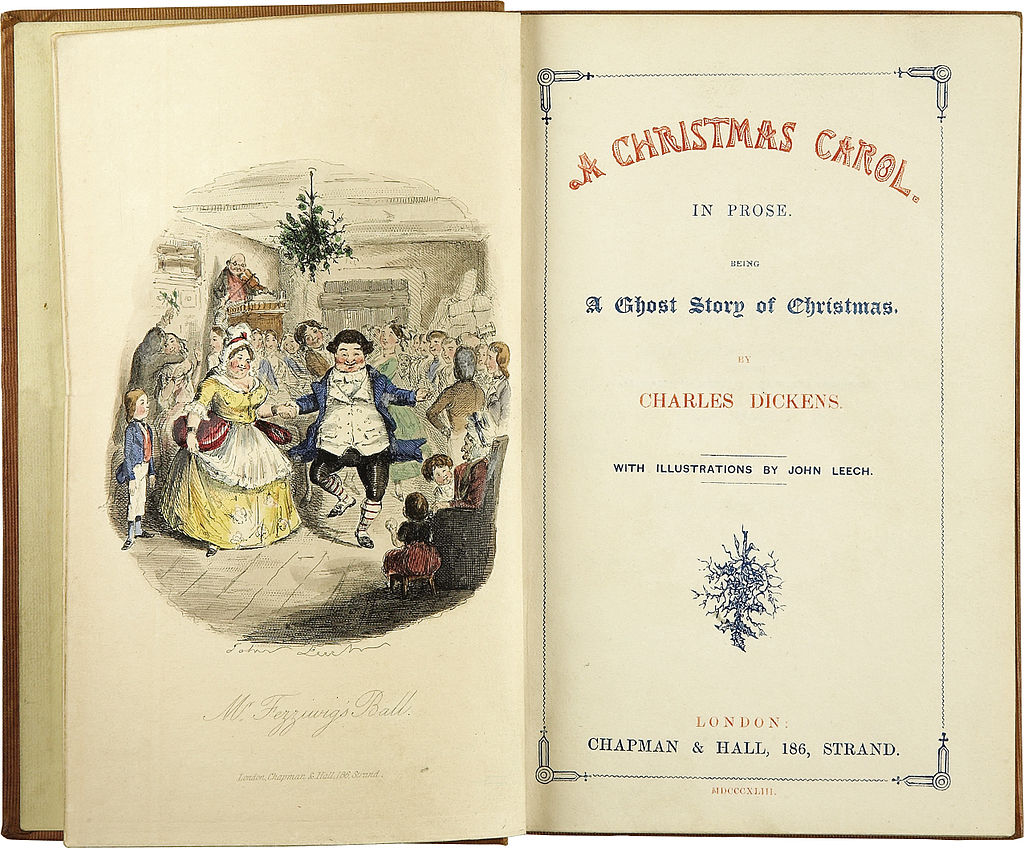
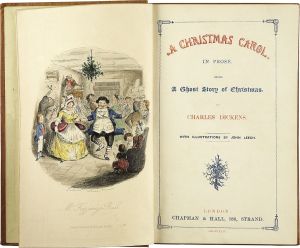
1024px-Charles_Dickens-A_Christmas_Carol-Title_page-First_edition_1843Charles Dickens was a master at creating marvelous hooks and using heavy foreshadowing. Let’s take the first line of my favorite Christmas story of all time,  A Christmas Carol. I love each and every version of it, will watch any movie version I can get my hands on:

“Marley was dead, to begin with. There is no doubt whatever about that. The register of his burial was signed by the clergyman, the clerk, the undertaker, and the chief mourner. Scrooge signed it. And Scrooge’s name was good upon ‘Change for anything he chose to put his hand to. Old Marley was as dead as a doornail.”

I hear a great deal of argument about how modern 21st century genre-fiction is nothing but sixty-second soundbites and bursts of action jammed together in dumbed-down prose.  I hate to say this, but that has been true of popular fiction for centuries–and if you look at this tale, you will see what I mean. The popular prose, at the time it was written, was more descriptive and leisurely than we enjoy nowadays, but even so, the really popular tales leaped straight to the action.
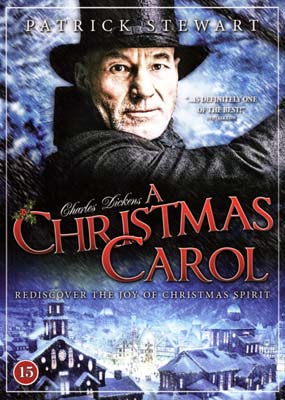
Patrick Stewart - A Christmas CarolIn that first paragraph, Dickens  tosses out the bait, sinking the hook, and landing the fish (the reader) by foreshadowing the first plot point of the story–the visitation by Marley’s ghost. We want to know why Marley’s definite state of decay was so important that the conversation between you the reader, and Dickens the author, was launched with that topic.

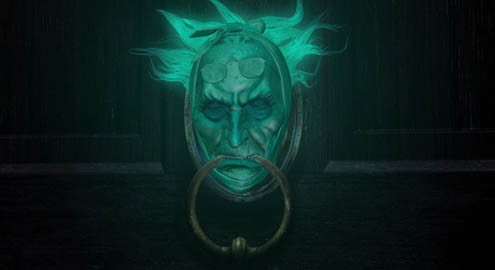
He picks it up and does it again several pages later, with the little scene involving the door-knocker: “Now, it is a fact, that there was nothing at all particular about the knocker on the door, except that it was very large.  It is also a fact, that Scrooge had seen it, night and morning, during his whole residence in that place; also that Scrooge had as little of what is called fancy about him as any man in the city of London, even including — which is a bold word — the corporation, aldermen, and livery.  Let it also be borne in mind that Scrooge had not bestowed one thought on Marley, since his last mention of his seven years’ dead partner that afternoon.  And then let any man explain to me, if he can, how it happened that Scrooge, having his key in the lock of the door, saw in the knocker, without its undergoing any intermediate process of change — not a knocker, but Marley’s face. 
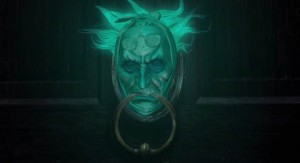
carol-disneyscreencaps_com-1887_gal“Marley’s face.  It was not in impenetrable shadow as the other objects in the yard were, but had a dismal light about it, like a bad lobster in a dark cellar.  It was not angry or ferocious, but looked at Scrooge as Marley used to look: with ghostly spectacles turned up on its ghostly forehead.  The hair was curiously stirred, as if by breath or hot air; and, though the eyes were wide open, they were perfectly motionless.  That, and its livid colour, made it horrible; but its horror seemed to be in spite of the face and beyond its control, rather than a part or its own expression.

“As Scrooge looked fixedly at this phenomenon, it was a knocker again.”

You have to admit, it’s a huge thing for a man of as limited an imagination as Scrooge was known to have, to suddenly see his dead friend staring back at him. This is also the second foreshadowing of the events that will follow, and makes the reader want to know what will happen next.
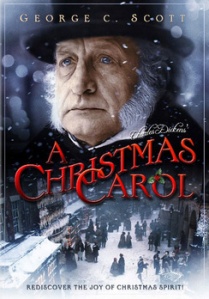
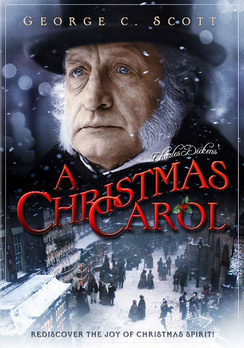
achristmascarol George C ScottAt this point we’ve followed Scrooge through several scenes introducing the subplots. We have met the man who, as yet, is named only as ‘the clerk’ in the original manuscript, but whom we will later know to be Bob Cratchit, and we’ve met Scrooge’s nephew, Fred. These subplots are critical, as our man Scrooge’s redemption revolves around the ultimate resolution of these two separate mini-stories–he must witness the joy and love in Cratchit’s family, who are suffering but happy in the midst of grinding poverty for which Scrooge bears a responsibility. We see that his nephew, Fred, though orphaned is well enough off in his own right, but craves a relationship with his uncle with no thought or care of what he might gain from it financially.

All the characters are in place. We’ve seen the city, cold and dark, with danger lurking in the shadows. We’ve observed the way Scrooge interacts with everyone around him, strangers and acquaintances alike. Now we come to the first plot point–Marley’s visitation. This is where the set-up ends and the story begins to take off.
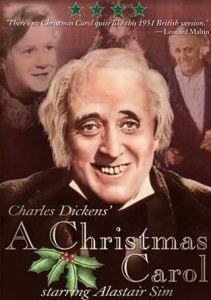
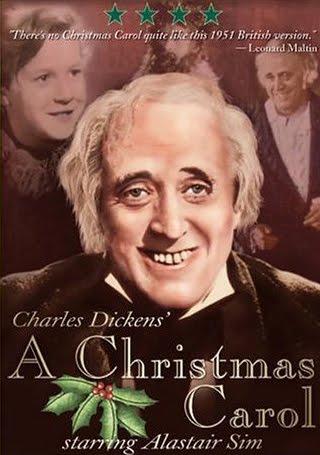
Alastair Sims - A Christmas CarolDickens raises the tension, the bells begin ringing for no apparent reason and “The cellar-door flew open with a booming sound, and then he heard the noise much louder, on the floors below; then coming up the stairs; then coming straight towards his door.

Scrooge of course is dismayed and tries to deny the strange happenings. He desperately clings to his view of reality.”It’s humbug still!” said Scrooge.  “I won’t believe it.”

However, he can’t deny this phenomena forever, and refusing to recognize it won’t make it go away. Though he looked the phantom through and through, and saw it standing before him; though he felt the chilling influence of its death-cold eyes; and marked the very texture of the folded kerchief bound about its head and chin, which wrapper he had not observed before: he was still incredulous, and fought against his senses.

“How now!” said Scrooge, caustic and cold as ever. “What do you want with me?”
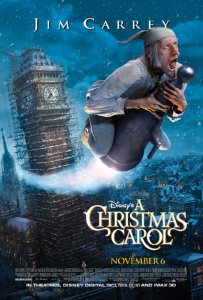
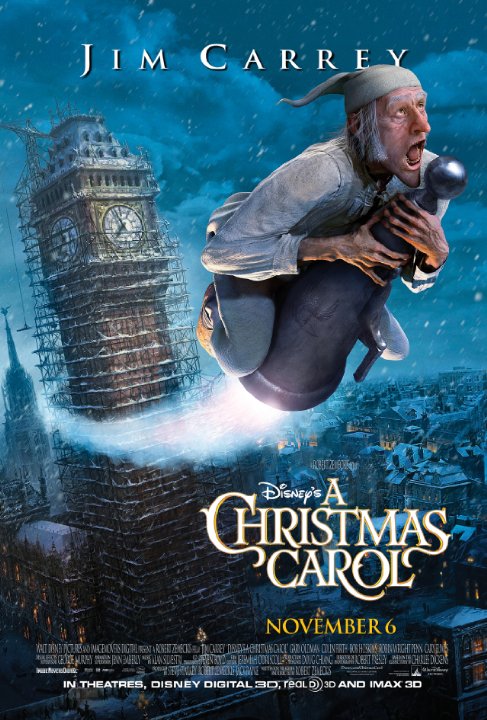
disneys a christmas carol jim careyThis is the turning point, the place where Ebenezer Scrooge is faced with a situation in which he will either succeed or fail, and what will happen to him, the reader can’t guess. A deep sense of mystery now surrounds this old miserly man–what could possibly be so important about him that a man he cared so little for in life would go to such trouble as to return from the grave to save him?

In 1843 Charles Dickens showed us how to write a compelling tale that would last for generations. We start with the hook, use foreshadowing, introduce the subplots that ultimately support the structure of the tale, and arrive at the first plot point–these are the things that make up first quarter of this timeless tale. Get these properly in line, and your story will intrigue the reader, involving them to the point they don’t want to set the book down.


2 Comments

Filed under Uncategorized

The author’s voice

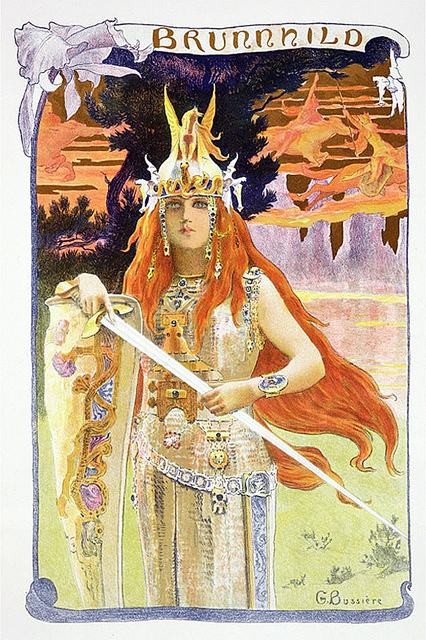
Brunhild_(Postkarte),_G._Bussiere,_1897All authors have a voice, although many can’t sing. I have 8 good notes and I’m not afraid to use them in singing the odd song now and again. Tad Williams can sing, and has the cd to prove it.

But what do I really mean when I speak of an author’s voice?

We become attached to certain authors because when we read their works, we hear their “voice.” We hear them speaking to us.

Each author writes with a certain style, or in other words, the words he or she habitually uses that makes his or her writing unique. “Voice” conveys the author’s attitude, personality, and character.

You have all heard me say that having a manuscript properly edited before publishing it is crucial for the indie author’s credibility. You may ask, “what is this process, and how do I retain my voice, and control of my work when someone else is intent on hijacking it?”

First of all, a good editor will never try to hijack your work. Writers intentionally use symbolism and thematic consistency. We sometimes intentionally repeat certain words for emphasis. These things are significant to us, and a good editor will recognize that.

So what does an editor look for in a manuscript?

Indies are looking for an editor who “helps a writer develop a book from idea or outline or initial draft. Makes sure the book will meet the needs of the publisher and its readers. Will work with the author through any number of drafts. Often works with writers of non-fiction. Guides the writer in topics to be covered in or omitted from the book.” quoted from the Editors Blog.

In other words indies want a structural editor.  What will this editor do for them?

The professional freelance editor will read your manuscript, looking for the rough spots and inconsistencies that work their way into every final draft. They will suggest you correct certain grammatical errors and habits that interfere with the flow of your work, and give you an idea of how those corrections could be made. They will also point out things that are unnecessary background–info-dumps that have slipped through, and suggest you remove them.

Also a structural editor may suggest that a section be moved to a different, more appropriate place in the manuscript. This editor will devote a month or more of their time to your manuscript. This is a hefty commitment on their part, and is one that is not lightly made.

Raymond chandler quote split infinitivesA good editor will not try to take over your manuscript and erase your voice.

You, as the author, have the final say on your manuscript–it is after all your intellectual property. If you don’t want to change something you feel is intrinsic to what you are trying to express, you don’t have to.

Sometimes editors don’t see the forest for the trees–and a good conversation with the author will straighten those areas out. If your editor does not respond to your emails, or indicate in some way that they have heard your concerns, you should not work with them.  

The best part of being an indie is having the control of your work. A good relationship with your editor is crucial to turning out a good product.

7 Comments

Filed under Adventure, Battles, Blogger, blogging, Books, Fantasy, Humor, Literature, Publishing, Self Publishing, WordPress, writer, writing

What I’m reading

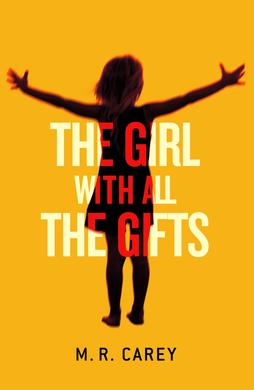
The_Girl_with_All_the_Gifts m.r. careyI just finished reading a great book, The Girl With All the Gifts, by UK author M.R. Carey (Mike Carey, of X-Men Legacy fame). I loved it as much as I did The Martian, by Andy Weir. At first glance the two novels have nothing in common other than they are both considered speculative fiction, but they do have one common feature–they both really rang my bells.

My friend, who also does not normally read dystopian fiction, directed me to it. The action is intense, and it is at times gory, but what makes this book so significant is not the fact it is about Zombies and the war against the undead (which is a theme I don’t usually gravitate to.) The truly powerful character of Melanie, the ten-year-old girl is the real driving force behind this novel.

I really get into character-driven works. That’s why I enjoy such a wide variety of genres in my eternal search for a good read.

The main character in this tale is Melanie, a girl who loves school and her favorite teacher is Miss Justineau.  Melanie is multi-layered and despite the horrible truth of what she is, she is innocent and trusting.

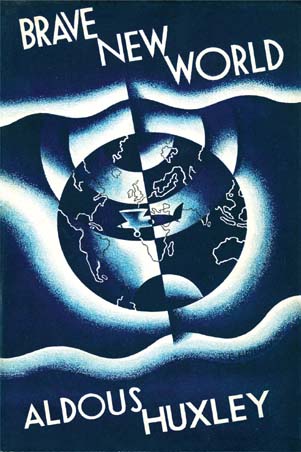
BraveNewWorld_FirstEditionSo what is dystopian fiction? The core plot of dystopian fiction revolves around the premise that society has crumbled for one reason or another, and details the struggle to survive and raise humanity from the ashes. According to Wikipedia, the fount of all knowledge:

Dystopia is defined as a society characterized by a focus on negative societies such as mass poverty, public mistrust, police state, squalor, suffering, or oppression, that society has most often brought upon itself. Most authors of dystopian fiction explore at least one reason why things are that way, often as an analogy for similar issues in the real world. In the words of Keith M. Booker, dystopian literature is used to “provide fresh perspectives on problematic social and political practices that might otherwise be taken for granted or considered natural and inevitable.”

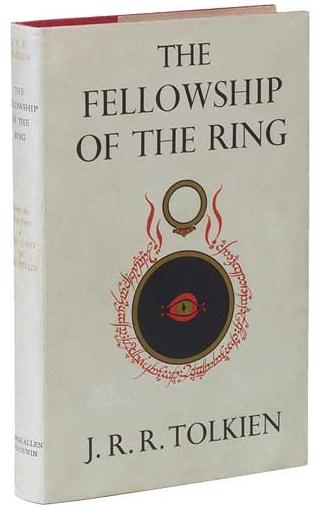
FellowshipOfTheRingNo matter the genre, stories are all driven by one of two elements, plot or character. A plot driven story is one where the plot defines who a character is. Take J.R.R. Tolkien’s Lord of the Rings: Even if you remove Frodo, who is the main protagonist and replace him with another hobbit, the event, which is the battle for middle earth still takes place, the call to action still exists. He is an awesome character who leaps off the page, yes–but this is a plot-driven tale.

But in  The Girl With All the Gifts, the plot is completely driven by Melanie. Her emotions, her love for her teacher and the innocent faith she has in both Miss Justineau, who sees her as a child, albeit a dangerous one, and Sergeant Eddie Parks, who sees her as a monster, but who nonetheless does the right thing–take these away and you just have a book about humanity dealing with zombies and the collapse of society.

In all of the books I have lately read, several that were character driven really stand out. Characters who are not flat, who leap off the page and grab you–characters who strike some chord within you and who stay with you long after the last page. When I close the book after the final paragraphs, if those characters are still with me, that book is a winner.

2 Comments

Filed under Adventure, Battles, Blogger, Books, Fantasy, Humor, Literature, Publishing, Self Publishing, Uncategorized, WordPress, writer, writing

The other side of the coin

Water_for_elephantsWriting is about so much more than merely laying words down on a page.   Most people can do that, and can even whack out a creditable paragraph or two. But sustaining the momentum and carrying that vision through an entire novel is quite another thing.

I’ve read several disparaging blogposts where the authors have expressed their scorn and disdain of Nation Novel Writing Month, and that is fine, if it makes them feel noble and slightly more pure than the rest of us mundane hacks. But they are overlooking one important notion, and that is that to write a novel one must start a novel. If it takes a special month of writing and a group frenzy to get some people fired up about an idea they’ve had rolling around in their heads, who am I to complain?  I am a reader as much as I am an author, and I say the more the merrier!

Take a look at some of the most well-known NaNo Novels of all time:

the night circus by erin morgensternWater for Elephants, by Sara Gruen. On the best-seller lists for over a year, turned into a movie starring Reese Witherspoon and Robert Pattinson, started as a NaNo novel.

The Night Circus, by Erin Morgenstern. What eventually became The Night Circus began life in 2004, seven years before it was finally published, started as a NaNo novel.

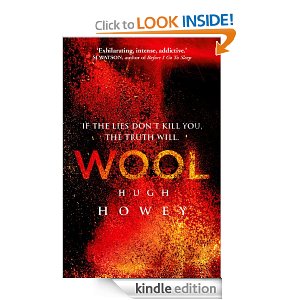
Wool, by Hugh Howey. Howey’s dystopian sci-fi novel is one of those credited with putting self-publishing on the map, started as a NaNo novel.

So don’t give me any of your “poo-poo on the contest” crap. Whatever gets a writer fired up and writing is fine by me!

I think the notion that anyone with an idea can sit down and write a book in 30 days bothers some authors, as they feel rather threatened by the number of books being published post NaNoWriMo.  Fear and Loathing, we call that in the industry. It’s irrational, but then no one ever accused authors of being rational!

WoolMost people who begin a novel in November do not reach their goal of 50,000 words. They do not have the discipline to sit down every day and dedicate a portion of their time to this project. And some people just are not good writers. But so what? The cream always rises to the top, my grandma used to say.

Because of NaNoWriMo, thousands of people are now embarking on learning a craft, committing their time and resources to educating themselves about how to write a novel that others will want to read. Several years  down the road, who knows what wonderful works of fiction will have emerged from this year’s madness?

I only know that I am always looking for a good book, and so I will be first in line, hoping to be blown away by a fresh, new work of art.

2 Comments

Filed under Adventure, Battles, Blogger, blogging, Books, Fantasy, Humor, Literature, news of the world, Publishing, Self Publishing, WordPress, writer, writing

NaNoWriMo: The Final Push

edgar allen poe quoteI’ve been talking a lot about NaNoWriMo–National Novel Writing Month. My friends are curious and ask if it’s a contest.

The answer is yes, in a way, but no.

It is a contest in the sense that if you write 50,000 words and have them validated through the national website you ‘win.’ But it is not a contest in the sense that it is a month that is solely dedicated to the act of writing a novel.

Now lets face it–a novel that is only 50,000 words long is not a very long novel. That falls more into the line of a long novella and is only half a novel, in my opinion. But a dedicated author can get the basic structure and story-line of a novel down in those thirty days simply by sitting down for an hour or two each day and writing a minimum of 1667 words per day.

That is not a lot. Most authors, when they are in the zone, double or triple that.

And again, we must face an ugly fact: Just because you can sit in front of a computer and spew words does not mean you can write anything that others want to read. Over the next few months there will be many books emerging that will testify to this fundamental truth.

But also, over the next few months many people will realize they enjoy writing; that for them this month of madness was not about getting a certain number of words written by a certain date. This was about writing and completing a novel they had wanted to write for years, something that had been in the back of their minds for the longest time. These people will join writing groups and begin the long journey of learning the craft of writing.

neil gaiman quote 2They are the real winners.

These authors will take the time and make the effort to learn writing conventions, they will attend seminars, they will develop the skills needed to take a story and make it a novel with a proper beginning, a great middle and an incredible end.

They will properly polish and edit their work and run it past critique groups before they publish it.

These are books I will want to read.

It’s not easy. Sometimes what we hear back from our readers and editors is not what we wanted to hear. The smart authors haul themselves to a corner, lick their wounds, and rewrite the damned thing so it’s more readable. They will be successful, for a variety of reasons, all of them revolving around dedication and perseverance.

But when we write something that a reader loves–that is a feeling that can’t be described.

Success as an author these days can’t be measured in cash. It can only be measured in what satisfaction you as an author get out of your work. Traditionally published authors see less of their royalties than indies, but they sell more books. It is a conundrum, and one many new authors will be considering in the new year.

But if you don’t write that book, you aren’t an author, and you won’t have to worry about it. NaNoWriMo will jump-start many discussions about this very issue. At this writing there are 3 days counting today left for many writers to get their 50,000 words and earn that certificate. Some of us have completed our first draft, and some of us still have a ways to go.

Winner-2014-Twitter-ProfileMy book has a beginning, a middle and an end, but will not become a novel for two or more years..  It is, instead, a rough draft sitting in the pile of other rough drafts, waiting to be rewritten when that flash of inspiration takes me over and I am driven to make it real. Huw the Bard began life in NaNoWriMo 2011, under the working title, The Bard’s Tale. He was published in 2014, and his story makes a darned good novel, if I do say so myself. (Shameless, I know.)

But although he was written in 30 days, he was then rewritten over the course of the following year, and edited over the course of the year after that. The life of a book from concept to publishing is a process. Some are quicker at negotiating this process than others, but having once rushed to publish with unhappy results,  I now take a more leisurely path.


Comments Off on NaNoWriMo: The Final Push

Filed under Adventure, Battles, Blogger, blogging, Books, Fantasy, Humor, Literature, news of the world, Publishing, Self Publishing, Vegan, WordPress, writer, writing

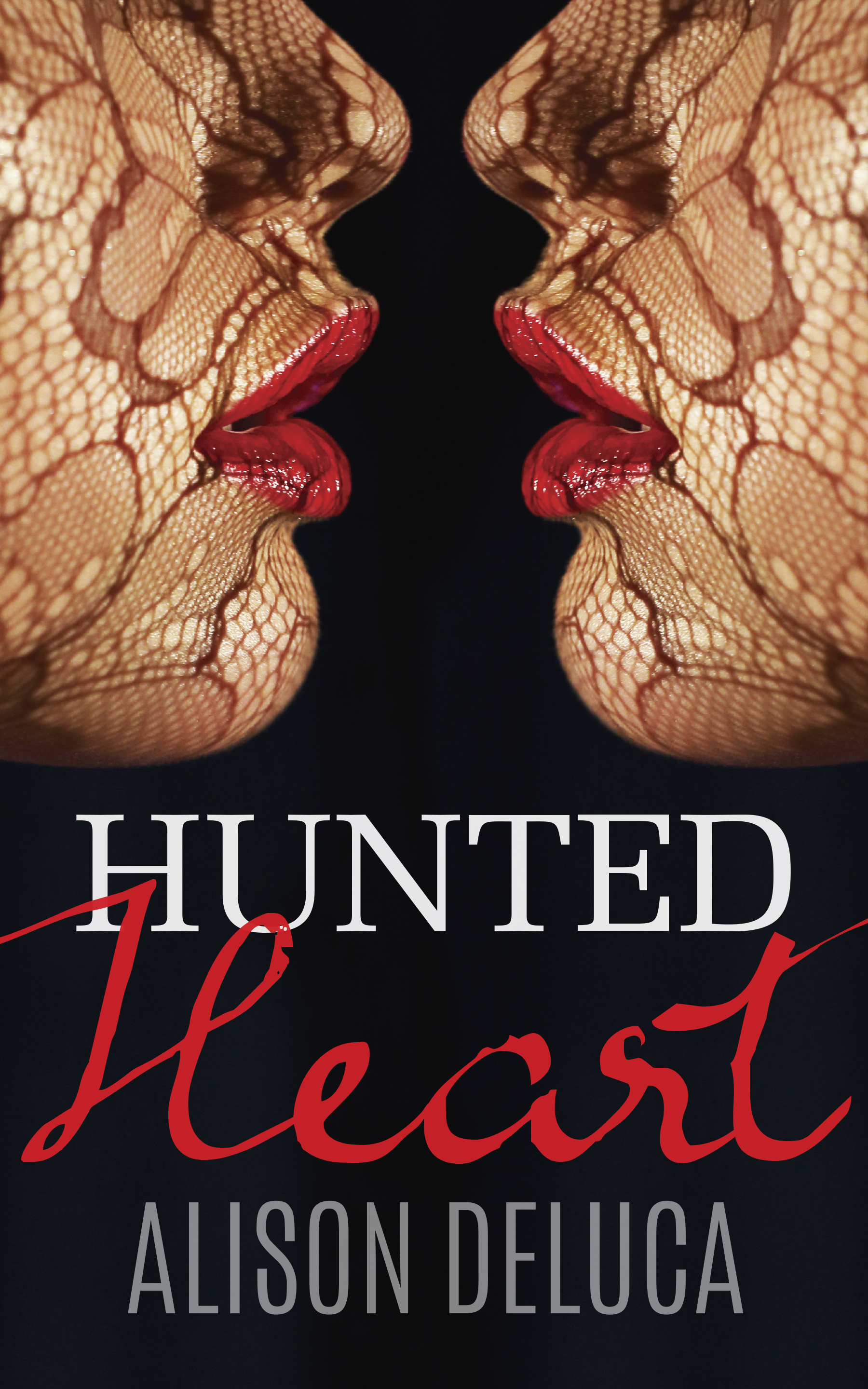
Hunted Heart, by Alison Deluca

Most avid readers of the fantasy genre are fans of the old fairytales as told by the Brothers Grimm and I am no exception. In fact it was my love of fairytales that inspired me to write in the first place. I am always interested in reading other authors’ takes on these fairy tales. It is amazing how differently two authors will tell what began as the same story.

Today my good friend, Alison DeLuca, author of  the steampunk Crown Phoenix Series, has consented to answer a few questions for us, and allow me to share the wonderful cover of her new book, Hunted Heart. It is a standalone book, and is a true fairytale, the premise of which had really intrigued me.

CJJ: Alison, tell us a little of early life and how you began writing:

AD: I always loved reading. My early favorites were Alice in Wonderland, the Odyssey, Arabian Nights, and fairytales of all kinds.

CJJ: Tell us about your most recent book.

AD: Hunted Heart is an adult version of Snow White. Prince Kas is the one threatened by the wicked queen, and the huntress, Tali, is given the job of taking him to the forest to cut out his heart. They end up falling for each other, but not without a great deal of adventure along the way. Yes, there is a wicked queen and my version of a poisoned apple. And we mustn’t forget True Love’s Kiss…

CJJ: How did you come to write this novel?

AD: Someone I met online prompted me and begged me to write the story – she is the J.R. in my dedication. I loved her idea of making the hunter a strong female and ran with it.

CJJ: Do you have a specific ‘Creative Process’ that you follow, such as outlining or do you ‘wing it’?

AD: This book was an exercise in winging! The Snow White structure supported my story, and I was able to take off from there. Writing a fairytale redux is completely addictive – I might have to do a few others.

CJJ: How does your work differ from others of its genre?

AD: It is genderbent, and I’ve set the story in a mythical Norse country. I couldn’t resist including Freja, Iduna, and a few others from Norse tales. It’s also quite adult, with violence and some sexy scenes, and a charity project: Tali, my main character, suffers from some terrible abuse as a child, and so 100% of the royalties go to HelptheChildren.org.

CJJ: Why do you write what you do?

AD: Honestly, because I can’t help it. When I get an idea it needles me until I pin it down on paper. It’s like giving birth, to be honest.

CJJ: I so know that feeling! I know why I chose the indie route for my work, but I’m curious as to why you’ve chosen this path.

AD: I love the freedom indie publishing gives me. I’m able to write what I like and donate the proceedings when I do a charity project like this.

CJJ: What advice would you offer an author trying to decide whether to go indie or take the traditional path?

AD: Both have their merits and challenges. Being an indie does give you freedom but also relies on individual marketing. Traditional publishing gives more support but gives the author little choice on things like covers and presentation. Both are good in their way – each author must decide for herself how she would like to proceed!

 CJJ: Alison–I love the answers you gave my stock questions!  Thank you for giving me this opportunity to get the word out about your charity, HelptheChildren.org.

AD: Thank you so much for having me on your blog, Connie. This was a lot of fun!

And without further discussion, here is that amazing, most intriguing book cover:

HuntedHeart cover final


I confess I am blown away by this one, and I have become quite a fan of Alison’s graphic designer.

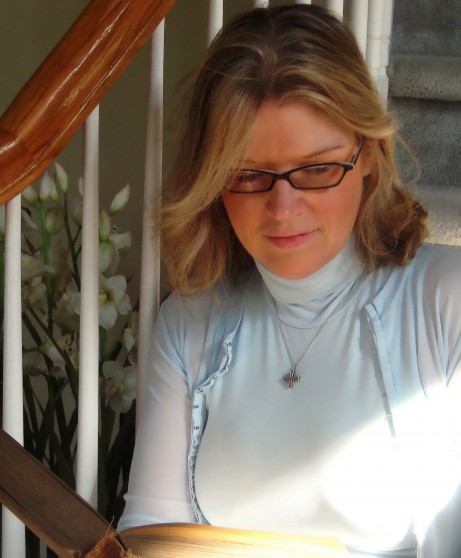
Alison DeLuca HeadshotAlison DeLuca is the author of several steampunk and urban fantasy books.  She was born in Arizona and has also lived in Pennsylvania, Illinois, Mexico, Ireland, and Spain.

Currently she wrestles words and laundry in New Jersey.

You can find Alison here:

Facebook – http://www.facebook.com/alison.deluca.author

OR http://on.fb.me/TNWEfb

Twitter – http://twitter.com/ – !/AlisonDeLuca

Google + http://bit.ly/ADGoogle

Author Central: http://amzn.to/ADeLucaAuthorCentral

Pinterest: http://pinterest.com/alisondeluca/

I have long been a fan of all of Alison’s work and have been fortunate enough to have some of my own work  included included along side of hers in a charitable anthology, Christmas O’Clock,  a book of wonderful short stories for children that is available in both paperback and for the kindle. (All proceeds for Christmas O’Clock go to Water Is Life to help children and families in an international effort.)


4 Comments

Filed under Adventure, Battles, blogging, Books, charity, Fairies, Fantasy, Humor, mythology, Romance, Self Publishing, Steampunk, WordPress, writer, writing

Loki, Zorg, and why I love the bad-boys

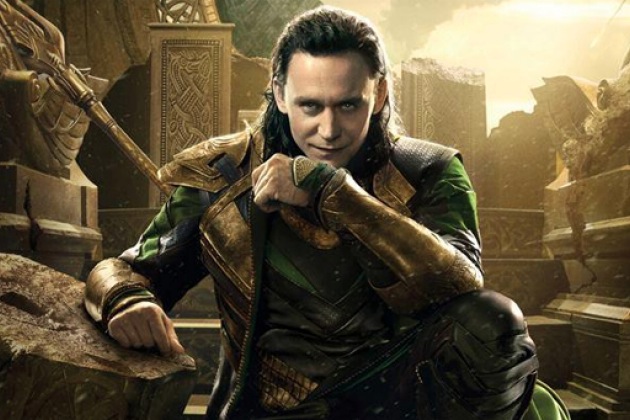
Thor-Everything-LokiI love swashbuckling sword-fights and movies fraught with testosterone and machismo. I don’t need it in real life, thank you–that’s what I have books and movies for. So what are my favorite movies?

Thor–anything Thor will be a winner  from my point of view.

Let’s just say that anything featuring a bad-boy god with a twisted sense of humor is high on my list of must-watch movies. Plot? Sure, if you say so–but this is a movie so bring on the eye-candy now.

I love the character of Loki as played by Tom Hiddleston. He is everything the God of Mischief should be, and then some. He’s like that beloved ex-boyfriend–you’re always glad to see him, and even happier to see him leave.

Fifth_element_poster_(1997)What other sorts of movies intrigue me? Well, I am a huge fan of the 5th Element. I adore the character of Korben Dallas as played by Bruce Willis, but for me the man who stole the film was Zorg, as played by Gary Oldman.  Who doesn’t love a megalomaniac industrialist enslaved to The Great Evil? What a guy! And lets face it, Korben Dallas is just as much fun as Han Solo, and both are quintessential bad-boys.

The thing that intrigued me most about the 5th Element was the way the film portrays consumerism in that society as a living, breathing thing that has veered out of control. Extreme lust for technology and power is set against that of a simple man wanting a simple life–our own flaws are laid bare in the characters of Zorg and Korben Dallas.

But where is the eye-candy in that movie? Well you have to admit it is one of the most visually stunning films of the twentieth century.

You might wonder where I am going with this-so do I. Oh wait!  Bad-boys! Why I love to write about the bad-boys and read about them and even see the movies featuring them!

han-solo-smugglerThe bad-boys are intriguing, dangerous, and definitely not the boy your mama set you up with.

They are fun.  So I have two new manuscripts in the works and one features a bad-boy, a man who falls from grace and years later returns. Some of his experiences have changed him, but some things will never change. While his basic arrogance has been tempered, he is still the man he always was, but with a better grasp of what is truly important.

A bad-boy is a multidimensional character, made of many layers both good and bad, and as the story progress those layers are peeled away, revealing a new facet, but also hinting that more still lies hidden. The trick is to make those layers lure the reader (or watcher) in.  Loki, Han Solo, and Korben Dallas are all characters who intrigued me. They are written perfectly, because at the end of the movie, the observer still doesn’t know them well, but wants to.

From watching these movies, I’ve learned that one should dole out the character in small bits, showing a layer at a time, but always holding out the lure that far more lies hidden beneath the surface.

That is the trick, and it’s one thing to know it and another to do it.  But we try!


2 Comments

Filed under Adventure, Battles, Blogger, blogging, Fantasy, History, Humor, Literature, mythology, Politics, Publishing, Uncategorized

Death Valley

Extreme-Heat-Death-ValleyEvery artist who has successfully created works other people enjoyed is a slave to the creative muse. Each artist endures those horrible moments when they question their choice of career–they have a series of bad days and inspiration is far from their grasp. Every note they play, every word they write, every picture painted is dead and dull. Forcing it doesn’t help, and indeed drives it further away.  These are the moments when we are walking in the Death Valley of creativity.

I have no magic bullet, no super-human powers of creativity to bestow upon you.  For me, the joy of creativity in music, art, and writing is the rebellious feeling of stealing the time to do it. I make music, I do graphics, and I write, doing each whenever the muse strikes me.

In the old days I would come home from work with a small notebook full of ideas and after I had fed the masses, everything else would fall by the way while I put those ideas to paper. Even when you must earn a living, creativity must be allowed to flow when you feel it, because it is a finite commodity.

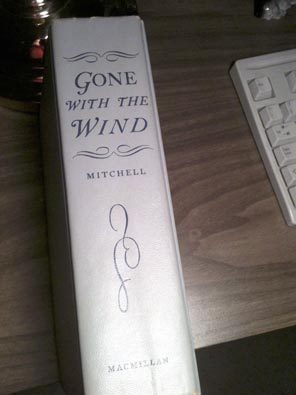
But I will tell you this: You Are Not Alone. Margaret Mitchell only published one book: Gone With The Wind.

gone with the wind 2Quoted from the fount of all knowledge,  WikipediaMargaret Munnerlyn Mitchell (November 8, 1900 – August 16, 1949) was an American author and journalist. One novel by Mitchell was published during her lifetime, the American Civil War-era novel, Gone with the Wind, for which she won the National Book Award for Most Distinguished Novel of 1936[1] and the Pulitzer Prize for Fiction in 1937. In more recent years, a collection of Mitchell’s girlhood writings and a novella she wrote as a teenager, Lost Laysen, have been published. A collection of articles written by Mitchell for The Atlanta Journal was republished in book form.

And did you know that Edgar Allen Poe and Oscar Wilde each only wrote one novel in their careers?  I am assuming this was because they suffered from long periods of having nothing they thought was worthy to show the world.

Poe understood the value of writing the short story. While he is generally considered the inventor of the detective fiction genre, his body of work consisted of–wait–how many short stories did he write? “Almost eighty” it says on page 373 of the official volume of the Big Read. The Edgar Allan Poe Society of Baltimore says the number is sixty-nine – counting “both short fiction and novels.” This appears to be the most widely published number.
So how many short stories did Edgar Allan write? By all reports he was a troubled man, and it’s possible that not even he knew for sure.

Poe is further credited with contributing to the emerging genre of science fiction. He was the first well-known American writer to try to earn a living through writing alone, resulting in a financially difficult life and career. Are we surprised? I don’t think so.

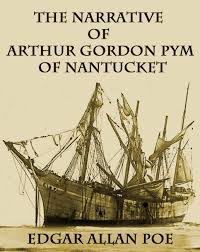
narrative of arthur gordon pym edgar allen poeBut though he is considered by many to be the most famous of our American authors, he only published one novel: The Narrative of Arthur Gordon Pym of Nantucket (1838) is the only complete novel written by our famous man, Edgar Allan Poe. The work relates the tale of the young Arthur Gordon Pym, who stows away aboard a whaling ship called the Grampus. Various adventures and misadventures befall the protagonist, Pym, including shipwreck, mutiny, and cannibalism, before he is rescued by the crew of the Jane Guy.

Indie author Mary W. Walters has written a wonderful blogpost on the subject of turning writers block into building blocks, available here.

So even if you feel the stream of creativity has run dry, it’s frustrating, yes–but nothing to get to worried about. At some point, when it is least convenient, that muse will strike again. You will once again feel that divine energy, that spark of madness that is the breath of life for a poem, a song, a novel or a painting. When you feel it, go with it.


4 Comments

Filed under Adventure, Battles, Blogger, blogging, Books, Fantasy, History, Humor, Literature, Publishing, Self Publishing, Uncategorized, WordPress, writer, writing