Tag Archives: #writetip

Writing the Short Story part 1: experimenting #amwriting

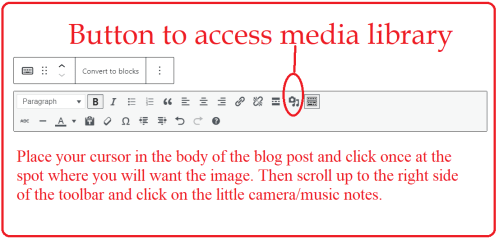
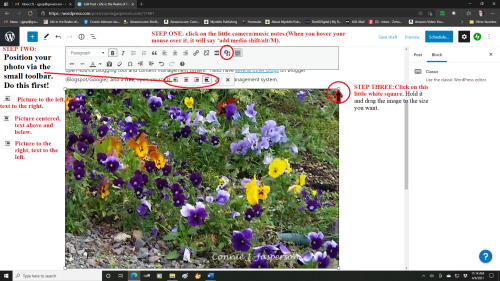
Before we begin, I hope you’ll bear with me as I learn to use the unnecessarily complicated dashboard WordPress calls “Gutenberg.” For a person who relies on images as much as I do, this isn’t a good fit, but I will make it work. They have removed the Admin Dashboard, which was perfect for uploading and positioning images and text. Please bear with me as I find ways to write my posts despite being forced to use the least intuitive dashboard the geniuses at WordPress could have come up with.


When it comes to learning how to write, experimentation is good. The best form for learning learning to write in different styles and genres is the short story.

Last week, we discussed why authors should write short stories and looked at one way to lay out the story arc. There are other ways, but that is my most commonly used method. If you are curious, this is the post: Gaining Readers Through Writing Short Stories.

This week we are going deeper into the many elements of writing a good, gripping story. Most of these features will be found in any length of story, from drabbles to novels. Today we are still focusing on getting all the elements into a piece that is less than 2,000 words long.

Before we go on, we need to remember that setting, atmosphere, and mood are intertwined.

Today’s example is from The Iron Dragon, a 1,025-word story I wrote during NaNoWriMo 2015. That was the year I focused on experimental writing, putting out at least one short story every day, and sometimes two.

The first paragraph of the Iron Dragon begins in the middle of a story:

Earl Aeddan ap Rhydderch turned his gaze from the mist to the strange iron road that emerged from it and then to where the road entered the cave. “Tell me again what happened.”

The opening sentences establish the story, set the scene, and introduce the first protagonist. The following three paragraphs show the world and establish the mood:

The peasant who had guided the earl and his men said, “The mist, the iron road, and the cave appeared yesterday, sir. We saw the beast entering its lair, and a fearful thing it is, too. No one dares to approach it, but the monster can be heard in there. It’s a most dreadful dragon — we found the carcass of a large wolf that had been torn to shreds, trampled until it was nigh unrecognizable.”

The man’s companion said, “Everyone knows wolves are Satan’s hounds. It must have angered its hellish master. We found it lying cast to one side of the Devil’s Road.”

Aeddan looked back to the iron road, seeing where it emerged from the mist. He walked to the low-hanging fog bank, seeing that the road vanished just after it entered the mist, leaving no marks upon the soil. He turned and strode back to the peasants. “I agree it’s the work of the Devil, but why does the Lord of Hell require an iron road that leads nowhere?”

The paragraphs that follow present the danger, the problem Aeddan must overcome:

A faint grumbling sounded beneath Aeddan’s feet. “A light! Look to the mist!” shouted one of his men.

Turning, Aeddan saw a white glow forming in the fog as if a large lamp approached from a great distance. “That’s no ordinary lantern. Mount up!” Moving quickly, he leaped into his saddle and turned his steed to face the demon.

A few sentences further on, I showed more of the world at the same time as I introduced the antagonist:

The light deep within the fog grew and strengthened, as did the rumbling noise.  It waxed brilliant, and the earth shuddered as if beneath the pounding of a thousand hooves. Smoke filled the night air, reeking of the sulfurous Abyss, combined with a howling as cacophonous as the shrieks of all the damned in Hell.

What emerged from the mist was impossible — an Iron Dragon of immense height and girth.

At this point, Aeddan knows that he must resolve the problem and protect his people:

The fiery light emanating from the burning maw lit the night, and the ground shook as the beast roared and raced ever closer. As the beast sped toward him, a burning wind blowing straight out of Hell knocked Aeddan and his horse to the side of the Devil’s Road, and using that opportunity, the Iron Dragon thundered past him, heading into its lair.

Stunned, Aeddan scrambled to his feet, staring as the beast passed him by, the body taller than a house and long, like an unimaginably giant, demonic centipede. The length of the beast was incomprehensible, lit by the fire within and glowing with row upon row of openings. The faces of the damned, souls who’d been consumed by the ravening beast peered out as they flashed by. Sparks flew from its many hooves.

Terrified his men would be crushed by the immense creature, he shouted for them to back off, his voice drowned by the din.

There is more to Aeddan’s side of the story, of course. But in what you have read already, you have made some guesses and are already aware that this is a story with two sides. Aeddan’s point of view is not the entire story.

Again, we must set the scene and establish the mood and characters. Here we meet the second protagonist, an engine driver named Owen:

Mist shrouded the small valley just outside of the village of Pencader. Engine Driver Owen Pendergrass looked at his pocket watch and opened the logbook, noting the time and that they had just departed Pencader Station. He said to the fireman, Colin Jones, “We should be approaching the tunnel, though it’s hard to tell in this mist. We’re making good time despite the fog. We’ll be in Carmarthen on schedule.”

“Sir! Look just ahead! What…?” Colin pointed ahead.

A group of mounted men dressed as medieval knights, complete with lances lowered as if prepared to joust, appeared out of the mist, attempting to block their path. “God in heaven — what next!” Blowing the whistle to scare them off the tracks, Owen pulled the brake cord, but there was no way the train could stop soon enough. In no time at all, the train was upon the knights, scattering them and blowing past. Owen looked out the window to see if they’d survived, but they were gone as if they’d never been.

The final paragraphs wind it up. They also contribute to the overall atmosphere and setting of the second part of the story. The story in its entirety can be read here: The Iron Dragon. It is an imperfect story, but as a practice piece, it has good bones. I didn’t feel that particular piece was suitable for submission to a magazine or contest.

Word choices are essential in showing a world and creating an atmosphere that feels believable. I had challenged myself to write a story that told both sides of a frightening encounter in 1000 words, give or take a few. I also wanted to show two aspects of a place in Wales but tell one story as lived by two protagonists separated by twelve centuries and a multitude of legends.

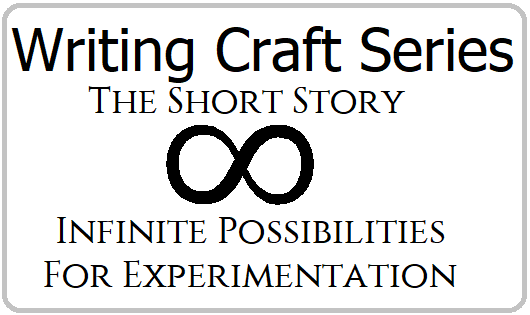
This brings me back to the layout aspect of a short piece. Some speculative fiction stories work well when the flow of the story arc is shaped like an infinity sign, a figure-eight laying on its side:

Instead of the usual bridge shape, the story arc begins in the middle, circles around, comes back to the middle, and circles around a different way. It ends where it began.

Writing short fiction offers me the chance to experiment with both style and genre. It challenges me to build a world in only a few words and still tell a story with a beginning, a middle, and an end.

Sometimes what I turn out is worth sharing, and other times, not so much. The act of writing something different, a little outside my comfort zone, stretches my ability to “think widely.” It makes me a better reader as well as a better writer.

>>><<<                                   >>><<<                                   >>><<<

Credits and Attributions:

Excerpts from The Iron Dragon, by Connie J. Jasperson, ©2015-2021 All Rights Reserved.

Comments Off on Writing the Short Story part 1: experimenting #amwriting

Filed under writing

Gaining readers through writing short stories #amwriting

We all want to gain readers. How do you, as an indie, get your name out there and gain awareness of your work? You earn your “street creds” by writing short stories and submitting them to magazines, anthologies, and contests.

Every time your short work is published or wins an award, you gain a little respect. You stand the chance of gaining fans, and it’s nice to have a little extra cash in your pocket.

Despite the changes in the publishing industry as a whole, writing short stories is still the way to increase your visibility. Reputable magazines that are SFWA approved are seeking submissions.

Submitting to contests is good too. If you have a story that was a contest winner, you may be able to sell it to the right publication. By doing this, you learn how to write to a specific length and theme.

I have a system for this. The following story has been used as an example here before. I wrote the original story for a 2015 contest with the theme of Truth and Consequences. The genre was epic fantasy, and the word limit was 2,000 words.

This meant my story had to adhere to that theme and word count, or it would not make the cut, no matter how well it was written.

My story was titled A Song Gone Wrong.

The Premise: Because he was a bit too specific when putting a local warlord’s fling with another man’s wife into song, our protagonist is now a wanted man. I had 2,000 words to show what happened.

I divided the story into four acts:

Act 1: the opening. I had 500 words to show these plot points:

  • Setting: the weather was unseasonably cold.
  • In an alley, a bard, Sebastian, hid from the soldiers of the lord he had humiliated.

My task in the first ¼ of the story was to introduce the protagonist so that his personality was clearly defined at the outset. I had to place him in the setting by showing the scents and sounds of his environment.

The theme, Truth and Consequences, had to be strongly shown throughout the story. Sebastian had told the truth and now faced consequences he was unprepared for.

My bard’s thoughts and observations were critical in this tale, but I had to be reasonable. At 2,000 words, I didn’t have a lot of room for mind wandering, especially in italics.

Another thing to consider was point of view—I went with first-person as I felt the protagonist could best show and interpret events and relate emotions while keeping to the number of words allotted.

Act 2: First plot point: I had 500 more words to show how:

  • The soldiers surrounded and captured Sebastian.
  • The irate lord threw him into prison and sentenced him to hang at dawn.

What Sebastian saw, smelled, and heard were the crucial means of showing the environment with a minimum of description from the first paragraph to the last.

Those noises and odors helped drive home the consequences part of the theme. Sebastian’s reactions told us a lot about who he was as a person.

So, where was this story going to go? I asked myself, “Does Sebastian regret being imprudent in mocking the nobleman, or does his punishment fire rebellion in him?” This was an opportunity for the circumstances to reveal his courage and still keep the plot moving forward.

I went with rebellion.

Act 3: Mid-point: I had 500 words to explain how:

  • Sebastian met a dwarf, Noli, also sentenced to die.
  • Noli was a member of an underground society trying to overthrow the current lord. He was on the verge of managing an escape, but time was short. He needed help with one last thing.
  • Noli and Sebastian managed to complete the escape route. Unfortunately, the guard seemed suspicious, hanging around their cell door, hampering their escape.

The whispered conversations between Noli and Sebastian gave us the background information. Noli had information Sebastian didn’t know.

This was the point when the reader also needed to know that information. Everything the reader already knew didn’t need repeating. Conversations were critical as they conveyed the personalities and the minimal backstory of the piece.

At this point, I set the final obstacle in their path.

This is where I have to emphasize one of my mantras: when writing to a strict word count limit, you must choose your words carefully. Find and use words that are strong and evocative, words that convey the most information concisely in one or two sentences.

Act 4: Resolution–I had 500 words to show how:

  • The smart guard was finally relieved by a less wary guard, which allowed Sebastian and Noli to squeeze through the escape route.
  • They were spotted at the last minute, but Noli’s friends were waiting, and they made their escape.

The fourth act is where you wind up the story and end it so that the reader feels satisfied. You hope they are left thinking about it, wondering what might have happened next.

Once you know how many words you are writing to and what must be done at what point within your story’s arc, you divide it into 3 or four acts. That is the way I structure most of my work.

This is true for any story, from 2000 to 20,000 to 200,000 words. Once you know the length a given tale must be, you can mentally divide it into acts and just write for fun.

I always outline short pieces that are intended for submission to contests, magazines, and anthologies. Magazines especially have strict parameters for what they accept, so you will have better success if you tailor that work to that particular publisher.

The contests and anthologies that are challenging to figure out are those whose guidelines tell you the theme but give you no indication of what genre they are looking for. You have no idea if the person reading your work prefers hard sci-fi or romance, so their personal preference can go against you.

That is a risk we all take. Remember, you have no control over what a prospective editor likes or dislikes. Rejections are more common than acceptance and shouldn’t be taken to heart. What one editor rejects, another will buy, so save it and submit it elsewhere.

Write short stories and only submit your best work. Expect to have them rejected and don’t take it personally. Turn them around and submit them elsewhere, because someone will accept it.

And always, always—celebrate the stories that you do sell.

11 Comments

Filed under writing

Choosing a publishing path: Traditional vs. Indie #amwriting

The publishing industry is in a state of flux, as is the rest of the world.

According to the December 2020 Statshot of participating publishers, the Association of American Publishers, published February 25, 2021, total revenues across all categories for December 2020 were down 8.5% compared to December 2019, coming in at $1.1 billion.

In terms of physical paper format revenues during the month of December, in the Trade (Consumer Books) category, Hardback revenues were up 14.2%, coming in at $312.5 million; Paperbacks were up 2.4%, with $248.1 million in revenue; Mass Market was down 1.6% to $25.9 million; and Board Books were up 6.2%, with $16.7 million in revenue.

eBook revenues were up 18.4% for the month as compared to December of 2019 for a total of $89.7 million.  The Downloaded Audio format jumped 30.0% for December, coming in at $66.0 million in revenue. Physical Audio declined 6.7% coming in at $1.9 million. [1]

In this publishing world, what share of the market is claimed by Indie book sales? For Indie books, those published without ISBNs, the Amazon market share accounts for roughly 83% of US purchases.

What do these numbers mean when trying to decide whether to self-publish or attempt to go the traditional route?

In recent months, the traditional publishing industry has undergone a shrinkage. Where they once were the Big Five, they are now the Big Four: HarperCollins, Simon & Schuster, Hachette, and Penguin Random House.

Literative.Com says: Authors who publish with them may still not have boatloads of money (depending on how many books they publish in a year), but they certainly have prestige. [2]

The fact is authors, either Indie or traditionally published, rarely earn enough in royalties to support their families. This is because publishers, large and small, don’t waste budgets promoting work by unknown authors. They spend their money on the few who have risen to the ranks of their guaranteed bestseller lists.

So, why should an author consider going traditional? Why go to the trouble of wooing an agent and trying to court a publisher?

The fact is, the traditional publishing industry offers many legitimate perks to those who get their foot in the door.

  1. Once you are signed with a reputable publisher, you have an editor who works with you personally. Most of the time, you can forge a good working relationship with this editor. If you go Indie, you must hire a copy editor, which is not cheap. (And should not be.)
  2. While they may not treat a new author the way they do Stephen King, traditional publishers will dedicate a small budget to marketing your work for its launch. It will be more money than you might be able to pony up as an Indie.
  3. Once you have proven yourself, traditional publishers can get your work into markets like Target, Walmart, Costco, airports, and grocery stores.

That is a huge thing, assuming your publisher considers your work worthy of such a commitment on their part. Their confidence will have to be earned. You must expect to find your work on the slow track for a while as the publisher tests the water and sees how well your work is received at Amazon and Barnes & Noble.

  1. Once you have proven yourself, you will have a wider distribution, make far more sales. With those sales, your work will meet the criteria to be considered for industry honors and awards, which will help sell your books.
  2. There is an air of respectability, the cachet of being able to claim you’re traditionally published.

These are valid reasons for attempting to sell your work to the traditional publishing industry.

However, if you seek a legacy book contract, you must go through a gauntlet of gatekeepers. You must pass the assessments of literary agents, acquisition editors, editorial committees, and publishing-house CEOs.

These people all must answer to the international conglomerates that actually own the majority of American publishing companies.

This is why you are most likely to be stopped by a rejection letter. It’s not the quality of your work; it’s the publisher’s perception of what the reading market will purchase and what it means to the accountants, who in turn must answer to their shareholders.

As an Indie, you may not become a bestseller, but you’ll make more money on what you do sell. In most standard book contracts, royalty terms for authors are terrible, especially for eBook sales. Most eBooks are sold through online retailers like Amazon.

For the traditionally published author, if a publisher prices their eBook at $9.99, this is how the Amazon numbers break out (and remember, Amazon is still the Big Fish in the Publishing and Bookselling Pond):

  • Amazon takes 30% of the list price, leaving about $7.00 for the publisher, agent, and you to split.
  • The publisher will keep 75% of that $7.00, or $5.25.
  • The publisher will pay you 25% of that $7.00—just $1.75.
  • The author then must pay their agent a 15% commission—or 26 cents.
  • The author nets just $1.49 on each $9.99 eBook sale.

This is assuming the publisher honestly reports your sales and royalties. In my personal experience, while most small presses are honest, some small presses fail to pay royalties and can have an author’s work tied up in legal limbo for years. Investigate small presses before you sign with them. This is where knowing your legal rights and having a lawyer read your contract before you sign is a good idea.

If you self-publish your eBook at $4.99 or even $2.99, you stand to sell books and make a decent profit.

If you self-publish, you’ll get paid quickly. When a publisher accepts your book, he offers you an advance against sales. Advancements are often paid in installments stretched out over long periods and are tied directly to how well or how poorly your book is doing in real market time. Publishers report sales and pay royalties slowly, as royalty statements are usually issued semiannually. Your royalty checks arrive later, so you can’t rely on this income until you have become an established author in their world.

Conversely, most eBook distributors like Kindle Direct Publishing and Draft2Digital report your sales virtually in real-time. Best of all, they pay your royalties monthly, with just a sixty-day lag from the time sales began.

Finally, and from my point of view, most importantly, you retain all rights to your work. Legacy book contracts are a terrible danger zone for the author.

Most of us are not lawyers. The complexity of negotiating a contract can be confusing and intimidating.

You must hire a lawyer specializing in literary contracts or risk unwittingly signing away secondary and subsidiary rights to your own work forever.

Quote from the Authors Guild post of July 28, 2015:

Diamonds may be forever, but book contracts should not be. There’s no good reason why a book should be held hostage by a publisher for the lifetime of the copyright, the life of the author plus seventy years—essentially forever. Yet that’s precisely what happens today. A publisher may go bankrupt or be bought by a conglomerate, the editors who championed the author may go on to other companies, the sales force may fail to establish the title in the marketplace and ignore it thereafter, but no matter how badly the publisher mishandles the book, the author’s agreement with the original publisher is likely to remain in effect for many decades. [3]

Regardless of whether you choose the traditional route or not, you must do the work and absorb the initial costs of getting your name out there. You must find bookstores willing to host you for a signing, and you must get yourself to conventions and conferences.

You must still work your day job to feed your family either way.

Both paths are valid, and both have positive reasons for choosing that direction, as well as negatives.

How you go forward in publishing your first book is a serious decision. Choosing your publishing path deserves deep consideration of all the many pros and cons.


CREDITS & ATTRIBUTIONS:

[1] AAP December 2020 Statshot Report © 2021Association of American Publishers https://publishers.org/news/aap-december-2020-statshot-report-publishing-industry-down-8-5-for-month-up-0-1-for-calendar-2020/  (Accessed March 16,2021)

[2] Literative.com Popular Books Published by the Big Four, by Jennifer Mendez © https://literative.com/writers-resources/popular-books-published-big-four/#:~:text=HarperCollins,%20Simon%20&%20Schuster,%20Hachette%20and%20Penguin%20Random,in%20a%20year),%20but%20they%20certainly%20have%20prestige. (Accessed March 16, 2021)

[3] A Publishing Contract Should Not Be Forever, The Authors Guild, © 2021 https://www.authorsguild.org/industry-advocacy/a-publishing-contract-should-not-be-forever/, (Accessed March 16, 2021)

Image: Quill Pen, PD|by author, BWCNY at English Wikipedia.

13 Comments

Filed under writing

Speculative Fiction: the Liberation of Ideas #amwriting

The overarching genre of speculative fiction can be broken into two main categories: science fiction and fantasy. Each of them is subdivided into many smaller sub-genres.

Consider what the words “speculative fiction” mean for our purposes.

Speculative = conjectural, suppositional, theoretical, hypothetical, academic, abstract, risky, hazardous, unsafe.

Fiction = novels, stories, creative writing, prose literature, narration, storytelling, romance, fable, imaginative writing, works of the imagination.

Put together, speculative fiction takes risky abstract ideas and expresses them through prose.

Those words give an author permission to leave the boundaries of our known world and go off to explore profound and meaningful concepts through a fictional environment.

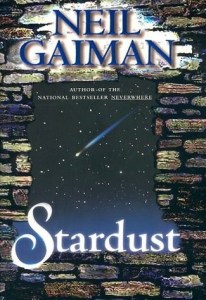
Neil Gaiman’s Stardust qualifies as a speculative fiction novel that is a “literary fantasy.” This is because it is a fairytale told with beautiful prose in an unhurried fashion. Lean prose can be leisurely, poetic, and still pack a punch.

That is what true writing is all about, conveying a story in a crafted style with a voice that is uniquely that of the author.

Fairytales always offer us morals, and in Stardust, Gaiman shows us truth. He lays bare the lies we tell ourselves through the simple fairytale motif that real love is not gained through prodigious deeds. All through the narrative, we see the difference between desiring a person and loving them. By the end, we know that love requires truth if it is to survive.

Neil Gaiman trusts his readers. That is something we all need to do. Sometimes a story needs to emerge slowly and be told with beautiful, immersive prose, and we need to trust that our readers will enjoy it if we craft it well.

There is room in the bookstore for books with a less urgent story to tell, as well as those that ambush the reader and beat them bloody with non-stop action.

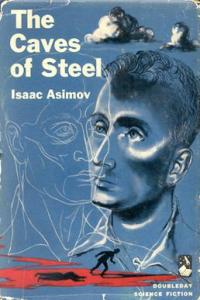
In 1953’s Caves of Steel, Isaac Asimov took us into the future, a time when humanity had divided into two factions—spacers and earthmen. The Blurb:

Like most people left behind on an over-populated Earth, New York City police detective Elijah Baley had little love for either the arrogant Spacers or their robotic companions. But when a prominent Spacer is murdered under mysterious circumstances, Baley is ordered to the Outer Worlds to help track down the killer. 

The relationship between Baley and his Spacer superiors, who distrusted all Earthmen, was strained from the start. Then he learned that they had assigned him a partner: R. Daneel Olivaw.  Worst of all was that the “R” stood for robot—and his positronic partner was made in the image and likeness of the murder victim!

In 1953, racism was endemic, institutionalized. When Asimov wrote this novel, he took on bigotry and equality in a palatable way by showing us a civilization where androids are denied equality. To murder a human is a crime, but in this society, many otherwise good people doubt that robots are sentient beings with a right to life. Yet, in R. Daneel Olivaw, we meet a sentient being and feel compassion for him.

Isaac Asimov trusted his readers too.

We write because we have a story to tell and concepts to convey. To that end, every word we put to the final product must count if every idea is to be expressed.

Asimov showed us that tight, straightforward prose works.

Gaiman shows us that sometimes you can just have a little fun with it.

The genre of speculative fiction grew out of the the repression of the 1940s and 1950s, and has always been the literary field in which ideas that challenge the norm were sown. Radical concepts could be conveyed when couched fantasy and set in fictional worlds.

Dedicated authors are driven to learn the craft of writing, and it is a quest that can take a lifetime. It is a journey that involves more than just reading “How to Write This or That Aspect of a Novel” manuals. Those are important, but they only offer up a part of the picture. The rest of the education is within each of us, an amalgamation of our life experiences.

Whenever I come across an author whose work shocks, rocks, and shakes me out of my comfort zone, I go back and reread it. The second time, I take notes. I study how they crafted their work, look at their word choices. I ask myself why it moved me.

I do the same with those whose work left me feeling robbed—where did they go wrong? What can I do to avoid this in my work?

I always learn something new from looking at how other authors combine and use words to form the moods and emotions that drive the plot. For me, writing is a journey with no finite destination other than the satisfaction of making small steps toward improvement.

Sometimes my work is good, other times not so much. But when I look back at my early work, I see improvement over time, which is all we can ever hope for.

Don’t lose heart, and don’t give up just because you think you can’t write like your favorite author. Write for yourself and write because you have something to say.

And don’t quit until you arrive at the place where you write “the end” on the last page.

5 Comments

Filed under writing

The Role of the Trickster #amwriting

My lead characters always have companions, and one of them is usually the trickster. In his famous book, The Hero With a Thousand Faces, philosopher Joseph Campbell discusses his theory of the journey of the archetypal hero found in world mythologies.

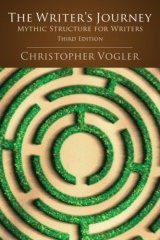
Christopher Vogler takes Campbell’s concept of the monomyth and applies it to modern storytelling.  His 2007 book, The Writer’s Journey, Mythic Structure for Writers, offers insights into character development and takes the mythical aspects of the hero’s journey and places it into pop culture, from movies to television, to books.

I am on my third copy of this book.

In my last post, I mentioned that tricksters:

  • Cross Boundaries
  • Break rules
  • Disrupt ordinary life
  • Charm us with their wit and charisma

Wikipedia tells us:

All cultures have tales of the trickster, a crafty creature who uses cunning to get food, steal precious possessions, or simply cause mischief. In some Greek myths, Hermes plays the trickster. He is the patron of thieves and the inventor of lying, a gift he passed on to Autolycus, who in turn passed it on to Odysseus. In Slavic folktales, the trickster and the culture hero are often combined. [1]

Often in mythology, the bending/breaking of rules takes the form of tricks or thievery.  When I need a thief, I automatically think of Loki—the consummate trickster of Norse mythology. Loki sometimes helps the gods and other times he is the villain. Loki is the god you love to hate.

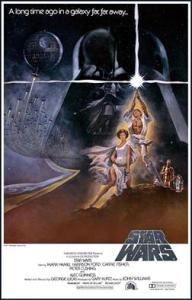
Who is a good example of the trickster in modern mythology? Let’s look at the first three Star Wars movies, and the character of Han Solo.

This is a man who is slightly older than the rest of the cast and has been around long enough to become jaded. He’s contradictory, in that he doesn’t believe in the force but relies on his luck.

Always courageous but not stupid, Han Solo takes incredible chances, and usually comes out on top. He rarely learns anything from his failures.

Han Solo’s primary role is keep everyone grounded. No one gets to be a princess around him, not even an actual princess. He points out to our hero that a blaster is more reliable than the force, and has no problem cold-bloodedly murdering a bounty hunter in a crowded bar.

What I love about the character of Han Solo is the way he livens things up. He is the ray of sunshine in what is actually a dark tale.

Vogler describes the trickster as: someone who embodies the energies of mischief and desire for change. [2]

I think the word energy is key. The rogue’s job is to inject energy into the story.

The loveable rascal is an important component of any epic tale. In the book versions of J.R.R. Tolkien’s Lord of the Rings trilogy, Pippin and Merry tend to go their own way sometimes and by doing so, they serve in the role of tricksters.

Quote from Wikipedia: The critic Tom Shippey notes that Tolkien uses the two hobbits and their low simple humour as foils for the much higher romance to which he was aspiring with the more heroic and kingly figures of Theoden, Denethor, and Aragorn: an unfamiliar and old-fashioned writing style that might otherwise have lost his readers entirely.

He notes that Pippin and Merry serve, too, as guides to introduce the reader to seeing the various non-human characters, letting the reader know that an ent looks an old tree stump or “almost like the figure of some gnarled old man”. The two apparently minor hobbits have another role, too, Shippey writes: it is to remain of good courage when even strong men start to doubt whether victory is possible, as when Pippin comforts the soldier of Gondor, Beregond, as the hordes of Mordor approach Minas Tirith. [3]

The trickster brings the essence of fallible humanity to a group of characters that can be otherwise too perfect. Their influence on the hero also offers us moments of hilarity and pathos.

The character who plays the trickster guides us through the darker aspects of a story with their wit and ironic humor. Thanks to them, the story is not quite so frightening, even when things are really bad.

The trickster sometimes emerges in my work, but I don’t always recognize them until my reading posse gets my manuscript. They will point out areas where I could use this character to better show certain aspects of the action.

I highly recommend The Writer’s Journey, Mythic Structure for Writers, by Christopher Vogler. It is one of the foundation books in my reference library, and I refer back to it often, especially in the early stages of a manuscript.

Hero, villain, mentor, or trickster—knowing what archetype a character embodies helps me identify their potential role within the story.


Credits and Attributions:

Star Wars movie poster © 1977 Lucasfilm Ltd., via Wikimedia Commons. Production company: Lucasfilm Ltd. Distributed by 20th Century Fox Release date May 25, 1977 (United States) Fair Use.

[1] Wikipedia contributors, “Trickster,” Wikipedia, The Free Encyclopedia, https://en.wikipedia.org/w/index.php?title=Trickster&oldid=811022016 (accessed December 5, 2017).

[2] Wikipedia contributors, “The Writer’s Journey: Mythic Structure for Writers,” Wikipedia, The Free Encyclopedia, https://en.wikipedia.org/w/index.php?title=The_Writer%27s_Journey:_Mythic_Structure_for_Writers&oldid=804454608  (accessed December 5, 2017).

[3] Wikipedia contributors, “Pippin Took,” Wikipedia, The Free Encyclopedia, https://en.wikipedia.org/w/index.php?title=Pippin_Took&oldid=1010711687 (accessed March 9, 2021).

7 Comments

Filed under writing

Dramatic Irony and the Trickster – Part 1 #amwriting

Creating depth in our writing is an involved process, one we get better at as time goes on. “Depth” consists of a multitude of layers we add to a scene, usually as part of the revision process.

Good writers take a one-dimensional idea and create a real, three-dimensional world. They do this magic layer by layer. Some layers are more abstract than others, but they add life to a story.

Two important layers of depth are dramatic irony and wry humor. They are fraternal twins who play well together. When done well, both add an element of the unexpected into the mix.

One of my favorite characters to write is the archetype known as “the trickster.” This wise friend can sometimes work against you, but their presence can add an essential layer of sardonic humor to the narrative.

Tricksters cross boundaries. They break rules and disrupt everyday life, but we love them for their wit and charisma. They are the wise-cracking rogue who lends a touch of fallible humanity to the cast that can be otherwise too perfect. Their interactions with the hero provide moments of both hilarity and grief.

The trickster often employs a literary device called dramatic irony. Their sarcasm adds a moment of “ah-hah!” to a scene. The ordinary becomes extraordinary.

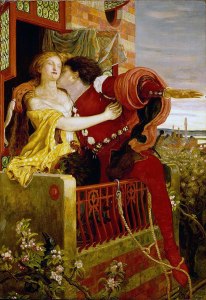
One of my favorite examples of where an author made good use of both dramatic irony and ironic wit is the play, Romeo and Juliet. The way William Shakespeare wrote the play, we see layer after layer of both irony and wit applied heavily.

First, the prologue announces that the  Capulets are at war with the Montagues and tells us that what happens to the star-crossed lovers at the end will bring about peace between the warring families.

That the audience is aware of the situation from the outset, but the characters aren’t, is one layer of irony. That “we know, but you don’t” factor might not fly today with modern audiences, but Elizabethans loved it. Their daily lives were fraught with danger, so knowing what lay around the corner was good.  

The next layer resonates with modern audiences. The second layer of irony is applied when Romeo falls in love with his nemesis—the daughter of his family’s arch-enemy.

Again, the audience sees the irony there, but (third layer) Romeo pushes onward, trying to convince Juliet that her family won’t harm him, that her love will protect him.

Alas, the ironic blindness of teenaged infatuation.

Nevertheless, at this point, despite the blatant warning that the prologue gives us at the outset, we are all hoping for a happy ending, even though we’ve had 400 years of “we know this will end badly.”

Mercutio and Benvolio discuss Romeo’s love-stricken behavior, as friends usually do. They assume he is still pining for Rosalind (fourth layer of irony). The audience says, “We know something you don’t.”

Alas poor Romeo! he is already dead;

stabbed with a white wench’s black eye;

shot through the ear with a love-song; [1]

“Shot through the ear with a love-song” is brilliant, ironic humor in any era and is one of my all-time favorite turns of phrase.

All through the play, from Tybalt’s murder to the suicides, the audience knows what is going on, but the characters don’t. That is dramatic irony taken to an extreme and contributed to the play’s success back in 1594-1595 when it first opened.

I know that tastes have changed over the 400-plus years since that play was written. We don’t want to be as blatant as William Shakespeare, but readers still like us to inject dramatic irony into our work as foreshadowing.

Imagine a movie involving a neighborhood planning committee’s meeting about what to do with a plot of land. Should they let it be developed commercially or make it a playground? In itself, the topic would make a dull movie.

Dramatic irony is introduced in the opening scene when an ordinary-looking woman enters the empty conference room ahead of the meeting, wearing gloves. She kneels and places a backpack under the table, makes an adjustment to its contents, sets the timer to 14:25 (2:25 pm), and then exits the room.

With just that one scene taking less than two minutes, the audience’s nerves are on edge. Every second that the mindless bickering over technicalities and political correctness drags on ratchets up the tension.

A committee member gets up to get a glass of water. Another member steps out to make a phone call. Someone else gets agitated, pacing back and forth as they press their opinions.

With each of the committee members’ mundane movements, one leaving the table and another returning, the clock on the wall ticks toward 2:25.

You wonder, “Will this person be the one to escape the massacre?”

Dramatic irony as foreshadowing is the backpack lurking under the table.

Modern science fiction made good use of both dramatic irony and the trickster. In the 20th century science fiction novel, Fahrenheit 451, Ray Bradbury used irony to convey information.

Bradbury introduced “firemen,” not as those brave people who put out house fires. Instead, they are charged with starting fires and burning all books.

The naming of that job title was subtle, as Bradbury never resorted to explaining the irony. Even today, it packs a punch when you first read it.

Ray Bradbury employed “situational irony” to give his readers the information they needed. This was handled in a way that impacted the reader and promised more to come.

We can also use ironic humor to convey information the reader needs. Both the trickster as an archetypal character and the inclusion of dramatic irony adds depth to a story. The reader understands what is being conveyed but hasn’t been told what to think.

Readers like to think for themselves.

The Machine that Won the War, a short story by Isaac Asimov, is one long scene filled with dramatic irony that becomes humorous as the story progresses.

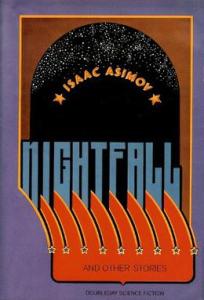
That story might be hard to find, but it first appeared in the October 1961 issue of The Magazine of Fantasy & Science Fiction. It was reprinted in the collections Nightfall and Other Stories (1969) and Robot Dreams (1986).

We will take a closer look at the role of the trickster in our next post.


Credits and Attributions:

[1] Quote from Romeo and Juliet, William Shakespeare, 1594 – 1595 PD|100.

Romeo and Juliet, by Ford Madox Brown, Public domain, via Wikimedia Commons. Wikimedia Commons contributors, “File:Romeo and juliet brown.jpg,” Wikimedia Commons, the free media repository, https://commons.wikimedia.org/w/index.php?title=File:Romeo_and_juliet_brown.jpg&oldid=531347482 (accessed March 8, 2021).

Cover of Nightfall and other Stories by Isaac Asimov, © 1969 Doubleday, cover art by Amelia S. Edwards. Fair Use. Wikipedia contributors, “Nightfall and Other Stories,” Wikipedia, The Free Encyclopedia, https://en.wikipedia.org/w/index.php?title=Nightfall_and_Other_Stories&oldid=885885790 (accessed March 8, 2021).

4 Comments

Filed under writing

Three books ruined by sins of repetition #amwriting

Last week I read three books, which is about my usual average. When I read, I like to see how other authors construct different aspects of their novels.

Two of the books I read were recent publications, both highly recommended by numerous reader-reviewers at the Big Bookstore in the Sky. The first one was a 2018 mystery published by Thomas & Mercer. This Amazon company publishes mysteries and thrillers, and the novel was written by a well-known British author.

The second book was published in 2020 by Tor Books and was a fantasy novel by a high-profile American author.

The final book I read was published by Doubleday and written in the 1980s by another well-known British author.

I’m not going to name these books or their authors because while they were good enough books, I wish to focus on the negatives I found in the diverse works I read.

Before I do that, I must say that I did enjoy the books, but in my view, they were three-star books, average and acceptable. The flaws I’m going to discuss didn’t detract from the overall story arcs. The main characters, for the most part, were engaging. I just didn’t like them enough to review them on my blog because I only review books I think are worth four or more stars.

I say the characters were engaging for the most part. Book Number One’s title proclaims it to be “an absolutely gripping whodunit full of twists.” No, that is not a tagline or review quote. The publisher has the gall to put that in the book’s title, something no indie would ever get away with.

If nothing else, it’s a shining example of what not to put in your book’s title.

Despite the glowing title, I was disappointed, but it did offer me an education on what I don’t want to do in my own work. This is actually a “2.75 star” book, in my opinion. It only gets three stars because of rounding up to the next higher number.

It began well. The protagonist was given to making snarky comments, which I thought livened things up. I would have connected with her if not for one fatal flaw. She was made less engaging by the author’s continual reference to her size and amazing sexual desirability.

The protagonist is a caterer who solves mysteries. She is continuously described as Junoesque, ample, vast, chubby, size eighteen, fat, large…and on and on. In every chapter, at least once and usually twice, we are given a visual description of her, along with indications of how she affects the males around her.

These mentions were meant to emphasize the author’s perception of her protagonist as plump but irresistible to the males. However, as the book wore on, it became jarring and unnecessary. Those distractions made it difficult to remain engaged in the book. For me, lesson one was that I had a visual picture of the caterer in the first chapter, and one or two mentions further on down the road would have been fine.

The overall arc of the mystery was good and carried the story enough to keep me reading. However, I will probably avoid buying any more books written by that author.

Book Number Two, the Fantasy book, had a 2020 publishing date. It had a good story arc, but it was clearly a novella that had been stretched to novel length. Of the three, this book had the most engaging protagonist.

Unfortunately, the way the author and publisher stretched this book’s length was to have the main character recap previous events whenever a new character entered the story. I should have expected it because an earlier book in the series had the same flaw.

Book Number Three was a police procedural, written and published in the 1980s, and was the best one of the lot. The one flaw was the continual reference to the protagonist’s pipe. Every scene involved fumbling with the tobacco, the ashes, etc. It was a distraction that jarred me out of the book.

Books One and Three bring up the question: when we are trying to convey our protagonists’ personalities, how do we go about it? Frankly, we walk the knife’s edge, balanced between too much and not enough.

Protagonist A is a larger woman, and she has sex appeal. After the first three references, we knew that.

Protagonist C is a sharp, personable detective with a dirty habit. After the first three references, we knew that.

In books One and Three, I felt that the authors did their protagonists a disservice by pointing out these character traits too often, from the external omniscient God-like view. Once I can visualize how the other characters see the protagonist, I want to see what the protagonist sees from that point on.

Reading those two books, I realized that an occasional observation of the main character from another character’s POV would have been a better way to show how the other characters saw them.

I would think this especially works if there is a blossoming love interest.

Book Number Two raised a different specter: padding the narrative with repetition to stretch the book.

What would you rather be known for writing? Would you want to be known as having written a brilliant novella or an average novel? Book Number Two could have been a brilliant novella had the padding been removed in the editing process.

These flaws, harping on character traits and fluff-dumping, are “sins of repetition.”  In all three of these books, the bulk of the story was told from the close third-person point of view which worked well.

This week, I am working on characterization in my own work. I am in the revision stage and strengthening how my protagonists are represented and shown.

In my current writing, I hope to portray my protagonists as I see them without bashing my readers with their magnificence.

We authors can see our characters so clearly. We love them and can wax poetic about specific characteristics each person has. The great difficulty is to convey those traits naturally and in such a way that the reader isn’t beaten over the head with them.

At 70,000 words, my current novel may be a little short when compared to other fantasy novels. Fantasy tends to be longer than some different genres, but I refuse to introduce padding to get the word count I want. 70,000 words is novel-length.

So, no one new will die, and no dramatic elements will be introduced just to fluff up the book-length.

If the finished product is a little short for a fantasy novel, that’s fine. If I can get my characters clearly drawn and balanced within that length, I will have achieved my goal.

12 Comments

Filed under writing

Revisions part 5: Near-Homophones or Cursed Words #amwriting

One thing that I notice when reading is the improper use of near-homophones, or words that sound closely alike, are spelled differently, and have different meanings. When we read widely, we’re more likely to notice the difference between words like accept and except when they are written.

The different meanings of seldom-used sound-alike words become blurred among people who have little time to read, and little encouragement. Wrong usages become part of everyday speech.

For this reason, new and beginning writers are often unaware they habitually misuse common words until they begin to see the differences in written words.

Let’s look at two of the most commonly confused words, accept and except. People, even those with some higher education, frequently mix these two words up in their casual conversation.

Accept (definition) to take or receive (something offered); receive with approval or favor.

  • to accept a present.
  • to accept a proposal.

Except (definition) not including, other than, leave out, exclude.

  • present company excepted.
  • with the exclusion of.

We accept that our employees work every day except Sunday.

English, being a mash-up language, has a long list of what I think of as cursed words to watch for in our writing.

Farther vs. Further: (Grammar Tips from a Thirty-Eight-Year-Old with an English Degree | The New Yorker by Reuven Perlman, posted February 25, 2021:

Farther describes literal distance; further describes abstract distance. Let’s look at some examples:

  • I’ve tried the whole “new city” thing, each time moving farther away from my hometown, but I can’t move away from . . . myself (if that makes sense?).

  • How is it possible that I’m further from accomplishing my goals now than I was five years ago? Maybe it’s time to change goals? [1]

When we use these words, we want to ensure we are using them correctly.

Ensure: make certain something happens

Insure:  arrange for compensation in the event of damage to (or loss of) property, or injury to (or the death of) someone, in exchange for regular advance payments to a company or government agency.

Assure: tell someone something positively or confidently to dispel any doubts they may have.

What follows is a looooooooong list of cursed words to double-check the meanings of.

If you need to use one of these words in your work, I suggest you look them up in the online dictionary to be sure your words say what you think they do.

For the moment, ignore the grandiose words and learn how to use all your words correctly. The majority are good words and using them correctly when they’re the only word that works is not pretentious.

However, if you pepper your narrative with obscure words, your readers might put the book down out of frustration, so go lightly. Still, it never hurts to know the meaning and uses of words.

178 Homophone and near-homophone comparisons and other often misused words:

  • abhorrent vs. aberrant
  • accept vs. except
  • ado vs. adieu
  • adopt vs. adapt
  • adverse vs. averse
  • affect vs. effect
  • afflict vs. inflict
  • aggravate vs. irritate
  • allude vs. elude
  • allusion vs. illusion vs. delusion
  • alternate vs. alternative
  • ambiguous vs. ambivalent
  • amicable vs. amiable
  • amoral vs. immoral
  • amuse vs. bemuse
  • anecdote vs. antidote
  • appraise vs. apprise
  • ascent vs. assent
  • assume vs. presume
  • assure vs. ensure vs. insure
  • aural vs. oral vs. verbal
  • aver vs. avow
  • bare vs. bear
  • bazaar vs. bizarre
  • breach vs. breech
  • bridal vs. bridle
  • broach vs. brooch
  • callus vs. callous
  • capital vs. capitol
  • censor vs. censure
  • chord vs. cord
  • cite vs. site vs. sight
  • climactic vs. climatic
  • complement vs. compliment
  • compose vs. comprise
  • concurrent vs. consecutive
  • confident vs. confidant(e)
  • connotation vs. denotation
  • connote vs. denote
  • conscious vs. conscience
  • contemptible vs. contemptuous
  • continual vs. continuous
  • correlation vs. corollary
  • council vs. counsel
  • decent vs. descent vs. dissent
  • definitely vs. definitively
  • demur vs. demure
  • desert vs. dessert
  • didactic vs. pedantic
  • disassemble vs. dissemble
  • discomfit vs. discomfort
  • discreet vs. discrete
  • disillusion vs. dissolution
  • disinterested vs. uninterested
  • disperse vs. disburse
  • dual vs. duel
  • economic vs. economical
  • elusive vs. illusive
  • emigrate vs. immigrate vs. migrate
  • eminent vs. imminent
  • eminent vs. imminent vs. immanent
  • empathy vs. sympathy
  • endemic vs. epidemic
  • entitle vs. title
  • entomology vs. etymology
  • envelop vs. envelope
  • envy vs. jealousy
  • epidemic vs. pandemic
  • epigram vs. epigraph
  • epitaph vs. epithet
  • especially vs. specially
  • exalt vs. exult
  • exercise vs. exorcise
  • expedient vs. expeditious
  • extant vs. extent
  • facetious vs. factious vs. fatuous
  • faint vs. feint
  • farther vs. further
  • faze vs. phase
  • ferment vs. foment
  • fictional vs. fictitious vs. fictive
  • figuratively vs. literally
  • flair vs. flare
  • flaunt vs. flout
  • flounder vs. founder
  • formerly vs. formally
  • formidable vs. formative
  • fortunate vs. fortuitous
  • gambit vs. gamut
  • gibe vs. jibe
  • gig vs. jig
  • gorilla vs. guerrilla
  • grisly vs. gristly vs. grizzly
  • hale vs. hail
  • healthful vs. healthy
  • hero vs. protagonist
  • historic vs. historical
  • hoard vs. horde
  • homonym vs. homophone vs. homograph
  • hone vs. home
  • imply vs. infer
  • incredible vs. incredulous
  • indeterminate vs. indeterminable
  • indict vs. indite
  • inflammable vs. inflammatory
  • ingenious vs. ingenuous
  • insidious vs. invidious
  • instant vs. instance
  • intense vs. intensive vs. intent
  • introvert vs. extrovert
  • irony vs. satire vs. sarcasm
  • it’s vs. its
  • laudable vs. laudatory
  • lay vs. lie
  • loath vs. loathe
  • lose vs. loose
  • luxuriant vs. luxurious
  • marital vs. martial
  • mean vs. median vs. average
  • medal vs. meddle vs. mettle
  • metaphor vs. simile
  • moral vs. morale
  • morbid vs. moribund
  • nauseated vs. nauseous
  • naval vs. navel
  • objective vs. subjective
  • optimistic vs. pessimistic
  • overdue vs. overdo
  • palate vs. palette vs. pallet
  • paradox vs. oxymoron
  • parameter vs. perimeter
  • parody vs. parity
  • peak vs. peek vs. pique
  • peddle vs. pedal vs. petal
  • persecute vs. prosecute
  • personal vs. personnel
  • pitiable vs. pitiful vs. piteous vs. pitiless
  • pore vs. pour
  • practical vs. practicable
  • pragmatic vs. dogmatic
  • precede vs. proceed
  • precedent vs. president
  • predominate vs. predominant
  • premier vs. premiere
  • prescribe vs. proscribe
  • pretentious vs. portentous
  • principal vs. principle
  • prophecy vs. prophesy
  • prostate vs. prostrate
  • quote vs. quotation
  • rebut vs. refute
  • regrettably vs. regretfully
  • reluctant vs. reticent
  • respectfully vs. respectively
  • sac vs. sack
  • scrimp vs. skimp
  • sensual vs. sensuous
  • simple vs. simplistic
  • slight vs. sleight
  • stationary vs. stationery
  • statue vs. statute
  • than vs. then
  • that vs. which
  • their vs. there vs. they’re
  • tortuous vs. torturous
  • troop vs. troupe
  • turbid vs. turgid
  • unconscionable vs. unconscious
  • undo vs. undue
  • unexceptional vs. unexceptionable
  • venal vs. venial
  • veracious vs. voracious
  • wave vs. waive
  • weather vs. whether
  • who vs. whom
  • who’s vs. whose
  • wreck vs. wreak vs. reek
  • your vs. you’re

Credits and Attributions:

[1] Farther vs. Further: (Grammar Tips from a Thirty-Eight-Year-Old with an English Degree | The New Yorker by Reuven Perlman, posted February 25, 2021 (accessed 28 Feb 2021).

Wikimedia Commons contributors, “File:Collegiate Dictionary.jpg,” Wikimedia Commons, the free media repository, https://commons.wikimedia.org/w/index.php?title=File:Collegiate_Dictionary.jpg&oldid=497770186 (accessed February 28, 2021).

13 Comments

Filed under writing

Revisions part 3: The Detour #amwriting

We who write fantasy and other genre fictions are story-tellers.  We write about invented people living in invented worlds, doing invented things. Unfortunately, there are times when we realize we have written ourselves into a corner, and there is no graceful way out.

This happened to me in 2019. I took one of my works in progress back from 90,000 words to 12,000.

That was the point where I began fighting the story, forcing it onto paper. I hated to admit that I had taken a wrong turn so early on, but by the 50,000-word point, the story arc had gone so far awry there was no rescuing it.

But I’m no quitter. No sir, not me.

I spent 40,000 more words refusing to admit I had “gone off the rails.”

Fortunately, much of what I had written can be recycled into a different project. NEVER DELETE months of work. Don’t trash what could be the seeds of another novel. Save it in an outtakes file and use it later:

HA_outtakes_29Dec2019

I had accomplished many important things with the 3 months of work I had cut from that novel.

  • The world was solidly built, so the first part of the rewrite went quickly.
  • The characters were firmly in my head, so their interactions made sense in the new context.
  • Some sections that had been cut were recycled back into the new version.

Writing the failed novel wasn’t a waste, just a detour. This sort of thing is why it takes me so long to write a book.

At the 12,000 word point, I needed a new outline. I spent several days visualizing the goal, the final scene, mind-wandering on paper until I had a concrete objective for my characters.

I finally realized that Alf had two quests, both of which were core plot points. I was unable to visualize a final scene because they had merged in my mind.

Beginning the novel with no definitive resolution was how I had lost my way.

So I separated them, and now I had a concrete goal to write to.

That was when I realized this book is actually two books worth of story. The first half is the personal quest. The second half resolves the unfinished thread. Both halves of the story have finite endings, so the best choice is to break it into two novels.

With that in mind, I outlined the first half, made a loose outline of the second for later reference, and began writing.

I was near the end of part one when I saw the flaw in my outline. This was 4 days into NaNoWriMo 2020, and I had just finished writing the ending to my serialized novel, Bleakbourne on Heath. I planned to finish Heaven’s Altar, and dove right into it.

I began to make good headway.  If you are a regular visitor here, you know what happened.

In trying to resolve the logic for the antagonist, I had to know the path that a tainted relic had take through the years. I needed to know where it originated and how it had survived for centuries, and why it had the power to corrupt my antagonist.

I accidentally wrote a completely different novel with a completely different cast of characters and plot. I finished November 2020 with around 90,000 words on three projects.

That accidental manuscript is in the final stages of my rewrite and is nearly ready for my beta readers.

For those of you who are keeping count—that’s 3 novels in progress in that world, and one almost complete stand-alone novel set in a different world entirely.

And it’s all because of one core plot-point and the logic of how it comes into my original, still unfinished, novel.

There are times when we must accept that we are forcing something and it’s not working. That’s when the best course is to look at it dispassionately and pare it down to the bare bones.

The sections you cut can be better used elsewhere.

I believe in the joy of writing, the elation of creating something powerful. If you lose your fire for a story because another story has captured your imagination, set the first one aside and go for it.

We who are indies have the freedom to write what we have a passion for.

True inspiration is not an everlasting fire-hose of ideas. Sometimes there are dry spells, and that is when you come back to the original work. You will see it with fresh eyes, and the passion will be reignited.

Yes, that is also when the work begins, but I think of Patrick Rothfuss and his struggle to write the books in his series, the Kingkiller Chronicle. The first two books, The Name of the Wind (2007) and The Wise Man’s Fear (2011) have sold over 10 million copies.

Rothfuss’ work is original and powerful, but though his work is highly regarded, he struggles to put it on paper just as the rest of us do. Despite a decade having passed, the third novel titled The Doors of Stone has not yet been released, and some fans are highly critical of him for that.

The two published books are work I consider genius, and I am willing to wait for him to be satisfied with his work.

Patrick Rothfuss’ battle to write the book he envisions gives me permission to keep at it, to not just push out a novel that is almost what I wanted to write.

When a book that gave you so much trouble turns out to be one of your best efforts, it’s worth it.

7 Comments

Filed under writing

Revisions part 2: Efficient self-editing #amwriting

In the new millennium, the traditional publishing world has changed and evolved in how they do business. In some ways, they haven’t changed enough, and in others, they’ve gone too far.

All authors must create a social media platform to promote their work. In most cases, the amount of help the Big Four publishers (Simon & Shuster, HarperCollins, Penguin Random House, and Hachette) offer their new, unknown authors is minimal. So, whether you go indie or not, you’re on your own.

Whether you intend to publish your work independently or try to go the traditional route, you are responsible for editing your work.  Unedited work shouts “amateur” to an agent or editor, so never submit work that isn’t your best effort.

If you can’t afford a full professional edit, there is a way to make a pretty good stab at revising your own manuscript. However, it is time-consuming, which is why an editor’s services are not cheap.

Open your Manuscript. Save a copy of your original manuscript in its bloody, raw form with a file name that denotes exactly what it is.

If you are using MS Word, your manuscript title will look like this: Book_Title_version_1.docx. My current work is: Gates_of_Eternity_version.docx.

Do save the original draft in a separate file on a thumb drive or in a file storage service such as Dropbox, Google Drive, or OneDrive. You will have a fallback manuscript in case something happens to your working files.

Break it into separate chapters and save them in a new master file labeled with the word ‘revisions.’ I would name the master file: Gates_of_Eternity_revisions_02-17-2021.

First, I divide my manuscript, saving each chapter as a separate document within the master file. Clearly and consistently name each chapter. Make sure the chapter numbers are in the proper sequence, and don’t skip a number.

For a work in progress, Gates of Eternity, I labeled my individual chapter files this way:

  • GoE_ch_1
  • GoE_ch_2

The reason we divide it into chapters for the editing process will be made clear further down this post.

The next step requires pencils, yellow highlighters, a printer, paper, and a good supply of ink, which may be a cost outlay. Another, more affordable option is to save your work to a USB Flash Drive, take it to an office supply/print shop, and print all the files at one go. In the US, FedEx Office, formerly known as Kinkos, provides printing and copying services.

I am currently in need of a new printer, so I feel your pain. My ancient thing is still limping along, but soon it will go to the recycling center. Once you have the required equipment, print out the first chapter.

Everything looks different printed out, and you will see many things you don’t notice on the computer screen.

Step 1: Turn to the last page of that chapter. Cover the page, leaving only the final paragraph visible.

Step 2: Starting with the last paragraph on the last page, begin reading, working your way forward.

Step 3: Look for typos and garbled sentences.

Step 4: With a yellow highlighter, mark each place that needs correction. In the margin, pencil in notes of how you want to correct them.

Some things you should consider in this step: consistency in spelling, consistency in punctuation, crutch words, repetitious paragraphs/ideas, and long, rambling sentences.

Step 5: I use a recipe stand for this step. Take the corrected printout and lean it where you can easily read it while you make corrections. (Amazon sells copy stands, but recipe stands are cheaper.)

In your word-processor, open the chapter file. Save as a new file:  GoE_ch1_edit1. It’s important to clearly label it as edited, so you don’t mix edited with unedited files. Reading from your corrected printout, make your revisions.

Step 6: At the end of it all, reassemble the corrected files into one manuscript, again making sure you haven’t skipped a chapter. Save that manuscript with a new label: GoE_manuscript_edit1_16-Feb-2021.

The date at the end of the file name is essential as you will know what the most recent edit is (not the most recent time you saved the file) and will have the previous version to go back to if needed.

For this method to work, YOU MUST UNDERSTAND AND OBEY THE BASIC RULES OF GRAMMAR.

First, you need something called a style guide. As an editor, I regularly refer to my copy of The Chicago Manual of Style. If you are an author writing fiction you someday hope to publish and have questions about sentence construction and word usage, this is the book for you. Another option is the online version: The Chicago Manual of Style Online.

The researchers at CMOS realize that English is a living, changing language. When generally accepted practices within the publishing industry evolve, they evolve too.

A less expensive option you might consider investing in is Bryan A. Garner’s Chicago Guide to Grammar, Usage, and Punctuation. This is a resource with all the answers to questions you might have regarding grammar and sentence structure. It takes the CMOS and boils it down to just the grammar.

Here is a list of links to articles I’ve previously posted on the basics of grammar:

Those who think the common rules of grammar don’t matter to readers are doing their work and their reputation a disservice.

You don’t have to be perfect, but readers want to enjoy the book, not struggle through rambling, garbled sentences.

Self-editing is not an easy task. You will still want another person, perhaps from your writing group, to read your work before you send it off or publish it. Then you may need to make some revisions.

However, all that hard work pays off when you put your best product possible in the hands of a reader, and they like what they read.

10 Comments

Filed under writing