
Our modern lives are ruled by the geography of our area. Rivers, mountains, lakes, and ponds impede travel, forcing a road to go around them.
 Unfortunately, maps have fallen out of favor thanks to satellite technology and the GPS in our cell phones. Many people don’t know how to read a map.
However, maps (and the ability to understand them) are a useful tool for authors of fantasy and speculative fiction, or indeed, any fiction set in any place and time.
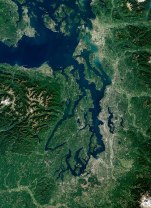
Satellite View of Puget Sound by Sentinel 2
Where I live, Puget Sound‘s shoreline determines the interstate highway’s path and the locations of cities and towns. Those detours add to the distance we must travel and increase the time it takes to go from one place to another.
The stylesheet is one of the most valuable tools an author can have to aid them in worldbuilding. It costs nothing to create but is a warehouse of information about your work-in-progress.
I suggest you include a glossary of created words, names, a list of sites where you got your research, and myriad notes related to that novel. Those are bits of knowledge you will be glad you made a note of, as they will contribute to the believability of your narrative.
If you are writing a contemporary novel or historical work set in our real world, this is where you keep maps and maybe a link to Google Earth.
If you are interested, a post on creating a stylesheet is here: Designing the Story.
 If you are designing a fantasy world, you only need a pencil-drawn map. Place north at the top, east to the right, south to the bottom, and west to the left. Those are called cardinal points and the position of north at the top and the directions east, south, and west following at 90-degree intervals in the clockwise direction is standard in modern maps.
Even if your story is set in a town, you need to map it out. Knowing which direction your people are going at the outset is critical if your characters are going from one spot to another. The lines and scribbles you add to your map are the information you can use to check for consistency in your narrative.
If, in chapter one, Hero leaves home and follows the river north to the Big City of Smallville, he won’t reach home in time to save his mother if he then races east in chapter ten. He must return south, and your notes on your little map will help you remember this.
Or perhaps Hero lives in a city and wants coffee at the shop two blocks north of his apartment. He will have to return past the same shops and buildings he passed on the way. If some of the action occurs in those buildings, you want to have your map out and update it as needed.
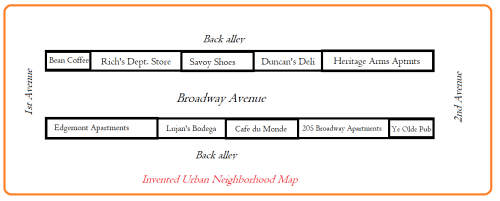 Use a pencil, so you can easily note whatever changes during revisions. Your map doesn’t have to be fancy. Lay it out like a standard map with north at the top, east on the right, south at the bottom, and west on the left.
You may need to note where rivers and forests are situated relative to towns, or in the case of towns, what streets and cross streets our Heroes must travel.
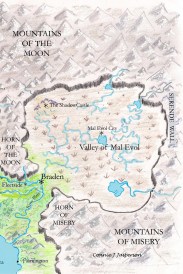 Many towns are situated on rivers. Water rarely flows uphill. While it may do so if pushed by the force of wave action or siphoning, water is a slave to gravity and chooses to flow downhill. When making your map, locate rivers between mountains and hills.
A river may emerge from a mountain spring or a glacier, but it will flow downhill to a valley where it will either continue on to the ocean or will pool and form lakes and ponds. Farms are usually situated near sources of water.
On your fantasy map, rivers, mountains, lakes, and ponds make travel difficult, forcing a road or trail to go around them. This creates opportunities for plot points, because the struggle is the story.
Those detours add to the distance and increase the time it takes to travel using the common mode of transportation.
Having a realistic grip on time is critical to keeping the narrative believable. I keep a calendar of events for each novel, which has saved me several times.
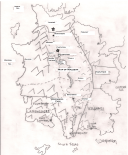 Maybe you aren’t artistic but will want a nice map later. In that case, a little scribbled map will enable a map artist to provide you with a beautiful and accurate product. An artist can give you a map containing the information readers need to enjoy your book.
Are changing seasons a part of your story?
In a first draft, it’s challenging to fit the visual world into a narrative without dumping it on the page because you are in the process of inventing it. Don’t worry about fine details when you are laying down the story. Go ahead and write “It was autumn” when you have an action scene that must be shown.
A blunt statement like that is a code embedded there for you to expand on in the second draft. It is there so that you can just get the story out of your head and move on.
However, in the revision process, I take those three words, it was autumn, and change them up, using them to lead into the action.
Ivan drew his cloak around himself, listening to the soft rattling of branches moving with the breeze. The occasional calls of night birds went on around him, as if he weren’t full of doubt and indistinct fears, as if he didn’t exist to them. Leaves fell, brown and harvest-dry, drifting, spiraling down to the forest floor.
 In my part of the world, the native forest trees I see in the world around me are mostly Douglas firs, western red cedars, hemlocks, big-leaf maples, alders, cottonwood, and ash. Because I am familiar with them, these are the trees I visualize when I set a story in a forest.
When it comes to geography, the “three S’s” of worldbuilding are critical: sights, sounds, and smells. Those sensory elements create what we know of the world. What does your character see, hear, and smell? Taste rarely comes into it, except when showing an odor.
Silently, she ran back to the entrance, slipping from boulder to boulder until she disappeared into the shrubbery. Once hidden in the thick undergrowth, she breathed deeply. The metallic aftertaste of terror and bitter air lingered in her imagination, overriding the musty scents of earth and leaves.
What makes up your written world? How does your environment affect the way your characters live?
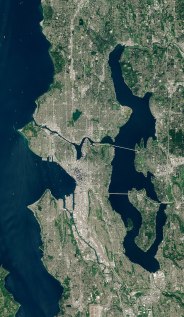
Seattle, by Sentinel 2 Satellite
Cities have complex geography. It is created by the terrain the city was built on and its architecture.
The odors behind the Flamingo Bar and Grill offered a pungent counterpoint to the aromas of burgers and barbecue emanating from inside. Above the back door, the weak bulb flickered but remained on, illuminating the litter.
Seattle is built between the salty waters of Puget Sound, and the fresh waters of Lake Washington, the largest natural lake in western Washington. This geography affects our modern society by limiting where highways can be built, as well as determining the good places to raise tall buildings or create suburban neighborhoods.
Humans have always created communities where resources are plentiful. Rivers, forests, lakes–these geographical places provide resources that allow towns to become cities.
Your narrative will mention all the different terrains and obstacles your characters must deal with. A little map scribbled on notepaper will help you keep things on track.
Credits and Attributions:
Image: Satellite View of Puget Sound, Wikimedia Commons contributors, “File:Puget Sound by Sentinel-2, 2018-09-28 (small version).jpg,” Wikimedia Commons, the free media repository, https://commons.wikimedia.org/w/index.php?title=File:Puget_Sound_by_Sentinel-2,_2018-09-28_(small_version).jpg&oldid=670161517 (accessed July 4, 2022).
Image: Satellite View of Seattle, Wikimedia Commons contributors, “File:Puget Sound by Sentinel-2, 2018-09-28 (small version).jpg,” Wikimedia Commons, the free media repository, https://commons.wikimedia.org/w/index.php?title=File:Puget_Sound_by_Sentinel-2,_2018-09-28_(small_version).jpg&oldid=670161517 (accessed July 4, 2022).
 Every fantasy world has a setting, and that environment has a climate. Certain climates limit the variety of foods available.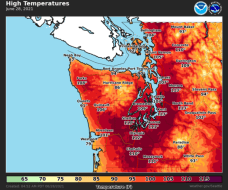
 We know from bitter experience that weather affects the food we produce and influences what is available in grocery stores. Abnormal heat waves across temperate states, category 4 hurricanes along the Atlantic seaboard and the Gulf of Mexico, and category 4 tornadoes down the center of the US and Canada, and even deep freezes in Texas and the deep south have been our lot in the last five years.
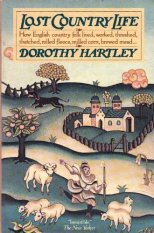 Once you have decided your historical era, terrain, and overall climate, research similar areas of the real world to see how weather affects their approach to agriculture and animal husbandry. Look into the past to discover ancient agricultural methods to see how low-tech cultures fed their large populations:
 Also, if your story is set in a particular era, how plentiful was food at that time? Famines occurring all across Europe and Asia over the last two-thousand years are well documented. Egyptian, Incan, and Mayan history is also fairly well documented so do the research.
 We have witnessed monumental changes since the turn of the millennium. We know California teeters on the edge of disaster, that a water shortage threatens the lives of millions, as well as one of the largest agriculture industries in the US.
 Tad Williams’s
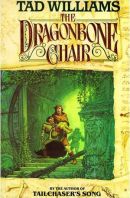 When the story opens with the first novel,
 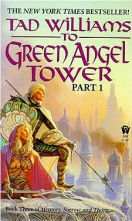 By the end of the third book,
 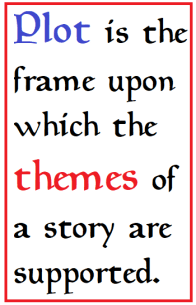 Fate vs. free will
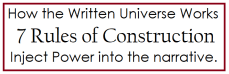 We who write because we love words spend a great deal of time framing what our words say. We choose some words above others because they say what we mean more precisely, or they color our prose with the right emotion.
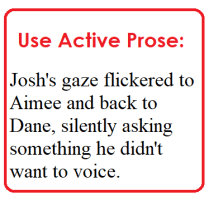 Two: Placement of verbs in the sentence can strengthen or weaken it.
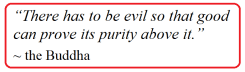 Four: Contrast—In literature, we use contrast to describe the difference(s) between two or more things in one sentence. The blue sun burned like fire, but the ever-present wind chilled me.
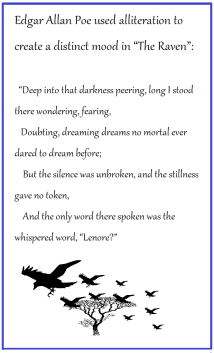 Seven: Alliteration is the occurrence of the same letter (or sound) at the beginning of successive words, such as the familiar tongue-twister: Peter Piper picked a peck of pickled peppers. Alliteration lends a poetic feeling to passages and enhances the atmosphere of a given scene without creating wordiness.
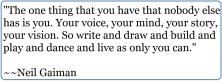 Active phrasing generates emotion. Sometimes, using similes, repetition, and alliteration in subtle applications enhances the worldbuilding without beating your reader over the head.
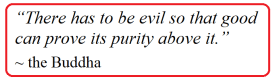 Readers connect with these stories across generations and across the centuries because the fundamental concerns of human life aren’t unique to one society, one technological era, or one point in time.
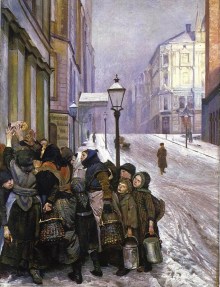 Acquiring food becomes their first priority. Having a surplus of food becomes a reason to celebrate. To go without adequate food for any length of time changes a person and makes one determined to never go hungry again.
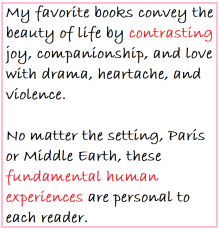 Love and loss, safety and danger, loyalty and betrayal—the eternal themes of tragedy and resolution. Hardship contrasted against ease provides the story with texture, turning a wall of “bland” into something worth reading.
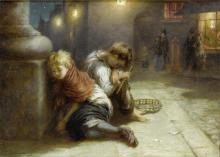 We writers must make our words count. We have to show the comfort zone in the moments leading up to the disaster, not too much, but just enough to show what will soon be lost.
 Scenes of conflict are crucial to the advancement of the story. They should be inserted into the novel as if one were staging a pivotal scene in a film.
 If you have no experience with combat or fighting, you don’t understand the limits of a normal athlete’s physical abilities. So, you must do the research. Think of how the human body works in reality. If your character knees a foe in the jaw, how is it possible?
 If you don’t show how such a strange hit could happen, the reader will say, “That’s impossible.” It’s a risky choice though, because going into that kind of detail bores the heck out of our readers. Our readers mind will fill in the details and if it’s confusing, they may stop reading.
 Don’t do this for every incident. After they are armed and armored as much as they are going to be the first time, just have them meet the enemy, skirmish, and continue on. The reader already knows what armor and weapons they had.
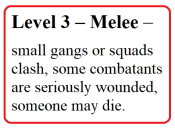
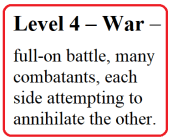 In real life, conflict happens on a sliding scale. It begins with a disagreement and escalates to an all-out war. While my outline will have a note alerting me to the level of conflict that must happen, I choreograph my fights to reflect that sliding level of intensity.
 Person-to-person combat doesn’t stretch for hours because no matter how well trained a fighter is, no one has that kind of strength.
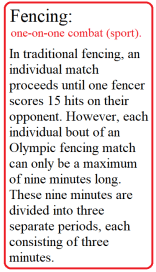 A typical
  I try to show this discreetly by sitting back and visualizing the scene after the choreography is laid on paper. I replay it in my mind as if I were a witness to the events and look for each combatant’s facial expressions and reactions.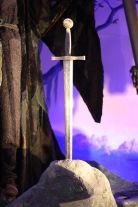
 The first incident has a domino effect. More events occur, pushing the protagonist out of his comfortable life and into danger. Fear of death, fear of loss, fear of financial disaster, fear of losing a loved one—terror is subjective and deeply personal.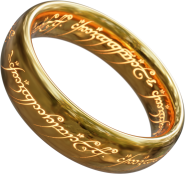
 However, the reader has an edge—they will be offered clues from the antagonists’ side, which the characters don’t know. The antagonist’s actions will affect the plot in the future. Even if the antagonist isn’t an overt enemy at the outset, the readers’ knowledge creates a sense of unease, a subliminal worry that things will go wrong.
 But not every author has that option.
 In most standard book contracts, royalty terms for authors are terrible, and this is especially true for eBook sales. Most eBooks are sold through online retailers like Amazon. If you’re a traditionally published author and your publisher priced your eBook at $9.99, this is how the Amazon numbers break out. No matter what you think of Amazon, it is still the Big Fish in the Publishing and Bookselling Pond:
 However, to be considered for a traditional contract, you should hire an editor, beta reader, and proofreader to ensure the manuscript you submit to an agent or editor demonstrates your ability to turn out a good, professional product.
 Regardless of your publishing path, you must budget for certain things. You can’t expect your royalties to pay for them early in your career – and many award-winning authors must still work at their day jobs to pay their bills.
 Conferences are an extension of the self-education process. I have discovered so much about the craft of writing, the genres I write in, and the publishing industry as a whole—things I could only learn from other authors. I gained an extended professional network by joining
 Sometimes I am invited to participate in panels or offer a workshop, and I can share my experiences with others. Either way, I learn things. In September, I will be on a panel with
  The plan or design is submitted to the client, who likes it. A mockup of the first iteration is submitted to the client, who still likes it, but … their needs have changed a little, and a new adjustment must be incorporated.
 Books are one area where project creep is not only appreciated but encouraged. Stories are particularly prone to this continual expansion of the original ideas. Short stories grow into novellas and then into novels, becoming a series of books.
 The first aspect of this is to Identify your Project Goals – create a rudimentary outline with names, who they are in relation to the protagonist, and decide who is telling the story. Remember, your story is your invention. Some inventions are in development for years before they get to market. Others are complete and ready to market in a relatively short time. Regardless of your production timeline, this is where project management skills really come into play.
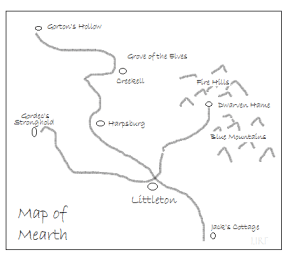 Your map doesn’t have to be fancy – all you need are some lines and scribbles telling you all the essential things, like which direction is north and what certain towns are named. Use a pencil, to easily update your map if something changes during revisions.
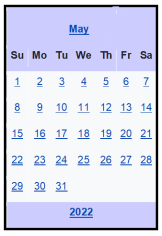 Time can get a little mushy when we are winging it through a manuscript. A calendar gives us a realistic view of how long it takes to travel from point A to point B, or how much time it will take to complete a task.


 Life in the Realm of Fantasy
.jpg&oldid=670161517)