
Today we’re continuing our NaNo Prep by imagining a world. These exercises will only take a few minutes unless you want to spend more time on them. They’re just a warmup, getting you thinking about your writing project. In our previous post, we asked ourselves who we think our characters might be. Now we ask, “Where do my characters live? How do they see their world?”
 Every world in which every story is set is imaginary. This is true whether it is a memoir, a cookbook, a math book, a sci-fi novel, a contemporary novel set in London, or an encyclopedia.
All written worlds exist only in our minds, even those non-fiction books detailing recent events.
The world you paint with words will be inhabited by the characters you create. I write fantasy, and I have three created worlds, peopled with characters I cherish and places where I feel at home.
But my created worlds didn’t begin that way. They emerged as the first draft of the first novel evolved. Each world started as an idea and grew in detail as the narrative unfolded in my imagination.
But what if you aren’t writing fantasy? Creating a fantasy or sci-fi world is exactly the same as detailing a historical time or a current event.
The difference is in documentation. While you can use Google Earth to visit a distant city, read documentation concerning a historical event, or view maps drawn by contemporaries, you must create the history and landscape of your fantasy world. With fiction, your preparatory world-building is the documentation.
 When writing our narrative, we want to avoid contradicting ourselves about our protagonist’s world. Keeping it all in your head is not a good idea, especially if you’re like me—too much data means I regularly have the eternal loading screen when trying to recall something. (I’ll never forget what’s-his-name.)
I recommend you create a file containing all your ideas regarding your fictional world, including the personnel files you are making. I learned to do that the hard way, so take my advice: write down your ideas, and update them with later changes.
I list all my background information in a separate Excel workbook for each book or series. You don’t have to go that far; you can use any kind of document, handwritten or digital. Many people make notes on their phones. You just need to document your ideas. If you want to get fancy, see my post, Ensuring Consistency: the Stylesheet.
Find images on the internet that are either historical or represent your ideas. Paintings and great photography inspire me and fire my imagination. Go to the internet and find maps.
If you are writing a fantasy or sci-fi novel, sketch a map. It doesn’t have to be pretty, but I recommend you use a pencil in case you need to rearrange it.
 Just like we do when creating our characters, we want to begin with a paragraph that might be the encyclopedia explanation of where the action takes place. I write fantasy, so here is the one paragraph I might start with:
The Citadel of Kyrano, a port city along the River Fleet. Its population is around five thousand, and its primary industry is wool production. Every industry in Kyrano supports the cloth trade in one way or another. The merchants’ council rules the citadel and a small armed militia keeps the peace and patrols the walls, repelling the occasional band of highwaymen.
I will ask myself several questions about Kyrano.
- What objects do the characters see in their immediate environment?
- When they step outside, what ambient sounds do they hear?
- What odors and scents do they encounter indoors and out?
- What objects do the characters interact with?
- What weapons does this society use for protection? (swords, guns, phasers, etc.)
- How important is religion?
- What are the layers of society, and where do my characters fit?
- Is the use of magic a part of my story? If so, who can use it, and what is the science of that magic? What are its limits?
- Are science and technology a part of my story? If so, who can use it, and what are its limits?
Keep your world-building document handy, or a notepad and pen. As you go about your life, observe the world around you and make notes of smells and sounds you can incorporate into your work. I spend a lot of time walking in my neighborhood, but my own backyard is a haven for birds and insects. If you plan to set your work in a fantasy or sci-fi world, what can you incorporate into it that is familiar, something the reader can identify with?
Write a paragraph or two about what you think your characters might see and hear in their environment. What do they smell? It’s been exceptionally warm and dry so far this autumn here in the Northwest. When I go outside, I smell smoke from distant wildfires. I see browning vegetation, falling leaves, and a militant spider colony attempting to annex my back porch.
An author takes an idea, translates it into words, and dares the reader to believe it. Successful fantasy and sci-fi authors take the world they see and reshape it just a little, just enough so it seems alien yet familiar.
Every novel requires world-building.
Make notes about possible places where events will occur, writing them down as they come to you. Remember, the setting for a contemporary novel requires the same thinking and the same imagining of place as a fantasy novel does.
 If I were to write a thriller set in the current Seattle of 2023, I’d want the reader to see the landscape as if they lived there. I would use the eternal gray of certain times of the year to underscore my dark themes.
- I would have some action take place at Pike Place Market.
- Some action would happen on a ferry, or possibly at Fisherman’s Terminal.
- Perhaps some scenes would occur on one of the floating bridges, or even a houseboat.
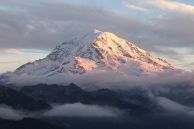
- My characters would see the sunset tinting Mount Rainier a hazy shade of pink and occasionally glimpse the Olympic Mountains rising over Puget Sound.
- Lush greenery would be the backdrop, the set dressing.
In fact, world-building is nothing more than taking what we know and reshaping it into what might be and then dropping casual hints about it into the narrative. It is only the backdrop against which our characters live out their lives. But without that backdrop, the story unfolds on a barren stage.
 The internet has information about every kind of environment that exists on Earth. All we have to do is use it.
Google Earth is a good tool for contemporary world-building if you can’t travel to the place in person.
The websites of NASA and other international space agencies are bottomless wells of information about the environment of space and what we know about other worlds.
Over the next few months, it’s up to you who write fantasy and science fiction to take what we know and make that intuitive leap to what might be.
Those of you who write romance, or thrillers, or action adventures, cozy mysteries or any other kind of novel—you must also take what we know of this world and turn it into what might be.
Posts in this series:
#NaNoWriMo prep part 1: Deciding on the Project #amwriting
#NaNoWriMo prep part 2: Character Creation #amwriting
Credits and Attributions:
Pike Place Market, by Daniel Schwen, CC BY-SA 4.0 https://creativecommons.org/licenses/by-sa/4.0, via Wikimedia Commons. (Accessed October 10, 2022)
Mount Rainier Sunset and Clouds, US National Park Service, Public domain, via Wikimedia Commons (accessed October 10, 2022).
Downtown skyline in Seattle viewed from the w:Space Needle, by M.O. Stevens. Wikimedia Commons contributors, Wikimedia Commons, the free media repository, File:Downtown Seattle skyline from Space Needle May 2011.JPG – Wikimedia Commons (accessed October 10, 2022)
 These exercises will only take a few minutes unless you want to spend more time on them. They’re just a warmup, getting you thinking about your writing project. Each post will tackle a different aspect of preparation and won’t take more than ten or fifteen minutes to complete. By the end of this series, my goal is for you to have a framework that will get your project started.
 I recommend you create a file that contains all the ideas you have in regard to your fictional world, including the personnel files you are creating. I list all my information in an Excel workbook for each book or series, but you can use any kind of document, even handwritten. You just need to write your ideas down. See my post,
  So, who is the protagonist of my intended story? Truthfully, in some aspect or another, they will be the person I wish I were. That is how it always is for me—living a fantasy in the safe environment of the novel. Bilbo was J.R.R. Tolkien’s younger self, an inexperienced man discovering the broader world through his wartime experiences. Luke Skywalker was the hero George Lucas always wanted to be.
 If we know their void, we should write it down now, along with any quirky traits they may have. Next, we decide on verbs that will be the driving force of their personality at the story’s opening. Add some adjectives to describe how they interact with the world and assign nouns to show their characteristics.
 Making lists of names is essential. You want their spellings to remain consistent and being able to return to what you initially planned is a big help later on. When we commence writing the actual narrative, each character will have an arc of growth, and sometimes names will change as the story progresses. Do remember to make notes of those changes.
 Short story collection
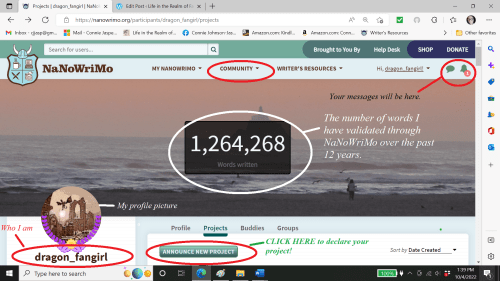
 Next, check out the community tabs. The tabs will be across the top if you are in full screen. If you have the screen minimized, the button for the dropdown menu will be in the upper right corner and will look like the blue/green and black square to the left of this paragraph.
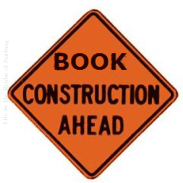 By the time November arrives, I hope that those who want to “do NaNoWriMo” will have the tools they need and the confidence to get it done.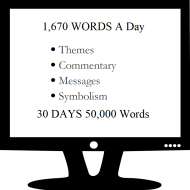
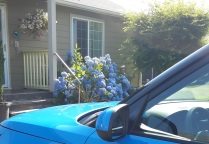 So, for the two final weeks of November and the first two weeks of December, we will be firing up the Starship Hydrangea (our hydrangea-blue Kia Soul) and driving 30 miles a day to and from the clinic. This will happen four out of five days a week, barring snow.
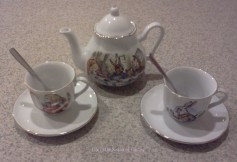 I have no problem getting the first draft done with the aid of a pot of hot, black tea and a simple outline to keep me on track. All that’s required is for me to sit down for an hour or two each morning and write a minimum of 1667 words per day.
 The real work begins after November. After writing most of a first draft, many people will realize they enjoy writing. Like me, they’ll be inspired to learn more about the craft. They discover that writing isn’t about getting a particular number of words written by a specific date, although that goal was a catalyst, the thing that got them moving.
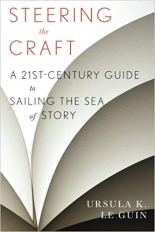 A good way to educate yourself is to attend seminars. By meeting and talking with other authors in various stages of their careers and learning from the pros, we develop the skills needed to write stories a reader will enjoy.
 I aspire to write like my heroes, authors who create characters who come alive. While I’m in that world, I see the people and their stories as sharply as the author intends.
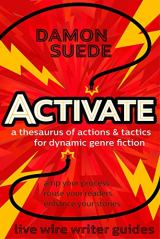 Polarity gives the important elements strength. It provides texture but often goes unnoticed while it influences a reader’s perception.
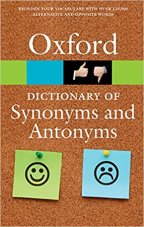 I use the
  Let’s have a look at how the Big 5 Publishers of literature did last year. You will note that the top players have changed since my last Big 5 article. Some of the big fish have been absorbed by the even bigger fish since we last looked at them.
 For indies, our most reliable royalties have always come from digital sales, although we do sell some print books. But the best route to gaining loyal readers has been book fairs, conventions, and signings at bookstores.
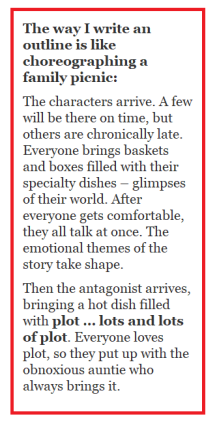 I am a planner, but I’m also a pantser. I’m just writing to a loose outline. All I need is a little free time in advance of November to let my mind wander.
 Next, I ask the creative universe who the protagonist is. I create a brief personnel file, less than 100 words. It’s a paragraph with all the essential background information. Sometimes it takes a while to know what a character’s void is (a deep emotional wound), but it will emerge. I note the verbs, adjectives, and nouns the character embodies, as those give me all the necessary information.
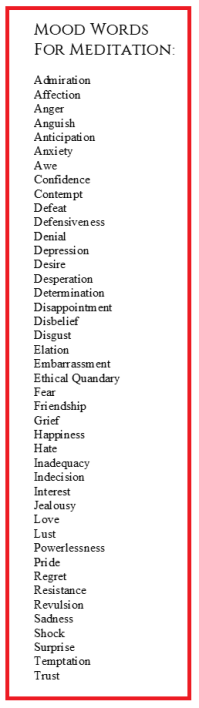 Meditating on mood words often precipitates a flash of brilliance that has nothing to do with anything. What if …
 I just finished reading a sci-fi book set ten years from now, in 2032. It was a free Kindle book, but I felt overcharged.
 Never once did the super-heroic and uber-capable protagonist fear for her life no matter what ridiculously dangerous situation popped up.
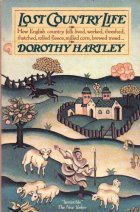 Take a look around in your local secondhand bookstore. A brilliant source of information on low-tech agricultural life and culture came in the form of a book I found at a second-hand bookstore in Olympia in the mid-to-late-1980s. It was called
 ![Fairy of Eagle Nebula By NASA [Public domain], via Wikimedia Commons](https://conniejjasperson.com/wp-content/uploads/2017/10/fairy-of-eagle-nebula-by-nasa-public-domain-via-wikimedia-commons.png?w=500)
 The second master class was on the how of creativity. Those of you who follow my blog know how the subject of creativity fascinates me. If you haven’t read any of Jeff Wheeler’s work, here is the link to my 2013 review of his first book, the
  First, Lindsay pointed out that thinking is an action scene, as are conversations. He asked what a character does while thinking. He pointed out that Humphrey Bogart had a way of tugging on his ear when thinking, a habit that carried over into his movies. A side character with a certain amount of screen time but isn’t the POV character can be shown as real when they have a small personal habit that appears from time to time.
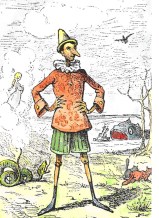 When a character’s facial expressions take over the scene, they become cartoonish, two-dimensional displays of emotion with no substance. A landslide of microscopic showing can make your characters seem melodramatic. All that physical drama doesn’t show a character’s emotions. What is going on inside their heads?
 And this brings me to the core of this post. During NaNoWriMo, when I write new words as quickly as possible, I lean too heavily on the external, relying on a lot of smiling and shrugging. Conversations are action scenes, but too much “face time” is too much.
 In some circles, 40,000 words is a novel, but in fantasy, it is less than half a book.
 A detailed history of everyone’s background isn’t required. As a reader, all we need is a brief mention of historical information in conversation and delivered only when the protagonist needs to know it.


 Life in the Realm of Fantasy