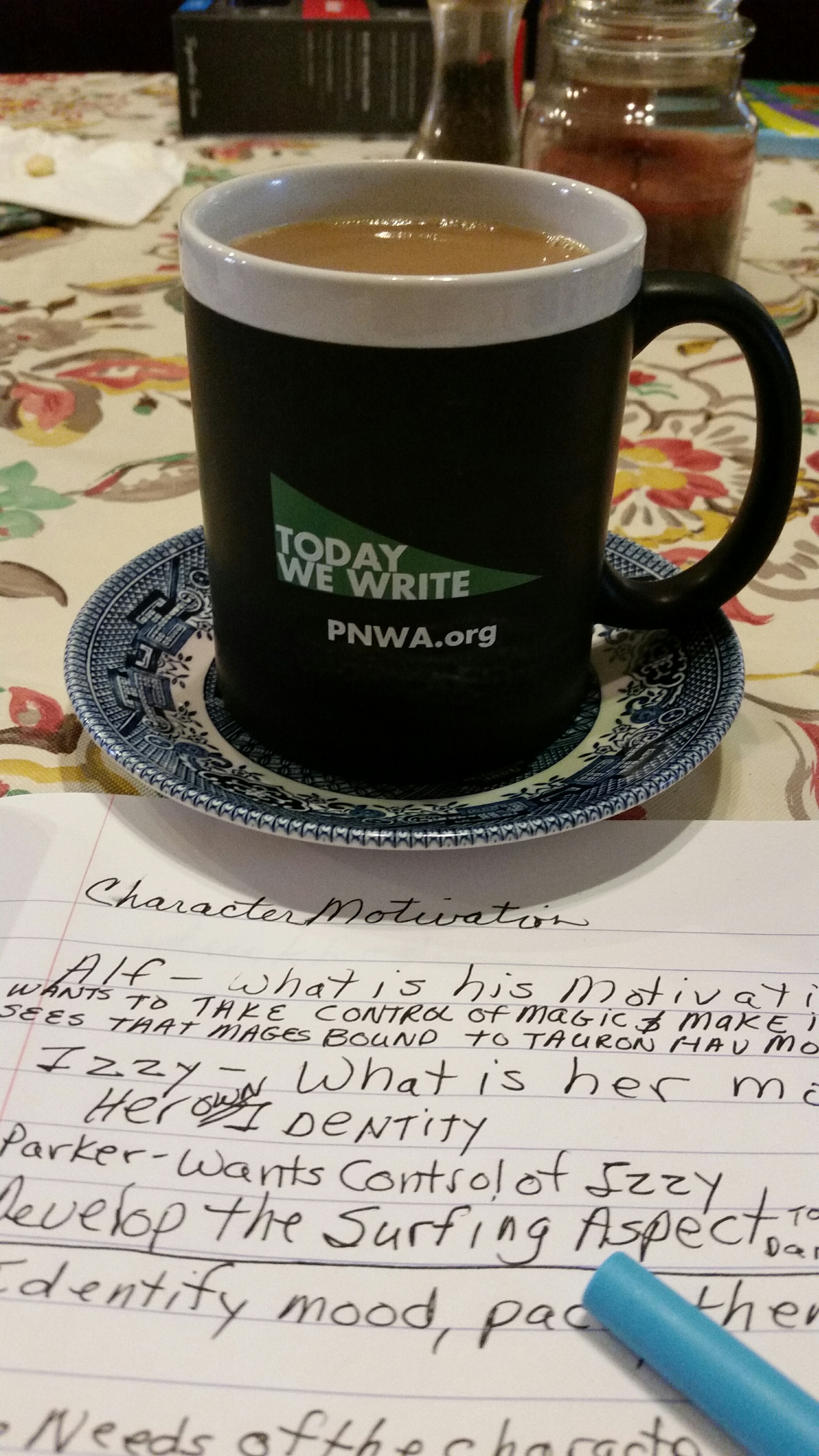
November is over, and I did achieve my goal of writing a chapter a day for all 30 days. However, the story is not finished, and a great deal of work still remains to be done. In between working on other projects, I will spend several months doing three things:
- Delving deeper into character arcs.
- Firming up the plot
- Identifying and cutting the chapters that don’t advance the main character’s story and turn them into short stories.
I always start with the characters.
As stories unfold on paper, new characters enter. They bring their dramas and the story goes in a different direction than was planned. When I meet these imaginary people, I assign their personalities a verb and a noun.
As an example of how I work, let’s look at four characters from my novel, Julian Lackland, which was published in 2020. Each side character impacts Julian’s life for good or ill.
This novel had a rough beginning, and an even harder path to final product. I nearly shelved it forever, but I had the good fortune to attend a seminar given by romance author, Damon Suede. THAT high-energy seminar changed how I approached the story.
I took the story back to its foundations and in the final rewrite, I made a point of looking for the two words that best describe how each point-of-view character sees themselves. It changed everything, allowing the story to be shown the way I saw it in my mind.
Julian’s noun is chivalry (Gallantry, Bravery, Daring, Courtliness, Valor, Love). He sees himself as a good knight and puts all his effort into being that person. He is in love with both Mags and Beau.
Beau’s noun is bravery (Courage, Loyalty, Daring, Gallantry, Passion). Golden Beau is also a good knight, but his view of himself is more pragmatic. He is Julian’s protector and is in love with both Mags and Julian.
Lady Mags’s noun is audacity (Daring, Courage). Mags defied her noble father and ran away from an arranged marriage to a duke in order to swing her sword as a mercenary. She will win at any cost and is not above lying or cheating to do so. She is in love with both Beau and Julian.
Bold Lora’s noun is bravado (Boldness, Brashness). Lora is in it for the fame. She doesn’t care about the people she is hired to protect, and makes enemies among every crew she is hired to serve in. As one unimpressed side character puts it, “If Lora rescues a cat from a tree, she wants songs of the amazing deed sung in every tavern.”
The way we see ourselves is the face we present to the world. These self-conceptions color how my characters react at the outset. By the end of the story, how they see themselves has changed because their experiences will both break and remake them.
Next, we assign a verb that describes their gut reactions, which will guide how they react to every situation. They might think one thing about themselves, but this verb is the truth. Again, we also look at sub-verbs and synonyms:
Julian has 2 Verbs. They are: Defend, Fight, (Preserve, Uphold, Protect)
Beau’s 2 Verbs are: Protect, Fight (Defend, Shield, Combat, Dare)
Lady Mags’s 2 Verbs are: Fight, Defy (Compete, Combat, Resist)
Bold Lora’s 2 Verbs are: Desire, Acquire (Want, Gain, Own)
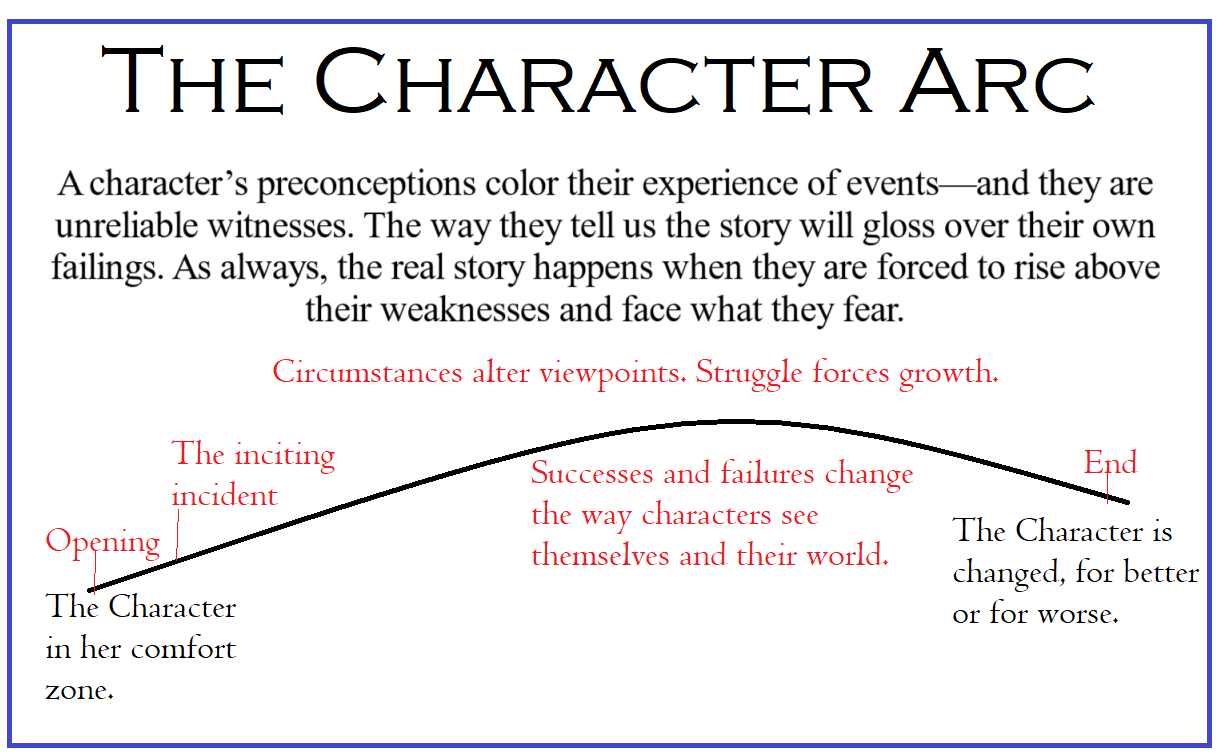
A character’s preconceptions color their experience of events—and they are unreliable witnesses. The way they tell us the story will gloss over their own failings. As always, the real story happens when they are forced to rise above their weaknesses and face what they fear.
As readers we see the story through the protagonist’s eyes, which shades how we perceive the incidents.
When I write my characters, I know how they believe they will react in a given situation. Why? Because I have drawn their portraits using words:
Julian must Fight for and Defend Chivalry. Julian’s commitment to defending innocents against inhumanity is his void, and ultimately it breaks his mind.
Golden Beau must Fight for and Protect Bravery. Beau’s deep love and commitment to protecting and concealing Julian’s madness is his void. Ultimately, it breaks Beau’s health.
Lady Mags must Fight for and Defy Audacity. She’s at war with herself in regard to her desire for a life with Julian and Beau. Despite the two knights’ often-expressed wish to have her with them, a triangular marriage goes against society’s conventions more than even a rebel like Mags is willing to do. That war destroys her chance at happiness and is her void.
Bold Lora must Fight for and Acquire Fame. She believes that to be famous is to be loved. Orphaned at a young age and raised by various indifferent guardians, she just wants to be loved by everyone. Julian’s fame has made him the object of her obsession. If she can own him, she will be famous, adored by all. This desperate striving for fame is Lora’s void.
The verb (action word) that drives them and the noun (object of the action) are the character traits that hold them back. It is their void, the emptiness they must fill.
Have you thought about the two words that describe the primary weaknesses of your characters, the thing that could be their ultimate ruin? In the case of Julian’s story, it was:
Julian Lackland: Obsession and Honor
Golden Beau Baker: Love and Loyalty
Lady Mags De Leon: Stubbornness and Fear (of Entrapment)
Bold Lora: Fear (of Being) Forgotten
So, in the novel, Julian Lackland, a girl who was ignored by everyone, a child who’d lived on the outside looking in and who was fostered by indifferent relatives, decides that the one person who had ever shown her kindness should become her lover. If she could have Julian, fame would follow.
The way she goes about it changes everything and is the core of Julian’s character arc.
Julian Lackland took ten years to get from the 2010 NaNoWriMo novel to the finished product. He spawned the books Huw the Bard and Billy Ninefingers, both of which were written and published before the final version of Julian’s story was completed. Billy and Huw play a huge role in shaping Julian’s life.
Placing a verb phrase (Fight for and Acquire) before a noun (Fame) in a personality description illuminates their core conflict. It lays bare their flaws and opens the way to building new strengths as they progress through the events.
Or it will be their destruction.
By the end of the book, the characters must have changed. Some have been made stronger and others weaker – but all must have an arc to their development.
Sometimes, as in the case of Julian Lackland, the path to publication is fraught with misery. Other times, the book writes itself and flies out the door. Who knows how my current unfinished novel will end? It’s in the final stretch, but nothing is certain.
I am a step ahead in this process, though. I already know my characters’ weaknesses, their verbs and nouns. As I learned from my experience writing Julian’s novel, I just need to know who they think they are, and then I must write the situations they believe they can’t handle.

For the last few weeks, many writers have been pouring the words onto paper, trying to get 50,000 words in 30 days. Some have written themselves into a corner and have discovered there is no graceful way out.
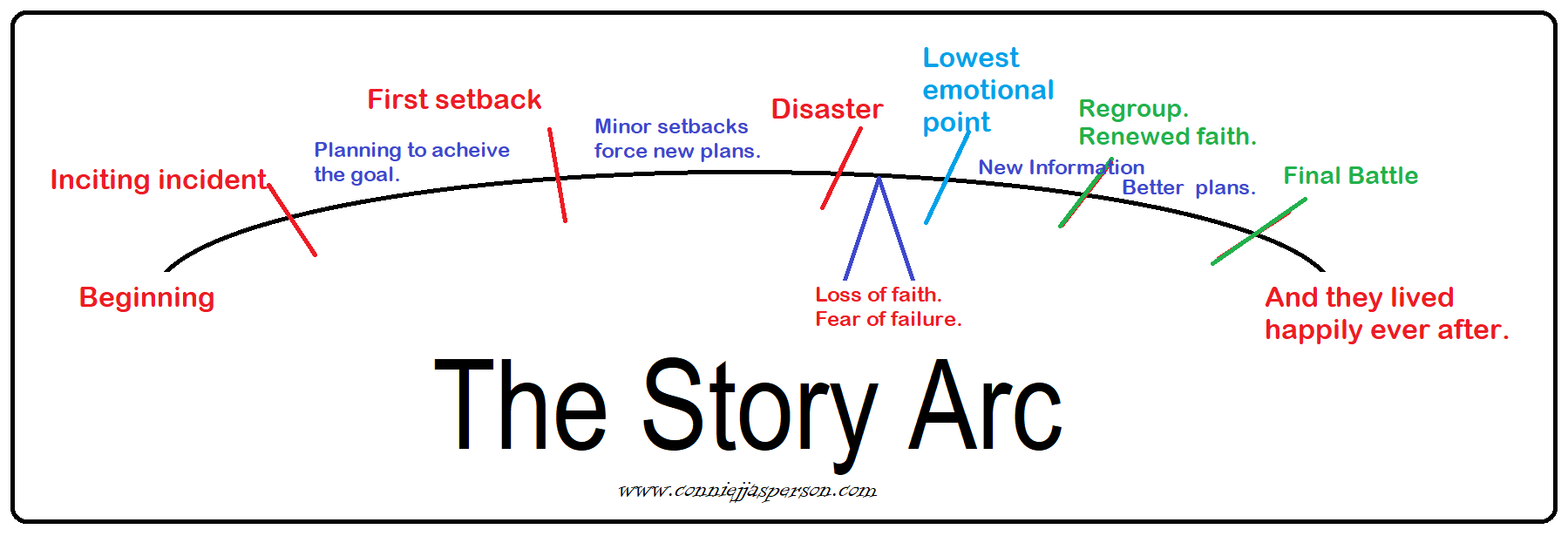
I hate it when I find myself at the point where I am fighting the story, forcing it onto paper. It feels like admitting defeat to confess that my story has taken a wrong turn so early on, and I hate that feeling. Fortunately, I knew by the 40,000-word point that last year’s story arc had gone so far off the rails that there was no rescuing it.
The sections I cut weren’t a waste, they were a detour. In so many ways, that sort of thing is why it takes me so long to write a book—each story contains the seeds of more stories.
Sometimes, something different happens. In 2019, I realized the novel I was writing is actually two books worth of story. The first half is the protagonist’s personal quest and is finished. The second half resolves the unfinished thread of what happened to the antagonist and is what I am currently working on. Both halves of the story have finite endings, so for the paperback version, I will break it into two novels. That will keep my costs down.
For those of you who are curious—I have the attention span of a sack full of squirrels. Proof of that can be found in the 4 novels currently in progress that are set in that world, each at different eras of the 3000-year timeline, each in various stages of completion.
think of
In 1953’s
Neil Gaiman’s
Dedicated authors are driven to learn the craft of writing, and it is a quest that can take a lifetime. It is a journey that involves more than just reading “How to Write This or That Aspect of a Novel” manuals. Those are important and my library is full of them. But how-to manuals only offer up a part of the picture. The rest of the education is within each of us, an amalgamation of our life experiences and what we have learned along the way.
Authors write because we have a story to tell, one that might also embrace morality and the meaning of life. To that end, every word we put to the final product must count if our ideas are to be conveyed.
The second piece of wisdom is a little more challenging but is a continuation of the first point: Write something new every day, even if it is only one line. Your aptitude for writing grows in strength and skill when you exercise it daily. This is where blogging comes in for me—it’s my daily exercise. If you only have ten minutes free, use them to write whatever enters your head, stream-of-consciousness.
The story is the goal; everything else is a bonus.
The well of inspiration runs dry and they quit. Many will never attempt to write again, although they will always consider themselves secretly a writer.
The first one is one I developed when working in corporate America. Frequently, my best ideas came to me while I was at my job. If your employment isn’t a work-from-home job, using the note-taking app on your cellphone to take notes during business hours will be frowned upon. To work around that, keep a pocket-sized notebook and pen to write those ideas down as they come to you.
Every obstacle we throw in the path to happiness for the protagonists and their opposition shapes the narrative’s direction and alters the characters’ personal growth arcs. As you clarify why the protagonist must struggle to achieve their goal, the words will come.
Finally, let’s talk about murder as a way to kickstart your inspiration. Some people recommend it but I suggest you don’t resort to suddenly killing off characters just to get your mind working. You may need that character later, so plan your deaths accordingly.
The writer of true science fiction must know the difference, especially when creating possible weapons. Superweapons and superpowers are science-based. Think
Magic works best when the local population in that world accepts that it exists and has limitations. When you think about it, magic should only be possible if certain conditions have been met. It should follow a set of rules.
Conflict forces the characters out of their comfortable environment. The roadblocks you put up force the protagonist to be creative. Through that creativity, your characters become stronger than they believe they are.
However, neither science nor magic can support a poorly conceived novel. Science, the supernatural, and magic are just tropes, tools we use to help tell the story. Strong, charismatic characters, mighty struggles, and severe consequences for failure make a brilliant novel.
I suggest writing a short synopsis of the story as you see it now. This will be as useful as an outline but isn’t as detailed. It will allow you to riff on each idea as it comes to you and is a great way to develop the storyline.
Fortunately for me, my writers’ group is made up of industry professionals, and one in particular,
The protagonist will find this information out as the story progresses and only when they need to know it. With that knowledge, they will realize they’re doomed no matter what, but they’re filled with the determination that if they go down, they will take the enemy down, too.

The answer to question number one kickstarts the plot: who are the players? Once I know the answer to this question, I can write, and write, and write … although most of what I write at that point will be background info. The answers to the other questions will emerge as I write the background blather.
They share some of their story the way strangers on a long bus ride might. I see the surface image they present to the world, but they keep most of their secrets close and don’t reveal all the dirt. These mysteries will be pried from them over the course of writing the narrative’s first draft.
And what if you are writing poems or short stories? Graphic novels? We will also go into preparing to “speed-date your muse” when embarking on those aspects of writing.
Setting: Does the setting feel real?
Be prepared for it to come back with some detailed critical observations, which may seem harsh. Any criticism of our life’s work feels unfair to an author who is new at this. And to be truthful, some authors never learn how to put aside their egos.
Worse, perhaps they were familiar with a featured component of the story, such as medicine or police procedures. The reader might have suggested we need to do more research and then rewrite what we thought was the perfect novel.
I went out and bought books on the craft of writing, and I am still buying books on the craft today. I will never stop learning and improving.
Who is the antagonist?
Consider cogs: they are engineered to interlock with each other, and when they move close enough that one cog interlocks and turns another, they move other parts of the mechanism.
Confrontations are chaotic. It’s our job to control that chaos and create a narrative with an ending that is as intense as our imaginations and logic can make it.