Category Archives: Battles

Bloated exposition and the power of the “No!”


Book- onstruction-signTwo-year-olds are awesome little balls of angst and joy. It’s either all happiness or all misery for them. I just spent the last two days babysitting my youngest grandson, who is two, while my daughter, a well-known musician, was in the recording studio. The dialogue between me and my grandson went something like this:

Me: “Would you like to eat dinner?”

2 yr old: “No dinner!”

Me: “Do you have to potty?”

2 yr old: “No Potty!”

Me: “Would you like ice-cream?”

2 yr old: “No ice-cream!”

It doesn’t matter what you ask the child–he is currently hardwired to say “NO!” to everything, no matter how badly he really wants it.  Everything is high drama and terrible tragedy for him–and his gut reaction to every question is driven by his newly acquired “power of the NO,”  a super-power that regularly goes to his head.

Unlike the two-year-old with his simple cut-and-dried answer for everything, we authors have a large amount of backstory that we are just sure the reader must know every minuscule detail of, and in order to avoid info dumps, we write conversations to do just that, so that the reader will not lack for information.

But this is where we authors need to exercise the power of the NO. It is also one of the hardest things we do–trying to decide what is crucial to the advancement of the plot and what could be done without. I am currently looking quite closely at one of my manuscripts, and I may cut an entire chapter that is only background. It’s awesome background, and I love this background–but when looked at with an independent eye, it doesn’t do anything but stall the forward momentum of my book.

Don’t give your characters long paragraphs with lines and lines and lines of uninterrupted dialogue. Those can become info dumps laced with useless fluff and are sometimes seen as a wall of words by the reader. This is referred to, in the industry, as bloated exposition.

When the dialogue is trying to tell the reader too much, characters end up saying a lot of unnatural and awkward things.

 “Remember the first day at the academy? We showed up wearing identical uniforms. I was so humiliated. I hated you for that. I didn’t speak to you at all until Commander Janson forced us to be partners in the biology lab, but I managed to get us through that with all A’s. But look at you now, you lucky dog. You are fortunate enough to be my second in command.”

“I know, sir. I despised you too, especially when you made me do all the dirty work, cutting up that alien amphibian. And you took all the credit for it. But now here we are, the best of friends and in command of the finest ship in the fleet, the USS George Lucas. I really, really love being your flunky. It is just the awesomest gig ever.”

Probably not gonna happen. When two characters go back and forth explaining precisely what they are feeling or thinking, it doesn’t seem remotely real. The only time exposition works in a novel is when both the reader and the character being spoken to do not know the information being artfully dumped.

dump no infoWhen reading, even dedicated readers will skip over large, unbroken blocks of words. Elmore Leonard said, “Try to leave out the part that readers tend to skip.” I feel this goes double for dialogue.

Cut to the chase. In real life, you might want to talk at length about the small details, but most of the important information is dealt with right away, and the rest is just socializing. When I think of the novels I enjoy the most, the important information in their conversations is dealt with up front, and the minor details emerge later as they become important.

Consider a phone conversation at work or when you’re in a hurry, and a friend just had a car accident. Your friend has a story to tell, and you have questions. “Are you hurt? Can you drive the car? Do you need anything?” While the boss is glaring at the back of your head, you won’t ask if they had insurance or if your friend will sue (unless you work for a legal firm and you’re fishing for business.)

There’s another important reason to avoid fluff in your dialogue besides the fact it makes a book more enjoyable:

In the real world, Indies and self-publishers pay the costs to publish their works up front. In the ebook format, costs are minimal and it doesn’t matter, but a paper book by a new author that has to sell for more than $12.99 may not sell well. Remember, with a longer book, your costs are increased because until you’re established, you must purchase your own stock to sell on consignment in local book stores. You’ll also need to buy books for your table at trade shows, conventions, and at most book-signings. You’ll want to keep your cost as low as possible and still turn out a good book.
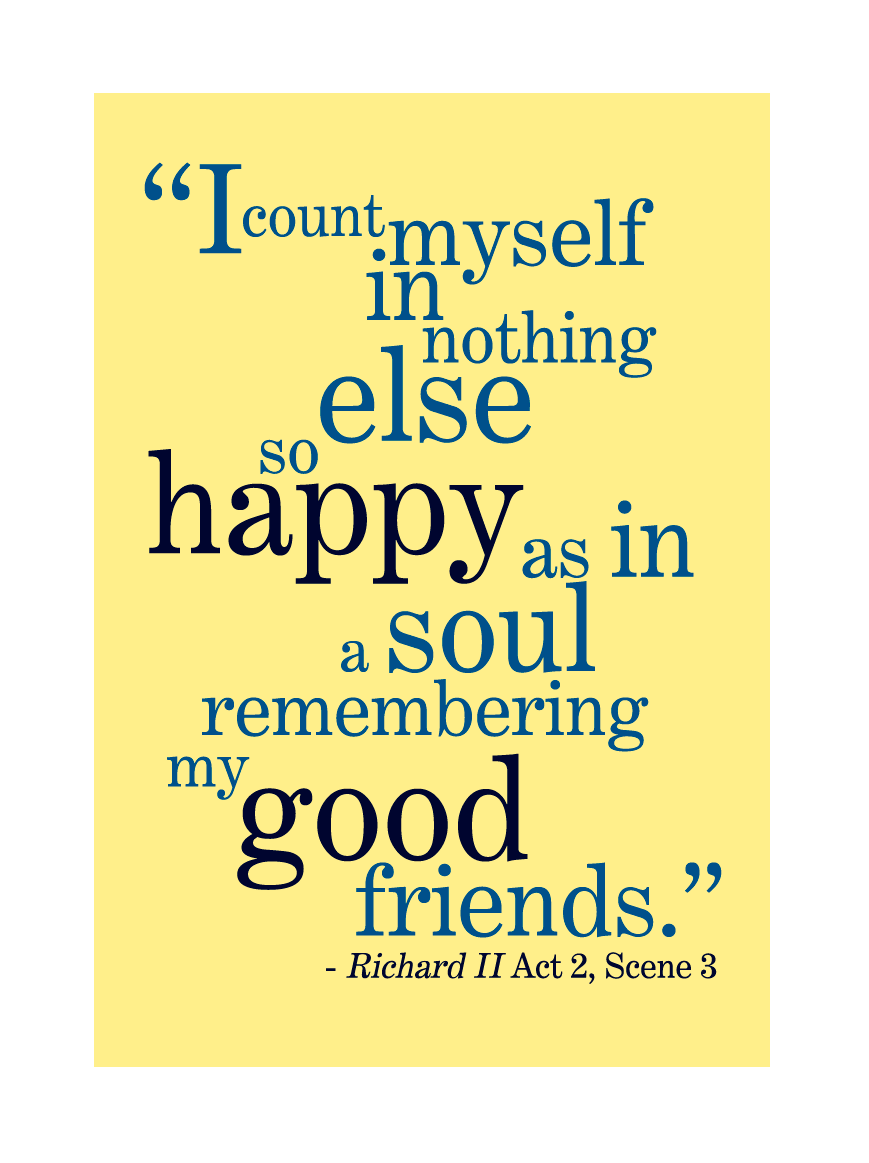
Shakespeare_ICountMyselfFor an indie who writes fantasy, which tends to be longer books and is my genre, it’s most cost-effective for you to keep your work to between 90,000 and 120,000 words if you intend to print through CreateSpace, which prints my paper books. So, wise authors will avoid empty filler in their conversations at all costs.

Having said to keep it short, I know there are times when a character will have a long story to tell, and if it’s done right, it works. Usually, these are stories within stories, and they’re a bit tricky to do right. Deploy the facts, and go light on the fluff.

Remember, what worked in a Shakespeare monologue does not work in a dialogue between two people. Fictional dialogue is about give and take, meant to sound realistic but sharpened by the fact that each character needs something, and by the fact that their needs do not mesh. You won’t get two-page speeches if you remember to visualize your conversation.

5 Comments

Filed under Adventure, Battles, Blogger, blogging, Books, Fantasy, Humor, Literature, Publishing, Self Publishing, Uncategorized, writer, writing

Dazed and confused

my sisters grave robert dugoniI am a a bit dazed and confused right now. I have been intensely preparing to give a seminar on writing dialogue at conference next weekend, but now the convention has been cancelled. Apparently not enough people pre registered. And I was all prepped to hear an announcement from Robert Dugoni!  Now I won’t know what it is until he tweets it. And his book, My Sister’s Grave was just named one of the top five thrillers of 2014.  I love it when an Indie goes viral!

But on the positive side, I am now free to focus on editing for clients, prepping for NaNoWriMo 2014 and several other things that demand my attention. Also, I don’t have to hope and pray I can find a vegan-friendly restaurant near the hotel (which I also cancelled.)

I had planned to talk about talking–at least about how your characters might talk, if they were talking to you in real life.

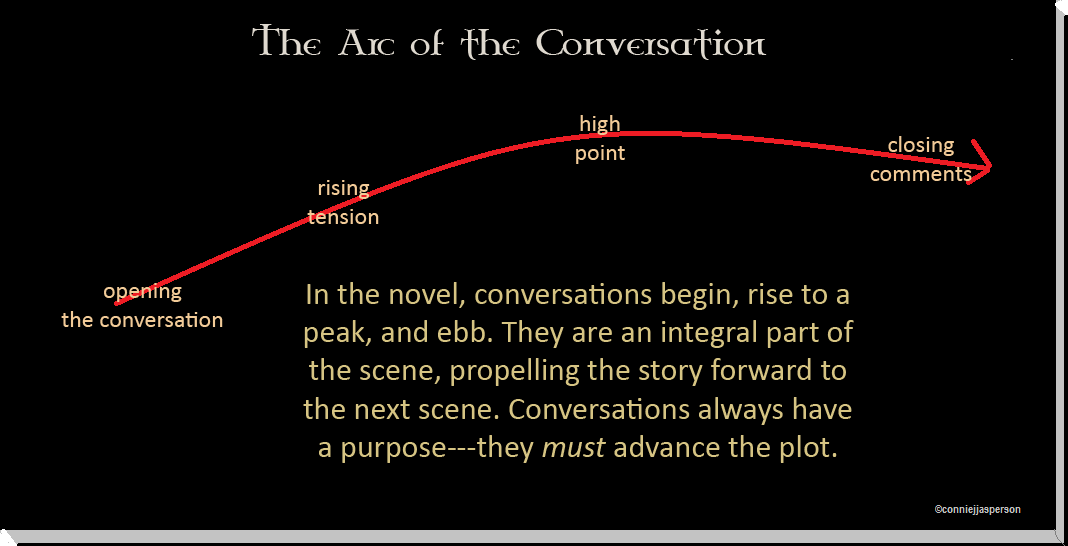
So how do we convey a sense of naturalness and avoid the pitfalls of the dreaded info dump and stilted dialogue? First, we must consider how the conversation fits into the arc of the scene.

It begins, rises to a peak, and ebbs, an integral part of the scene, propelling the story forward to the next scene. A good conversation is about something and builds toward something. J.R.R. Tolkien said dialogue has a premise or premises and moves toward a conclusion of some sort. If nothing comes of it, the dialogue is a waste of the reader’s time.

First we must identify what must be conveyed in our conversation.

  1. Who needs to know what?
  2. Why must they know it?
  3. And how many paragraphs do you intend to devote to it?

My rule of thumb is, keep the conversations short and intersperse them with scenes of actions that advance the plot. Walls of conversation don’t keep the action moving and will lose readers, so make the conversations important—and intriguing.

Author James Scott Bell says dialogue has five functions:

  1. To reveal story information
  2. To reveal character
  3. To set the tone
  4. To set the scene
  5. To reveal theme

So now that we know what must be conveyed and why, we arrive in the minefield of the manuscript. That will be the subject of my next blogpost.

The Arc of the Conversation

2 Comments

Filed under Battles, Blogger, blogging, Books, Fantasy, Humor, Literature, Publishing, Romance, Self Publishing, Uncategorized, WordPress, writer, writing

What’s in YOUR belfry?

APPROACHING HELLI’ve got a jammed-up calendar right now. I’m preparing my presentation on writing natural dialogue for Northwest Bookfest, which will be held in Kirkland Washington at Northwest University on Nov. 1 & 2, 2014. I’m really looking forward to that, but they’ve given me a slot between 10:30 a.m and 12:00  on Sunday morning-so that’s a lot of talking about talking. I can do it– heck, you know me. If I talk myself hoarse, I’ll let everyone out a few minutes early for lunch because that’s the kind of girl I am.

But in the meantime, I am still finalizing my seminar and the worksheets to go with it, and I have to also publicize it via twitter, press releases, and blogposts. After all–I really do want people to attend this sock-hop!

NaNoWriMo-General-FlyerNot only that, but I’m trying to get a book-signing/talk about the self-publishing industry for myself and Lindsay Schopfer at a local bookstore (whose website has no working contact links and who rarely answers their phone and never answers their voice-mail.) The nice-but-vague young man whom I have spoken to so far seems to have rather a low opinion of indies, but I am going to conquer that bookstore yet!

I am also building my calendar for my nano group in preparation for NaNoWriMo, which also begins on November 1st. While I do this, I have to  get the Christmas promotions finalized for my published books. I fit all of this in the copious amounts of free time I have between editing for clients, and making required revisions of my own current work, and finishing my next novel.

Being an indie author means it’s all on me. I have to generate any buzz about my books that will be generated, and I have to do it in such a way that my friends don’t all unfriend me, and my husband still looks forward to coming home. Maybe I do have bats in my belfry, but at least I’m having fun.

330px-Title_page_William_Shakespeare's_First_Folio_1623I console myself with the thought that Shakespeare had the same trouble. I do have my Twitter campaign planned–the genuine not-too-annoying-please-buy-my-books-I’ll-do-anything campaign. I have a Goodreads Ad campaign currently ongoing. I will stand naked on a street corner until I sell a book.  I will get a Google Ad campaign going.

I have several ads to put in the local paper regarding NaNoWriMo, and also I have a press release for Christmas O’ClockMyrddin Publishing’s charity anthology. We want to push that book and hopefully double our sales this year as the royalties from all sales go to benefit Water is Life. This charity is very dear to my heart, as millions of people go without safe drinking water, and they seek to change that.

I am my own publicist, secretary, chauffeur, housekeeper, and chef–so I guess you know, nothing much is getting done around the house.

Watch out for that low flying grandma–this broom ain’t stopping anytime soon.

4 Comments

Filed under Adventure, Battles, Blogger, blogging, Books, Fantasy, Humor, Literature, Publishing, Self Publishing, Uncategorized, WordPress, writer, writing

You split my what?

Raymond chandler quote split infinitivesRecently I was asked “What is an infinitive, and what’s so bad about splitting it?” My answer was “It’s a way of modifying a verb and it’s not like we’re splitting atoms here–the world will not explode.”

The words TO GO make an infinitive. When you put the word ‘to’ before any verb, you have an infinitive.

SO if I want to boldly go where no man has gone before, I’m going to have to sunder (or split off) the bare verb ( the basic dictionary form of the verb) GO from its infinitive marker (which happens to be a preposition) TO by inserting an adverb: BOLDLY. (It’s was edited to read its-thank you Irene Roth Luvaul♥)

So what’s the big deal? Why all the hullabaloo over such a simple, innocuous thing as separating the the infinitive TO GO with an adverb, BOLDLY?

Grammarians will fight to the death over the most picayune little points of contention. The split infinitive is one of those grammatical rules that wars have been fought over in the in the hallowed pages of usage guides for two-hundred years at least. Beer has been spilled over this particular grammatical construction.

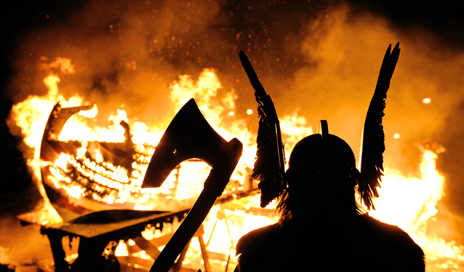
_72982736_vikings courtesy of BBCThe battle really heated up in 1864 when Henry Alford wailed about it in his classic usage guide, Plea for the Queen’s English: 

A correspondent states as his own usage, and defends, the insertion of an adverb between the sign of the infinitive mood and the verb. He gives as an instance, “to scientifically illustrate“. But surely this is a practice entirely unknown to English speakers and writers. It seems to me, that we ever regard the to of the infinitive as inseparable from its verb. And, when we have already a choice between two forms of expression, “scientifically to illustrate” and “to illustrate scientifically,” there seems no good reason for flying in the face of common usage.

Meh. What, are we speaking Latin here? The rule forbidding a split infinitive comes from the time when Latin was the universal language of the world, and the English language was in a terrible state of flux. All scholarly, respectable writing used to be done in Latin and, in Latin, splitting infinitives is a no-no.

Henry Watson Fowler took a dim view of Henry Alford’s pickiness. “The ‘split’ infinitive has taken such hold upon the consciences of journalists that, instead of warning the novice against splitting his infinitives, we must warn him against the curious superstition that the splitting or not splitting makes the difference between a good and a bad writer.”

Douglas Adams quote, split infinitivesMerriam-Webster’s Dictionary of English Usage says, “the objection to the split infinitive has never had a rational basis.”

Indeed, according to Grammar Girl  Mignon Fogarty, “Today almost everyone agrees that it is OK to split infinitives.”


375px-RaymondChandlerPromoPhotoRaymond Chandler complained to the editor of The Atlantic Monthly about a proofreader who changed Chandler’s split infinitives:

“By the way, would you convey my compliments to the purist who reads your proofs and tell him or her that I write in a sort of broken-down patois which is something like the way a Swiss-waiter talks, and that when I split an infinitive, God damn it, I split it so it will remain split, and when I interrupt the velvety smoothness of my more or less literate syntax with a few sudden words of barroom vernacular, this is done with the eyes wide open and the mind relaxed and attentive. The method may not be perfect, but it is all I have.”

 I agree. I shall forever attempt to boldly split infinitives as needed, when and where I feel so inclined.

4 Comments

Filed under Battles, blogging, Books, Fantasy, Humor, Literature, Publishing, Self Publishing, Uncategorized, writer, writing

The Castle of Otranto, Northanger Abbey, and The Mysteries of Udolpho

the-castle-of-otranto-a-gothic-storyThe  late nineteenth century was a great era in which the seeds of the genre of fantasy were planted, a time when books chronicling magic, mayhem, and dark mysteries found fertile soil in the imaginations of thousands of educated, book-hungry middle-class men and women. This was the emergence of the Gothic Novel.

Gothic novels have common themes consisting of incidents of physical and psychological terror, remote, crumbling castles, seemingly supernatural events, a brooding, scheming villain, and (most importantly) a persecuted heroine.

The Castle of Otranto is a novel written in 1764 by Horace Walpole. Many consider it to be the first gothic novel, the beginnings of the literary genre that would spawn the likes of Bram Stoker, Edgar Allan Poe, and Daphne du Maurier.  Walpole chronicles the story of Manfred, lord of the castle, and his family. The book begins on the wedding-day of his sickly son Conrad and princess Isabella. Just before the wedding, however, Conrad is crushed to death by a gigantic helmet (!) that falls on him from above. This strange, unexplained event is particularly ominous in light of an ancient prophecy “that the castle and lordship of Otranto should pass from the present family, whenever the real owner should be grown too large to inhabit it.” This sets into motion terrible events.

It also suggests that decking your halls with heavy armor may not be a good idea, for all you medieval Martha Stewart(s) out there.

So anyway–Manfred decides the only way for him to avoid destruction is to marry Isabella himself, but first he must divorce his current wife. Isabella runs away, aided by a peasant named Theodore. ” It’s all very melodramatic and exciting, with Isabella hiding in caves, and the fortuitous appearance of mysterious knights, and dark curses.  Theodore is revealed to be the true prince of Otranto and Manfred’s daughter, Matilda, dies, leaving Manfred to repent. Theodore becomes king and eventually marries Isabella “because she is the only one who can understand his true sorrow.”

Even Jane Austen loved Gothic novels.

NorthangerAbbeyNorthanger Abbey  was the first of Jane Austen’s novels to be completed for publication, written circa 1798–99. It was originally written as a send-up of the gothic novel, the Mysteries of Udolpho. She died in 1817 and her book was posthumously published.

The book details the adventures of seventeen-year-old Catherine Morland. She is one of ten children of a country clergyman. Although a tomboy in her childhood, by the age of 17 she has read so many Gothic novels that she considers herself to be in training to be a heroine. Catherine reads voraciously, and Ann Radcliffe’s Mysteries of Udolpho is a favorite.

She meets and falls in love with Henry Tilney and after a bit of drama, is invited to visit at his family’s home. Catherine, because of her love affair with Gothic novels, expects the abbey to be exotic and frightening. Sadly, it turns out that Northanger Abbey is a pleasant home and decidedly not Gothic. However, (cue the dramatic music) the house includes a mysterious suite of rooms that no one ever enters. Catherine learns that they were Mrs Tilney’s, who died nine years earlier. Catherine decides that, since General Tilney does not now seem to be affected by the loss of his wife, he may have murdered her or even imprisoned her in her chamber.

I LOVED this novel when I read it while in college in Bellingham, Washington in the 1970s. I wore out three hard-bound copies of it!

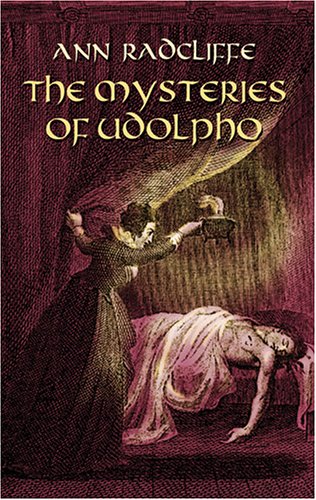
mysteries-of-udolpho-coverSo what inspired Jane Austen to write a Gothic novel? It was her own love of a work written an Englishwoman who, in turn, was inspired by the Gothic work of Horace Walpole.  The Mysteries of Udolpho by Ann Radcliffe, was published in four volumes on May 8, 1794. Walpole began the genre, but Radcliffe made it popular.

Set in the year 1584 in southern France and northern Italy, the novel details the plight of Emily St. Aubert, a young French woman. Her mother is dead, and while journeying with her father, she meets Valancourt, a handsome man who also feels an almost mystical kinship with the natural world. Emily and Valancourt quickly fall in love. After the death of her father she is sent to live with her aunt, Madame Cheron. Emily suffers imprisonment in the castle Udolpho at the hands of Signor Montoni, an Italian brigand who has married her aunt. Emily’s romance with the dashing Valancourt is frustrated by Montoni and others. Emily also investigates the mysterious relationship between her father and the Marchioness de Villeroi, and its connection to the castle at Udolpho.

Radcliffe’s fiction is characterized by apparently supernatural events that are then provided with rational explanations. She was a forward-thinking woman, as was Jane Austen, in that in all Radcliffe’s works traditional moral values are reinforced, the rights of women are strongly advocated, and reason always prevails. Sir Walter Scott was quoted as saying, in regard to Ann Radcliffe’s work, “Her prose was poetry and her poetry was prose. She was, indeed, a prose poet, in both the best and the worst senses of the phrase. The romantic landscape, the background, is the best thing in all her books; the characters are two-dimensional, the plots far-fetched and improbable, with elaboration of means and futility of result.”

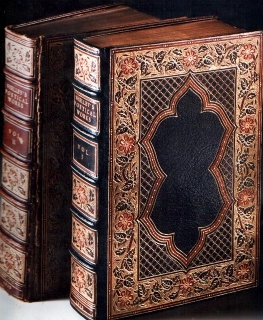
Old Restored booksThe roots of our modern fascination with all things dark and mysterious goes back to the first stories told by our tribal ancestors, under the stars around campfires. Every tribe (and in later millennia, every family) had a storyteller who wove tales of darkness, of good triumphing over evil, of sin and redemption. When written languages were invented, the upper classes in early societies had literature written for them by the likes of Homer and Li Fang .

In western societies, the renaissance began the great lust for books. With the advent of the printing press and the emergence of an affluent, educated middle-class, reading novels became a popular way to while away one’s well-earned leisure hours in the evening or on a Sunday afternoon. This habit survived, despite frequent, intense puritanical censure of such frivolity.

It is because of those nineteenth century pioneers of early popular literature that we modern readers have such a wide variety of work to entertain us. Kindles and other ebook-readers show up among the patrons of every coffee shop and in every airport-lounge and every doctor’s waiting room.

Much may have changed how we take delivery of that content–few books arrive at my house with thick paper and leather bindings nowadays, but nothing has changed in the desire to just quietly enjoy a good story when one has a little downtime.

2 Comments

Filed under Adventure, Battles, blogging, Books, Fantasy, History, Humor, Literature, Publishing, Self Publishing, Uncategorized, WordPress, writer

But let’s talk about books for a while

I noticed something this weekend–I’m obsessed with books.  No, it’s true! Apparently, and I have to agree, it’s all I can think of to discuss. Not only that, but my friends are all obsessed with what they are reading, too.

What a surprise!

So what have I read lately that really rings my bells? Several things, actually, in a wide range of genres.

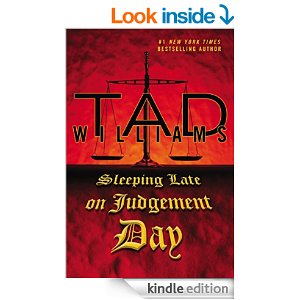
Sleeping Late on Judgement Day Tad WilliamsI just finished the third book in Tad Williams’s Bobby Dollar series, Sleeping Late on Judgement Day. Wow, my favorite bad angel, Bobby Dollar, finally gets a break. I love the twists and turns of William’s prose, as his hard-boiled angel gets down to the dirty business of cleaning up the mean streets of Heaven. He uses ordinary words in an extraordinary way, but never commits the sin of dropping the reader out of the story.  THIS is why I read his work.  I highly recommend this book to all those who like a bit of a hardboiled-detective twist to their paranormal fantasy. It is a smart, well-crafted journey into the human condition, set in an environment guaranteed to keep things interesting, and peopled with unforgettable characters. I gave it 5 full stars on my book review blog, Best in Fantasy.

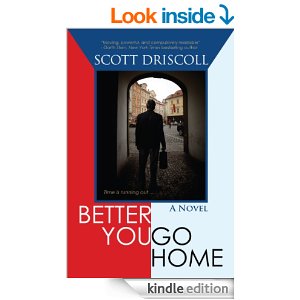
Better You Go Home Scott DriscollI also read Better You Go Home, by Seattle area author, Scott Driscoll.  This is not fantasy, it is literary fiction and a medical thriller. Chico Lenoch is an intriguing character. The tale is told in the first person, which I usually find difficult to get into as a reader, but didn’t in this case. Also something I usually find off-putting but didn’t in this case is the way Chico occasionally ‘breaks the fourth wall’–he sometimes addresses the reader directly. It works, because you are in his head the whole time and it feels perfectly natural. Driscoll is a professor at the University of Washington, and is work is both literate and intriguing. This is not genre fiction, instead it is written for mature, dedicated readers who want substance in a book. No fluff here, just good solid craftsmanship. I also gave it five full stars in my review.  But let’s be real–I don’t go to all the trouble of reviewing books I don’t love.

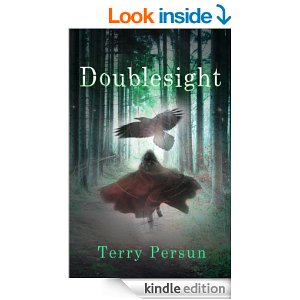
Doublesight--Terry PersunThen, in July I read a fantasy by another local author, Terry Persun: Doublesight. This was the most intriguing twist on the old shapeshifter theme I had ever read. Wholly human or wholly crow depending on what form she is in, Zimp is a great character, both endearing and aggravating. At first, she is weak and allows a less qualified, but more aggressive clan member, Arren, to make decisions for her. This book is as much about personalities and the need to remember their own commonality as it is about the great evil that threatens their kind. Each individual is sharply drawn, and has presence, struggling for their own place in their society while their world faces calamity. Zimp and Lankor, who is a doublesight dragon,  struggle to do what they know is right, in the face of treachery and occasional bad judgement.

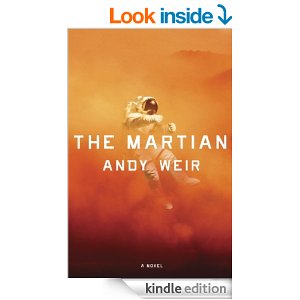
The MArtian Andy WeirMy mind is still blown by The Martian, by Andy Weir. This is hardcore science fiction and may well be the best book I read all year. Mark Watney is hilarious. He is the sort of man who gets through life by finding something positive in every disaster, and mocking the hell out of everything that is negative. A horrendous storm destroys much of their base, and his team is forced to abort their mission.  During the emergency evacuation of the Ares 3 landing site, he is severely injured in an accident that appears to have killed him. His body is unretrievable, and unaware that he is still alive, he is left behind. His companions begin the long journey back to Earth, grief-stricken at his sudden death. However, Mark is that rare breed of human, an astronaut, so of course he is extremely resourceful. He does what he has to in order to survive his injuries, and then figures out exactly what he must do to stay alive until the next mission.

I definitely read a mix of self-published and indie authors, but I like authors who take chances with their work, and who eschew the hamster wheel to hell of the Big Six publishing giants, who mindlessly chug out sequel after boring sequel. Tad Williams writes like an indie, rebellious and defiant. Scott Driscoll is also ‘a bit out there’ in the approach he takes in writing Chico’s story.

I love my job!


2 Comments

Filed under Adventure, Battles, Blogger, blogging, Books, Fantasy, Humor, Literature, Publishing, WordPress, writer, writing

What language are we speaking today? Understanding Stephen Swartz

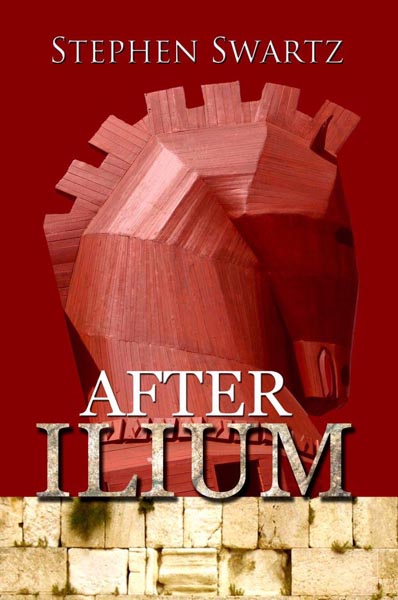
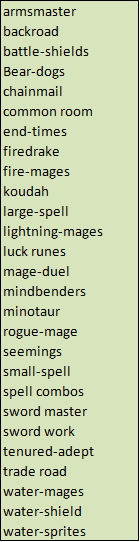
Swartz_After Ilium_FrontCvr_200dpi_3inOne of my dearest friends is author Stephen Swartz, a true renaissance man. A professor of English and a linguist, Stephen’s work frequently involves foreign settings, and with those exoctic places, come the exotic languages. He has devised a chart (you know how happy charts make me) to keep the many languages his characters speak straight. It is an easy way to do so, and is a great way to make what editors call a ‘style guide’ when you are working in different worlds.

For more about Stephen’s chart and his books, go to:

DeConstruction of the Sekuatean Empire: What language are we speaking today? Understanding the worlds of Stephen Swartz

But what if we don’t work in earthly languages? What if our reality is, in truth, UNreality?

All the more important to make yourself a style guide for your project. This will ensure consistency, especially when you are making up words.  Readers will notice inconsistencies, even though we as authors rarely see them in our own work.

Some things to consider:

What words need to capitalized at all times? Temple

What words must be hyphenated at all times? Battle-mage

How do you spell that city’s name again? Ludwellyn

Stephen’s Chart can be adapted to create a style guide for your work quite easily.  I think I’ll have me some fun with excel today!

style guide for Neveyah


2 Comments

Filed under Battles, Books, Fantasy, Humor, Literature, Publishing, Self Publishing, Uncategorized, writer, writing

Achieving a Balanced Narrative

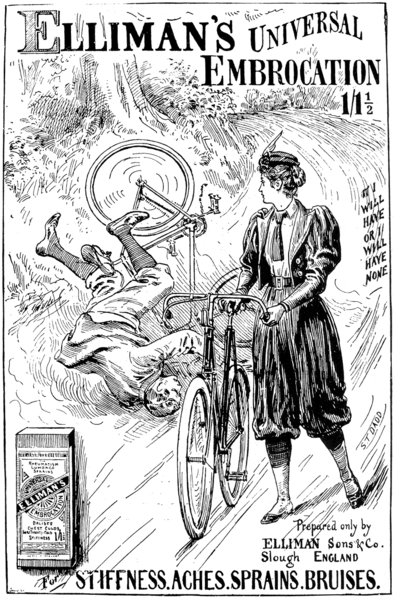
395px-Ellimans-Universal-Embrocation-Slough-1897-AdI was involved (as a horrified bystander) in an online dispute over how much description is needed in today’s genre fiction.  I walked wide of that mess, as it was clear that one author with an online pseudonym was in assassin mode. The other, whose prose had been harshly critiqued, also using a pseudonym, had called in her flying monkeys, all of whom proceeded to tear the argumentative ‘troll’ to shreds.

Ugh.  What a waste of time for all of us, bystanders included. It should have been a civilized discussion about using adjectives and achieving balance when showing and not telling your story.

Sadly, in this case the troll was right, but his attitude was so arrogant, he negated the value of his opinion, with normally sane people reduced to begging him to just ‘shut it.’

The prose in question was far too florid for my taste, forcing the reader to watch every excruciating, drawn out second as the the main character slowly curved his lush, full lips into a sexy, white smile, his pink tongue just touching his full, trembling, lower lip.

Pardon me, I must go barf now.

I prefer to read work written with in a lean style, as too much showing gets in the way of the story. It becomes a matter of the author forcing his vision onto me, as the reader, and is just as unpleasant to read as a narrative that tells you how to feel.

This is my view on the subject of description in the narrative: when you write about a room, any room, you don’t describe the details of room. You tell the character’s story as he enters the room.

What does the character see? What does he or she do in response to those things? Do they use the old wall-mounted telephone? Do they open the drapes? Perhaps he picks up the newspaper, and continues into the kitchen. Each character is different, and will see and do different things, and through those actions your room will come into focus in the mind of the observer–the reader.

Describing emotions is done the same way as describing the setting. We have all been told over and over again that in narrative, the most intimate way to show a feeling is to show the state of the protagonist’s body.

But how do we do that?  Let’s take humiliation:

Her face turned bright red in embarrassment.  

This sentence is what we call telling–the author has baldly told you how the character feels and why. This separates the reader from the sense of being the character. While the character may feel that her face had flushed, it’s unlikely that she would know the exact shade of red she had turned. To make it from the protagonist’s point of view and keep it simple, just write what happened.

Her face burned and she turned away.

Here is my  thought on this subject: we don’t need to get crazy, and give the minute details of her burning flesh heating up until she could see her nose glowing like Rudolph on steroids…we just need simple descriptions that point the reader in the right direction. If our character is really humiliated you can add one more descriptor, but still keep it simple:

Her face burned, and nauseated, she turned away.  

This is as much humiliation as I would put a reader through in one sentence. Realistically, the protagonist would feel the burning of her face, and would feel the nausea. The reader will taste the nausea if you describe the sensations with too much detail so keep the details to the bare minimum.

With that said, it is crucial that you give SOME clues as to what the character is feeling, as the reader will be completely lost without some sort of visual cues.

640px-Bicycling-ca1887-bigwheelersTake a look at what the protagonist’s body might be doing. What did it feel like when you experienced the same emotion? What did your body do? What did you feel inside? Was there a heaviness in your chest? A lump in your throat? Did you feel light-headed or weak-kneed? Did your face burn? Close your eyes and think about how you experience an emotional moment and allow your senses to take over.

With that memory in your head, write it down.

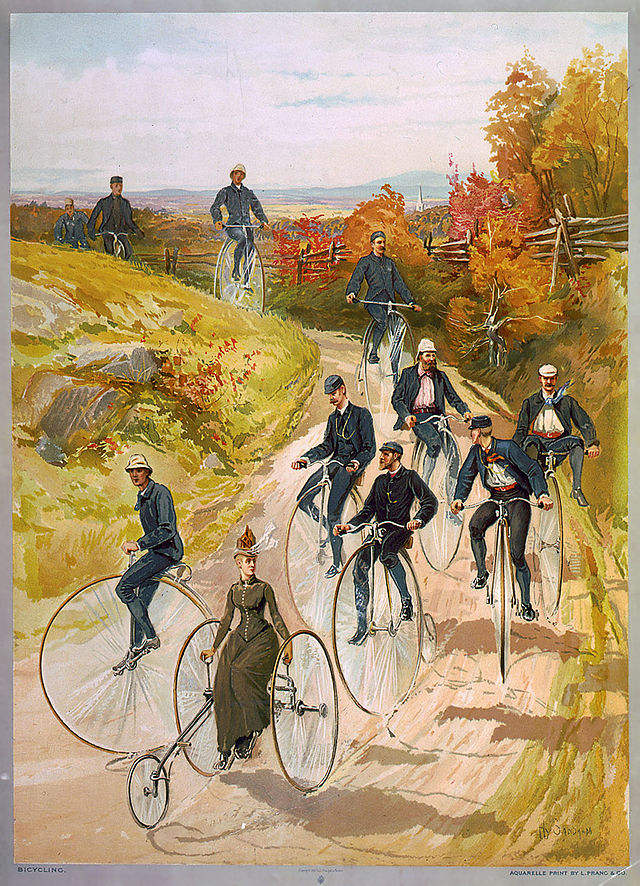
Just remember that it is crucial that you don’t over do it. Just like riding a bicycle, you must have balance in your descriptions: there must be enough description to intrigue the reader, but not so much it overpowers the story.


2 Comments

Filed under Adventure, Battles, blogging, Books, Fantasy, Humor, Literature, Publishing, Romance, Self Publishing, Steampunk, Uncategorized, WordPress, writer, writing

Good bye my friend: a dialogue about depression and creativity

robin williamsWe have all been affected by the suicide of beloved comedian Robin Williams. His was a death that touched us as deeply as his life had. We felt we knew him on a personal level, and though we knew he battled demons, we somehow believed he had survived them, and that all was well at last for him.

But if there is one positive thing to come out of this sad end to a beautiful man’s life, it is that people are at last having a dialogue about clinical depression.

This is something I understand on a personal level. My mother suffered from clinical depression, to the point that many times she was incapacitated during my childhood, and my maternal grandmother stepped in to care for our home and for us all. It was the 1960’s and miracle drugs were prescribed right and left–and Mama was on all of them at on time or another with varying degrees of success.

I have fought depression all my life too, and know firsthand that there is no ‘cure,’ no ‘magic bullet,’ no one-size-fits-all pill to solve the problem. Telling yourself to just pull up your socks and get on with your life doesn’t help much either. Because my mother took so many medications, and they often worsened her condition, I have avoided them except at my worst, lowest point.

There is no way to express what clinical depression feels like to a person who has never experienced it.  You are not sad–that word is an approximation, but not an accurate description. There is sadness involved, but for me it was more a deep lethargy, a lack of interest in life. I wanted to participate in the world around me, but I couldn’t pull myself together enough to get dressed and go out the door. It was like being stranded at the bottom of a well of confused misery and I loathed myself for that, but there were times in my twenties when I was so paralyzed by this disease, I couldn’t scrape together the energy to clean my house. I had no idea what was wrong with me, or why I was such a failure.

Fortunately I had children. I refused to just stay in bed as my mother did at times. I forced myself to stay involved with them, only booked music gigs for early evening in places like Wolf Haven or coffee shops where I could take my kids, and I wrote short stories, fairy-tales for them. Having to provide a decent life for my children kept me going to work and functioning on a superficial level. For them, I could get up, go to work, and pay the bills, but it was a constant struggle and in the late nineties my third marriage fell apart and once again depression hit me hard.

In 1998 I began having severe panic attacks to the point I was unable to drive across town. I opted to go into therapy, in the hope I could learn ways to cope. Thanks to an extremely caring psychologist who was not afraid to try new ideas, I found the tools and skills I was looking for. He showed me simple ways to physically alter my brain’s chemistry without resorting to medications, and as along as I practice these techniques I do well. For me, this was an answer.

It was not as easy as it sounds, but now I have some way to deal with this. I have sort of gotten a handle on it, and writing is part of my therapy. Interestingly enough, I recently had the indignity of being denied affordable life insurance because of this diagnosis being in my medical record.

The Journal of Psychiatric Research recently published a study, “Mental Illness, Suicide, And Creativity: 40-Year Prospective Total Population Study,” examined 1.2 million Swedish patients from the country’s national registry and compared this sample against the entire Swedish population. The most interesting and surprising results related to authors. Writers were a whopping 121% more likely to suffer from bipolar disorder than the general population. Moreover, Simon Kyaga, the study’s lead researcher, said that authors had a “statistically significant increase” in anxiety disorders: 38% to be exact. Rates of alcoholism, drug addiction, and suicide also increased among writers.

Go figure.

In an interview on the website, Lit Reactor, Portland Oregon based author and psychotherapist, Philip Kenney, said: “It isn’t easy to see oneself, the strengths and weaknesses, the familiar imperfections, without a judgment that often spells, B-A-D. Inferior. I try to remember the beautiful patterns made by the cracks in the sidewalk. Practicing kindness is the best remedy.”

IMG727That is also my motto. Practicing kindness, forcing myself to be involved with life outside of my front door and pushing myself out the door to work in a coffee shop is an antidote for me.

I admit I am obsessive about my craft, and that has been both a curse and a boon.  It is a curse, because if I choose, I can use it as a reason to never go anywhere.  But it is a boon because through my involvement with  NaNoWriMo, Olympia Area Writers Co-opPNWA, and ABNA I am FORCED to leave the Room of Shame (my office) and through these organizations I have met some of the most wonderful, amazing people you can imagine.

And strangely enough–many of them frequently suffer from various forms of ill health, depression, and anxiety disorders. By staying involved, we raise each other up, and try to support each other when the road is hard.

I am grateful for my blessings, never more so than when someone  like Robin Williams, who gave us so much of himself, falls victim to the demons of evil, pernicious, clinical depression.

11 Comments

Filed under Battles, blogging, Books, Fantasy, Literature, news of the world, Publishing, Self Publishing, Uncategorized, writer, writing

On Motivation

Periodically I get so far off track that I have to completely scrap the mess I am working on.  It’s as if I began writing one book, but somewhere along the line it becomes another.

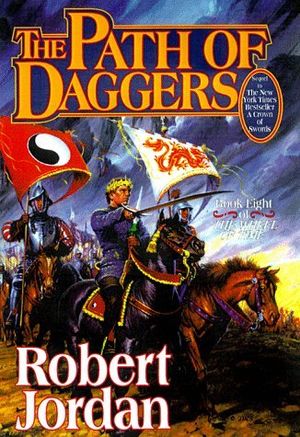
300px-WoT08_ThePathOfDaggersOne of the worst, most divergent messes I have created as a writer occurred early on in my current work-in-progress. I was  apparently channeling Robert Jordan. (The Path of Daggers) (Sorry, Wheel of Time fans–I had to say it. I loved the series overall, but he lost us there. It’s okay to admit it.)

I became so completely sidetracked by the stories of my random squirrels…er…side characters…that I completely lost track of the character whose story I had begun writing. I wrote well over 200,000 words that did not advance that story.

I got so lost that I had to rein it in somehow. I’m not Robert Jordan, so there’s no way folks are going to stick with me while I meander through 15 books in the trilogy.

I shelved that MS, re-titled it  Junk for my next book,  and started all over again, this time with an outline. But all is not lost–I have 3 books worth of material for later, and it was a good exercise in how NOT to write a novel.

What originally got me going off in so many directions  was the search for one particular character’s motivation. WHY does he behave the way he does?   I wasn’t sure how to go about it, and I began by writing a backstory that I knew would never make it into the book. It was intended to show me who this person is, and what motivates him, but it got out of hand rather quickly.

In a workshop I attended at a recent convention,indie author  Lindsay Schopfer boiled character motivation down to one  simple thing: Need. Every action by a character must be motivated by some need.

Well, it sounds simple, enough, but it really can be complicated. After Lindsay’s talk, it occurred to me that I had gone about it the hard way. The simplest way would be to graph it out, and the internet is rife with all sorts of inspirational thingys of this nature, but I’m a rebel. I gotta do it my own way.

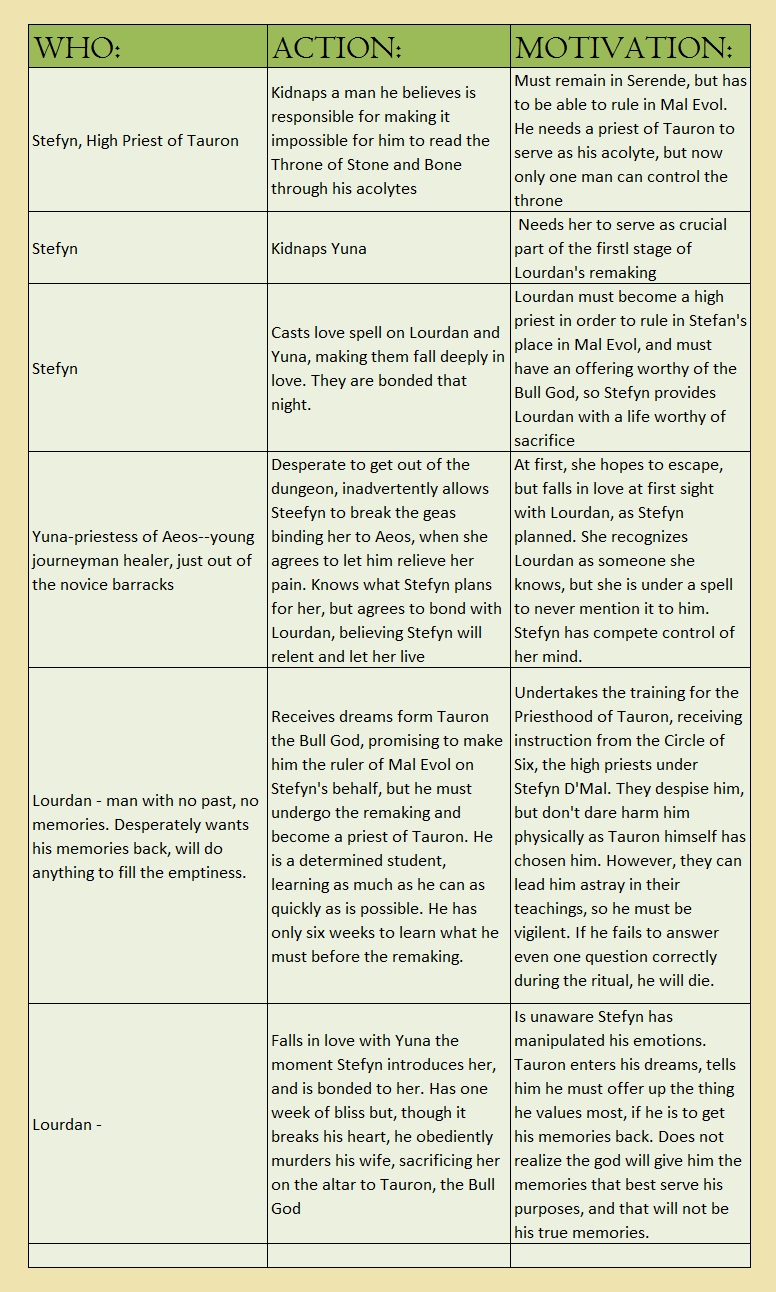
SO–I was a bookkeeper for years–I fired up Excel, and made me a handy-dandy Motivational Chart, where I identified the characters, what their action was, and what motivated that action.

What does a character need? Well, what do real people need?  The basics are  food, shelter, and garments. Once they have those items, they may need transportation, they may need entertainment. They need companionship. They need spirituality, or love, or sex. Once we identify what a character needs, we need to know how far they are willing to go to acquire it.

The lengths they will go to achieve their goal is the real story

This is one section of the long chart:

motvation table

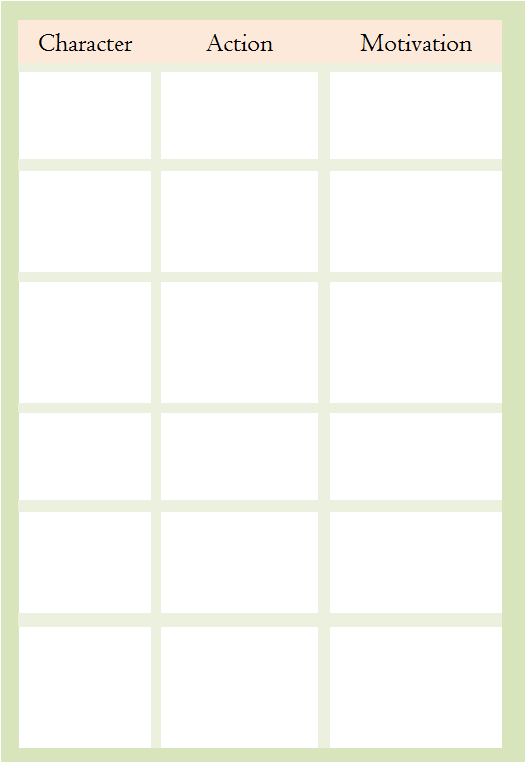
Now, you don’t have to be able to use MS Excel to make your own motivational chart. Get your ruler out, and block off sections on a standard sheet of paper. If you don’t have a ruler, use the straight side of something long, like a foil-box or a plastic-wrap box.  The point is, you want to tame the chaos on one horizontal tier of a grid:

character –>his actions –> and why he did it (his motivations.)

motivation table - blank

In the process of doing that you may find yourself ironing out some plot wrinkles, as I did. I am a linear thinker–so I need to have my characters as clear to me as if they were my dearest friends. For me, that means I will make a chart from now on, rather than wasting time writing words to nowhere.

After I did this, I wrote 25,000 words that launched the real story. Charting my character’s motivations works well for me.  I will be story-boarding my work in this fashion in the future.


5 Comments

Filed under Battles, Books, Fantasy, Humor, Literature, Publishing, Self Publishing, Uncategorized, writer, writing