Category Archives: writing

#FineArtFriday: The Spirit of War by Jasper Francis Cropsey 1851

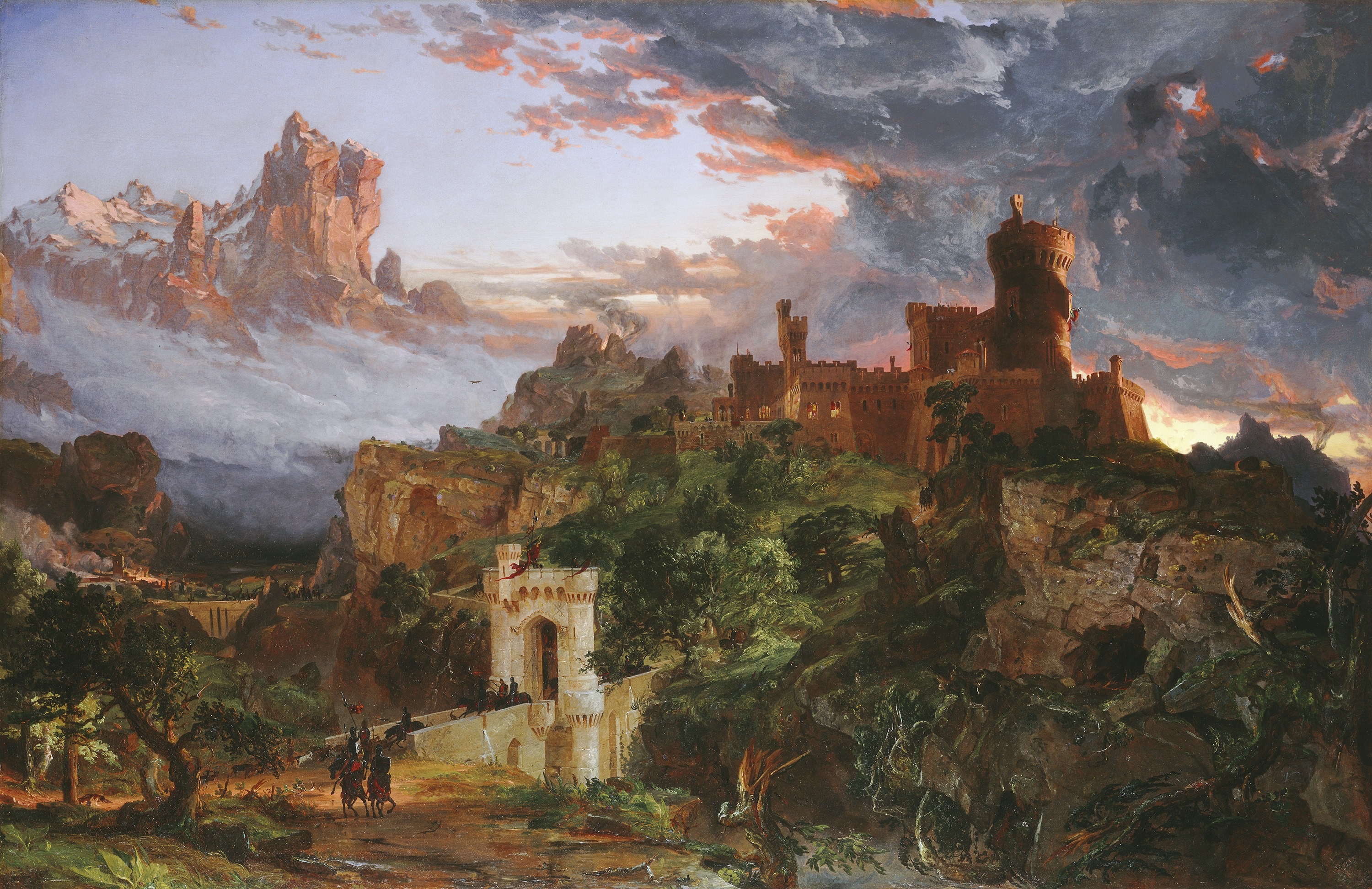
The spirit of war

Title: The Spirit of War by Jasper Francis Cropsey  (1823–1900)

Genre: landscape

Date: 1851

Medium: painting

Dimensions: Height: 110.8 cm (43.6 in); Width: 171.6 cm (67.5 in)

Collection: National Gallery of Art

Place of creation: United States of America [1]

What I love about this painting:

The Spirit of War by Jasper Francis Cropsey is one of a two-part fantasy that Cropsey painted in 1851; the other is the Spirit of Peace. During Cropsey’s lifetime, these two paintings were his most celebrated, but now he is known more for his ethereal paintings depicting autumn scenes, several of which I have featured here.

This painting was inspired both by the aftermath of the Mexican-American War and the looming threat of the American Civil War. It shows the young artist’s love of Arthurian tales and demonstrates his ability to deliver a story. His signature luminism is still in its infancy here, yet one can see the seeds of what would become a mastery of light and illumination.

Cropsey contrasts light and shadow as if they were good and evil. He paints godlike mountains that reign over deep valleys and strongholds. In the foreground, a strong fortress represents prosperity, her richly attired knights riding out to do battle. In the distance, a citadel burns, the smoke of raging fires billowing toward the darkening sky.

This is a powerful painting, one that tells a story and shows an entire novel.

About the Artist, via Wikipedia:

Jasper Francis Cropsey (February 18, 1823 – June 22, 1900) was an important American landscape artist of the Hudson River School.

Trained as an architect, he set up his own office in 1843. Cropsey studied watercolor and life drawing at the National Academy of Design under the instruction of Edward Maury and first exhibited there in 1844. A year later he was elected an associate member and turned exclusively to landscape painting; shortly after he was featured in an exhibition entitled “Italian Compositions”.

Cropsy traveled in Europe from 1847–1849, visiting England, France, Switzerland, and Italy. He was elected a full member of the Academy in 1851. Cropsey was a personal friend of Henry Tappan, the president of the University of Michigan from 1852 to 1863. At Tappan’s invitation, he traveled to Ann Arbor in 1855 and produced two paintings, one of the Detroit Observatory, and a landscape of the campus. He went abroad again in 1856, and resided seven years in London, sending his pictures to the Royal Academy and to the International exhibition of 1862.

Returning home, he opened a studio in New York and specialized in autumnal landscape paintings of the northeastern United States, often idealized and with vivid colors. Cropsey co-founded, with ten fellow artists, the American Society of Painters in Water Colors in 1866.

Cropsey’s interest in architecture continued throughout his life and was a strong influence in his painting, most evident in his precise arrangement and outline of forms. But Cropsey was best known for his lavish use of color and, as a first-generation member from the Hudson River School, painted autumn landscapes that startled viewers with their boldness and brilliance. As an artist, he believed landscapes were the highest art form and that nature was a direct manifestation of God. He also felt a patriotic affiliation with nature and saw his paintings as depicting the rugged and unspoiled qualities of America. [2]


Credits and Attributions:

[1] Wikimedia Commons contributors, “File:The-spirit-of-war.jpg,” Wikimedia Commons, the free media repository, https://commons.wikimedia.org/w/index.php?title=File:The-spirit-of-war.jpg&oldid=565046310 (accessed June 17, 2021).

[2] Wikipedia contributors, “Jasper Francis Cropsey,” Wikipedia, The Free Encyclopedia, https://en.wikipedia.org/w/index.php?title=Jasper_Francis_Cropsey&oldid=1018920537 (accessed June 17, 2021).

3 Comments

Filed under #FineArtFriday, writing

Review of The Slime Mold Murder by Ellen King Rice #amreading

I did receive an advance copy of The Slime Mold Murder. I usually decline to do advance reviews as my blogging and writing schedule means I just don’t have time to write a proper review anymore.

magicAlso, if you have been a reader of mine for a while, you know I rarely write reviews for books I don’t like, no matter how much I like the author because I hate hurting peoples’ feelings.
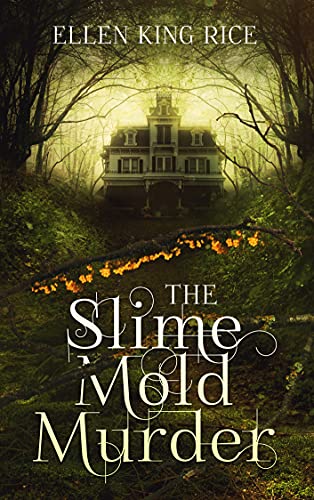
However, when I was approached about drawing the map that is featured in the front, what I was told about the book intrigued me. I had read and loved other work by this author, most especially Larry’s Post-Rapture Pet Sitting Service.

But first, The Blurb for The Slime Mold Murder :

A Winner of the 2020 IPPY Gold Medal for best regional fiction, Ellen King Rice is back with a fourth biological adventure set in the woods of the Pacific Northwest, this time exploring the fascinating world of the Myxogastria slime molds.

At nineteen, Dylan’s brilliant mind is an asset as he struggles with severe ADHD and deteriorating living conditions. He’s one semester away from completing his college degree in ecology, but he’s out of cash, out of soap, and about to be evicted.

A post-pandemic opportunity to survey a rural property sounds like a lifeline. The owner of a creepy faux-chateau is ready to pay a handsome wage for a list of species found on the property. Dylan can’t believe his good luck. He’s about to be paid to wander in the woods. Sure, there’s some bookkeeping, but how hard can it be to make a plant list?

The neighborhood, however, has other residents, including a metal sculpture artist, nudists, two homeless men, and a conservative county commissioner, each with their own definition of freedom and their own ways of interacting with the land.

When a body is found in the woods Dylan’s work opportunity is threatened. He needs to uncover the reason for the death, but Dylan’s lightning-fast mind is constantly undermined by his poor executive functioning. He can discourse eloquently on the significance of Geoffrey Chaucer’s The Canterbury Tales, but he can’t find his wallet. He longs to adopt an orphaned West Highland terrier, but he’s not sure he’d remember to feed a dog. He certainly can’t afford a bag of dog kibble, much less the repairs needed on his vintage Honda.

How can Dylan’s intuitive grasp of ecology and the complex life cycles of the Myxogastria help to expose a killer? And how does he protect his employer, his professor, his friends and a small, confused dog from those who eagerly embrace violence?


My Review:

51v0Z1IolxSDylan Kushner is a 19-year-old genius coping with absentee parents, financial insecurity, looming homelessness, and worry about paying for his last semester of school. He also lives with ADHD and dysgraphia, which impairs his ability to translate his thoughts into handwritten words. Through his college classes, he is befriended by good people who give him the tools to be independent.
Mari is a fellow student, bumbling her way to adulthood. Alyson is the precocious twelve-year-old daughter of Wade Witecki. All the many characters in this mystery are engaging and either likable or unlikeable as they would be in real life. One even empathizes with the characters who fall into the gray area between good and evil.

I enjoyed how Rice framed opening chapters, introducing us to the players. She uses action and interaction to show the lengths some powerful people are willing to go to when their cherished beliefs are threatened. Once we have met everyone, it’s clear that a clash of epic proportions looms.

While the narrative is a little science-heavy at times, it moves along well, with the events occurring as they might in real life. Each character’s reactions and subsequent actions are logical, yet just when you think you have it figured out, you don’t.

The world Rice presents to us is solidly formed. I found it easy to be immersed in the dampness and subtle smells of the forest as the characters worked their way through the mystery. In the process, we see the general unpleasantness some people have a knack for, the kindnesses people are capable of, and the evil that lurks in the soul of others.

If you love learning about the natural world and also love a good mystery that is strong on science, the Slime Mold Murder is the book is for you.


OLYMPUS DIGITAL CAMERA

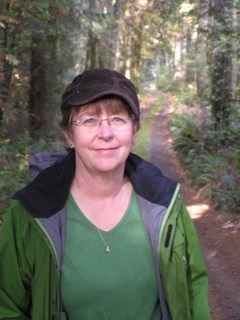
Ellen King Rice is a wildlife biologist who explores the woods while wearing leg braces. Her slow pace has provided opportunities to learn about the Northwest’s small and cryptic species. Her vivid adventures shine a spotlight on the richness found on the forest floor, augmented by crisp illustrations from Olympia artist, Duncan Sheffels. This award-winning pair have been charming woodland lovers since 2016.

You can find Ellen and her books at www.ellenkingrice.com

Please join her on Instagram at:

https://www.instagram.com/mushroom_thrillers.

And on Facebook:

https://www.facebook.com/mushroomthriller/

Comments Off on Review of The Slime Mold Murder by Ellen King Rice #amreading

Filed under writing

Submitting to Contests vs. Submitting to Magazines and Anthologies #amwriting

One question I frequently see in various writers’ forums, is “how can an indie get their name out there and gain fans for their work?”

WritingCraft_short-storyMy answer is simple. We write short stories and submit them to magazines, anthologies, and contests.
Every time your short work is published or places well in a contest, you stand the chance of getting your name out there and it’s nice to have a little extra cash in your pocket.

Despite the changes in the publishing industry as a whole, writing short stories is still the way to get your foot in the door and increase your visibility. Anthology calls from traditional large publishing houses and reputable small and mid-size publishers that are willing to pay for your work are sometimes open to new authors.

Also, magazines that are SFWA approved regularly post open calls for submission, so it pays to check each magazine and publisher’s website for opportunities.

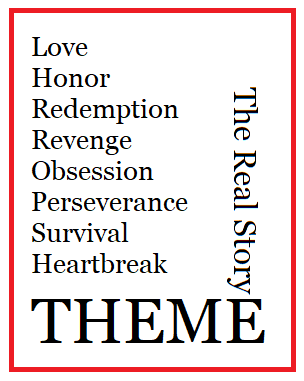
Submitting to contests is good too.theRealStoryLIRF01102021 If you have a story that was a contest winner, you may be able to sell it to the right publication.
Writing for anthologies and contests have similar requirements. You must learn how to write to a specific length. Often, you must make use of a specific theme, one that may not be of your choosing.

So, what do editors of anthologies and magazines look for versus how contests are judged? Trust me, editors work hard, and more than anything, they love to read.

And all publisher and editors want to discover brilliant work written by new authors.

I have worked on both sides of the publishing industry. I know the frustrations of the author who waits to hear back regarding their submission, and I’ve seen the publisher’s inbox. I’ve read for many contests and edited several anthologies.

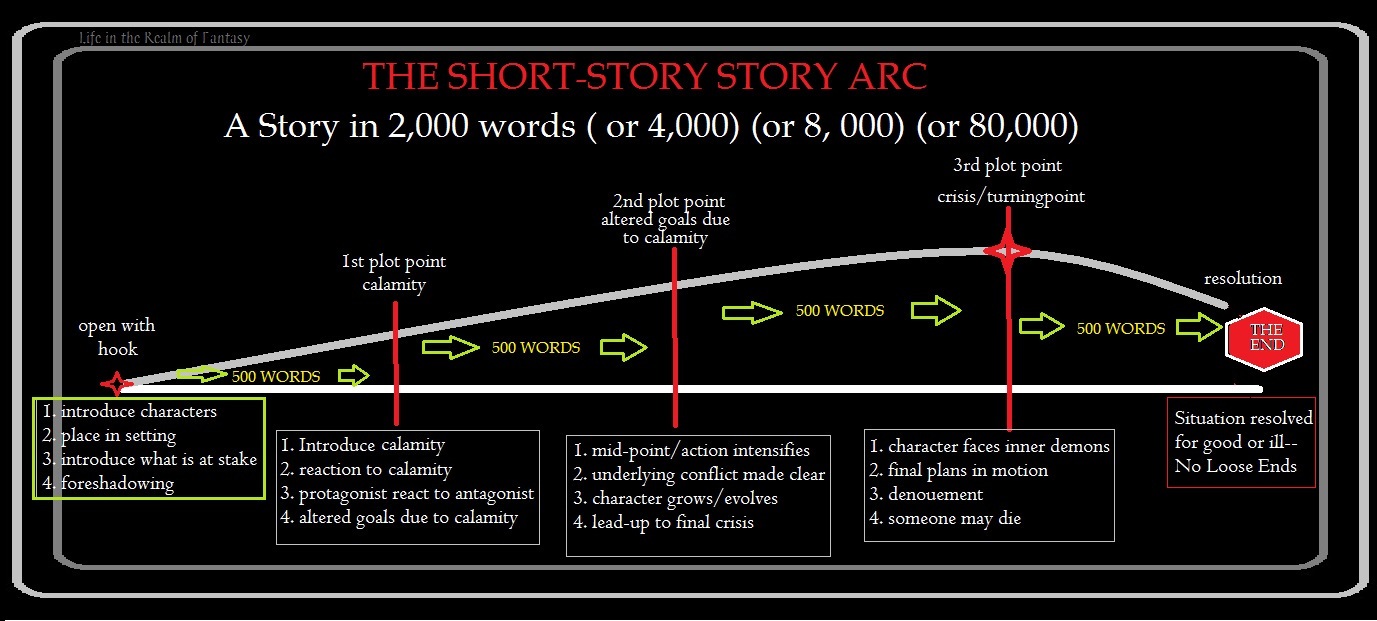
First, your work will receive a far closer inspection from a contest than from a publisher. Contests have readers who are either editors or authors, and who do their best to judge each entry on their merits. This means two people will have read the submission and each reader will have looked at the technical aspects of the piece as well as the overall story and characters.

Contest readers must judge:

  1. Plot: the sequence of events and the overall story arc.
  2. Setting: did the world building include a location, time, hints of the weather, and hints of the environment? Was the world solid to the reader?
  3. Viewpoint/narrative mode: how was the story told? Was the POV consistent or did it inadvertently drift, say between present tense to a few paragraphs in past tense, and then back to present. Was it consistently first-person, (or second, or third, or omniscient, etc.)?
  4. Characters: Were the characters believable, and did they have an arc?
  5. Did the dialogue, both spoken and internal, advance the story? Did each speaker have their own voice and style?
  6. Transitions and hooks: Did the opening lines hook the reader? Did the narrative move from scene to scene smoothly, without jarring the reader out of the story? Did each transition hook the reader, enticing them to keep reading?
  7. Showing versus telling: did the author understand how to show the action?
  8. Mechanics: Did the author have a good grasp of grammar, punctuation, and industry standards? Did they follow word count and length requirements, and obey formatting directions as listed in submission guidelines?

Editors for anthologies will look at each submission with the above guidelines in mind, but they will have two more caveats:

  1. Theme: did the author understand and incorporate the theme into their story?
  2. Appeal: did that story strike a chord, make them want to read more of that author’s work?

Contest readers/judges read every word in each submission and base their opinions on how well the first eight conditions were met.

Anthologies and magazines have a slightly different style of judging what they will accept.

The main difference between publishers of anthologies and those of magazines is the sheer volume of work that is submitted, and the number of people/editors available to read it.

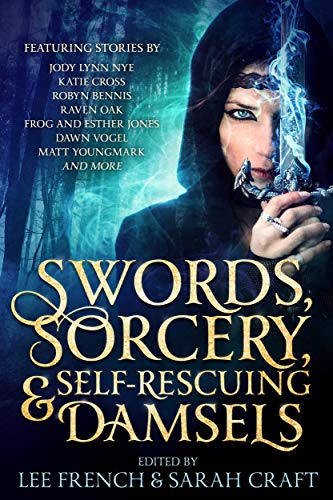
51AvRGmiMQLAnthologies will close on a specific date, or after a certain number of submissions have been received.
The inbox of a large publisher fills up every day. Larger publishers may have a gatekeeper reading submissions, but most editors do their own work. For this reason, the editor will look at the first page of the story and based on what she sees there, she will decide whether to continue reading or reject it.

If all ten of the above criteria are clearly shown in the first paragraphs, the editor will read further. If the work continues to be engaging and professional, they will read it to the end.

At that point, criteria number ten is most important condition to be met—your story must have wowed the editor.

Once you have written a short story  with the intention of submitting it to a specific publisher or contest, you must edit it. Then you must format the manuscript to make it submission-ready, by reading and following the guidelines published on their website.

I’ve said this before, but it bears mentioning again: if you don’t follow your prospective contest or publisher’s submission guidelines, you have wasted your time submitting it.

AFF_MarApr2018_400x570These steps demonstrate your level of professionalism. Editors at magazines, contests, and publishing houses have no time to deal with unedited, poorly formatted manuscripts. Their inboxes are full of well-written and properly formatted work, so they will reject the amateurs without further consideration.
I hope knowing the requirements your work will be judged by will help you find good homes for your work.

If you have any doubts about the quality of your work, consider running it past your critique group to hear their opinions on characterization, story arc, and other features of your work.

It’s hard to hear a bad verdict, but sometimes you should completely rethink certain aspects of a piece before you submit it, and this is where the external eye can help you.

7 Comments

Filed under writing

Fundamentals of Writing: The Strong Antagonist #amwriting

I gravitate to narratives featuring a strong antagonist, someone who could have been a brilliant hero if only they had made different choices.

depth-of-characterAuthors work hard to create a strong, credible hero. In genre fiction, the hero’s story evolves in a setting of our devising and is defined by their struggle against an antagonist.

Strong emotions characterize what and who we perceive as good or evil. Emotion is a constant force in our lives. When we write, the emotions we show must be credible, shown as real, or they will fail to move the reader.

Consider the forces of antagonism in the story. The antagonist can take many forms. In some stories, it will be a person or people who stand in the way. In other stories, an internal conflict and self-deceptions thwart the hero. When you think about it, we are usually our own worst enemy, constantly telling ourselves negative things that undermine our self-confidence.

When we create an antagonist, we take what is negative about a character and take it one step further: we hide it behind a lie.

First, we assign them a noun that says who the antagonist thinks they are. Good.

Then we assign them the noun that says who the protagonist believes they are. Evil.

So, in an overly simplistic example, the antagonist gets two nouns: Good/Evil. We hide that perception of evil behind a lie, a falsehood. This lie is the antagonist’s belief that they are the hero.

One of my antagonists in a current work in progress is Kellan. He and his younger sister were born into an abusive family. When their parents were murdered, they were adopted by a family who raised them with kindness and understanding. At the age of ten, Kellan’s basic character and gut reactions were already formed.

protagonist-antagonist-06082021LIRFKellan is a complicated character who believes he is the hero. His story begins as a member of the protagonist’s inner circle and ends tragically.

The people who love him describe him this way: Ivan saw Kellan as two people. One lashed out at the people he trusted and loved most, was filled with jealous anger, and the other was sweet, gentle, and mesmerizing. Rage sometimes owned him, a flaw the earth-mage might never overcome.

Life is complicated, and the relationships in a good novel should also be complex. Often, a protagonist faces a second antagonist: themselves. In real life, who is usually our worst enemy?

We are.

It is us, our own fears, the little voice whispering doubt, indecision, and impulsiveness into our subconsciousness.

So, to further complicate life for our hero, we can go two routes when creating the antagonist. One way is to allow one of the characters to make choices that ultimately harm them, which is how I went with Kellan, turning him into the visible antagonist.

Another way is to take the negative that is directed outward and turn it into self-hate, which I have done with Ivan. He has two enemies to fight, one is someone he loves but must reject, and the other is himself.

nebulousIn other stories, there is the nebulous antagonist—the faceless giant of corporate greed, characterized by one or two representatives, who may be portrayed as caricatures. In some cyberpunk tales, the antagonists tend to be thugs-in-suits, and in hard sci-fi, they might be members of the military or scientists. In fantasy, the nebulous antagonist might be a powerful queen/king or sorcerer, or both.

In that case, how the protagonist reacts internally to the threat these formless antagonists pose is the story. Emotion makes the risk feel genuine to the reader, gives it life.

To show great evil in genre fiction, we take the negative to the limit of human experience. And while I do write some dark scenes, I don’t write horror, so I can’t speak to that, exactly.

What I can speak to is the perception of corruption, which sometimes horrifies us.

Perception and imagination are everything. As children, what we infer from the visible evidence in a dark room after mother and father have turned out the lights can be terrifying.

We are frightened of the formless monster that we perceive as lurking in the corner until we discover the truth—it is only something that was piled there and was never put away.

As adults, what we infer from the visible evidence in a dark story can be equally terrifying. Thus, you can write dark scenes but don’t have to be utterly graphic.

War is an evil that is difficult to make sympathetic, and shouldn’t be. Sometimes a faceless blob of evil is the right villain.

However, I seek out stories that delve into the characters as people and show their motivations. Word choices are the key to success in showing the darkness a character embodies without going over the top. Think about the word perversion, a word with many meanings and uses. Its synonyms are: corruption, corruptness, debasement, debauchery, decadence, decadency, degeneracy, distortion.

Coloring an antagonist with a perception of perversion (distortion, corruption) drives home the evil they represent.

Someone—and I don’t remember who—said in a seminar a few years ago that the author is the character’s attorney, not their judge.

approval-f-scott-fitzgerald-quote-LIRF05312021This is an important distinction. Credible villains become evil for sympathetic reasons. They care intensely, obsessively about something, or someone. It is our job to make those deeply held justifications the driving force behind their story.

Therefore, a true villain is motivated, logical in their reasoning. They are creatures of emotion and have a backstory. You as the author and their lawyer, must know what that narrative is if you want to increase the risk for the protagonist. The reader doesn’t need to wade through an info dump, but you, the author, need to know those details.

You need to know why they feel justified in doing the sometimes-heinous things they do.

The greater the risk for the hero, the more interesting the story is. A strong protagonist requires a stronger antagonist if the risk is to be believable.

9 Comments

Filed under writing

Author Interview: Ellen King Rice on characters #amwriting

51v0Z1IolxSOne of the best ways to learn about the craft of writing is to talk with other authors. We all have different ways of creating our work, so hearing how another author works always gives me new ideas.

Ellen King Rice writes mysteries set in the South Puget Sound area of the Pacific Northwest. She is a wildlife biologist and is happiest when out in the woods on a fungi hunt with her camera.

Ellen has a new book out, The Slime Mold Murder, and as one the advance readers, I found it witty and the series of events are well-plotted. The characters are engaging, and their stories emerge as the plot unfolds. She has agreed to talk about her characters in this book, and how she came to know them.


CJJ: Tell us about Dylan. When did he first come into your mind as a protagonist?

EKR: Dylan was in my first book, The EvoAngel, as a precocious eleven-year-old with impulse-control challenges. He channels my own life as someone who speaks boldly and often irritates others.

CJJ: This book has number of credible characters. Which character was most difficult to write, and why?

5EKR06042021LIRFEKR: Mitchell and Mark are a gay couple, but I didn’t want to write them as caricatures. I spent a great deal of time trying out descriptions to come up with two men who are individuals in their own right but collectively a pair who would rattle the conservative county commissioner.

CJJ: Which character do you identify with on a personal level. Why?

EKR: Mari reminds me of myself at eighteen. I was keen to explore romance but terribly inept.

CJJ: Do you create an outline for structuring a character arc, or do you wing it?

EKR: Authors are often divided into the pantser or plotter groups. Some of us are plontsers – a lovely hybrid who think they have a plan but are really making it up as they go along. No kidding. I do start with a plan and then I get distracted with new ideas.

CoralRootEKR06042021LIRFjpgCJJ: Do you think your characters or events drive the plot? How are your characters shaped by the events they live through?

EKR: For me it is the events that drive the plot and the characters respond, hopefully growing as they take action.

CJJ: Are there any final words you would like to say regarding the characters and events of The Slime Mold Murder?

EKR:  The inclusion of the sclerotia in the story is meant to be inspirational. Slime molds can enter a dry phase where they do not grow. This phase can last for years, but when conditions improve, there can be a vibrant response. I so hope that we humans can move past months of a global pandemic to build a better world where more of us thrive.


Ellen, thank you for taking the time to talk about how you approach the craft of writing and creating your wonderful characters.

If you are curious about this book, The Slime Mold Murder is available at Amazon as a paperback, and will be released for the Kindle on June 24th, 2021: The Slime Mold Murder.


OLYMPUS DIGITAL CAMERA

About Ellen King Rice:

I am a wildlife biologist who suffered a spinal cord injury many years ago. Although my days of field work are over, biology continues to intrigue me.

I am fascinated by sub-cellular level responses to ecosystem changes. I also like the predictability of animal behavior, once it is understood.

A fast-paced story filled with twists is a fun way to stimulate laughs, gasps and understanding. I work to heighten ecological awareness. I want the details and your new insights to remain in your thoughts forever.

You can find me and my books at www.ellenkingrice.com

Please join me on Instagram at:

https://www.instagram.com/mushroom_thrillers.

And on Facebook:

https://www.facebook.com/mushroomthriller/


Credits and Attributions:

All photos copyright 2021 Ellen King Rice. All images used in this post are the work and intellectual property of Ellen King Rice. She has kindly given me permission to use them in this post.

Comments Off on Author Interview: Ellen King Rice on characters #amwriting

Filed under writing

Fundamentals of Writing: Conveying Depth and Revealing Character through Conversations #amwriting

As I mentioned in my previous post, depth is a vast word, a sea of information created of layers. It is complex, intense, and profound. We use the arc of the opening scene to lure the reader, to hint at what lies hidden below. The scene opens, the first character(s) step onto the stage, the action rises and ebbs, and the reader wants to know more.

WritingCraftSeries_depth-through-conversationSome scenes have no dialogue, are comprised of the actions that propel the plot forward. But often, conversations are the core of the passage, propelling the story onward to the launching point for the next act.

Dialogue is an opportunity to reveal who your characters are and hint at what lies beneath the surface they present to the world. Conversations must have a purpose and follow an arc: they open, disseminate information, and move toward a conclusion of some sort.

Dialogue that doesn’t reveal character and advance the story in some vital way is a waste of the reader’s time.

  • We use dialogue to show the personalities of our characters.
  • We use it to reveal secrets and create empathy.
  • We use conversation to convey knowledge when the characters and the reader need it and reveal motivations.

First, we must identify what should be conveyed in our conversation. Who needs to know what? Why must they know it? How many words do you intend to devote to it? Be wary—conversations can get out of hand and become an info dump.

Info dumps don’t add depth. They add fluff.

Depth consists of many layers. It is a combination of story/plot information and character revelations. It is the underlying theme and the atmosphere of the world the characters inhabit. It is the mood created by the words you habitually use.

If you look in a thesaurus, you can see that most words in the English language have more than one shade of meaning depending on the context in which we use them. Your word choices are essential in showing a world of many shades of color.

Each word adds to or detracts from the feeling of atmosphere. Those choices are critical in conveying personality and creating a sense of empathy for our characters.

Conversations are opportunities to show depth as well as convey information. Your habits, how you form your phrases, and your choice of words establishes the tone.

approval-f-scott-fitzgerald-quote-LIRF05312021This pertains to the thoughts of your characters too.

We have mental conversations with ourselves in real life. Sometimes we even speak our thoughts aloud.

Researchers say that most of the time, our inner monologue concerns how we see ourselves. These thoughts are often in whole sentences and phrased negatively. And most telling of all, we aren’t usually aware of our inner thoughts when we have them.

However, an interior monologue is useful for revealing motives. What they think but don’t speak aloud tells the reader a lot about the character.

It shows who they think they are as well as how they perceive others.

Conflict keeps the protagonists from achieving their goals. In real life, our internal conflicts create greater roadblocks to success than any antagonist might present.

These tiny inner voices of self-destruction are crucial to creating relatable characters. They reveal the inner layers that make the character who they really are beneath the surface they show the world.

Sometimes, revealing a critical bit of backstory can only be accomplished through the protagonist’s thought processes or those of a companion.

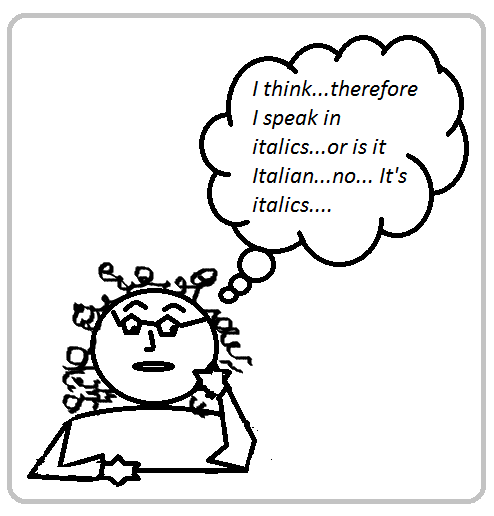
A loud contingent at any gathering of authors will say thoughts should not be italicized. While I disagree with that stance, I do see their point.

As a reader, I dislike it when long strings of private thoughts are italicized. This is an accepted practice in the genres of Sci-fi, Fantasy, and YA novels, so readers of those genres expect to see thoughts presented in italics. However, we need to be aware of how overwhelming it is for a reader to be faced with a wall of words written in a leaning font.

If the author makes it clear that the character is having the conversation with themselves, italics aren’t needed.

It was, he thought, one of those rare days, where the sun shone benevolently upon mankind, a day when the constant wind was gentle, benign. Aloud he said, “Enjoy the sun while you can, my friend. The rain is eternal here.”

Dialogue, both spoken and interior, sets the scene and unveils the theme. Your word choices reveal characters and their secrets, their personalities.

Your word choices reveal you, the author. Through those words, we hear your voice.

So, let’s consider that voice. Voice is a combination of word choices and grammar. It is distinct to each author.

From the reader’s perspective, grammar/punctuation is to writing what gravity is to the universe. It holds everything together.

We obey traffic signals when driving to avoid getting into wrecks. In the same way, our written work must abide by specific fundamental rules, or it will be unreadable—a wreck.

This is especially important when it comes to dialogue. What is spoken must be easily distinguished from the ordinary narrative.

Overall, most readers don’t see minor grammar glitches in the narrative, which is good because we all make them. Even editors write crap and need editors. But readers do notice unprofessional writing, especially when it comes to how dialogue is punctuated.

Readers notice amateurish writing.

If you are new to writing and are unsure of how to punctuate conversations so that readers can understand your work, see my post from July 29, 2020: Four Rules for Writing Conversations. The post details four simple, easy-to-remember rules of punctuation, rules for keeping the conversations flowing and understandable.

Epic Fails meme2I have said this before, but it bears mentioning again: Never resort to writing foreign languages using Google Translate (or any other translation app). Also, please don’t go nuts writing out foreign accents. It’s frustrating for readers to try to untangle garbled dialogue. A word or two, used consistently, is all that is needed to convey foreignness.

Information dispensed gradually reveals the plot, unveils hidden layers. What your characters think and say are the reader’s window into them and their world.

Conversations pull the curtain back, revealing the characters’ innermost secrets and their story.

With every sentence, a prism of information illuminates who the characters believe they are and is passed from the author to the reader. It is a light, filtered through the characters, that colors the narrative with the shades and moods of the words you habitually choose.

5 Comments

Filed under writing

Fundamentals of Writing: Character Depth – who do they think they are? #amwriting

Depth is a vast word, a sea of information created of layers. It is complex, intense, and profound. Characters with depth feel solid, alive, as real as your best friend.

depth-of-characterTo achieve a sense of depth, we begin with simplicity. Each character’s sub-story must be built upon who these characters think they are.

One of the most useful seminars I’ve ever attended was given by a Romance writer. He is a strong proponent of assigning verbs and nouns to each character at the outset as a way to get inside their heads.

If there is one thing Romance authors understand, it is how to create a strong impression of character.

When I plan a character, I make a simple word picture of them. The word picture is made of a verb and a noun, the two words that best describe each person. We want to know the good things about these characters, so we assign nouns that tell us how they see themselves at the story’s outset.

We also look at sub-nouns and synonyms, so put your thesaurus to work. In my book, Julian Lackland, I had four characters with significant roles, so I assigned them nouns that describe their principal defining quality.

This noun is the core characteristic thread that stays with them, is challenged by events, and either wins in the end or is their downfall.

Julian’s Noun is: Chivalry (Gallantry, Bravery, Daring, Courtliness, Valor, Love.) He sees himself as a good knight, a defender of innocence.

Beau’s Noun is: Bravery (Courage, Loyalty, Daring, Gallantry, Passion.) He aspires to chivalry but has a pragmatic side. He sees himself as a good knight but knows that good doesn’t always win.

Lady Mags’s Noun is: Audacity (Daring, Courage.) She is a good knight but is under no illusions about the people she defends. She is chivalrous but practical.

Bold Lora’s Noun is: Bravado (Boldness, Brashness.) She desires fame, is convinced that knights are defined by the celebrity their deeds bring them.

In real life, the way we see ourselves is the face we present to the world. Self-conceptions color how we react to events. We are gradually altered by events as life goes on. Our view of ourselves evolves, and our reactions are changed.

By the end of the story, the way our characters see themselves should have evolved. The circumstances you put them through must affect and remake them.

Once I know their nouns, I assign my characters a verb that describes their gut reactions. This word will shape the way they react to every situation that arises.

unreliable-narratorThey might think one thing about themselves, but this verb is the truth.

Julian has 2 Verbs. They are: Defend, Fight. Again, we also look at sub-verbs and synonyms: (Preserve, Uphold, Protect.)

Beau’s 2 Verbs are: Protect, Fight (Defend, Shield, Combat, Dare.)

Lady Mags’s 2 Verbs are: Fight, Defy (Compete, Combat, Resist.)

Bold Lora’s 2 Verbs are: Desire, Acquire (Own, Control, Imprison.)

When I wrote these characters, I knew how they believed they would react in a given situation and that knowledge drove the plot. Why was it so clear to me? Because I had drawn their portraits in a few descriptive words.

Julian must Fight for and Defend Chivalry. Julian’s commitment to defending innocents against inhumanity breaks his mind.

Beau must Fight for and Protect Bravery. Beau’s commitment to protecting Julian and concealing his madness breaks his health.

Lady Mags must Fight for and Defy Audacity. She’s at war with herself regarding her desire for a life with Julian and Beau. That war ruins her chance at happiness.

Bold Lora must Acquire Fame and Control Chivalry. Her thirst for notoriety destroys her.

When we uncover the nouns and verbs that describe who our characters think they are, we have a grip on creating characters who are alive to the reader.

How we phrase this when describing them in our outline is essential. Placing the verb before the noun describes a character’s core conflict. It lays bare their flaws and opens the way to building new strengths.

Knowing who our characters are before we meet them is important. Go ahead and make that personnel file detailing their backstory if you need to. Set that infodump aside because the real story will be built upon who they think they are on page one of this story.

Our characters’ preconceptions color their experience of events, which colors the readers’ view.

The characters we write are unreliable witnesses to the events that shape them. Their self-perception shades their reactions when they fail to live up to their own standards.

These are the watershed moments when our characters must examine their motives, and either face them or gloss over their failings.

Depth is instilled into to a scene where the characters prevail despite their flaws, succeeding against the odds. Or conversely, depth can be added when character flaws cause them to fail miserably at a point where they could have triumphed.

What two words describe the primary weaknesses of your characters, the factor that could be their ultimate ruin?

Julian Lackland: Obsession and Honor.

Beau Baker: Steadfast Loyalty.

Lady Mags De Leon: Stubbornness and Fear (of Entrapment).

Who are youKnowing the verb (action word) and the noun (object of the action) that best represented my characters made writing Julian Lackland easier. Their actions and reactions unfolded, and it was as if the story wrote itself.

So how do we get to know our characters and how they see themselves? Just as in real life, we meet and come to know them through conversations.

Conversations give shape to the story, turning what could be a wall of words into something personal.

Our next installment in this series will focus on revealing character through conversations.

17 Comments

Filed under writing

Fundamentals of Writing: Depth part 1 – identifying the weaknesses #amwriting

You have finished your first draft, successfully taken your characters from the opening pages through several disasters, and given them a smashing conclusion. You wrote “the end,” so now you’re finished! Time to upload it to Amazon and wait for the accolades to roll in.

depthPart1revisionsLIRF05252021STOP! If you value your reputation, you won’t rush to publish that mess just yet.

In my previous post, I outlined the stages of book construction using a traditional phased method of project management.

  1. The Concept. Make a note of that brilliant idea. Write it down, so you don’t forget it.
  2. The Planning Phase is where I create an outline. Some people don’t need this step, but I do.
  3. The Construction Phasewrite the first draft from beginning to the end.
  4. Monitoring and Controlling—For writers, this is actually a continuation of step three, a part of the construction phase. This is where you build quality into your product. If you are an outliner, this phase might go smoothly.
    • Create a style sheet as you go. See my post on style sheets here: Self-editing: Ensuring Consistency.
    • Find beta readers among your writing group and heed their concerns in the rewrites.
    • Take the manuscript through as many drafts as you must to have the novel you envisioned.
    • Employ a good line editor to ensure consistency in the quality of your product.
    • Find reliable proofreaders. (Your writing group is an invaluable resource.)
  5. Completion or Closing.

As you can see, when you write “the end” at the bottom of the last page, you have only completed the development and initial construction phase of this project.

800px-Singapore_Road_Signs_-_Temporary_Sign_-_Detour.svgNow you must set it aside, as you must gain a little distance from it to see it with a clear eye. This is where I seek an outside opinion on the strengths and weaknesses of my proto-novel. I am fortunate to have a local writing group of highly talented published authors. I also trade services with several editors. When the first draft of my manuscript is finished, I send it to a reader. While they are reading it, I work on something completely different.

You must ask your reader to look for and point out weaknesses. You need to know where you’ve over-explained, what needs to be expanded upon, and if the story has a satisfying conclusion. At this point, your manuscript needs line editing, but the first reader must understand that you aren’t at that stage yet. Beta readers must be able to look beyond those flaws and see the story as a whole.

Authors are thin-skinned. We are full of expectations that all readers will enjoy it and tell us how stellar it is. You must be prepared for your manuscript to come back with some critical observations. I have felt the sting and burn of honest criticism and was utterly crushed.

I had to put on my big-girl undies and grow up.

The real work begins when we get the first reader’s assessment back, and it isn’t what we thought we would hear.

If you had a conscientious reader, they noticed those massive info dumps. You know the ones, the long paragraphs of backstory we write to explain things.

Hopefully, your reader is familiar with your genre and knows about features such as horses, medicine, or police procedures. If so, they may tell you that more research is required.

Sometimes, the feedback we get means that we now have to completely rethink what we thought was the perfect novel.

Book- onstruction-sign copyAt this point, an amateur decides the beta reader missed the point and chooses to ignore their comments. Our unrealistic belief that our work is perfect as it falls from our minds is a failing that we must overcome if we want to engage readers.

When you have received your manuscript back with the reader’s comments, it’s time to begin the second draft. This is the area of construction where we straighten out confusing passages and make positive changes by adding or cutting scenes. We begin to add depth to our novel.

In my current manuscript, several areas were identified that needed attention.

First, my reader liked the overall story and found the characters engaging. However, she felt I hadn’t explored their relationships well enough to show their growing attraction. The eventual pairing seems to come out of nowhere. That relationship lacked depth.

Also, she pointed out where I had missed an excellent opportunity to inject real tension into the midpoint crisis. She also felt a lack of tension in the final pages.

In other words, the story lacks depth and tension at this point in its development. The work isn’t done; it’s only just begun.

This is where the intelligent author puts her reader’s observations to work. I took Alison’s comments to heart and considered the midpoint crisis. A solution presented itself, turning the story on its head. By doing that, an opportunity to make the final confrontation more perilous presented itself.

I added two chapters and trimmed back three. I slightly changed how the characters interact initially, making their mutual attraction a sub-thread that gradually grows from the moment when Character Two enters the story.

This novel tells the origin of an artifact that will be a strong thread in this series, but it is more focused on the internal battles we fight as part of the human condition. Each of us experiences emotional highs and lows in our daily lives. I must bring forward a specific layer of depth, the deep-rooted, personal reason for the emotions I want to portray.

Reactions must have a cause, something to react to. Depth can be instilled by adding a few well-chosen words, a sentence or two to show a flash of memory, a sensory prompt that a reader can empathize with.

But I'm not superstitious, LIRFIn my current work, the thoughts and motives of the characters are critical to the midpoint event and subsequent crisis of faith. Yes, who these people are, and their place in the story at the point where we meet them is crucial to the plot.

But the plot is only the surface. Below the surface, lending substance to the narrative, lies the layer of inference and implication. This layer conveys a sense of solidness, of complexity.

This layer must be handled deftly because you want the reader to feel like they have earned the information they are gaining. Yet, you must leave enough clues lying around that they can understand what you are implying. Readers can only extrapolate knowledge from information the author has offered them.

Depth is a vast word, considering that it consists of only five letters. Depth is complexity, intensity, and profoundness. These qualities are shown when each character’s sub-story is built upon who these characters think they are.

On Monday, we will take a closer look at some ways to build depth into the interactions of our characters.

2 Comments

Filed under writing

Fundamentals of Writing: Project Management #amwriting

Authors who want to take their books from idea to paperback must become project managers. Like any other endeavor, writing and successfully taking your novel to publication has many steps that take it from idea to proto-product to completion. It doesn’t matter if you are going indie or sticking to the traditional route.

ProjectManagementLIRF05232021Then there is the marketing of the finished product, but that is NOT my area strength, so I won’t offer any advice on that score.

Even on the surface, writing fiction is complex.

We all know a high-quality product when we see one. The manufacturer didn’t make it out of cheap components. They put their best effort and the finest materials they could acquire into creating it. Because the manufacturer cared about their product, we are proud to own it.

For authors, the essential component we must not go cheaply on is grammar. The way we habitually structure our prose (our voice) adds to the feeling of depth. We must have a fundamental understanding of basic mechanical skills as they are the rules of the road and prevent confusion:

  • Grammar
  • Punctuation

If you have a limited knowledge of grammar, your first obligation is to resolve that. The internet has many easy-to-follow self-education websites to help you gain a good understanding of basic grammar in whatever your chosen language is. One site that I like is https://grammarist.com/.

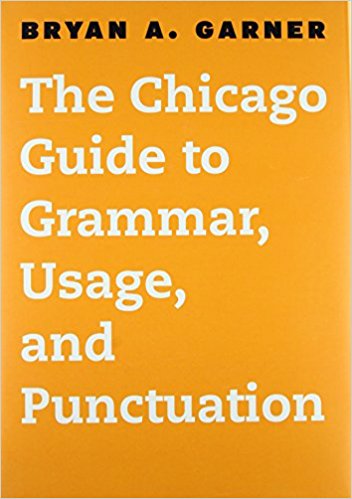
chicago guide to grammarIf you are writing in US English, I can highly recommend getting a copy of the Chicago Guide to Punctuation and Grammar. If you are writing in UK English, purchase the Oxford A – Z of Grammar and Punctuation.

Uneducated authors write erratic prose with inconsistent capitalizations, random commas, and use too many exclamation points. They show no understanding of how to punctuate dialogue, which leads to confusion and garbled prose.

Authors must know the rules of grammar to break them with style and consistency. How you break the rules is your unique voice.

Readers expect words to flow in a certain way. If you choose to break a grammatical rule, you absolutely must be consistent about it.

Ernest Hemingway, James Joyce, Alexander Chee, and George Saunders all have unique voices in their writing. All of them break the rules in one way or another, but they are deliberate and consistent. Each of these writers has written highly acclaimed work. Their prose is magnificent, and you never mistake their work for anyone else’s.

Alexander Chee employs run-on sentences and dispenses with quotation marks (which I find excruciating to read).

George Saunders writes as if he is speaking to you and is sometimes choppy in his delivery. But his work is wonderful to read.

We need a broad vocabulary, but we also need to be careful not to get too fancy with it. To be successful, we need an understanding of the tropes common to our chosen genre. We must employ those tropes to satisfy the general expectations of our readers. How we do that is our twist, the flavor that is our unique “secret sauce.”

We don’t consciously think about this, but organizational skills are critical because we want the story to flow easily from scene to scene. This is why successful authors are project managers, even if they don’t realize it.

The first aspect of this is to Identify your Project Goals. Your story is your invention. You want to sell that invention, so your effort and the materials you create it out of are what determine the quality of the finished product.

Some inventions are in development for years before they get to market. Others are complete and ready to market in a relatively short time. Regardless of your timeline, this is where project management skills really come into play.

I use a phased (or staged) approach. This method breaks down and manages the work through a series of distinct steps to be completed.

  1. Concept: The Brilliant Idea. Make a note of that idea, so you don’t forget it.
  2. The Planning Phase: creating the outline. Some people don’t need this step, but I do.
  3. The Construction Phase—writing the first draft from beginning to the end through multiple drafts.
  4. Monitoring and Controlling—This is where you build quality into your product.
    1. BGoogle Sheets Storyboard Template Screenshot 2017-10-15 07.13.09 cjjaspBCreating a style sheet as you go. See my post on style sheets here: Self-editing: Ensuring Consistency.
    2. Finding beta readers and heeding their concerns in the rewrites.
    3. Taking the manuscript through as many drafts as you must in order to have the novel you envisioned.
    4. Employing a good line editor to ensure consistency in the quality of your product.
    5. Finding reliable proofreaders. (Your writing group is an invaluable resource.)
  5. Completion or Closing—
    1. Employing a cover designer if you are going indie.
    2. Finding an agent if you are taking the traditional route.
    3. Employing a professional formatter for the print version if you are going indie.
    4. Courting a publisher if you are taking the traditional route.

After that comes marketing, whether you are going indie or traditional. Both paths require serious effort on your part. But as I said earlier, I have no professional skills in the area of marketing. I recommend you seek professional help but be wary—the waters are full of starving sharks waiting to devour you and your savings.

ok to write garbage quote c j cherryhWrite the basic story. Take your characters all the way from the beginning through the middle and see that they make it to the end. If you have completed the story and have it written from beginning to end, you can concentrate on the next level of the construction phase: adding depth.

We will work on some of the sublayers of depth in our next series on the craft of writing. First up, we will examine why your story isn’t finished just because it now has an ending.

10 Comments

Filed under writing

The Vegan on the Road to Vegas #amwriting

I am out of town and on a mini vacation this week. We are fully vaccinated and in Las Vegas for a grandchild’s wedding.

MyWritingLife2021My husband is recovering from a total hip replacement, so traveling out of town for an extended stay involves a lot of logistics. Also, I am vegan, which has an impact on things. I can eat in restaurants, but once I am away from my part of the world, the menu is often limited to a garden salad.

I have several militant vegan friends who can be… um… evangelical… so I go out of my way to NOT be difficult. If you are determined to cook for me, don’t get into a dither. Offer me a salad with oil and vinegar, bake me a potato, and give me a little guacamole or salsa to dress it up. Open a can of beans – I will be happy with just about anything you fix. Let’s be real! Anything with avocado is awesome!

I love a veggie plate with hummus. Many restaurants offer one as an appetizer plate, and I will make that my meal. I guarantee, I won’t feel cheated.

It may seem odd to many people who know that I once raised sheep and chickens, but that experience is partly why I am vegan. So, being vegan means that I eat nothing from an animal. No cheese, no meat, no eggs.

So, what do I eat? I live in the Pacific Northwest. The Vancouver B.C./Seattle/Portland area has a large vegetarian community, so most restaurants offer options that can be made vegan. The stores in my area have large sections of plant-based proteins, cheeses, and plant-based butters. Many delicious kinds of cheese are available from Miyoko’s Creamery. They can be found in most grocery stores here in the Pacific Northwest, as can Beyond Meat and Field Roast products. We also can often find Gardein products, a Canadian plant-based company.

These products taste good and are satisfying to the carnivores I am feeding, and are easy to prepare in many diverse ways.

Vegetables are amazingly versatile and quick to prepare. If you have an eye for art and color, you can impress even your five-year-old. Some of the most beautiful presentations you will see at fine restaurants are created from artistically plated fruits and vegetables.

book-plants-only-coverProtein is essential, and I have many delicious options to make that don’t involve processed foods. My favorite “impress-the-son-in-law” cookbook is this gem by Gaz Oakley: Plants-only Kitchen.

I also have a book by Miyoko Schinner, the Homemade Vegan Pantry, a book that has been the cornerstone of my personal style of cuisine. I’ve adapted many of my old recipes to my vegan lifestyle.

Tempeh is made from soybeans but differs from tofu (which I love for curries). It is a whole soybean product with different nutritional characteristics and textural qualities.

Tempeh has ‘tooth.’ The way you marinate the tofu or tempeh before you cook it is how you make it tasty. Plain tofu or tempeh is bland, waiting for you to liven it up. That blandness is what gives them a bad reputation among new vegetarians who don’t understand how to prepare them.

However, they take on the flavors of marinades well, so they are wonderful products to cook with.

Chickpeas (garbanzos) are an extremely versatile bean, with as many uses in the vegan kitchen as the soybean.

Flavor for gravies, pilafs, and soups comes from vegetable broth. There are two ways to get good rich flavor using vegetable broth. However, my go-to store-bought product for use at home is the reliable kitchen staple, Better Than Bouillion Vegetable Base. Otherwise, I make my own veggie broth base, using the recipe I found here: Homemade Vegetable Soup Base. It’s not complicated and is one of those shortcuts to great flavor that I regularly employ.

But you don’t have to cook fancy things for me. I’m happy with rice and vegetables sautéed in olive oil (or any other organic vegetable oil) rather than in butter, which comes from cows.

The_Homemade_Vegan_PantryThe most surprising thing about being vegan is how little it costs to eat well once you have your pantry basics. Going sans meat is the lazy person’s dream diet. It’s amazing how quickly you can get a meal on the table, and whether you are making beans or soup, the crockpot is your best friend. I often make my own bread from several different recipes, a tasty treat that takes less than five minutes to put together using my bread machine.

I would far rather spend my time writing than cooking. However, the meals in our household are important. The table is where we discuss the day and share our thoughts, hopes, and plans. How the food looks when the family sits down is as important as any other part of the meal. Fruit and veggies make decorating each plate easy.

But today, I’m partying in Vegas. Someone else is doing the cooking and cleaning, and I’m enjoying a spa day and a relaxing change from the routine. Our granddaughter’s wedding is a big day for us all, and we’re going to make the most of it.

4 Comments

Filed under writing