
Most writers find it easy to connect with flamboyant emotions, such as hate, anger, desire, and adoration. However, emotions have “volume,” ranging from soft to loud. Today we are looking at emotions we need to show with less noise.
 Volume control is a crucial part of the overall pacing of your story. “Loud” deafens us and loses its power when it’s the only sound. However, like the opening movement of Beethoven’s 5th Symphony, the entire range of volume can be effectively used to create a masterpiece.
Subtle reactions have power when contrasted against more forceful displays of emotion.
Low-key thoughts and feelings can go almost unnoticed. Under the surface, positive or negative vibes give us a rounded view of a character, making them less two-dimensional, a more natural person.
We’re all aware of one positive emotion that can go bad – love. When love is reciprocated, it’s a positive feeling. We all enjoy a good love story.
However, when love starts out with promise and then goes terribly wrong, you have the makings of a deep, dark story filled with possibilities. Anger, despair, revenge—these can be loud and also be subtle, brooding.
 Dark emotions, such as depression, can be shown through a character’s reactions to things that once pleased them. Perhaps they no longer find beauty in the things they once enjoyed.
What about lighter emotions? The way we feel joy ranges from mild to overwhelming, from a slight smile to an experience so profound it brings tears to one’s eyes.
Subtle emotions don’t stand out and grab the reader. But when they’re swimming just under the surface, they have impact. Subtleties color and shape the reader’s opinions about the story and the characters.
One negative aspect of our human character is our tendency to experience an uncharitable emotion known as schadenfreude. We all go through it on a personal level every now and then. Some people take great joy in it, gaining a sense of superiority. But most of us are embarrassed to admit to it.
Small, quiet emotions linger and leave an impression but are hard to articulate. It helps to include small indicators of mood such as:
- Anguish
- Anxiety
- Competence
- Confidence in their friends
- Cooperation
- Courage
- Decisiveness
- Defeat
- Defensiveness
- Depression
- Discovery
- Ethical Quandaries
- Group ethics
- Happiness
- Inadequacy
- Indecision
- Individual moral courage
- Jealousy
- Paranoia
- Powerlessness
- Purposefulness
- Regret
- Resistance
- Revelation
- Satisfaction
- Self-confidence
- Serenity
- Strength
- Success
- Sufficiency
- Temptation
- Trust
- Unease
- Weakness
These attributes are rarely spelled out, but they color how the characters interact with each other.
Some positive emotions can be more intense, yet not overpowering. Those moments can be shown by an immediate physical reaction combined with internal dialogue or conversations.
Severe emotional shock strikes us with a one-two-three punch: the disbelief/OMG moment, followed by knocking knees, shaking hands, or a shout of “No!” which is sometimes followed by disassociation.
 Visceral reactions are involuntary—we can’t stop our face from flushing or our heart from pounding. We can pretend it didn’t happen or hide it, but we can’t stop it. An internal physical gut reaction is difficult to convey without offering the reader some information, a framework to hang the image on.
We use the same one-two-three trick when describing a mild experience as we do with louder emotions.
Start with the visceral response. There will be an instant reaction. How does a “gut reaction” feel? Nausea, gut-punch, butterflies … how do you respond to internal surprises?
Emotions are felt in the chest in varying degrees, from a slight warmth or chill to a stronger heart-pounding sensation. But we’re keeping it subdued here.
Follow the visceral up with a thought-response. Whatever your style and word choices are, showing the characters’ joy or dismay makes them human. If it is a mild reaction, give it a moderate thought response. Showing small moments of relatable happiness or displeasure makes our protagonist more sympathetic.
Third, finish up with body language. That is how emotions hit us. We feel the shock and then experience the mental reaction as we process the event. Our body language reflects these things.
What if you are writing a story where one of the antagonists eventually becomes part of the protagonist’s inner circle? Including small positive thoughts early on in their narrative can foreshadow that this character may become the ally that turns the tide.
Conversely, when the antagonist begins as part of the protagonist’s inner circle, minor negatives like envy and schadenfreude in their narrative can foreshadow that this character is not what they seem.
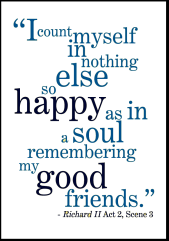 Conflict keeps the protagonist from achieving their goals. Significant conflicts and emotions are easy to write about. But in real life, our smaller, more internal conflicts frequently create more significant roadblocks to success than any antagonist might present.
Large emotions are easy to visualize. But frequently, in real life, our smaller joys have a longer-lasting impact, and the memory of these can be the impetus that keeps the soldier fighting during the darkest hours.
If we contrast the loud emotions against the soft ones, the reader will experience those emotions as if they are theirs. The story detailed in that book will be more meaningful to them.
 In real life, we are drawn to certain people and get to know them better through conversations.
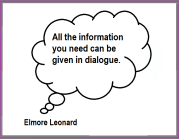 Good conversations and mental dialogues bring written characters to life and turn them into people we want to know, our closest friends.
 Internal dialogues (rambling thoughts) are often a thinly disguised info dump in my first drafts. I seek those out in the second draft and either cut them to a line or two or eliminate them entirely. I try to avoid italics if possible, so this is how I write thoughts nowadays:
 However, I have no problem understanding an accent and visualizing a character as foreign when the author consistently uses one or two well-known words that a non-native speaker might use, such as si, ja, or oui, in place of yes. Most English speakers recognize and know the meaning of these words when they see them. All it takes is a straightforward word to convey the proper foreign flavor.
 The laws of grammar sometimes break down on the quantum level in conversations with our friends. This is also true of written exchanges.
 Rule 3: Commas—Do not place a period between the closed quotes and the dialogue tag. Use a comma because when the speech tag follows the spoken words, they are one sentence consisting of clauses separated by a comma: “I’m here,” he said.
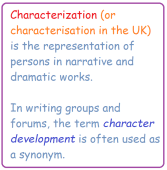 Conversations, both spoken and internal, light up and illuminate the individual corners of the story, bringing the immensity of the overall story arc down to a personal level.
 In his book,
  Batman is a
  Apollo 13 (April 11–17, 1970) was the seventh crewed mission in the
  No matter what genre we write in, when we design the story, we build it around a need that must be fulfilled, a quest of some sort.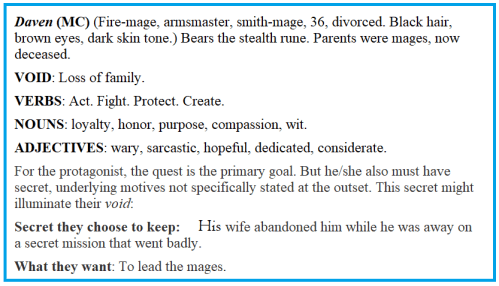
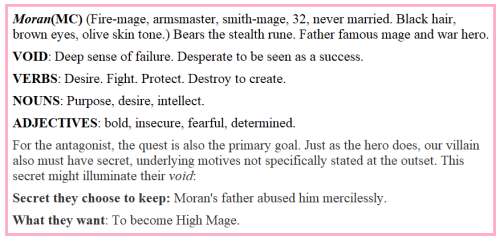
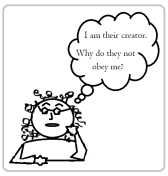 I recently had a manuscript undergo a complete change from what I originally planned. The original antagonist had such an engaging story that he had become more important to me than the protagonists.
 As a reader, I dislike discovering the author is at a loss as to what their protagonist wants. Without that impetus, they don’t have a good reason for the villain to be there either. Random events inserted to keep things interesting don’t advance the story, but motivation does.
 You’ve taken them through two revisions and think these characters are awesome, perfectly drawn as you intend. The overall theme of the narrative supports the plot arc, and the events are timed perfectly, so the pacing is good.
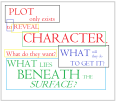 But in real life, I often find little distinction between heroes and villains. Heroes are often jackasses who need to be taken down a notch. Villains will extort protection money from a store owner and then turn around and open a soup kitchen to feed the unemployed.
 Both heroes and villains must have possibilities – the chance that the villain might be redeemed, or the hero might become the villain. As an avid gamer, I think of this as the “
 In Final Fantasy VII, the 1997 game that started it all, we meet Cloud Strife, a mercenary with a mysterious past. Gradually, we discover that, unbeknownst to himself, he is living a lie that he must face and overcome to be the hero we all need him to be.
 I try to keep the ensemble narrow in my work, limiting points of view to only one, two, or three characters at most. I keep the core cast limited to four or five, as it takes a lot of effort to show more people than that as being separate and unique.
 Moriarty’s characters are immediately engaging. They sucked me into their world in the opening pages. I couldn’t set the book down, as I wanted to know everyone’s dark secrets. I was hooked; I had to understand what led these people to book themselves into that exceedingly unusual health spa.
 The guests are immediately thrust into an unknown and possibly dangerous environment. The food they are offered is high quality but not what they are used to and varies from guest to guest.
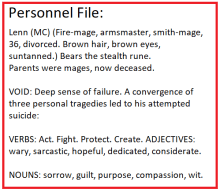 Character Names. I list the essential characters by name and the critical places where the story will be set.
 But what I realized is this—had he lived, my father would be turning one hundred. Our two oldest daughters will be turning fifty. Our two sons are in their mid and late forties, and our youngest daughter, the baby, will be forty.
 This diagnosis has prompted us to downsize and sell our home. We currently live in a tiny, rural town twenty miles south of Olympia, where all the services we need easy access to are located. So now we’re planning to move back to a city of politics, art, and creativity. Since leaving there in 2005, we have enjoyed the quiet of our little quarry town—but now we’re looking forward to seeing plays and attending concerts again.
 We have upped our garbage collection to weekly instead of bi-weekly, and we have no trouble filling that bin with things no sane person would have saved in the first place.
 This behavior occurs on a subatomic level, something to do with
  The most important things we will keep are the memories, things that take up no room and never need dusting. We’ve had family parties for every holiday, including Easter Egg hunts that are legendary among the grandchildren.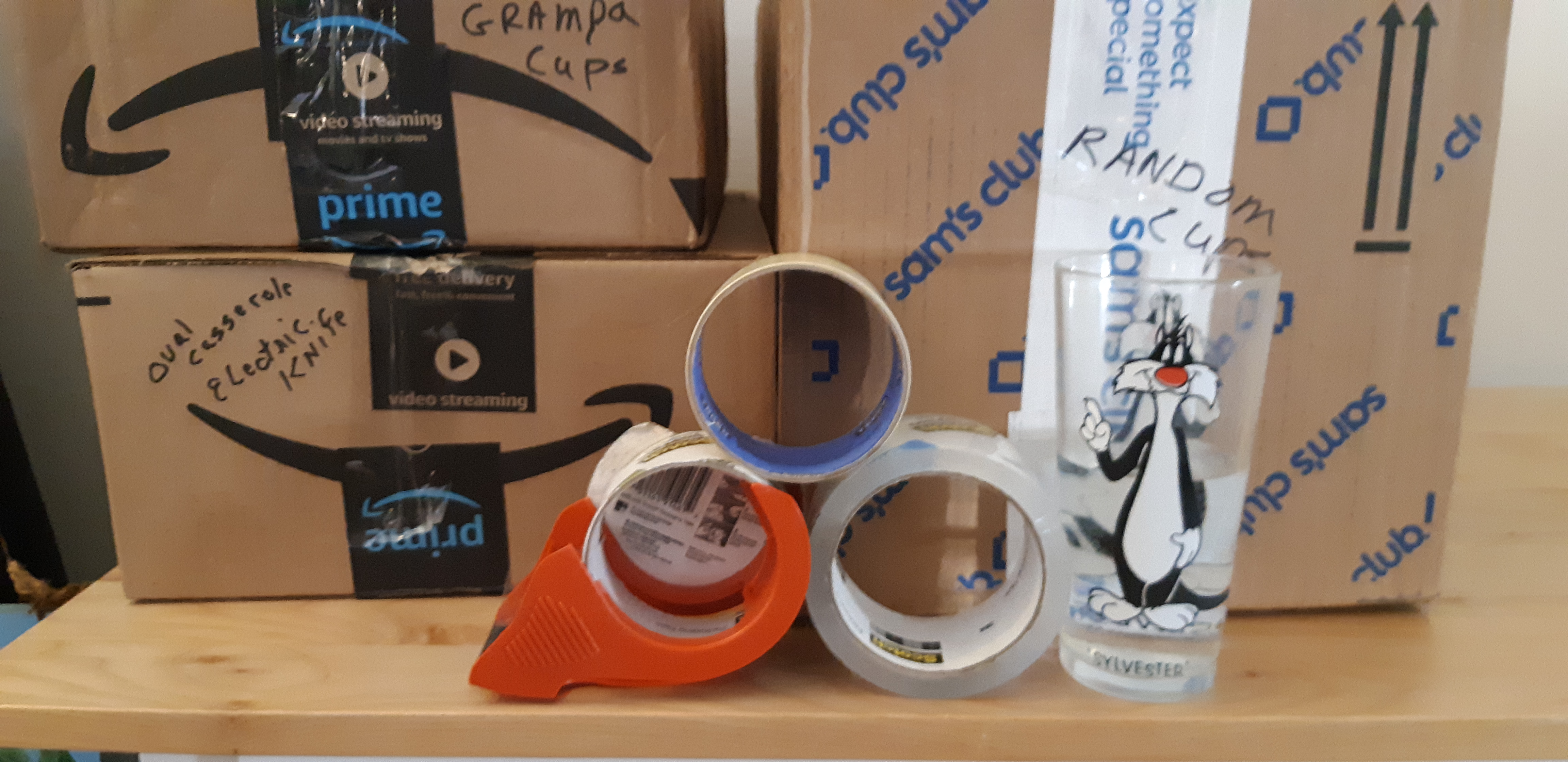


 Life in the Realm of Fantasy
