
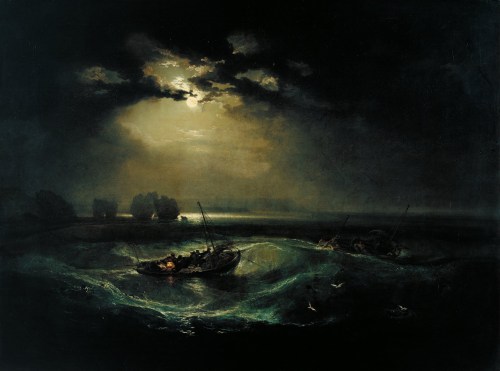
 Artist: J. M. W. Turner (1775–1851)
Title: Fishermen at Sea
Genre: marine art
Depicted place: The Needles, off the Isle of Wight
Date: 1796
Medium: oil on canvas
Dimensions: Height: 914 mm (35.98 in); Width: 1,222 mm (48.11 in)
What I love about this painting:
I love seascapes, in all their many forms. This particular painting is dark in many ways beyond the obvious. It is a night scene, and it tells us a story of the dangers that fishermen face. Fish don’t care about the weather and some fish can only be caught at night.
If you must go out in the stormy dark, sometimes the catch is death.
We see an event unfolding by moonlight, observed by three seagulls sailing on the wind. Two boats, one a small vessel and the other a larger boat, tossing upon the rough sea, both with their sails furled. This tells us they fear being driven onto the rocks known as the Needles.
A line has been cast toward the larger boat, but no one is tending it. Nearly all the art scholars say it is a fishing line, but it seems rather stout for a fishing line, and there is only one line in the water although two ships are braving the storm. Waves threaten to wash everything overboard on both boats.
I’m a storyteller; to my imagination this scene looks less like a fishing expedition and more like a rescue, as if the rope has been cast toward the other vessel to bring it close.
This is the beauty of great art. It inspires the imagination to think beyond the obvious, to look outside the accepted view and to find new ways of looking at things.
The warm glow of lantern in the stern of the smaller boat casts little light and is the only warmth in this scene. The moon has emerged from behind the clouds and illuminates the action.
Whether this is merely a rough night of fishing or a rescue at sea, this a powerful moment of fear and bravery.
About this painting via Wikipedia:
Fishermen at Sea, sometimes known as the Cholmeley Sea Piece, is an early oil painting by English artist J. M. W. Turner. It was exhibited at the Royal Academy in 1796 and has been owned by the Tate Gallery since 1972. The painting measures 36 by 48.125 inches (91.44 cm × 122.24 cm). It was the first painting by Turner to be exhibited at the Royal Academy. It was praised by contemporary critics and founded Turner’s reputation, as both an oil painter and a painter of maritime scenes. Art historian Andrew Wilton has commented that the image: “Is a summary of all that had been said about the sea by the artists of the 18th century.”
The painting depicts a moonlit view of fishermen on rough seas near the Needles, of the Isle of Wight. It juxtaposes the fragility of human life, represented by the small boat with its flickering lamp, and the sublime power of nature, represented by the dark clouded sky, the wide sea, and the threatening rocks in the background. The cold light of the Moon at night contrasts with the warmer glow of the fishermen’s lantern. [1]
About the Artist, via Wikipedia:
Joseph Mallord William Turner RA (23 April 1775 – 19 December 1851), known in his time as William Turner,[a] was an English Romantic painter, printmaker and watercolourist. He is known for his expressive colourisations, imaginative landscapes and turbulent, often violent marine paintings. He left behind more than 550 oil paintings, 2,000 watercolours, and 30,000 works on paper. He was championed by the leading English art critic John Ruskin from 1840, and is today regarded as having elevated landscape painting to an eminence rivalling history painting.
Turner was born in Maiden Lane, Covent Garden, London, to a modest lower-middle-class family. He lived in London all his life, retaining his Cockney accent and assiduously avoiding the trappings of success and fame. A child prodigy, Turner studied at the Royal Academy of Arts from 1789, enrolling when he was 14, and exhibited his first work there at 15. During this period, he also served as an architectural draftsman. He earned a steady income from commissions and sales, which due to his troubled, contrary nature, were often begrudgingly accepted. He opened his own gallery in 1804 and became professor of perspective at the academy in 1807, where he lectured until 1828. He travelled to Europe from 1802, typically returning with voluminous sketchbooks.
Intensely private, eccentric and reclusive, Turner was a controversial figure throughout his career. He did not marry, but fathered two daughters, Eveline (1801–1874) and Georgiana (1811–1843), by his housekeeper Sarah Danby. He became more pessimistic and morose as he got older, especially after the death of his father, after which his outlook deteriorated, his gallery fell into disrepair and neglect, and his art intensified. In 1841, Turner rowed a boat into the Thames so he could not be counted as present at any property in that year’s census. He lived in squalor and poor health from 1845, and died in London in 1851 aged 76. Turner is buried in Saint Paul’s Cathedral, London. [2]
Credits and Attributions:
Fishermen at Sea, J. M. W. Turner, Public domain, via Wikimedia Commons
[1] Wikipedia contributors, “Fishermen at Sea,” Wikipedia, The Free Encyclopedia, https://en.wikipedia.org/w/index.php?title=Fishermen_at_Sea&oldid=1000617338 (accessed January 21, 2022).
[2] Wikipedia contributors, “J. M. W. Turner,” Wikipedia, The Free Encyclopedia, https://en.wikipedia.org/w/index.php?title=J._M._W._Turner&oldid=1062349164 (accessed January 21, 2022).
 But more importantly, even if you are traditionally published, you pay for the books you sell at shows.


 She also wrote the brilliant, hilarious standalone novel,
 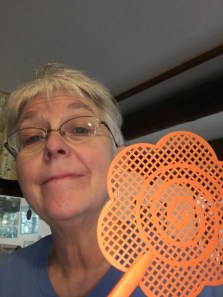 About Ellen King Rice: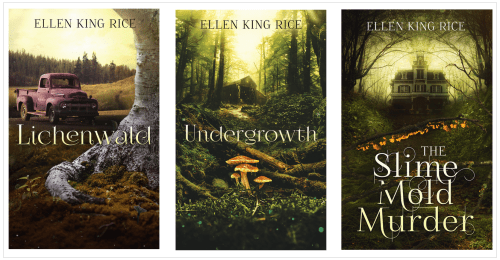
 Artist: Anna Ancher (1859–1935)
 In an instant, an entire manuscript is gone, wiping away hundreds of hours of work on their labor of love.
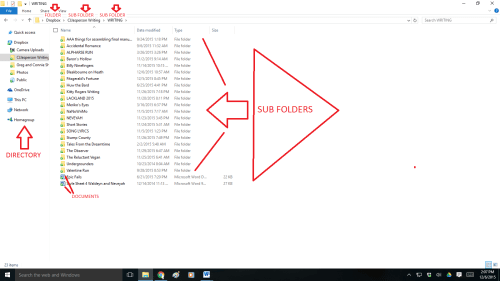 A filing system is quite simple, rather like a tree from the ground up. For most documents, my system is a standard office-type system that consists of:
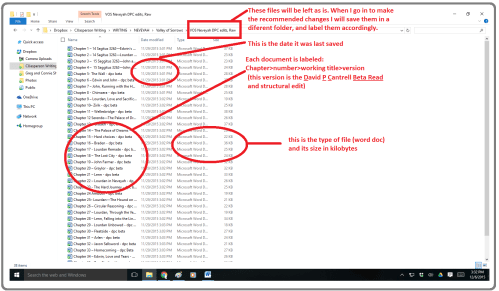 Name your files consistently and save each version in a separate folder within the master folder. Below is the master file for Valley of Sorrows.
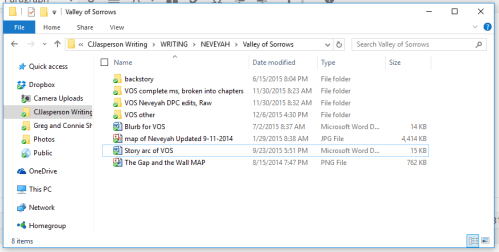 You may create many versions of your manuscript. YOU MUST manage your versions with meticulous care, or you will lose files, have to rewrite sections you just wrote, and which were brilliant, or any number of horrible, irritating situations.
 It’s a platform where you can advertise your books and discuss your interests, and most importantly, talk about what you are writing.
 Writing blogposts requires me to become a thinking author, as well as a pantser. I can write using the “stream-of-consciousness” method or from an outline of whatever interests me at the time. I do the research, and the post begins to write itself.
 I love to see what questions people might want to have answered. Sometimes topics crop up at my writing group that no one has an answer to, and then I get to do a little research—my favorite thing. Other times I find interesting questions in the writers’ forums that I frequent.
 If you feel that it’s too much work, consider how you update your other social media. Try posting a haiku, a tweet-length post, or an Instagram-style post once or twice a week. Any social media platform post can be converted to serve as a blog post.
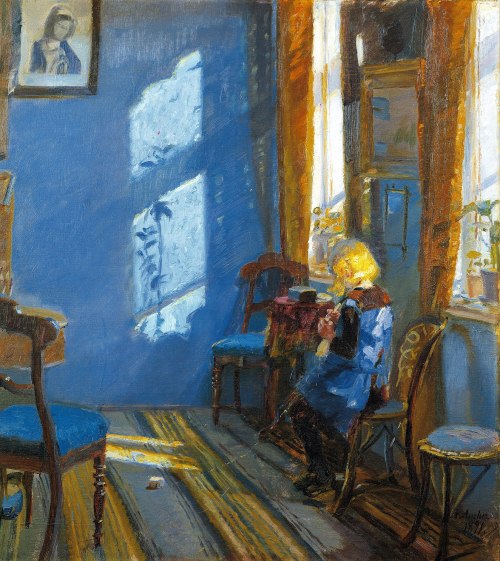 Artist: Anna Ancher:
 Today, we continue that discussion with four more genres, each with many subgenres. First up is westerns. This is a popular genre with several common tropes and can be tricky to write respectfully and find a publisher for.
 However, more and more, we are finding stories with female protagonists. An excellent example of this is the novel,
 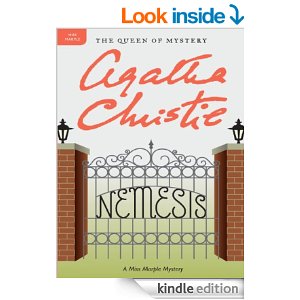 The Agatha Christie / Sherlock Holmes style of novel is the classic whodunnit. They feature a private detective with close ties to law enforcement but who is still an outsider. The detective sometimes has a sidekick who chronicles their cases. At times, the detectives butt heads with the police as resentment of the protagonist’s stepping on their turf crops up. This jealousy hinders the investigation. Clues are always inserted so that the reader doesn’t notice them until the denouement, and the sidekick never guesses right either.
 Definitions differ as to what constitutes a historical novel. On the one hand, the
  The rules of the category I am entering (Genre Fantasy/Sci-Fi) are clear: submissions must be of new, never-before-published novels. You can include only the first 25 pages of the manuscript, which will follow the synopsis.
 This is a task I would have found far more daunting without the support of my Tuesday morning writing group.
 Attend a few meetings as an observer to see if this group is a good fit for you.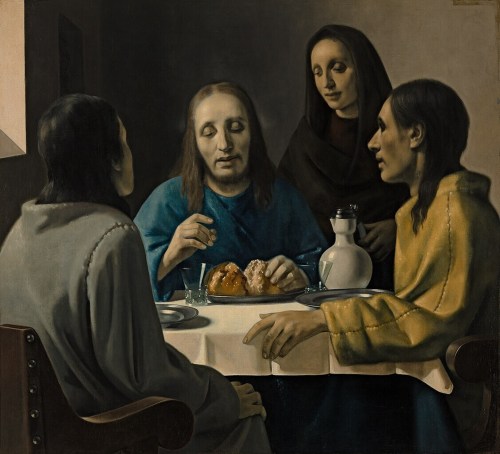


 Life in the Realm of Fantasy
