Poetry: Shape and form #amwriting

Poetry comes in many forms. In fact, Writer’s Digest University lists 100 of them: List of 100 Poetic Forms for Poets.

However enticing that rabbit trail may be, today’s post will cover only a few of the most common and well-known forms. The rhyming scheme of poetry is traditionally shown by using the first letters of the alphabet, such as: AABB

Another word to know is what we call a stanza, or how we divide our poem. Literary Devices says: In poetry, a stanza is a division of four or more lines having a fixed length, meter, or rhyming scheme.

A few of the most common poetic forms are:

Elegy  – a poem or song written to honor the life of someone deceased, such as W. H. Auden’s In Memory of W. B. Yeats, the opening lines which follow:

He disappeared in the dead of winter:

The brooks were frozen, the airports almost deserted,

And snow disfigured the public statues;

The mercury sank in the mouth of the dying day,

What instruments we have agree

The day of his death was a cold dark day.

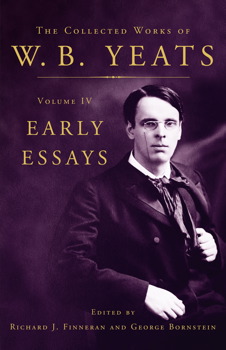
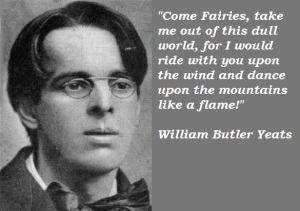
Epitaphs – poetic writings on tombstones, such as William Butler Yeats’ epitaph, taken from his poem, Under Ben Bulben:

Cast a cold Eye

On Life, on Death.

Horseman, pass by!

Haiku – short Japanese poem, 5 syllables, then seven syllables, then 5 syllables.

I write one Haiku

Five over seven and five

Five Seven Five done.

Limericks have 5 lines, with lines 1, 2, and 5 rhyming with each other, and lines 3 and 4 rhyming with each other. The cadence ends with a stressed syllable. Limericks have strong rhymes, and a recognizable rolling verse:

The limerick packs laughs anatomical

Into space that is quite economical.

But the good ones I’ve seen

So seldom are clean

And the clean ones so seldom are comical.

Odes are poetry that praise a person or an ideal, such as this excerpt from Wordsworth’s Intimations of Immortality:

Turn wheresoe’er I may,

By night or day,

The things which I have seen I now can see no more…

Our birth is but a sleep and a forgetting:

The Soul that rises with us, our life’s Star,

Hath had elsewhere its setting,

And cometh from afar:

Not in entire forgetfulness,

And not in utter nakedness,

But trailing clouds of glory do we come

From God, who is our home…
Prose poetry is written in prose form instead of verse form without the line breaks associated with poetry. However, it contains the imagery and makes use of rhyme, repetition, fragmentation (short sentences), and most other poetic devices.

Quatrain. A complete poem consisting of four lines. There are fifteen possible rhyme patterns, but the most traditional and common are: AAAA, ABAB, and ABBA. Thomas Gray’s Elegy Written in a Country Churchyard is ABAB:

The curfew tolls the knell of parting day,

The lowing herd wind slowly o’er the lea,

The plowman homeward plods his weary way,

And leaves the world to darkness and to me.

Rondel -13 or 14 lines in 3 stanzas. Wikipedia says:

“There are several variations of the rondel, and some inconsistencies. For example, sometimes only the first line of the poem is repeated at the end, or the second refrain may return at the end of the last stanza.  Henry Austin Dobson provides the following example of a rondel:

    Love comes back to his vacant dwelling,

      The old, old Love that we knew of yore!

      We see him stand by the open door,

    With his great eyes sad, and his bosom swelling.


    He makes as though in our arms repelling

      He fain would lie as he lay before;

    Love comes back to his vacant dwelling,

      The old, old Love that we knew of yore!


    Ah! who shall help us from over-spelling

      That sweet, forgotten, forbidden lore?

      E’en as we doubt, in our hearts once more,

    With a rush of tears to our eyelids welling,

    Love comes back to his vacant dwelling.

The last form I’m going to show you is the Sonnet, which was a favorite medium for William Shakespeare.

Wikipedia says: The Petrarchan sonnet is a sonnet form not developed by Petrarch himself, but rather by a string of Renaissance poets. Because of the structure of Italian, the rhyme scheme of the Petrarchan sonnet is more easily fulfilled in that language than in English. The original Italian sonnet form divides the poem’s fourteen lines into two parts, the first part being an octave and the second being a sestet.

On His Blindness by the English poet Milton, gives a sense of the Petrarchan rhyme scheme:

When I consider how my light is spent (A)

 Ere half my days, in this dark world and wide, (B)

 And that one talent which is death to hide, (B)

 Lodged with me useless, though my soul more bent (A)

To serve therewith my Maker, and present (A)

 My true account, lest he returning chide; (B)

 “Doth God exact day-labour, light denied?” (B)

 I fondly ask; but Patience to prevent (A)

That murmur, soon replies, “God doth not need (C)

 Either man’s work or his own gifts; who best (D)

 Bear his mild yoke, they serve him best. His state (E)

Is Kingly. Thousands at his bidding speed (C)

 And post o’er land and ocean without rest; (D)

 They also serve who only stand and wait.” (E)
I have experimented with writing in all of these forms, but I tend to lean most toward a kind of free verse or prose poem. On Wednesday, I will feature an interview with my good friend, Stephen Swartz. He writes novels and short stories in a wide variety of genres and often leaves comments for me in the form of silly rhymes.

Silliness aside, Stephen has been known to produce some beautiful prose poems and is always willing to talk about the craft.


Sources and Attributions:

Wikipedia contributors, “Rondel (poem),” Wikipedia, The Free Encyclopedia, https://en.wikipedia.org/w/index.php?title=Rondel_(poem)&oldid=925869026 (accessed May 17, 2020).

Wikipedia contributors, “Sonnet,” Wikipedia, The Free Encyclopedia, https://en.wikipedia.org/w/index.php?title=Sonnet&oldid=951762201 (accessed May 17, 2020).
7 Comments

Filed under writing

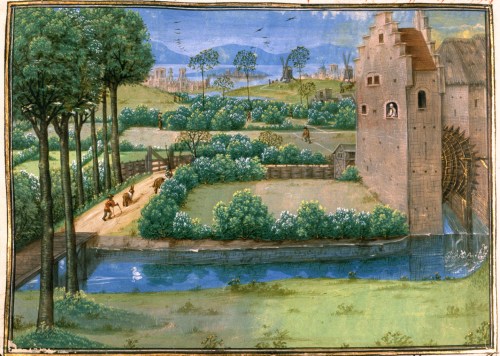
#FineArtFriday: Landscape with a Watermill – Le Tresor des Histoires (15th C) The Cotton Library

Description: Landscape with a Watermill

Date: 15th century

Collection: British Library

Accession number: Cotton Augustus V, f.345v

Source/Photographer: Image taken from Le Tresor des Histoires: a universal history from the Creation to the time of Pope Clement VI.

Originally published/produced in 15th century.

Held and digitised by the British Library

About the Cotton Library, via Wikipedia:

The Cottonian Library was the richest private collection of manuscripts ever amassed. Of secular libraries it outranked the Royal Library, the collections of the Inns of Court and the College of Arms. Cotton’s collection even included the original codex bound manuscript of Beowulf, written around the year 1000. Cotton’s house near the Palace of Westminster became the meeting-place of the Society of Antiquaries of London and of all the eminent scholars of England. the Library was eventually donated to the nation by Cotton’s grandson and is now housed in the British Library.

Robert Bruce Cotton organized his library in a room 26 feet (7.9 m) long by six feet wide filled with bookpresses, each with the bust of a figure from classical antiquity on top. Counterclockwise, these were:

This is an incomplete list of some of the manuscripts from the Cotton library that today form the Cotton collection of the British Library. Some manuscripts were destroyed or damaged in a fire at Ashburnham House in 1731, and a few are kept in other libraries and collections.

In each press, each shelf was assigned a letter; manuscripts were identified by the bust over the press, the shelf letter, and the position of the manuscript (in Roman numerals) counting from the left side of the shelf. Thus, the Lindisfarne Gospels, Nero B.iv, was the fourth manuscript from the left on the second shelf (shelf B) of the press under the bust of Nero. For Domitian and Augustus, which had only one shelf each, the shelf letter was left out of the press-mark.

The British Museum retained Cotton’s press-marks when the Cotton collection became one of the foundational collections of its library, so manuscripts are still designated by library, bookpress, shelf, and number (even though they are no longer stored in that fashion). For example, the manuscript of Beowulf is designated Cotton MS Vitellius A.xv, and the manuscript of Pearl is Cotton MS Nero A.x.

Today’s image is a gorgeous, highly detailed illustration from the 15th century book,  Le Tresor des Histoires. Universal history, from the Creation to Pope Clement VI (died 1342). 15th century copy. Lavishly illuminated, the beautiful art was most likely done by an unknown artist in either a monastery or nunnery, as both priests and nuns were known to work at copying and illustrating books. In fact, nuns were as likely to be found working as scribes as monks, friars, and priests were.

About Sir Robert Cotton, 1st Baronet – via Wikipedia:

Sir Robert Cotton began developing the works and manuscripts into a collection for his Library shortly after the birth of his son in 1594. From the period 1609 to 1614 the deaths of various people (including Lord Lumley, Earl of Salisbury, Prince Henry, William Dethick and Northampton) all contributed to Sir Robert Cotton’s purchase of works for his library. Sir Robert Cotton resided in London, while his wife and son remained in the country. During his father’s absence Thomas Cotton studied to eventually receive his BA on 24 October 1616 from Broadgates Hall—the very same year that Sir Robert Cotton returned to his wife Elizabeth and family (a result of a hiccup with the law involving the death of earl of Somerset). At that point, Sir Thomas Cotton had taken the responsibilities of the home and the library into his own hands.

(c) Trinity College, University of Cambridge; Supplied by The Public Catalogue Foundation

In 1620, Thomas Cotton married Margaret Howard with whom he had his first son, Sir John Cotton, just one year later in 1621. Sir Thomas Cotton’s marriage with Margaret Howard ended in 1622, which had been the year that Thomas Cotton’s father, Sir Robert Cotton, permanently moved residence to The Cotton House, along with the library which remained in the Cotton House until Sir Robert Cotton’s death nine years later in 1631. The relocation of the library and residence to the Cotton House gave members of Parliament and government workers better access to the matter within the library to be used as resources for their work.

The Cotton Library offered important and valuable sources of reference and knowledge to many people, such as John Selden, “a frequent borrower from the library, and probably its protector during the civil wars” as stated in the Oxford Dictionary of National Biography. Selden, in 1623 said of Cotton: “his kindness and willingness to make them [his collection of books and manuscripts] available to students of good literature and affairs of state”. In keeping with the notion that John Selden was a common presence in the Cotton library, The British Library holds a list of thirteen works, and the locations of those volumes today, that had been lent to Seldon by Sir Robert Cotton.

After another hiccup with the government, Sir Robert Cotton was forced to close the library by Charles I because the content within the library was believed to be harmful to the interests of the Royalists in 1629. In September 1630 Sir Robert Cotton and Sir Thomas Cotton, together, petitioned for renewed access to their library. One year later, in 1631, Sir Robert Cotton died without knowing what the future held for his library, but wrote in his will that the library be left to his son Thomas Cotton and that it be passed down accordingly. After the death of his father, Sir Thomas Cotton married his second wife, Alice Constable, in 1640 with whom they had their son Robert Cotton in 1644. Sir Thomas Cotton’s “ownership access to the Cotton library was more limited than under his father” according to the Oxford Dictionary of National Biography, and Thomas Cotton maintained his ability to “protect,” “improve” and “maximize the profits” received during the civil war, as he had earlier on in his life as a result of his father’s absence. Upon the death of Sir Robert Cotton on 13 May 1662, Sir Thomas Cotton obeyed the will of his father and passed down the library to his eldest son from his first marriage, Sir John Cotton.

On 12 September 1702, Sir John Cotton died. Prior to his death, Sir John Cotton had arranged for the Cotton Library to be bought for the nation of England through acts of Parliament. If the library had not been sold to the nation, despite the wish of his grandfather Sir Robert Cotton, the library would have been taken over and inherited by John Cotton’s two grandsons, who, unlike the rest of the college-educated Cotton family, had been illiterate and put the Cotton Library at risk of potentially getting broken up and sold to different divisions within the family.


Credits and Attributions:

Wikimedia Commons contributors, “File:Landscape with a watermill – Le Tresor des Histoires (15th C), f.345v – BL Cotton MS Augustus V.jpg,” Wikimedia Commons, the free media repository, https://commons.wikimedia.org/w/index.php?title=File:Landscape_with_a_watermill_-_Le_Tresor_des_Histoires_(15th_C),_f.345v_-_BL_Cotton_MS_Augustus_V.jpg&oldid=295714857 (accessed May 14, 2020).

Wikipedia contributors, “List of manuscripts in the Cotton library,” Wikipedia, The Free Encyclopedia, https://en.wikipedia.org/w/index.php?title=List_of_manuscripts_in_the_Cotton_library&oldid=919448324 (accessed May 14, 2020).

Wikipedia contributors, “Sir Robert Cotton, 1st Baronet, of Connington,” Wikipedia, The Free Encyclopedia, https://en.wikipedia.org/w/index.php?title=Sir_Robert_Cotton,_1st_Baronet,_of_Connington&oldid=948522337 (accessed May 14, 2020).

Portrait of Sir Robert Bruce Cotton, 1st Baronet, by Cornelis Janson van Ceulen Wikimedia Commons contributors, “File:Robert Cotton.jpg,” Wikimedia Commons, the free media repository, https://commons.wikimedia.org/w/index.php?title=File:Robert_Cotton.jpg&oldid=369753711 (accessed May 14, 2020).

3 Comments

Filed under #FineArtFriday

Poetry and Prose part 1 – Structure, #amwriting

In my previous post, I discussed how language and poetry were fundamental to how our human species survived and passed knowledge forward to future generations. Today, we’re going to look at two aspects of poetic structure.

Poets must convey an entire story in as few words as possible, and so must authors of other stripes.

An obvious trope of poets that we who write novels must make good use of are (what I think of as) power words. If we choose words that both carry emotions and have visual impact, we don’t have to use as many to show the story.

Rhymes are foundational poetry. I Have Seen the Stars is a short poem written as a class exercise in a seminar on the poetry of William Butler Yeats.

  1. We were limited to two stanzas of four lines each.
  2. We were to use both hard and soft syllables.
  3. We had to establish a rhythmic beat and stick to it.
  4. We were to use words that could be found in his poems but that might have fallen out of fashion.
  5. We had fifteen minutes to write it.

My poetic offering detailed an experience I’d had of being away from the city lights and seeing the night sky for what felt like the first time.

I have seen the stars hung bright

Across the inky dark of night

Such beauty there displayed for me

I scarce can know their mystery.


Heaven’s vault with diamonds flung

Summer’s sky with beauty hung

Bursting forth, the joy in me

Humbled by the majesty.

What are the power words/phrases in that poem?

  • Hung bright
  • Inky dark
  • Mystery
  • Diamonds flung
  • Beauty hung
  • Bursting, joy
  • Humbled, majesty

The poem was written in a traditional form and is end-stopped—that is, it has a pause at the end of each line. It is made up almost entirely of words meant to convey powerful images, and the fact I was constrained to find ways to rhyme forced me to think creatively.

When you are forced to rhyme and given a set of parameters, you develop an understanding of syllabic cadence, or how the sounds of syllables and their combination affect the flow of a sentence.

But while the impact of all poetry depends on the hard or soft sound of syllables and their number and repetition, not all poetry rhymes and not all is end-stopped. Sometimes authors use enjambment, the continuation of a sentence or clause across a line break.

So, if poetry doesn’t rhyme, how is it poetic? I can only use work here that I have the right to publish, or that is in the public domain, so I am sharing some of  my own work, for good or ill. Consider this poem, which is really a short story about my cat:

In February the House is Smaller employs both enjambment and end-stopped sentences.

In February the house is smaller,

Shrinking to my office, nearer the furnace.

The Room of Shame, decorated with

Files and dusty computers, books, and cat fur,

From Yum Yum, the Cat, dead these seven years.

She was old, even in cat years, and

This was her domain.


Like Jacob Marley and Scrooge’s knocker,

Her ghost inhabits this room,

Lurking behind boxes filled with books

And lit by the glow of the computer’s screen.

Little tufts of white fur hiding in places

The vacuum can’t reach,

A dusty memory keeping me company as I

Write novels that may or may not be read.


Four inches of snow fell last night, wet and heavy with water

And then froze, solid.

An iceberg enshrouded my bungalow, overtook my mini-van

And weighs heavily on the rosemary shrubs.

And I am safe and warm inside this much smaller house

With my books and my computer,

And the ghost of my feline, past.


The power words and phrases are:

  • smaller
  • shrinking, nearer
  • shame, decorated
  • dusty
  • dead
  • ghost inhabits
  • lurking
  • lit by the glow
  • dusty memory keeping me company
  • iceberg enshrouded
  • weighs heavily
  • safe and warm

In that poem, I used contrasting words that contained both hard syllables and soft to convey the atmosphere. I had trouble getting the rhythm right.

Contrast lends power to ordinary words.

In the previous poem, the structure is mixed. The opening lines are end-stopped, and most of the rest are enjambed. Many classical poets and playwrights, as early as John Donne, frequently employed enjambment mixed with end-stopped phrasing.

In The Good Morrow, Donne opens with enjambment:

I wonder, by my troth, what thou and I

Did, till we loved? Were we not weaned till then?

Born on 22 January 1572, Donne’s life and work still influence modern literature. One of his poems that modern authors reference and frequently borrow lines from is the one that follows, which is the fourth stanza of a larger work, Devotions upon Emergent Occasions (17th devotion, Meditation XVII). It was translated to reflect modern spellings by Wikisource:

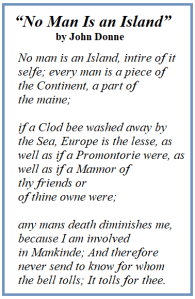
“No Man Is an Island” by John Donne

No man is an island, entire of itself;

every man is a piece of the continent,

a part of the main.

If a clod be washed away by the sea,

Europe is the less,

as well as if a promontory were,

as well as if a manor of thy friend’s

or of thine own were.

Any man’s death diminishes me,

because I am involved in mankind;

and therefore never send to know

for whom the bell tolls;

it tolls for thee.

This is a powerful poem, resonating down the centuries and expressing the connectedness of mankind as a whole.

Donne employs symbols and contrasts, as well as references to things people all knew. In his time, when someone died, churches tolled their bells with special clappers on. The particular sound of those bells told the town that someone had died.

By writing these lines, Donne expressed his belief in these ways:

  1. No man is an island, entire of itself;

every man is a piece of the continent,

a part of the main.

This means that we are all part of something larger, the continent referenced here is humanity as a whole.

  1. If a clod be washed away by the sea,

Europe is the less,

as well as if a promontory were,

as well as if a manor of thy friend’s

or of thine own were.

This tells us that if one bit of dirt is washed away, the land is reduced. If one clod of dirt is as important as a chunk of land or a house, then even the least of human beings is as essential as our friends or we are.

  1. Any man’s death diminishes me,

because I am involved in mankind;

and therefore never send to know

for whom the bell tolls;

it tolls for thee.

Donne tells us that we are not solitary, islands apart, that when one person dies, we are all affected by the loss and that a part of us has died with them.

By using 81 words carefully chosen for the imagery and information they present, Donne expressed his belief in the cosmic connection, the divine thread that binds the disparate factions of humanity together into a whole.

That condensing of ideas into powerful words and imagery is what poetry is all about. This is why an author who wants to write memorable narratives should consider reading the creations of poets who are also novelists to see how they use their words.

I’ve mentioned the works of Patrick Rothfuss and Neil Gaiman in other posts, but here is a list found on Lit Hub. If you choose to take up this challenge, consider it part of your education.

Seven Great Novels Written by Poets


Credits and Attributions:

Portrait of the English poet and cleric John Donne (1572–1631), by an unknown English artist, National Portrait Gallery / Public domain. Wikimedia Commons contributors, “File:John Donne BBC News.jpg,” Wikimedia Commons, the free media repository, https://commons.wikimedia.org/w/index.php?title=File:John_Donne_BBC_News.jpg&oldid=335924688 (accessed 12 May 2020).

No Man is an Island by John Donne, Devotions upon Emergent Occasions (17th devotion, Meditation XVII), published 1624, England. Public Domain. Wikisource contributors, “Meditation XVII,” Wikisource , https://en.wikisource.org/w/index.php?title=Meditation_XVII&oldid=3748254 (accessed May 12, 2020).

I have seen the Stars, by Connie J. Jasperson © 2016, published 03-June-2016 on Life in the Realm of Fantasy, https://conniejjasperson.com/2016/06/03/flashfictionfriday-short-poetry-i-have-seen-the-stars/

In February the House is Smaller, by Connie J. Jasperson, © 2017, published 10 February 2017 on Life in the Realm of Fantasy, https://conniejjasperson.com/2017/02/10/flashfictionfriday-in-february-the-house-is-smaller/

8 Comments

Filed under writing

Thoughts on Poetry and the Evolution of Language #amwriting

I think of poetry and language as coming into existence as conjoined twins. I can remember anything I can set to a rhyme or make into a song.

Yet, much of the time, modern songs and poetry don’t rhyme. Even so, they have tempo and rhythm.

If it doesn’t rhyme, what makes poetry “poetic?” And where does it fit into modern narrative prose?

Poetry is a primal form of communication in the human species, the literary invention that emerged as soon as we had words. It presents thoughts and feelings as abstractions and allusions rather than the concrete.

Poets select words for the impact they deliver. An entire story must be conveyed using the least number of words possible. For that reason, choices are made for symbolism, power, and syllabic cadence, even if there is no rhyme involved.

Narrative prose is broader, looser, more all-encompassing, with no limit on how long it takes for the story to unfold.

Modern humans deliver highly detailed concepts and ideas with packets of noise formed into individual words. We learn the meanings of these sound-packets as infants. By stringing these meaningful sound-packets together, we can share information with others of our species.

I suspect using rhyme as a mnemonic is fundamental to human nature. Research with modern primates in the wild proves that, while we were still in Africa before the great diaspora, humans developed complex languages within our tribal communities.

By observing primates in the wild, we see that our earliest ancestors had the ability to describe the wider world to their children. With that, we could teach them skills and the best ways to acquire food.

We understood and were able to see the motives of another person.

We developed compassion and burial rites.

Early humans relied on the cadence of repetition and rhyme. They could explain the how and why of a great flood or any other natural disaster, passing it forward across many generations.

The availability of food is central to the prosperity of all life, not just humans. Our ancestors saw the divine in every aspect of life, especially around the abundance or scarcity of food. They developed mythologies combining all of these concepts to explain the world around us and our place in it.

With the ability to pass on knowledge of toolmaking, we had leisure to contemplate the world. We discussed these things while eating and sharing food with each other.

We now know that other primates also deliver information by using sound-packets. Gorillas have been observed singing during their meals. Humans have always sung.

Chimpanzees and Bonobos have been observed chatting during leisurely meals.

We humans love to sit around the table and chat.

The larynx and vocal cords of each primate species are formed differently, which affects how they communicate. They understand each other perfectly, but because they are so different from us, our human ears can’t differentiate the meanings of the individual sound-packets that make up their calls.

To us, their communications are just mindless screeching, and so we have always assumed they must not be self-aware.

I suspect that in years to come we will find that we have been wrong. We may be the only species we reliably converse with, but we are not the only self-aware species who communicate through vocalizations.

For many humans, dogs and cats are their beloved family members, self-aware people who love and accept them like no one else does.

This brings me to another point – if we can’t figure out and understand the languages of the other intelligent creatures in this world, i.e., Elephants, Cetaceans, and other Primates, then how can we ever expect to communicate with an alien extraterrestrial being?

And if we can’t recognize, value, and protect the individual self-awareness and personhood of beings like Elephants, Cetaceans, and other Primates, how will we recognize an extraterrestrial life-form? How will we behave toward them? After all, to us, these fellow creatures of earth have been nothing but resources for us to exploit.

Like modern Great Apes, proto humans used rhyme and cadence to memorize and pass on ideas as abstract as legends or sagas to their children and to others they might meet in friendly circumstances. By handing down those stories through the generations, we learned lessons from the mistakes and heroism of our ancestors.

Rhyme and cadence were fundamental to our ability to make tools out of stone and bone. The capacity to learn, remember, and reliably pass on knowledge was why the three human genomes we call Homo Sapiens, Neanderthal, and Denisovan could master fire. This is why they could develop the tools that made them the apex predators we became. We could reliably feed our young, rear them to adulthood, and still have time to create art on the walls of caves.

Every tribe, every culture that ever arose in our world, had a tradition of passing down stories and legends using rhyme and meter. Rhyme, combined with repetition and rhythmic simplicity, enabled us to remember and pass on our histories and knowledge to our children.

In times gone by, writers used words for their beauty, employing them the way they decorated their homes. Authors labored over their sentences, ensuring each word was placed in such a way as to be artistic as well as impactful.

In writing poetry, we are forced to think on an abstract level. We must choose words based on their power. The emotions these words evoke, and the way they show the environment around us is why I gravitate to narratives written by authors who are also poets—the creative use of words elevates what could be mundane to a higher level of expression. When it’s done subtly, the reader doesn’t consciously notice poetic derivations in prose, but they are moved by them.

We have no need to memorize our cultural knowledge anymore, just as we no longer need the ability to accurately tally long strings of numbers in our heads. Readers seek out books with straightforward prose and few descriptors. Words for the sake of words is no longer desirable to the modern reader.

Modern poetry has evolved too. The love of poetry continues, and new generations seek out the poems of the past while creating powerful poetry of their own.

Modern authors, such as Patrick Rothfuss in his novel, The Name of the Wind craft narratives packed with powerful, evocative prose. We eagerly read their work because it is both straightforward and poetic. Most readers are unaware that they are drawn to the subtle poetry of his work as much as to the story that unfolds within the narrative.

I write poetry, some that follow traditional rhyming, and much that does not. Regardless of the structure, the cadence of syllables and the words I choose are recognizably mine. The emotions they evoke and the way they portray the environment I imagine is what lends my voice to my work.

Authors like me who read and sometimes write speculative fiction can enjoy our modern stripped-down narratives, guilt free.

That said, we who love the rhythm and cadence of words can still appreciate beauty combined with impact when it comes to our prose. And, if you love dark, heroic speculative fiction and haven’t yet read The Name of the Wind, by Patrick Rothfuss, I highly recommend it.


Credits and Attributions:

Admiring the Galaxy |CCA 4.0 ESO/A. Fitzsimmons

12 Comments

Filed under writing

The Author Community, by Mollie Hunt, Cat Writer #amwriting

This is the sixth and final post in a six-week blog tour series for the Northwest Independent Writers’ Association.  NIWA serves pacific northwest writers working to achieve professional standards in independent writing, publishing and marketing.


Many creative professions have a reputation for being competitive, hostile, and dare I say, catty, toward each other. Thankfully, this tendency for animosity, for the most part, has passed the author community by. Even as a budding writer, I was treated with respect by my fellows. I have been helped when I needed help, mentored when I needed mentoring, liberally complimented on my work, and generally accepted wherever I’ve gone within the writing circle.

This didn’t happen by chance, however. I did my part. Though I’m an introvert, I pushed myself to get out and meet people, ask questions, and make contacts. One of the most satisfactory way of doing that was to join writers’ groups. Along with NIWA, I am a member of Sisters in Crime, the Cat Writers’ Association, and Oregon Writers Colony. I have belonged to a few others as well, but these are the ones that have helped me learn, produce, and promote my books. If a group isn’t helpful to your work, then what are you getting for your yearly dues besides another name to add to your list of credits?

Each of those groups I listed offers me something different.

NIWA is a fellowship of local independent authors. Though I’m both self- and press-published, this group is extremely helpful. They put together communal bookselling events, host an impressive website and booklist, and offer a members Facebook page where I can communicate with others about anything and everything book.

My local faction of Sisters in Crime has information geared specifically for the mystery writer. They offer presentations from police, detectives, pathologists, and other professions we see a lot of in mysteries. One time, our group took the Ghost Tour of Fort Vancouver, because you never know when a ghost might come up in your novel.

Oregon Writers Colony supports members in all phases of writing, from “I want to write a book but don’t know where to start” to famous authors like Jean Auel. They have several different programs throughout the year, both to teach and inspire, as well as promote and sell members’ books.

The Cat Writers’ Association is the cat’s pajamas if your stories involve felines. They also have a stunning list of members from all branches of creativity. Bloggers, artists, photographers, as well as fiction and non-fiction authors make up this international organization.

There are many more writers’ groups, both national, international, and in your local area. I encourage you to look into them to see what they have to offer.

Besides writers’ groups, Book Faires and events are a great way to get to know other people in your author community. The more you participate, the more your circle of will grow.

Online and Facebook Groups offer another way of relating to those in your field and well and an opportunity to gather fans. Some groups allow you to advertise your work, where others are strictly for conversations about elements of craft. Try NIWA FANS AND FRIENDS to get started.

Once you begin to look for and engage with your author community, the possibilities open up exponentially. Good luck! And thanks for reading.


Thank you for following the NIWA Blog Tour. Let’s do it again soon!

Check out this week’s other participating NIWA blogsites:

About Mollie Hunt: Native Oregonian Mollie Hunt has always had an affinity for cats, so it was a short step for her to become a cat writer. Mollie Hunt writes the Crazy Cat Lady cozy mystery series featuring Lynley Cannon, a sixty-something cat shelter volunteer who finds more trouble than a cat in catnip, and the Cat Seasons sci-fantasy tetralogy where cats save the world. She also pens a bit of cat poetry.

Mollie is a member of the Oregon Writers’ Colony, Sisters in Crime, the Cat Writers’ Association, and NIWA. She lives in Portland, Oregon with her husband and a varying number of cats. Like Lynley, she is a grateful shelter volunteer.

You can find Mollie Hunt, Cat Writer on her blogsite: www.lecatts.wordpress.com

Amazon Page: www.amazon.com/author/molliehunt

Facebook Author Page: www.facebook.com/MollieHuntCatWriter/

@MollieHuntCats

Comments Off on The Author Community, by Mollie Hunt, Cat Writer #amwriting

Filed under writing

Snares in the Depths #amwriting

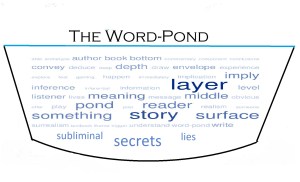
Something lurks in the depths of the Word Pond that is our story, snares waiting to drown the unwary author.

An early trap is confusion: At first, we don’t know what to do with commas. Some frustrated authors will decide to do without them altogether.

This decision leads to chaos and an unreadable manuscript.

I’ve said this before, but it bears repeating:

Commas are to clauses what traffic signals are to streets. They govern the flow of traffic, although, in the case of sentences, the traffic is comprised of words, not cars.

  • Commas follow introductory words and clauses. Instead, they took a left turn.
  • Commas set off “asides.” Her sister, Sara, brought coffee.
  • Commas separate words in lists: We bought apples, oranges, and papayas for the salad.
  • Commas join two complete sentences, and once joined, they form one longer sentence. When used too freely, linked clauses can create run-on sentences.
  • Commas frequently precede conjunctions, but only when linking complete clauses. When connecting a dependent clause to a complete clause, don’t insert a comma. “I intended to go back to London but found myself here instead.”

Another early snare the new author must avoid is the long-winded sentence. How often do you link several clauses together with the word and? Conjunctions are the gateway to run-on sentence hell.

If you are deliberate in your use of conjunctions, em dashes, and hyphens, you will also use fewer commas. Craft your prose but use grammatical common sense. Brevity usually strengthens prose.

Another trap waiting for the unwary is descriptive TMItoo much information.

Don’t waste words describing every insignificant change of expression and mood. Consider this hot mess of fifty-one words that make no sense:

Eleanor looked at Gerard with concern. His voice changed so much in the telling of the story as his emotions came to the surface that it still seemed so raw, as if Timmy’s death had happened only days ago. In addition, his expressions also changed and his current one was akin to despair.

That waste of ink could be cut down to fourteen (14) words that convey the important parts of the sentence: Gerard’s raw despair concerned Eleanor, seeming as if Timmy’s death had happened only days before.

Using too many words mingled with catchphrases and acronyms to express simple concepts is a common requirement of corporate emails and documents for project managers. If you are coming from that environment, you must learn to write a lean narrative. Readers don’t want fluffy, meaningless prose littered with clichés and obscure words in their literature.

What does “Kill your darlings” really mean? All it means is don’t write self-indulgent drivel.

We all fall in love with our characters. Why make the point that people fall over themselves drooling at the beauty of the protagonist? Why make that point in every other paragraph? Is it that important to the narrative?

If it isn’t important to that scene, don’t include it. Gerard’s handsome visage and grace should be mentioned occasionally, but only where his god-like magnetism and charisma impacts the story.

Really–in real life, how often does that happen? However, if Gerard’s looks and charisma cause trouble wherever he goes, then it becomes a key part of the action and can be used to set up other scenes.

We write because we love words, but simplicity is usually best. Consider this morsel of “yuck.”

Delicious sounds captivated their eardrums.

Please, just say it sounded amazing. If music touches the protagonist’s soul, it’s good to say so.

We want to convey the fact the music was beautiful, and we don’t want to be boring. However, when we get too artful we are at risk of creating awkward visuals.

Odors and sounds are part of the background, the atmosphere of the piece, and while they need to be there, we don’t want them to be obtrusive, in-your-face.

This is an instance of prose working better when it isn’t fancy.

I hope these thoughts help get your writing week started.

Now, go! Write like the wind!

15 Comments

Filed under writing

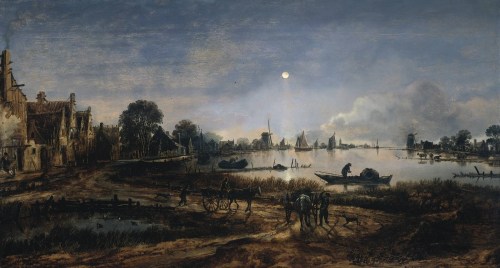
#FineArtFriday: River View by Moonlight, Aert van der Neer


River View by Moonlight, Aert van der Neer [Public domain], via Wikimedia Commons

Aert van der Neer, or Aernout or Artus (c. 1603 – 9 November 1677), was a landscape painter of the Dutch Golden Age, specializing in small night scenes lit only by moonlight and fires, and snowy winter landscapes, both often looking down a canal or river.

Description:
View of a village on a river by moonlight. In the foreground two horse and carriage on a dirt road. To the right a fisherman on a small boat on the water. On the horizon two windmills.
Date: Circa 1640-1650
Medium: oil on panel

What I love about this painting:

This image offers us context to history. It shows how a 17th century harbor looked and the people who worked there. Carters and haulers move cargo, and fishermen go out in the dark to fish for a living. Some freshwater fish, such as eels, are more commonly found after dark.


Credits and Attributions:

River View by Moonlight, Aert van der Neer [Public domain], via Wikimedia Commons / Wikimedia Commons contributors, “File:Rijksmuseum neer.jpeg,” Wikimedia Commons, the free media repository,  https://commons.wikimedia.org/w/index.php?title=File:Rijksmuseum_neer.jpeg&oldid=194438646 (accessed October 27, 2017).

Wikipedia contributors, “Aert van der Neer,” Wikipedia, The Free Encyclopedia, https://en.wikipedia.org/w/index.php?title=Aert_van_der_Neer&oldid=770891498 (accessed October 27, 2017).

Comments Off on #FineArtFriday: River View by Moonlight, Aert van der Neer

Filed under #FineArtFriday

Reading to Impact Your Writing: Writing Books, Inspirations, and Beyond by Joyce Reynolds-Ward

This is the fifth in a six-week blog tour series for the Northwest Independent Writers’ Association. You can catch up with them at https://www.niwawriters.com/.


Generally, when the discussion about reading to impact your writing begins, many people’s thoughts turn toward writing references and guides. That’s good for a beginning. But reading books about writing mechanics, process, and the like should not be the only things you read as a writer. Part of developing yourself as a writer includes expanding your reach as a reader—after all, growth arises in many ways, and reading something for the purposes of growing your awareness of style, idea usage, and the like. Picking up a challenging new book in a genre you don’t normally read can often provide insights on your own writing. Or reading a favorite author’s journal or memoir about writing process may help you past your own struggles. It all really depends on what resonates with you. Here are some of my favorites.


For myself, reading journals, letters, and memoirs/autobiographies (not biographies!) of my favorite authors has been a good source of writing inspiration and development. I was an early fan of John Steinbeck, thanks to one of my high school teachers. As a result, one of the earliest writer reads that has stuck with me over the years is John Steinbeck’s Journal of a Novel: The East of Eden Letters. While writing East of Eden, Steinbeck would start every writing day with a short letter to his editor and friend Pascal Covici. It was part of his warmup process and a means of separating from daily concerns to developing the focus needed for the day’s work. In a similar vein is Working Days: The Journals of the Grapes of Wrath and Steinbeck: A Life in Letters. Because Steinbeck often used letter writing as a tool for warming up, his letters frequently reflect not only what was going on in his life at the moment but what was happening with his writing process—a valuable insight into the struggles that all writers have.

I tend to prefer journals and letters to memoirs and autobiographies because writers can and will embellish later accounts while journals and letters reflect the writer’s state of mind at the time they were writing. May Sarton’s Journal of a Solitude is billed as “the intimate diary of a year in the life of a creative woman,” and it does not disappoint. While ostensibly a book about the process of writing, Jay Lake’s Process of Writing 2005-2010 is a collection of blog posts Jay wrote about writing organized into topics which—really—tells you as much about Jay’s daily struggles with the writing life as it does anything else. Also, given Jay’s reputation as an extremely fast writer, he gives a breakdown of exactly what that looks like and what it means for him economically as a writer. His analysis of his differing rates of writing speed is something that I recommend every writer read.

And then we get to memoir and biography. One book that I think every writer should read is Anthony Trollope’s An Autobiography. Trollope wrote over sixty books over the course of his life, in part by exercising the discipline of rising early and writing 250 words every quarter of an hour for three hours before going to his day job with the British Post Office as a surveyor. His observations of the mid-19th century writing world (hint: Trollope does not like Dickens) are priceless and, if you have read Trollope or watched productions of his novels, you gain insights into how he built his characters. Ursula K. LeGuin’s essays on writing, often found mixed in with her other essays, are definitely worth considering.

And then there are the books explicitly about the craft of writing. Oh, the many books about writing techniques. I own a lot of them, and have bought and discarded many others. For me, the problem with many craft books is that they often speak to me at a particular stage in my writing or process. But as I progress beyond what they have to offer, I end up walking away from books I once loved. The reality about many books about the writing process is that they are often limited to a particular time and market. There’s nothing wrong with that, but if you pick up an old Writer’s Digest book about writing, you need to crosscheck it to ensure that certain things about the field have not changed. Heck, that is true of any book explicitly about writing technique, because the techniques change and evolve.

Furthermore, while I know of many writers who cling to their favorite writing advice book over the course of the years, for me, the books that have resonated the most are those where the writer speaks candidly about the struggles they face in the writing life. The letters. The memoirs. The autobiographies. Those details where the struggle of the creative life is chronicled without whitewash or embellishment. The advice books often move on, except for a select few…but oh, the value of a chronicle of a writer’s struggle. At least that is what works for me.

And what about you?


Other posts in this series by Joyce Reynolds-Ward (note: each website owner will post at some point during the week listed).

March 29-April 4th—Organizing Your Plot www.joycereynoldsward.com

April 5-11—Self-editing, grammar, and beta readers https://authorwilliamcook.com/blog/

April 12-18—Genre and cross-genre https://tanstaaflpress.com/news

April 19-25—My Approach to the writing process https://varidapr.com

April 26-May 2—Reading to Impact your writing www.conniejjasperson.com

May 3-9—Advice for new writers https://lecatts.wordpress.com


Joyce Reynolds-Ward is a speculative fiction writer from Enterprise, Oregon. Her short stories include appearances in Well…It’s Your Cow, Children of a Different Sky, Allegory, River, and Fantasy Scroll Magazine. Her agripunk thriller trilogy, The Ruby Project: Origins, The Ruby Project: Ascendant, The Ruby Project: Realization, are due for release in November, 2020. Her books include Shadow Harvest, Choices of Honor, Judgment of Honor, and Klone’s Stronghold. Joyce has edited two anthologies, Pulling Up Stakes (2018), and Whimsical Beasts (2019). Besides writing, Joyce enjoys reading, quilting, horses, and hiking, and is a member of Soroptimist International of Wallowa County.

You can find Joyce’s books at her website, Peak Amygdala or on her author page at Amazon.com.


4 Comments

Filed under writing

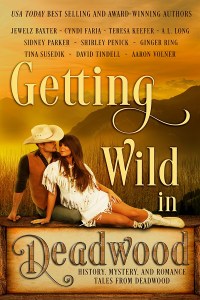
#Interview: @Aaron_Volner Gets Wild in Deadwood #writerlife

Today I am talking with fantasy author, Aaron Volner. Aaron has a story in the anthology, “Getting Wild in Deadwood,” and has kindly agreed to talk about the evolution of one of his most daring protagonists yet, Adalyne Huntsman. I was privileged to be an advance reader for Aaron, and loved his story, “For the Love of Gold.”


CJJ: Tell us about the theme of this anthology, and how you got involved.

AV: “Getting Wild in Deadwood” is all about the history, mystery and romance that surrounds the town of Deadwood, South Dakota. Every story ties in either to the town’s storied past or it’s exciting modern life. Each features a romance sure to sweep readers up and take them on an emotional ride.

There’s an interesting selection of authors here, so the book has a lot of variety. While my own contribution is a historical fantasy starring a bounty hunter, there are tales about wild west outlaws, a reincarnation romance, even a time travel story in there.

This project was put together by the wonderful folks in charge of Wild Deadwood Reads, a huge book event that takes place annually in Deadwood, South Dakota (this year’s event is Saturday, June 20th). I agreed to contribute a story when they put out a call for interested authors.

I’d like to make special mention of Cyndi Faria, the author who spearheaded this project. She really went out of her way to make this a good experience for the rest of us who contributed, and I really appreciate everything that she did to help this anthology become a reality.

CJJ: Let’s talk about your protagonist, Adalyne, in “For the Love of Gold.” I love her! How did she come to life?

AV: Adalyne Huntsman,  a strong-willed bounty hunter with an unfortunate darkness in her past, took a strange path to come to where she is as a character. For one thing, in my original conception of the story the protagonist was actually male.

The idea for this tale came to me one night while I was shooting pool with my dad. Many of my best ideas come to me in pool games with him. Alas, my game hasn’t improved from it nearly as much as my writing has. Anyway, I was discussing the anthology with him and the requirement that the story be set in or around the town of Deadwood, when he shared with me his own story that took place there.

Our family lived in North Dakota for a year due to my dad’s work in the oilfield service business, which often took him across the border into South Dakota. To make a long story short, he went on an unusual call to a mine near Deadwood where a fault line had opened up in a lower level and was spilling hot water like a faucet. The water wasn’t as much of a problem as the heat, which was making it dangerous for the miners to work. So the mine owners reached out to dad’s company about the possibility of using their equipment to seal the crack and get the mine functioning again.

My imagination took that idea and ran with it, wondering what otherworldly things could spill from a crack in a mine. Such a thing might try to use the miners to protect itself. Perhaps the danger of it was how it enthralled people who came within, including the hero’s lady love.

Something about the idea didn’t sit right, and I soon realized that the story held a lot more interest for me with a female protagonist. The next thing I needed to figure out was who she was. I knew I wanted her to be tough, and self-reliant, but the challenge was determining in what way.

As I read a bit on the history of Deadwood I came across some information about the Gem Theater, a brothel run by the notorious Al Swearengen. One of his secrets to success in his industry was a tendency to beat or blackmail women into working for him. I asked myself what would happen if he tried that with my heroine, and a scene popped into my head: one of Swearengen’s goons trying to ‘persuade’ her to work at the Gem, and her turning the tables on him with some impressive gun play and a witty remark that would sting his pride.

Adalyne Huntsman evolved from that scene as a bounty hunter with complicated reasons for pursuing her chosen path. She’s a tough-as-nails woman who enjoys showing up men who underestimate her.

This presented a problem, though. The story had to include a romance, and I wasn’t sure what type of man would earn Adalyne’s respect enough to win her heart. I needed to seek the advice a real-life bad-ass gun-toting lady to learn how my bad-ass gun-toting heroine would fall for someone.

For that I reached out to my friend Helen M. Pugsley, very much a real-life bad-ass gun-toting lady and author of “War and Chess.” After a lengthy conversation with her about Adalyne’s development up to that point and her relationship with some of the other characters who appear in the story, Helen had some excellent advice.

She suggested that the way for a man to win Adalyne’s affection would be if he could make her feel safe. Not physically safe, as Adalyne has that covered herself. But emotionally safe. Someone that she can let down her constant guard around and be her true self. Someone she can share things with and feel entirely confident that it will stay between them, and who will still accept her.

Armed with that advice, I built out a secret for Adalyne that she would only share with just such a person, and began constructing her love interest, David. A man who has seen some of the worst sides of humanity, yet still retains his sense of wonder and fascination about the world.

I really hope that readers will like Adalyne, as a lot of work went into making her a real and relatable heroine. I have to say, she’s fast become one of my favorite protagonists that I’ve written.

CJJ: How can we buy this book?

AV: Orders for “Getting Wild in Deadwood” can be placed via the online form here. You’ll need an email and a PayPal account to place the order.

The books are being hand-shipped so as to include an awesome extra goody. With every order you receive a full-color insert featuring the cover art and signatures of all ten contributing authors!

This anthology is a print exclusive and only available for a limited time, so be sure to order while you can.

CJJ: I loved The Roc Rider. I understand you have a sequel in the works. Can you tell us about it?

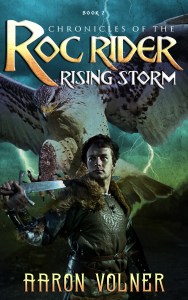
AV: Yes, the sequel to Roc Rider is finally coming! “Chronicles of the Roc Rider:  Rising Storm” picks up several months after where the first book leaves off. Tanin Stormrush, the titular roc rider, has been working with new allies to try and unlock secrets from the memories he acquired from his enemy at the end of the first book.

We quickly learn that the stakes are higher than Tanin realized. His enemy has a plan that could remake the very fabric of reality itself.

Tanin’s promise to his late wife that he would rescue the roc hatched from the egg that was stolen from her proves more difficult than he anticipated. It turns out the enemy has taken to riding the creature, and it may not be in the mood to be rescued!

I’m really excited about how Tanin and his roc Zera grow in this book. Yes, we get to see them take their first flight together which is super exciting! I’m also really jazzed for people to meet some of the other characters that are introduced.

Lana, a woman from Tanin’s past and who was his fellow apprentice during roc rider training, brings an interesting dynamic to this story.

We also get to meet two of the mysterious Narn. Mentioned briefly in the first book, the Narn were invaders from beyond the great northern desert whom Tanin spent nearly a decade fighting with his original roc partner. Now, to save the stolen roc and fulfill his promise to his wife, Tanin might just have to look past his own hatreds and work alongside one of them.

The ebook releases on May 9th, with the paperback coming hopefully the same day or not long after. I’ll be hosting an online launch party via Facebook Live at 6 pm that evening to celebrate the launch.

CCJ: Where can people buy your other books?

AV: You can find all of my titles for purchase via my author page on Amazon. I also recommend that readers sign-up for my newsletter for regular updates about future titles, first reveal on new covers, and more.

Thanks so much for taking the time to talk with me about all this, Connie. I really appreciate it.

CJJ: Thank YOU, Aaron, both for visiting today and for talking about Adalyne Huntsman, who is one of the strongest women I’ve ever met. And I can wait to read “Chronicles of the Roc Rider: Rising Storm.


About my guest today:

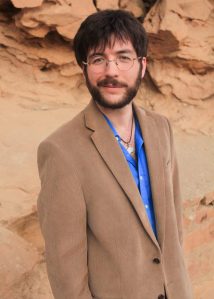
Aaron Volner is a guy who gets lost in worlds of his own creation and has to write books in order to escape. He lives in southwest Wyoming with his faithful dog, Andy, and a house full of plants from all over the globe.

Orders for “Getting Wild in Deadwood” can be placed via the online form here.

Purchase Chronicles of the Roc Rider 

Visit Aaron’s website at www.aaronvolner.com

2 Comments

Filed under writing