Tag Archives: fantasy

What language are we speaking today? Understanding Stephen Swartz

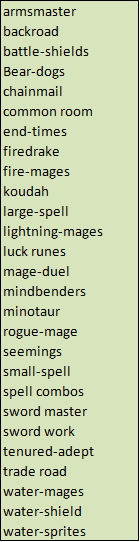
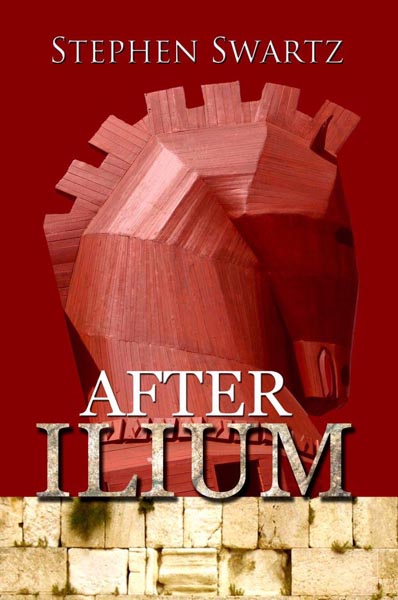
Swartz_After Ilium_FrontCvr_200dpi_3inOne of my dearest friends is author Stephen Swartz, a true renaissance man. A professor of English and a linguist, Stephen’s work frequently involves foreign settings, and with those exoctic places, come the exotic languages. He has devised a chart (you know how happy charts make me) to keep the many languages his characters speak straight. It is an easy way to do so, and is a great way to make what editors call a ‘style guide’ when you are working in different worlds.

For more about Stephen’s chart and his books, go to:

DeConstruction of the Sekuatean Empire: What language are we speaking today? Understanding the worlds of Stephen Swartz

But what if we don’t work in earthly languages? What if our reality is, in truth, UNreality?

All the more important to make yourself a style guide for your project. This will ensure consistency, especially when you are making up words.  Readers will notice inconsistencies, even though we as authors rarely see them in our own work.

Some things to consider:

What words need to capitalized at all times? Temple

What words must be hyphenated at all times? Battle-mage

How do you spell that city’s name again? Ludwellyn

Stephen’s Chart can be adapted to create a style guide for your work quite easily.  I think I’ll have me some fun with excel today!

style guide for Neveyah


2 Comments

Filed under Battles, Books, Fantasy, Humor, Literature, Publishing, Self Publishing, Uncategorized, writer, writing

Achieving a Balanced Narrative

395px-Ellimans-Universal-Embrocation-Slough-1897-AdI was involved (as a horrified bystander) in an online dispute over how much description is needed in today’s genre fiction.  I walked wide of that mess, as it was clear that one author with an online pseudonym was in assassin mode. The other, whose prose had been harshly critiqued, also using a pseudonym, had called in her flying monkeys, all of whom proceeded to tear the argumentative ‘troll’ to shreds.

Ugh.  What a waste of time for all of us, bystanders included. It should have been a civilized discussion about using adjectives and achieving balance when showing and not telling your story.

Sadly, in this case the troll was right, but his attitude was so arrogant, he negated the value of his opinion, with normally sane people reduced to begging him to just ‘shut it.’

The prose in question was far too florid for my taste, forcing the reader to watch every excruciating, drawn out second as the the main character slowly curved his lush, full lips into a sexy, white smile, his pink tongue just touching his full, trembling, lower lip.

Pardon me, I must go barf now.

I prefer to read work written with in a lean style, as too much showing gets in the way of the story. It becomes a matter of the author forcing his vision onto me, as the reader, and is just as unpleasant to read as a narrative that tells you how to feel.

This is my view on the subject of description in the narrative: when you write about a room, any room, you don’t describe the details of room. You tell the character’s story as he enters the room.

What does the character see? What does he or she do in response to those things? Do they use the old wall-mounted telephone? Do they open the drapes? Perhaps he picks up the newspaper, and continues into the kitchen. Each character is different, and will see and do different things, and through those actions your room will come into focus in the mind of the observer–the reader.

Describing emotions is done the same way as describing the setting. We have all been told over and over again that in narrative, the most intimate way to show a feeling is to show the state of the protagonist’s body.

But how do we do that?  Let’s take humiliation:

Her face turned bright red in embarrassment.  

This sentence is what we call telling–the author has baldly told you how the character feels and why. This separates the reader from the sense of being the character. While the character may feel that her face had flushed, it’s unlikely that she would know the exact shade of red she had turned. To make it from the protagonist’s point of view and keep it simple, just write what happened.

Her face burned and she turned away.

Here is my  thought on this subject: we don’t need to get crazy, and give the minute details of her burning flesh heating up until she could see her nose glowing like Rudolph on steroids…we just need simple descriptions that point the reader in the right direction. If our character is really humiliated you can add one more descriptor, but still keep it simple:

Her face burned, and nauseated, she turned away.  

This is as much humiliation as I would put a reader through in one sentence. Realistically, the protagonist would feel the burning of her face, and would feel the nausea. The reader will taste the nausea if you describe the sensations with too much detail so keep the details to the bare minimum.

With that said, it is crucial that you give SOME clues as to what the character is feeling, as the reader will be completely lost without some sort of visual cues.

640px-Bicycling-ca1887-bigwheelersTake a look at what the protagonist’s body might be doing. What did it feel like when you experienced the same emotion? What did your body do? What did you feel inside? Was there a heaviness in your chest? A lump in your throat? Did you feel light-headed or weak-kneed? Did your face burn? Close your eyes and think about how you experience an emotional moment and allow your senses to take over.

With that memory in your head, write it down.

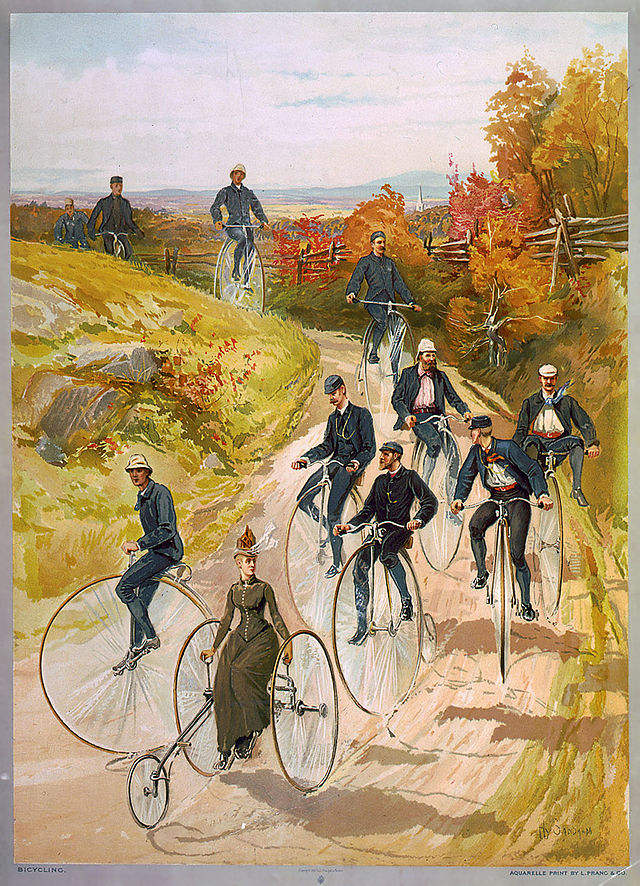
Just remember that it is crucial that you don’t over do it. Just like riding a bicycle, you must have balance in your descriptions: there must be enough description to intrigue the reader, but not so much it overpowers the story.


2 Comments

Filed under Adventure, Battles, blogging, Books, Fantasy, Humor, Literature, Publishing, Romance, Self Publishing, Steampunk, Uncategorized, WordPress, writer, writing

Write write write…

225px-Ff12castRight now I am writing two fantasies, both based in  the world of Neveyah, which was originally designed for an old-school RPG that didn’t get built.

When I write in Neveyah, I find myself gaming more during my downtime than reading. Dragon Age, Final Fantasy–those are my games.  Anything where I can go out and hack, slash, and throw a little magic around, while great music and wonderful storylines unfold–those are the games that intrigue me.  Anything to get to that all important cut scene!

Not only am I writing the 3rd and 4th books in the Tower of Bones series, I am in the re-editing process for Tower of Bones, the first book in the series. It has been a slow process, as my editor in England has been unwell, and has also had her own wonderful work to write. But it is getting there, and when it is republished, it will be what it should have been when it was originally written.

When I first started this gig, I knew I wanted to be an indie, even though I knew it would be hard, and my sales would be miserable. The point for me was that I could be published and have some control over my work.

What I didn’t realize, is that your friends, wonderful people that they are, are not editors. They don’t really notice anything but the most glaring errors, and they miss a great many of those! Places where you have repeated yourself ad nauseam, and places that are phrased in a confusing way are skipped over.  Large plotholes, clichés, and intriguing auto-correct mistakes get missed when your eager-to-help friends try to edit your work.

You see–very rarely are you BFFs with an editor to begin with–although, through this process, I have become BFFs with MY editors.

Your friends know they don’t like what you wrote, but they don’t know why, so they plow through it as fast as they can just to get the misery done with. They will spot a few problems, which helps, but isn’t going to make your ms readable.

Oh, they aren’t going to tell you that, but they will think it. “This is really different. I’m a little confused about the dog who was an arsonist, but it’s really…unique.”

Do hire an editor. Even if you plan to submit it to a large publisher, do this, so that what you submit will be the best you can offer them.

SO, right now I am working on two books, one that runs concurrent with Forbidden Road, detailing events involving Edwin’s father, John Farmer, and also the follow-up to Forbidden Road, concluding that tale. I am also occasionally working on the rewrite of The Last Good Knight, which is what  Julian Lackland’s story was originally, and is the book Huw the Bard evolved from.  That one is complete, but it needs to sit on the back-burner for a spell while I gain some perspective on it.  Then I will go through it one more time and find an editor for it.

Then, there is Mountains of the Moon, which is in the editing queue.  Not sure if that will be done anytime soon, but rushing to publish is no longer my thing.

Goodness knows how all this will come together, but I love it.


2 Comments

Filed under Adventure, Blogger, blogging, Books, Fantasy, Final Fantasy, Humor, Literature, Publishing, Self Publishing, Uncategorized, writer, writing

Infinite power equals infinite boredom

I attended a seminar on World Building this week offered by Lindsey Schopfer, local author and writing coach. One of my strengths is in that area, and I realized, as I listened to his talk, that it is because I use the same steps he does to make my world as real as is possible. I always know WHERE I am writing, WHO, and WHAT I am writing about.

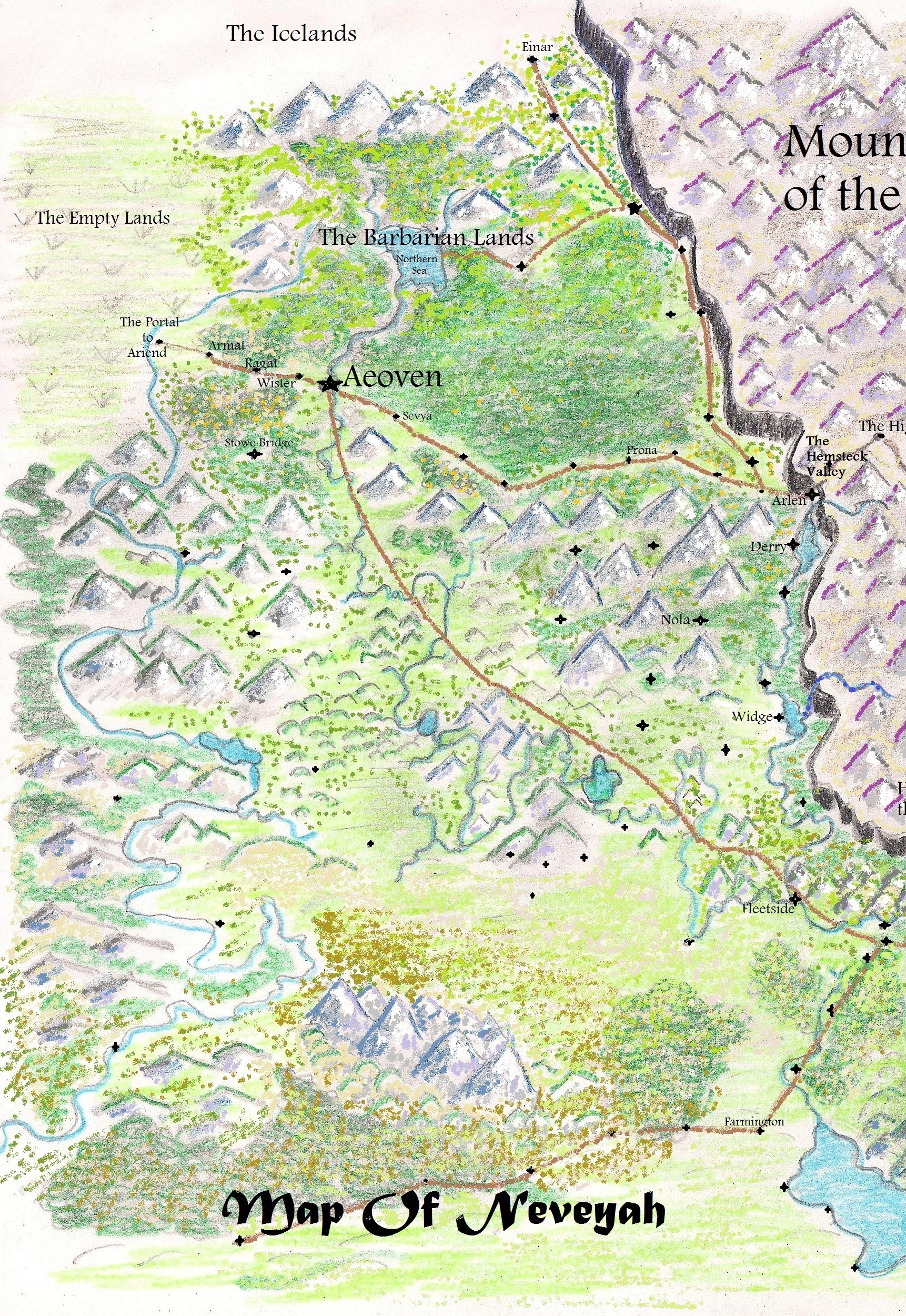
I begin by drawing a sketchy map.This way I have an idea of where the towns are in relation to each other. Nothing on a map is ever finite, they are only approximations–artistic guesses.

Heart of Neveyah relief 3-4-2013 001As I write, my map evolves, becoming more complex as the topography becomes more clear to me. In Neveyah, I began with a pencil sketch, and that evolved into a relief map that gave me the opportunities for injecting tension into the tale that I needed. It also provided me with a detailed explanation of where the resources are, so that funding my country is not an issue.

I build their political and monetary structure, and the prevailing religion. I decide who has the power and privilege in that society, and who is the underclass.

As I create the power-structure and the maps, the opportunities for creating tension within the story also grow. I keep a list of those ideas so that when I run short on creativity I have a bit in the bank, so to speak.

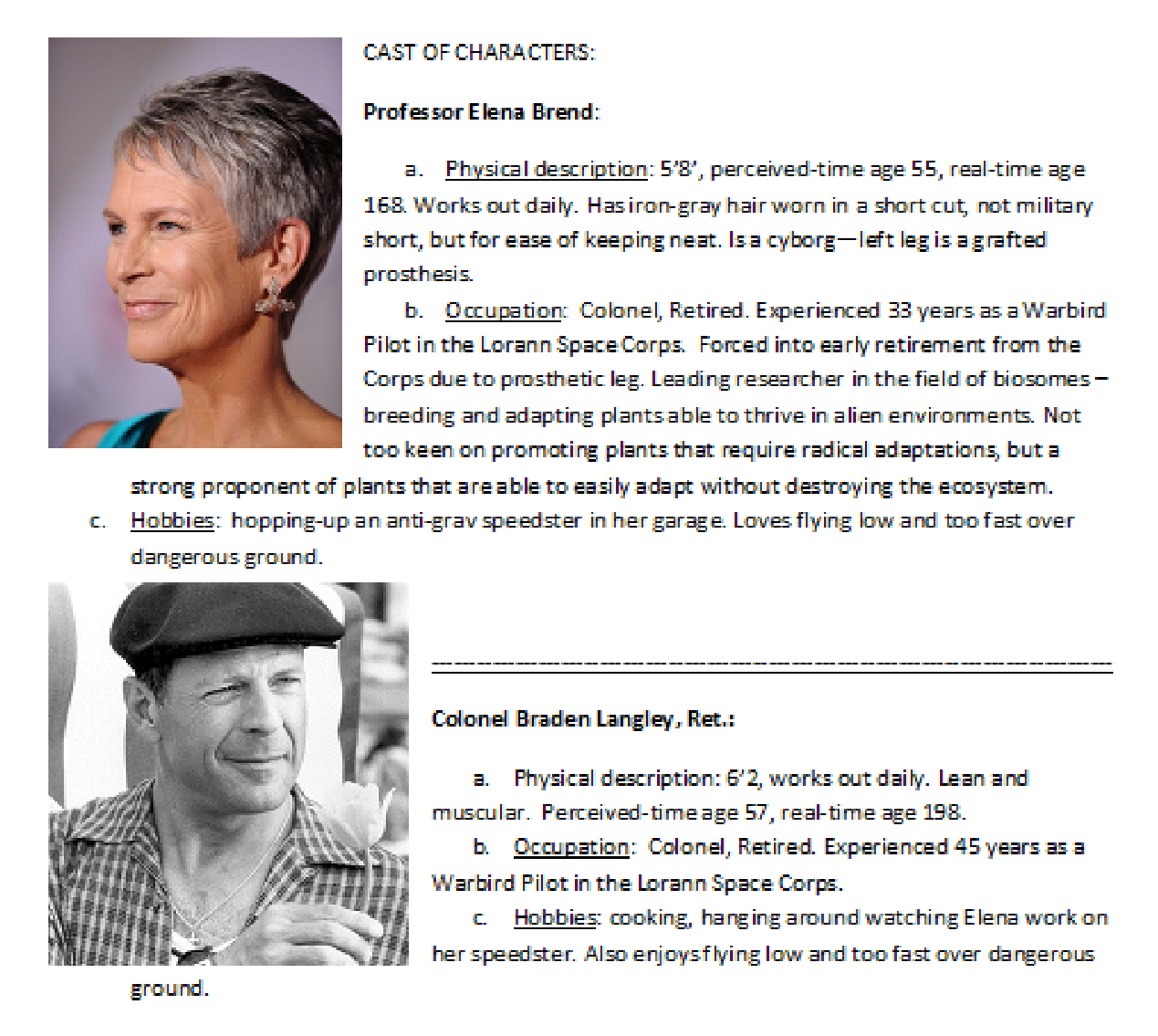
Another thing Lindsey mentioned that I also do is to create a sort of personnel file. (I was an office-manager for years, so I think in those terms.) Is everyone human? If not, what are their species and how do they differ from humans? What are their origins and why are they all together on this world. This information will most likely not make it into the tale, but it is important for me to know.

personel file for Elena and LangleySome people draw their characters, but my artistic talents run to less realistic things. In some cases, I select an actor who best represents my character or who could play him/her well. I am a whiz at cartoons and maps, but not at drawing people or animals, so that’s why I resort to simpler methods to cement them in my head. Once I know who they are, that is where I stop. The reader will decide from the bare-bones descriptions I will give as to what they look like and that will be more intriguing than if I belabor their violet eyes and stunning cheekbones.

When I design a religion, I do it from the ground up.  I know who the gods are, what they require of their worshipers and the rituals that worship involves.  The same goes for the political system. Who is in charge of the country, and what is their power-base? What is their currency and how do they get it? Alternatively, how do they spend it? Are they despots or benevolent?

Then, there is the magic. Who has magic? What kind of magic–healing or offensive or both? What are the rules for using that magic and why do those rules exist? I despise books where there are no clearly defined rules for the magic, because infinite power instills infinite boredom in me as a reader.

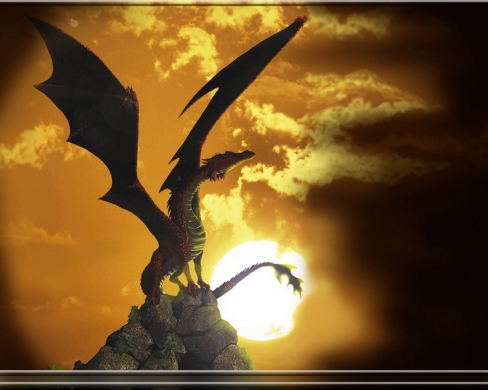
http://www.hdwallpapers.in/

Ask yourself what sort of wild creatures will live in your world. What do they look like and how big are they? How do they survive, what do they eat? Are they hunted, or are they simply benign creatures that harm no one? What is their place in the ecosystem?

How are you going to name your people and beasts? Do your readers a favor and use spellings that look fairly simple and look good on paper. DO NOT USE THE CONVENIENT NAME GENERATOR websites that the internet is rife with. They provide you with hokey, ridiculous  names no barbarian worth his salt would claim.

How do they dress? Do they wear armor? How difficult is that armor to get on and off?

How do they travel? Horses or spaceships each have certain basic requirements–both require fuel of some sort and both frequently need maintenance, whether it is currying or cleaning the exhaust vents. Who does this?

In conclusion, assembling this background information is time-consuming, but once I have it all together, my work is so much easier. The hard work is mostly done at that point, so there is less stopping and starting. All I have to do is get my heroes off the sofa and out of the house to the final battle on time, so they can save the world.


6 Comments

Filed under Adventure, blogging, Books, Dragons, Fantasy, Literature, Publishing, Self Publishing, WordPress, writer, writing

Gratitude

Billy Blackwell performing live at Wade's Place, Aug 24-2014

Billy Blackwell performing live at Wade’s Place, Aug 24-2014

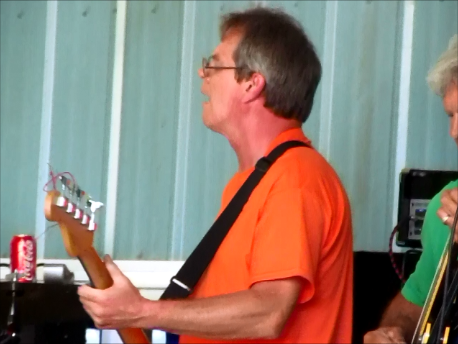
Over the weekend we attended a large function where there was a live band. It consisted of five people, three of whom are very dear to me: my ex-husband, Darryl, on guitar, my younger brother Robert on bass, and my stepson, Billy (who is the child of my heart), on drums.

It never ceases to amaze me how much of an influence music has been in the life of my family, over many generations.

This tie binds us and has sometimes cut us apart, but in the end it always brings us back together.

Family is so much thicker than blood.  Gratitude is too.

Robert (Mad Dog) Johnson performing live at Wade's Place, Aug. 24, 2014

Robert (Mad Dog) Johnson performing live at Wade’s Place, Aug. 24, 2014

We are a close unit, bound by love and children.  Music is the common thread that runs through our lives–two horn players, one sax player, two drummers, three guitarists, three keyboardists–four working musicians and everyone else singing harmony–music is the core of our life, and a new generation is learning at their knees.

I loved this weekend.

The air held the peculiar quality of serenity that is unique to Black Lake-the lake of my childhood home.  The crowd loved  the music they played. Children ran wild and the food was fabulous–even the vegan found something delicious to enjoy!

Darryl Riffero performing live at Wade's Place, Aug. 24, 2014

Darryl Riffero performing live at Wade’s Place, Aug. 24, 2014

Seeing these three men, none of them blood related to each other, but all of them family and close as brothers, made me once again realize how much I have to be grateful for. Each has faced and overcome demons that would have killed a lesser man, and they are stronger for it.

Happiness and love of life fill their music, and it is beautiful to me.

My blessings are many, and I count them every day.


2 Comments

Filed under Adventure, blogging, Fantasy, Literature, Music, Publishing, Self Publishing, Uncategorized, writer, writing

Sharpening my clause

I’ve been reading a lot lately, some for editing, which is a great pleasure, and some for my own amazement, which can be a mixed bag of nuts.
 .
So let’s talk about what it is that makes reading for pleasure not a pleasure at times:  Some authors don’t understand the basic rules of how to write coherently.  I suppose that’s not a surprise to you, but I am always shocked.
 .
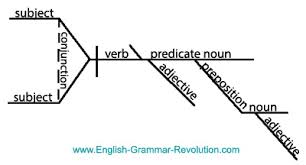
So what makes a coherent sentence? We want a subject, a verb and some words to help explain those two things. We call this a sentence.
.
Sentences frequently consist of clauses. Okay, they always do, but…anyway:
.
clause
klôz/
noun
  1. a unit of grammatical organization next below the sentence in rank and in traditional grammar said to consist of a subject and predicate.
 .
Well, that seems pretty simple–simply confusing, anyway.
 .
According to About Education: A clause may be either a sentence (an independent clause) or a sentence-like construction within another sentence (a dependent or subordinate clause).
 .
Subordinate Clause definition: A group of words that has both a subject and a verb but (unlike an independent clause) cannot stand alone as a sentence. Also known as a dependent clause. Contrast with coordinate clause.
.
Example:
If a free society cannot help the many who are poor, it cannot save the few who are rich.
(John F. Kennedy)
 .
Mostly I find subordinate clauses cropping up in conversation–dialogue–when I look at my own writing. These “grammatical juniors” are like any other form of seasoning in our writing and must be used consciously and sparingly. When we write with too many subordinate clauses, we separate the reader from the narrative.
 .
If you go on a cruise that consists exclusively of drinking, dancing, and partying, I shall worry.
.
Well, I won’t really worry, but I shall be jealous.
.
In genre fiction, which is what I write, readers do not want to be held away from the story by too many words. They want to be immersed in the tale, living it with the characters. One way we do this by providing balance in how we phrase our sentences, using a variety of sentence structures. We use complex sentences, consisting of:
 .
Fun-Fruit-Skewers-21. a simple clause 
I went to the grocery store.  (the meat of the matter)
2. a dependent clause
because I needed skewers. (technically not necessary but adds to it)
 .
I went to the grocery store because I needed skewers.  
 .
Who was I going to skewer? I don’t know, but I at least I had the right tool for the job.
 .
We can set the clause off with commas:
 .
The lake, its surface calm and black with deceptive serenity, called to me.
.
The lake called to me is the meat of this sentence, the clause describing it is technically not necessary, but without that clause the sentence is flat.
 .
An excellent FREE and entertaining resource for writers who want to get a grip on clauses, commas, and all that conjunction stuff is:
.
 .
You might want to check it out, it costs nothing and is really easy to understand.

4 Comments

Filed under Blogger, blogging, Books, Fantasy, Humor, Literature, Publishing, Self Publishing, Uncategorized, WordPress, writer, writing

Journaling or Noveling

As summer ends and fall approaches, those of us who are regular NaNoWriMo writers begin to plan for our month of committed writing. We are jotting down ideas as they come to us, and making notes to help springboard ourselves into November with all our guns a blazing.

Generic-180x180People who have never heard of NaNoWriMo are always surprised that it is not only people who want to be published authors who use this month to create 50,000 word manuscripts. Family historians, dedicated diarists, people working on their PhD–anyone who wants or needs a month dedicated to getting a particular thing written will do so in November. More people do this during November than you would think–about half of our WriMos in my regional area are journaling or writing their theses. The support of the group really helps the graduate students stay focused, and it also bolsters those who are diarists and encourages them to write more about their thoughts and philosophies.

330px-Title_page_William_Shakespeare's_First_Folio_1623I’ve been asked many times what I see as the differences between journaling and noveling. (Sorry, word-nazis–I know,  I know! I just invented that word but hey, why not loosen up a bit and have a little fun with language? Willie Shakespeare did it all time!)

Anyway, journaling is keeping a diary. You do this on a daily basis, or at least frequently. According to Tiny Buddha “Journaling can help with personal growth and development. By regularly recording your thoughts you will gain insight into your behaviors and moods.” You start where you are in life at that moment, and for ten or fifteen minutes a day, you write stream of consciousness. This is an awesome way to jump-start your brain.

Noveling is telling lies, keeping them straight, and making the world believe it until the last page.  Again, William Shakespeare was awesome at this, and he put his work into the form of plays and sonnets, which were the most accessible media of the time for the common people.

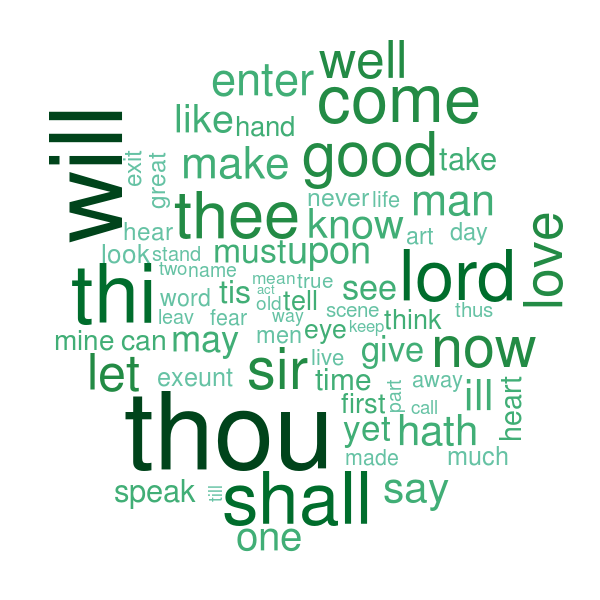
shakespeare-word-cloudHow many words did William Shakespeare invent? According to Shakespeare Online Dot Com: “The English language owes a great debt to Shakespeare. He invented over 1700 of our common words by changing nouns into verbs, changing verbs into adjectives, connecting words never before used together, adding prefixes and suffixes, and devising words wholly original. …  For a more in-depth look at Shakespeare’s coined words, please click here.”

Whether you are journaling or noveling, the important thing is to do it every day. Write for as long as you can when you can, and that will build your ‘writing’ muscles. If I dedicated 3 hours a day to just writing stream of conscious, I will chunk out 2500 to 3000 words–about half of which are mis-keyed and misspelled, but hey, no one is perfect. Some words I invent–and some words invent me, but either way, I love words.

Comments Off on Journaling or Noveling

Filed under Blogger, blogging, Books, Fantasy, History, Humor, Literature, Publishing, Self Publishing, Uncategorized, WordPress, writer, writing

Conveying the Mood

Something I’ve lately realized is that every author, even my favorite, has what I think of as ‘fall-back’ tricks they use when describing certain scenes, little quirks and twists of words that are as personal and unique as a signature. The great authors can get away with this, because their stories are just so darned compelling that we don’t notice or don’t care.

I’ve had to face it–when I, as an author, make a habit of resorting to writing my characters with excessive shrugging or sighing, it’s clear I’ve run out of ideas. I recently had a wonderful discussion with several other authors who have noticed this phenomenon in their own work. After that discussion, I found myself wondering how to maintain speed in my writing when I am in the zone, but still have a variety of words and ideas available to me for describing mood and emotion.

So–since tattoos are expensive, and my palm isn’t really large enough to contain a really good table of visual cues, I resorted to my handy-dandy Excel program, and created one there.

What I discovered while compiling this, is that my little brain is quite limited. I had to struggle to picture what these moods and emotions looked like.  Once I had the facial expression in my mind, it was easier to imagine how a character might appear to an observer.

What these cues do is help me come up with a fresh description when I want to show something that may happen frequently within a group of characters. I don’t necessarily use these cues verbatim as they are written here, but they do give my mind a jumping off point and I can extrapolate from there.

Please feel free to: right click> save as> png or jpeg and print it out for your own use.

Conveying Mood and Emotion in Writing


9 Comments

Filed under blogging, Books, Fantasy, Humor, Literature, Publishing, Self Publishing, Uncategorized, WordPress, writer, writing

Yes, but how do you really feel?

x - y chromosomesI love writing and I love my characters, but they are so stubborn about some things. Of course, many of them have ‘Y’ chromosomes, but still…. It’s frustrating because they don’t want to to talk about how they’re feeling.

Oh, for the love of Tolstoy–don’t they get it? I’m  a woman. I need you people to talk to me. Tell me what’s going on in your imaginary head.

It’s difficult to show the characters’ emotions and thought processes when it’s so much easier to just say he felt, or she was some emotion.  These thoughts and feelings are central to making our characters feel real. But describing them from a distance, as an author must do, may disconnect the reader from that character.

Sometimes, descriptions don’t allow the reader to experience the moment with the character. Instead, the author is telling them how the character feels.What we must ensure is that our readers remain immersed in the narrative, that no ‘speed-bumps’ come along to knock them out of it. Heart Search cover

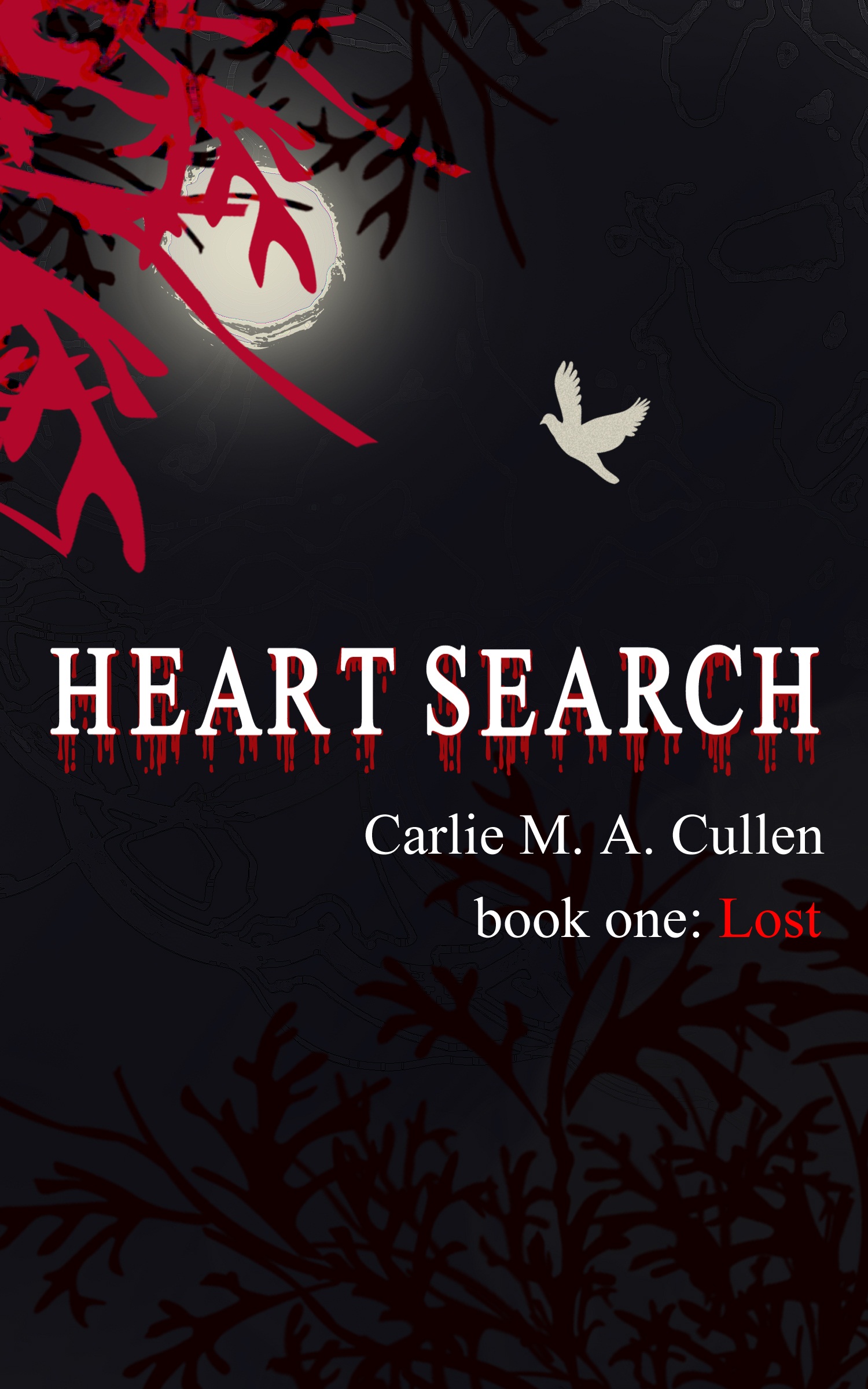
One of the best at this is Carlie M.A. Cullen, whose urban fantasy series Heart Search  featuring a coven of vampires is gaining in popularity. I think her books are so compelling because of her ability to draw a reader into the character without going over the top. So, how does she do it?

The opening line of chapter one of Heart Search Book 1, Lost reads like this: The sun, a ferocious golden orb, burnt into his skin as Joshua wandered aimlessly through the country park.

She could have just written The sun was hot and Joshua was killing time in a park.

But she didn’t, and the story is better for it–AND she showed you both the scene and Joshua’s mood in that one sentence.

So what can we learn from reading our favorite authors? We can see how they craft their tales, and we can learn those skills. Painters do this all the time, and we paint with words. 480px-Schmalz_galahad

Let’s pretend we’re writing a fantasy novel. We can go over the top, like a painting by Herbert Gustave Schmalz, or we can find a happy medium between too much and too little. There is no need to sink into overly sentimental and exaggerated pathos in order to inject feeling into our work.

Here we have a character who is on the run from a creature of some sort. 1. He was afraid. He was terrified to look back.

Example one tells the reader how the character feels. We might write this in our first draft when we are just trying to get the story out of our heads. An unskilled writer would consider it just fine the way it is, as it expresses his thoughts perfectly.

However, it tells the reader how to feel, and readers really don’t like being told what to do.

2. He wiped the sweat from his brow with a trembling hand, fear from his narrow escape coursing through his veins. Heart pounding, he leaned against the wall, listening for any sounds that shouldn’t be there before chancing a glance around the corner.

Personally, I would read book number two over book number one, because it’s more interesting and makes me want to know more about this character and his problems. We need to use physical symptoms a character might experience combined with their actions, but  we need to describe them in such a way that it is a natural part of the scene.

John slid down the wall, sitting in the mud, his breaths coming in hard, ragged gasps. Something trickled down his cheek, and wiping it, his hand came away with blood.

Another example: Theodor_Hosemann_Weinstube_1858

Lord Deccan’s fist hit the table. “Wine now, you miserable worm–or I’ll cut off your other ear!”

The one-eared innkeeper scuttled to the cellar. He quickly searched the shelves filled with dusty jars of cheap wine, settling at last on a vintage he thought might suffice.

Baldric’s guests normally drank from wooden tankards, but he knew that wouldn’t suit. There was a goblet, one he’d come by in a peculiar way, but it was a fine cup and would do well enough to stave off a tantrum of the lordly variety.

His shoulders hunched in anticipation of trouble, he approached the angry lord’s table. Setting the only goblet before the nobleman, he left the bottle and stepped away, bowing with feigned obeisance. Baldric had  survived  the  war with all but his left ear intact, and intended to remain that way.

Sir Paul McCartney, image from Rolling Stone MagazineWhat we are doing here is exactly like interpreting what our loved one is telling us, when he/she refuses to use their words. Seeing them sitting slouched in the chair, clicker in hand and numbly flipping through channels is a good indication of their mood. So we must picture the scene and describe it .

We must show the emotions as they are reflected by the physical cues our characters give us, but don’t tell them–a difficult trick to master but one we must all do if we want our work to engage the reader.

7 Comments

Filed under blogging, Fantasy, Humor, Publishing, Self Publishing, Uncategorized, WordPress, writer, writing

Don’t dump it-deploy it

CAUTION INFO DUMP ZONE AHEADMost of my work takes place in  a world I invented, right down to the religion. Because my world is very different, whenever I sit down to write, I have the most incredible urge to spew background information. I want my reader to understand the world I’ve created, so I want to give them information. Lot’s and lots of information. OMG, do I have information for you.

But is the information for you as the reader, or for me as the author? There you have it–writing it down cements the world in my head.  Now my info-dumps are cut and kept in a file that contains all my background information. I need that info to write the story, but the reader only needs enough bare bones to fire his imagination.

So how shall I do this? A prologue? Well, I’m leaning away from prologues nowadays, although it can be done–David Eddings did it really well in The Belgariad, and Anne McCaffrey also did in her Pern novels. In some cases a prologue sets the stage. But in online writing groups  I frequently  see that a large number of folks don’t bother to read prologues, preferring to get directly to the story. If folks aren’t going to bother reading it, why should I waste my time writing it?

The key to describing the fantasy setting and the social structure of that world is to let the story do it naturally. Deploy the info in small increments as the characters go through their daily life.

Let’s pretend we’re writing a detective novel:

Joe Stone stood, illuminated by the harsh light of the fridge, staring at the six-pack of beer that represented the sum total of his groceries. Grabbing one, he twisted the cap off, and took a long, desperately needed pull.

dump no infoA sour smell rose from his sink as he peered through the broken blinds, more concerned with the dead body in his rundown tool shed than the shabby state of his kitchen. He wondered who the stiff was, and how the dead man pertained to the divorce case he was investigating.

Most importantly, he wondered how he could avoid taking the rap for it.

That he was being deliberately set up was a given, but by who? Pulling his phone  from his pocket, Joe scrolled through his contacts. He had one last friendly ear at the police department, his old partner, Mike Copper. The question was, would Mike believe him or would he leap to the conclusion that Joe had snapped again? 

So, now you have a picture of Joe Stone. He’s probably single,  a private investigator, his home is in disrepair, his empty fridge tells us doesn’t eat at home very often, and he may drink more than is good for him.

Joe is an ex cop, possibly fired for use of excessive force, as he fears he has only one sympathetic ear there. He’s involved in a nasty private investigation, the corpse in the shed tells us that.
TRUST YOUR READERThere’s no need for an info dump to aid the reader in forming a picture of Joe. All that information was deployed by his actions, and while reading the events of the next 72 hours, more snippets will come out, and this complicated man and his world will become more clear to the reader.

Settings make no difference. Writing fantasy novels is the same thing as writing novels set in the real world. Assume your world is real and slip the info in the natural places.

Belnek knelt by the low fire in front of his hut, pulling the turnips out of the coals, brushing the burnt flakes away. His mouth watered, and he wished there had been meat to roast, but once again, when he checked his snares, they had been empty.

Realizing what he had just thought, he gasped,  fearing the god would interpret his thoughts as ingratitude and would make the harvest scant too. He raised his eyes to the east where the shining towers of the gods were said to be. Closing his eyes he, said a prayer to Osin, thanking him for the turnips, asking his blessing on the meal.

Book- onstruction-signNow you see a man who is not rich, but who has a hut and a fire, and has turnips to roast. Prayers come as naturally to him as breathing–he is a devout man, sure his god is all-knowing, and concerned that he is seen as a devoted, grateful man. His snares are apparently empty quite often, so game has become scarce, and it concerns him.

We have the basics of his world, low-tech, agrarian. In that small scene, intimate details of Belnek’s life is shown and in that way the reader has enough info to begin to picture the world outside Belnek’s hut. There is no need to dump a huge amount of information, because it will come out as his story unfolds.

For me the real trick is to rein it in, because I love every last little detail about my imaginary worlds. But that doesn’t mean my readers will love them. Most readers only need the skeleton of the world so that they can visualize it themselves. The hard part is finding that magic moment where you have given them exactly the right amount of details to involve the reader, but not so much they become bored.

Listen to your beta readers, and make adjustments accordingly. If they feel they can be honest with you, they will point out where you need to tighten the narrative, or expand a bit more on the details.



4 Comments

Filed under blogging, Books, Fantasy, Humor, Literature, Publishing, Self Publishing, Uncategorized, WordPress, writer, writing