Tag Archives: My Writing Process

#amwriting and #amrevising: weeding the garden of words

Free-range pansies by cjjaspersonWhen I write a novel, I always end up with a lot of back story. These are details that are important for me to know, but not meant for the actual novel. It’s more a way for me to mentally talk my way through the first draft.

I think of my manuscript as a garden of words, and by the time the novel is complete, it will have been weeded, dug up, and replanted many times.

Every author has their own style, their own way of getting the story down on paper. My style is not the usual way, but it works for me.

The way I do a first draft is this: First, I put together an outline listing all the characters and plot points.  Second, I write the ending and then write the scenes for the large events and turning points. Once those are in place, I start at the beginning and write the story in a linear form, connecting the large events and finally meeting up with the end.

Along the way, my story evolves. A lot of fluff gets added in because I need to sort the story out in my head and writing it down is the way I do that. This fluff is all written in a passive, telling voice, and is part of my road map for creating the first draft–it was put down in that fashion so I would remember it later when I came back to rewrite the scene and turn it into an action sequence or cut it entirely.

I’ll give you an example of a telling sequence from Julian Lackland’s story, which is set in Waldeyn, Huw the Bard’s world. It was written down in this way so I would have a mental picture:

“In Port Lanque, the harbor itself was accessible only by one broad cobbled street, Quay Street, snaking down the steep cliffs to the piers. This wide boulevard ran through the center of town, twisting and turning in a sharp descent down to the piers, and had been kept in good repair by the pirates as it was the only way to move carts and drays down to the ships for off-loading loot. At the very top of Quay Street, in the worst part of town, an immense, rundown palace loomed. Now less than a filthy slum, it was once the home of generations of kings.”

Little or none of that passage will make it into the final manuscript because it doesn’t advance the plot. It was originally written to set the scene in MY mind. But I didn’t throw it away–I kept it in my file of outtakes along with some useful conversations further down the page that may come in handy in a different story:

“You’re wearing a dress, madam, not a crown. How can I be sure you’re the real king?” King Harry eyed the pirate. “You could be any old thief claiming to know how to sail a ship. I happen to like this ship, and I’m not disposed to give her away to some random old man in a dress.”  

That above passage is why I say you shouldn’t be married to your prose. I love the scene and the conversation, and the action that follows, but the plot thread it is part of does not advance Julian Lackland’s story. However, I intend to turn it into a short story set in Waldeyn.

By the time I finish a manuscript, I will have written the beginning three different ways, some names will have changed, and relationships will have evolved. But the major plot points and the ending will usually be the same as I had originally envisioned.  I say ‘usually’ because that was not the case for Valley of Sorrows. I ended up completely rewriting the end of that manuscript.
prnt screen 1 never delete cut passagesI can’t say it often enough: never delete any passage that you have cut from your manuscript. Save it in a separate file labeled ‘outtakes,’ because you may need that information later, or you may be able to turn that work into a short story.

A lot of authors use Scrivener for this, and it seems to work for them. I find it simpler to just copy and paste the work into a new file and save it in my outtakes for that particular novel. That way it’s out there in my dropbox or google drive and available no matter where I go or what happens to my computer.

Short stories are the bread-and-butter of many authors. You get paid a small sum for them, and your author name is published in one more place. The small story you toss out there could attract new fans to your other work.

Our work starts out full of passion and promise. Like a garden, it can grow wildly out of control. When you can’t see the flowers for the weeds, the garden must be cut back and pruned. The wild weed-words must be pulled in order for the reader to enjoy the real story.

Sometimes those weeds produce beautiful flowers when you get them into a different garden.

2 Comments

Filed under Self Publishing, writer, writing

#amreading: the genesis of an author

Nymphenburg, View From the Seaside painting by Joseph Wenglein 1883

Nymphenburg, View From the Seaside painting by Joseph Wenglein 1883

I find the process of creativity as experienced by others intriguing, and am always curious about how they became authors.

My own journey to this place in my life was pretty tame. But some people  become authors via more adventurous, alternative paths.

This notion is explored in Elizabeth McKenzie’s frank, autobiographical post published on January 26, 2016, for LitHub.

Max Ernst, The Elephant Celebes 1921, Tate, London via WikipediaAppropriately titled “Surrealism and Decomposition. Or How I Wrote My Novel,”  McKenzie takes us on a journey through both her personal quest for enlightenment and creativity and the authors whose works colored her writing life. The quote that hooked me into reading this piece: “I read Rimbaud and Breton and Lautreamont and started according my dreams the respect I felt towards art. I wanted to have visions, I wanted, as Rimbaud put it, to take part in the systematic disordering of the senses.”

Her honest account of her sometimes psychedelic journey through alternate forms of consciousness and literary greatness is quite intriguing and took me back to my college days when many of my friends also chose that path for enlightenment.

Psychedelics were never an option for me, although in that way I was the odd one in my circle. The notion of them frightened me. Life in the early 1970s was surreal enough in its cold reality. My form of mind-expansion came in books.

The authors whose works influenced me as a young adult might surprise those who know me.

In my twenties, sci-fi and fantasy books were expensive and hard to get. The libraries stocked a few, but not as many as I required, as fast as I read.

When I was young, my parents were prolific readers and were members of both Doubleday Book Club and Science Fiction Book Club. They also purchased two to four paperbacks a week at the drugstore and subscribed to Analog and several other magazines.

samuel pepys diaryThere was always something new and wonderful to read around our house, and most of it was speculative fiction, although we had the entire 54 volume leather-bound set of the Great Books of the Western World, and our father insisted we attempt to read and discuss what we could.

Some were mostly understandable, such as William Shakespeare and Samuel Pepys.

Plato, not so much, and yet his work did influence me.

At the age of 14 I didn’t understand Pepys, but I read him, and while we were bass fishing on a Saturday morning, Dad would talk about the differences between life and morality in Pepys’ London and our life in suburban America in 1969. His thought was that I should learn about the 17th century and the Great Fire in London from an eye witness, just as I had learned about the war in the Pacific from John F. Kennedy‘s autobiographical novel,  PT 109.

But Pepys’ London of 1666 was so different from the ‘Mod’ subculture of the London of 1966 (and the Beatles) that I was familiar with thanks to Life magazine. To me, it was almost like speculative fiction. In many ways it was more difficult  for me to believe in historical London than Tolkien’s Middle-Earth.

When I married and left home, I still read every sci-fi or fantasy novel that came out in paperback, budgeting for books the way others of my acquaintance budgeted for beer. I read the classics for my irregular college classes, and learned to love Chaucer and James Joyce. For a variety of reasons I never earned a college degree, but I’ve never stopped reading and researching great literature.

But reading for entertainment was still my “drug.” I jonesed for new books by the great ones, Anne McCaffrey, Jack Chalker, and Roger Zelazny, reading and rereading them until they were shreds held together with duct tape.

As a married student attending college in Bellingham Washington, purchasing books for pleasure became a luxury. I found a secondhand bookstore where I could get a brown paper shopping bag full of novels in too poor a condition to sell on their shelves for $2.00 a bag if you had a bag of books to trade in.

As a college drop-out I went through a bag of books every week, and within a year, I had read every book they had.

Devils Cub Georgette HeyerThus, out of desperation, I discovered a whole new (to me) genre: regency romances written by Georgette Heyer, and other romance writers of that generation. Those books, along with beat up copies of bestsellers by Jack Kerouac, James Michener, and Jacqueline Susann began to show up in the pile beside my bed.

So at least some of my literary influences can be traced back to dragons, booze, morality, and England’s romantic Regency—lived vicariously through these authors’ eyes.

Always when the budget permitted, I returned to Tolkien, Zelazny, McCaffrey, Asimov, Bradbury, and as time passed, Piers Anthony, David Eddings, Tad Williams, L.E. Modesitt Jr., and Robert Jordan to name only a few.

And there were so many, many others whose works I enjoyed. By the 1990s, the genres of fantasy and sci-fi were growing authors like a field grows weeds, and I loved it.

All of the books I read as a child and young adult have influenced my writing. They still inspire me.

Nowadays I rarely am able to read more than a chapter or two before falling asleep. My Kindle is full of books, and I haven’t got the time to read them because I have to write my own story. Having the luxury to spend a day wallowing in a book is a treat to be treasured.

Old booksBut it is because of the uncountable authors whose works I have been privileged to read that I was inspired to think that my own scribblings might be worth pursuing.

Writing has always been necessary to me, as natural as breathing. In the beginning, my writing was unformed and was a reflection of whoever I was reading at the moment. As I matured and gained confidence, I found my own ideas and stories, and they took over my life.

Once that happened, I became a keyboard-wielding writing junkie.

Some days I write well, and others not so much, but every day I write something.

And every day I find myself looking for the new book that will rock my universe, a new “drug” to satisfy my craving, even if I know I won’t have time to read it.

I’m addicted to dreams and the people who write about them. Reading is my form of mind expanding inspiration. Without the authors whose books formed my world, I would never have dared to write.

Life would be so boring.

2 Comments

Filed under Publishing, writer, writing

#amwriting: the end: separation anxiety

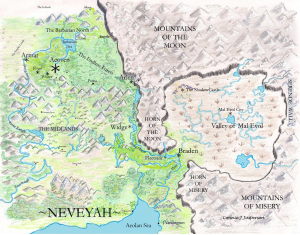
Map of Neveyah, for RizAeroNothing is more difficult (in my opinion) than finishing a novel that has been stalled for three years. My current work in progress has been through three different incarnations.

Two other books have been published during this time because  I couldn’t find a satisfying way to end this chapter in the history of Neveyah.  Perhaps it is a case of separation anxiety, but for one reason or another, it has never gotten to the true finish line.

My current focus is on finishing the final draft of this novel and getting it submitted to my editor. This book must wind up the Tower of Bones series, and it has to finish BIG.

While I am doing this, I confess I feel the same mix of feelings as I did when my youngest child left home–a sense of loss combined with pride and the thought that freedom looms.

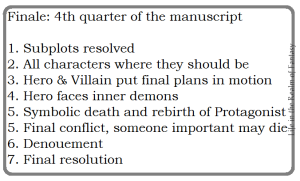
4th qtr of MSSo let’s talk about the all-important fourth quarter of the story arc.

At this point in the story arc, the final plans are in motion. We’ve met the enemy part 1 and survived the encounter. We’ve suffered a terrible setback. Now we’ve regrouped.

In the third quarter, major events have unfolded that point to the conclusion. Based on my structural editor’s suggestions, I  inserted new scenes into the existing narrative that drive the action to the final conflict. Those are all finished and are where they should be.

  1. At the outset of the 4th quarter, all my subplots are resolved and the final focus is on the Dark God’s move.
  2. The Dark God’s final pawn in this game must be exposed to the reader.
  3. The enemy’s plan and their true nature must be shown.
  4. Someone who was previously safe is now in peril. Their fate hangs on a thread and the outcome is unclear.
  5. The heroes must face the fact that their efforts to preserve their homeland has forced the enemy’s hand in a way they never expected
  6. The resolution for these characters is final, no loose threads can be left at the end of this book, as it completes the trilogy.

My work right now revolves around taking the new material and blending it into the existing story. Foreshadowing must be inserted and some otherwise great passages will be cut. This is because anything that does not drive the plot to this end is a side quest, and there can be no more of those.

This means one whole storyline that took six months to write will be cut, but it’s not a waste. There will be more opportunities for writing in this world, and that storyline could become a novella. These are great characters and the villains are as intriguing as the heroes.

As I said at  the beginning of this post, I am seeing this novel coming together at long last, and I am loath to let go of it. But I am excited to see it coming to this conclusion and feel good about it, despite having to shed some of the work that took so long to write.

The events have been detailed. Making sure this story flows seamlessly is time-consuming but it’s my obsession, so poring over the manuscript is what I am doing when I could be playing games. (Hear that Aveyond Stargazer?)

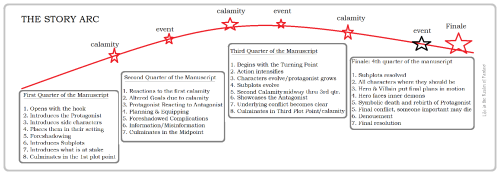
The Story Arc copy

4 Comments

Filed under Publishing, writer, writing

#amwriting: Taking the #NaNoWriMo novel to the next level

NaNo-2015-Winner-Badge-Large-SquareYou took a leap of faith. You’d had this idea for a novel rolling around in your head for years. Someone told you about Nation Novel Writing Month, and on the spur of the moment you joined.

Then you were committed. Every day, no matter what disaster was occurring on the home-front, you sat down and wrote at least 1,667 words.  Some days it was hard, the words just weren’t there. But you persevered and some days you were on fire–everything flowed. Your story took you places that amazed you.

Now it’s November 30th and you have your 50,000 word manuscript, and the all-important winner’s certificate from NaNoWriMo dot org!

But now you don’t know what to do next.  Whatever you do, DON’T SHOW IT TO YOUR ADORING FANS JUST YET. This is not the time to ask for feedback unless you want to be lied to. They’ll look at you with a possum-in-the-headlights smile, and say “Wow…this is really…different.”

What they’re really thinking is, “Holy s**t. This disjointed, hokey mess sucks.” That friend will poke needles in their eyes before they read another piece of your work again.

What you must do is put it in a drawer for a month or two. Write some short stories, or start a new novel. You have to step back from this in order to see what need to be done with it, and you can’t do that right now. SO–in January or February:

First let’s talk about that manuscript.

When you were writing it, you were concerned about increasing your word-count. Someone told you not to use contractions, as the word ‘doesn’t’ counts as one word while ‘does not’ is two. Foolishly, you did just that.

LIRF Global Search all steps

Global Search Print-Screen

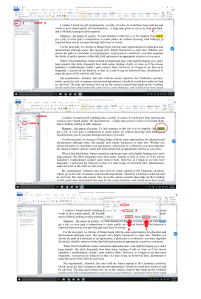
Now you must go through and make that awkward, stilted phrasing into contractions. Do a global search:

  1. press control+F
  2. type the word you are looking for in the search box
  3. click on options
  4. click on replace
  5. in the ‘replace with’ box type the word you want to replace the wrong word with
  6. DO NOT replace all. Go to each instance of the words individually and replace them after you have seen the context of the sentence they are in.

Second, let’s look at how we are telling the story. In the rush of the first draft, of getting all our thoughts about the story-line down, we use a kind of mental shorthand and write things like:

Erving was furious.

Martha was discouraged.

Readers don’t want to be told how the characters felt—they want to see.  When you come across this in your first draft, now is the time to follow those road signs and expand on the scene a little. Instead of telling the reader that Martha was furious, you will show this emotion.

Martha stamped her foot.

Erving’s face went white, his body shook with rage.

When you go back through your manuscript, change each ‘telling scene’ to a ‘showing scene.’ When you show the reader the emotions it deepens the story and enables the reader to be involved.

Dialogue

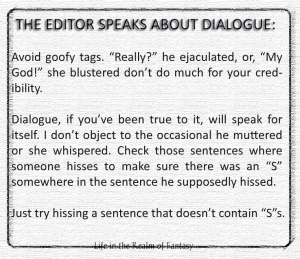
Third: too many dialog tags. When only two characters are in a scene readers should be able to keep track of speaker ID with ease. In those situations, speech tags are rarely, if ever, needed.

Instead of using a speech tag, consider inserting an action beat (a burst of action) before a line of dialogue. This identifies the speaker and offers opportunities for you to deepen character chemistry, conflict, and emotions.

Annie felt something trickling down her cheek. She wiped it, and her hand came away with blood. Her companion was covered with gore, but at least he was in one piece. “John, are you okay?”

 “Of course.”

 She reached toward his shoulder, toward the torn shirt, the ugly gash—but something held her back. “Your arm. I thought maybe ….”

 “You thought it was bad.” 

 The look in his eyes forced her to glance away. “Well, yes. But if you say you’re okay….” Her face burned.

John bent down, digging around in the medical kit, hiding his grin. His thoughts ran wild, but he said only, “Let’s get ourselves doctored up. We’ve a long way to go.”

Replace those empty speech tags with an emotion-infused narrative. However you must remember that the reader needs to have clear direction as to who is speaking to whom, otherwise you will lose them. Don’t make more than a few exchanges without dialogue tags, and make those you do use simple. Said, replied–we really don’t need to get fancy.

dump no infoFourth: Too Much Information. This is my personal bugaboo. As I am writing I spill my guts and write all the background as I am thinking it. The reader doesn’t need to know everything up front. These passages are really notes telling me as the author what direction this tale is supposed to go.

My beta readers always tell me the reader doesn’t want to read the history of the world–they want to get to the action. THEY ARE RIGHT!

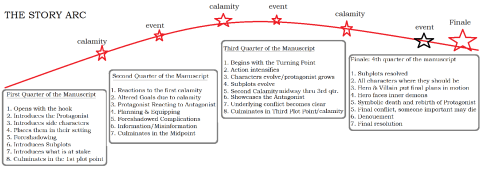
Fifth: Make sure you have a good story arc:

  1. Exposition, where we introduce our characters and their situation.
  2. Rising Action, where we introduce complications for the protagonist
  3. Climax, the high point of the action, the turning point of the narrative
  4. Falling Action, the regrouping and unfolding of events that will lead to the conclusion
  5. Resolution, in which the problems encountered by the protagonist are resolved, providing closure for the reader.

The Story Arc

SO before we show this novel to anyone, we have a lot of work to do.

  1. Check for contractions
  2. Check for scenes that are telling and not showing
  3. Take a look at the dialogue tags and make action speak for you.
  4. Carve back the info dumps–keep what moves the story along and save the rest in a separate file.
  5. Make sure you have a good story arc.

Let this nano novel rest for several months before you do anything with it. Start a different novel, and come back to this one later. When you look at that original first draft with fresh eyes and begin looking for these things, you will be amazed at how well your novel will begin to come together. During this rewrite, your characters will grow and develop, and your plot will really begin to move along. This is when you really write your novel.

4 Comments

Filed under Humor, Publishing, Uncategorized, writing

#amwriting: consider the weather

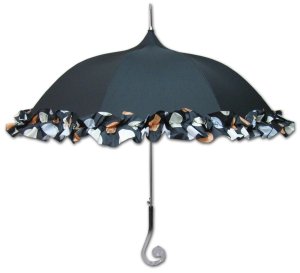
81UuqzVF-1L._SL1500_Something about the  wind-driven rain-bullets here in our part of the world can be death on umbrellas, even expensive ones. Even the cutest umbrellas frequently end up in street-corner trash-bins, ending their days as the tattered and broken relics of impulse purchases.

Despite the carnage, I feel compelled to keep buying umbrellas, feeling sure the next purchase will be the one–the true umbrella for all seasons, able to withstand 40 mph winds and sideways rain.  So far, the decidedly unromantic golf umbrella is the bumbershoot I carry.

But while golfers look fine carrying them, I long for beauty. I just know that my desire to have some cheery vestige of spring in the form of a floral print over my head will somehow work out and I will manage to remain both dry and stylish.

And this brings me to my point: You may not realize it but weather is a huge factor in your characters’ ability to go from point A to point B. For those of us who are writing fantasy, our characters are likely to be riding horses or walking. Weather will be a large part of what impedes them, or enables them to travel faster than they had planned.

Traveling on foot in the dark during a heavy storm is extremely difficult. Prior to the advent of the automobile, people didn’t travel during storms unless some terrible reason forced them to.

helly hansen raingear comboWeather is something I understand. In the 1980s, newly divorced and unqualified for any well-paying job, I worked for a Christmas tree grower. In the summer, we started work at 5:30 am so we could be finished and out of the field by 2:30, during the hottest part of the day.

I’ve never been a fan of using too much sunscreen—it’s greasy and full of things I can’t pronounce, it gets in your food, and I’m not so sure eating it is good for you. So, in those days I wore light, long-sleeved shirts to keep the sun off me, and wide-brimmed hats that kept the sun off my face. That is old-school, low-tech farm garb, and is how I still roll when it comes to dealing with the sun.

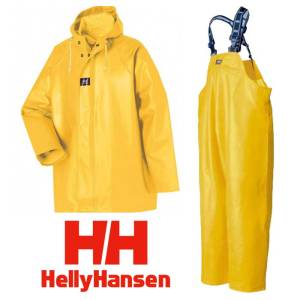
But when November arrived, we field hands were still working outside. With the advent of a Northwest Winter, we wore layers, 2 pairs of wool socks, barn-boots, and raingear. Good old Helly Hansen—his fine product kept me dry and warm while I worked to bring Christmas trees into every home. But, working outside in the cold and rain requires a certain amount of preparation, or you can become hypothermic, and unable to function.

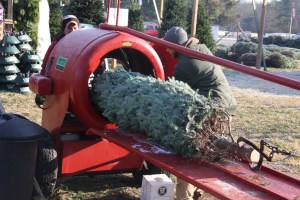
Howey Christmas Tree Baler

Howey Christmas Tree Baler via Flicker

Every year, when cutting-and-baling season started we would have a new crop of people who had never worked out of doors, and who didn’t understand the sense of investing in long-johns and raingear. The company offered decent gear (boots, gloves, and raingear) at reasonable prices, but many would not  spend the money, refusing to believe that it was a war the weather would win.

So I discovered that if you were going to work outdoors year-round, you needed better quality gear than the company offered. In 1982, the best gear available was: LL Bean thermal underwear, and Helly Hansen foul-weather gear, and the mail-order catalogue was the place to get it.

My point with this is that if your novel’s setting is a low-tech society, weather affects what your characters can do. It affects the speed with which they can travel great distances, and it affects how they dress. It affects their horses, and that is a serious point to consider.

Medieval society had ways of dealing with the weather when they had to be out in it, and the internet is your friend. In medieval times, people of England, Wales, and Ireland didn’t have to deal with extreme temperatures the people of Northern Europe experienced in the 17th and 18th centuries, as it was a warmer time. However, they did get some occasional snow and cold in the winter, and at times they suffered heat waves during the summer.

How did they protect themselves against the weather? Here are several good websites for research:

Sarah Woodbury, Romance and Fantasy in the Middle Ages

Medieval Gloves, etc.

Castles and Manor Houses

In a cold, wet winter, a simple shawl won’t cut it. Layers are critical, and the materials they would use are simple and readily available—linen, and wool.

414-2-blue-robed-santa-claus-christmas-vintage-postcardIn a lower-tech society fur-trapping is a common way of earning money, but only the wealthier classes, merchants and nobility, can afford to buy those furs.

The average medieval agrarian society will have access to fleeces, though, especially if they are a Northern European type of society. Also, in the more urban centers of a low-tech society, the average person’s winter garments, hooded cloaks and gloves, and even bedding would be made of thick wool, layered and felted.

Wool has been a winter mainstay since humans first began making cloth. Some garments will be made of heavy canvas, or oil-cloth. Oilcloth, close-woven cotton canvas  or linen cloth with a coating of boiled linseed oil,  was a product available from the late middle ages on.

Clothing and cold weather gear will make their appearance in relatively few sentences in your novel, but a little research on your part regarding what technology might be plausible in your society will lend a sense of realism to your work.

2 Comments

Filed under Publishing, Uncategorized, writer, writing

#amwriting: 3 steps for keeping the story straight

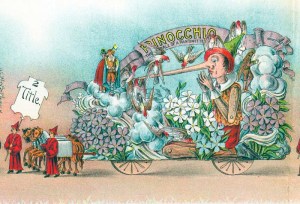
1916 Momus Pinocchio via Wikimedia CommonsEvery liar knows it’s difficult to keep a story straight–the story keeps evolving and soon it’s out of control.  However, writers, those spinners of awesome lies on paper, must devise ways to avoid this little problem.

Some people use a program called Scrivener which is not too expensive, but which seems to have a tricky learning curve. I downloaded the free version but couldn’t make heads or tails of it and found it quite frustrating. Nevertheless, I understand that it works well for many people, and to them I say, “Good for you.”

For myself, I don’t want a fancy word-processing program. I just use MS Office, because I have been using the programs that come with that software since 1993, and I’ve been able to adapt to each upgrade they have made. It’s affordable, so I use Word to write and edit in, and occasionally use Excel  to make small charts that are my style guides for each  novel or tale I write, and also for every book I edit.

Helpful tip #1: Create a style sheet for every work-in-progress. Whether it is a handwritten list or spreadsheet–keep track of what you named people, places, and things.

Bleakbourne Style Sheet

By creating a visual guide that I can print out or  keep minimized until I need it, I will not inadvertently contradict myself later on in the tale. This particular chart is the style-sheet for a serial I am writing for Edgewise Words Inn, a small online blogzine.

Lets consider Lord Tenneriff, the name of a minor character. Because I noted it on the style sheet and gave a small explanation when I first used it, I will always remember that Lord Tenneriff was spelled with two ‘n’s and two ‘f’s, and with no ‘e’ at the end of it.  The heading of the sheet is like this:

Character Name       Word 1st appears      Other names       Meaning?

            Jason Tenneriff              chapter 1                                                      a local lord

                                                         chapter 2                   Bleakbourne             a village

By listing out the names of every character no matter how minor, even the horses, I will not have a continuity problem by the time I hit chapter 14 of this series. For my editing clients, I also list all magic spells, every god, demon or dwarf that comes into the tale. Anything that is named goes onto that style sheet exactly the way it was first mentioned, the chapter it was first mentioned in, and the brief description of what it means.

Every author has a different way of visualizing these things, and this is what works for me.

Helpful tip #2: Map it out:

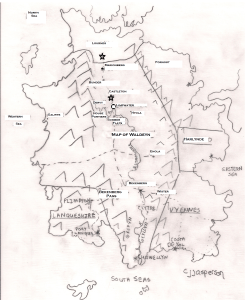
Map of WaldeynSo how do you visualize your country and the world you are creating? I have discussed this before–I draw maps.

They start out like this, all blotchy and hand-drawn, with whiteout covering the changes. After a while of refining them they end up looking more like real maps.

Its a gradual process, and the actual shapes and where the places are will evolve throughout writing the tale, but it will remain basically that way.

Many authors will use locales they are familiar with for their fantasy maps, just changing the names of major cities.  This is a good way to do it, because your world is already well defined for you, and Northwesterners know that Portland, Oregon is about 170 miles south of Seattle, Washington.  You are safe using currently existing terrain.

map of Waldeyn 2015 with lettering cooper black copyBut safe isn’t exactly my thing, so I had to invent both the world of Waldeyn (Huw the Bard), and the World of Neveyah (Tower of Bones). This is what the hand-drawn map of Waldeyn from above has evolved into————>

Helpful Tip #3: Version control:

When we first begin to write seriously we learn how critical it is to have proper naming of our files to ensure version control.  The most recent file will usually be the best edited unless you have accidentally saved an earlier version over it. ALWAYS use a separate file for each version, and ALWAYS use consistent file labeling practices to avoid this tragedy!

Use good file labeling practices, even if you have a fancy program that handles structuring your manuscript.

As an editor, I am particularly careful how I name the files of my clients.

  1. I use a specific sort of naming system. It will ALWAYS be Book_ AuthorName_script.doc .
    This is the main file folder for this book and this author!
  2.  The file folder will contain everything that pertains to this author and his work. There will be at least two folders in this file, and can have up to six. Version control is critical, so proper naming of the files is absolutely essential. If he should ever lose his files, I will have the most recent version on hand.
  3. The raw manuscript in its entirety is saved in this file, and I will name it:
  •  Book_ AuthorName_rawscript.doc

There will be 2 files for every step of the process this manuscript goes through with me: One file will be from the author’s desk to me, and the other will be from my desk to the author.  I will break the raw ms down into chapters, and label each chapter in that file consecutively:

  • Book title_Ch1_ author initials_cjj_edit_rnd1.doc

This tells me that this is Book A, chapter 1, by Author SoAndSo, and was edit round one of that ms.

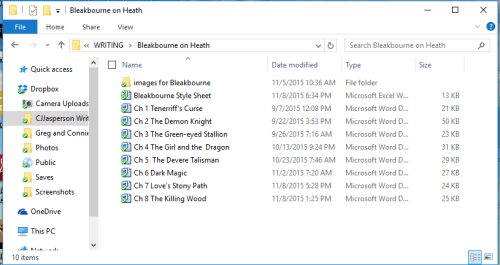
For my own work I label the files uniformly, like this: The main folder will be labeled with the working title, such as Bleakbourne on Heath. Inside the main folder will be the style sheet, and any images that will be used, including maps if needed.

Version Control 1

These three tips, creating a style guide, drawing a map, and labeling your files so you have good version control will help you navigate the shoals of the authoring business. You will always know who you are talking about, where you are, and you will be working in the most recent version of your work.

3 Comments

Filed under Publishing, writer, writing

Phrasal verbs–minions of evil, or sometimes useful?

Book- onstruction-sign copyPhrasal verbs are usually two-or three-word phrases consisting of a verb plus an adverb, or a verb plus a preposition, or both. They are just another aspect of English vocabulary, and can be considered a form of compound verbs.  We use them all the time, but what, exactly, are they?

First, what is an adverb?

The term adverb is somewhat of a catchall word to describe many kinds of words having little in common other than the fact they don’t fit into any of the other available categories (noun, adjective, preposition, etc.) and they modify an action word—a verb.

The principal function of adverbs is to act as modifiers of verbs or verb phrases. An adverb used in this way gives information about the manner, place, time, frequency, certainty, or other circumstances of the activity denoted by the verb or verb phrase. Too many modifiers in your narrative and voila! Purple prose.

phrasal verbsThere are three main types of phrasal verb constructions depending upon whether the verb combines with a preposition, a particle, or both.

Wikipedia, the fount of all knowledge, has a good example of these three forms:

Verb + preposition (prepositional phrasal verbs)

  1. Who is looking after the kids? – after is a preposition that introduces the prepositional phrase after the kids.
  2. They picked on nobody. – on is a preposition that introduces the prepositional phrase on nobody.
  3. ran into an old friend. – into is a preposition that introduces the prepositional phrase into an old friend.
  4. She takes after her mother. – after is a preposition that introduces the prepositional phrase after her mother.
  5. Sam passes for a linguist. – for is a preposition that introduces the prepositional phrase for a linguist.
  6. You should stand by your friend. – by is a preposition that introduces the prepositional phrase by your friend.

Verb + particle (particle phrasal verbs)

  1. They brought that up twice. – up is a particle, not a preposition.
  2. You should think it over. – over is a particle, not a preposition.
  3. Why does he always dress down? – down is a particle, not a preposition.
  4. You should not give in so quickly. – in is a particle, not a preposition.
  5. Where do they want to hang out? – out is a particle, not a preposition.
  6. She handed it in. – in is a particle, not a preposition.

Verb + particle + preposition (particle-prepositional phrasal verbs)

  1. Who can put up with that? – up is a particle and with is a preposition.
  2. She is looking forward to a rest. – forward is a particle and to is a preposition.
  3. The other tanks were bearing down on my panther. – down is a particle and on is a preposition.
  4. They were really teeing off on me. – off is a particle and on is a preposition.
  5. We loaded up on Mountain Dew and chips. – up is a particle and on is a preposition
  6. Susan has been sitting in for me. – in is a particle and for is a preposition.

(end of quoted example, thank you Wikipedia)

We use phrasal verbs all the time in our daily speech and in our writing. However, whenever it’s possible we should look for simpler ways to phrase our thoughts when writing, unless we are writing conversations spoken in the local vernacular.

Why do I feel that way? The way I see them, phrasal verbs are  two-or-three words (an action word and modifiers) forming what can be considered a separate verb-unit with a specific meaning. In other words, they use more words than is really needed to express a thought:

  • Who is looking after (verb unit) the kids? == Who is watching the kids?
  • They brought that up (verb unit) twice. == They mentioned it twice.
  • Who can put up with (verb unit) that? == Who can endure that?

We use these phrasings because they sound natural to us—that is the way people in your area might speak. But when used too frequently in a written piece, phrasal verbs junk up the narrative. They subtly contribute to what we call “purple prose” because the overuse of them separates the reader from the story.

Unless you are writing poetry, simplicity is best, because you want to immerse your reader in the experience.

ok to write garbage quote c j cherryhWhen we are revising our first draft, and tightening our narrative we should be examining the prose for weak phrasing. Each time you come across phrasal verbs in your work, look at the sentence it occurs in as if it were an isolated incident and ask yourself if it needs to be there. Many times a phrasal verb really is  the only way to express what you are trying to say, but equally often a more concise way can be found.

Phrasal verbs have their places, but if you can simplify a thought and make the sentence stronger, do so.

2 Comments

Filed under Literature, Publishing, Uncategorized, writer, writing

Girls Can’t be Knights, Lee French cover reveal and interview

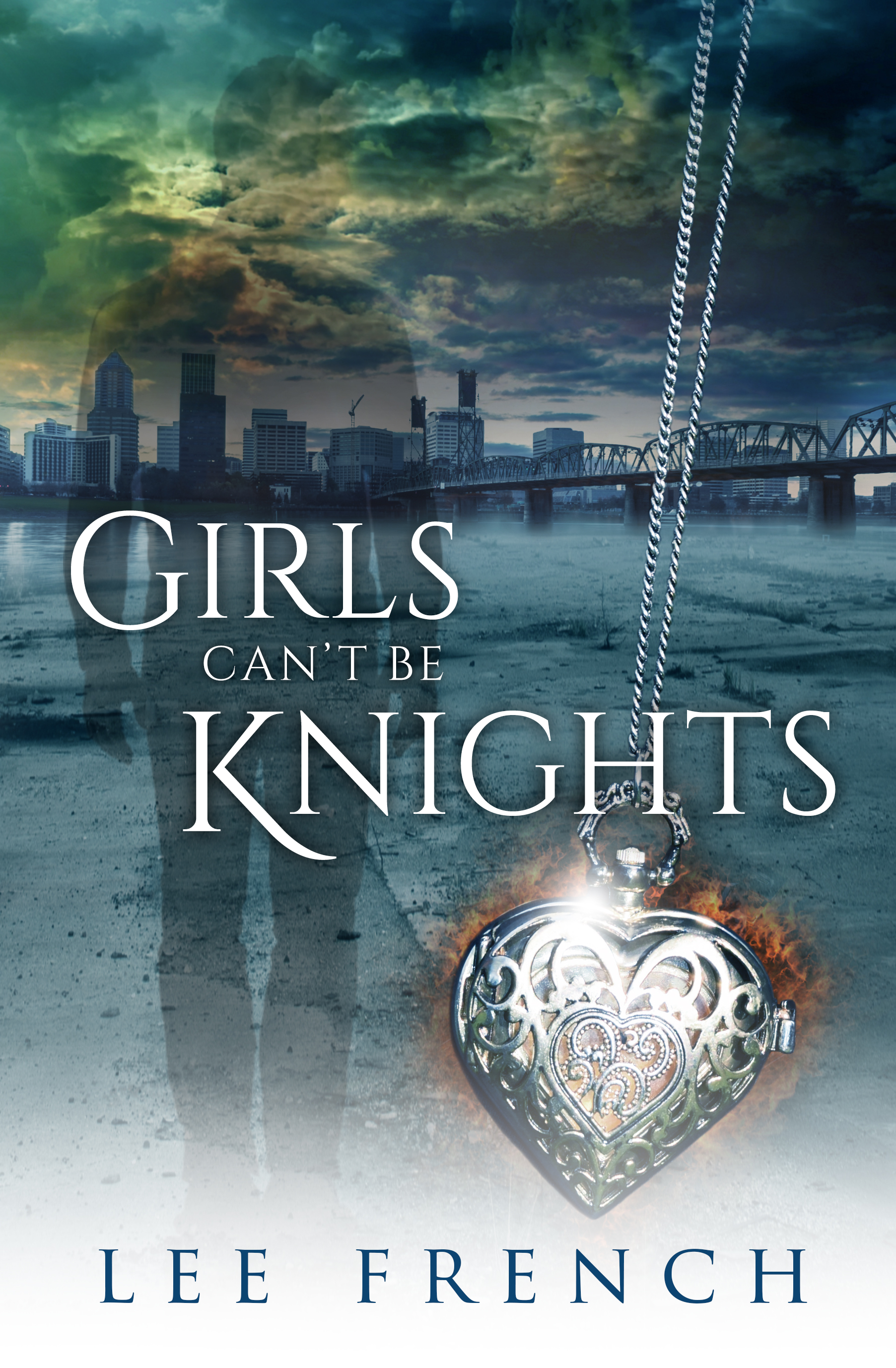
My good friend and fellow member of Myrddin Publishing Group, Lee French, has a new book coming out soon. The cover is gorgeous, in my opinion. I also love the title, Girls Can’t Be Knights.  This book is a young adult fantasy novel, championing Girl Power while exploring the world of a secret organization, the Spirit Knights. I can totally get behind that!

Set in Portland Oregon, Girls Can’t Be Knights is another in the long line of French’s impressive career, which includes nine books, one trilogy, one epic fantasy series and a short story. Her works are popular among fantasy and paranormal readers, with many re-reading books several times after purchase.

Lee has consented to answer a few questions for us:

CJJ: Tell us a little of early life and how you began writing:

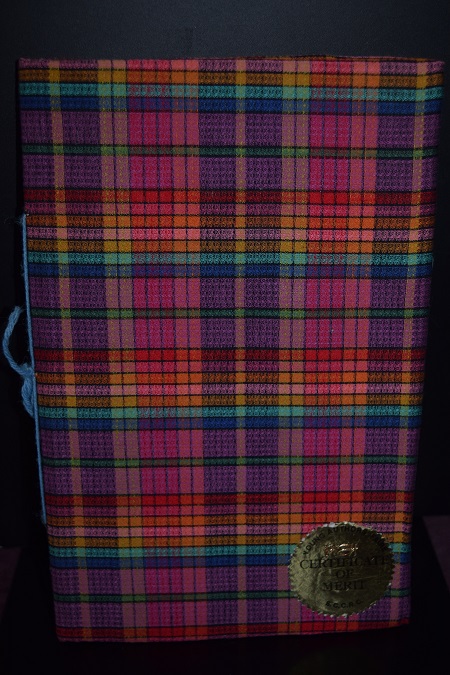
Lee French's First Book

Lee French’s First Book

LF: I was a late reader, not really grasping the whole thing until 2nd grade. Once I did, I clung to books with both hands and a glare for anyone who dared to attempt prying one away. At that time, my school district ran an annual book fair, for which they encouraged students of all ages to submit “books” for “judging.” With my mom’s help, I self-published an epic six page volume about The Mean Old Man’s Backyard, which is to say that I cut all the paper, wrote all the words, drew all the pictures, and let her glue the fabric to the cardboard for the cover.

From that point on, I considered myself a “writer,” though I considered it a hobby for a long time.

CJJ: That is a cute book! Tell us about your most recent book. How did you come to write this novel?

LF:  Girls Can’t be Knights started as all my books do—with an idea that sounds brilliant but is ultimately kinda dumb. I wrote it for NaNoWriMo last year, which means it had curious ideas and plot points that had to be rewritten quite a bit. The primary idea comes from Les Miserables, specifically the idea of two men, eash the hero of his own story, striving against each other. The two main characters were Valjean and Javert, and elements of that remain. What happened is that Claire stepped in and demanded agency. The core ideas had to mutate to accommodate her.

CJJ: How does Girls Can’t be Knights differ from your other two series of books?

LF: This is my first foray into YA. The Maze Beset trilogy is similar to urban fantasy, though being about people with superpowers who got them through a genetic thingy, it’s technically science fiction. Like that trilogy, The Greatest Sin is generally suitable for teen readers, but wasn’t written with them in mind.

CJJ: Do you have a specific ‘Creative Process’ that you follow, such as outlining or do you ‘wing it’?

LF:  When I first took the plunge into writing novel length work, I winged it. A lot. October 29, 2008, I decided to do NaNoWriMo for the first time and had just a basic idea of where I’d go. I finished, but it was awful. The next year, I took outlining a little too far. Since then, I’ve found a happy medium that works for me, where I go back and forth between winging it and outlining. The first chapter of a book is usually off the cuff, then I outline a few chapters, then I work up to the outline and wing a bit, then go back to the outlining. It works for me, which is the most important part of any Process.

CJJ: What genre would you consider this book, and how does it differ from others of its genre?

LF: Girls Can’t Be Knights is Young Adult Urban Paranormal/Fantasy Adventure. This book is all about family issues. Justin has a happy traditional family, but he’s the only one, and he came to it by way of domestic abuse between his own parents. This story shows a number of characters in various stages of dealing with broken homes and lost family members, and for various reasons. I’m really looking forward to pursuing the theme further in the second book, which is untitled as yet and will probably be out in 2016.

CJJ: What sort of books do you read for pleasure?

LF: As a book blogger, I don’t really read for pleasure in the strictest sense anymore. My reading material is almost exclusively indies, because that’s who needs book reviews. I’ve had the good fortune to meet a number of excellent indie authors, though, and their writing is mostly what I read, ensuring that steampunk, traditional fantasy, the occasional bit of space sci-fi, and some guilty pleasure smut fills my reading time slots.

CJJ: When you are not writing, what do you do for fun?

LF: Though writing is, admittedly, the most fun thing I do, I also enjoy baking, gardening, and cycling. Every year, I participate in Ragbrai, which is a lunatic pedal-powered festival across Iowa that attracts about 20,000 other cyclists for long days of torturous riding in abysmal heat punctuated by camping every night. It’s awesome.

CJJ: I know why I chose the indie route for my work, but I’m curious as to why you’ve chosen this path.

LF: At first, I chose it because the process of querying an agent or publisher made me freeze in panic. It also made my hideously impatient side cringe at the expectation of waiting months to get rejected. After pursuing it for almost two years now, I’ve come to the conclusion that I’d probably be unhappy with a traditional publisher. I’m too impatient, I have too much need for control over the aspects, and I actually *gasp* enjoy formatting my own books. If someone took one of my books and gave me a cover that I didn’t like without letting me at least make suggestions, I’d probably punch them in the face.

CJJ: What advice would you offer an author trying to decide whether to go indie or take the traditional path?

LF: Read everything you can about how it works and don’t discount one or the other because you’ve “heard” x or y thing. Independent publishing is now a major force in the market, but traditional publishing isn’t going to roll over and die. There are benefits and detriments to both paths, and every author has to decide what’s right for them. Investigate the market to discover who your audience is and where and how they shop. Get out and meet other authors in your area. Pay attention to the books you come across and how you came across them. All the information you need to make the best choice for you is out there.

CJJ: I always enjoy your POV, especially on the way the publishing industry works, and what indies need to take note of. And now, the blurb, and the the cover reveal for Lee’s new book:

>>><<<

GIRLS CAN’T BE KNIGHTS

by Lee French

release date June 12, 2015

Girls Can't Be Knights KINDLEPortland has a ghost problem.

Sixteen-year-old Claire wants her father back. His death left her only memories and an empty locket. After six difficult years in foster care, her vocabulary no longer includes “hope” and “trust”.

Everything changes when Justin rides his magical horse into her path and takes her under his wing. Like the rest of the elite men who serve as Spirit Knights, he hunts restless ghosts that devour the living.

When an evil spirit threatens Claire’s life, she’ll need Justin’s help to survive. And how could she bear the Knights’ mark on her soul? Everybody knows Girls Can’t Be Knights.

>>><<<

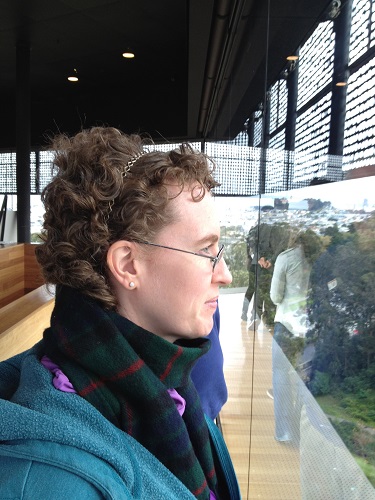
Lee French PhotoLee French lives in Olympia, WA, and is the author of several books, most notably the Maze Beset Trilogy, The Greatest Sin series (co-authored with Erik Kort), and assorted tales in her fantasy setting, Ilauris. She is an avid gamer and active member of the Myth-Weavers online RPG community, where she is known for her fondness for Angry Ninja Squirrels of Doom. In addition to spending much time there, she also trains year-round for the one-week of glorious madness that is RAGBRAI, has a nice flower garden with one dragon and absolutely no lawn gnomes, and tries in vain every year to grow vegetables that don’t get devoured by neighborhood wildlife.


She is an active member of the Northwest Independent Writer’s Association and the Olympia Writer’s Coop, as well as serving as the co-Municipal Liaison for the NaNoWriMo Olympia Region.


Comments Off on Girls Can’t be Knights, Lee French cover reveal and interview

Filed under Books, Humor, Publishing, Uncategorized, writer, writing

My Writing Life: David P. Cantrell

My Writing LifeToday indie author and blogger, David P. Cantrell, has consented to answer a few questions for us. Dave is a fellow staff-member at Edgewise Words Inn, a reader-oriented blog where Dave Cantrell, Lee French, and I post a variety of short articles, human interest stories, some short stories, memes, and generally have a great time just writing. At the end of this post, I will be reblogging Dave’s most recent post on Edgewise Words Inn, a little thing called “Ten Things I’ve learned as a Quadriplegic.” I think you’ll find that post as interesting and inspiring as I did.

But first, my virtual interview with Dave:

CJJ: Tell us a little of early life and how you began writing:
DPC: I grew up in Southern California after immigrating from Indiana at age five. I was a mediocre student in grade school, sports were much more interesting, but sadly, I was a mediocre athlete too. I wasn’t horrible at either of them, mind you—I got by.

I’ve often wondered where I’d be today if my family hadn’t moved to a new school district. I had completed one semester of eighth grade before the summer of the move. The new district couldn’t accommodate split semesters and required me to restart the grade. I became very bored in math and petitioned to join an experimental math class (eighth grade algebra—it sounds quaint now.)

The math teacher let me in for a semester with the proviso that I earn a Cee or better, otherwise it was back to regular math. I struggled, but the teacher worked with me, and I didn’t want to be put back. I think she took pity on me when she wrote a Cee on my report card. Whether she did or not, I’ll never know, but that Cee changed my life. Ultimately, I got a Bee in the subject, and took Geometry during the summer following middle school—No I wasn’t that nerdy, my girlfriend wanted company. I started high school taking a junior level math class.

I learned to enjoy reading in eighth grade. It’s difficult to remember which book lit the flame, but I think it was I Robot by Isaac Asimov. At any rate, reading eventually ignited the writing flame.

CJJ: You are right–the love of reading is the jumping-off-point to attempting to write. I happen to know what you are working on, but my readers don’t, so let’s talk about your current work in progress. 

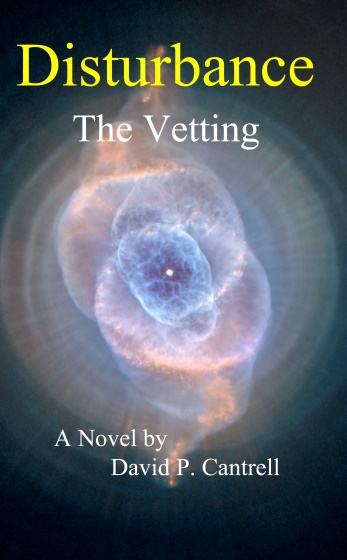
Disturbance - the VettingDPC: My one and only book is a work in progress. I published part one, Disturbance: The Vetting, in July 2014 and took it off the market in January 2015. The initial publishing was a mistake, but I’m glad I made it. I’ve learned a good deal about the process of writing, formatting and editing because of the mistake. I’ve met wonderful, supportive authors from around the globe as a result of it too.

CJJ: How did you come to write this novel?
DPC: Well-meaning idiots made me do it. That’s mean, but true in a sense. I started posting short “Slice-of-Life” stories on Facebook, items like “The Chicken Parmesan Saga.” I was encouraged to create a blog and gave it a go. I beta read Sci-Fi novels for a talented author, Jasper T. Scott. His comments gave me the idea that I might be able to write. I jumped into the deep-end.

CJJ: I’m mostly an outliner, myself. Do you have a specific ‘Creative Process’ that you follow, such as outlining or do you ‘wing it’?
DPC: Please define creative process. I tried to outline, but got hung-up on the order of things. What comes first, character or story? Can they exist independently? I’m a wing-it writer that prays for an outline to magically appear, and in it does sometimes.

CJJ: This is the question I hate to be asked, but here I am asking you: how does your work differ from others of its genre?
DPC: I want to write stories that make the reader think or learn something new. I love action oriented stories as much as the next person, but I want to write page turner’s that make the reader stop and think about what they’ve just read every once in a while. I get frustrated by the mantra to keep the story moving forward, if the words don’t keep it moving they are useless, not necessary.

CJJ: Why do you write what you do?
DPC: I write for the joy of research (I love an excuse to learn new things) and the hope to touch a stranger with my words.  Touching strangers is why I smile and say hello to them as they walk their dog down my block. Their response makes me feel good.

I recall a day my wife asked me to pick up something from our local grocer on my way home from work. It must have been summer because daylight abounded. I was a middle aged over-weight man walking across a parking lot and saw a stunning mid-twenties women dressed to the nines walking to her own car with a bottle of wine.  I worried if I said anything she’d think I was perverted. As I passed her we made brief eye contact and I said, “You look beautiful the evening.”  The smile on her face brings tears to my eyes as I write this.

CJJ: I like that little vignette you just painted for us, and feel somewhat the same myself when it comes to making people smile. So, when it comes to publishing, I know why I chose the indie route for my work, but I’m curious as to why you’ve chosen this path.
DPC: Is there a better way for an unknown to get their work before a world audience? I don’t care if I make a lot of money selling books. Don’t get me wrong, I’d love to do it, but it isn’t why I’m writing. I want to touch others, and honestly, I want the ego stroke that comes with it.

CJJ: What advice would you offer an author trying to decide whether to go indie or take the traditional path?
DPC: If money is your goal, try the traditional path. No one can promise better odds of making money on that path, but if you don’t give it a go you’ll always think you should have.

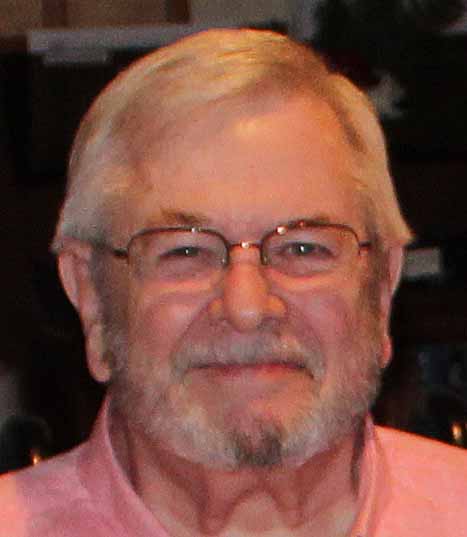
Dave Cantrell Author pictureDavid P. Cantrell lives with his wife of nearly four decades in the beautiful coastal community of Arroyo Grande< California. He is a retired CPA, enthusiastic (but not particularly good) home cook and avid reader. He enjoys history, historical novels, science fiction, non-fiction, fantasy, crime, thrillers, contemporary fiction and even a western now and again.

Before a spinal cord injury in 2009, he spent his creative efforts writing IRS defenses for his clients and on woodworking; building a variety of items, from chessboards to a Murphy Bed. The spinal cord injury left him paralyzed from the neck down, but with the help and love of his wife and caring therapists, he was able to recover significant function. Woodworking was behind him, and he accepted that.

Thank you Dave—you are a joy to know and to have as a friend, and you are an integral part of my personal writing life.

And now, “Ten Things I’ve learned as a Quadriplegic” By David P. Cantrell

(Reblogged from Edgewise Words Inn)

Being a quadriplegic (aka tetraplegic) is a learning opportunity. I found my opportunity when a confluence of events left me prostrate. Actually, I don’t remember being on the floor, I learned it later from my wife. She also told me I repeatedly asked if I’d had a heart attack while in the local ER. I don’t remember that either, but I’m not surprised. After all, I was an overweight, hypertensive, diabetic, chain-smoking CPA working on a deadline.

The first thing I clearly remember is the voice of an EMT talking to his ambulance driver as we arrived at a bigger hospital. I wasn’t sure why I was in the ambulance, but I knew something very strange was happening. I learned a good deal about myself over the following months.

  1. Paralyzed means: Crap, I can’t move and I don’t mean immobile.
    There’s a big difference between the two. Immobile means I can’t move right now because I’m drugged, strapped down or really-really sleepy, perhaps all three. Paralysis means so much more.
  1. Disrespect or abuse of a good woman’s love and support deserves retribution.
    If I’ve done either, shame on me. The memory of ICU, day one, is vague, but real. My teary-eyed wife held my hand, which I could not feel, and said, ‘I have your heart and your mind, that’s all I need.’ To this day, it’s our motto ….(To read the rest, click here to be transferred to Edgewise Words Inn and the rest of Ten Things I’ve Learned as a Quadriplegic)

Comments Off on My Writing Life: David P. Cantrell

Filed under Adventure, Battles, Books, Fantasy, Humor, Literature, Uncategorized, writer, writing

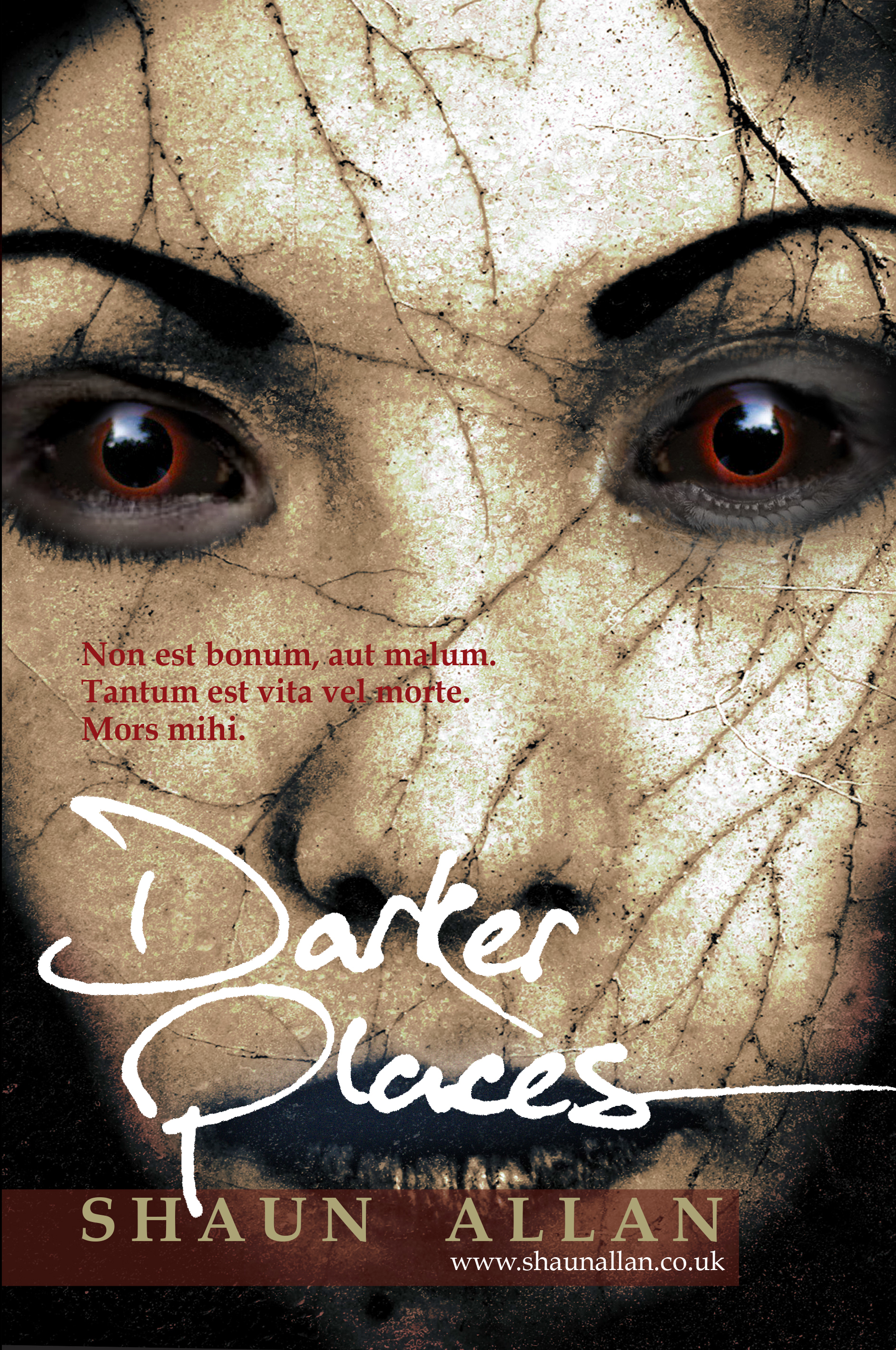
Darker Places, Shaun Allan

My Writing LifeOne of my favorite people is Shaun Allan, author of the bestselling novel, Sin–he  can write circles around me. Actually, he can write circles around ANYone.  Shaun has a new book out today, Darker Places. I was fortunate to be asked to edit this book, and I’m just going to say, very little effort on my part is ever required with Shaun’s work.

Darker Places is a dark, literary fantasy, comprised of thirteen poems and 13 short-stories, in the same vein as Dark Places,  his book of short works that was published in 2012.

Shaun has consented to answer a few questions about his writing life for us:

CJJ: Tell us a little of early life and how you began writing:

SA: Early life…  Can I remember that far back?  I’m not sure I can…  I can’t think of a time when I haven’t been writing.  I’m told (by my mother who also tells me I was a little terror as a young child, which I can’t quite believe) I used to write stories and draw the pictures to go along with them.  Nowadays, my artistic skills are probably somewhat lacking.  I’m hoping my writing skills have improved, though.  At school, English was easily my favourite lesson and I loved writing the essays.  I was a big fan of science fiction, back then (I still am a fan, of course), so read lots of Arthur C. Clarke and Isaac Asimov amongst others.  I moved on to fantasy, with David Eddings and Terry Brooks and then brought in horror.  All these found their way into my writing, with horror and the supernatural becoming the mainstay of my subject matter now.  I feel, without the darkness, you can’t appreciate the light.

CJJ: Those are books I loved too. Tell us about your most recent book.

SA: Darker Places, my new book, is the follow up to Dark Places.  It’s an anthology of 13 stories and 13 poems which walk the reader through the shadowy passages of my mind. There’s ome humour in there (with Gremlins and Little Dead Riding Hood), some touching stories (The Crow and Stolen Moments) and much darker ones (Home) where I kill off a number of my old school friends, with their permission!  And, we get to see what happened with Sin before the events of his novel.

CJJ: I have to say that is an awesome story–Sin is an amazing character. And Home is one of the best, short stories I have read in a long time. Now we come to the question people always want to know:  How did you come to write this novel?

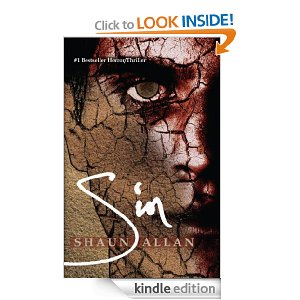
sin - Shaun AllanSA: Sin took me ten years to write.  As it’s a very personal book, I occasionally had to step away and wrote short stories.  Many of these were collected together in Dark Places, which was prompted by a comment a writer friend of mine made.  As my mind tends to write what it wants rather than what I want, and another friend, who lives in Australia, was very forthcoming with writing prompts I couldn’t refuse, Darker Places became more and more a reality.  I mean, if you’re given a starter sentence of “The bird fell and the sky was silent,” how can you not work with it?

CJJ: Do you have a specific ‘Creative Process’ that you follow, such as outlining or do you ‘wing it’?

SA: Oh, I wing it.  I know wonderful writers (Connie) who outline, but I can’t.  I’ve tried, but my mind doesn’t work like that.  It goes where it wishes, my Muse being a right royal pain in the posterior.  I sat down to write some of Mortal Sin and ended up writing a Christmas story about Rudolph, for example!  Sometimes, as with Mr. Composure, I can write the start and almost immediately know how it will end, with ‘only’ the path it takes to figure out, but often, I start and I have no idea at all.

CJJ: How does your work differ from others of its genre?

SA: I think because it’s personal.  There’s aspects of me, my life and my darkness in everything.  There’s also my sense of humour.  I set the stories where I live.  When I was starting, and everyone was saying “write what you know,” I struggled somewhat.  What did I know?  Where I lived seemed boring, for a start!  But then I read a Clive Barker book (Weaveworld, I think) and he described going down back alleys in a town.  I didn’t know, but felt it could have been the alleys where he grew up.  It wasn’t boring.  So I moved my stories to Grimsby and Lincolnshire – the places I knew.  Once they came home, they allowed me more freedom.

CJJ: Your work is dark, but you are such a cheerful, light-hearted person. Why do you write what you do?

SA: Good question.  Though I can write silly children’s poetry as well as paranormal and psychological thrillers, it’s the darker work which I find easiest.  I find it therapeautic.  I can get stresses and bad memories out and turn them into something I and others seem to enjoy.  As I say, without darkness, you can’t appreciate the light.

CJJ: I know why I chose the indie route for my work, but I’m curious as to why you’ve chosen this path.

SA: I did try to be ‘properly’ published, but, with the indie route, I’ve made some amazing friends and reached people all over the world.  I have full control over my work and the only deadline (in most cases) is the one I set myself.

CJJ: What advice would you offer an author trying to decide whether to go indie or take the traditional path?

SA: Well, you have to go for what you feel is right, but I have to admit, though the indie route is hard work, its immensely rewarding.  I’d definitely recommend giving it a go.

~~~~~~

Thank you Shaun, for taking the time to answer these questions, and for being here today!

DarkerPlaces_96dpi_100%DARKER PLACES by Shaun Allan

What if you could steal the final moments from the dying? What if you had the darkest secret, but couldn’t think what it might be? What if you entered the forest in the deep of the night. Who is the melting man? And are your neighbours really whom they appear to be?

So many questions.

To find the answers, you must enter a darker place. Thirteen stories. Thirteen poems. Thirteen more doorways.

 ~~~~~


Shaun AllanA creator of many prize winning short stories and poems, Shaun Allan has written for more years than he would perhaps care to remember. Having once run an online poetry and prose magazine, he has appeared on Sky television to debate, against a major literary agent, the pros and cons of internet publishing as opposed to the more traditional method. Many of his personal experiences and memories are woven into the point of view and sense of humour of Sin, the main character in his best-selling novel of the same name, although he can’t, at this point, teleport.

A writer of multiple genres, including horror, humour and children’s fiction, Shaun goes where the Muse takes him – even if that is kicking and screaming. He has written for NBC Universal, and regularly holds writing workshops at local schools.

Shaun lives with his wife, two daughters and two cats. Oh and a manic dog. Though his life might, at times, seem crazy, he is not.

Honest.

~~~~~~

To see more of Shaun’s work, please visit Shaun’s author page at Amazon.com.

1 Comment

Filed under Adventure, Blogger, Books, Fantasy, Humor, Literature, Publishing, Self Publishing, Uncategorized, writer, writing