Tag Archives: NaNoWriMo

#amwriting: #NaNoWriMo Jump Start

NANO CrestIf you are doing NaNoWriMo this year, you’re quite busy right now and don’t have time to read a long post. So, here are a few quick tips and resources to help get your novel off the ground:

Tips:

  • Never delete, do not self-edit as you go. Don’t waste time re-reading your work. You can do all that in December when you go back to look at what you have written.
  • Make a list of all the names and words you invent as you go and update it each time you create anew one, so the spellings don’t evolve as the story does.
  • Write 1670 words every day – 3 more than is required (to account for differences in how your word processing program and NaNoWriMo’s official word counter validates wordcount – you don’t want to come up short at the end! This has happened and is quite frustrating.

If you are writing a story set in our real world and your characters will be traveling, walking a particular city, or visiting landmarks, bookmark google maps for that area and refer back to it regularly to make sure you are writing it correctly.

If you are writing about a fantasy world and your characters will be traveling, quickly sketch a rough map and refer back to it to make sure the Town names and places remain the same. Update it as new places are added. This is all you need:
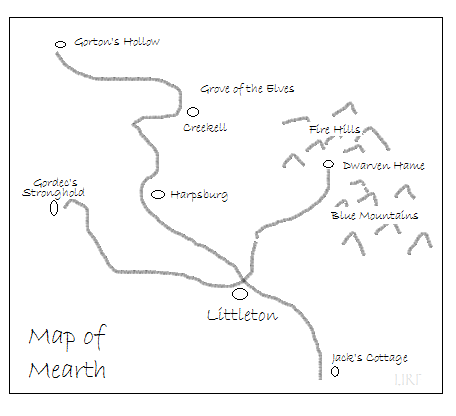
sample-of-rough-sketched-map

If you are writing fantasy involving magic or supernatural skills, briefly draw up a list of rules for who can do what with each skill. Remember:

  • Magic with no rules is both impossible and creates a story with no tension. No one wants to read a story where the characters have nothing to struggle against.
  • Each character should have limits to their abilities. Because they are not individually all-powerful, they will need to interact and work with each other and with the protagonist. They will have to do this whether they like each other or not if they want to win the final battle or achieve their goal. That will provide openings for some great interactions.
  • This gives you ample opportunity to introduce tension into the story. Remember, each time you make parameters and frameworks for your magic you make opportunities for conflict within your fantasy world, and conflict is what drives the plot.

Resources to Bookmark:

Three websites a beginner should go to if they want instant answers in plain English:

Most importantly – enjoy writing that novel. This is time spent creating an amazing story only you can tell, so above all, enjoy this experience.

4 Comments

Filed under NaNoWriMo, writing

#NaNoWriMo2016: The Ghosts of NaNoWriMos Past

NaNoWriMo-General-FlyerYou’ve had this idea rolling around your head for a while now for a book you’d like to read, and you keep wishing your favorite author would write it. In my experience, you’re going to have to write it yourself, or it will never happen. This is because your favorite author can only write so fast, or, as in the case of several of my most respected authors, they might be dead. Dead authors rarely publish new books, unless they are ghost writers. (heh heh.) From what I can see, most authors don’t live beyond 100 years of age, so there you go–if you want that book, you’re going to have to write it yourself.

My first NaNoWriMo novel, written in 2010, began with the idea of writing a book Fritz Lieber might write if he were still alive (and if he had consumed several hallucinogenic mushrooms). You see, I had just finished re-reading my collection of Fritz Lieber tales, and I had Fafhrd and the Gray Mouser on the brain. These two characters are scoundrels, living in a decadent world where a lack of scruples a requirement for survival.

What I actually produced had no resemblance to Fafhrd and the Gray Mouser, and was nothing like anything Fritz would have written, but within the uneven plot and frequently overblown dialogue it had the bones of a good story.

My addiction to NaNoWriMo began innocently, as all good addictions do: A young writer in the Philippines whom I had met through a gaming website mentioned he was going to do this writing challenge. It was a worldwide thing where hundreds of thousands of people actually began writing a novel on November 1 with the intention of having it finished by November 30.  The catch was, you couldn’t start until 12:01 am on November 1st,  it had to be at least 50,000 words long, but it could longer than that if you needed it to be. And, you had to have it validated by 11:59 PM on November 30th to win the coveted winners goodies.

My friend challenged me to enter, and not sure I would really be able to do this crazy thing, I did. He said all I had to do was write 1,667 words a day, which I felt I could do. I figured the worst that could happen was that I would fail to get the word count. In the past, fear of failure had never stopped me from making my life more complicated, so of course I went out to the national website and signed up. I chose the handle dragon_fangirl.

At 6:30 a.m. on November 1, 2010, I looked at my laptop and had no idea what to do. Then it came to me: Just write the first line:

There was a cabin in the woods.

Well, that wasn’t exactly literary brilliance, but it wasn’t too terrible, and it gave my idea little more form. I just began telling the story as it fell out of my mind. To my surprise, I discovered my word count averaged 2,500 to 3,000 words a day. By day fifteen I knew I would have no trouble getting the 50,000, and by November 21 I had attained the winning number of words.

At the 68,000 word point, I had completed my rollicking tale of snark and medieval derring-do. Of course, it was completely unpublishable, but I didn’t know that until later.

What I did know, was that I had written a complete novel, and told a story that I would have wanted to read. Three years later I realized all it needed was rewriting, editing, revising, rewriting, and putting in a drawer, never to be seen again.

However, out of the wreckage of that book came the story of Huw the Bard. You never know what characters you will need later, so killing them when you get stuck for a plot point is not really wise.

One rule they tell you at NaNoWriMo is never delete, and don’t self-edit as you go along. This is all strictly stream-of-consciousness, write it the way you think it. That was hard for me, but I did get into the swing of things eventually.

When I was out lurking on the various threads on the national website, I discovered a contingent of writers who were not trying to write a book that could be published. For them, this was a game they wanted to win at any cost, and their goal was to see how high their word count could get.

One suggestion from them for increasing your word count was to use no contractions.

Let’s be clear: I do NOT recommend this. If you ever want to publish your manuscript, you will have a lot of work ahead of you to make it readable if you do that.

My rules for NaNoWriMo:

  1. Write at least 1,670 words every day (three more than is required) This takes me about 2 hours – I’m not fast at this.
  2. Write every day, no matter if you have an idea worth writing about or not. Do it even if you have to get up at 4:00 am to find the time and don’t let anything derail you. If you are stuck, write about how your day went and how you are feeling about things that are happening in your life, or write that grocery list. Just write, and think about where you want to take your real story. Write about what you would like to see happen in that story.
  3. Check in on the national threads and your regional thread to keep in contact with other writers.
  4. Attend a write-in if your region is having any, or join a virtual write-in at NaNoWriMo on Facebook. This will keep you enthused about your project.
  5. Delete nothing. Passages you want to delete later can be highlighted, and the font turned to red or blue, so you can easily separate them out later.
  6. Remember, not every story is a novel. If your story comes to an end, draw a line at the bottom of the page and start a new story, in the same manuscript. You can always separate the stories later, and that way you won’t lose your word count.
  7. Validate your word count every day.

These are the novels I have written during the month of November since 2010:

  • 2010 Billy’s Revenge (published 2011 as the Last Good Knight, has since been unpublished and will remain that way)
  • 2011 The Bard’s Tale, which was published in 2013 as Huw The Bard.
  • 2012 Neveyah 3, which was published in July 2016 as The Wayward Son.
  • 2013 Valley of Shadows, which was published May of 2016 as Valley of Sorrows.
  • 2014 The Seventh Space, still under construction, may not be a novel after all.
  • 2015 November Tales – 42 short stories, totaling 107,000 words. Included in this mess were ten truly awful poems, along with chapters 7 thru 11 of Bleakbourne on Heath, an ongoing serial, published 2015-2016. That serial is now past the mid-point and will end in the spring of 2017.
  • 2016 November Tales 2016 – 30 Days of Madness and Pot Pies – nothing written yet, but I will hit the keyboard at 12:01 a.m. on November 1st, and begin churning out as many short stories, flash-fictions, drabbles, poems, and chapters of Bleakbourne as my feeble fingers are able to do.

crest-bda7b7a6e1b57bb9fb8ce9772b8faafbIf you should choose to enter this highly addictive, adrenaline rush of a contest, go to www.nanowrimo.org and sign up! Pick your name, get your author profile started, and look up dragon_fangirl (that’s me). Add me as your writing buddy and I will be part of your writing posse, cheering you on when you need a morale boost.

9 Comments

Filed under NaNoWriMo, writing

#amwriting: advancing the plot

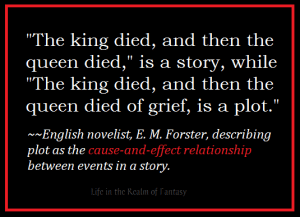
e.m. forster plot memeIn the previous post, I discussed the story arc, and how it relates to what E.M. Forster said about the plot: that plot is the cause-and-effect relationship between events in a story. The story arc is a visual description of where events should occur in a story. For me, knowing where they should happen is good, but it doesn’t tell me what those events are.

Planning what events your protagonist will face is called plotting, and I make an outline for that.

“Pantsing it,” or writing using stream-of consciousness, can produce some amazing work. That works well when we’re inspired, as ideas seem to flow from us. But for me, that sort of creativity is short-lived.

Participating in nanowrimo has really helped me grow in that ability, and one nanowrimo joke-solution often bandied about at write-ins is, “When your’re stuck, it’s time for someone to die.” But we all know that in reality, assassinating beloved characters whenever we run out of ideas is not a feasible option because soon we will run out of characters.

As devotees of Game of Thrones will agree, readers (or TV viewers) get to know characters, and bond with them. When cherished characters are too regularly killed off, the story loses good people, and we have to introduce new characters to fill the void. The reader may decide not to waste his time getting invested in a new character, feeling that you will only break their heart again.

The death of a character should be reserved to create a pivotal event that alters the lives of every member of the cast, and is best reserved for either the inciting incident at the first plot point or as the terrible event of the third quarter of the book. So instead of assassination, we should resort to creativity.

This is where the outline can provide some structure, and keep you moving forward.  I will know what should happen in the first quarter, the middle, and the third quarter of the story. Also, because I know how it should end, I can more easily write to those plot points by filling in the blanks between, and the story will have cohesion.

Think about what launches a great story:

The protagonist has a problem.

You have placed them in a setting, within a given moment, and shown the environment in which they live.

You have unveiled the inciting incident.

Now you need to decide what hinders the protagonist and prevents them from resolving the problem. While you are laying the groundwork for this keep in mind that we want to evoke three things:

  1. Empathy/identification with the protagonist
  2. Believability
  3. Tension

We want the protagonist to be a sympathetic character whom the reader can identify with; one who the reader can immerse themselves in, living the story through his/her adventures.

Also, we want the hindrances and barriers the protagonist faces to feel real to the reader. They must be believable so that the reader says, “Yeah, that could happen.” Within every scene, you must develop setups for the central events of that moment in their lives and show the payoffs (either negative or positive) to advance the story: action and reaction.

Each scene propels the characters further along, each act closing at a higher point on the story arc, which is where the next one launches from.

Some authors resort to “idle conversation writing” when they are temporarily out of ideas.  Resist the temptation—it’s fatal to an otherwise good story. Save all your random think-writing off-stage in a background file, if giving your characters a few haphazard, pointless exchanges helps jar an idea loose.

imagesDon’t introduce random things into a scene unless they are important. What if you had a walk-on character who was looking for her/his cat just before or just after the inciting incident? If the loss of the cat is to demonstrate the dangers in a particular area, make it clear that it is window dressing or remove it.

If the cat has no purpose it needs to be cut from the scene. To show the reader something  is to foreshadow it, and the reader will wonder why the cat and the person looking for it were so important that they had to be foreshadowed.

Every memorable element in a fictional story must be necessary and irreplaceable.  In  creative writing, this concept is referred to as “Chekhov’s Gun,” as it is a principal formally attributed to the great Russian playwright, Anton Chekhov.

Finally, we want to keep the goal just out of reach, to maintain the tension, and keep the reader reading to find out what will happen next. Readers are fickle, and always want what they can’t have. The chase is everything, so don’t give them the final reward until the end of the story.

But do have the story end with most threads and subplots wrapped up, along with the central story-line. Nothing aggravates readers more than going to all the trouble of reading a book to the end, only to be given no reward for their investment of time.

2 Comments

Filed under writer, writing

#amwriting: working in the blender

caloricclassic red blenderOnce you have a book published, the hardest, most difficult part is trying to fit writing the next book into all the other demands on your time. I have an editing job that I work at from 6:00 a.m. to 12:00 p.m. daily, I write five blog posts a week for various blogs (3 for this blog) I have several novels in the works, and I am my own publicist.

That last part is not going so well, just so you know.

For one of my writing gigs, I am a member of the staff for Edgewise Words Inn, which had been quite fun as I get to explore the creative writing side of my life. I just began a serial there, a medieval fantasy, called Bleakbourne on Heath. The first installment posted September 11th,  and the next will post  on Tuesday the 29th of September. This has been quite fun, as it is a series of short-stories (Less than 2000 words each) chronicled by Leryn, a bard. He is the observer, but is sometime drawn into the action against his better judgement. The first two episodes are a little dark, but episodes 3 & 4 have been far-fetched and quite fun to write.

I have also signed on to edit an anthology for my publishing group, Myrddin Publishing. That has been an absolute joy–the stories that are being included in this anthology are extremely high quality. And the good part of that is, I have wonderful people working with me on the production of that book, Alison DeLuca and Lee French.

crest-bda7b7a6e1b57bb9fb8ce9772b8faafbNaNoWriMo is approaching–and I am planning to spend the month of November writing a series of short stories, some set in Bleakbourne on Heath, and several random shorts.

But, like every other working person, I also have a home to keep in some sort of order, minimal though that effort is, laundry to do, cooking (yes, even vegans cook) and I try to maintain some sort of communication with our kids and grand-kids–even if it is just stalking them on Facebook.

And lets talk about Facebook, that soul-sucking time-waster from the Netherworld. Many of the events I do are organized though Facebook, and that means I get a lot of email to sift through, while I am trying to accomplish something productive for my clients.

So-and-so, the organizer, encourages everyone involved in the ordeal to post something in a thread:

  • But if you do, you will get 200 emails from that thread alone.
  • But if you don’t, you will miss some critical piece of information.
  • But if you do, you will get 200 emails from that thread alone.

If you are careful when you select which event to get involved with in the first place, these events can raise the indie author’s visibility, and indeed, any author’s visibility. I have done many that were not good experiences, and many that helped sell books.

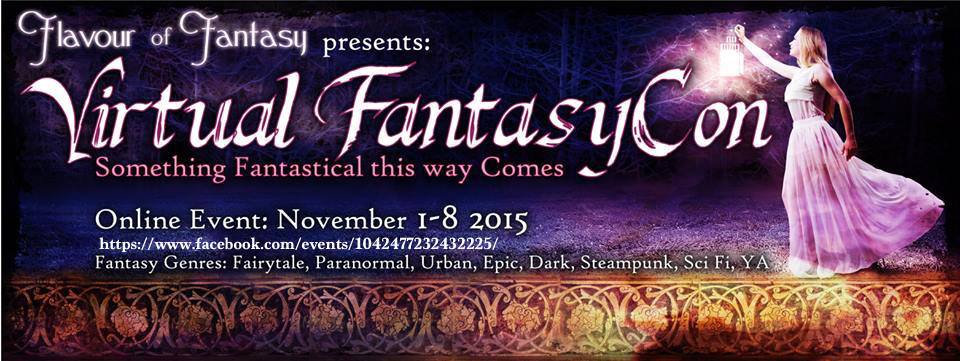
To that end, I, along with many of the authors I know and a lot whom I’ve never met (over 200) will be participating in the first annual Virtual Fantasy Con in November, the 1st through the 8th.

virtual fantasy con 2015

So far, at least on the participant’s end, it is being set up like a really well-run convention, so it will be interesting to see how smoothly this goes, and how much visibility we will actually gain from this. We participating authors will have the opportunity to take part in many publicity events prior to the actual convention.

The only thing I worry about is how confusing keeping up with all the email and information is. I am afraid I will accidentally not do some critical thing–which is why I am the world’s worst personal assistant for myself.

But it’s a lot of work keeping everything organized. My ‘personal assistant’ is not as good at her job as I wish she was.

Sigh.

4 Comments

Filed under Humor, Publishing, Uncategorized, writer, writing

Jonesing for affirmation

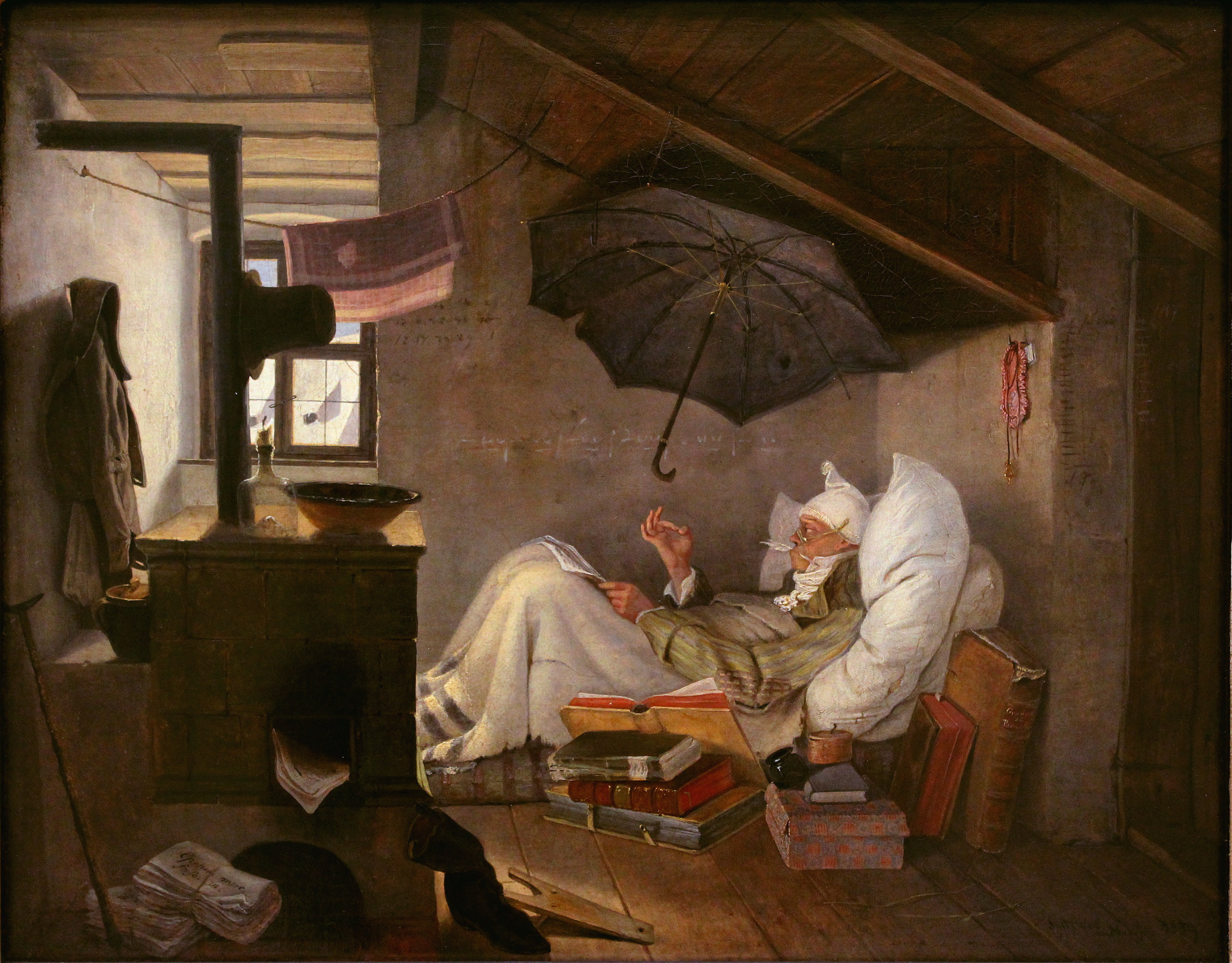
Der Arme Poet

Carl Spitzweg, The poor poet,1839 PD|100 yrs via Wikimedia Commons

Writing is an addiction. Oh, we don’t start out as garret-dwelling addicts. No, we start out as young people with bright futures, occasionally toying with that gateway drug–short-fiction.

At first it’s just thrill-seeking–writing a few short-stories and flash-fiction, just to see if we can. However, once we’ve felt the rush of  hearing the incredulous words, “You wrote this? This is good!” we are hooked.

The next step is often NaNoWriMo. Once you’ve done that first NaNoWriMo, you’ll never be the same.

Some fortunate people manage to walk away from it–they just do one NaNoWriMo, and quit, forever.

But for the rest of us, we are now on an eternal cycle of getting our word count and stream-of-consciousness-writing, and it will take us to the gates of perdition. Or to a local writing group–same thing, I am told.

No sane person thinks we can actually write for a living, but we can’t fight the urge.  We know we can do it, if we just keep at it. We crave that affirmation again, that incredible rush of “Oh yeah–I knew that story was all that, and I wrote it!”

At first, we still have some basic common sense. We know it isn’t cool to just quit our jobs and expect our family to live in a garret, starving, so we hang on to our day jobs and begin sneaking around, writing in secret, hiding it from our closest loved ones until we accidentally blow it–we are so high on the adrenaline rush from the incredible scene we just finished writing that we just have to tell someone.

After all, that scene is the turning point for the entire novel, and it’s golden!

So, not wanting to see the glazed look in your spouse’s eyes again, you tell the dog. Of course, the dog just has to tattle on you. Dogs can’t keep secrets, you should know that.

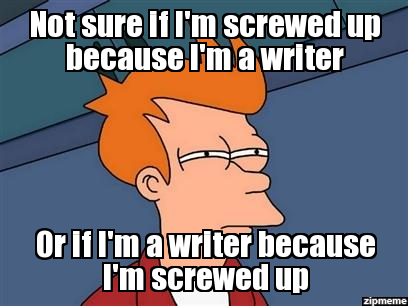
tumblr_ndi15fZRpu1syd000o1_500That is when it finally comes out that your every waking moment is spent on some aspect of the writing craft. Our family knew something was going on,and they were worried about our behavior.

But we’re so far gone by now that we don’t care.

If we’re lucky, the family is comprised of consummate enablers. Desperate to have some normalcy in their lives, they will try to keep us from becoming unkempt, shabby, pajama-clad writing-seminar junkies, bankrupting them with our endless, rather costly, efforts to “improve our work.”

They tell themselves that we’ll out grow the habit if they help us control our addiction. They encourage us to join free online writing and critique groups. They toss us a bone by giving us the occasional second-hand book on the craft of writing, usually by a famous author.

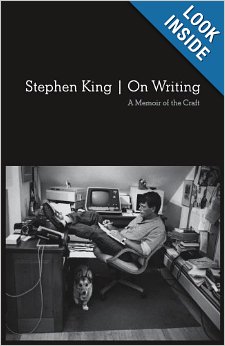
on writingThey have no idea just how potent an injection of inspiration that garage-sale edition of “On Writing” by Stephen King is to a hopeful author, and unknowingly they just make our condition worse.

At parties we have a sixth sense, always knowing who the other writers are just by the way they can’t focus on the conversation, and can’t wait to get  back to their work in progress, surreptitiously keying notes into their cell-phone and pretending they are texting.

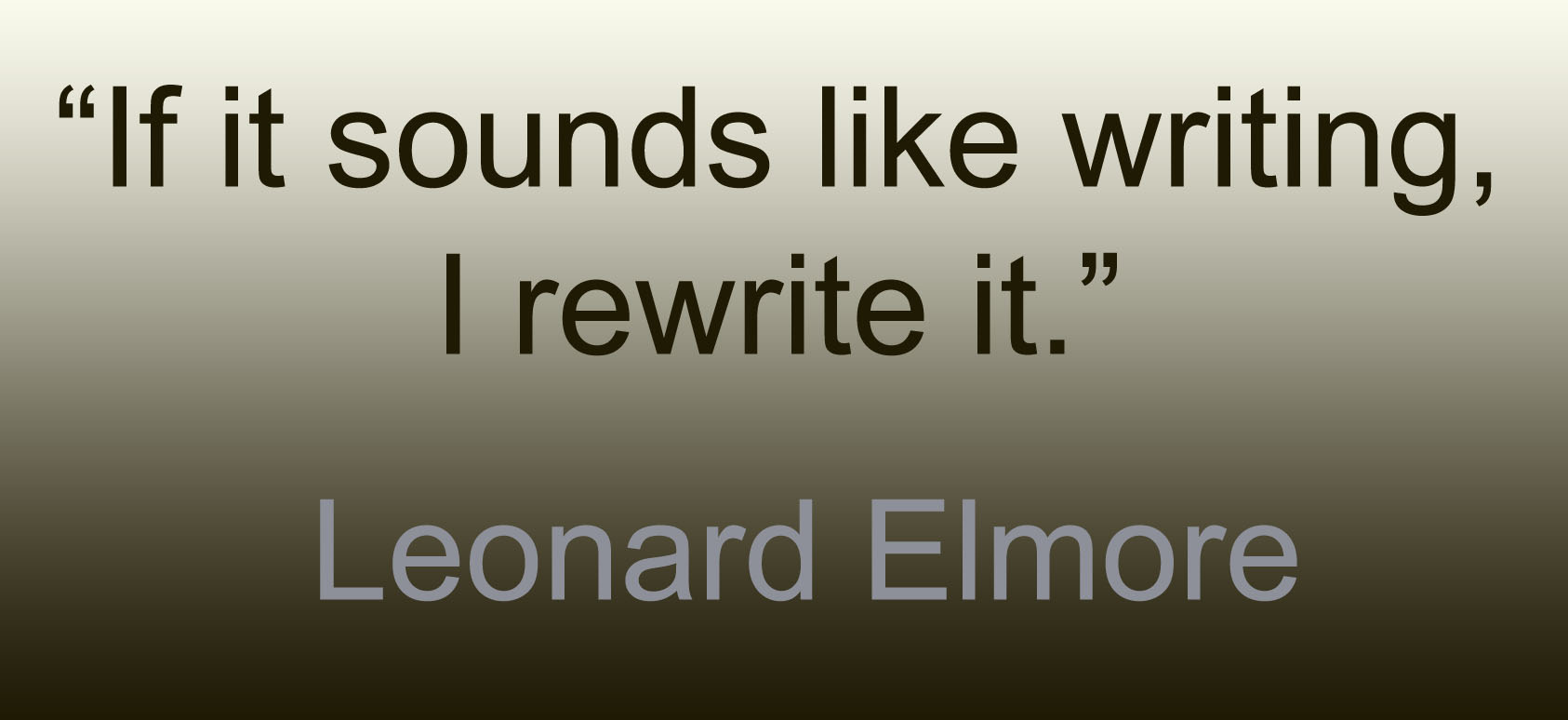
We’ve never met them before, but we find ourselves exchanging knowing glances and sneaking out to the patio with our new best friend, bingeing on Leonard Elmore quotes about writing, and sharing a few morsels of Orson Scott Card’s writerly wisdom.

leonard elmore quoteA new brother-in-arms and Leonard Elmore–we’re high as a kite and having fun now. What a great party!

Shocked faces stare out the window–it’s apparent we’re having too much fun, and our families suspect we’re “ranting about our novel again.” They drag us back into the light, despairing of ever having a “normal” life again.

An intervention and rehab looms in our future.

It won’t work. It’s not an addiction you can just walk away from. When they’ve taken your laptop away and hidden the pencils, and still they catch you forming little sentences out of the ‘o’s in your cereal bowl, they will know there is no such thing as recovery for the writing addict.

Don’t worry. Soon, they will be begging you to just go to that bloody writers’ convention and get it out of your system.

Heh heh. Like that’s ever going to happen. Soon, you will be hanging out at the local coffee-shops, looking for people with their laptops open, trying to make unsuspecting new converts to your dirty little habit.

“Are you a writer too? Ever do any NaNoWriMo?”

“Wanna share a little “Writer’s Digest? C’mon, what’s the worst that can happen? It’s not like it’s illegal, or anything.”

4 Comments

Filed under Books, Humor, Literature, Publishing, writer, writing

The other side of the coin

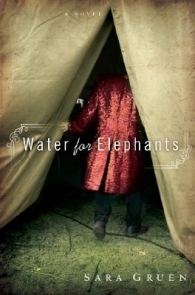
Water_for_elephantsWriting is about so much more than merely laying words down on a page.   Most people can do that, and can even whack out a creditable paragraph or two. But sustaining the momentum and carrying that vision through an entire novel is quite another thing.

I’ve read several disparaging blogposts where the authors have expressed their scorn and disdain of Nation Novel Writing Month, and that is fine, if it makes them feel noble and slightly more pure than the rest of us mundane hacks. But they are overlooking one important notion, and that is that to write a novel one must start a novel. If it takes a special month of writing and a group frenzy to get some people fired up about an idea they’ve had rolling around in their heads, who am I to complain?  I am a reader as much as I am an author, and I say the more the merrier!

Take a look at some of the most well-known NaNo Novels of all time:

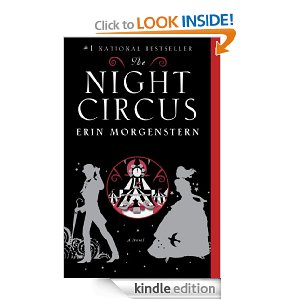
the night circus by erin morgensternWater for Elephants, by Sara Gruen. On the best-seller lists for over a year, turned into a movie starring Reese Witherspoon and Robert Pattinson, started as a NaNo novel.

The Night Circus, by Erin Morgenstern. What eventually became The Night Circus began life in 2004, seven years before it was finally published, started as a NaNo novel.

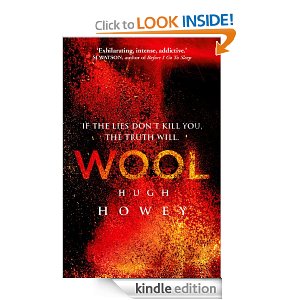
Wool, by Hugh Howey. Howey’s dystopian sci-fi novel is one of those credited with putting self-publishing on the map, started as a NaNo novel.

So don’t give me any of your “poo-poo on the contest” crap. Whatever gets a writer fired up and writing is fine by me!

I think the notion that anyone with an idea can sit down and write a book in 30 days bothers some authors, as they feel rather threatened by the number of books being published post NaNoWriMo.  Fear and Loathing, we call that in the industry. It’s irrational, but then no one ever accused authors of being rational!

WoolMost people who begin a novel in November do not reach their goal of 50,000 words. They do not have the discipline to sit down every day and dedicate a portion of their time to this project. And some people just are not good writers. But so what? The cream always rises to the top, my grandma used to say.

Because of NaNoWriMo, thousands of people are now embarking on learning a craft, committing their time and resources to educating themselves about how to write a novel that others will want to read. Several years  down the road, who knows what wonderful works of fiction will have emerged from this year’s madness?

I only know that I am always looking for a good book, and so I will be first in line, hoping to be blown away by a fresh, new work of art.

2 Comments

Filed under Adventure, Battles, Blogger, blogging, Books, Fantasy, Humor, Literature, news of the world, Publishing, Self Publishing, WordPress, writer, writing

NaNoWriMo: The Final Push

edgar allen poe quoteI’ve been talking a lot about NaNoWriMo–National Novel Writing Month. My friends are curious and ask if it’s a contest.

The answer is yes, in a way, but no.

It is a contest in the sense that if you write 50,000 words and have them validated through the national website you ‘win.’ But it is not a contest in the sense that it is a month that is solely dedicated to the act of writing a novel.

Now lets face it–a novel that is only 50,000 words long is not a very long novel. That falls more into the line of a long novella and is only half a novel, in my opinion. But a dedicated author can get the basic structure and story-line of a novel down in those thirty days simply by sitting down for an hour or two each day and writing a minimum of 1667 words per day.

That is not a lot. Most authors, when they are in the zone, double or triple that.

And again, we must face an ugly fact: Just because you can sit in front of a computer and spew words does not mean you can write anything that others want to read. Over the next few months there will be many books emerging that will testify to this fundamental truth.

But also, over the next few months many people will realize they enjoy writing; that for them this month of madness was not about getting a certain number of words written by a certain date. This was about writing and completing a novel they had wanted to write for years, something that had been in the back of their minds for the longest time. These people will join writing groups and begin the long journey of learning the craft of writing.

neil gaiman quote 2They are the real winners.

These authors will take the time and make the effort to learn writing conventions, they will attend seminars, they will develop the skills needed to take a story and make it a novel with a proper beginning, a great middle and an incredible end.

They will properly polish and edit their work and run it past critique groups before they publish it.

These are books I will want to read.

It’s not easy. Sometimes what we hear back from our readers and editors is not what we wanted to hear. The smart authors haul themselves to a corner, lick their wounds, and rewrite the damned thing so it’s more readable. They will be successful, for a variety of reasons, all of them revolving around dedication and perseverance.

But when we write something that a reader loves–that is a feeling that can’t be described.

Success as an author these days can’t be measured in cash. It can only be measured in what satisfaction you as an author get out of your work. Traditionally published authors see less of their royalties than indies, but they sell more books. It is a conundrum, and one many new authors will be considering in the new year.

But if you don’t write that book, you aren’t an author, and you won’t have to worry about it. NaNoWriMo will jump-start many discussions about this very issue. At this writing there are 3 days counting today left for many writers to get their 50,000 words and earn that certificate. Some of us have completed our first draft, and some of us still have a ways to go.

Winner-2014-Twitter-ProfileMy book has a beginning, a middle and an end, but will not become a novel for two or more years..  It is, instead, a rough draft sitting in the pile of other rough drafts, waiting to be rewritten when that flash of inspiration takes me over and I am driven to make it real. Huw the Bard began life in NaNoWriMo 2011, under the working title, The Bard’s Tale. He was published in 2014, and his story makes a darned good novel, if I do say so myself. (Shameless, I know.)

But although he was written in 30 days, he was then rewritten over the course of the following year, and edited over the course of the year after that. The life of a book from concept to publishing is a process. Some are quicker at negotiating this process than others, but having once rushed to publish with unhappy results,  I now take a more leisurely path.


Comments Off on NaNoWriMo: The Final Push

Filed under Adventure, Battles, Blogger, blogging, Books, Fantasy, Humor, Literature, news of the world, Publishing, Self Publishing, Vegan, WordPress, writer, writing

Gratitude

Pumpkin-Pie-Whole-SliceTomorrow, here in the US, is a national holiday, a day of Thanksgiving. We gather at the homes of relatives, overeat, and then some of us embark on  the 30 days of Christmas shopping.

I don’t.

Oh, I will go to my daughter’s house and overeat, and I will give sincere and heartfelt thanks for all the many blessings I have been given in this life. And I have been blessed, far more than I deserve. I am comfortable, and I have the luxury of being able to write full-time, because my husband has a good, fairly stable job.

But grandma does not shop. Grandma does not go to the midnight sales, the door-busters, the Black Friday events that seem to be a national sport here.

Grandma does the internet for all her shopping these days. Amazon, Zulily, Overstock.com–these are the stores grandma shops in.

christmas-gift-bagsAnd it’s nearly all done already. All I have to do is get a few little thing-a-ma-jigs for you-know-who, and then we’re set!

Shopping for loved ones is so darned difficult. I can’t tell you how much I hate it. No matter how hard I sweat, no matter how pretty I wrap them, the gifts I think are awesome for so-and-so never seem to live up to their potential.

Thus I have become the queen of gift-cards.

Starbucks, Amazon, Barnes&Noble–gift cards are the way to go. The recipient can get what they want, and I am off the hook for another year.

But if you are looking for the awesomest gift ever, may I recommend a book?  Books are small vacations, little diversions into foreign lands and cultures, windows into other people’s lives.

Books can also change the world.

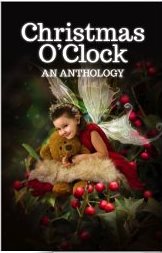
The company that publishes my books, Myrddin Publishing, just announced the successful campaign to raise funds for the international charity, Water is Life, via sales of their Christmas anthology, Christmas O’Clock.

christmas oclock coverChristmas O’Clock is a collection of holiday-themed stories including magic, space travel, and Rudolph. With two complete chapter books, lots of stories, and plenty of spirit, this anthology is great for kids of all ages. Two of the stories in this collection are mine!

In 2014 the publishing group donated all the revenue generated from sales of this book, totaling over $200.00 in royalties. This purchased three bucket systems and eight drinking straws, providing fresh water to three families, and eight individuals. Their goal is to double that in 2015.

It may not seem like a lot, but for those families who now have clean water, it was huge.  We can do better, and this year we intend to.

All proceeds from this wonderful book go to Water Is Life to help children and families in an international effort.

Christmas O’Clock  can be purchased at www.amazon.com

Paperback via this link: http://bit.ly/CoCpaperback  $9.51

And for the Kindle via this link http://bit.ly/CoCusE  $2.99

a medieval tablesetup 1I live in a soft, easy world of plenty with clean, clear water and plenty of food. I have a warm, dry place to live that is safe and pestilence-free. Not every family has such luxury. My husband and I believe it is our duty to help those who don’t and we do this through actively volunteering in our community. You know that I am involved  as a municipal liaison for National Novel Writing Month and I contribute time and energy to literacy programs here locally, but my husband is far more active on a grassroots level, and what he does has a direct effect within our community.

MH900438718My husband, Greg,  is on the board of the Community Action Council, and has been for more than twenty years. Community Action Council is a private, non-profit 501c(3) agency governed by a volunteer Board of Directors.  Their multipurpose organization focuses on meeting the needs of low-income individuals and families through a variety of programs designed to help them become independent and more self-sufficient. They work collaboratively to develop strategies that address poverty in our local communities,  providing essential human services in Lewis, Mason and Thurston Counties since 1966.

I am Grateful, with a capital ‘G’, for all my many blessings, for my husband who works tirelessly in the service of our community and for the opportunities I’ve been given to help make a difference in this sometimes terrible world.


4 Comments

Filed under Adventure, Battles, Blogger, blogging, Books, charity, Fantasy, Food, History, Humor, Literature, news of the world, Politics, Publishing, Self Publishing, Spirituality, Uncategorized, writer, writing

Resurrection, Reconstruction, and the Great Reckoning

cocacola_08

Coca-Cola HD Wallpapers

I have been writing like a crazy person for the last two weeks.  Well, I am a crazy person, but–I have been spewing the basic rough draft of a novel in the most unlinear way possible.  I have my plot outline and I am following it, sort of.  With that as my guide, even when I am jumping around in the manuscript like a mini-van full of toddlers hopped up on jelly-beans and coca-cola, I am still within the actual framework of the story that was originally outlined.

But what if, as occasionally happens, you suddenly realize that four chapters previously you shot the villain and buried him when he should actually have been struck by lightning? He was always going to die, that was a given, because he must be the undead villain, hell-bent on revenge.

330px-Zombie_haiti_ill_artlibre_jnlThe good thing about being an author is that once you realize there was a mistake, you can always un-shoot them. Then you can strike them with lightning as they should have been in the first place, send them to Hell and and have some minor devil trying to work his way up the management chain in the underworld resurrect them as your creepy, decaying, undead villain.

And if you are in the middle of NaNoWriMo, every time you rewrite the the scene with a slightly different outcome, it counts toward your word count.

Just sayin’.

So, here there I was, happily writing along, when suddenly I realized I had to change a rather large plot-hole, and knew I had to do it while I was thinking about it. First I did a global search for the name of the character that has taken the wrong turn. I changed the font color to red in that section, and began rewriting the scene the way it SHOULD have been written in the first place, using the usual black font.

Now, during normal writing sessions, I would simply cut the offending scene out of the ms, and paste it into a separate document which I then save to my ‘Background File’ in the same folder as my main manuscript. By doing that, I don’t lose information I may need later.

virtually golden medallion of mayhem copyBut this is National Novel Writing Month, and every word in that manuscript  counts toward my region’s total wordcount! We are the Olympia Washington USA region and we have a Word War on with Salem Oregon USA: the Capital Smackdown! On November 30, the day of the Great Reckoning,  The Virtually Golden Medallion of Mayhem is up for grabs!

We have never won this awesome…thing-a-ma-bob….

But we want it.

And in the per-writer stats Salem is slightly ahead of us in this battle. OH! the misery!

So if that means I have a multicolored manuscript for a few weeks, so be it!

Besides, if I don’t begin to make those changes when first I realize they need to be done, I might forget until a beta reader points it out. Thus, I find myself up at all hours of the night ironing out plots points, trying to keep an unmanageable group of characters in line and trying desperately to keep that all-important word-count up!

2 Comments

Filed under Adventure, Battles, Blogger, Books, Fantasy, Humor, Literature, Publishing, Self Publishing, Uncategorized, WordPress, writer, writing

NaNoWriMo and the Road to Hell

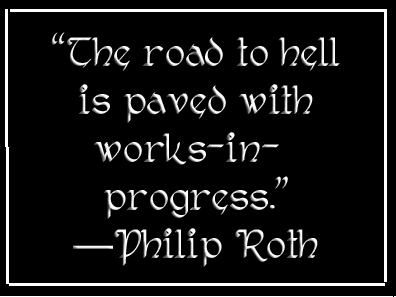
The road to hell Phillip Roth QuoteOkay–I admit it. I have a bunch of works in progress, in three different worlds. If, as Phillip Roth has been quoted as saying,  “The road to hell is pave with works-in-progress,” then I am strapped into the handbasket and barreling down the highway toward an extremely hot destination.

But it’s not my fault.

I have to write when the mood strikes and sometime the mood strikes for a different manuscript than the one it struck for only the day before.

Doh.

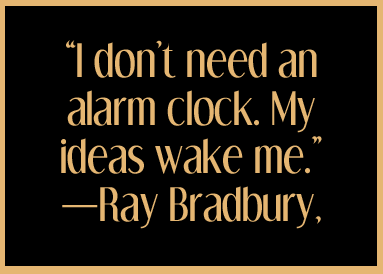
Alarm clock quote ray bradburyAt times I am faced with the dilemma of NaNoWriMo–28,000 words toward the goal and I can’t think of where I want to take it just yet.

As Ray Bradbury said, “I don’t need an alarm clock. My ideas wake me.” I write what I can when I can, and write the second story in an alternate color, such as green. Fortunately–once I have the ideas down for the other world, a bolt of inspiration strikes me and I am again back on track with the new nano manuscript.

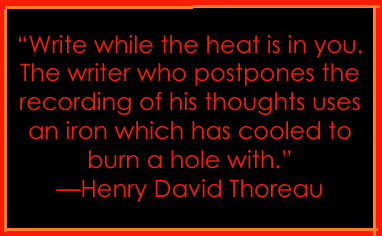
write-henry david thoreau quoteAnd then there is the annoying problem of writing the back story I will never use, but which serves to cement the story in my head as I am creating it. I write that in red. At the end of November, all these things will be easy to cut and sort out by color-code. They are important in the long run–the ideas for the shelved work-in-progress will not be wasted, and the background material for the current work-in-progress is there so that my world and my characters will have substance in my mind when I write them.

ok to write garbage quote c j cherryhThis is my month of writing madly–of dedicating all my time to the craft. My month of chicken-pot-pies and frozen pizza.  This is the month when my daughters do all the work of preparing the upcoming holiday meal and I steal a few brief hours to play with the babies.

And perhaps write a few notes in my notebook as ideas strike me. And the best part is, all this garbage I spew today will have a long journey through the editing process before it hits the pages of an actual book.

2 Comments

Filed under Adventure, Battles, blogging, Books, Fantasy, Literature, Publishing, Self Publishing, Uncategorized, writer, writing