Tag Archives: #writetip

Editing Programs – the pros and cons #amwriting

With NaNoWriMo 2021 behind us, it’s time to talk about editing programs again. Several writers in our region have asked me if I use one in my own work.

MyWritingLife2021I do use Grammarly—but also, I don’t.

I rely on my knowledge of grammar and what I intend to convey more than I do an editing program. While they are good at alerting you to some errors, these helpful programs are not as useful as we wish they were.

No software can replace knowledge of grammar. An author must have confidence in what they intend to convey and how they wish to say it.

For this reason, editing software may not be a good tool for every author.

A person with no knowledge of grammar will not benefit from relying on an editing program for advice. There is no way to bypass learning the craft of writing.

You may have found that your word processing program has spellcheck and some minor editing assists. Spellcheck is notorious for both helping and hindering you.
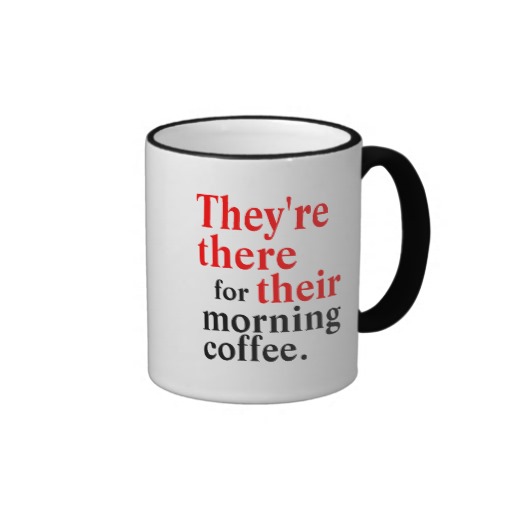
they're their there cupSpellcheck doesn’t understand context, so if a word is misused but spelled correctly, it may not alert you to an obvious error.

  • There, their, they’re.
  • To, too, two.
  • Its, it’s

Grammarly is an editing program I use for checking my own work, in tandem with Pro Writing Aid. I pay a monthly fee for the professional versions of these two programs. Each one has strengths and weaknesses.

For me, especially in my first draft, some words are like tics—they fall out of my fingers and into my keyboard randomly and out of my voluntary control. I don’t self-edit as I go because, at that point, I’m just trying to get the story down. The second and third drafts are where I shape my grammar and phrasing.

I want to write active prose, so I don’t want to use words with no power behind them.

Often removing an adjective or adverb strengthens the prose. Descriptors are easy to find because these words frequently end with the letters ‘ly.’

You could do a global search for the letters ‘ly,’ and a list will pop up in the left margin of your manuscript.

However, the most ludicrous advice I’ve ever heard at a critique group came from an author who was about to publish his first book. He had a great deal of enthusiasm for the craft but was armed with too little knowledge: he told a new writer to remove all adverbs from her narrative.

Unfortunately, he forgot that words like “later,” or “everywhere,” or “never” or “alone” are also adverbs.

That sort of wrong-headed advice survives because it is based on a writing truth: unnecessary adverbs and adjectives inflate the word count but add no value. Worse, they sometimes fail to tell us something that we need to know.

In other words, use adverbs and adjectives when they are necessary and cut them when they aren’t.

In my own work, I seek out adverbs, descriptors, qualifiers, and “weed words.” I look at how they are placed in the context of the sentence and decide if they will stay or go. Many will go, but some must stay.

The BIG problem for those who don’t understand the basics of grammar is this: editing programs cannot see the context of the work they are analyzing.

In one of my older manuscripts, this sentence triggered the algorithm:

“The tea was cool and sweet, quenching her thirst.”

Grammarly suggested replacing quenching with quenched and then suggested a comma at the end instead of a period.

Pro Writing Aid made the same suggestion but didn’t tell me to add a comma.

These programs operate on algorithms defined by finite rules. They will often strongly suggest you insert an unneeded article or change a word to one that is clearly not the right one for that situation. That is where your eye and understanding of context and grammar must prevail.
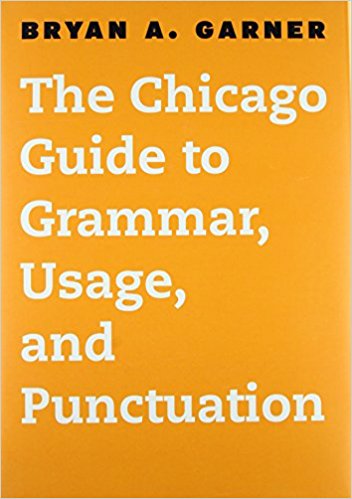
chicago guide to grammarNew writers should invest in the Chicago Guide to Grammar, Usage, and Punctuation and learn how grammar works. For people new to the craft and who don’t understand grammar or how to construct a sentence or a paragraph, or how to write dialogue, editing programs will confuse and mislead them.

To get the best out of editing software, you must know the basics of how to write.

At this stage in our technology, understanding context is solely a human function. Context is defined as the parts of a written or spoken statement that precede or follow a specific word or passage, usually influencing its meaning or effect.

A person with no knowledge of grammar will not benefit from relying on Grammarly or any other editing program for advice. There is no way to bypass learning the craft of writing.

Because context is so important, I am wary of relying on these editing programs for anything other than alerting you to possible comma and spelling malfunctions.

You might disagree with the program’s suggestions. You, the author, have control and can disregard suggested changes if, as illustrated above, they make no sense. I regularly reject weird suggestions.

However, when the editing program highlights something, I examine the problem sentence. Just knowing that the way I phrased a sentence tripped the program’s algorithms encourages me to look at that passage with a critical eye.

I may not use the program’s suggestion, but something triggered the algorithm. That means my phrasing might need work. I may need to find a better way to get my idea across.
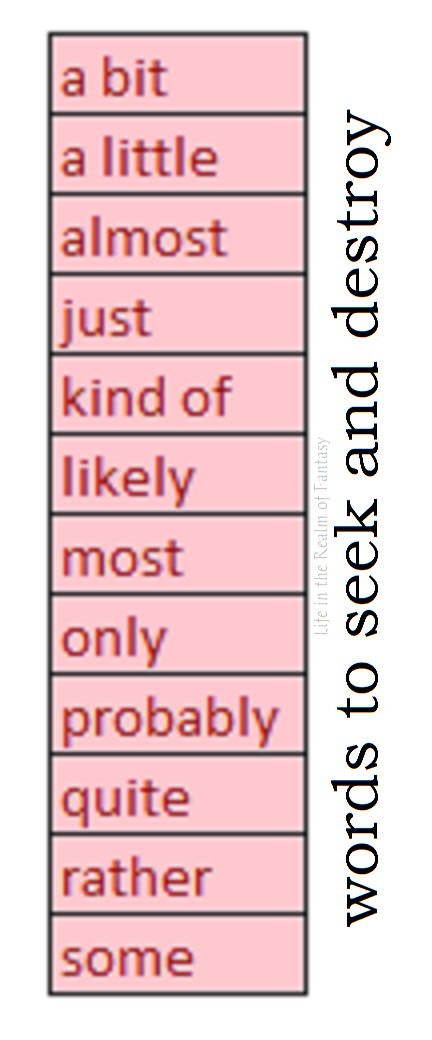
Timid WordsEven editors must have their work seen by other eyes. My blog posts are proof of this as I am the only one who sees them before they are posted. Even though I write them in advance, go over them with two editing programs, and then look at them again before each post goes live, I still find silly errors two or three days later.

Certain words and phrases don’t add to the narrative and only increase the wordiness. Used too freely, they separate the reader from the experience.

In my first draft, these words are like tics. They fall out of my fingers and into my keyboard randomly and out of my voluntary control. I never self-edit as I write the first draft because I am just trying to get the story down. The second and third drafts are where you deal with grammar and phrasing.

When I begin revisions, I will seek out adverbs, descriptors, qualifiers, and other “weed words,” look at how they are placed in the context of the sentence, and decide if they will stay or go

You can’t take shortcuts. If you are too impatient and choose to “Replace All” without carefully thinking things through, you run the risk of making a gigantic mess of your work. Some weed words are parts of other words, for example:

  • very—every
  • has—hasten, chasten

powerwordsWordCloudLIRF06192021If you have decided something is a “crutch word,” examine the context. Inadvertent repetitions of certain words are easy to eliminate once we see them with a fresh eye.

Context is everything.

I can’t stress this enough: take the time to look at each example of the offending words individually.

It’s unfortunate, but there is no speedy way to do this. You will be rewarded, though, when your book is finished to the best of your ability.


17 Comments

Filed under writing

My Writing Life #amwriting

Someone recently suggested I write a post on the evolution of me as an author, so here it is.

MyWritingLife2021BFrom my earliest childhood, I always thought of myself as a writer. I just didn’t know how to write anything longer than a poem or a song in such a way that it was readable.

Most evenings, I listened to music on the stereo, writing my thoughts and ideas in a notebook while my kids did their homework.

My pen and ink ramblings weren’t “writing” as I see it now. They were more like frameworks to hold ideas that later became full-fledged stories.

Then, in 1987, my father bought me a secondhand IBM Selectric Typewriter, and my writing addiction took off.

For most of my writing life, I was like a five-year-old with a new set of paints. My enthusiasm for my stories was far greater than my ability to tell them.

I didn’t have the information I needed to make my work readable and didn’t know how to get it.

I felt embarrassed for even thinking that I could be an author.

orson_scott_card_write_scifi_fantasyOne day in 1990, I stumbled upon a book offered in the Science Fiction Book Club catalog: How to Write Science Fiction and Fantasy by Orson Scott Card. The day that book arrived in my mailbox changed my life.

I could become an author, and one of my favorite writers was going to tell me how to do it.

In the years since that book, I have amassed a library of books on the craft. Some are brilliant, some not so much, but I always learn something from them.

However, personal experience is a great teacher, and I’ve learned many things by trial and error.

So here in no particular order are six things I would like to pass on to you:

One: Make a style sheet as you go.

Build a glossary of words and spellings unique to your story and especially be sure to list names. I use an Excel spreadsheet, but you can use anything you like to help you stay consistent in your spelling.

And even though I think I am developing a thorough glossary, my editor will find many words to add to it.

Two: Develop a logical, consistent system for naming your files and save regularly.

Save each version of your manuscript with a different name so you can go back and retrieve bits you may need later. I use a system like this:

Heavens_Altar_V5.docx

That stands for Heaven’s Altar version five, and I work out of Word, so the extension is automatically a docx.

chicago guide to grammarThree: Find a local group of writers to meet with and talk about the craft.

Critique groups are great, but they are only one small part of the picture. Authors need to network with other authors because we need to discuss the craft with someone who doesn’t look at you with glazed eyes.

I gained a wonderful local group through attending write-ins for NaNoWriMo before the pandemic. While we haven’t been able to have in person meetings for a while, we meet weekly via zoom. They are a never-ending source of support and information about both the craft and the industry. We are a group of authors writing in a wide diversity of genres. We gladly help each other bring new books into the world, but more than that, we are good, close friends.

Four: Never stop educating yourself.

Learn how to say what you mean with your unique voice and your personal style. A college education is an expense we might not be able to wrangle. But you can buy books on grammar, books on style and substance, and books on writing craft.

Learn about structure and pacing from successful authors. Every coin you invest in your education will be returned to you with interest when your story makes a reader say they wished it hadn’t ended.

Self-education requires perseverance and a small investment of money, but you can do it.

storybyrobertmckeeSpend the money to go to conventions and attend seminars. You will learn so much about the craft of writing, the genre you write in, and the publishing industry as a whole—things you can only learn from other authors. I gained an extended professional network by joining The Pacific Northwest Writers Association and going to their conferences.
Five: Don’t even consider signing with the slick-talking publisher that contacts you out of the blue.

How can a publisher possibly want work they haven’t seen?

Make use of SFWA’s Writer Beware site. These predators want your work all right—and want to sell you publishing services you can do for yourself. You won’t benefit from the predator publisher’s “services,” but they will profit from your desperation to be published. They will publish your work in its raw unedited form, and you will never see a dime.

300px-Astound5006Six: My final suggestion is this: even though you are writing that novel, keep writing short stories too.
Short stories are a training ground, a way to hone your developing skills. They’re also the best way to get your name out there. My advice is to build a backlog of work from 2000 to 5000 words in length and keep them ready to submit to magazines, anthologies, and contests.

All those fabulous scenes and vignettes that roll through your head can be made into short pieces.

Get the Submittable App and see who is asking for the kind of stories you write. Start submitting your work, and don’t let rejections stop you. Just keep sending that work out to new places because someone will want it.

These are a few things that I wish I had known when I first started writing professionally but didn’t.

3 Comments

Filed under writing

The garden-path sentence #amwriting

As NaNoWriMo winds down, I am preparing to face a manuscript full of wandering, garbled sentences. These are the products of my fingers not being able to keep up with my brain. I might know what that sentence means, but my editor won’t. My job in December is to be alert and watch for ambiguous phrasings.

MyWritingLife2021About garden-path sentences, via Wikipedia, the fount of all knowledge:

(The term) garden path refers to the saying “to be led down the garden path,” meaning to be deceived, tricked, or seduced.

After reading, the sentence seems ungrammatical and makes almost no sense, requiring rereading to fully understand its meaning after careful parsing.” [1]

In this case, confusion arises because we attempt to understand sentences as we are reading them. The “garden-path sentence” begins by taking you toward a particular destination. Midway through, it takes a turn for the bizarre.

There are two types of garden-path sentences.  The first is a “local ambiguity,” meaning it can be cleared up easily with the addition of a word or punctuation, such as:

“The raft floated down the river sank.” Add one word to make it clear: “The raft that floated down the river sank.”

“We told the man the dog bit a medic could help him.” Add two words for clarity: “We told the man whom the dog bit that a medic could help him.”

Wikipedia offers this example: “The old train the young fight.” Adding a comma reads: “The old train, the young fight.” The addition of the comma makes sense of the words. One could also argue that the sentence means “The old train the young to fight.”

The other type of garden-path sentence is “globally ambiguous” because the meaning stays unclear no matter how many times you reread it when it is taken out of context.

A sentence should be understandable even when removed from its context. Wikipedia offers the sentence: “The cat was found by the shed by the gardener.”

Hydrangea_cropped_July_11_2017_copyright_cjjasperson_2017 copyWhen I have asked a beta reader to read a section of my work, they sometimes flag a paragraph as unclear. It might make perfect sense to me, but if I am the only one who understands it, it’s time to tear that paragraph down to see if each sentence can stand on its own.
Sara’s missing cat was found by the shed by the gardener. Mittens was frightened and hungry but safe.

Let’s break that paragraph down sentence by sentence:

  • Sara’s missing cat was found by the shed by the gardener.
  • Mittens was frightened and hungry but safe.

The first sentence is passive and ambiguous, open to interpretation. Was the cat by the shed? Or was the shed by the gardener? Or were the cat and the gardener both next to the shed?

Once I’ve taken it out of context, it’s easy to see why the reader didn’t understand it.

Usually, a simple rewording to make my phrasing more active is all that is required.

The gardener found Sara’s cat near the shed. Mittens was frightened and hungry but safe.

Often, a new author has been criticized for using the relative pronoun ‘that’ too freely. Thin-skinned and bleeding profusely, they will go to any length to avoid using the word that, which can lead to awkwardly phrased sentences.

Relative pronouns have a fundamental place in English. While it’s easy to turn them into crutch words, they are essential words that make nouns specific.

  • That dog bites, so watch out.
  • Harry Potter was the boy who lived.

The way to resolve the garden-path sentence is to:

  • Insert a relative pronoun (such as “that” or “who”) for clarity.
  • Insert proper punctuation for clarity.
  • Reword the sentence to make the prose active.

Readers want to read without bumps and hiccups. Anytime they have to stop and reread something, you risk losing them. Sentences that are ambiguous stop the eye, which throws the reader out of the story.

Clementines_Astoria_White_Hydrangea2019I don’t want to introduce vagueness into my work. Just because I like what I wrote doesn’t mean it has to stay in the finished product. Maybe I don’t see that it’s confusing, but my friends who read my raw manuscripts will.
Every time I participate in NaNoWriMo and then take that manuscript through revisions, my first draft skills become a little stronger. I write stronger sentences in my first drafts and have to make fewer changes, which feels like a victory.


Credits and Attributions:

[1] Wikipedia contributors, “Garden-path sentence,” Wikipedia, The Free Encyclopedia, https://en.wikipedia.org/w/index.php?title=Garden-path_sentence&oldid=1053287156 (accessed November 28

Comments Off on The garden-path sentence #amwriting

Filed under writing

The Credible Antagonist #amwriting

We are 21 days into November and NaNoWriMo. To this point, we have been writing a story around our hero. We have an idea of what they must overcome, but it may not be fully formed just yet.

depth-of-characterWho is the enemy, the true architect of that conflict? At this point, we may have a name, but who are they really?
It’s time to consider the opposition. Every hero needs an adversary, the evil that can take many forms. The evil that must be surmounted will be different in every story because it is up to you.

In some stories, an enemy is someone who stands in the protagonist’s way, blocking them from achieving their goal.

Other times, self-deceptions and inner conflicts frustrate the protagonist. After all, we’re usually our own worst enemy.

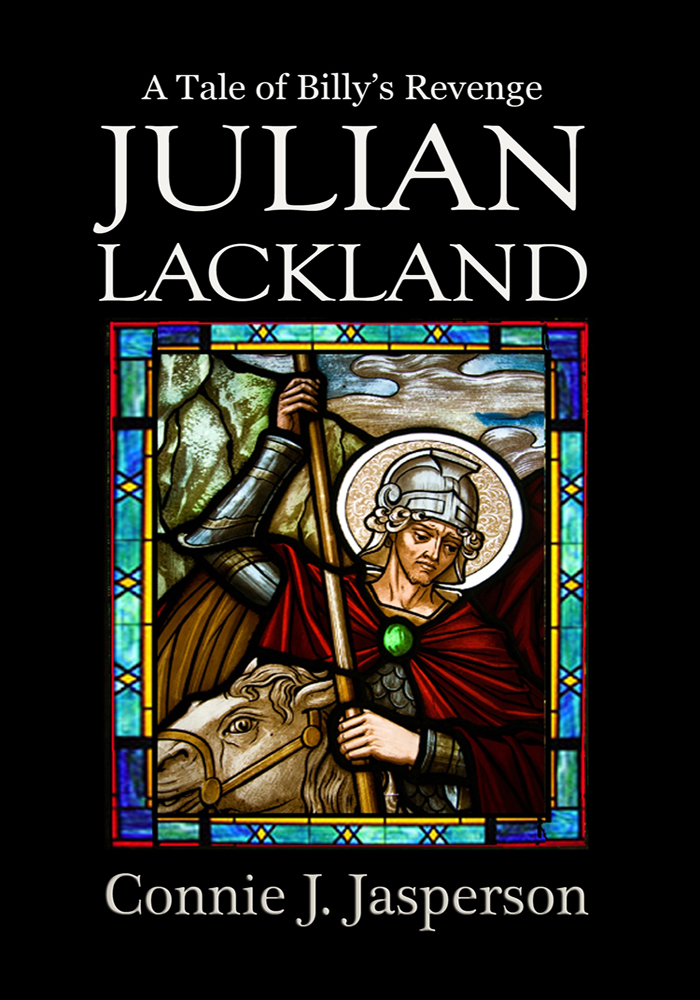
In this scene from my 2020 novel, Julian Lackland, Huw and Jack have cornered Beau, voicing their concerns about Lackland’s ability to continue as King Henri’s Lord Commander:

Huw refused to let go of his animosity. “It has to be Lackland then, but he’d better have all his wits about him. If anything happens to Culyn because Lackland has lost his mind, I’ll never forgive you.”

Julian_Lackland Cover 2019 for Bowkers“God! You honestly believe I’m stupid.” Despite his anger, Beau kept his voice low. “There’s no reasoning with you. You’re convinced I’m besotted and Julian is barking mad. Get out of my way! I feel like hurting you.” He pushed past Huw, saying, “Go home, since you have so little faith in me.” He opened the door, intending to leave.
“Beau,” Jack’s quiet voice called after him. “Come back. Let’s bury this now. I wanted to hear what you had to say because I’m a father. I worry about my boys.” [1]

The great enemy that Julian Lackland faces is his internal conflict and how his subsequent breakdown affects the people who love him.

If the enemy is a person, they always believe they are the heroes. In your story, what are their justifications for that belief?

When we create an antagonist, we take what is negative about a character and take it one step further, hiding it behind a lie.

This is where I like to get wordy: first, we assign the enemy a noun that tells us who they think they are: Good.

Once we know why they think they are the heroes, we assign them the noun that says who the protagonist believes they are: Evil.

The antagonist in a current work in progress is Coran. He is a complicated character. His story begins in abject poverty. Through his desire to climb out of that abyss at any cost, it will end tragically.

To further complicate life for our hero, we can go two routes when creating the antagonist. One way is to allow one of the characters to make choices that ultimately harm them, which is how I am going with Coran, allowing him to gradually become the visible antagonist.

Another way is to take the negative that is directed outward and turn it into an inner demon, which I did in the previous book of this series with my protagonist, Ivan. He had two enemies to fight, one was someone he loved but was forced to reject, and the other was himself.

This time, Ivan and Kai share an inner enemy—the deep desire to return home to their children and the growing fear that it won’t happen.

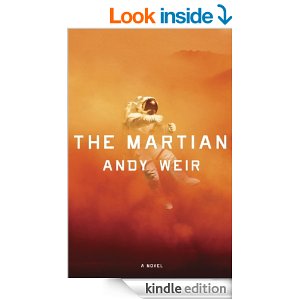
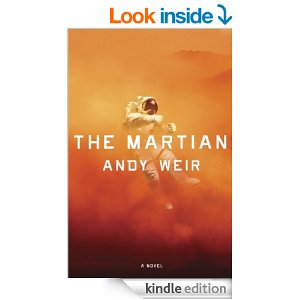
The MArtian Andy WeirIn other stories, there is the nebulous antagonist. This could be the faceless behemoth of corporate greed, characterized by one or two representatives who may be portrayed as caricatures. In some cyberpunk tales, the antagonists tend to be goons-in-suits. In hard sci-fi, they might be members of the military or scientists. Andy Weir in The Martian made the planet of Mars the antagonist.
In fantasy, the nebulous antagonist might be a powerful queen/king or sorcerer whose forces/minions the protagonist must defeat. The mind behind the conflict is a person they might not actually meet. How the protagonist reacts internally to the threat posed by the machinations of those distant antagonists is the story.

Emotion makes the risk feel genuine to the reader, gives it life. To show great evil in genre fiction, we take that which is negative to an extreme and show the emotion of that experience.

I should say that while I do write some dark scenes, I don’t write horror, so I can’t speak to that, exactly. However, I can speak to the perception of corruption, and the evil humans are capable of that sometimes horrifies us.

For a reader, perception and imagination are everything. As children, what we infer from the visible evidence in a dark room after the lights have been turned out can be terrifying.

The formless monster that lurks in the corner terrifies us until we discover the truth—it is only several toys piled there and never put away.

As adults, what we infer from the visible evidence in a dark story can be equally terrifying. Thus, you can write dark scenes but don’t have to be utterly graphic.

No matter how right the cause, war is an evil that is difficult to make sympathetic and shouldn’t be. But sometimes, war, a faceless blob of evil, is the right villain for the narrative.

What single word (and its synonyms) can characterize our antagonist? An example is the word perversion. We tend to think of it as referring only to sexual deviancy, but it has many meanings and uses. Its synonyms are corruption, corruptness, debasement, debauchery, decadence, decadency, degeneracy, distortion.

We view the antagonist through the protagonist’s eyes, so coloring the enemy with a perception of perversion (distortion, corruption) drives home the evil they represent.

Someone—and I wish I could remember who—said a few years ago in a seminar that the author is the character’s attorney, not their judge.

This is an important distinction. Credible villains become evil for sympathetic reasons. They care intensely, obsessively about something or someone. It is our job to make those deeply held justifications the driving force behind their story.

scienceA true villain is motivated, logical in their reasoning, and is utterly convinced of their moral high ground. They are creatures of emotion and have a backstory. As the author and their lawyer, you must know what their narrative is if you want to increase the risk for the protagonist.
As always, the reader doesn’t need to wade through an info dump, but you, the author, need to know those details. Having this backstory to draw on will make your characters easier to flesh out.

But more importantly, you will know what is at stake for your antagonist and how much they are willing to sacrifice for it.

And every word you write detailing the enemy’s background and view of themselves counts toward your goal of 50,000 words by November 30th.


Credits and Attributions:

[1] Quote from Julian Lackland, by Connie J. Jasperson, © 2020 Myrddin Publishing Group. Used by permission.

Comments Off on The Credible Antagonist #amwriting

Filed under writing

Research and Development #amwriting

I love learning how other authors work. I recently watched a 2015 podcast, Adam Savage Interviews ‘The Martian’ Author Andy Weir – The Talking Room. This is a fabulous interview, where Andy explains his intense research for the bestseller, The Martian, and his writing process.

The MArtian Andy WeirAndy Weir is genuinely a nice person and is the best example of an inadvertent teacher that I’ve ever seen. This interview is a brilliant seminar on how to research and plot a book. He writes hard sci-fi with a heart, but the principles of creation are the same for any genre.
If you haven’t read The Martian, I have to say it is my favorite sci-fi novel of all time. DO PLEASE watch that interview—his method of writing and researching is genius.

Targeted research is crucial if you want your fiction to be plausible. Identify what you want to know, use the internet, ask an expert, and create a searchable file or database of information that backs up your assertions.

Once you establish the technological era you are writing in, you know what you need to research and how theoretical your narrative may need to be.

Here are some of my go-to sources of information. I’ve published this list before, but here it is again:

If you seek information about low-tech societies (the past):

My best source of information on low-tech agricultural (farm) life and culture comes from a book I found at a second-hand book store in Olympia in the mid-to-late-1980s. Lost Country Life by Dorothy Hartley is still available as a second-hand book and can be found on Amazon. This textbook was meticulously researched and illustrated by a historian who personally knew the people she wrote about.

I also discover a lot of information on how people once lived from the art found at Wikimedia Commons. Under the heading  Category: Painters from the Northern Netherlands (before 1830), you will find the brilliant works of the Dutch Masters, artists living in what is now The Netherlands.

These painters created accurate records of ordinary people going about everyday life. Their genre art depicts how they dressed and what was important to them in their daily lives.

Looking things up on the internet can suck up an enormous amount of your writing time. Do yourself a favor and bookmark your resources, so all you have to do is click on a link to get the information you want. Then you can quickly get back to writing.

Resources to bookmark in general:

www.Thesaurus.Com (What’s another word that means the same as this but isn’t repetitive?)

Oxford Dictionary (What does this word mean? Am I using it correctly?)

Wikipedia (The font of all knowledge. I did not know that.)

oxford_dictionaryTED Talks are a fantastic resource for information on current and cutting-edge technology.

ZDNet Innovation is an excellent source of existing tech and future tech that may become current in 25 years.

Tech Times is also a great source of ideas.

Nerds on Earth is a source of valuable information about swords and how they were used historically.

If you are writing a contemporary novel, you need to know what interests the people in the many different layers of our society. Go to the magazine rack at your grocery store or the local Big Name Bookstore and peruse the many publications available to the reading public. You can find everything from mushroom hunting, to culinary, to survivalist, to organic gardening. If people are interested in it, there is a magazine for it. An incredible amount of information can be found in these publications.

We all agree that while the early pioneers of science fiction got so much of our modern reality right, they also got it wrong. So, we can only extrapolate how societies will look in the future by taking what we know is possible today and mixing it with a heavy dose of what we wish for.

SpaceX

NASA

Digital Trends

If you write sci-fi, you must read sci-fi as that is where the ideas are. Much of what was considered highly futuristic in the era of classic science fiction is today’s current tech.

Ion drives and space stations are our reality but were only a dream when science fiction was in its infancy.

Think about it: your Star Trek communicator is never far from your side, and your teenagers won’t put theirs down long enough to eat dinner.

sample-of-rough-sketched-mapMAPS: If you are writing a story set in our real world, your characters will be traveling in places that exist in reality. You want to write the landmarks of a particular city as they should be, so bookmark google maps for that city. Even if you live there, make sure you write it correctly because readers will let you know where you have gone wrong.
GOOGLE EARTH is your friend, so use it!

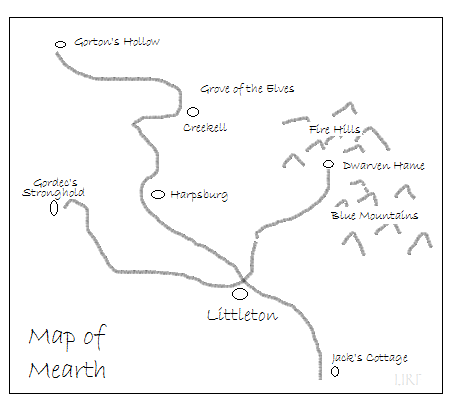
If you are writing about a fantasy world, quickly sketch a rough map. Refer to it to ensure the town names and places remain the same from the first page to the last. Update it as new locations are added.

Please, make sure your literary murders are done in a way that doesn’t fly in the face of logic. Do the research on poisons, knife wounds, and consider all the possible reasons why that particular murder wouldn’t work in reality. Then write a murder that does work.

Talk to police, talk to doctors, talk to lawyers–many are willing to help you with your quest for accuracy about their professions. Also, you can Google just about anything. Fads, fashion, phone tech, current robotics tech, automobile tech—it’s all out there.

We may be writers of fiction, but we are also disseminators of information and dreams. It’s a big responsibility!

Do the proper research, target it to your needs, and don’t allow yourself to be sidetracked by the many bunny trails that lead you away from actually writing.


2 Comments

Filed under writing

Autumn, Industry News, and Week 1 of NaNoWriMo 2021 #amwriting

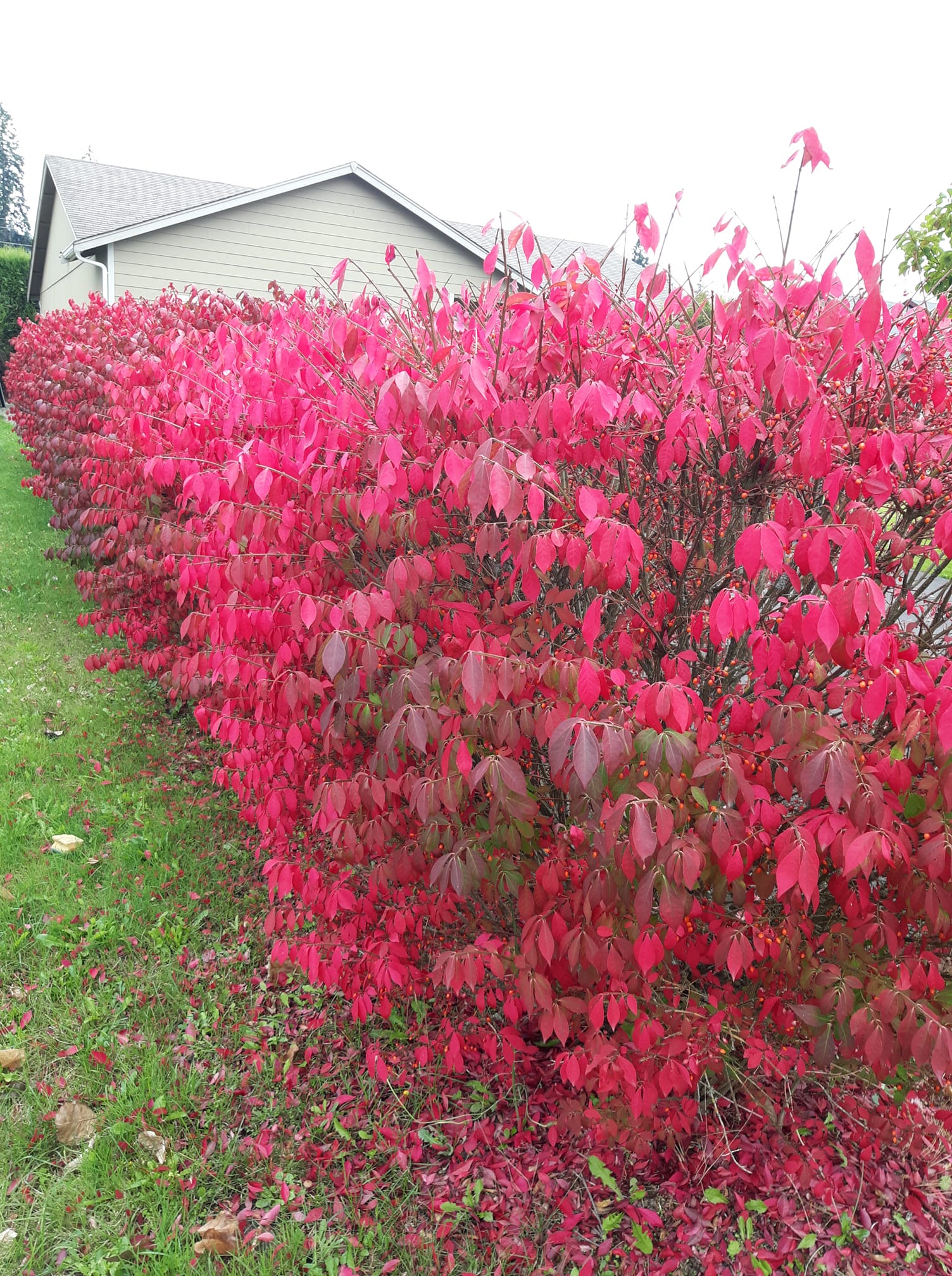
The terrible heat wave we Northwesterners suffered in June has given us one of the most colorful autumns we have had in many years. All last week, even the native trees were colorful. Usually, our native maples are relatively dull as compared to the non-native ornamentals.

MyWritingLife2021My euonymus alata compacta, AKA Burning Bush, was glorious this year. That is a non-native shrub, but wow! The hedge really brightened up the yard.

Our magnolia tree even bore two fruits this year, which it never has done before. We planted the tiny sprouts in containers, hoping maybe they would grow. Who knows, we might end up with two more trees.

In industry news, Publishers Weekly reports that with most categories posting increases, sales at the 1,158 publishers that report results to the Association of American Publishers’ StatShot program rose 6.9% in July over July 2020.

They also said that Amazon’s growth has slowed to 15% in the third quarter of 2021. At the same time, Hachette Book Group’s third-quarter sales dropped by 9%. I find that interesting, as it says that with the pandemic easing, people are making less time for reading. Amazon sells far more than books, while HBG’s focus is on printing and selling paper books.

I ran across an older article in the HuffPost yesterday that still has merit: Traditional Journalism is Dying: Why the Publishing Industry Must Adapt to Survive | HuffPost Impact.

Apparently, short attention spans are still affecting that side of the industry. If people don’t have the patience to read a short article—

euonymous burning bushWhere was I? Oh, yes. Today (Wednesday) is the third day of NaNoWriMo2021. I am managing to get all the clerical work for my region done and keep a path cleared through my home. Monitoring the Discord channel for my region has been a bit distracting. However, I still have the time to get a respectable amount of work done on my new book.
At the time of this writing, the plumbing is still a problem on the homefront, but that is closer to being worked on. More on that debacle later when I have at least an answer and an estimated cost.

This year having an outline has been a real bonus. With my home in plumbing hell, having the outline for reference keeps me focused on the story.

Today, my goal is to finish fleshing out the Antagonist’s backstory. When that is finished, I will move on to the inciting incident.

My novel is not a book at this stage, and it won’t be until sometime in January. But I hope to have the entire story arc written and ready to flesh out by the 30th of this month.

I learned early on that even with an outline, this first draft is my “thinking draft.” It will be a combination of backstory and brilliance. In January, the weeding will begin. Hopefully, I will be in the editing stage by next November, just as I am now with last year’s NaNoWriMo novel.

So that is the news from the Command Corner at Casa Del Jasperson. Happy writing!

2 Comments

Filed under writing

What I #amwriting

Today is the opening day of National Novel Writing Month, and the clock is ticking. I plan to write the scenes detailing the incidents as presented in my outline and then link them together into a narrative. Today I am writing a first encounter scene.

NaNoWriMo-WriterBadge-555-2x-1This method involves hopping around in the story arc, but it works for me. I have a master file already with the storyboard in it. Today, I began writing each scene as a short story, labeling the file with a title like FoR_pub_scene_at_Linniston (Fires of Redemption, pub scene at Linniston). The title tells me where this scene will fit in the story arc. Everything will go into the master file in my writing folder and be saved to Dropbox. I’m starting with this one, as it introduces everyone.
Each scene will be around 1,000 words long, so I will shoot for two scenes a day. And truthfully, these scenes are really chapters, but I can’t think that far ahead at this point.

Once I have all of the major plot points written, I will stitch them into a proto manuscript and begin writing transitions and joining scenes. That is when the real work begins and should happen in about week three of November.

Everyone has a particular way of getting the story out of their heads. I used to write more linearly, starting at page one and writing forward as the story unfolds. But there are times when I can’t sustain that intensity of focus over a 70,000-word manuscript. My brain is like a toddler on jellybeans and Coca Cola.

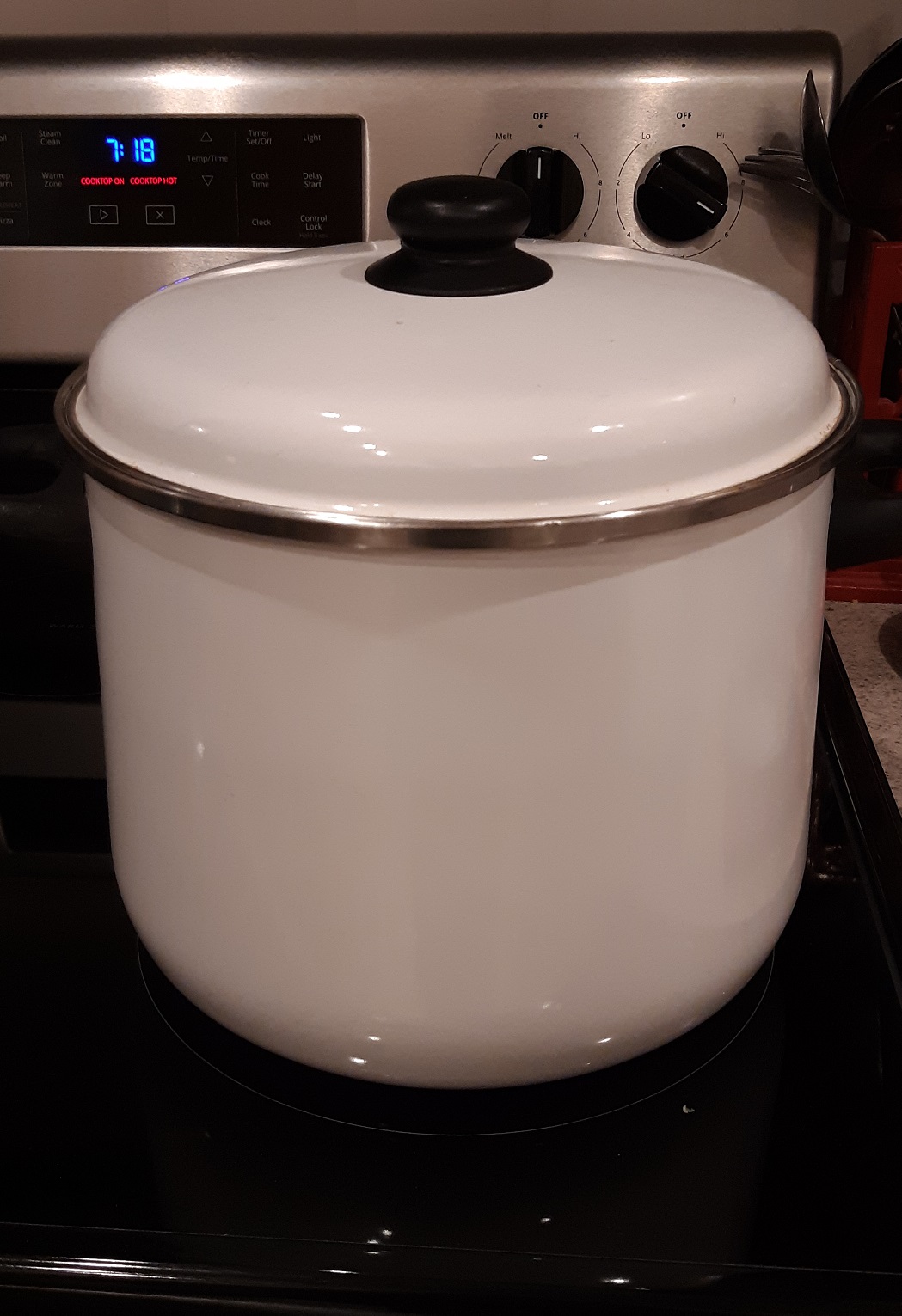
spaghetti boilerThis will be one of the more challenging years for me, as life is throwing roadblocks in my path. A water pipe has broken beneath our master bedroom closet, and two weeks on, we are still waiting for a plumber. In the meantime, we have no hot water, but we do have cold still flowing, so we aren’t hurting too badly. I make hot water with the spaghetti boiler on my stove and feel glad we aren’t hauling it here from the creek.
In the meantime, all the clothes we own are in the living room, draped over the furniture, waiting to return to their closet.

Speaking of clothes, going to the laundromat was a shock—one washer costs $5.50 to run. On the positive side, it washed the amount of clothes I would do in three loads here at home.

But I was 50 cents short of having enough quarters, because I rarely use cash for anything.

However, you can pay via the QR code … just by entering your information into an impossible-to-decipher-on-your-phone website. Demons designed this particular website to enable us mortals to finance doing our laundry. After much struggle, a seriously frustrated hubby, and the aid of a fellow sufferer, we managed to wash our clothes.

be happy 3That was a week ago. We’ve been waiting for the plumber for two weeks, but a light is on the horizon. Hope looms, and an appointment for tomorrow has finally been confirmed.
One only hopes the resolution will be moderately un-invasive, as a radical deconstruction of my bedroom would be … unpleasant.

So, that is the news from Casa del Jasperson. Writing is going well, providing a perfect escape from plumbing problems. My happiness quotient is full to bursting despite the hiccups in life, and you can’t ask for more than that.

4 Comments

Filed under writing

#NaNoPrep: What to Expect #amwriting

I am a supporter of NaNoWriMo (National Novel Writing Month) as a way to get people writing. Some people can’t resist a challenge, and NaNoWriMo is definitely that.

NaNoWriMoMemeNaNoWriMo is a personal challenge, a month that is solely dedicated to the act of writing a novel. It is a speed-run with daily goals to meet.
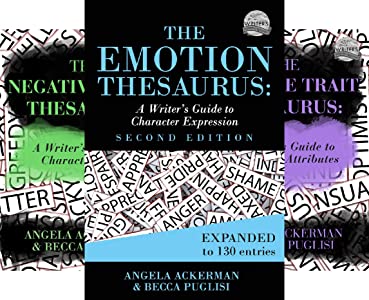
Day 1 – write 1,667 words or more.

Days 2 through 30 – rinse and repeat.

If you write 50,000 words and have your word count validated through the national website, you ‘win.’ Reporting your word count has been an honor system for the last two years, so you never have to upload your manuscript.

If you do cross the 50,000-word line, there are no huge prizes or great amounts of acclaim waiting for you. You will, however, get a PDF winner’s certificate that you can fill out and print to hang on your wall or keep in your digital files as I do.

Starting on day one, you will collect badges, little visible rewards, for your daily achievements. One badge that is difficult to get is the “update your progress every day” badge. I usually have my “winners’ certificate” by the day they become available, but I continue writing every day through the 30th and update my word count daily.

We all know that a novel of only 50,000 words is a good length for YA or romance, but for epic fantasy or literary fiction it’s only half a novel. Still, a dedicated author can get the basic structure and story-line of a novel down in those thirty days simply by sitting down for an hour or two each day and writing a minimum of 1667 words per day.

With a simple outline and a few notes to keep you on track, that isn’t too hard. Most authors who grew up with computers (unlike me) can double or triple that.

NaNoWriMo-WriterBadge-555-2x-1As always, there is a downside to this intense month of stream-of-consciousness writing. Just because you can sit in front of a computer and spew words does not mean you can write a novel that others want to read.

And unfortunately, for the first time author, the desire to publish that book without making revisions, and without professional editing is almost impossible to quell. Every year in February and March, many cheap or free eBooks will emerge testifying to that fundamental truth.

So why do I participate every year? I love working with the writers in our area, and hope to see the rare, committed novelist, the one who stays writing all year long. That person will join our region’s Discord channel and be a part of the posse.

More people write during November than you would think. In some years, about half the NaNo Writers in my regional area are journaling, writing family histories, or even writing their thesis.

Every year, my co-Municipal Liaison and I see a wave of new people who fill the vacancy left behind by the people who either lost interest in the first week or couldn’t find the time to get more than ten or twenty thousand words during previous years.

Those people sometimes feel like failures, but they aren’t.

Ten thousand words is two or three short stories. Twenty thousand is a novella. Writing a story of any length is an accomplishment, and those authors should be proud. They will write more as time goes on.

However, for a very few people, participating in NaNoWriMo will give them the confidence to admit that an author lives inside their heart, demanding to get out. In their case, NaNoWriMo is about writing and completing a novel they had wanted to write for years, something that had been in the back of their minds for all their lives.

These authors will take the time and make an effort to learn writing conventions. Grammarly’s website says writing conventions consist of four elements:

  • spelling
  • grammar
  • punctuation
  • capitalization

emotion-thesaurus-et-alSome new authors seek out books about writing craft and attend seminars. They will join writing groups and develop the skills needed to take a story and make it a novel with a proper beginning, a great middle, and an incredible end.
They will properly polish their work and run it past critique groups before they publish it. They will have it professionally edited.

These are books I will want to read.

And one skill we must develop early on is a thick skin. Nothing hurts worse than to see your work through their unbiased eyes and discover it wasn’t perfect after all. Yes, some people will love and admire what we have created, but other times what we hear back from our readers and editors is not what we wanted to hear.

For most authors success can only be measured in the satisfaction we get out of writing and seeing it published.

If your first novel is picked up by a traditional publisher, they may not put a lot of effort into pushing it, because you are an unknown author. They will test the waters and see what sort of reaction your book gets before they really commit to backing you.

Also, whether you are traditionally published or indie, you must do all the social media footwork yourself. You must get an Instagram account, a twitter account, a website, and so on. You may even have to arrange your own book signing events, just as if you were an indie.

strange thoughts 2This is time-consuming, and you will feel as if you need a personal assistant to handle these things. I know several authors who rely on the services of hourly personal assistants to help navigate the rough waters of being their own publicist.

Every year, participating in NaNoWriMo will inspire many discussions about becoming an author. Going full-time or keeping the day job, going indie or aiming for a traditional contract—these are conundrums many new authors will be considering after they have finished the chaotic month of NaNoWriMo.

However, if you don’t sit down and write that novel, you won’t have to worry about it.

November is a good time to do just that.

#NANOPREP SERIES TO DATE:

#NaNoPrep: part 1: What’s the Story?  (the storyboard)

#NaNoPrep, Setting: Creating the Big Picture

#NaNoPrep, Building Characters

#NaNoPrep, More Character Building

#NaNoPrep, Creating Societies

#NaNoPrep, Designing Science, Magic, and the Paranormal

#NaNoPrep, Terrain and Geography

#NaNoPrep, Connections and Interconnections

#NaNoPrep, Construction and Deconstruction

#NaNoPrep, The Story Arc Part 1

#NaNoPrep, The Story Arc Part 2

#NaNoPrep, The Story Arc part 3, the End

#NaNoPrep: Signing up and Getting Started

#NaNoPrep: Guernica, Inspiration, and Finding Writing Prompts

#NaNoPrep: Time Management

#NaNoPrep: Countdown to November, Subject and Theme

This post:  #NaNoPrep: What to Expect

7 Comments

Filed under writing

#NaNoPrep: Countdown to November, Subject and Theme

NaNoWriMo 2021 officially begins one week from today on November 1st. For those of us who love a challenge, that will be the day we set the pen to paper and begin the actual writing of our projects.

plot is the frame upon which the themes of a story are supportedSo, what do we need to have in place during the next seven days before the big event?
One: We need to have characters.

Two: Our characters need an environment to live in, a world to inhabit.

Three: Our characters need some sort of backstory, so we know who they are when we begin writing.

Four: We need a plot or at least an inciting incident. We should have some idea of that moment when our frogs leap from the frying pan into the fire.

Five: You should try to identify your subject and unifying theme. We’ll talk about those things further on in this post.

How does my storyboard look right now?

Characters: This will be Ivan’s second book, so I have his backstory and don’t need to worry too much about that. Ivan is a fire-mage, an armorsmith, and a shaman. He is a father, a husband to his life partner, Kai. Kai is an earth-mage and a mason. The two share four children with another lashei couple, Avis and Venna. The children live with Ivan and Kai, as Avis and Venna are traveling dye traders.

The Home in WeilandEnvironment: Ivan and Kai live in Weiland, Tribe Weila’s riverport and mining center. Ivan’s extended family has five rowhouses at the upper end of High Street. It’s a steep but easy walk to the market for his grandfather, who lives next door and watches the children while Ivan and Kai work. I drew a little map for my notes, so I know the layout of where everything is in regard to their home and businesses. It could change, but I have something to start with.
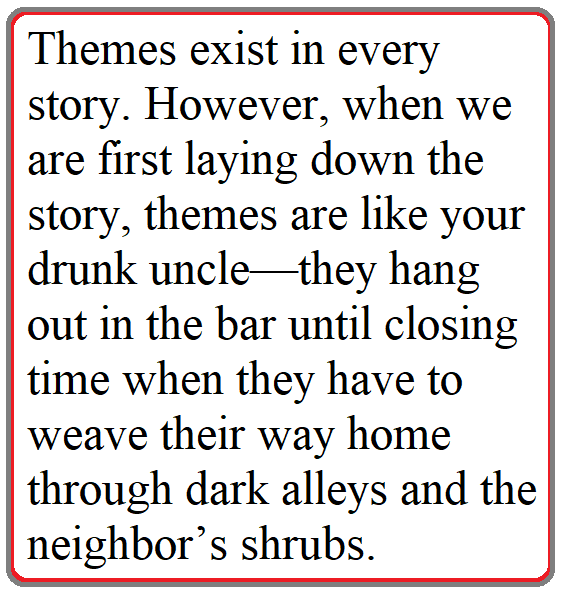
His brother, Aldric, and his wife, Marta, have three children. They live at the other end of the row of houses. Ivan’s father, Aengus, and mentor, Jan, have their homes there too. Behind the rowhouses are a walled shared garden and orchard and the family’s barn. Ivan and Jan’s armory is a short walk through the back garden, and beyond that is Kai’s quarry.

The backstory: is already established for this book, as book one is currently being edited.

The inciting incident: At this point, the inciting incident is the arrival of news that a neighboring town has been attacked by tribeless raiders. It’s suspected the raiders are led by a rogue mage. Ivan and Kai must go and deal with that, a simple-sounding thing that becomes complicated. Aldric and Marta join them, leaving the children in the care of the three grandfathers.

What I hope to achieve by the last paragraph of this book: Ivan will be forced to grow in his role as a shaman and mage. Kai will be challenged when an old acquaintance is discovered in the rogue mage’s entourage. Aldric’s and Marta’s skills with weapons will be critical, and the blade that Ivan made for Marta when they were young will be the key to resolving the final encounter. Each character will be tempered steel, able to do what must be done, and still remain compassionate.

Subject and Theme: So, what is a theme? It’s different from the subject of a work. An example that most people are familiar with is the Star Wars series and franchise. The subject is “the battle for control of the galaxy between the Galactic Empire and the Rebel Alliance.” The themes are “moral ambiguity” or “the conflict between technology and nature.”

The subject of this book is how the desire for dominance and power corrupts an abused young mage, and the destruction he creates in his attempt to control his life. This book will explore the theme of good vs. evil and the subthemes of comradeship and love of family. The books I am drawn to often feature these themes.

How do you identify your theme? Sometimes it’s difficult unless you start out with one in mind. Here is a short list of some themes for you to consider:

  • Abuse
  • Alienation/loneliness
  • Ambition
  • Coming of age
  • Conspiracy
  • Crime and Justice
  • Fall from Grace
  • General dehumanization of society
  • Good vs. Evil
  • Grief
  • Humanity in jeopardy
  • Love
  • Nostalgia for the good old days
  • Plagues
  • Rebellion and revolution
  • Redemption
  • Religious intolerance
  • Separation and reunion
  • The hero’s journey
  • War

theme_meme_lirf06302020A common theme in fantasy is the juxtaposition of chaos and stability (or order). This subtheme will feature strongly in my novel. Good vs. evil is a trope of the speculative fiction genre. Evil is usually portrayed by taking one or the other of these concepts to an extreme.
Epic fantasy is usually good vs. evil, based on the hero’s journey. The stories detail how events shape the characters.

That is what I am writing in November.

#NANOPREP SERIES TO DATE:

#NaNoPrep: part 1: What’s the Story?  (the storyboard)

#NaNoPrep, Setting: Creating the Big Picture

#NaNoPrep, Building Characters

#NaNoPrep, More Character Building

#NaNoPrep, Creating Societies

#NaNoPrep, Designing Science, Magic, and the Paranormal

#NaNoPrep, Terrain and Geography

#NaNoPrep, Connections and Interconnections

#NaNoPrep, Construction and Deconstruction

#NaNoPrep, The Story Arc Part 1

#NaNoPrep, The Story Arc Part 2

#NaNoPrep, The Story Arc part 3, the End

#NaNoPrep: Signing up and Getting Started

#NaNoPrep: Guernica, Inspiration, and Finding Writing Prompts

#NaNoPrep: Time Management

This Post: #NaNoPrep: Countdown to November, Subject and Theme

10 Comments

Filed under writing

#NaNoPrep: Time Management #amwriting

If you plan to write a 50,000-word novel this coming November, you will need to develop some time management skills.

NaNoWriMoMemeWriting is easier once it becomes a daily behavioral habit. However, making the best use of your limited writing time requires a little planning, self-discipline, and encouragement from your family.

Once you tell them that you have a goal of writing 1,667 words a day, they might be your biggest supporters. My family certainly has been.

My children are grown now, but most new writers have jobs and a family. When you have school-age children, time for personal projects can be limited. You are constantly going somewhere to some athletic or school function.

But I did it, and you can too. By writing in short bursts whenever you have the opportunity, you might get your first draft finished and get that certificate that says you completed 50,000 words in 30 days.

First, you must give yourself permission to write. For much of my working life, I was a single parent, sometimes with three part-time jobs. My main job was as a bookkeeper or working in data entry for corporate America. Throughout the 1990s, I worked weekends and holidays as a hotel maid. I’m retired now, but although I’d never heard of NaNoWriMo, I was a secret novelist, and I couldn’t stop thinking about what I was writing.

Digital Clock FaceWe have this perception that taking time for creativity is selfish, and that will be your biggest hurdle. Trust me, it is not asking too much of your family for you to have some time every day that is sacred and dedicated to writing.
I wrote in the evenings while my children did their homework, which sometimes meant a lot of stopping and starting, but I did get some writing done. Some words are better than none! You can also set aside a block of time on the weekend to make up some words, although that can be difficult. Setting aside time on a weekend can become a hardship, especially if you have a young family.

Having me there, typing away next to the gerbil cage seemed to keep them on track with their homework, and I did get a page or two written every night.

What I churned out was pretty awful, but although I didn’t know it at the time, I was developing discipline and a work ethic in myself as well as in my children.

Having an artistic life means you allow yourself time to create something meaningful to you.

The following is a list of ideas to help you carve the time to write and still be a full participant in your family’s life.

  • You must decide what is more important, your dream of writing or watching a television show that is someone else’s dream. Do you want to create, or do you want to be entertained?

Personally, I would say that if you didn’t like how Game of Thrones turned out, too bad. Write it the way you think it should have been done. Writing fan-fiction is a time-honored way to start your writing career.

  • You have the right to take an hour in the morning and the evening to use for your own creative outlet. Wake up an hour early and write until the time you would generally get up. That will be the quietest time you will have all day. Give up that 9:00 p.m. TV show and write for one more hour. There are your 2 precious hours.

Use those two separate hours for your stream-of-consciousness writing. You could easily get your 1,667 words written every day, possibly more. I am a slow keyboard jockey, and I can do about 1,100 wonky, misspelled words an hour during NaNoWriMo.

ALL words you write count toward the goal, misspelled or not.

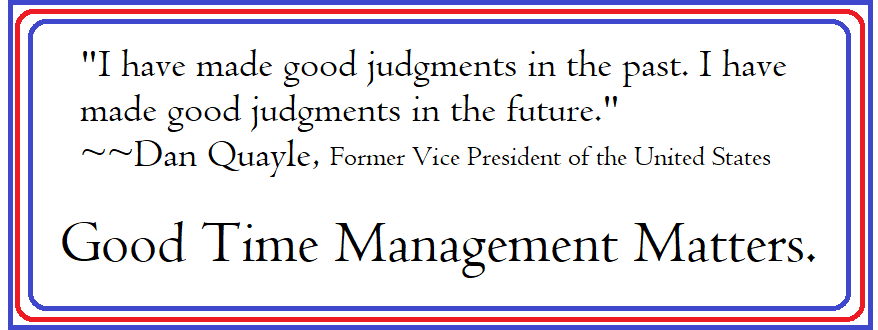
Time_Management_Quayle_QuoteWrite for five minutes here and ten minutes there all day long if that is all you can do. Every word counts toward your finished manuscript. I took my lunch to work and wrote during my lunch half-hour whenever possible. I also wrote on the bus when I didn’t own a car.
You don’t have to announce to your co-workers or family that you are writing a book if you don’t wish to. I certainly didn’t feel comfortable saying anything about my secret life.

  • If you want to spend your lunchtime writing, politely let people know you’re handling personal business and won’t have time to chat.

Writing in the stream-of-consciousness style is an excellent way to cultivate your emotional and poetic mind. It will improve your writing skills in general.

During NaNoWriMo, you engage in unedited writing. Nothing is deleted and every word counts. Even with an outline, sections of your narrative will often be unstructured because it reflects your (or your character’s) observations at the moment you were thinking them.

Writing in this fashion mirrors the way internal thoughts in the human mind work. You are quickly processing thoughts and perhaps switching from one topic to another with abandon. Just go for it.

powerwordsWordCloudLIRF06192021Remember, what you are writing is a rough draft, so your story arc will be bumpy and uneven. It doesn’t have to be perfect, so don’t worry about making it so. The goal of NaNoWriMo is to get that first draft written in thirty days. So, every time you have fifteen minutes to spare, sit down and write as much as you can in that short length of time. Spew your story as fast as you can in those moments before you are pulled away. With six or seven short bursts of writing, you can really rack up the word count.

In January or March, or whenever you go to revise your first draft, you might be amazed to find that much of what you originally wrote has life and passion.

The point is to keep on writing even when you have fallen behind. Use whatever motivational tricks you need to encourage yourself, and don’t be too hard on yourself. Far more important than simply getting word count, the goal is to finish your novel.

Writers and other artists do have to make some sacrifices for their craft. It’s just how things are. But you don’t have to sacrifice family for it. Sacrifice one hour of sleeping in and give up something ephemeral and unimportant like one hour of TV.

You can achieve your goal of 50,000 words in 30 days if you give yourself permission to create and make the time to do so.


#NANOPREP SERIES TO DATE:

#NaNoPrep: part 1: What’s the Story?  (the storyboard)

#NaNoPrep, Setting: Creating the Big Picture

#NaNoPrep, Building Characters

#NaNoPrep, More Character Building

#NaNoPrep, Creating Societies

#NaNoPrep, Designing Science, Magic, and the Paranormal

#NaNoPrep, Terrain and Geography

#NaNoPrep, Connections and Interconnections

#NaNoPrep, Construction and Deconstruction

#NaNoPrep, The Story Arc Part 1

#NaNoPrep, The Story Arc Part 2

#NaNoPrep, The Story Arc part 3, the End

#NaNoPrep: Signing up and Getting Started

#NaNoPrep: Guernica, Inspiration, and Finding Writing Prompts

10 Comments

Filed under writing