Tag Archives: #writetip

How I Became a Keyboard-wielding Writing Fool

I grew up in a home that had more books than some libraries. My parents were voracious readers who insisted we read too. We had all the great children’s classics, and when we couldn’t play outside and were bored, we’d read the Encyclopedia Britannica.

Yep.

We read the encyclopedia for fun.

MyWritingLife2021My parents also had bought Grolier‘s Great Books of the Western World. Dad would occasionally assign me a book to read, something that I didn’t understand but wanted to.

This probably influenced my choice of classes in college, which is where I learned to understand and love Chaucer and James Joyce. Joyce may be the king of brilliant one-liners, but F. Scott Fitzgerald holds a place in my heart for his phrasings.

When I was first out in the world, I held two and sometimes three jobs just to pay the rent and feed my kids. My go-to genres were sci-fi and fantasy, but books were expensive, and food came first.

The libraries stocked a few sci-fi or fantasy books, but I had read all the classics in those genres. For whatever reason, librarians didn’t stock new speculative fiction books as comprehensively as they did contemporary and literary fiction.

The book aisle at the supermarket had a better selection, but they cost as much as I made for one hour of work, so I could only get one book per bi-monthly payday. Tad Williams and Anne McCaffrey got most of my “fun” money in those days.

My budget forced me to write the stories I wanted to read. Most evenings, I sat listening to music on the stereo, writing my thoughts and ideas in a notebook while my kids did their homework.

Besides the poetry or song lyrics I regularly turned out, my pen and ink ramblings weren’t “writing” as I see it now. They were more like frameworks to hold ideas that later became full-fledged stories.

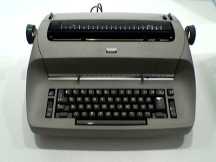
IBM_Selectric (1)Then, in 1987, my father bought me a secondhand IBM Selectric Typewriter, and my writing addiction took off.

When my job situation improved, I scrimped and saved for my monthly Science Fiction Book Club purchase. I also scoured the secondhand bookstores for sci-fi or fantasy novels, budgeting for books the way others of my acquaintance budgeted for beer.

I found a secondhand bookstore where I could get novels that were in too poor a condition to sell on their shelves. A full shopping bag of beat up, and sometimes coverless books was only two dollars, if you had a bag of better books to trade.

I went through a full shopping bag of books every week, and within a year, I had read every book they had in my favorite genres. Agatha Christie’s books were high on my list of hoped-for treasures.

In the process, I discovered a new (to me) genre: regency and gothic romances written by Georgette Heyer, Barbara Cartland, and other romance writers of that generation. Along with beat-up copies of bestsellers by Jack KerouacJames Michener, and Jacqueline Susann, those books known as “bodice-rippers” began to show up in the pile beside my bed.

Always when the budget permitted, I returned to Tolkien, Zelazny, McCaffrey, AsimovBradbury, and as time passed, Piers AnthonyDavid EddingsTad WilliamsL.E. Modesitt Jr., and Robert Jordan, to name only a few.

And there were so many, many others whose works I enjoyed. By the 1990s, the genres of fantasy and sci-fi were growing authors like a field grows weeds, and I loved it.

All of the books I read as a child and young adult have influenced my writing. They still inspire me.

Editors_bookself_25May2018I’m proud to admit that my literary influences can be traced back to dragons, booze, elves, space-operas, Roaring Twenties morality, Don Quixote, and England’s romantic Regency, all of which I lived vicariously through these authors’ eyes.
Nowadays, I can barely read more than a chapter or two before falling asleep. My Kindle is full of books and having the luxury to spend a day wallowing in a book is a treat to be treasured.

I became a writer because my parents loved books and allowed me to read whatever I wanted, whenever I wanted.

Thanks to the uncountable authors whose works I’ve been privileged to read, I was inspired to think that my own stories might have value.

In the beginning, my writing style was unformed and reflected whoever I was reading at the moment.

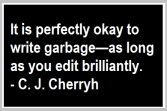
ok to write garbage quote c j cherryhI shared what I wrote with other people and got feedback, some good, some bad. I learned from it all and kept trying. I bought books on the craft of writing.
I gained confidence and began to trust my own ideas and stories. Once that happened, I became a keyboard-wielding writing junkie.

Writing has always been necessary to me, as natural as breathing. Some days I write well, and others not so much, but every day I write something.

And every day, I find myself looking for the new book that will rock my universe, a new “drug” to satisfy my craving, even if I know I won’t have time to read it.

Reading is my form of mind-expanding inspiration. Without the authors whose books formed my world, I would never have dared to write.


Credits and Attributions:

Wikimedia Commons contributors, “File:IBM Selectric (02).jpg,” Wikimedia Commons, the free media repository, https://commons.wikimedia.org/w/index.php?title=File:IBM_Selectric_(02).jpg&oldid=555742863 (accessed August 24, 2021).

2 Comments

Filed under writing

Character Development: Point of View. Who is Telling the Story?

The descriptive narrative of a story is comprised of three aspects:

Narrative point of view is the perspective, a personal or impersonal “lens” through which a story is communicated.

Narrative time is the grammatical placement of the story’s time frame in the past or the present, i.e., present tense (we go) or past tense (we went).

Narrative voice is the way in which a story is communicated. How it is written is the author’s fingerprint.

WritingCraftSeries_narrative modeToday, we’re focusing on the narrative point of view, discussing who can tell the story most effectively, a protagonist, a sidekick, or an unseen witness.
The words objective narrator and omniscient narrator (in modern literary terminology) are reserved for non-participant voices: the 3rd Person narrator. We can use this mode in several ways for our descriptive passages.

The 3rd person omniscient narrative mode refers to a narrating voice that is not one of the participants. This narrator views and understands the thoughts and actions of all the characters involved in the story. This is an external godlike view.

David remembered Selina’s instructions, but things had changed. With no other option, he turned and dropped the gun into the nearest dumpster.

The third-person point of view provides the greatest flexibility and thus is the most commonly used narrative mode in literature. In the third-person narrative mode, every character is referred to by the narrator as “he,” “she,” “it,” “they,” or other gender terms that best serve the story.

The writer may choose third-person omniscient, in which every character’s thoughts are open to the reader, or third-person limited, in which the reader enters only one character’s mind, either throughout the entire work or in a specific section.

Third-person limited differs from first-person because while we see the thoughts and opinions of a single character, the author’s voice, not the character’s voice, is what you hear in the descriptive passages.

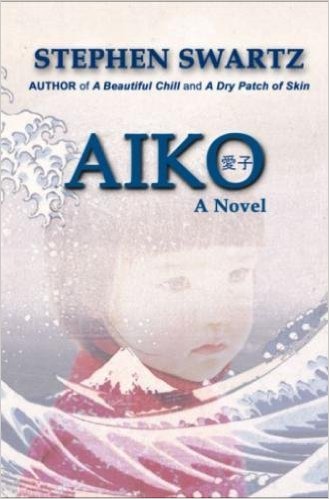
aikoSome third-person omniscient modes are also classifiable as “third-person subjective,” modes that switch between the thoughts, feelings, etc. of all the characters.
This mode is also referred to as close 3rd person. At its narrowest and most personal, the story reads as though the viewpoint character were narrating it. Because it is always told in the third person, this is an omniscient mode.

This mode is comparable to the first-person in that it allows an in-depth revelation of the protagonist’s personality but always uses third-person grammar.

Some writers will shift perspective from one viewpoint character to another. I don’t care for that but occasionally find myself falling into it. I then have to stop and make hard scene breaks because it’s easy to fall into head-hopping, which is a serious no-no.

Head-hopping occurs when an author switches point-of-view characters within a single scene. It happens most commonly when using a third-person omniscient narrative, because each character’s thoughts are open to the reader.

To wind up this overview of the third-person narrative mode, we have the Flâneur (idler, lounger, loiterer.) This is traditionally a form of third-person point of view, but I like to think of it almost as a fourth POV. Many of you have heard of it as third-person objective or third-person dramatic.

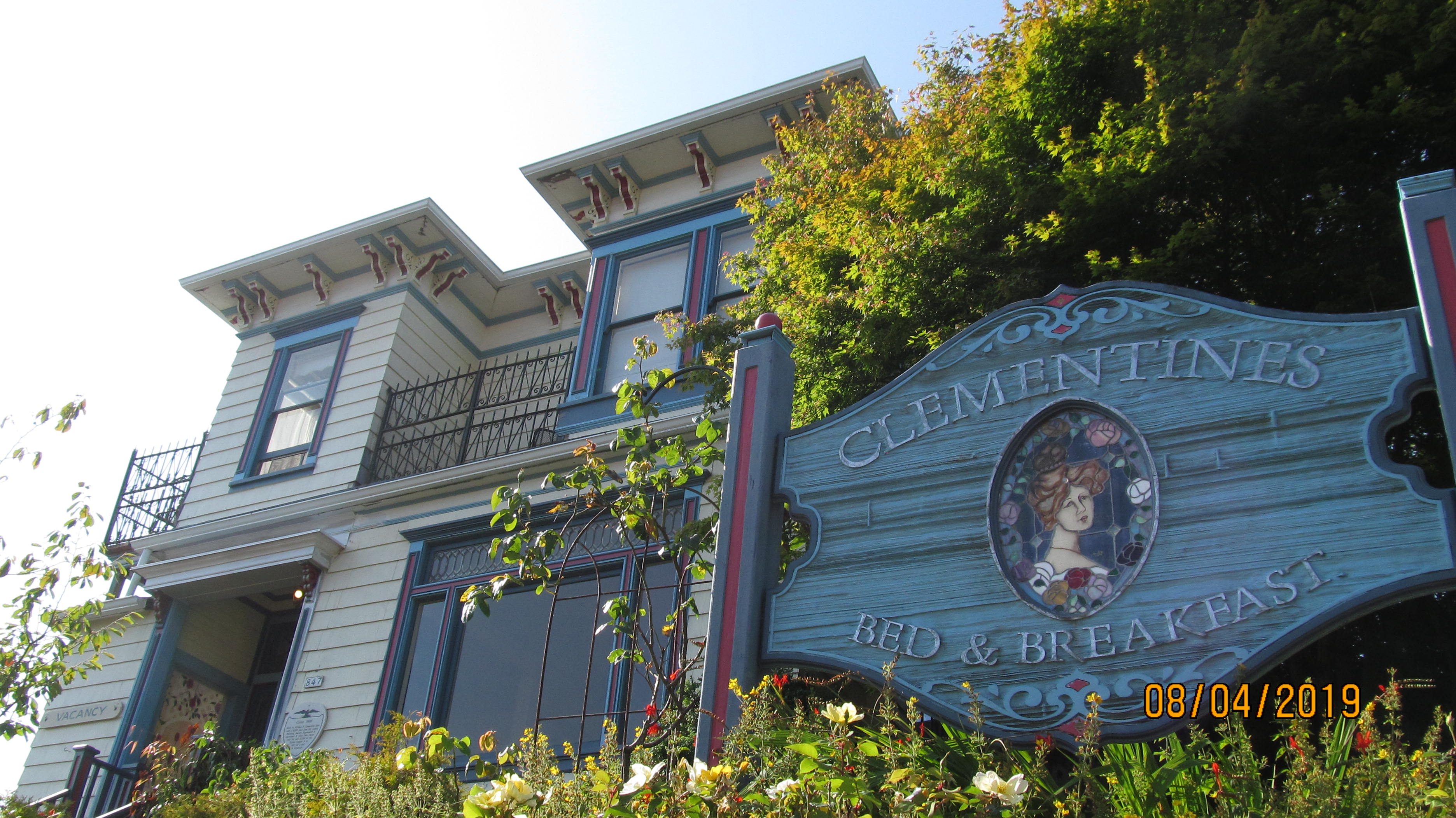
Clementines_Bed_and_BreakfastThe flâneur is the nameless external observer, the interested bystander who reports what they see and overhear about a particular person’s story. They garner their information from the sidewalk, window, garden, or any public place where they commonly observe the protagonists. They are an unreliable narrator, as their biases color their observations. In many of the most famous novels told by the flâneur, the reader comes to care about the unnamed narrator because their prejudices and commentary about the protagonists are endearing.
On Saturday mornings, at seven o’clock, Wilson always passed my gate as he walked to the corner bakery. He bought a box of maple bars, which he carefully held with both hands as he returned. I imagined he served them to his wife with coffee, his one thoughtful deed for the week.

Sometimes, the story works best when it’s told by the characters central to the story’s main action. Other times it is best told by the witnesses. So now we come to the two terms, reliable narrator and unreliable narrator, that describe participant narrator/observers.

The first-person point of view is common and is told from one protagonist’s personal point of view. It employs “I-me-my-mine” in the protagonist’s speech, allowing the reader or audience to see the primary character’s opinions, thoughts, and feelings.

Many authors employ the first-person point of view to convey intimacy when they want to tell a story through the protagonist’s eyes. With the first-person point of view, a story is revealed through the thoughts and actions of the protagonist within their own story.

The waves carried me, and I fell upon the shore, a drowning man, clutching at the stones with a desperation I had never before known.

Second-person point of view, in which the author uses “you” and “your,” is rarely found in a novel or short story. However, it can be an effective mode when done right.

You enter the room, unsure if you’re dreaming. Yet, here you are, in the tangible reality of devastation, stumbling over the wreckage of your life.

IndieGuideCoverSecond-person point of view is commonly used in guidebooks and self-help books. It’s also common for do-it-yourself manuals, interactive fiction, role-playing games, gamebooks such as the Choose Your Own Adventure series, musical lyrics, and advertisements.
Some stories seem to demand a first-person narrator, while others are too large and require an omniscient narrator.

Your homework for the week, should you choose to try it: Experiment with point-of-view. Write a scene from one of your works in progress using all the different narrative modes discussed. How does the way you see your story change with each change of point-of-view?


Previous Posts in this Series:

Storyboarding character development 

Character Development: Motivation drives the story 

Character Development: Emotions

Character Development: Showing Emotions

Character Development: Managing the Large Cast of Characters

This Post: Character Development: Point of View

7 Comments

Filed under writing

Character Development: Showing Emotions

Most authors who have been in writing groups for any length of time become adept at writing emotions on a surface level. We bandage our wounded egos and work at showing our characters’ inner demons. We spend hours writing and rewriting, forcing words into facial expressions.

depth-of-characterHappiness, anger, spite – all the emotions get a description. Eyebrows raise or draw together; foreheads crease and eyes twinkle; shoulders slump and hands tremble. Lips turn up, lips curve down, and eyes spark – and so on and so on.
Using facial expressions as dialogue tags can work when done sparingly and combined with a conversation.

But that solution can easily become a crutch that keeps us from delving deeper into our characters.

Also, it’s aggravating when it becomes repetitive.

And this brings me to the core of this post. In the early drafts of my most recent work in progress, I struggled to give my characters balanced personalities. During NaNoWriMo, when I was writing new words as quickly as I could, I leaned too heavily on the external, with a LOT of smiling and shrugging.

Those facial expressions were code words for the second draft, places where more work would be required to flesh out the scene.

Nothing is more ordinary than a story where a person’s facial expressions take center stage, hollow displays of emotion with no substance. Lips stretch into smiles, but the musculature of the face is only a small part of the signals that reveal the character’s interior emotions.

Then, there are the stories where the author leans too heavily on the internal. Creased foreheads are replaced with stomach-churning, gut-wrenching shock, or wide-eyed trembling of hands.

And don’t forget the recurring moments of weak-kneed nausea.

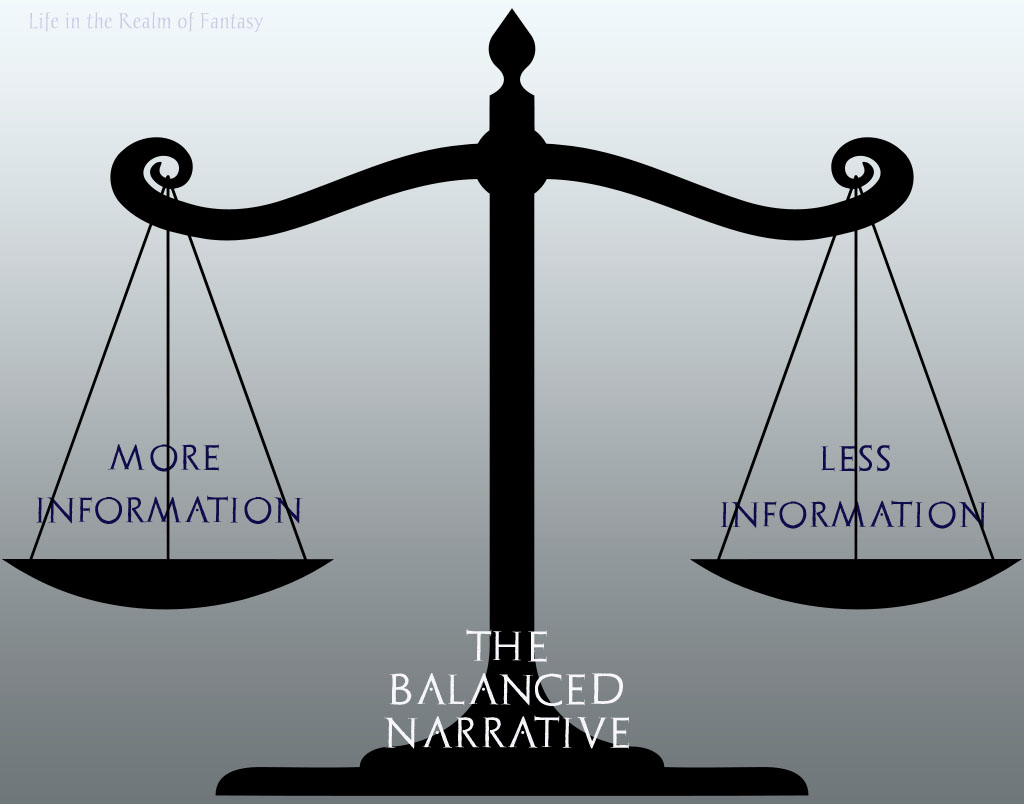
the balanced narrativeFor me, the most challenging part of writing the final draft of any novel is balancing the visual indicators of emotion with the more profound, internal clues.
It takes effort to write a narrative so that we aren’t telling the reader what to experience. We allow the reader to infer what to feel (remember we are still in the inferential layer of the Word-Pond). We must make the emotion feel as if it is the reader’s idea.

If you haven’t seen this before, here is my list of surface emotions:

  • Admiration
  • Affection
  • Anger
  • Anguish
  • Anticipation
  • Anxiety
  • Awe
  • Confidence
  • Contempt
  • Defeat
  • Defensiveness
  • Denial
  • Depression
  • Desire
  • Desperation
  • Determination
  • Disappointment
  • Disbelief
  • Disgust
  • Elation
  • Embarrassment
  • Ethical Quandary
  • Fear
  • Friendship
  • Grief
  • Happiness
  • Hate
  • Inadequacy
  • Indecision
  • Interest
  • Jealousy
  • Love
  • Lust
  • Powerlessness
  • Pride
  • Regret
  • Resistance
  • Revulsion
  • Sadness
  • Shock
  • Surprise
  • Temptation
  • Trust
  • Unease
  • Weakness

These are emotions you can show with either a facial expression or a physical reaction, combined with internal dialogue or conversations.

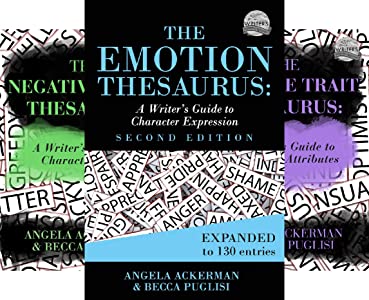
emotion-thesaurus-et-alI have mentioned The Emotion Thesaurus by Angela Ackerman and Becca Puglisi. Sometimes all we need is a hint of how to show what a character is feeling, someone to point the way when we’re suffering from a blank mind.

Just don’t go overboard when describing emotions, as it can turn into mawkishness, maudlin caricatures of emotions, and over-the-top melodrama.

Readers form mental visions of the scenes you describe, and you don’t want them to find your protagonist’s reactions repulsive.

A few subtle physical hints and some internal dialogue laced into the narrative show a rounded character, one who is not mentally unhinged.

Each of us experiences emotional highs and lows in our daily lives. We have deep-rooted, personal reasons for our emotions.  Our characters must have credible reasons, too. A flash of memory or a sensory prompt can inspire emotions that a reader can empathize with.

Why does a blind alley or a vacant lot make a character nervous?

Why does a grandmother hoard food?

Why does the sight of daisies make an old woman smile?

Writing genuine emotions requires practice and thought. Motivation is the foundation of emotion in a narrative. If a character’s eyes light up at the sight of daisies, WHY does she react with that emotion?

Emotions that are undermotivated have no base for existence, no foundation. They lack credibility and leave us, the reader, feeling as if the story is shallow, a lot of noise about nothing.

Timing and pacing are essential. Let’s say the sight of a river sparks a memory.

The emotion hits, and the character processes it, experiencing a physical reaction.

If something sparks a memory that advances the plot or explains something about the character, simply mention it in passing. That way, you avoid dumping backstory, and the reader can extrapolate the needed information.

ozford-american-writers-thesaurusOpen the thesaurus and find words that carry visual impact in your narrative, and you won’t have to resort to a great deal of description.
Weak word choices separate the reader from the experience of the narrative, dulling the emotional impact of what could be a highly charged scene.

Balancing the internal and external reactions our characters experience is necessary. Otherwise, all we have is a bunch of drama queens on a quest for sanity instead of heroes looking to rid the world of evil.

The books I love are written with bold, strong words and phrasing. The emotional lives of their characters are real and immediate to me. Those are the kind of characters that have depth and are memorable.

Homework assignment: A good exercise for writing deep emotions is to create scenes involving characters you currently have no use for.

  1. My Coffee Cup © cjjasp 2013The setting is a coffee shop.
  2. You must create two to four characters.
  3. One of them is hiding a gun.
  4. One of them is angry.
  5. Give them conversations and mental dialogue and practice using their body language instead of dialogue tags.

Mixing body language into paragraphs in place of dialogue tags to show who is speaking serves several purposes:

  • It describes what they are thinking and feeling in fewer words.
  • It keeps the “he said, they said” problem down to a dull roar.

Again, common sense is required, or the scene becomes nothing but words followed by grimaces, foot shuffling, and paper rattling.

Remember, just as in all the many other skills necessary to the craft of writing a balanced narrative, practice is required.

PREVIOUS POSTS IN THIS SERIES:

Storyboarding character development 

Character Development: Motivation drives the story 

Character Development: Emotions

14 Comments

Filed under writing

Character Development: Motivation drives the story #amwriting

You have probably heard of the literary rule known as Chekhov’s Gun, which says nothing should appear in the scene that has no use. If a rifle is important enough to be shown hanging on the wall, someone had better fire it, or it should be removed from the setting.

MyWritingLife2021Firing Chekhov’s gun brings us to motivation. I learned “the 5 W’s” of journalism when I was in grade school. Yes, back in the Stone Age they assumed 12-year-old children were considering their adult careers, and journalism was a respected path to aspire to. I don’t know if they still teach them, but they should.

  • Who
  • What
  • When
  • Where
  • Why

These five words form the core of every story. Who did what? When and where did it happen?

Why did they do it?

In some stories, the author has made the what quite clear, but the why is murky. I have read far too many novels where the author had no clue as to why their protagonist wants to do the task set before them.

If a character commits a murder, you’d better know why they felt compelled to do it. Readers don’t like unsolved mysteries, and random events with no resolution won’t keep them engaged.

When we write the scene detailing the inciting event, we should have already established what the characters want most. Their desires determine the path of the story arc. Identifying what motivates your character is the core of character development.

Some characters are easy to figure out:

  • In Tower of Bones, Edwin wants to save Marya from her kidnapper.
  • In Mountains of the Moon, Wynn wants to get the quest out of the way so he can get back to his wife and his forge.
  • In Huw the Bard, Huw wants to avoid the gallows, falsely accused of treason.

Some characters have motives that are more difficult to identify. Need drives motives. What a character desires can be hard to isolate and describe.

So, as if we were meeting with a writing group, let’s get out our stylesheet/storyboard, open it to the personnel files, and brainstorm a group of characters for a prospective novel. If you haven’t made a storyboard/stylesheet by now, you should. See my post, Storyboarding Character Development.

Anna will be the protagonist in our example. Before we begin writing, we need to understand Anna, find out who she is, and what makes her tick.

She is a well-educated, professional woman who left her law practice to pursue her dream of writing mysteries. She is married to another writer, David. Her books are wildly popular, but she has always catered to his needs, often at the expense of her career.

The_Pyramid_Conflict_Tension_PacingWhat motivates Anna?

  • When we first meet this couple, we can see that Anna fears her husband has strayed and is desperate to keep her marriage together.
  • She presents herself as whatever she thinks David wants her to be.
  • She confesses to her sister that she casts no shadow of her own.

So, on page one, we meet a woman with no sense of self-worth, no self-confidence.

We know what the main protagonist believes she desires.

Now, let’s find out who the other characters are and see if we can figure out what they want.

David is a well-known journalist and the author of several award-winning novels. He is confident, charismatic, and brilliant. He strongly advocates for women’s rights, civil rights, human rights, and volunteers many hours each week at a food bank. Despite the way he views himself, in reality, he suffers from a severe case of White Male Privilege. He despises it when he sees it in other people and truly believes he is a modern, enlightened man.

Anna and David invite several friends to spend the Christmas Holidays at their beach house. Anna plans it to be a month-long working retreat.

Plot-exists-to-reveal-characterUnfortunately, David has been suffering from crippling writers’ block and has begun to seek inspiration in alcohol and an affair with the wife of a close friend. He loves Anna, and desperately wants to end that illicit relationship.
John is a renowned wildlife photographer. He is intent on photographing the way wildlife coexists with year-round tourism in coastal Washington State. His husband, Kyle, is Anna’s agent and editor. Kyle wants to get Anna’s next book finished as the publisher is eager to have it.

Marc is a world-famous concert pianist and composer who is working on the score for a space opera that is currently filming. His wife, Lilith, is a sculptor with a show opening in New York in January. She despises Marc and intends to end her marriage. She hates sneaking around but desperately wants to keep David, so she continues the charade.

All have visible deadlines for their work which are their official reasons for being there. But Lilith and David each have their agendas, which will clash.

All four of the side characters have strong personalities, are charismatic, and are used to a certain amount of privilege. Both David and Lilith use and manipulate Anna for their purposes, although John and Kyle try to head off what they see as a looming disaster. Every cast member has a secret, and someone will attempt murder to ensure their secret remains hidden.

As the plot progresses and events unfold, Anna must evolve, and her motives must change. She must become an individual who no longer seeks the validation of other people.

The motives and viewpoints of each of the other characters must also be altered, for good or ill.

By the end of the novel, Anna must discover that she is, and has always been, the strong one in her marriage.

With this information complete, we know this novel is the story of Anna’s journey to a place of strength and self-acceptance.

The plot would work no matter what genre you dress it up with, as long as the characters and the changes they go through are the primary focus. Sci-fi, paranormal fantasy, contemporary – genre doesn’t matter.

  • The events force change upon the characters’ motives and form the plot.
  • Motivation affects how each character sees the events.
  • The way these events affect the preconceptions and desires of the players shapes the actions and reactions that occur in the next scene.

Without clear motivations, it’s just a bunch of drama queens cooped up in a house by the gloomy Washington coast. Unless each character’s wants and needs are clearly defined, the events won’t make any sense.

Once we know their motivation, it becomes a story.

When I need to flesh out characters, I write out what they think they want the moment we meet on page one, as if we were being introduced at a friend’s house.

Who are youOnce I get a bit deeper into writing a story, circumstances will have changed at the midpoint. Do these changes affect the characters’ wants and needs? If so, I make a note of that on my stylesheet.

Motivation is the characters’ quest to fulfill their deepest needs.

Why must they climb that mountain? Why did they fire that gun?

Why did Frodo and Sam endure what they did to take the One Ring to Mordor?

Without a real, personal motivation, that of preserving the way of life in the Shire, there is no reason for Frodo to walk a thousand miles only to face certain death just for the thrill of flinging a ring into an active volcano.

Next Monday, we will talk emotion, and explore why showing it well is such an art form.


9 Comments

Filed under writing

Storyboarding character development #amwriting

Every year, I participate in NaNoWriMo (National Novel Writing Month). This happens in November and is thirty days of dedicated writing. Authors with an idea for a novel sit down and daily write at least 1,667 words of a first draft.

depth-of-characterThis month of concentrated writing time is meant to help authors get the entire story down while the inspiration and ideas are flowing. At the end of the thirty days, you should have a novel-length story, hopefully with a complete story arc (beginning, middle, and end).

To succeed at completing a project with such an ambitious goal, you should spend some time planning your novel. To that end, I create a stylesheet for each project, a place to storyboard all my ideas.

I have mentioned before that I use a spreadsheet program to outline my projects, but you can use a notebook or anything that works for you. You can do this by drawing columns on paper by hand or using post-it notes on a whiteboard or the wall.

Some people use a dedicated writer’s program like Scrivener.

Everyone thinks differently, so there is no perfect way to create that fits everyone. I just happen to like working with Excel or Google Sheets.

I make this effort when the idea is first in my head. If I become lost or find myself floundering in the writing process, I can remind myself of the original concept of the story. The stylesheet is where I brainstorm ideas.

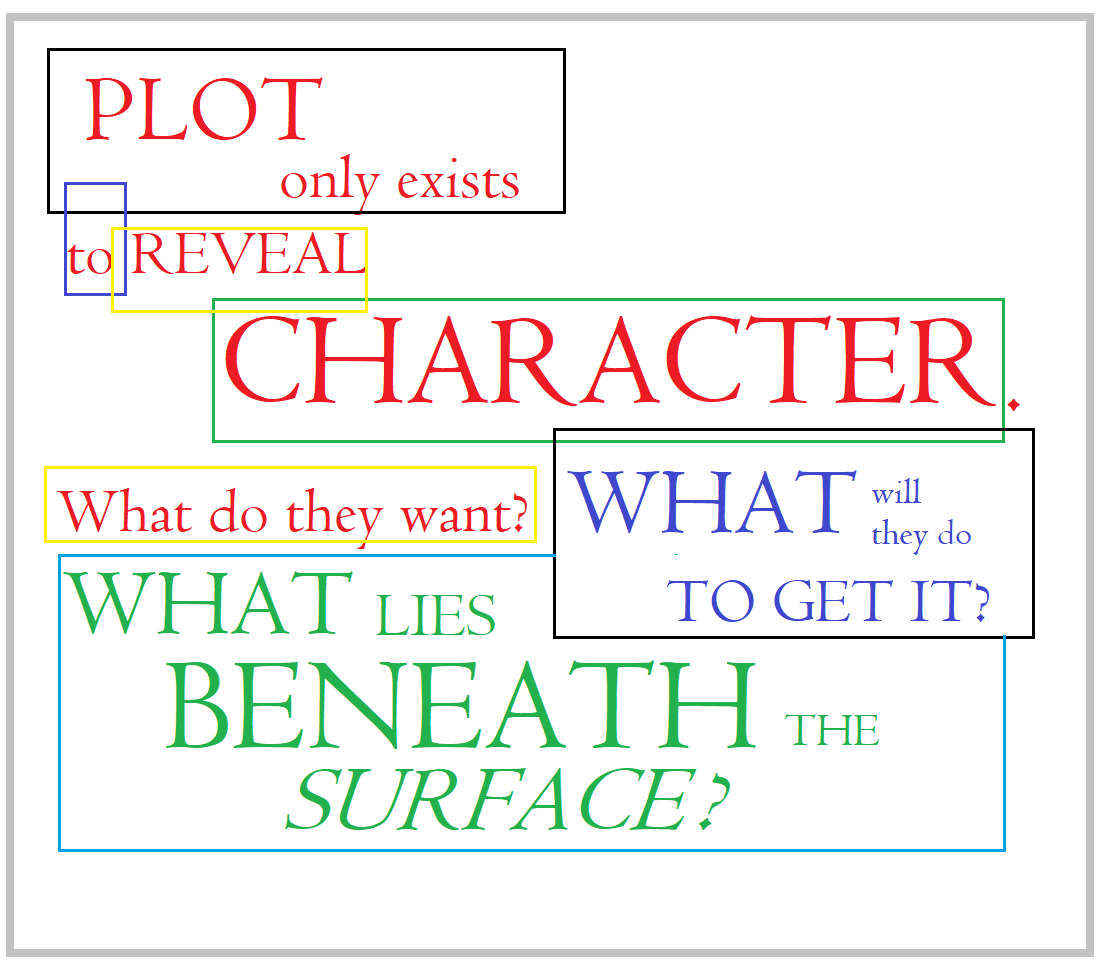
New authors spend a lot of time plotting the events of a novel, but sometimes neglect to flesh out their characters. Attention must be given to character development. The characters are the story, and the circumstances of the piece exist only to force growth upon them.

The character arcFirst, we want to get to know who we’re writing about.

Who are these people, and why should I care about them? I have a fairly good idea of how my characters look. However, that image can drift as the first draft evolves, and brown eyes are suddenly green (yes, this did happen in one of my current works in progress).

But don’t get too detailed. Readers have their own image of beauty, so don’t force your idea of loveliness on them. General description and the reactions of other characters should convey how they look.

Once I know the basic plot, I make a page in my workbook with a bio of each character, a personnel file. Sometimes I include images of RPG characters or actors who most physically resemble them and who could play them well.

Professor Reina Jacobs

  • Physical description: 5’8′, perceived-time age 55, real-time age 168. Works out daily. Has brown eyes, iron-gray hair worn in a short cut, not military short, but for ease of keeping it neat. Is a cyborg—left leg is a grafted prosthesis.
  • Personality: Competitive, highly organized, ambitious, impatient, highly focused.
  • Occupation:  Colonel, Retired. Experienced 33 years as a Warbird Pilot in the Mirandan Space Corps. Forced into early retirement from the Corps due to prosthetic leg. Leading researcher in the field of biosomes – breeding and adapting plants able to thrive in alien environments. Not too keen on promoting plants that require radical adaptations, but a strong proponent of plants that can easily adapt without destroying the ecosystem. 
  • Hobbies:  hopping up an anti-grav speedster in her garage. Loves flying low and too fast over dangerous ground.

Colonel Brandon Ladeaux, Ret.:

  • Physical Description: Dark hair turning gray, brown eyes, 6’2, works out daily. Lean and muscular. Perceived-time age 57, real-time age 198.
  • Personality: competitive, organized, slightly laid-back approach to life.
  • Occupation: Shuttle pilot. Experienced 40 years as a Warbird Pilot in the Mirandan Space Corps.
  • Hobbies: cooking, hanging around watching Reina work on her speedster. Also enjoys flying low and too fast over dangerous ground.

The personnel file is laid out this way:

Column A: Character Names. I list the important characters by name and the point where they enter the story.

Column B: About: What their role is, a note about that person or place, a brief description of who and what they are.

Column C: The Problem: What is the core conflict?

Column D: What do they want? What does each character desire?

Column E: What will they do to get it? How far will they go to achieve their desire?

storyboard_LIRF_10_31_17Names say a lot about characters. If you give a character a name that begins with a hard consonant, the reader will subconsciously see them as stronger than one whose name begins with a soft sound. It’s a little thing but is something to consider when trying to convey personalities.

Also, I’ve said this before, but with the growing popularity of audiobooks, my suggestion is to write names that are easy to pronounce. I learned that lesson when I was having a novella of three short stories, Tales from the Dreamtime, made into an audiobook. My reader was brilliant, and worked with my difficult fantasy names, but since that experience, I only write names my readers can easily pronounce.

A great story evolves when the antagonist and protagonist are powerful but not omnipotent. Both the antagonist and protagonist must have character arcs that show personal growth or inability to grow. For the antagonist to be realistic, this must be clearly shown, so they also get a personnel file.

When you begin writing the first chapters, the characters aren’t fully formed. They will evolve as a result of the experiences you write for them. Note these changes in your personnel file so that descriptions remain consistent.

I like stories featuring characters who are human. They make mistakes, cause themselves more trouble because they are untried and don’t know what they are doing.

The evolution of each character’s personal arc should parallel the events that form the story arc.

How do they handle setbacks? How do they handle success? How do they see their future when we meet them on page one? Has their view of the future changed by the time we arrive at the final page?

The characters must be changed by the events they experience. How you show their emotional state is critical because emotions engage readers. If you want your readers to feel the crisis, your characters must feel it and show their reactions to the reader.

emotion-thesaurus-et-alIf you need ideas for showing a variety of emotions, I highly recommend the Writers Helping Writers Series of textbooks written by Angela Ackerman and Becca Puglisi.

But do us all a favor—show it briefly and move on. Don’t swamp us with detailed shoulder sagging, lips turning down, and face dropping all in one sentence.

We must contrast the relative security of the characters’ lives as they were in the opening paragraphs with the hazards of where they are now. Each person experiences uncertainty, fear, anger, and sense of loss differently. Those differences make them unique characters.

In a good story, bad things have happened, and the protagonists have to get creative and work hard to acquire or accomplish their desired goals.

How they overcome their doubts and make themselves stronger is what makes each character interesting. That internal and emotional journey is the real story.

The events, mighty as they may be, are only the catalysts of personal growth. Next in this series, Character development: Motivations.


14 Comments

Filed under writing

Worldbuilding part 4: Designing the Parameters of Science and Magic #amwriting

Personal power and how we confer it is the layer of worldbuilding where writers of science and writers of magic come together.

  • WritingCraftWorldbuildingScienceVSMagicMagic and the ability to wield it confers power. Magical creatures, elves, mythical races, mythological gods and demigods – these are some of the many natural and supernatural components of fantasy.
  • Science and superior technology also confer power. Science fiction embraces current physics and theoretically possible technology, taking them into the near or distant future.

Speculative fiction is comprised of two overarching genres: science fiction and fantasy. The choice to make the technology of science or the technology of magic the primary source of power in your story determines which side of the coin lands up. The way you choose to go determines the sub-genre.

A novel set firmly in the technology of the past with no magic is not mainstream sci-fi. If it falls in late Victorian or early Edwardian times and uses the technology available in that era in advanced ways, it could be a branch of sci-fi called Steampunk.

If it takes place in an earlier era and contains magic, magical creatures, or advanced technology, it is an Alternate World fantasy (magic) or sci-fi (tech). If it has no magic or advanced technology, it could be a different genre altogether: historical fiction.

Science fiction has strict parameters established by its readers. The wise author will pay attention to those limits if they want their work to resonate with that audience.

I have said this before, but I feel the need to repeat it. Science is not magic, and it should not feel to a reader as if it were. It is logical, rooted in the realm of both factual and theoretical physics.

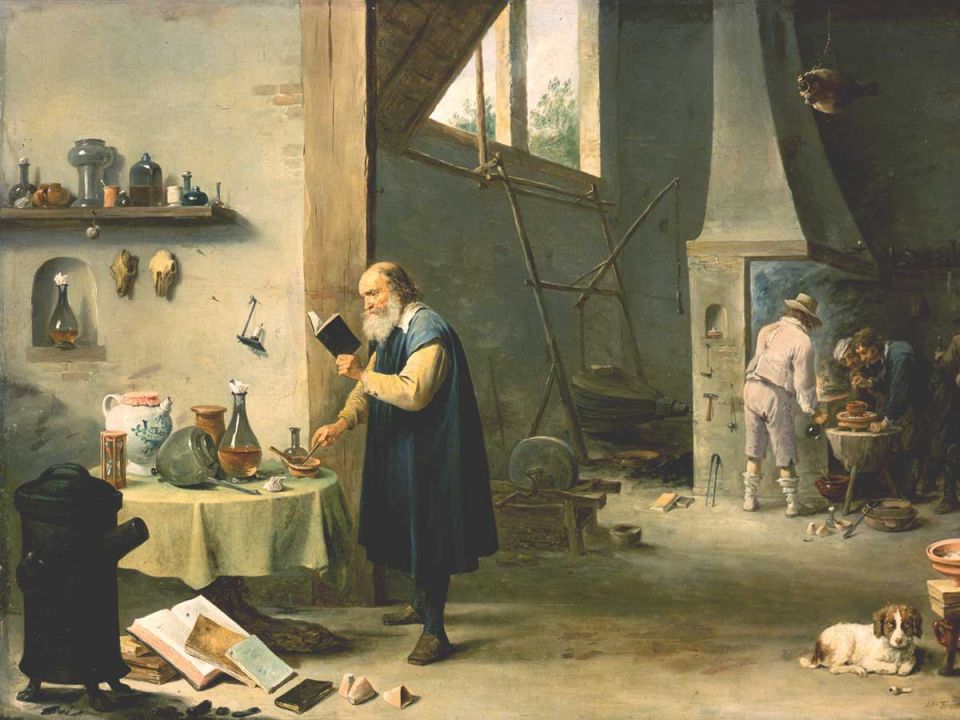
David_Teniers_the_Younger_-_The_AlchemistAuthors of sci-fi must do the research and understand the scientific method. This path of testing and evaluation objectively explains nature and the world around us in a reproducible way. The physics of our current technology, everything from toasters and cellphones to microwave ovens and spaceships has been created using scientific discoveries by people who understand the scientific method.  
Skepticism and peer review are fundamental parts of the process.

An important thing for authors to understand is who their readers are. Those who read and write hard science fiction are often employed in various fields of science, technology, or education in some capacity.

They know the difference between physics and fantasy.

The same goes for those who read fantasy: they are often employed in fields that require critical thinking.

Often, readers of both genres are avid gamers. Gamers learn to develop skillsets within strict parameters to advance in the game. Thus, logic and limitations define how much enjoyment they get from a gaming or reading experience.

I read a great many books in all genres. If I have one complaint, it is that many authors indulge in mushy science or magic. They make it up as they go, which is what we all do, but they don’t bother to cover their tracks.

When they get to the editing stage, they don’t go back and look for the contradictions in their magic or science, the places where a reader can no longer suspend their disbelief.

Magic is also a science and should be held to the same standard as physics. Having magic conveys power in the same way that having superior technology does.

If magic is a tool that your characters rely on, it must be believable. I write fantasy, so the science of magic is an underlying, invisible layer that is part of my worldbuilding process.

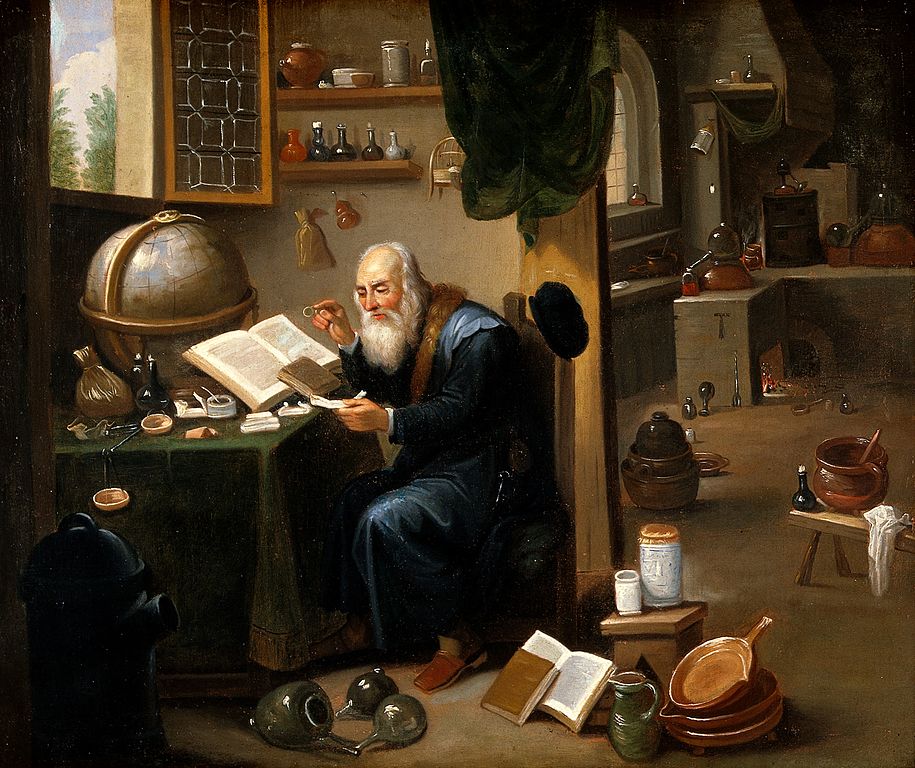
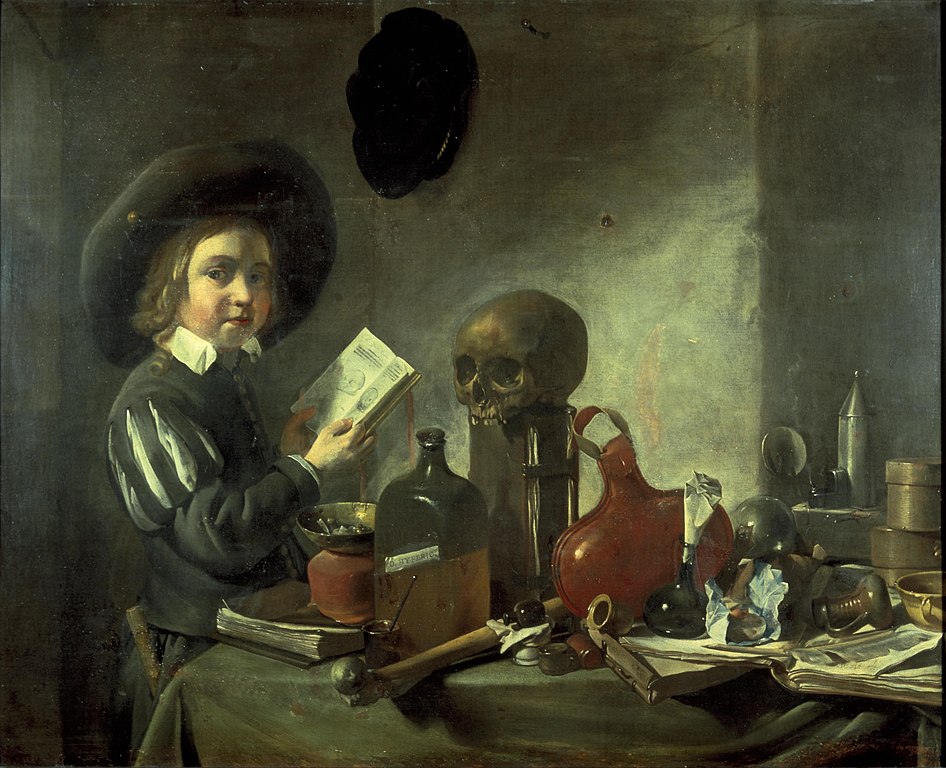
915px-An_alchemist_in_his_laboratory._Oil_painting_by_a_follower_o_Wellcome_V0017631The following is my list of places where the rules of believable magic and technology converge in genre fiction:
  1. The number of people who can use either magic or technology should be limited.
  2. The ways that characters can use magic or technology should be limited.
  3. Characters with those abilities or equipment should be limited to one or two kinds of magic/technology. Only specific mages/technicians can make use of all forms of magic/technology.
  4. There must be strict, inviolable rules regarding what each kind of magic/technology can do.
  5. The author must clearly define the conditions under which this magic/technology will work.
  6. There must be some conditions under which the magic/technology will not work.
  7. There must be limits to the damage magic/technology can do as a weapon or the healing it can perform.
  8. The wielder of this magic/technology might pay a physical/emotional price for using it.
  9. The wielder of this magic/technology should pay a physical/emotional price for abusing it.
  10. The learning curve for magic should be steep and sometimes lethal.

For the narrative to have a realistic conflict, the enemy must have access to equal or better science/magic.

Often in the case of magic, the protagonist and their enemy are not from the same “school.” When this is the case, the author has two systems and sets of rules to design for that story.

The same goes for technology. One group may have found a way to exploit physics that places the other group at a disadvantage. This disparity is where the tension comes into the story.

We authors must create the rules of magic or the limits of science for both the protagonist and antagonist. We must do it in the first stages of the writing process. If you have been creating your stylesheet, take the time to include a page defining the laws of physics/magic that pertain to your universe.

It will only require fifteen minutes to half an hour to brainstorm and create a system that satisfies the above ten requirements. This way, you will be sure the logic of your magic/technology has no hidden flaws.

When you take the time to research science technologies or create magic systems, you create a hidden framework that will support and advance your plot. Limits force us to be creative, to find alternative ways to resolve problems.

There can be an occasional exception to a rule within either science or magic, but it must be clear to the reader why that exception is acceptable.

There must be an obvious, rational explanation for that exception.

An_Alchemist_attributed_to_Joost_van_Atteveld_Centraal_Museum_20801Science or magic is only an underpinning of the plot. They are foundational components of the backstory. 
The only time the reader needs to know these systems exist is at the moment it affects the characters and their actions. When Gandalf casts a spell, or Sulu fires his phaser, the reader knows the characters have these abilities/technologies.

The best background information comes out only when that knowledge affects the story. It emerges naturally in actions, conversations, or as visual components of the setting.

By not baldly dropping the history or science/magic on the reader in paragraph form, the knowledge becomes a normal part of the environment rather than an info dump.


The previous posts in this series can be found here:

Designing the Story (includes creating a stylesheet)

Worldbuilding Part1: Climate

Worldbuilding Part 2: Maps, Place-names, and Consistency

Worldbuilding Part 3: Designing the Parameters of Science and Magic

This Post: Worldbuilding Part 4: Creating the Visual World


Credits and Attributions:

Wikimedia Commons contributors, “File:David Teniers the Younger – The Alchemist.jpg,” Wikimedia Commons, the free media repository, https://commons.wikimedia.org/w/index.php?title=File:David_Teniers_the_Younger_-_The_Alchemist.jpg&oldid=528972179 (accessed July 18, 2021).

Wikimedia Commons contributors, “File:An Alchemist attributed to Joost van Atteveld Centraal Museum 20801.jpg,” Wikimedia Commons, the free media repository, https://commons.wikimedia.org/w/index.php?title=File:An_Alchemist_attributed_to_Joost_van_Atteveld_Centraal_Museum_20801.jpg&oldid=531124885 (accessed July 18, 2021).

Wikimedia Commons contributors, “File:An alchemist in his laboratory. Oil painting by a follower o Wellcome V0017631.jpg,” Wikimedia Commons, the free media repository, https://commons.wikimedia.org/w/index.php?title=File:An_alchemist_in_his_laboratory._Oil_painting_by_a_follower_o_Wellcome_V0017631.jpg&oldid=303482875 (accessed July 18, 2021).

5 Comments

Filed under writing

Worldbuilding part two: maps, place names, and consistency #amwriting

My first novels were complete messes to edit. I didn’t have a clue about how to structure a plot and what to avoid. Surviving those editing experiences taught me many ways to smooth the path to a finished novel.

When a manuscript is first accepted, editors at all the large publishing houses begin creating a list of names, places, and created words. This document also contains a glossary and other information that pertains only to that manuscript. My editor refers to this as a stylesheet. Other editors refer to this as a “bible.”

WritingCraft_mapsSome people use a program called Scrivener, which is not too expensive, but which I found quite frustrating. Nevertheless, I understand that it works well for many people, so it may be an investment to consider.
For myself, I don’t need a fancy word-processing program. I use Microsoft Office 360 because I have used Microsoft software since 1993, and I’ve adapted to each upgrade they have made. I use Word for writing and editing and Excel to make stylesheets for each novel or tale I write. I make stylesheets for every book I edit.

If you prefer, you can use a pencil and paper and keep these lists in a ring binder. Or you can use Google Docs/Sheets or OpenOffice, both of which are free.

The stylesheet can take several forms, but it is a visual guide to print out or keep minimized until it’s needed. I copy and paste every invented word or name onto my list, doing this the first time they appear in the manuscript. If I am conscientious about this, I’ll be less likely to contradict myself later inadvertently.

Regardless of how you create your stylesheet, I suggest you include these elements:

  1. Names and invented words, all spelled the way you want them.
  2. The page or chapter where the word first appears.
  3. The meaning of each invented word.
  4. Maps, something rudimentary to show the layout of the world.
  5. Calendar.

This list is especially crucial for fantasy authors because we invent entire worlds, religions, and magic systems.

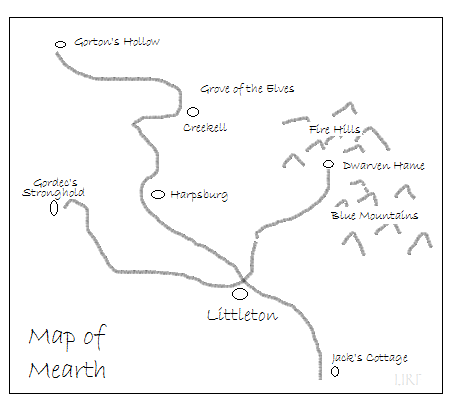
sample-of-rough-sketched-mapMaps are essential tools when you are building the world. Your map doesn’t have to be fancy. You need to know north, south, east, west, where rivers and forests are relative to towns, and locations of mountains.
You also need some idea of distances and how long it takes to travel using the common mode of transportation.

All you need is a pencil-drawn map, lines and scribbles telling you all the essential things. Use a pencil, so you can easily update it if something changes during revisions.

If you aren’t artistic and want a nice map later, this little map will enable them to provide you with a beautiful and accurate product. You will have a map that contains the information needed for readers to enjoy your book.

I also keep a calendar of events for each novel, and believe me, that calendar has saved me several times.

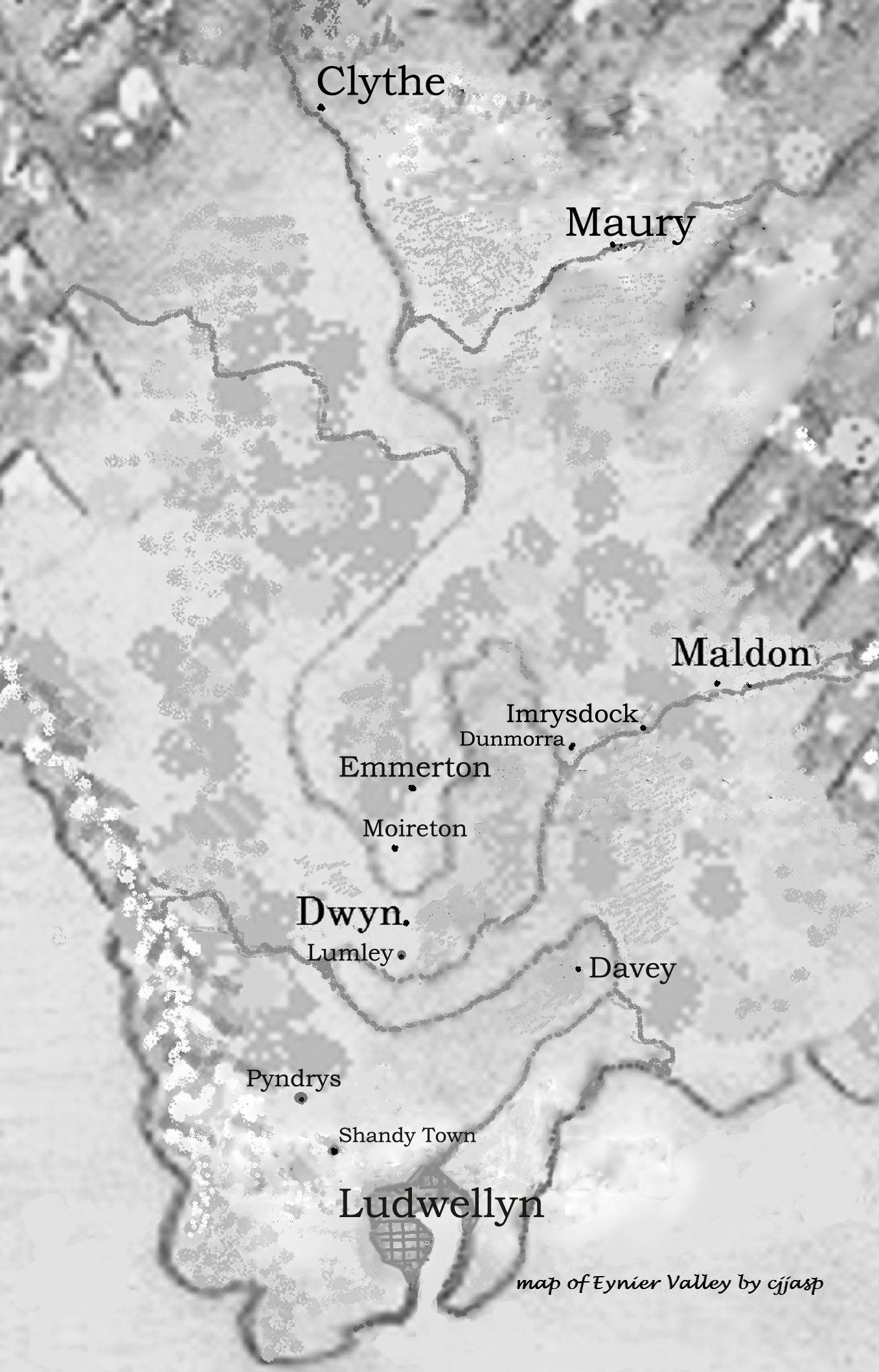
Map of Eynier Valley for HTB copy copy

Places written on a map tend to be ‘engraved in stone,’ so to speak. Readers will wonder where the town of Maldon is when the only village on the map at the front of the book that comes close to that name is listed as Malton.

To prevent that from happening, double-check what you have written on the map, and then do a global search for every possible variant of that name in your manuscript.

Just because you invented the world doesn’t mean you know it like the back of your hand.

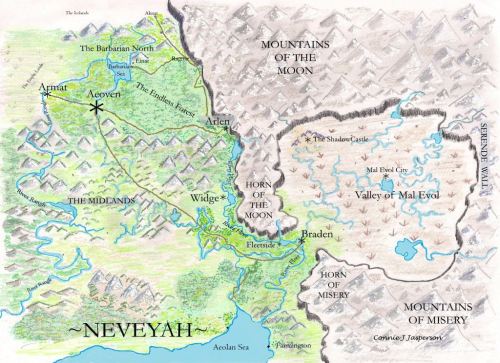
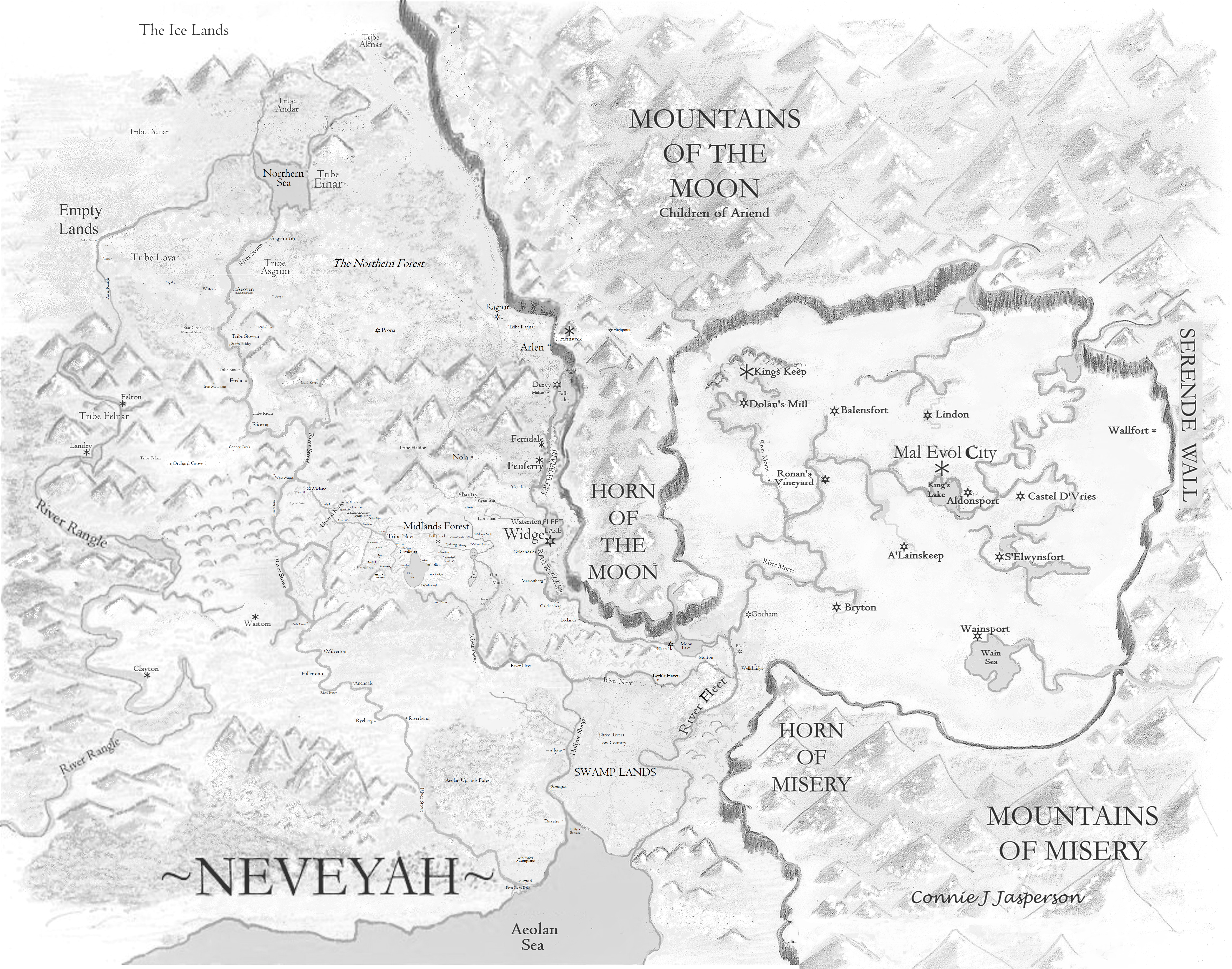
That world is constantly evolving in your mind. I have been writing in the world of Neveyah since 2009, and I still contradict myself, which is why the stylesheet is so important.

Every story I write that is set in that world must have the right sights, sounds, and smells. When it comes to worldbuilding, the stylesheet is crucial.

What is the name of the world in which the story opens? The file name you give this document should contain it. My oldest stylesheet is labeled Neveyah_stylesheet.xls and has been evolving with each book in that series.

What did you name the town/village where the protagonists are living? Place names can give the reader an idea of the kind of world your town or village is set in.

I live in an area where the indigenous people were pushed aside and their land taken over and settled by a mixture of Scots, Irish, Germans, and Scandinavians. Our place names reflect all those cultures.

Forty miles west of my house is a coastal city named Aberdeen, and next to it is a city named Hoquiam, a city whose name has its origin in Native Culture.

This is how the countries of Canada and the US are from coast to coast; signs of European ancestry mingled with traditional names reflecting the tribes who were there first.

Are there forests? Mountains? Rivers? My part of the world has large tracts of forests, many wide rivers, and is mountainous, with numerous volcanos.

Each of these areas will affect how your communities live, what resources they have for building, and how long it takes to go from one place to another.

You can’t travel in a straight line over mountains or forests. Sometimes you must travel parallel to a river for a long way until you come to a place shallow enough to cross.

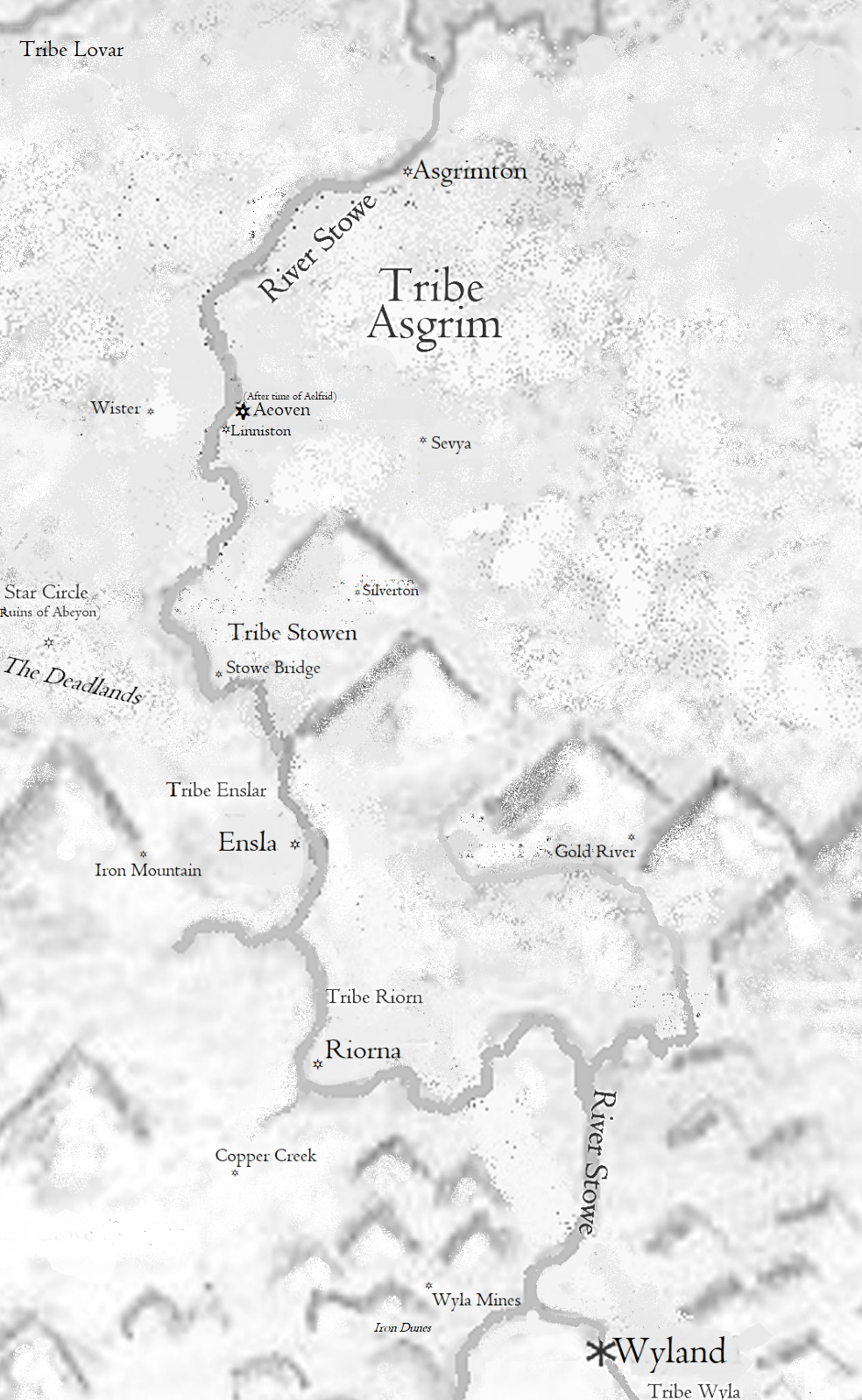
Stowe_River_Basin_Midwest_Neveyah_2020And we’ll just toss this out there – while you can drop a tall tree across a narrow creek, building bridges over rivers requires a certain amount of engineering. Cultures from the Stone Age on to modern times have had the skills needed to make bridges.
Archeology and history both tell us that humans, as a species, are tribal by nature. We band together for protection, shelter, better access to resources, and companionship.

We are creative, and archaeology shows us that our ancestors were capable of far more than we have traditionally believed.

Humans have always created communities where resources are plentiful, but climate changes.

History and geology tell us that what was once a good place may become a desert over time. Your maps should take all the terrain your characters must deal with into consideration.

We based our societies on our oral histories and family connections. How our ancestors lived in their chosen area and what their traditions became were shaped by the climate and the lay of the land. The resources available to them were the reasons they stayed and built communities.

Those aspects of worldbuilding will form the backdrop of your story. If you make a stylesheet, your invented world will be consistent and contain all the elements that make it feel solid to a reader.

Neveya_Map_Nov_2020


Credits and Attributions:

Map of Mearth, © 2015 Connie J. Jasperson, All Rights Reserved.  

Map of the Eynier Valley for Huw the Bard, © 2015 Connie J. Jasperson, All Rights Reserved.

Map of the Stowe River Basin, World of Neveyah, © 2021 Connie J. Jasperson, All Rights Reserved.

Map of Neveyah, World of Neveyah, © 2021 Connie J. Jasperson, All Rights Reserved.

12 Comments

Filed under writing

World-building part one: climate #amwriting

Hello from a small town near beautiful Olympia, Washington. June was a strange month, climate-wise. We usually have the same climate as those of you in Wales or England.

MyWritingLife2021BOn June 27th, within the space of days, we went from temperatures well below average, low to mid-60s, and pouring rain to suffering from temperatures well above 100 degrees—108 at my house, 111 at my sister’s house 10 miles away. We use Fahrenheit in the US, but for you in the UK and Europe, we topped out at around 44 degrees Celsius. For more on the week from H**l, see this article in the Seattle Times.
Now we’re back to temperatures that are slightly above normal, getting up to the mid to upper 80s, and we feel like that’s a cool breeze.

Air conditioning isn’t as commonly built into homes here as in other parts of the US. Those of us who have the occasional A/C window unit are the lucky ones. This is because, until recent years, summers here never really began until July 5th or so, with low clouds and drizzle for much of June, and they never became unbearably warm.

When the sun did arrive, temperatures, for most of the time we have kept records, ran into the high 70s or rarely, low to mid-80s. We are said to have a generally mild climate, and while that is changing, we hope it will remain mostly temperate.

When the heatwave hit, our free-standing A/C unit saved us, but when the outside temperature reached 108, the temperature in our back hallway was still 89 degrees.

Until this year, that seemed uncomfortably warm.

Now we’re grateful for a day that doesn’t end with us prostrate.

So, let’s look at the weather as a factor in world-building.

What follows is a plan to help you lay the groundwork for the world in which your novel is set. First, what sort of world is your life set in? When you look out the window, what do you see?

I always think that if an author can inject enough reality into a fantasy or sci-fi setting, the world will feel solid when I read it.

The weather can be shown in small, subtle ways. Usually, authors use the weather as background to give a sense of place to our characters’ interactions and the events they precipitate.

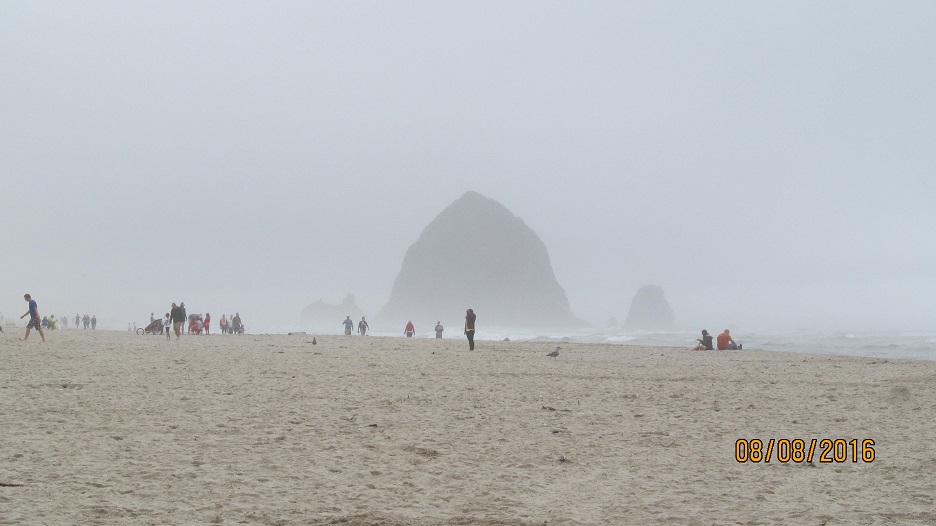
The path was slippery and required scaling the cliff in some places. By the time they arrived at the clifftop, the sky had begun to clear, and the low fog was dissipating. Patches of blue peeked from behind the gray clouds, and the wind had picked up.

Haystack_Rock_in_the_fog_©2016_Connie_J_Jasperson_LIRF07112021

Haystack Rock in the Fog

Other times, weather becomes the star of the story. Tornados, hurricanes, bizarre heatwaves—these weather events can be the villain our heroes must overcome.

Once you have decided your overall climate, do some research on how the weather affects agriculture and animal husbandry.

The best way to make the fantasy world real is to visualize the scene clearly and place yourself there. Blend what you know about the natural world into it. Write out all the details that will never make it into your story, things you as the author must have set in your mind.

Now we get to the tactile parts of the setting:

How does the weather make the characters feel? Is it too warm, too wet, or is it pleasant? If your novel’s setting is a low-tech civilization, the weather will have a different kind of effect on your characters than one set in a modern society.

Parker observed the beach from his balcony. Far down at the north end of the cove, Leo and Claire walked beside the surf, with Leo’s gestures emphasizing his words. Claire was hunched against the sharp breeze in her hooded sweatshirt and agitated. It was clear her agent had told her something she didn’t want to hear.

In any era, the weather affects the speed with which your characters can travel great distances and how they dress. Bad weather always has a detrimental effect on transportation, a serious point to consider.

For example, when the heatwave was just beginning, when it was still only building, we made a trip 80 miles north to visit two of our daughters. We stayed the night in Snohomish, then stopped in Bothell to have lunch with our second oldest son. We left our last stop in Bellevue at 3 pm to head home.

sample-of-rough-sketched-mapThe journey from our youngest daughter’s house to our home 60 miles south of there took 3 ½ hours, a trip that should take an hour. Unfortunately, traffic had ground to a halt in many places. At times, we would speed along at 5 miles an hour, sometimes as fast as ten. Many drivers couldn’t handle the 94-degree heat of that day, and their short tempers combined with several stalled vehicles made for a miserable journey down I5.

But enough about the wretched climate and the effects of global warming on my life. Our next post will talk about location, and why I make simple maps for every fantasy world in which my work is set.


Credits and Attributions:

Haystack Rock in the Fog, © 2016-2021 Connie J. Jasperson, All Rights Reserved.

Map of Mearth, © 2015-2021 Connie J. Jasperson, All Rights Reserved.


9 Comments

Filed under writing

Fundamentals of Grammar: seven basic rules of punctuation #amwriting

Mark Twain famously said, “If it’s your job to eat a frog, it’s best to do it first thing in the morning. And if it’s your job to eat two frogs, it’s best to eat the biggest one first.”

MarkTwainEatAFrogQuotLIRF04042021Many authors  are just beginning their careers and trying to self-edit their NaNoWriMo manuscript. The problem is, they don’t know how to write a readable sentence or what constitutes a paragraph. If they are hoping to find an agent or self-publish, they have a big, ugly job ahead of them.
Most public schools in the US don’t go into depth in teaching creative writing, so the majority of students leave school with only a cursory understanding of basic mechanics.

We know good writing when we read it, but when we are just starting out, getting our thoughts onto paper so others enjoy it eludes us.

Learning to write in your native language involves work and means you must educate yourself. As Twain would say, this is a multi-frog task.

The biggest frog to swallow is gaining an understanding of basic punctuation.

Punctuation is the traffic signal that keeps the words flowing and the intersection manageable.

Trying to learn from a grammar manual can be complicated, but I learned by reading the Chicago Manual of Style, which is the rule book for American English. Most editors refer to this book when they have questions.

However, you don’t need to know everything that is in that book, because the basic rules are simple. If you know these seven laws, your writing will pass most editors’ tests.

What follows is a quick guide, a “How-To Guide for Basic Punctuation.”

Punctuation seems difficult because some advanced usages are open to interpretation. In those cases, how you habitually use them is your voice. Nevertheless, the foundational laws of comma use are not open to interpretation.

If you consistently follow these rules, your work will look professional.

First:  Let’s get two newbie mistakes out of the way:

  1. Never insert commas “where you take a breath” because everyone breathes differently.

  2. Do not insert commas where you think it should pause because every reader sees the pauses differently.

Commas and the fundamental rules for their use exist for a reason. If we want the reading public to understand our work, we need to follow them.

Second: Commas join two independent but related clauses.

The independent clause is a complete standalone sentence.

  • Edward worships the ground I walk on, but his adoration tires me.

Dependent clauses are unfinished and can’t stand on their own. Join them to the sentence with a conjunction.

  • Edward worships the ground I walk on and brings me my coffee. (And is a conjunction, a joining word.)

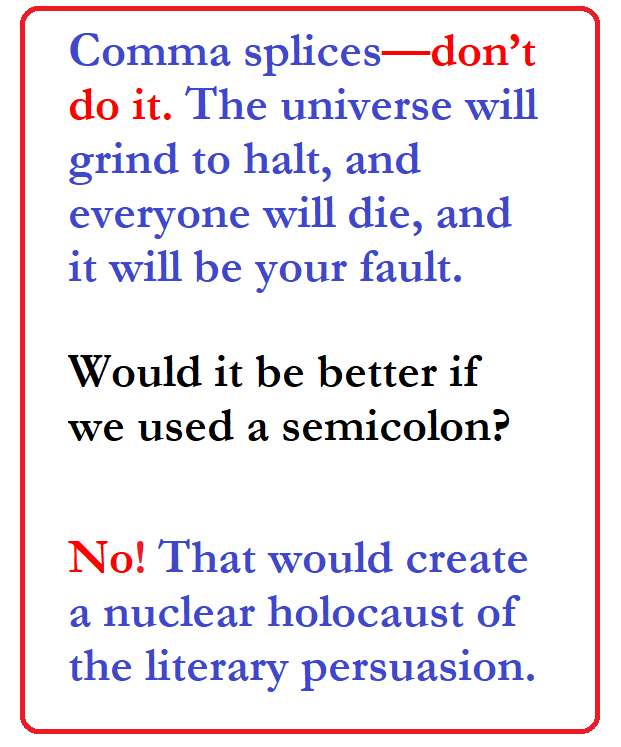
You do not join unrelated independent clauses (clauses that can stand alone as separate sentences) with commas as that creates a rift in the space/time continuum: the Dreaded Comma Splice:

comma-spliceComma Splice:

Boris kissed the hem of my garment, the dog likes to ride shotgun.

The dog has little to do with Boris, other than the fact they both worship me. The same thought, written correctly:

Boris kissed the hem of my garment.

The dog likes to ride shotgun.

The dog riding shotgun is an independent clause and does not relate at all to Boris and his adoration of me and should be in a separate paragraph. If you want Boris and the dog in the same sentence, you must rewrite it: Boris and the dog worship me, and both like to ride shotgun.

Third: A semicolon in an untrained hand is a needle to the eye of the reader. Use them only when two standalone sentences or clauses are short and relate directly to each other.

Some people (and Microsoft Word) think they signify an extra-long pause but not a hard ending. The Chicago Manual of Style says that belief is wrong. DON’T blindly accept what Spellcheck tells you!

Semicolons join short independent clauses, which can stand alone but which relate to each other. These are short sentences that would be too choppy if left separate.

  • The door swung open at a touch. Light spilled into the room.
  • The door swung open at a touch; light spilled into the room.
  • The door swung open at a touch, and light spilled into the room.

All three of the above sentences are technically correct. The usage you habitually choose is your voice. I usually suggest avoiding semicolons except under those circumstances, as they’re the gateway to run-on sentences.

When do we use semicolons? Only when two clauses are short and are complete sentences that relate to each other.

If the independent clauses don’t relate to each other, revise that passage. Use common sense and rewrite them, so they aren’t choppy. An example of a semicolon done wrong:

Boris attempted to kiss the hem of my garment; my boot was in his face.

The first clause is one whole idea: Boris adores me. The second clause is an entirely different idea: my boot was someplace inconvenient.

Two separate standalone clauses done right, assuming the mention of my boot is essential:

Boris attempted to kiss the hem of my garment, but my boot was in his face.

I don’t dislike semicolons as some editors do, but I generally try to find alternatives to them. I think they are too easily abused because Microsoft Word and most people don’t know how to use them.

Fourth: Colons. These head lists but are more appropriate for technical writing and are rarely needed in narrative prose.

Fifth:  Oxford commas, also known as serial commas. This is the one war authors will never win or find common ground, a true civil war. When listing a string of things in a narrative, we separate them with commas to prevent confusion. I like people to understand what I mean, so I always use the Oxford Comma/Serial Comma.

If there are only two things (or ideas) in a list, they do not need to be separated by a comma. If there are more than two ideas, the comma should be used as it would be used in a list.

We sell dogs, cats, rabbits, and birds.

Why we need clarity:

I accept this Nebula award and thank my parents Ralf and Maggie Jasperson and Poseidon.

Rumors abound regarding my demigoddess-like beauty and possibly heroic background. Could Poseidon be my father? Mother refused to talk about it, so the mystery remains unsolved. However, a comma after Jasperson would eliminate confusion.

virtually golden medallion of mayhem copyI accept this Nebula award and thank my parents, Ralf and Maggie Jasperson, and Poseidon.

Sixth: We use a comma after common introductory clauses.

After dark, Boris would change into his bat form and go hunting for insects.

Seventh: Punctuating dialogue: All punctuation goes inside the quote marks.

  1. A comma follows the spoken words, separating the dialogue from the speech tag.
  2. The clause containing the dialogue is enclosed, punctuation and all, within quotes.
  3. The speech tag is the second half of the sentence, and a period ends the entire sentence.

“I agree with those statements,” said the editor.

The editor said, “I agree with those statements.”

What do these seven rules mean? Punctuation tames the chaos that our words can become. It is the universally acknowledged traffic signal, signifying a pause or a joining to the reader.

If you follow these seven simple rules, your work will be readable. If your story is stellar, it will be acceptable to acquisitions editors.

10 Comments

Filed under writing

Successful Self-Editing #amwriting

Books are machines, comprised of many essential components. If one of those elements fail, the book won’t work the way the author envisions it. So, what are these parts?

no_graceful_way_outLIRF02212021Prose, plot, transitions, pacing, theme, characterization, dialogue, and mechanics (grammar/punctuation).

As an editor, I’ve seen every kind of mistake you can imagine and written many travesties myself. This tendency to not see the flaws in our own work is why I have an editor. I need someone with a critical eye to see my work before publication.

I am in the process of revising my Accidental Novel, prepping it to send to my editor. I have a three-part method, using specific tools that come with my word-processing program.

Phase one: the initial read-through. This stage is put into action once I have completed the revisions suggested by my beta readers. At this point, the manuscript looks finished, but it has only just begun the journey.

I use Microsoft Word. On the Review Tab, I access the Read Aloud function and begin reading along with the mechanical voice. Yes, it’s annoying and doesn’t always pronounce things right, but this first tool shows me a wide variety of places that need rewriting.

ReviewTabLIRF07032021I use this function rather than reading it aloud myself, as I tend to see and read aloud what I think should be there rather than what is.

  1. I habitually key the word though when I mean through. These are two widely different words but are only one letter apart. Most miss-keyed words will leap out when you hear them read aloud.
  2. Run-on sentences stand out when you hear them read aloud.
  3. Inadvertent repetitions also stand out.
  4. Hokey phrasing doesn’t sound as good as you thought it was.
  5. You hear where you have dropped words because you were keying so fast you skipped over including an article, like “the” or “a” before a noun.

This is a long process that involves a lot of stopping and starting, taking me a week to get through the entire 90,000-word manuscript. By the end of phase one, I will have trimmed about 3,000 words.

Phase Two: The Manual Edit

The_Pyramid_Conflict_Tension_PacingThis phase is where I find my punctuation errors most often. I look for and correct punctuation and make notes for any other improvements that must be made. Usually, I cut entire sections, as they are riffs on ideas that have been presented before. Sometimes they are outright repetitions, which don’t leap out when viewed on the computer screen.

  1. Open your manuscript. Break it into separate chapters, and make sure each is clearly and consistently labeled. Make certain the chapter numbers are in the proper sequence and that they don’t skip a number. For a work in progress, Baron’s Hollow, I labeled my chapter files this way:
  • BH_ch_1
  • BH_ch_2
  1. Print out the first chapter. Everything looks different printed out, and you will see many things you don’t notice on the computer screen or hear when the voice reads it aloud.
  2. Turn to the last page. Cover the page with another sheet of paper, leaving only the last paragraph visible.
  3. Starting with the last paragraph on the last page, begin reading, working your way forward.
  4. With a yellow highlighter, mark each place that needs correction.
  5. Put the corrected chapter on a recipe stand next to your computer. Open your document and begin making revisions as noted on your hard copy.

This is the phase where I look for what I think of as code words. I look at words like “went.” In my personal writing habits, “went” is a code word that tells me when a scene ends and transitions to another stage. The characters or their circumstances are undergoing a change. One scene is ending, and another is beginning.

In fact, all info dumps, passive phrasing, and timid words are codes for the author, laid down in the first draft.

Clunky phrasing and info dumps are signals telling me what I intend that scene to be. In the rewrite, I must expand on those ideas and ensure the prose is active. I must cut some of the info and allow the reader to use their imagination.

I look for all of the eight forms of the verb “be” and change that passive phrasing to make it active if possible. The forms of “be” are subjunctives and are tricky words. They’re necessary in some cases, but not always and can become crutches.

Be_Eight_Forms_LIRF05122019Passive phrasing does the job with little effort on the part of the author, which is why the first drafts of my work are littered with it. Active phrasing takes more effort because it involves visualizing a scene and showing it to the reader.

For example, when I see the word “went,” I immediately know someone goes somewhere. But “went” is a telling word and is passive phrasing. I ask myself, “How do they go?” Went can always be shown as a scene. Loretta opened the door, gave Burt the finger, and strode out.

By the end of phase two, I will have trimmed about 3,000 more words from my manuscript.

Phase three is the step that only works if you have an understanding of grammar and industry practices. Currently, at this stage in our technology, understanding context is solely a human function.

You may have found that your word processing program has spellcheck and some minor editing assists. Spellcheck is notorious for both helping and hindering you.

Tools like spellcheck don’t understand context, so if a word is misused but spelled correctly, it probably won’t alert you to an obvious error.

  • There, their, they’re.
  • To, too, two.
  • Its, it’s.

In the third phase of prepping my work to send to my editor, I go over each chapter one more time, this time using Grammarly. I have also used ProWriting Aid. Each one has strengths and weaknesses.

Context is critical. I am wary of relying on Grammarly or ProWriting Aid for anything other than alerting you to possible comma and spelling malfunctions.

If you don’t know anything about punctuation, don’t feel alone. Most of us don’t when we’re first starting out, and if this is your case, your best bet is to avoid these programs.

chicago guide to grammarUse that money to invest in a book like the Chicago Guide to Grammar, Usage, and Punctuation and learn how grammar works.

Good editing software is not cheap. But for my specific needs, it has been a worthwhile investment. If you do choose to invest in some, use common sense when reviewing the program’s suggestions.

This three-part process can take more than a month. When I’ve finished, I’ll have a manuscript to send my editor that won’t be full of distractions. She’ll be able to focus on finding as much of what I have missed as is humanly possible.

Hopefully, between the two of us, I’ll have a decent book to publish early in 2022.


10 Comments

Filed under writing