Tag Archives: #writetip

The Mushy Midpoint #amwriting

I am not good at winging it when plotting a novel. I might begin with nothing but a few characters and a loose idea for a plot, but somewhere toward the middle, I will lose momentum.

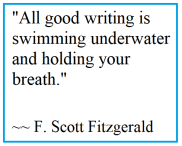
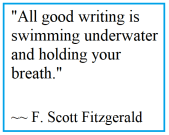
F Scott Fitzgerald on Good Writing LIRF07252022I will have to spend a day or two thinking about the story as a whole and writing an outline as a framework to guide the story. The plot points I originally planned to occur at each of the four quarters of the story will be met, but how?
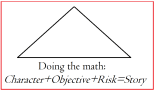
In my head, I know that character plus objective plus risk equals a story. In practice, it’s more complicated than it looks.

Every story begins with the opening act, introducing the characters and setting the scene. It then kicks into gear with the occurrence of the “inciting incident,” that first plot point that triggers the rest of the story.

I’m very good at getting this part on paper. But here is where my storytelling skills sometimes fail me.

At the midpoint of my outline, another serious incident is scheduled to occur, an event setting them back even further. They will be aware that they may not achieve their objectives after all.

While I  know that bad things have to happen at this place, I sometimes can’t figure out what those things are.

In my logical mind, I know that the protagonists must get creative and work hard to achieve their desired goals. I know they must overcome their doubts and make themselves stronger.

But what are those doubts?

We have arrived at the first pinch point. The characters are on the hunt for the MacGuffin. The antagonist makes an appearance, and the heroes survive the first roadblock and—

Nothing.

This sudden blank wall is where creating an outline comes into play. But since I know what the ending is that I must write to, I approach this part of the outline as if I were writing a murder mystery.

When I can’t figure out the middle, I start at the end of my story and work my way backward until I have joined the dots connecting the ending to the beginning.

Crime writers ask themselves several things when they begin plotting a mystery. We can all learn from their method:

  • What crime was committed?
  • Who committed the crime?
  • How did they pull it off?
  • Why did they do it?

So, I look at what I originally planned for the ending and ask, “What led us to this point?”

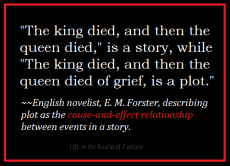
e.m. forster plot memeThe midpoint of the story arc is often where the protagonists lose their faith or have a crisis of conscience. Something terrible happens, and they must learn to live with it.
What was that terrible thing?

Maybe the protagonist has suffered a terrible personal loss or setback. Because of this, maybe she no longer believes in herself or the people she once looked up to.

How was her own personal weakness responsible for this turn of events?

How does this cause the protagonist to question everything she ever believed in?

What gives her the strength and the courage to pull herself together and finish the job?

How is she different after this personal death and rebirth event?

This midpoint crisis is where the protagonist makes the hard decisions and learns she truly has the courage to do the job. The antagonist has had their day in the sun and could possibly win.

What I sometimes forget is this: plot arcs hinge on our characters and their reasons for being there. No matter what genre we’re writing in, giving the individual players strong motivations makes the story easier to write.

If I haven’t made their motivations strong enough by the midpoint, I will lose track of the plot.

At the beginning of my story, I will know what “the crime” is, the incident that throws my characters into the action. I never lose track of that—it’s the middle that gets mushy for me.

I will know who the antagonist is and why they are acting against my main characters. I will even know why it is all happening.

The part I struggle with is the how.

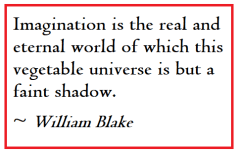
WilliamBlakeImaginationLIRF05072022So, starting at the end, I look at my characters’ location when the story finishes. Then I ask myself what they were doing just before the final encounter.
And before they did that, what were they doing? What did they accomplish to move the story forward to that place? What location did they begin that part of the journey from, and why were they there?

I work my way backward through each step of the problem. It’s not a perfect method, and may not work for everyone. But by working in reverse from a known point, I can see what needs to happen and begin to write the story again.

3 Comments

Filed under writing

Character, Objective, and Risk #amwriting

Sometimes I lose the plot. I know that character plus objective plus risk equals a story, but sometimes I can’t figure out the risk part.

Or the objective.

StoryMemeLIRF10052021This happens even when I have an outline. I will get to a place where I don’t know what to write, and the characters stand around doing nothing. I repeat the same old crisis with slight variations, which is tedious.
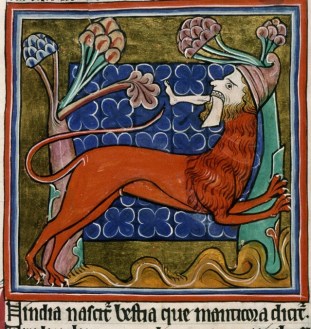
It’s a medieval fantasy, and manticores are quite prominent in medieval heraldry.

Unfortunately, my imagination is stuck on manticores but even in fantasy they’re a rare beast. My hero just killed the last one so I’m unsure what to do now. Readers don’t like it when you milk a plot twist over and over, no matter how you change the scenery around it.

I hate this job.

So let’s look at the plot outline again. I’m all about giving your characters agency, but sometimes it takes divine intervention to get the plot moving again.

Sir Percival stands at my elbow, looking over my shoulder. “Ahem.” He stares at me. “You there. Are you the person plotting this book?”

My characters no longer surprise me when they intrude, but being polite when I am disturbed is impossible. “What do you want?” I prefer it when my heroes don’t feel compelled to harass me.

Bodleian_Library-MS_Bodl_764-fol_025r-manticoreHe says, “I rescued Lady Adeline, and the manticore is dead. Did you notice?”

“Yes. I wrote that scene, and if I do say so myself, you were magnificent.” One problem with heroes is their obsessive desire for obscene amounts of praise. Sir Percival is a prime example of that.

“Thank you,” he replies, attempting to appear modest and failing. “Well, the thing is, Lady Adeline has thrown herself into wedding preparations.”

“I know,” I reply. “I’m designing the dress.”

“Well, you’ve been doing that for the last twenty pages, but who’s counting. Anyway, I’ve been booted outside because no one needs the groom until the big day. I need something to do.”

I never noticed it before, but Percy isn’t handsome when he scowls. Is there some way I can make him look like an adult? I don’t like beards, but he needs something to disguise his serious lack of a chin.

Sir Percy taps his foot. “You know, you’re really good at telling folks how to plot a book, but you suck at it yourself. We’re 25,000 words into your novel, and you’ve already wasted the big scene.”

What? This man who owes his very existence to my creative genius is picking a fight with me? He’s in for it now. “What are you talking about? I have numerous quests just waiting to leap off the page and occupy your idle hands.” See? I can give a dirty look too, and I don’t whine about it.

He just stares. “Well?”

I despise sarcastic heroes.

He whines, “If you intend this to be a novel, you have at least 50,000 or so words left. I have nothing to do.'”

The idiot has a point. I mistimed the big finale, so now I need a new objective for him, something entailing risk.

Trolls?

No, I did that in Billy Ninefingers.

I know! Carnivorous fairies … but no. I did that in Billy Ninefingers too.

This could take a while. I gaze at Sir Percival the Prim, wondering what I was thinking when I made a whiney inbred nobleman like him the star of this charade. “I can’t work with you staring over my shoulder. Find something to do for a few minutes.”

Of course, he flounces off to the living room. I should have given him a few more social graces.

clicker“Look, why don’t you sit here and watch TV for a while?” I park him in front of the TV and give him the clicker.
He looks first at me and then at the clicker. “What is this?”

Sighing, I show him how to turn the TV on and help him find something he’ll enjoy.

That takes an hour. Nine hundred channels and nothing interests him. Eventually we settle on old Star Trek reruns.

Finally, I am back at the keyboard and scraping the bottom of the barrel for a few more terrifying plot twists, hoping to keep this bad boy busy. The trouble is, all I can think of is manticores, but he’s already killed the only one that was left in the world.

Besides, readers hate it when authors milk plot twists.

Of course, my knight in shiny armor has acquired a certain amount of skill in manticore murdering, but how can you build a career out of that?

“Ahem.”

I look up, only to see Duchess Letitia, his future stepmother-in-law standing at my elbow. “Yes?”

Book- onstruction-sign copy“I’m sorry to bother you, but we desperately need a certain magical ingredient for my special anti-aging cream.” She looks at me expectantly. “My stepdaughter’s wedding is a big deal. But the outline says Percival and Adeline will assume the throne upon their marriage. It’s canon now, so I’m done, kicked to the curb in the prime of my life.” She dabs the corner of her squinty eyes with a silken handkerchief. “You set this story in an era where women have few career options. I simply must have my beauty cream, or I won’t be able to snare a new hubby.”
She has a point. “And that ingredient is…?” I hope it’s not a complicated thing because now I have two bored characters nagging the hell out of me.

A sharklike smile crosses her features. “Manticore’s milk.”

How odd. Another thing I never realized until this moment is how evil Adeline’s stepmother looks when she smiles like that. I love this woman.

She says, “I’m sure Sir Percival can get some since he’s just sitting around watching a magic box filled with other people having adventures.”

Duchess Letitia’s malicious smirk offers me no end of possibilities. I consider this for a moment. I could rewrite the original battle scene and subtract the dead manticore part.

He could get killed milking the manticore.

Or perhaps only mutilated.

Lady Adeline would have to rescue herself and then him. But what the hell. He’s a hero, right? Bad days at the office come with the territory. I walk to the living room, finding him sitting with his dirty boots on my coffee table.

This means war. Oh, yes. I promise, there will be mutilation in his future. Rather than deleting his character from the story and starting anew, this jackass will live. Percy the Prim and Proper will beg me to kill him off.

You know, manticores are an endangered species.

Lady Adeline won’t approve of his attempting to murder the last one so there will be trouble in paradise. The noble idiot will have misadventure after misadventure until my new coffee table is paid for.

“Percy, I have a task for you! Take this bucket and get some manticore’s milk. It’s a matter of life and death.”

He looks up. “I will in a minute, but I must see how this story ends. Captain Kirk might die if Spock can’t get the medicine!”

That’s another good plot twist. Note to self: have Duchess Letitia supervise stocking the medical supplies in Percy’s kit.

The duchess was wrong about one crucial thing. Nothing is actually canon until the book is published. I think the duchess deserves a much larger role in this story.

Excalibur London_Film_Museum_ via Wikipedia

Excalibur London Film Museum via Wikipedia

So does my new hero, Lady Adeline.

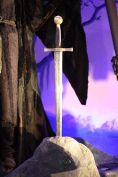
A lady hero who needs armor and a sword.

And a horse.

A horse that’s a unicorn.

I love this job.

7 Comments

Filed under writing

The business side of the business: budgeting for in-person sales events #amwriting

Spring and summer are conference and convention seasons. Regardless of your publishing path, indie or traditional, you must budget for certain things. You can’t expect your royalties to pay for them early in your career. And just so you know, many award-winning authors must still work their day jobs to pay their bills long after becoming bestsellers.

Its a BusinessAt first, getting your books in front of readers is a challenge. The in-person sales event is one way to get eyes on your books. This could be at a venue as small as a local bookstore allowing you to set up a table on their premises.


Or it could be as large as a table at a regional conference or convention.

Signings at writers’ conferences are usually a bit pricy for the number of books you might sell, but they are great ways to network.

What are the minimum costs for working a table at a signing event?

The bare minimum expenses:

You must have a stock of books on hand. You can’t sell books that you haven’t ordered. I order well in advance, as it can take three weeks for an order to arrive via the least expensive shipping method. Paying for overnight shipping of fifteen to twenty books is well out of my price range.

coins

Coins, Microsoft content creators

We must consider the table fee. A bookstore might not charge you anything for the table, but they may take a small cut if they run your sales through their cash registers.

However, large conferences and conventions will charge table fees ranging from $70.00 to as high as $300.00 or more. This varies with the size and type of conference, the venue where the convention is being held, and the vendors you will be competing with.

Sci-fi and Fantasy fan conventions can be quite pricy. You will be in an immense, crowded room, competing with big-name RPG game franchises and movie franchises, plus all the vendors of memorabilia and collectibles that are available in the vendors’ alley.

If you are able to get a table at a major fan convention, you must pay for transportation, food, and lodging. These costs could be gas, parking, airfare, hotel, etc., if you don’t have friends or family in that area. If you are planning to stay in a hotel, take simple foods that can be prepared without a stove. Being vegan, I tend to be an accomplished hotel-room chef, as most coffee bars don’t offer many plant-based options. While that bias is changing, I still go prepared.

Bring at least one pen for signing your books. I bring four or five because sometimes the pens don’t work as advertised.

Square Card Reader 1The final thing you will need is a way of accepting money. I have a metal cash box, but you only need something to hold cash and some bills to make change with. A way to accept credit cards, something like Square, is a good option. You will find a lot of vendors use Square, but there are other options out there.
These things are the bare minimum you will need to provide. At many shows, you’ll be given a table with skirting and a sign attached to the front with your name in block letters. You can get by with this if you’re on a tight budget. New vendors manage with this minimal setup all the time. This option lets you squeak by on little more than the cost of your books. Your setup and teardown time will be short, and you’ll have little to transport—always a positive, in my opinion.

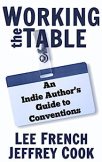
My good friend, Lee French, is a pro when it comes to selling at conventions. She co-wrote the book, Working the Table: An Indie Author’s Guide to Conventions with Jeffrey Cook. She tells us that to really succeed, you’ll need to invest a bit more.

It helps to have some kind of promotional handout. I find bookmarks and business cards are the most affordable option. I know a few authors who have all sorts of little buttons and promotional trinkets relating to their books made. They give them out to everyone who passes their table, buyers or not.

However, most of my friends agree that business cards and bookmarks are the best bang for the buck in promotional material. They are less expensive when purchased in bulk, so I get as many as my budget allows.

You will need a business license to sell books at most conventions. Each state in the US has different requirements for getting these, so do the research and get whatever business license your local government requires. This allows you to get a reseller’s permit, enabling you to buy copies of your own books without paying sales tax. If your state doesn’t assess sales tax, you don’t need this, but you’ll still need the business license.

If you live in a state like Washington State, be smart and set aside the money collected as sales tax. It is not yours and shouldn’t be considered part of your income.

Investing in some large promotional graphic, such as a retractable banner, is a good idea. A large banner is a great visual to put behind your chair. A second banner for the front of the table looks professional, but they do require some fiddling with pins.

Lee French suggests getting a custom-printed tablecloth that drops over the front of the table, acting as a banner. It looks more professional, and the books will hold it down, so you don’t have to mess with pins. You can find a wide variety of sizes and shapes of banners and graphic promotional props on the internet.

I have an inexpensive black tablecloth for under my books, but you can get one in the color of your choice. Venues will often provide a white tablecloth, so buying one isn’t necessary, but it makes your display look more professional. Most shows offer a 6×3 table.

steampunk had holding pen smallI suggest buying book stands of some sort. Recipe stands work, as do plate and picture stands. Whether they’re fancy or cheap, be sure you know how to use them properly so they aren’t falling over when someone bumps the table. I use folding plate stands as they store well in the rolling suitcase I use for my supplies.
This brings us to storage and shifting goods. We must move our gear between the table and our vehicle, and sometimes we’re forced to park in inconvenient places. Many people use wheeled bins or fold-up handcarts. Luggage carts are a great, lightweight option when you only have a few books. I use a large wheeled suitcase, as I travel pretty light.

I have a plastic container with a good lid for storing pens, bookmarks/cards, book stands, and other whatnot.

I suggest you keep it simple because the more you add to your display, the longer setup and teardown will take. The shows and conferences I have attended offered plenty of time for this, but I’ve heard that some require you to be in or out in two hours or less.

Aside from the table fee and transportation, Lee French says it will cost about $400 for your stock of books, banners, bookmarks, and odds & ends. The way inflation is going, it may take more than that.

Shop the internet for sales on banners and similar items. You will need to replace bookmarks, business cards, and book stock, but most larger promotional items won’t need to be repurchased for a year or two.

working the tableIf you plan to get a table at a large conference this year, I highly recommend Working the Table: An Indie Author’s Guide to Conventions by YA authors Lee French and Jeffrey Cook. This book has all the tips and tricks you will need to successfully navigate the wild seas of selling your books at conventions.
And if you choose to embark on the in-person event circuit, I wish you good luck and many happy sales.

4 Comments

Filed under writing

Making Your Author’s Website Work for You #amwriting

Whether we are indie or traditionally published, we are responsible for getting our author name out there via the available social media. Expenses can mount up and finding affordable ways to get your name out there can be difficult.

blogging memeBut when it comes to having a website, don’t sweat it. WordPress and Blogger (Google’s platform) offer free blogs and theme templates. You can have a nice-looking website, with only a small amount of effort and a little self-education.

I began this site in 2011. I used WordPress’s free plan and had no website skills whatsoever. I also had a book review site, Best in Fantasy using Google’s Blogger platform. I used both platforms’ learning tools and can hold my own now.

Your website is your store, a newsletter, and is also your public presence. We want people to find and read our work. It’s a platform where you can advertise your books and have links to where they are available.

I belong to several professional organizations. One of the comments even traditionally published, well-known authors make most often when explaining why they don’t keep their blogs updated, is this:

They don’t know what to write about.

Several years ago, a well-known author told me that updating her blog is as exciting as doing laundry. This is because it hasn’t occurred to her to write about her passions.

She is an avid music fan and gets to every festival she can. I think her fans would have loved to hear about 2022’s Bonnaroo, a music festival I’ve never had the chance to attend. It sounded amazing when she told me about it, and she could have made a quick post featuring photos and tweet-length comments.

However, my friend regularly posts on Instagram and Twitter about her garden and what she had for dinner. Many authors use twitter to connect with fans, but they don’t think their thoughts are worth more than the 280 characters in a tweet.

Yet those small chunks of personal life could be stretched a bit to make a delightful short read.

Margaret Atwood on writing LIRF07252022A blog post doesn’t have to be long. Think of it as a slightly longer tweet or Facebook post. Just write a paragraph or two about what you are interested in at that moment. You will have 300 – 500 words written in no time.

That is an acceptable length for a blog post. My first posts averaged 400 words and detailed my experience of floundering around as a writer. I began with four followers, and while I’m not burning up the internet, I’m connecting with many more people now than I was then.

Many of us are adept at using Facebook to connect with readers. The work you put into a Facebook post for your author page could easily be turned into a short blog post.

If you fall into that category, even a bi-monthly update on your works in progress and where you will be signing books is a good option. We only need something to keep our fans engaged.

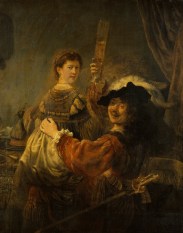
Rembrandt_-_Rembrandt_and_Saskia_in_the_Scene_of_the_Prodigal_Son_-_Google_Art_Project

Rembrandt and Saskia as the Prodigal Son.

I have made a personal commitment to post three times a week on this blog. This allows me to rant about the craft of writing and gives me a place to talk about fine art – something I love.

Financial constraints mean I can’t travel the world to view great art in person. Wikimedia Commons allows me to see the works of all the artists from prehistoric times to the present. I love talking about what I have discovered at Wikimedia Commons.

Writing blog posts requires me to be a thinking author as well as a pantser. I can write using the “stream-of-consciousness” method or from an outline of whatever interests me at the time. I do the research, and the post begins to write itself.

This blog never fails to provide me with a sharp dose of reality and has made me a better writer. I proofread my work, run it through Grammarly, have the Read-Aloud function of my word-processing program read it back to me, and then publish it.

Nothing bursts your bubble of self-importance like discovering gross errors and bloopers several days after you published the post.

I do admit, finding new and interesting content can be a challenge. Sometimes, I consider cutting back to publishing only on Mondays and Fridays. I have written posts on nearly every aspect of the craft and am repeating myself.

But then, a complex subject will be raised in a forum, and I hear a new point of view on it. I see things from a different perspective, and I’m fired up again.

I know it’s hard to gain readers when you first start out. But it’s like Twitter, Instagram, or Facebook. If you keep at it, you gain readers. If you write it, readers will comeif you do these three things:

  1. Tweet the new post’s link.
  2. Post the link to Instagram.
  3. Post it to your author Facebook

You can set WordPress up to post automatically to Twitter and Facebook, taking the work out of everything.

I advise writing short posts, scheduling them for a particular day and time and not worrying about how many hits, likes, or comments you get. That’s a stress you don’t need.

Instead, write your posts as if every person on the planet will read them. Just post them and forget about them until it’s time to post the next one.

  • Don’t even look at the stats for the first six months.

Quill_pen smallAfter six months, you’ll have a history of stats to look at. Use that information to gauge what topics did best. Make sure the time the blog goes live is a good slot. You want to post it when people are looking for something short to read, like when riding the bus or train to or from work.
Updating your website twice a month to discuss your writing and how life treats you will be interesting to people who read. They are your target audience.

If that’s too much work, approach it like your other social media. Any social media platform post can be converted into a quick blog post.

It is another good way to connect with your readers. And if you go the free route as I did for the first five years, it costs you nothing.

6 Comments

Filed under blogging, writing

Short Fiction – the narrative essay #amwriting

We discussed micro fiction in Monday’s post. Today we’re continuing to look at writing short works by looking at the narrative essay/article. Many will wonder just what a narrative essay is.

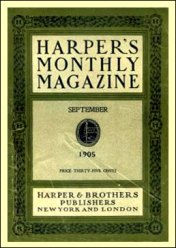
narrative essayIf you enjoy reading magazines like the New Yorker, Harper’s, or Reader’s Digest, you have read and enjoyed many narrative essays.

A narrative essay/ article is not a newspaper article, which (usually) deals in facts – who, what, why, when, and where.

The primary purpose of an essay is to offer readers thought-provoking content. Many narrative essays take an event and play fast and loose with the facts. Some elements are exaggerated, and others might be skipped over. The same is true of how the people involved are portrayed.

It might detail an actual event but will be colored and shaped by the author’s personal point of view.

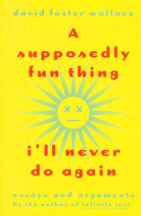
A-supposedly-fun-thing-first-edition-coverThe narrative essay conveys our experiences and ideas in a form that is easy to digest, so writing this kind of piece requires authors to have some idea of the craft of writing.
A list of highly regarded narrative essays and links to them can be found at 40 Best Essays of All Time (Including Links & Writing Tips) (rafalreyzer.com).

To write a good narrative essay, an author must understand the publishing industry’s grammar and mechanics standards. This is critical because the people who read this kind of work are dedicated readers.

Dedicated readers might vary in their level of formal education, but all are knowledgeable and will recognize when a writer is untrained.

I enjoy reading narrative essays when the author uses the opportunity to explore themes and subthemes.

Theme is vastly different from the subject of a work. Theme is an underlying idea, a thread woven through the story from the beginning to the end, binding the plot together. An example I regularly use is the movie franchise Star Wars.

  • The subject of the first three movies is the battle for control of the galaxy between the Galactic Empireand the Rebel Alliance. That is what the story is about.
  • Two of the themesexplored in those films are the bonds of friendship and the gray area between good and evil—moral ambiguity. Each character arc and every incident explores this struggle in subtle ways.

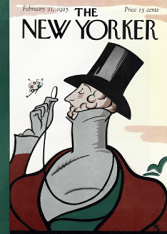
Original_New_Yorker_coverA narrative essay is a story that begins with an experience you once had. You know how that event began and ended. Just like any other form of short fiction, a narrative essay has a plot arc.
  • Make an outline as you must develop both content and structure.
  • Take some time to consider how you want your account to be perceived by the reader.

The arc of an essay is the same as that of a fictional story. It has

  • an introduction,
  • a plot,
  • characters,
  • a setting,
  • a climax,
  • a conclusion.

It’s not a memoir, so exposition must be limited. For me, the challenge is to not frontload the story. Offer the information at the moment the reader needs it. We must convey the most information with the least number of words.

If you love writing prose and choosing the right words, this might be a good medium for you.

Authors of narrative essays sometimes meet with criticism regarding the subject matter and how they present their opinions. This is because narrative essays often present profound and (sometimes) uncomfortable ideas.

A skillful writer can offer these concepts in a way that the reader feels connected to the story, even if they disagree.

Good essays express far more than mere opinion—they tell a story. The story is what keeps the reader engaged.

If you are writing about an actual event, names should be changed for your protection. This is because narrative essays are filled with information. They expose the places we go and detail the people we meet.

Harpers_Magazine_1905We don’t want to disclose too much information about ourselves or the people we have encountered. An honest narrative essay contains an author’s opinions. Sometimes those sentiments are not glowing accolades. One can lose friends if they aren’t careful.
Those who write narrative essays can make a living because literary magazines have open calls for them. Editors and publishers are seeking well-written essays/articles with fresh ideas about wide-ranging topics.

Some will pay well for first publication rights.

HOWEVER – if you want to be published by a reputable magazine, you must pay strict attention to grammar and editing.

Never submit anything less than your best work. After you have finished the piece, I suggest you set it aside for a week or two. Then come back to it with a fresh eye and check the manuscript for:

  • Spelling—misspelled words, autocorrect errors, and homophones (words that sound the same but are spelled differently).
  • Repeated words and cut-and-paste errors. These are sneaky and dreadfully difficult to spot. Spell-checker won’t always find them.
  • Missing punctuation and closed quotes. These things happen to the best of us.
  • Dropped and missing words.

As I mentioned above, don’t be afraid to use your words. Readers of narrative essays have a wide vocabulary. But there is one caveat to that:

  • Never use jargon or technical terms that only people in certain professions would know unless it is a piece in a publication geared for that segment of readers.

Above all, be intentional and active with your prose, and be bold. I enjoy reading works by authors who are adventurous in their prose.

EPSON MFP image

And on that note, we must be realistic. Breaking into any sort of traditional publishing is difficult. You will have trouble selling your work at first. You haven’t gained a reputation yet, and no one knows what to expect from you.

Also, you may have gauged your audience wrong, and your work might not appeal to the first editors you send it to.

Don’t be discouraged by rejection. Rejection happens far more frequently than acceptance, so don’t let fear of rejection keep you from writing pieces you’re emotionally invested in.

I have said this many times, but it is true:

How you handle critiques and rejections tells editors what kind of person you are to work with. Rejection allows you to cross the invisible line between amateur and professional.

Always take the high ground. If an editor has sent you a detailed rejection, don’t be angry or upset at their remarks. No editor sends a detailed rejection unless they see promise in the author’s work.

  • Let it rest for a day or two, then respond with a simple “thank you for your time.”

367px-Saturday_evening_post_1903_11_28_aTake some time to review what you submitted, keeping those comments in mind. Then form a plan to address those issues with a rewrite.
If you received a form letter rejection, don’t reply. But do look at your work critically and try to see what can be changed to improve it.

When you receive that email of acceptance, celebrate.

There is no better feeling than when someone, whose publication you respect, liked your work enough to publish it.

8 Comments

Filed under writing

Micro Fiction: Goals and Rewards #amwriting

The habit of creative writing usually begins small. It’s an idea, something we wish someone would write. At first, it’s a hobby we must fit around our work schedule and family obligations. Somehow, that hobby grows and grows. For some of us, it becomes a second job that pays little and demands a great deal of attention.

WritingCraft_short-story-drabbleWhen a new writer decides to begin their career by embarking on writing a novel, the magnitude of the undertaking soon becomes apparent.
At first, they are fired up about the project. For several pages, the words flow. Unfortunately, the fire of enthusiasm burns low as creativity fails.

They have the idea. They have the characters. But they don’t have the skills to write something as long and involved as a novel.

Many people see that as a sign that they are untalented. They put it away and never write again.

But the truth is, the project was too ambitious for their skill level. They haven’t learned the tools of the trade and received no reward for their efforts.

I suggest people begin by writing micro fiction. Drabbles are a form of micro fiction, an entire story in exactly 100 words.

Some forms of poetry, such as haiku, are not micro fiction, as they don’t tell a fully developed story.

My Coffee Cup © cjjasp 2013 iconWriting a drabble takes less time than writing a 3,000-word story or a 70,000-word novel, but all writing is a time commitment. When writing a drabble, you can expect to spend an hour or more getting it to fit within the 100-word constraint.
First, we need a prompt, a jumping-off point. We have 100 words to write a scene that tells the entire story of a moment in a character’s life.

Some contests give whole sentences for prompts. Others offer one word, and still others have no prompt at all.

prompt is a word or visual image that kick-starts the story in your head. If you need an idea, go to Reedsy’s Weekly Writing Prompts.

But prompts are only the beginning. To write a story of any length, we need these essential components:

  • A setting
  • One or more characters
  • A conflict
  • A resolution.

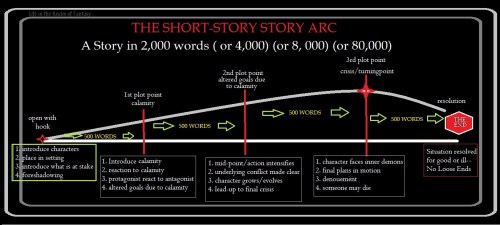
writer_at_work_nanowrimo_signI use a loose outline to break the arc of every story I write into acts, each with a specific word count. (I’ve included a graphic at the bottom of this post.)
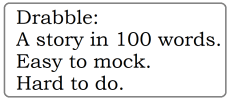
A drabble may have only 100 words, but my process works the same as for a novel.

For a novel, I divide my outline this way: 10,000 or so words to open the story, set the scene, introduce the characters and get to the inciting incident. 50,000 or so words for the heart of the story. 10,000 or so words for the conclusion.

A micro fiction is outlined the same way:

  • I have about 25 words to open the story and set the scene.
  • I have about 50 – 60 for the heart of the story.
  • I give myself 10 – 25 words to conclude it.
  • The story must be told in precisely 100 words. (Not more, and not less—exactly 100 words.)

Writing micro fiction teaches you to tell a story without exposition.

However, you should save the clumps of exposition and backstory in a separate file because they do come in usefully as part of your world-building and character development exercises.

  • Every word you write and discard might be useful in a later story.
  • Label the file with a title that says what it is.
  • Save it in a master file that contains ideas for longer stories.

Drabble_LIRF_1_jan_2018_cjjapI mentioned rewards in the title of this post. The completed story is a small gift you give yourself, and the surge of endorphins you experience in that moment of “Yes! I can write after all!” are the reward.
When you write to a strict word count limit, every word is precious and must be used to the greatest effect. By shaving away the unneeded info in the short story, the author has more room to expand on the story’s theme and how it supports the plot.

I suggest you save your drabbles and short scenes in a clearly labeled file for later use. Each one has the potential to be a springboard for writing a longer work. Or you might want to submit it to a drabble contest.

Contests for micro fiction abound on the internet. Whether you choose to submit a drabble to a contest or hang on to it doesn’t matter. Either way, the act of writing micro fiction hones your skills, and you will have captured the heart of your brilliant idea.

Micro fictions are the distilled essence of novels. They contain everything the reader needs to know about that one moment in time. The reader wants to know what happens next.

You will have succeeded in writing your story, and that success is a reward in itself.

short-story-arc

25 Comments

Filed under writing

Worldbuilding part 1 – checklist for creating societies #amwriting

Worlds are comprised of plants, animals, and geology. But if intelligent life forms live in that world, societies will also exist.

WritingCraftWorldbuildingWe humans are tribal. We prefer an overarching power structure leading us because someone has to be the leader. We call that power structure a government.
As a society, the habits we develop, the gods we worship, the things we create and find beautiful, and the foods we eat are evidence of our culture.

If your society is set in modern suburbia, that culture and those values will affect your characters’ view of their world. You will still have to build that world on paper. But the information and maps are all readily available, perhaps in your own backyard.

But what if you are writing a sci-fi or fantasy novel? You must create the background material to show your world logically and without contradictions.

  • Authors must know how society works in their created cities and towns.
  • They must know the technology whether it is set in a medieval world or on a space station.

Merchants, scientists, priests, soldiers, teachers, healers, thieves – no matter the setting, each occupation has specific technology. They may also have a place in the social hierarchy, people they can and cannot associate with.

Society is always composed of many layers and classes. Below is a list of what I think of as “porch questions.”

This is the stage where I sit on the back porch and consider the world my characters will inhabit. Going somewhere quiet and pondering these questions brings clarity to my vague ideas.

The following is a list of points to consider when creating a society. Feel free to copy and paste it to a page you can print out. Jot the answers next to the questions and refer back to it if the plot raises one of these questions.

How is your society divided? Who has the wealth?

  • Is there a noble class?
  • Is there a servant class?
  • Is there a merchant class
  • Is there a large middle class?
  • Who makes up the most impoverished class?
  • Who has the power, men or women—or is it a society based on mutual respect?

Ethics and Values: What constitutes morality, and how do we treat each other?

  • Is marriage required?
  • How are women treated?
  • How are men treated?
  • How are the different races viewed?
  • Is there a cisgenderbias, or an acceptance of different gender identities?
  • How are same-sex relationships viewed?
  • How are unmarried sexual relationships seen in the eyes of society?
  • How important is human life?
  • How is murder punished?
  • How are betrayal, hypocrisy, envy, and avarice looked upon?
  • What about drunkenness?
  • How important is the truth?
  • What constitutes immorality?
  • How important is it to be seen as honest and trustworthy?
  • What is taboo? What is “simply not done” among that group?

WilliamBlakeImaginationLIRF05072022Power structures are the hierarchies encompassing the leaders and the people with the power. Government is an overall system of restraint and control among selected members of a group. Think of it as a pyramid, a few at the top governing a wide base of citizens.
Religion is rarely a sci-fi trope but often figures prominently in fantasy work. In sci-fi, science and technology often take the place of religion or are at odds with it. They both have similar hierarchies and fanatics, but with different job titles.

Archbishop might be replaced with Head of Research and Development.

Cardinal or Pope might be replaced with GeneralAdmiral, or CEO (Chief Executive Officer).

Level of Technology: What tools and amenities are available to them? What about transport?

  1. Hunter/Gatherers?
  2. Agricultural/farming?
  3. Greco-Roman metallurgy and technology?
  4. Medieval metallurgy and technology?
  5. Pre-industrial revolution or late Victorian?
  6. Modern-day?
  7. Or do they have a magic-based technology?
  8. How do we get around, and how do we transport goods? On foot, by horse & wagon, train, or space shuttle?

Government: There will be a government somewhere, even if it is just the local warlord. Someone is always in charge because it’s easier for the rest of us that way:

  1. Is it a monarchy, theocracy, or a democratic form of government?
  2. How does the government fund itself?
  3. How are taxes levied?
  4. Is it a feudal society?
  5. Is it a clan-based society?
  6. How does the government use and share the available wealth?
  7. How do the citizens view the government?

Crime and the Legal System: What constitutes criminal behavior, and how are criminals treated?

Foreign Relations: Does your country coexist well with its neighbors?

  • If not, why? What causes the tension?
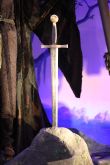
Excalibur London_Film_Museum_ via Wikipedia

Excalibur, London Film Museum via Wikipedia

Waging War: This is another area where we have to ask what their level of technology is. It is critical for you, as the author, to understand what weapons your characters will bring to the front. You must also know what the enemy will be packing. Do the research and choose weaponry that fits your established level of technology.

  • What kind of weaponry will they use?
  • How are they trained?
  • Who goes to battle? Men, women, or both?
  • How does social status affect your ability to gain rank in the military?

A common trope in fantasy is magic, which brings up the need to train magic-gifted people. Do your sorcerers/mages rely on

  • dumb luck and experimentation?
  • apprenticing to sorcerers?
  • training by religious orders?
  • or as in the case of Harry Potter, a school of some sort? What are the rules of your magic?

The Church/Temple is the governing power in many real-world historical societies. The head of the religion is the ruler, and the higher one rises within the religious organization, the more power one has. The same is true of both universities and research facilities.

Power in the hands of only a few people offers many opportunities for mayhem. Zealous followers may inadvertently create a situation where the leader believes they are anointed by the Supreme Deity. Even better, they may become the God-Emperor/Empress.

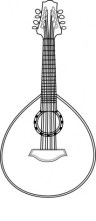
lute-clip-artThe same sort of God complex occurs among academicians and scientists. Some people are prone to excess when presented with the opportunity to become all-powerful.
If you were unsure what your plot was before you got to this stage, now you might have a real villain, one presented to you by your society.

What sort of society do you envision in your world? How does that culture shape your characters?

Being the leader means bearing responsibility when things go wrong. Scrambling to keep things afloat occurs far more often than basking in the glory.

When things are going well, it’s good to be the queen.

However, the Tiara of Shame weighs heavily when things go awry—and that is when we have a story.

19 Comments

Filed under writing

Writing through the Block #amwriting

We all have moments where our creativity has failed us. Maybe we had an idea, but the words wouldn’t come. Or when they did, they felt stilted, awful. We feel alone and isolated in this because we are writers. The words are supposed to flow from our fingers like water down the Columbia River.

MyWritingLife2021BSome people call this writers’ block. I think of it as a temporary lull in my creativity.

I have learned to write my way through these dry spells. Usually, the work I produce at that moment is awful, and I wouldn’t share it with anyone. But I am a professional writer and the act of writing every day keeps me fit and in the habit of working.

Writing is like participating in sports or playing a musical instrument. We must practice if we want to be good at it. Doing well at writing requires some discipline on our part. I lose my momentum and purpose when I stop writing for any reason.

I lose my passion for my work.

At times, we come to a place where we can’t think of what to write. It happens to everyone, and we each handle it differently. I will share how I deal with lulls in creativity—and I know it’s not a one-size-fits-all solution.

Before we begin, I suggest you save the file you are working on, the one you can’t seem to make headway on. Close it, and delete nothing. You will be able to use this work later, so file it properly.

mindwanderingLIRF02212023Sometimes, the problem is that your mind has seen a shiny thing, a different project that wants to be written, and you can’t focus on the job at hand. If that is the case, work on the project that is on your mind. Let that creative energy flow, and you can reconnect with the first project once the new project is out of the way.

For me, writer’s block manifests not as a block per se. It will appear as an inability to visualize a scene I must write to advance a story. If I can’t picture it, I can’t describe it.

That can be quite frustrating.

Unfortunately, some people have a different experience, one where they have no words whatsoever. They try, they struggle, and nothing comes to them.

This creates a kind of trauma. Once a person has experienced that moment of complete inability, fear of being unable to write can magnify the problem until it paralyzes them.

So what do I do when the words don’t come?

First, I open a new document. At the top of this document, I type: Where I Am Today.

  • I look around myself and see the room I am in, trying to see it with a stranger’s eyes.
  • I briefly describe what the stranger might see on entering that room.
  • Then I describe how I feel sitting in that place at that moment in time.

I write two or three paragraphs just to prove I can do it.

Next, I go somewhere else and take my notebook. I am a stranger there, so I write three more paragraphs detailing how I fit into that new space and how it makes me feel.

You could do this at the mall, a coffee shop, or the parking lot at the supermarket.

Me working in a starbucks, through the fishbowl, copyright Dan Riffero 2013

Me writing in a Seattle Starbucks, taken through a fish tank. I was the big fish in that tank! Photo by Dan Riffero.

The last exercise is more abstract: Where do I want to be? I visualize it and describe my imaginary scene as if I am looking at it.

I want to walk along the high-tide mark on a foggy beach. I want to hear the gulls and the waves. I want to feel at peace again.

It’s weird but writing about nothing in particular is like doodling. It is a form of mind wandering. It can jar your creative mind loose. With perseverance, you will be writing your other work again.

Everyone has family, jobs, and external demands that limit their writing time. Sometimes the world gets in the way of writing. We might feel unwell or have too many things to accomplish and not enough time to get it all done.

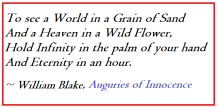
WilliamBlakeInfinityAndEternityLIRF05072022In my real life, getting our house ready to put on the market saps my creativity, but I am muddling along. Boxes here and there, getting rid of this and that—it’s exhausting. Sometimes I don’t have the energy to write.
But I sit down and get at least 100 words on paper just to prove I can. That usually leads to a more productive writing session.

The most important thing is to care for my family first. Sometimes just doing laundry can jar an idea loose, and I feel incredibly productive at the same time.

However, when I am stuck for words to write, the most important thing I do is to sit somewhere quiet and let my mind wander.

Daydreaming is good for you. It boosts the brain, making our thought process more effective. Apparently, letting the mind wander allows a kind of ‘default neural network’ to engage when our brain is at wakeful rest, like in meditation, unlike when it’s actively focused on the outside world.

Book- onstruction-sign copyWhen we daydream, our brain is free to process tasks more effectively.
This is good to know because I spend an astounding amount of time daydreaming, and I would hate to be simply wasting time.

This is how my mind works. I hope that what works for me will work for you. Remember, if you are suffering from a temporary dry spell, you are not alone. We all go through those times.

When you want to talk about it, you will find friends here.

14 Comments

Filed under writing

Characterization part 4 – Doling out the Backstory #amwriting

Every story has a past, a present, and hopefully, a future. The past shapes what we know as the here and now. The past also gives history to our characters, so when they first step onto the page, they are formed in the author’s mind and ready to begin their journey.

MyWritingLife2021Every writer knows the backstory is what tells us who the characters are as people and why they’re the way they are. At the beginning of our career, it seems logical to inform the reader of that history upfront. “Before you can understand that, you need to know this.”
As we progress, we learn not to drop the history of the intended conflict in the first five pages of a novel or to waste the first three paragraphs of a short story on it.

We understand that those are the pages and paragraphs editors look at first. From those pages, acquisitions editors will decide whether or not to continue reading the submission.

For those of us planning to go the indie route, those first five pages are what the prospective buyer sees in the “look inside” option when buying an eBook. For us, the prospective reader is the acquisition editor. They will buy the book if they like what they see on those pages.

Walls of fictional history muck up the transitions and negate our hooks. We know that infodumps block the doors from one scene to the next.

strange thoughts 2But knowing this and putting it into action are two different things.
So, how do our favorite authors deliver the backstory and still sell books?

First, they consider what must be accomplished in each scene and allow the backstory to inform the reader only when (and if) it’s needed to advance the plot.

Look at the first scene of your manuscript. Ask yourself three questions.

  1. Who needs to know what?
  2. Why must they know it?
  3. How many words do you intend to devote to it?

Dialogue, both spoken and internal, is the easiest way to dole out information but can be the gateway to an infodump.

  • Don’t give your characters long paragraphs with lines and lines and lines of uninterrupted dialogue. (Trust the voice of experience, please.)

Doling out the information is a double-edged sword, one all authors must learn to wield with skill. Beginnings must be active, yet those precious first lines must step onto the stage in such a way that they are original, informative, and engaging.

After we open with our best work, the passages and chapters that follow must reflect and build upon the tone and cadence of the opening pages. If not, the reader may be disappointed and choose to not buy any more books by us.

We’re all familiar with the term ‘flatlined,’ a medical expression indicating the patient has died. When the story arc is imbalanced, it can flatline in two ways:

  • Not enough backstory: The action becomes random, an onslaught of meaningless events that make no sense.
  • Too much backstory: The pauses become halts, long passages of random info dumps that have little to do with the action.

A good way to avoid this is to have your characters briefly discuss what is on their minds. Then they will bravely muck on to the next event, keeping the story moving at a good pace.

  • Don’t allow conversations to deteriorate into bloated exposition.
  • Do set forth the necessary information.

This can be accomplished in several ways. For my novels and short stories, I tend to write in either a close third-person or first-person point of view, so my comments in this post are geared toward that style of writing.

Short moments of introspection (thinking, reminiscing, etc.) offer opportunities for doling out new information essential to the story. Their thoughts shed light on how they really feel, illuminating their secret fears or voicing knowledge, giving it to the reader at the moment it is needed.

F Scott Fitzgerald on Good Writing LIRF07252022Be aware: if you are writing from an omniscient POV, this can be tricky and lead to “head-hopping,” which can lead to confusion on the reader’s part. When I change point-of-view characters, I do a hard scene or chapter break.
Letters and messages received or written can give needed information.

Conversations between witnesses and adversarial dialogues (quarrels) can shine a light on a festering past. But remember, if you go on for too long, your reader will either skip forward and miss what was really important or close the book and walk away.

Those are only a few ways to briefly open a window for the reader to see who the characters think they are and how the other characters see them. They offer a hint of how the characters became the way they are portrayed.

In the most gripping narratives I have read, character introspection is brief but delivers crucial information. Their internal monologues illuminate a character’s motives at a particular moment in the story arc, cluing the reader in on what is happening and why.

As the plot progresses, conversation and introspection are good opportunities to deliver information not previously discussed.

Consider the most popular genre: Romance novels. These things fly off the shelves. Why?

  • Because the path to love is never straightforward, and a reward awaits the reader who sticks with it.
  • Some characters will have an air of mystery about their past that isn’t fully revealed until the end.

The pacing in a Romance novel is crucial and is something all writers can learn from:

  • It speeds up (a small reward), and
  • Then it is slowed (dangling the carrot),
  • Then, it goes a little ahead (slightly larger reward),
  • But is slowed (enticement),
  • Finally, the two overcome the circumstances and things that have barred the way to their true happiness. (Gratification and endorphins abound.)

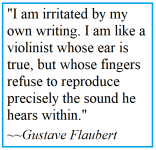
Flaubert on writing LORF07252022Romance novels average 50,000 to 70,000 words. In shorter novels, there is no room for sweeping, epic backstories. Instead, information and backstory are meted out only as needed through conversations and internal dialogue/introspection.
All obstacles to the budding romance are followed by small rewards that keep the reader involved and make them more determined to see the happy ending.

As a reader, I can say that a long-winded rant is not a reward.

This holds true in every book and story, regardless of genre: enticement, reward, enticement, reward. In all stories, complications create tension, and information is a reward.

The combination of those elements keeps the reader reading.

It’s difficult to see bloated exposition in my own work, but one trick I have found is this: word count.

I look at each conversation and assess how many words are devoted to each character’s statement and response. Then, when I come to a passage that is inching toward a monologue, I ask myself, “What can be cut that won’t affect the flow or gut the logic of this exchange? Can some of this be moved to a later conversation?”

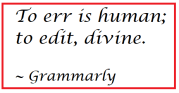
to err is human to edit divineEven with all the effort I apply to it, my editor will find things that don’t matter. She will gently take a metaphorical axe to it, highlighting that which doesn’t advance the story or add to the intrigue.

Sometimes we write brilliantly; other times, not so much. Sorting the diamonds from the gravel is hard when it comes to doling out the backstory, but your readers will be glad you made an effort.

16 Comments

Filed under writing

Heroes and Villains part 3 – Drawing on the Shadow Within #amwriting

Today we’re continuing to explore character creation and the dark energy the villain of a piece brings to a story.

WritingCraft_Dark_EnergyIn his book, The Writer’s Journey, Mythic Structure for Writers, Christopher Vogler discusses how the villain of a piece represents the shadow. The antagonist provides the momentum of the dark side, and their influence on the protagonist and the narrative should be profound.

The shadow character serves several purposes.

  • He/she/it is usually the main antagonist and represents darkness(evil) against which light (good) is shown more clearly.
  • The shadow, whether a person, place, or thing, provides the roadblocks, the reason the protagonist must struggle.

The shadow lives within us all, and our heroes must also struggle with it. The most obvious example of this in pop culture is that of “Batman.”

About the original concept of Batman, via Wikipedia:

Batman_InfoboxBatman is a superhero appearing in American comic books published by DC Comics. The character was created by artist Bob Kane and writer Bill Finger, and debuted in the 27th issue of the comic book Detective Comics on March 30, 1939. In the DC Universe continuity, Batman is the alias of Bruce Wayne, a wealthy American playboy, philanthropist, and industrialist who resides in Gotham CityBatman’s origin story features him swearing vengeance against criminals after witnessing the murder of his parents Thomas and Martha as a child, a vendetta tempered with the ideal of justice. He trains himself physically and intellectually, crafts a bat-inspired persona, and monitors the Gotham streets at night. Kane, Finger, and other creators accompanied Batman with supporting characters, including his sidekicks Robin and Batgirl; allies Alfred PennyworthJames Gordon, and Catwoman; and foes such as the Penguin, the RiddlerTwo-Face, and his archenemy, the Joker. [1]

Bruce Wayne is a flawed character. He is both a generous benefactor of many charities and a vigilante with little or no remorse for his actions. As Batman, he is a hero, a defender of the weak and defenseless. Much of what makes his story compelling is how he justifies indulging his darker side.

The story of Batman is complex, which is why so many movies have emerged exploring his story. We sit in theaters and applaud Batman’s dark side because it’s confined to taking on criminals.

The evil in a narrative is not always represented by a person. Sometimes war is the villain. Hurricanes, tornadoes, earthquakes, wildfires—nature has a pantheon of calamities for us to overcome and no end of stories that emerge from such events.

True heroes don’t necessarily wear capes, and the evils they fight against are often disasters of epic proportions. Ordinary people can become heroes when faced with disasters of any sort.

Consider the true-life events of April 11 through the 17th, 1970. Via Wikipedia:

Apollo_13_liftoff-KSC-70PC-160HRApollo 13 (April 11–17, 1970) was the seventh crewed mission in the Apollo space program and the third meant to land on the Moon. The craft was launched from Kennedy Space Center on April 11, 1970, but the lunar landing was aborted after an oxygen tank in the service module (SM) failed two days into the mission. The crew instead looped around the Moon and returned safely to Earth on April 17. The mission was commanded by Jim Lovell, with Jack Swigert as command module (CM) pilot and Fred Haise as Lunar Module (LM) pilot. Swigert was a late replacement for Ken Mattingly, who was grounded after exposure to rubella. [2]

The villain in that epic space adventure was mechanical failure. The heroic efforts of the ground crew to brainstorm ways to get the astronauts home is one of the most powerful stories of the 20th century. We were glued to the television, watching as remedies for each disaster were devised, celebrating as the crew made their way home safely.

The villains we write into our stories represent humanity’s darker side, whether they are a person, a mechanical failure, a dangerous animal, or a natural disaster. They bring ethical and moral quandaries to the story, raising questions of morality, dilemmas we should examine more closely.

When the protagonist must face and overcome the shadow on a profoundly personal level, they are placed in true danger. Which way will they go? This is where my characters have agency, and they sometimes surprise me. They may unknowingly offer up their souls if they stray from the light.

Every character has a different personality and should respond to each event differently. The freedom you allow the protagonist and antagonist to steer the events is crucial for them to emerge as real to the reader.

Sometimes my characters make their own choices. Other times, they go along as I, their creator, have planned for them. Ultimately, they do things their own way and with their own style.

Our fictional heroes must recognize and confront the darkness within themselves. As they do so, the reader also faces it. The hero must choose their own path—will they fight to uphold the light? Will they walk in that gray area between? Bruce Wayne is a good example of one who walks the gray area.

The reader forms opinions and makes choices too, and these subliminal ideas sometimes challenge their ethics.


Credits and Attributions:

[1] Wikipedia contributors, “Batman,” Wikipedia, The Free Encyclopedia, https://en.wikipedia.org/w/index.php?title=Batman&oldid=1135964072 (accessed January 30, 2023).

[2] Wikipedia contributors, “Apollo 13,” Wikipedia, The Free Encyclopedia, https://en.wikipedia.org/w/index.php?title=Apollo_13&oldid=1133889788 (accessed January 30, 2023).

Image: Batman, drawn by Jim Lee for the cover of Batman: Hush. Created by       Bob Kane and Bill Finger. DC Comics; 15794th edition (December 6, 2011) (Fair Use) Wikipedia, The Free Encyclopedia, https://en.wikipedia.org/w/index.php?title=Batman&oldid=1135964072 (accessed January 30, 2023).

Image: Apollo 13 Lift off, Wikimedia Commons contributors, “File:Apollo 13 liftoff-KSC-70PC-160HR.jpg,” Wikimedia Commons, the free media repository, https://commons.wikimedia.org/w/index.php?title=File:Apollo_13_liftoff-KSC-70PC-160HR.jpg&oldid=560250836 (accessed January 30, 2023). Public Domain.

3 Comments

Filed under writing