Tag Archives: writing craft

#amwriting: Rothfuss and Gaiman, crafting good prose

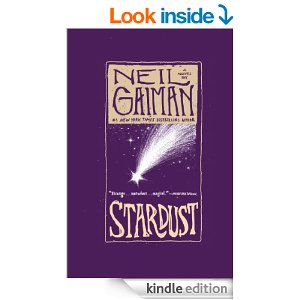
Stardust, Neil GaimanSome fantasy qualifies as literary fiction because of the way in which the story is delivered.

One example of what I think of as literary fantasy is Neil Gaiman’s Stardust. In the very first sentence of chapter one, Gaiman commits the most heinous crime an author can commit, according to those critique groups armed with a little dangerous knowledge:

Quote: There once was a young man who wished to gain his hearts desire. 

And then, to make matters worse, he throws out a bit of background:

  1. Our story starts in the village of Wall, a tiny town about a night’s drive from London. A giant wall stands next to the town, giving it its name.
  2. There’s only one spot to pass through this huge grey rock wall, and it’s always guarded by two villagers at a time, and they are vigilant at their task.
  3. This is peculiar, because all one can see through the break in the wall is meadows and trees. It looks as if nothing frightening or strange could be happening there, but no one is allowed to go through the break in the wall.
  4. The guards only take a break from the wall once every nine years, on May Day, when a fair comes to the meadow

omg! Did he really do that? What was he thinking, starting a fantasy novel with a TELLING, PASSIVE sentence followed by an info dump?  To answer your question, he thought he was offering up a good story, and guess what? HE WAS!

And he did it with beautiful, immersive prose.
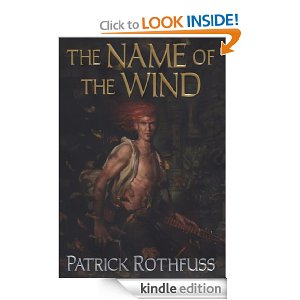
name of the wind -patrick rothfussWho else writes great prose? Patrick Rothfuss, for one. Take the first lines of The Name of the Wind. 

Quote:  It was night again. The Waystone Inn lay in silence, and it was a silence of three parts.

Rothfuss then goes on to commit what some purists (aka trolls) consider a heinous crime–he DESCRIBES THE SILENCE. He does this on the first page and guess what–the reader is sucked into the story and has no desire to leave.  To compound that crime, the story is a story within a story, told to a chronicler, and what most would use as the prologue actually comes after the first chapter, in chapter eight:

(quote) If this story is to be something resembling my book of deeds, we must begin at the beginning. At the heart of who I truly am. To do this, you must remember that before I was anything else, I was one of the Edema Ruh.

When we write, we are writing because we have a story to tell. (Yes, I said tell). To that end, every word must count, every idea must be conveyed with meaningful words, and sometimes you can just have a little fun with it.

In the opening lines of Gaiman’s Stardust, nothing unimportant is mentioned although the prose meanders in a literary way. Yes, he takes the long way, but the attitudes, mores, and personalities of Tristam’s village are conveyed with humor and the journey is the best part of this fairytale. He never devolves into purple prose.

The Elements of Style calls “Purple Prose” “hard to digest, generally unwholesome, and sometimes nauseating.”  To be fair, purple prose is subjective and each reader has a different level of tolerance for it, but it is something we definitely don’t want. What do you want to convey? Choose your words based on what you want the reader to see and feel:

  • Plain: He set the mug down. (conveys action–what’s going to happen next?)
  • Somewhere in the middle: He eased the tankard onto the table. (conveys a medieval atmosphere–what’s going to happen next?)
  • Bleah: Without haste, the tall, blond barbarian set the immense, pewter, ale-filled cup with a wooden handle onto the stained surface of the rough, wooden table. (conveys nausea–don’t care what happens next.)

Of course you are not going to devolve into sticky-sweet goo in your attempts to show the mood and atmosphere. But please, if I may use a cliché here, don’t “throw  the baby out with the bathwater.” Lean prose with well chosen imagery will express your ideas in such a way that the reader can hang their imagination on your words.

In direct contrast to Gaiman’s lighthearted opening prose in Stardust, the opening lines of Rothfuss’ The Name of the Wind, are dark and heavy with portent.  Rothfuss sets the mood, and conveys the subtle power kept restrained by Kote/Kvote, and he uses this atmosphere to drive the tale.

Both Rothfuss and Gaiman use words chosen for their imagery. Gaiman’s story is told with sardonic humor, which makes it all the darker, and Rothfuss’ prose evokes the dark of nightmares. They write with widely different styles, but both books are dark, both books are fantasy, and both books moved me.

Both authors write so well that the internet is rife with haters and trolls who can’t wait to trash their next book. THAT, sadly, is the mark of success, or genius, in today’s world of fanatics in dark rooms, armed with a rigid idea of what fantasy should be, and waging war via the internet on authors who dare to write outside those boundaries .
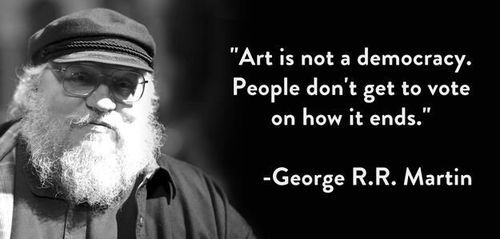
GRRM Meme 3Write from your heart, and dare to write what moves you. Think about the rush of “yeah, this is it!” that you get when you read a piece that takes you out of this world and changes your life for a few brief moments. That author knows something about the craft, or you would not have been so moved by it.

Study the prose of those whose work shocks, rocks, and shakes you. See how they craft the sentences, and form the moods and emotions that drive the plot. Learn from them how to show the true character of a protagonist, or the smell of an alley by the wharves. Read, and then apply what you’ve learned from the masters to your own work.
4 Comments

Filed under Fantasy, Humor, Literature, Publishing, writer, writing

#amwriting: keeping short stories short, when all your stories want to be long

Autumn Landscape With Pond And Castle Tower-Alfred Glendening-1869

Autumn Landscape With Pond And Castle Tower-Alfred Glendening-1869

Over the summer I posted several times about why we need to write short stories, and each time I’ve talked about writing them to build stock for submissions to magazines, anthologies, or to enter into contests. Today, I want to talk about the art of keeping a story short.

First, decide what length you want to write to–if you have no specific contest in mind, 2000 to 4000 is a good length that will fit into most submission guidelines.

For those of you who have trouble writing short works for contests and anthologies with rigid word-count limits, this is where mapping your story becomes really important.

Let’s say you want to write a story that can be no longer than 2,000 words. You know what the story is, but when you sit down and begin writing, it’s like there is way too much story for only 2,000 words. You need to map it out.

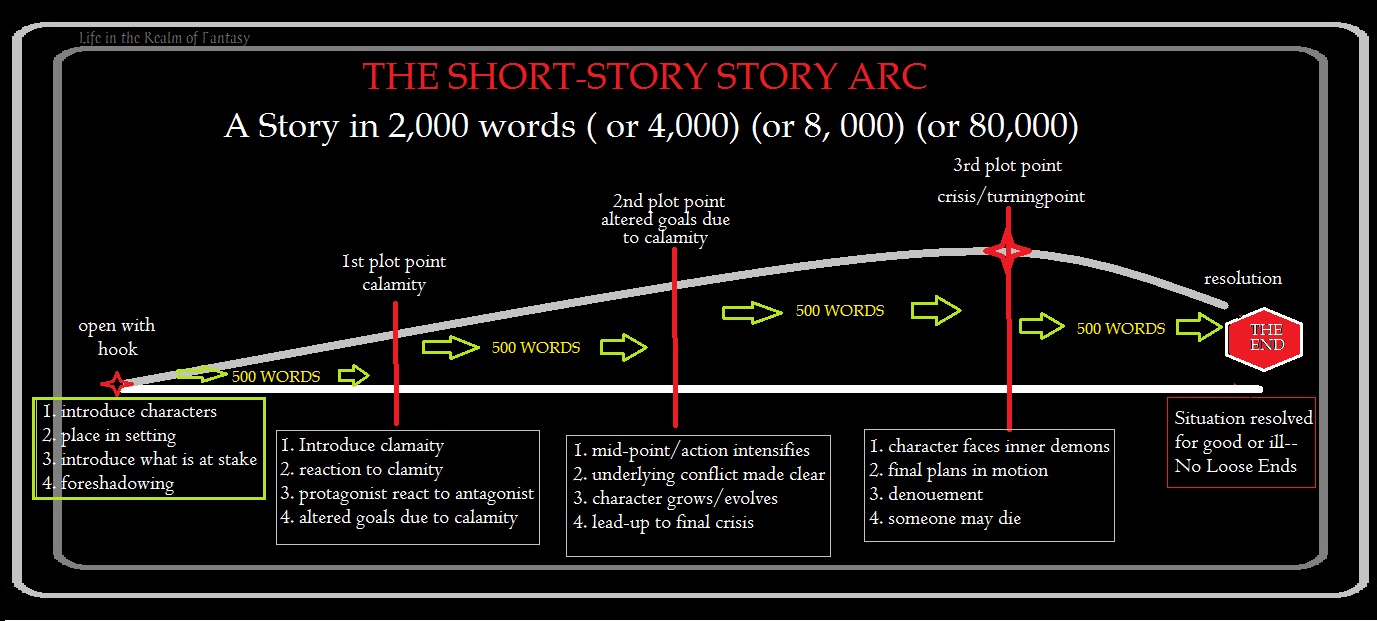
Short-stories are just like novels, in that they have an arc, and you can make it work for you.  By looking at it from the perspective of the story arc, you can see what you have to accomplish, and how many words you have to accomplish it in.

short story arc

Every word in a 2000 word story is critical and has a specific task–that of advancing the the plot. To that end, in a story of only 2,000 words:

  1. No subplots are introduced
  2. Minimal background is introduced
  3. The number of characters must be limited to 2 or 3 at most
  4. Every sentence must propel the story to to the conclusion

Lets say you are writing a fantasy, titled, A  Song Gone Wrong. Because he was a bit too specific when a putting a local warlord’s fling with another man’s wife into a song, our protagonist  is now a wanted man. Divide your story this way:

Act 1: the beginning: You have 500 words to show these plot points

  1. setting: the village of Imaginary Junction,
  2. the weather is unseasonably cold
  3. In an alley, a bard, Sebastian, is  hiding from the
  4. Soldiers of the lord he has inadvertently humiliated

Act 2: First plot point: You have 500 words to tell how

  1. the soldiers surround and capture Sebastian
  2. he is hauled before the angry lord and
  3. thrown into prison, sentenced to hang at dawn, but now you are at:

Act 3.: Mid-point: You have 500 Words to explain how

  1. Sebastian meets a dwarf, Noli, also sentenced to die
  2. Noli is on the verge of managing an escape, but needs help with one last thing
  3. Noli and Sebastian manage to complete the escape route
  4. but the guard seems suspicious, hanging around their cell door, hampering their escape

Act 4: Resolution–you have 500 words to show how

  1. The smart guard finally is relieved by a less wary guard, which
  2. allows Sebastian and Noli to squeeze through the escape route
  3. They are spotted at the last minute, but Noli’s friends are waiting, and
  4. they are whisked to a dwarf safe-house, leading to Sebastian’s next short-story adventure

Once you have parsed out what needs to be said by what point, and in how many words, you can then get to the nitty-gritty of turning that far-fetched tale of woe into a good short-story.

You will see that in order to keep to the strict limit of words, you will have to choose your words carefully. You will have to find words that really convey what you want to say, concisely in one or two sentences. Sebastian can’t give Noli a recap  of his troubles in your hearing–all that will have to be off-stage. On-screen conversations are critical–they will convey the personalities and the minimal backstory of the piece.

After a few times of creating short stories this way, you won’t need to think about it. When you know the length a given tale has to be, you can mentally divide it into acts and just write for fun.

2 Comments

Filed under Publishing, Uncategorized, writer, writing

Elements of the story: when the novel is not a novel after all

Book- onstruction-sign copy

In the rough draft, the goal is to get the work out of your head, and the concepts onto the page. To that end, I advise you to just write, and try not to self-edit as you go, because you may lose your train of thought.

If we let ourselves drop into the zone, in the first draft we are in story-teller-mode, which is where our best work happens. Yes, our prose is uneven and may contain things we wish had been written by someone else, but all we were doing was getting the idea down:

Thus it was that On departing Billy’s Revenge on this particular job, Lackland and Mags had kept the conversation cordial and polite, but little of substance passed between them. Oh, They joked and laughed, and said all the things that as they would say to with any Rowdy that they were on a job working with, but it felt all wrong. Still, Even so, Lackland did not press for anything more from Lady Mags, although he was full of questions and desperate for answers. 

It’s okay write crap when you are just getting it on to paper. You have to get the basic ideas down before you can craft them into a proper novel or short-story. (That drivel was from the rough draft of my 2010 nanowrimo manuscript. I can get rid of at least 24 words in that paragraph, and although I did replace several words, losing the fluff made it stronger.)

Remember, the rough draft–the first draft–is the proto-story, the just-born infant that is the child of your creativity. You do the shaping when you come back to it in the second draft. Some will stay, and some will go.

This weekend I discovered that one of my works in progress is not really a novel after all.

It was at 85,000 words, but it has occurred to me that it is a novella, because in the first half of the book, 4 chapters don’t advance the protagonist’s story. When I am done weeding it out, the ms may only top out at about 50,000 words.  In some circles that is a novel, but in fantasy, it is half a book.

Still, I’m not going to try to force it to be any longer than it is, because I have nothing of value to add to the tale. I would much rather be known for having written a strong novella than a weak novel. So, now at the end of the rough draft, this book must become a novella.

Those four cut chapters total about 16,000 words. Add to that the words that will be weeded out in the second draft and I would say its going to lose a lot more weight–perhaps another 8,000 to 10,000 words. But why do I think this? Because I am just finishing the rough draft and I have realized several things:

  1. __Hell's Handbasket__400 1Besides the four chapters that must go since they don’t belong there anymore, 3 more chapters are mostly background that doesn’t need to be in the finished product. When I went in and removed large chunks of exposition I was able to condense those 3 chapters into 1 that actually moved the story forward.
  2. Add to that the fact that in the rough draft we will always have a lot of words we can cut (or find alternatives for), words and phrases that weaken our narrative:
  • There was
  • To be

I will also make some contractions, ‘was not’ becomes ‘wasn’t,’ ‘has not becomes hasn’t,’ etc.

It’s amazing how many times we can simply cut some words out, and find the prose is stronger without them. Many times they need no replacement.

Sometimes we use what I think of as “crutch” words. You can really lower your word-count when you look at each instance and see if you can get rid of these words. These are overused words that fall out of our heads along with the good stuff as we are sailing along:

  • so,
  • very,
  • that,
  • just,
  • so,
  • literally
  • very

But back to one of my current works-in-progress: why am I cutting an 85,000 word MS down to 50,000 or so words?

800px-Singapore_Road_Signs_-_Temporary_Sign_-_Detour.svgA lot of what I have written is good work, but as I said, several long passages don’t advance my protagonist’s tale. They pertain to a different character’s story set in that world–so they were a rabbit-trail to nowhere in the context of this tale. However, those passages will come in handy later if I choose to write that character’s story, so I am saving them in file labeled “Out Takes.”

The fact is, you must be willing to be ruthless. Yes, you may well have spent three days or even weeks writing that chapter. But now that you are seeing it in the context of the overall story arc, you realize it is bogging things down, and NO–Sometimes there is no fixing it. Just because we wrote it does not mean we have to keep it.

In genre fiction, no matter how much you like the prose you have just written for a given chapter, if the chapter does not advance the story, it must go. The story arc must not be derailed, and sometimes amputation is the only cure.

The Story Arc copy

3 Comments

Filed under Publishing, writer, writing

Elements of the story: Crafting magic systems

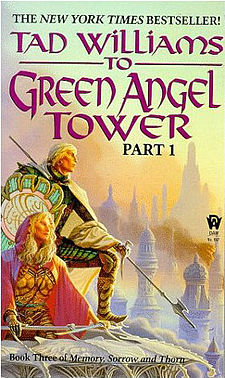
Green_Angel_Tower_P1I am thrilled that Tad Williams is writing another series of books set in Osten Ard. Tad is an author who  absolutely understands the craft of writing fantasy. He knows what makes epic fantasy EPIC. There is just the slightest hint of the rebellious indie in his work, which makes it a little wild. But more than that, Tad understand how important it is to make the limitations and roadblocks forced on the protagonists power the narrative.

If you love epic fantasy and have not read his powerful trilogy, Memory, Sorrow, and Thorn–you should.

In Tad’s work, magic systems feel natural, organic and are not all powerful. I love epic fantasy books where the magic systems have been as well thought out as the political systems, and the characters are limited in what they can do with them.

I despise books where the hero/heroine can do anything, and be as awesome as she/he needs to be, all because he/she has a special power. No need to worry about planning that mission, because our hero can read minds and predict the future–he knows exactly how to thwart Evil Badguy. Several boring scenes later, an opportunity for something interesting turns up, but no! The author has blessed his favorite supercharacter with (cue the fanfare) amazing magic powers that have no explanation, and apparently no limits.

If you are writing fantasy, consider this–Infinite abilities instills infinite boredom in me as a reader.

Let’s talk about magic. Who has magic? What kind of magic–healing or offensive or both? What are the rules for using that magic and why do those rules exist? Magic is an intriguing tool in fantasy, but it should only be used if certain conditions have been met:

  1. if the number of people who can use it is limited
  2. if the ways in which it can be used are limited
  3. if not every mage can use every kind of magic
  4. if there are strict, inviolable rules regarding what each magic can do and the conditions under which it will work.
  5. if there are some conditions under which the magic will not work
  6. if the learning curve is steep and sometimes lethal

Even if it does not come into the story, you should decide who is in charge of teaching the magic, how that wisdom is dispensed, and who will be allowed to gain that knowledge.

  1. is the prospective mage born with the ability to use magic or
  2. is it spell-based, and any reasonably intelligent person can learn it if they can find a teacher?

Mists_of_Avalon-1st_edMagic and the ability to wield it usually denotes power. That means the enemy must be their equal or perhaps their better. So if they are not from the same school, you now have two systems to design. You must create the ‘rules of magic.’  Take the time to write them out, and don’t break the laws, without having a damned good explanation for why that particular breaking of the rules is possible.

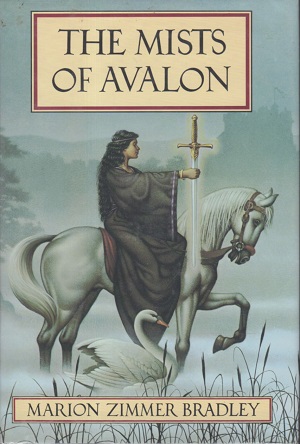
Limits make for better, more creative characters. In the Mists of Avalon, Marion Zimmer Bradley made the magic a natural outcome of religion, something only a few characters had access to, and they paid a great price each time they used it.

Lets pretend we have a mage, Gerald—we’ll make him a lowly journeyman mage, just allowed out of magic school on his own. Events beyond his control occur, and only he can rid the world of Stinky Sam. Sam is a very powerful, very naughty wizard, who will crush young, untried Gerald with no effort whatsoever.

Let’s say Gerald has a few skills at the beginning: he can draw water out of the air for drinking, and maybe he can use the elements of fire and lightning as weapons. Can he also use magic to heal people?  Can he heal himself?  What are the rules governing these abilities and how do these rules affect the progress of the story?  When it comes to magic, limitations open up many possibilities for plot development.

For this to be a good story, our bad guy, Stinky Sam, must be a master in whatever area Gerald has chosen–and he should have a few skills and abilities Gerald might never learn.

the night circus by erin morgensternThis means Gerald must work hard to overcome the obstacles set in his path by Stinky Sam.  With the successful completion of difficult tasks, and overcoming great hardships, Gerald will learn what he needs to know about his magic/gifts, and acquire the ability to counter Stinky Sam’s best efforts in the final showdown, although it will be difficult.

In great fantasy, evil is very strong, and has great magic–but there are rules.  The evil one might be a bully and he may have some awesome skills, but he’s not omnipotent, or there would be no story. All magic systems have limits, which means he has a weakness. With the discovery of the antagonist’s limitations, your character has the opportunity to grow and develop to his fullest potential in process of finding and exploiting it.

2 Comments

Filed under Fantasy, Publishing, writer, writing

Elements of the story: showing the mood

My Writing LifeMost of us, if you are reading this blog, are writers who love to read for pleasure. We each enjoy different sorts of books, but all our favorite reading has one thing in common: the story, whether fictional or true, moves us in some deeper way, making us think about it long after the final page has been read.

In order for the reader to be moved by a story, his imagination must have been completely engaged in the work. Thus, the writer must perform a tightly controlled balancing act, walking the fine line between giving too much description and not enough.

As writers we are constantly admonished to show, not tell. This can be taken to extreme, and the result is a boring, unimaginative walk-though of a character’s most minute expressions. For example:

Gordon’s brow furrowed, and his eyes narrowed. His eyebrows nearly met in the middle. His lips turned down at the corners. He screamed, “You bloody idiot.”

Well, duh. Pick one, and let the reader imagine the rest.

Gordon appeared angry.

That doesn’t do it either. That is simply telling the reader Gordon was upset, rather than showing it. Perhaps Gordon’s face darkened and his voice was harsh. Or, Gordon’s eyes narrowed. “You bloody idiot!” 

If your character is angry, please don’t have them hiss their dialogue. People do not snort, hiss, or spit dialogue, no matter how angry they are unless they are a snake or a camel.

The writing world has several good handbooks on showing emotions, and these two are  in my library:

It’s good if you have bought a book on this subject and are using it to help show what is going on in  your character’s minds rather than telling it. But use some common sense. If there are fifteen ways to show dejection, please don’t use them all to describe one moment. Simply have your character sit slumped, or refuse to engage the others.

Readers don’t want to be told in minute detail what to imagine. They will put your boring book down and walk away with only one regret–that they bought it in the first place.

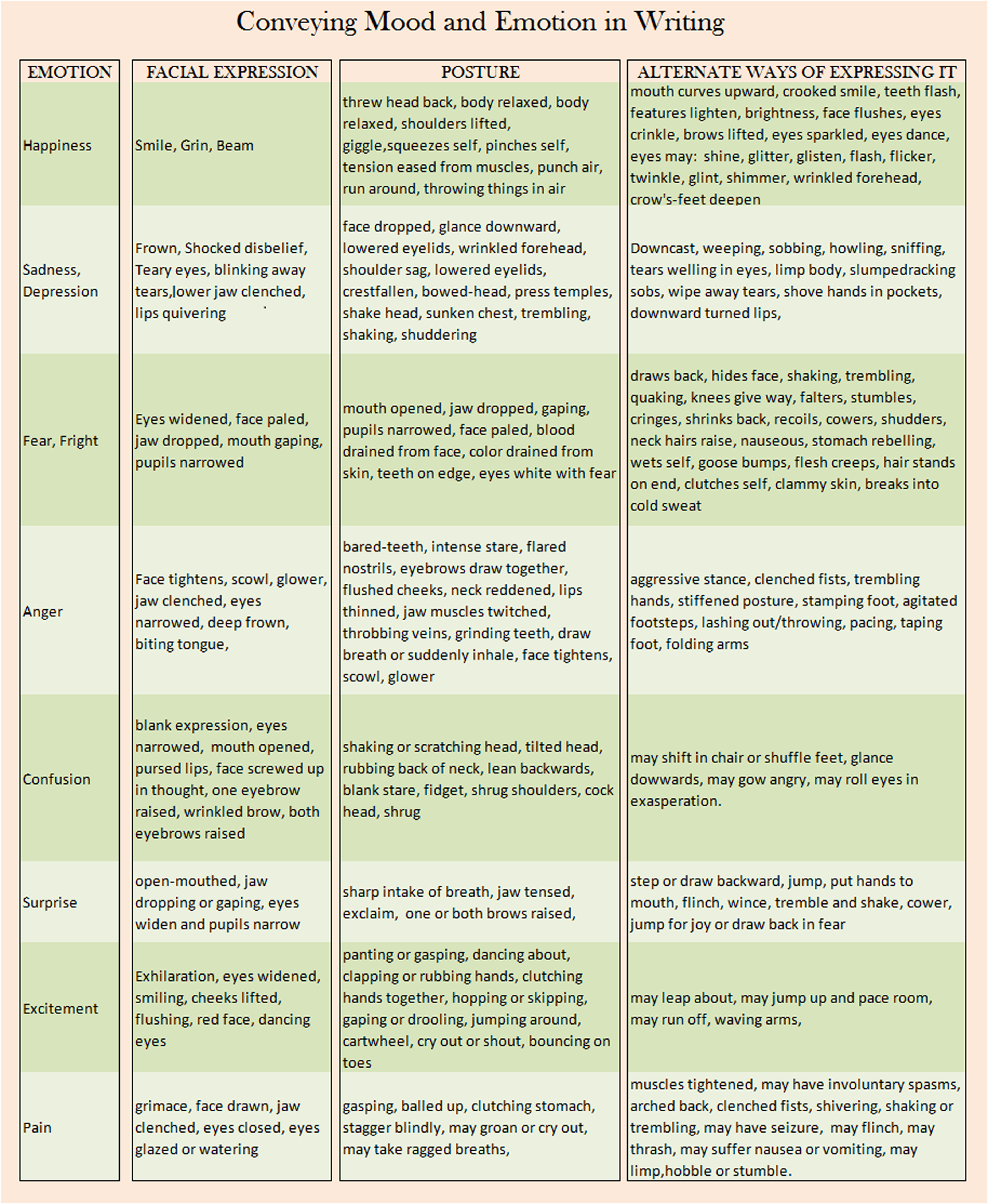
I’ve put together a little cheat sheet for showing emotions. Be sparing–show just enough to keep your readers engaged and the story moving along. If you provide a good framework and allow the reader’s imagination to do the rest, you will engage the reader. That, my friends, is priceless.

Cheat sheet for showing emotion and mood

Cheat sheet for showing emotion and mood

5 Comments

Filed under Humor, Publishing, Uncategorized, writing

Elements of the story: making effective revisions

puppy happy dance via pinterestThere is no feeling of accomplishment like that of having completed a novel, or a shorter piece. Once that final sentence is written, there is that happy-dance moment, where we are shouting and the world is singing.

Following that, we have the urge to immediately look the finished manuscript over and see where some revisions could be made.

I know it’s tempting, but don’t do it. We need to gain some distance from our work in order to see it more clearly, so put it aside. If you work on something else for a couple of weeks, or even a month or two, you will gain a better perspective on what you just finished, and your revisions will bring out the best in your work.

But when we do get back to it, where do we start?

Stephen King said it so eloquently in his book, On Writing: “I got a scribbled comment that changed the way I rewrote my fiction once and forever. Jotted below the machine-generated signature of the editor was this note: ‘Not bad, but PUFFY. You need to revise for length. Formula: 2nd Draft = 1st Draft – 10%. Good luck.’ — Stephen King, On Writing, 2000

This means we must cut the fluff.  If your 1st draft is 100,000 words, try to cut 10,000 words out of it, making it 90,000. The following is a list of things to consider:

  1. Dialogue pitfalls: Search for clichés. Speaking as a reader, do a global search for the word alabaster. If you have used it to describe a woman’s skin, get rid of it, and find a different way to describe her. It’s an overused word that has become cliché. Find different ways to say what you want, unless you have a character who uses clichés–if so, he’d better have a good reason. Even then, don’t go overboard. Click here for a looooong list of common clichés: ProWriting Aid.
  2. Try to make your sentences do without these words: very, that, just, so, and literally. There will be places where they are the only words that will work, and you will use them in that instance. Usually just cutting them out of the sentence and adding nothing makes the sentence stronger. Fluffy, over-blown prose weakens the narrative.
  3. Flowery prose, even in a medieval setting, is off-putting to a reader. Do a global search (Cntrl F) for two letters: ly. This will bring up all the adjectives  (oops adverbs, thank you David Cantrell) because they end in ly. Look at each instance and if it is possible, get rid of them. Often the sentence is stronger without that extraneous word. Find a way to show the idea without flowery prose. This is where you grow as a writer–you give visual clues that enhance the story.
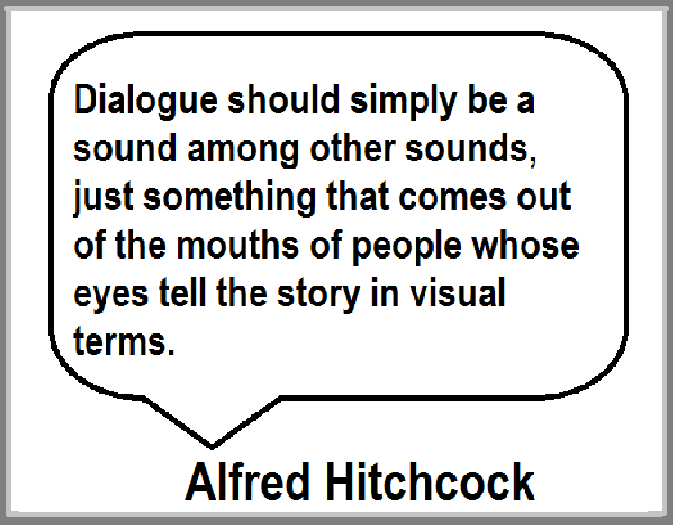
  4. Alfred Hitchcock quote re dialogueExamine the ms for conversations that are opportunities for info dumps. Info is good, but don’t dump it–dole it out as needed, and only when needed.
  5. Are people long-winded, and ranting on and on, with nary a pause for breath?  Decide what is really important in what they are saying and cut everything else.  Conversation in literature must have a purpose, or it is as boring as hell. Cut those marathon speeches down to where they sound like normal people talking, not like orators.
  6. Conversation must pertain to and advance the story. Small talk and verbal tics are obnoxious, and should be avoided at all cost. DO NOT have your characters preface sentences with “Hmmm…” and DO NOT have them use the name of the person they are speaking to, unless there are more than two characters in the scene. You can avoid things like “Well, Bill, it was like this…” just by having the speaker turn to Bill, and say it.

And now for my pet peeve: People do not smile, snort, or smirk dialogue. I mean really: “That’s a lovely dress,” snorted Clara. (eeew. )  Stick to simple dialogue tags, such as said and replied. In fact, it is often best to do away with speech tags (attributions) altogether for a few exchanges every now and then, if:  A. you have only 2 speakers, and B. you have clearly established who is speaking. You can also show who is speaking in other ways:

  1. Miss a few beats. Beats are little bits of physical action inserted into dialogue: John fell quiet and stared out the window. Halee turned and walked out the door. Used sparingly, these pauses serve to punctuate the dialogue, to give the scene movement, and to maintain a strong mental picture in the absence of description. They’re best placed where there is a natural break in the dialogue, because they allow the reader to experience the same pause as the characters.
  2. Don’t over do the action within the conversation. If your characters are rattling pans, slicing apples or staring out the window between every line of dialogue, the scene becomes about the action and not the dialogue, and the impact of the conversation can be lost entirely.

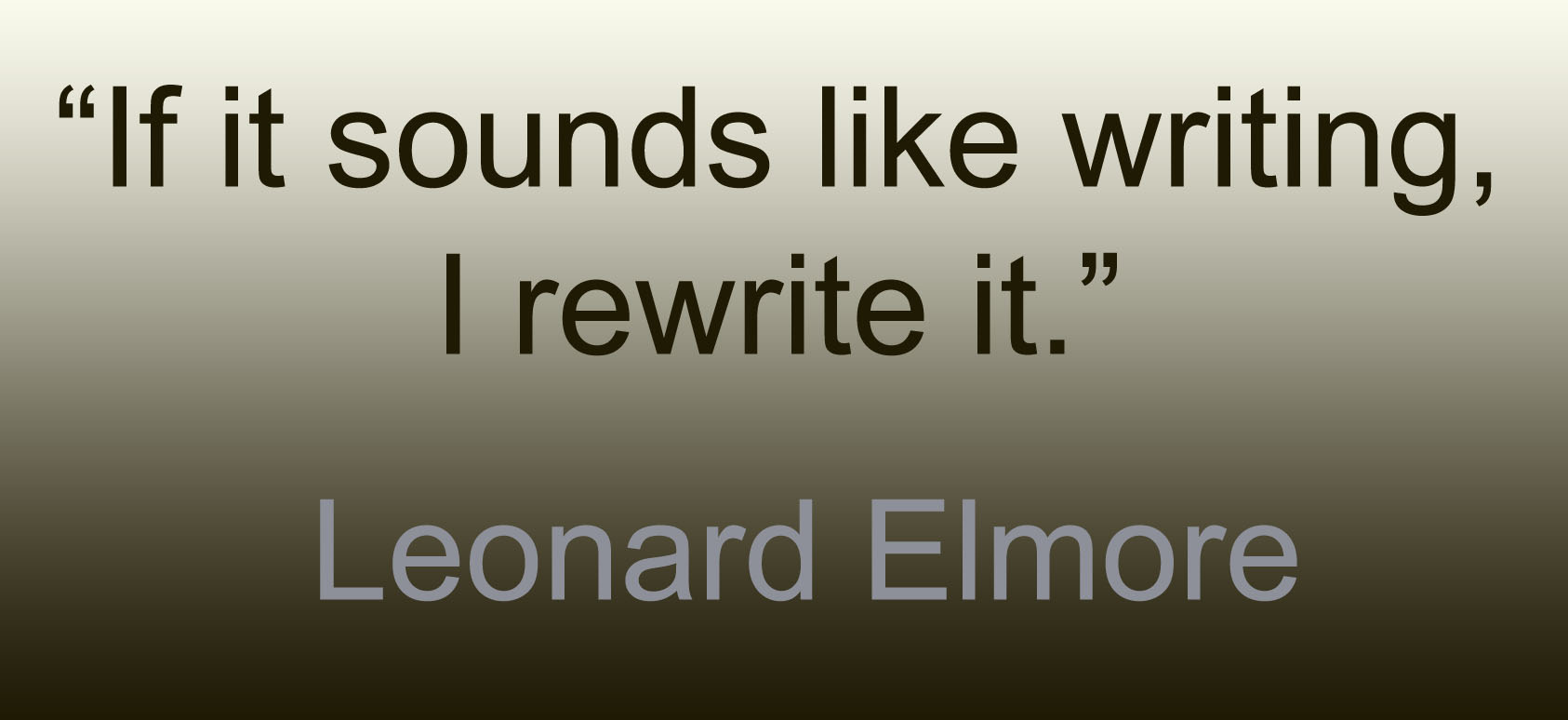
leonard elmore quoteIn our first draft we are trying to make our point, and we inadvertently repeat ourselves. A good way to find where you are repeating yourself is to read a chapter from the bottom up, one paragraph at a time. My editors frequently  tell me, “You said it once, that’s enough.”

In my own work, I hear repetitions and other things I need to cut, if I read it aloud to someone else. I think that’s because when another person is listening, we are more aware of how a given passage sounds.

Also, consider not including a prologue. About half of the readers see the word “prologue” and assume it will be a boring info dump, so they skip it.

This begs the question, “Why go to the trouble of writing it if they aren’t going to read it?” If you must have a prologue, consider calling it Chapter 1– and make it clear that is occurring twenty years before the present day (or whatever). Make it immediately exciting, make it a true first chapter. And don’t do an excerpt from a Holy Book as your prologue. I did that once, and it flew like an iron kite. So I moved my Holy Book to the appendices, and if a reader is interested, they can read it there.

These are just a few things to look for when you begin revisions. And just so you know, revisions are not editing, they are rewriting. If you are “editing” your own manuscript, you have a fool for a client. There is no such thing as self-editing–the best you can do is make revisions and admire your work. You may do very well at that–some people do.

You must make revisions before you hire an editor. Then, ask other authors who they might recommend as an editor and see if you can work well with that person. Your editor will likely point some things out that you didn’t see, but that a reader will. At that point, you will make revisions again. But the results will be so worth it!

5 Comments

Filed under Humor, Self Publishing, Uncategorized, writing

The clock, groceries, and a new thesaurus

Jetsonslogo640x480At times the world seems to be conspiring against me.  I have to drop what I’m doing, load up the van, and head up to town for something as mundane as groceries. Food should order itself, deliver itself, and put itself away.

But no. Where is my android butler and why is he not doing the shopping? Just like the flying car I was promised when I was child, my android butler is in the Jetsons‘ style garage of my imagination.

But sometimes I get two or three pages of writing done in the 20 or 30 minutes before I have to leave the house for an appointment. There is something about the pressure of knowing I will have to quit at a certain time that forces me to be more productive than I would ordinarily be.

Why is this? When I am pressed for time I use every second to get those ideas out of my head. I don’t stop and research on the good, old, time-wasting internet, and I don’t worry about whether or not I am overusing a word in the narrative. This is a rough draft–all of that can be ironed out when I have more leisure–the next day usually.

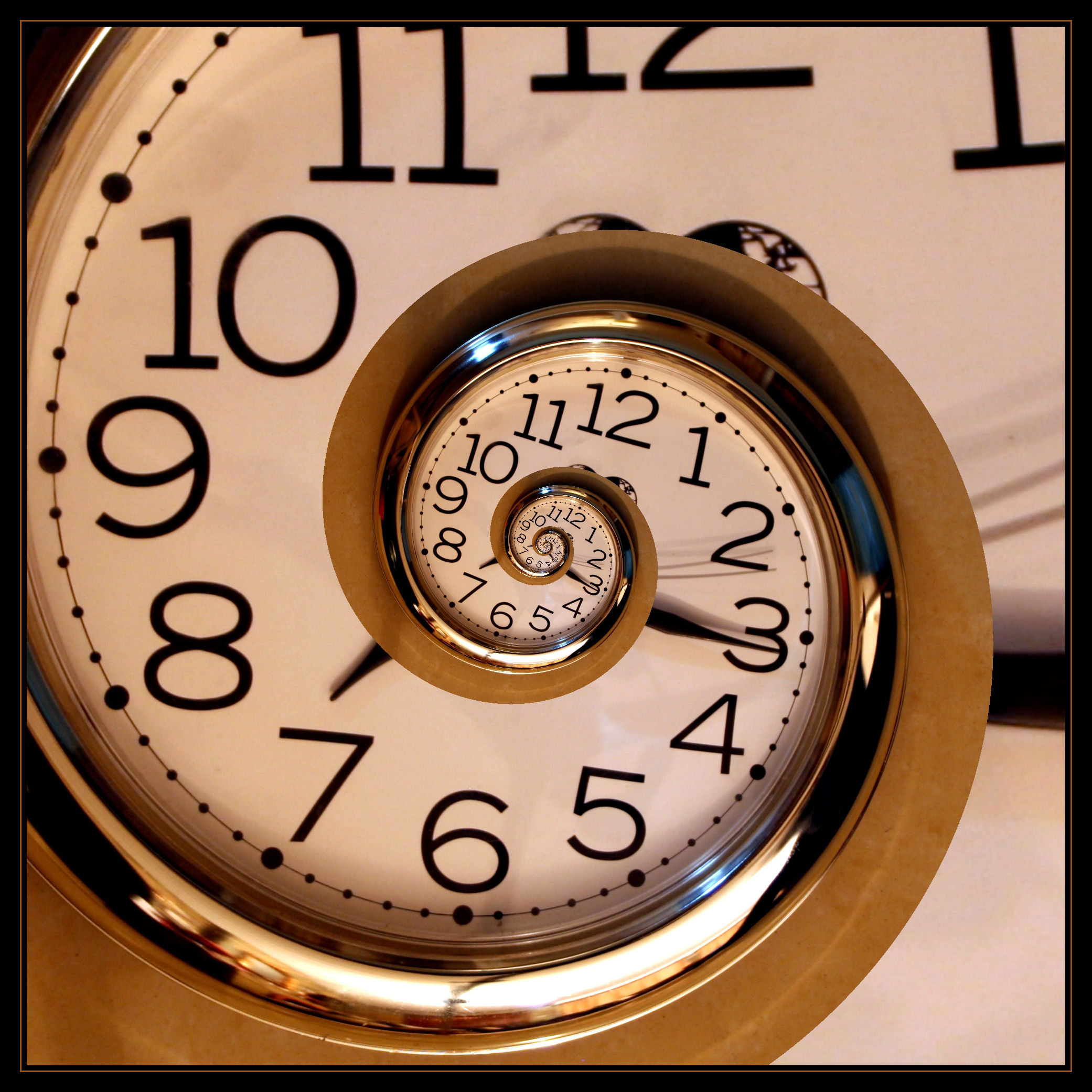
clockSome of my best ideas have come about under a time crunch.  Normally when I am writing on a stream-of-consciousness level, I can key about fifty words a minute–paltry compared to today’s young-uns who grew up keying their homework rather than writing it in cursive.

I do admit that just because I can key those words does not mean they will all make sense, or be worth reading. But that again is why we are driven to look at what we just wrote the day after we wrote it–did it say what I meant? How many times did I use the word “noose” in that particular chapter and where am I going to find six different alternatives for such a unique word?

Apricot poodle puppy portrait. Isolated on a white background (studio shoot), via Google Images

A little rephrasing here, cutting there, and voila! It looks like a poodle!

It’s a jungle in my head sometimes, and my ancient  student edition of Roget’s Thesaurus is my friend. But neither the old student version of the thesaurus from 40 years ago, nor the modern, online version is cutting it for me right now.

I need more synonyms. Lots, and lots more!

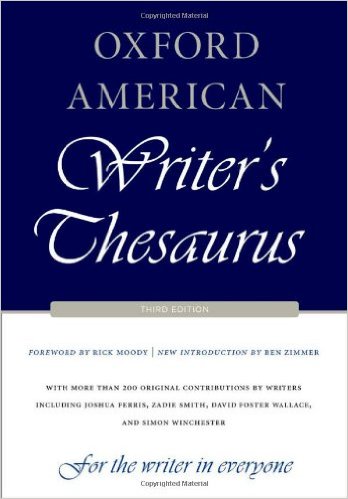
I have just now invested in a bigger, better, hardcover thesaurus. Thus I now have the Oxford American Writers’ Thesaurus winging it’s way to my doorstep. I expect the drone to drop it on Saturday.

ozford american writers thesaurusSome references have to be in hard-copy–such as The Chicago Manual of Style, which is the most comprehensive style guide geared for writers of essays, fiction, and nonfiction. Strunk and White’s Elements of Style is a good beginner style guide, but I found it hard to navigate and couldn’t always find what I wanted. The Chicago Manual of Style is written specifically for writers, editors and publishers and is the industry standard.

Just as a side note–if you are using AP style you are writing for the newspaper, not for literature–two widely different styles with radically different requirements. AP style was developed for expediency in the newspaper industry and is not suitable for novels or for business correspondence. For business, you want to use the Gregg Reference Manual.

Eternal_clock

Eternal Clock, Robbert van der Steeg CC|2.0 via Wikimedia Commons

All in all, I like the way being forced to produce words in a short time helps me lay down a rough draft. But being short on time is big pain when I am trying to revise and iron out stubborn, repetitive wrinkles in a narrative.

Summer is nearly over, and with that comes the long, dark days of the northern winter. I won’t be going as many places (I hope). But with the advent of September I will be spending longer hours editing for clients. My personal productivity will drop in regard to my own work, but I will still find time to write.

And I will also find time to revise. I am nearly at the end of two books written for the World of Neveyah series. Valley of Sorrows will wind up the Tower of Bones series–it is completed and is in revisions. The Wayward Son is nearly complete. While The Wayward Son is not actually a part of the Tower of Bones series, much of it does run concurrently with Forbidden Road, as it is the story of John Farmer’s redemption.

Today will be busy–groceries can wait until tomorrow. Today I am working as hard as I can, trying to get Valley of Sorrows ready to be edited, so that the ToB series will be complete, and also to get John’s story out there too.

2 Comments

Filed under Books, Humor, Literature, Publishing, writer, writing

Elements of the story: identifying and crafting a strong theme

The Plaza After Rain, Paul Cornoyer PD|100 via Wikimedia Commons

The Plaza After Rain, Paul Cornoyer PD|100 via Wikimedia Commons

“Theme” is an idea or message that flows through a story from beginning to end. Theme is what readers think the work is about but it is also what the work itself says about the subject.

It is ephemeral in that theme is only an idea, but it is like the moon–it is there and the world is greatly affected by it through the pull of gravity: witness the tides.

In a given work the theme might never be mentioned outright, but the characters’ actions are motivated by it and the plot revolves around it. Here is a link to a list of 101 common themes in books.

How do you make something as hard to get a grip on as a theme central to your story? The theme was an idea about the plot, a notion you had about your story when you first began to write it, no matter what the setting you placed it in was, or whether the genre was fantasy, sci-fi, paranormal, or contemporary fiction.

Brothers in Arms, Bujold, coverPerhaps you are writing a tale where a group of people face heroic challenges in a war. On the surface this looks like it it is all about the action, but in reality it is is not. It is about relationships, the bonds of friendship, and the way the events of this war bind a group of soldiers together and also the way events test those bonds, perhaps breaking them. The theme of this tale is the way fighting a common enemy binds strangers from all walks of life together: creating brothers- and sisters-in-arms.

The way I look at it, the theme is as important as the main character. You spend as certain amount of time creating strong characters. Perhaps you are like me and make personnel files for each new character so you know who they are, how they think, and how they will react in a given situation. Or not, but you know your characters the minute the enter the story.

I try to identify my theme early on, and write a short paragraph to myself to remind me of what that central idea was so I stay on track. During the initial writing process I regularly refer back to that little note, to ensure I have not lost my way. I want to write in such a way that I emphasize and exploit that idea throughout the book or short-story.

Initially, when I first started writing full time, I was not always good at sticking to my original idea. At times the core themes became mushy, which, when you read these stories, takes away from the cohesiveness of what otherwise could have been good work. Theme is glue that binds your plot and characters.

The best way to get a grip on both identifying and solidifying the theme is to practice writing with a specific core theme in mind. Write a short story, just a piece of flash fiction. Make every paragraph represent some aspect of that central concept.

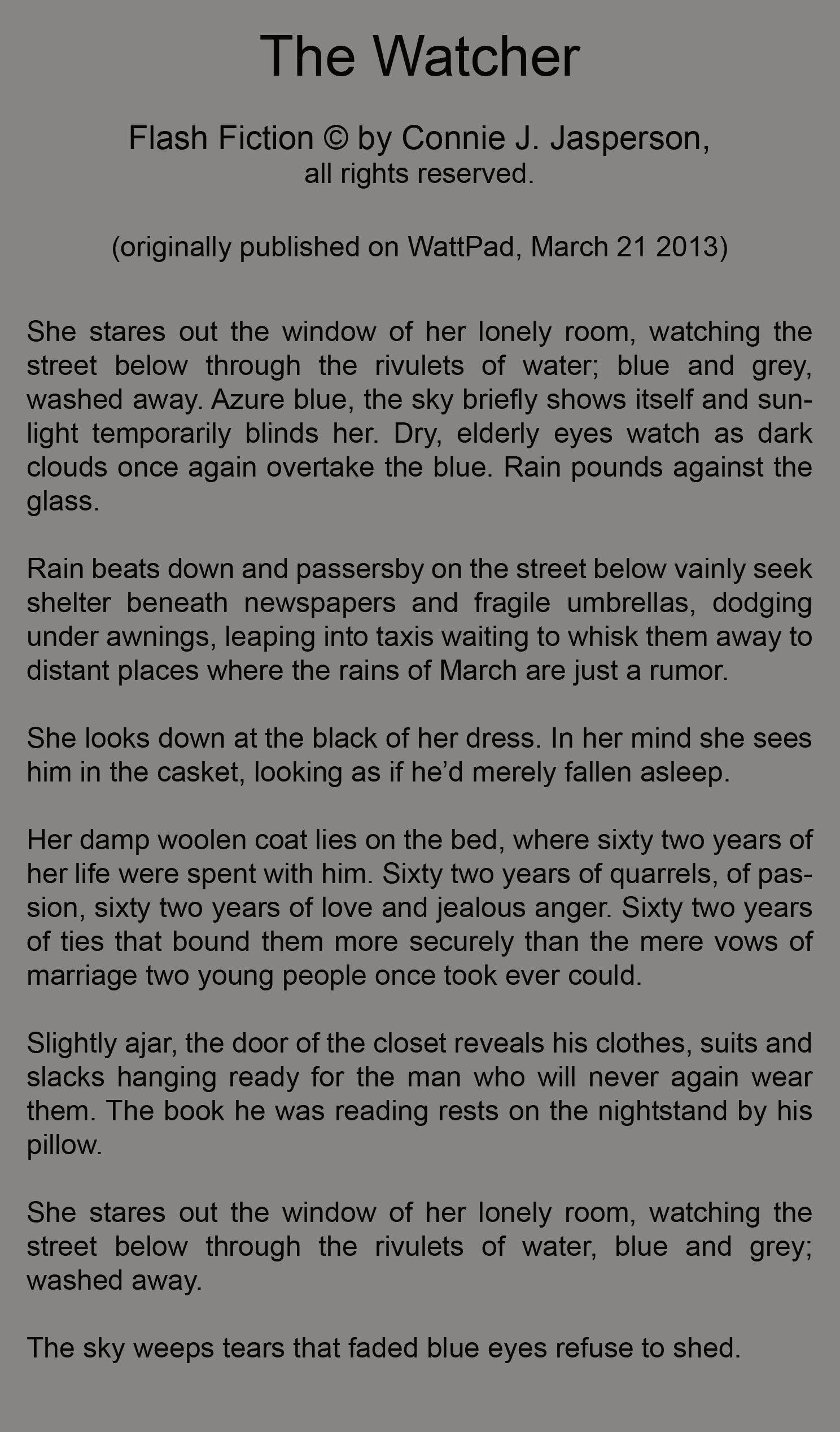
I tend to think of themes and then write stories set in fantasy worlds, but not always. Take this piece of Flash Fiction I wrote in 2013:

the watcher flash fiction

It is set in a contemporary environment with no fantasy elements. The idea came from the painting at the top of this post by Paul Cornoyer, and the action is minimal–an elderly woman staring out a window. But the theme is grief, and everything in these short paragraphs points to and represents her sense of loss.

How do you identify your theme? Sometimes it’s difficult, unless you start out with one in mind. Most of my books are based around the hero’s journey, and how the events my protagonists experience shape them. Alongside the theme of good vs evil are the sub-themes of brotherhood, and love of family.

These concepts are important to me on a personal level, and so they find their way into my writing. Ask yourself what is important to you? When you look for a book, what catches your interest?I am not talking genre here, I am speaking of the deeper story. When you look at it from a distance, what do all the stories you love best have in common?

  • Political thrillers: Set against the backdrop of a political power struggle. Political corruption, terrorism, and warfare are common themes.
  • Romance Novel: Two people as they develop romantic love for each other and work to build a relationship. Both the conflict and the climax of the novel are directly related to that core theme of developing a romantic relationship, although the novel can also contain subplots that do not specifically relate to the main characters’ romantic love.
  • Literary fiction focuses on the protagonist of the narrative, creating introspective, in-depth character studies of interesting, complex and developed characters. Action and setting are not the point here, although they must also be carefully developed in such a way they frame the character, and provide a visual perspective.
  • Science Fiction: realistic speculation about possible future events, based solidly on adequate knowledge of the real world, past and present, and on a thorough understanding of the nature and significance of the scientific method. Science and technology are a dominant theme, but based on current reality. Characters are still subject to sub-themes such as morality and love, but setting and science are the main themes.
  • Fantasy: Often set in alternate, medieval, or ancient worlds, common themes are good vs evil, hero’s journey, coming of age, morality, romantic love. Can also be set in urban settings with paranormal tropes.

the hobbit movie poster 2On the surface these types of books look widely different but all have one thing in common–they have protagonists and side-characters. These people will all have to deal with and react to the underlying theme of the book. Morality, love, coming of age–these ideas can be found in nearly every book on my shelves or in my Kindle.

In my mind, the genre and the setting in which these characters react to the wider concepts are just a backdrop. The world they are set in is the picture-frame, a backdrop against which the themes of the story play out, and characters are shaped by a force beyond their control–the author.

4 Comments

Filed under Literature, Publishing, writer, writing

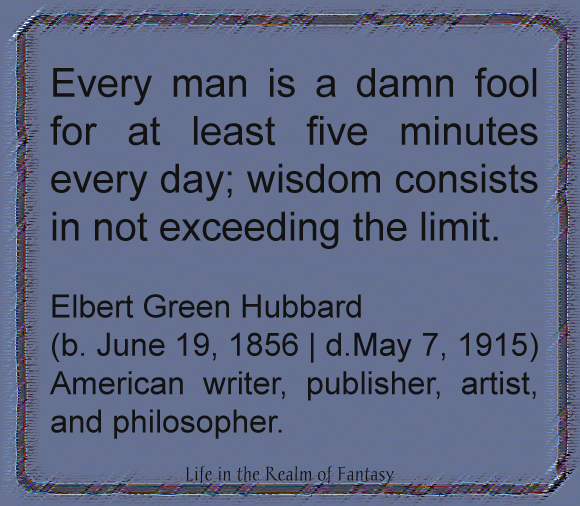
Is it damn fool, damnfool, or damned fool?

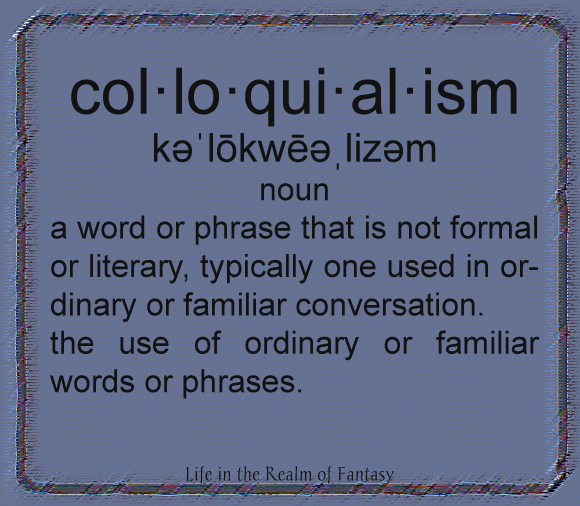
colloquialism memeOne of the more interesting things about being an editor is the amazing amount of time you spend stopping what you are doing and doing a little research. This is especially true if you are editing a piece that has a lot of colloquialisms in it.

Fortunately, some colloquialisms have made it into the Webster’s Dictionary, and the rest are out there on the internet somewhere.

Let’s consider the question of if we mean damn fool, damnfool, or damned fool:

According to the Urban Dictionary

  • A person who is extremely foolish. Their actions are not only irresponsible to themselves, but can possibly be harmful towards others.
  • If a guy tries and talk you out of using a condom, he is a damn fool. (You can’t make this stuff up–you have to go to the internet for it.)
  • Did you see that damned fool? He was swerving all over the road. (end quoted text)
And just for fun, lets see what Wiktionary has to say:
  • damn fool (adjective)
  • damnfool 
  1. (informal) Contemptibly foolish. (end quoted text)
He was a damned fool.

Ellbert Hubbard memeHow I see it:

  1. He was a damned fool. (I just cursed him to hell.)
  2. He was a damn fool. (He was contemptibly foolish)
  3. He did a damnfool thing. (He was contemptibly foolish and I will curse him to hell.)
Now this can be tricky if you are unsure which of these damnfool things the author meant, so this is where I insert a comment asking the author what kind of a damned fool she is writing about.
.
What other fun little “OMG I have to stop and look this up” things do I play with when I should be working?
  • I love looking up Pagan rituals, or indigenous peoples’ religious rituals.
  • I love anything to do with history, and exact dates.
  • Ooh! Ooh! Let me look it up on a map!
Yep–looking things up is part and parcel of the fun. I’m just not as keen on looking up where to properly place commas–the rules make my head hurt.
 .
So let’s talk commas and where to stick ’em, or better yet, where NOT to stick ’em. I found a wonderful website that has a handy-dandy list of comma don’ts phrased in simple language that did not make my eyes go numb: The Proper Care & Feeding of Commas
 .
chicago manual of styleImproperly installed commas can wreak havoc in a paragraph. This is because they are punctuation: “…the act or practice of inserting standardized marks or signs in written matter to clarify the meaning (of a sentence.)” (quoted from Google)
.
Commas are there to separate clauses and to make sentences understandable. Consistently used according to the accepted rules, commas make it so that every English-speaking reader understands what you have written. We don’t put them in to indicate to the reader where we pause or take a breatheveryone pauses and breathes differently and what makes sense to you will not make sense to someone else.
.
These are the same rules for everyone, which make our work understandable in Brisbane, Houston, London, Hong Kong or Seattle. But the rules in the Chicago Manual of Style (my go-to manual) are often ambiguously phrased and are hard to remember. SO, when checking on simple points, I love this website for a quick list of comma dos: Your Dictionary: Comma Rules
 .
Dialect and local sayings play a huge part in contemporary work–sometimes I get a piece that was written by a UK author.  Perhaps it is an Urban Fantasy and it will have all sorts of words I have never heard of: again, I go to Your Dictionary: Common UK Expressions. This  is also a problem with American dialects and local slangs–the internet is my friend! Texas-talk is “a whole nuther thang” and sometimes more difficult to follow than Cockney EnglishHowdy Get Rowdy
 .
It is an editor’s job to do a certain amount of research whenever a question arises in the manuscript to ensure his comments will help the author clarify ambiguous and hard-to-understand areas. Having fun surfing the internet looking up obscure and interesting facts is just one of the perks!
.
keep-calm-and-say-you-fool-you-damn-fool

2 Comments

Filed under Books, Fantasy, Humor, Literature, Publishing, Uncategorized, writer, writing

Crafting the narrative: the potty-mouthed vicar

Portrait of Vsevolod Mikhailovich Garshin by Ilya Repin

Portrait of Vsevolod Mikhailovich Garshin by Ilya Repin PD|100 via Wikimedia Commons

Look at poor Vsevolod Mikhailovich Garshin. The artist immortalized him at the unfortunate moment he realized he was faced with a gazillion hours of searching for overused words in his manuscript–and all of them in Russian.

Heh heh.

I wrote a post on this subject three years ago, but it’s time to  dust it off and play with it again. Overused words can be fun if done right:

Mark Twain said, “Substitute “damn” every time you’re inclined to write “very”; your editor will delete it and the writing will be just as it should be.”

Well now, we could have some fun with that!

Think of how often some beginning authors use the word very in their work:

“We are doing very well, thank you,” replied the vicar. “The weather is very nice, and the food  is very good.” 

Let’s do as Twain suggests and see what happens:

“We are doing damn well, thank you,” replied the vicar. “The weather is damn nice and the food is damn good.”

That was fun. The word ‘damn’ leaps out at you, because you don’t really expect it. I personally enjoyed replacing ‘very’ with ‘damn.’  But, hilarious though it is to give the vicar potty-mouth, in reality it’s unnecessary. Simply eliminating ‘very’ and not replacing it with anything goes a long way toward improving it:

“We are doing well, thank you,” replied the vicar. “The weather is nice and the food is good.”

Some times we repeat certain words and phrases for emphasis. This article is not about using repetition when crafting narrative. Instead, we are thinking about words that are overused, and which we can often do without.

In our rough drafts we overuse certain words because we are flying along and they are easy–they say what we want and we can keep on moving.

But in the second draft, we must look for them. Let take the word ‘very.’

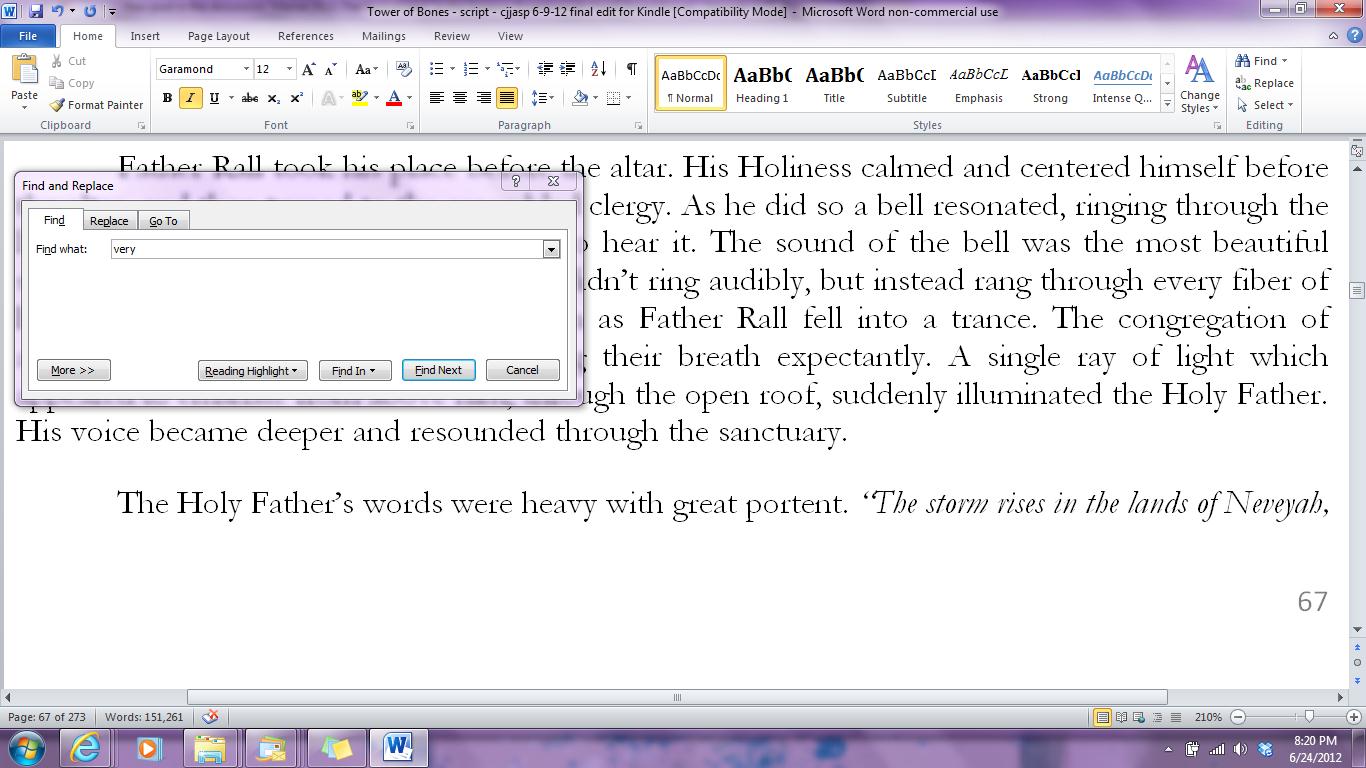
Once you are finished with your first draft, do what is called a global search – in Microsoft WORD you click on the ‘Home’ tab, and at the far right hand side click on ‘Find,’ OR press the ‘Ctrl’ key and the ‘F’ key at the same time.  This will open the ‘find and replace’ menu:

find graphics

In the ‘find and replace menu, type the word ‘very’ and click on ‘find next’.  The word ‘very’ will be highlighted in blue, and you can delete it.  I don’t recommend doing ‘replace all’ with any overused modifier, because you will create more problems than you can imagine!  Look at each individual instance of the word, and either delete it or change it to a stronger word.

Deleting them or changing to a stronger word will help you grow as writer.  You will begin to think about your sentences and stretch your vocabulary.

Next do the same with ‘that’ and ‘had.’ These are words  we all use too freely in our first draft, and until an editor pointed it out to me, I had no idea how they weakened my work. They are good words, used infrequently and only when another won’t do the job.

Here is a list of words that can appear with great frequency in your rough drafts, some of which are considered ‘tired.’ Some of these words can be made into contractions to eliminate wordiness. Some can be cut altogether, and some will need to stay. However, some of these words are ‘telling’ words, and we want to avoid that wherever possible. Look at each instance and make that decision.

  • about
  • am
  • are
  • bad
  • beautiful
  • big
  • could
  • did
  • fine
  • good
  • great
  • had
  • has
  • have
  • is
  • look
  • looked
  • nice
  • quite
  • seems
  • so
  • some
  • that
  • then
  • think
  • very
  • was
  • well
  • went

We all use these to excess in our rough draft, because we are laying the roadbed of the superhighway that is our book. The words we spew at this point are the framework we are going to build the true story around, the story that was in our heads, but that the rough draft doesn’t do justice to.

Historical_ThesaurusThis is where our thesaurus comes in handy. We need to express the thoughts our overused words evoke, but we don’t want to repeat them over and over. When a word seems to be cropping up with great frequency, try using the global search option. It will tell you how many instances of the word appears in your manuscript, and you might be surprised.

Highlight the word and right-click on it. A pop-up menu will appear. From that menu, choose ‘synonyms.’ Click on that, and a list of words with similar meanings will appear. If you need more than can be found in that list, click on ‘Thesaurus’ (at the bottom of the list) or google the word and add ‘synonyms’ to your search.

Consider my recent experience with gaped–a beta reader pointed out that I had my characters gaping at each other far too regularly. I had to go through it and have them stare, exchange glances, or simply look away. In several instances, I cut that sentence because it wasn’t really needed.

It can be difficult to see the words you have overused when it is your own work. But you can run your ms through a free, online  program like Word Count Tools and that will give you a heads up on how many times you have used each word.
2 Comments

Filed under Books, Literature, Publishing, Self Publishing, Uncategorized, writer, writing