Today marks the halfway point for NaNoWriMo 2021. Many writers are working on the first draft of a new manuscript. Others are revising last year’s novel and rearranging the story’s events and writing new scenes.
 Foreshadowing is integral to a well-plotted story.
Those of us who have been working from an outline may have included some in the planning stage. For authors who wing it, this happens on a subconscious level, but it does happen.
But what is foreshadowing? It is the subtle warning that all is not what it seems, a few clues embedded in the first quarter of the story to subliminally alert the reader that things may not go well for the protagonist. We include small warning signs of future events, bait, if you will, to lure the reader and keep them reading.
In the first draft, we commit certain sins of craftsmanship, road signs for us to examine in the second draft:
- Clumsy foreshadowing, baldly stating what is going to happen later.
- Neglecting to foreshadow so that events arrive out of nowhere.
Recognizing those signals can be a challenge, but that is where writing craft comes into play.
When a possibility is briefly, almost offhandedly mentioned, but almost immediately overlooked or ignored by the protagonists, that is a form of foreshadowing.
Some readers will miss the suggested possibility just as the unsuspecting characters do. Other readers will guess what is going on.
If the narrative is well-written, readers will stick with it as they will want to see how it plays out.
We are subtle with foreshadowing because we want readers to feel surprised when all the pieces fall into place. We want to reward the reader with a moment when they can say, “I should have seen that coming.”
Now is an opportune time to hone our foreshadowing skills. This helps avoid using the clumsy Deus Ex Machina (pronounced: Day-us ex Mah-kee-nah) (God from the Machine) as a way to miraculously resolve an issue.
- A Deus Ex Machina occurs when, toward the end of the narrative, an author inserts a new event, character, ability, or otherwise resolves a seemingly insoluble problem in a sudden, unexpected way.
- Foreshadowing also helps us avoid the opposite ungainly device, the Diabolus Ex Machina (Demon from the machine). This is the bad guy’s counterpart.
When an author suddenly realizes the evil his character faces isn’t evil enough, we may see the sudden introduction of an unexpected new event, character, ability, or weapon. The intent is to ensure things suddenly get much worse for the protagonists, but it falls flat.
As a reader, I hate it when a character suddenly gets a new skill or knowledge without explanation. When this happens, it’s usually explained away as a Chekhov’s Skill.
A casual mention early on of the characters using or training that skill will resolve the situation. Without briefly foreshadowing that ability, the reader will assume the character doesn’t have it.
This is when the narrative becomes unbelievable.
Literature and the expectations of the reader are like everything else. Tastes evolve and change over the centuries.
In genre fiction today, a prologue may not be a place for foreshadowing. This is because modern readers don’t have the patience to wade through large chunks of exposition dumped in the first pages of a novel.
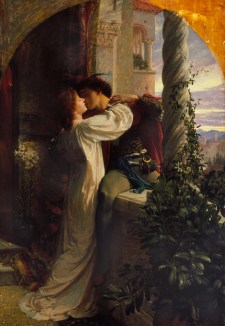 I often refer to the way that Shakespeare used both exposition and foreshadowing. In his works, more significant events are foreshadowed through the smaller events that precede them.
Let’s look at Romeo and Juliet and the scene where Benvolio tries to talk Romeo out of his infatuation with Rosaline.
“Take thou some new infection to thy eye,
And the rank poison of the old will die.”
In other words, “Bro, the minute you see a different girl, you’ll forget this one.”
Benvolio’s advice proves correct because as soon as Romeo lays eyes on Juliet, he forgets his obsession with Rosaline and is fixated on his mortal enemy’s daughter.
And again, later, when Benvolio brings the news that Mercutio is dead, Romeo says,
“This day’s black fate on more days doth depend;
This but begins the woe, others must end.”
Romeo predicts that Mercutio’s death is only the beginning, that disaster looms for everyone. He feels as if he is racing toward an unknown future.
 In that moment, we see that Romeo is deeply aware that he has reached a point of no return.
He will fight Tybalt to avenge Mercutio because his society requires it. Therefore, he must duel but is fully aware that killing Tybalt won’t resolve anything. Instead, the murder will only perpetuate the problem.
Romeo has seen the foreshadowing and knows he is no longer in control of his fate.
Inserting slight hints of what is to come into your narrative gives the protagonists an indication of where to go next.
It tantalizes a reader and keeps them turning the page, and that is our goal.
Credits and Attributions
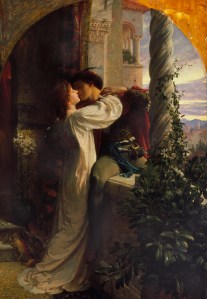
Romeo and Juliet, by Frank Bernard Dicksee, 1884 Public domain, via Wikimedia Commons
First Folio of William Shakespeare’s Plays, 1623 by William Shakespeare, Public domain, via Wikimedia Commons
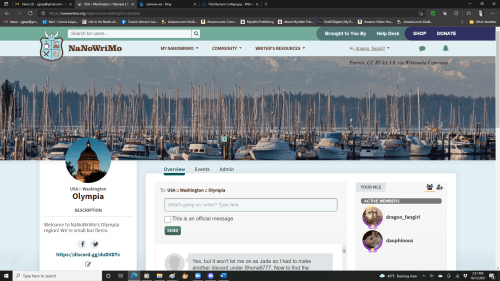
 Once there, create a profile. You don’t have to get fancy unless you are bored and uber-creative.
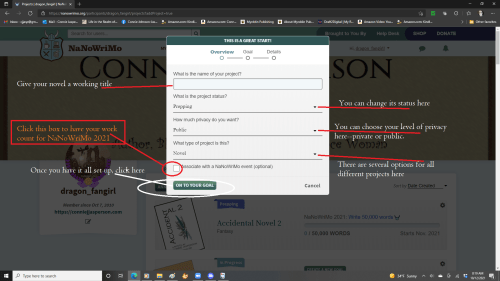 You can play around with your personal page a little to get used to it. I use my NaNoWriMo avatar and name as my Discord name and avatar. This is because I only use Discord for NaNoWriMo and one other large organization of writers. (Next week, we’ll talk about Discord and why NaNoWriMo HQ wants us to use it for word sprints and virtual write-ins.)
 Next, check out the community tabs. If you are in full screen, the tabs will be across the top. If you have the screen minimized, the button for the dropdown menu will be in the upper right corner and will look like the blue/green and black square to the right of this paragraph.
 You may find the information you need in one of the many forums listed here.
 Make a master file folder that is just for your writing. I write professionally, so my files are in a master file labeled Writing.
 Give your document a label that is simple and descriptive. My NaNoWriMo manuscript will be labeled: Accidental_Novel_2.
 Still, we can come together and support each other’s writing via the miracle of the internet. My region is finalizing a schedule for “Writer Support” meet-ups via Zoom – little gab sessions that will connect us and keep us fired up.
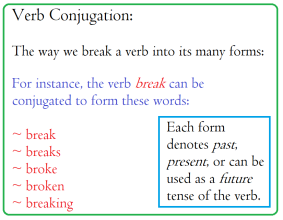 Today we’re discussing how narrative time, or what we call tense, affects a reader’s perception of character development. In
 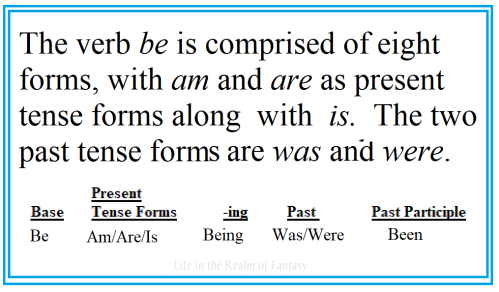 In the rewrite, we look for the code words that tell us the direction in which we want the narrative to go.
 Sometimes the only way you can get into a character’s head is to write them in the first-person present tense, which happened to me with Thorn Girl. I struggled with her story for nearly six months until a member of my writing group suggested changing the narrative tense and point of view.
 Every story is unique, and some work best in the past tense, while others need to be in the present. When we begin writing a story using a narrative time that is unfamiliar to us, we may have trouble with drifting tense and wandering narrative points of view.
 Happiness, anger, spite – all the emotions get a description. Eyebrows raise or draw together; foreheads crease and eyes twinkle; shoulders slump and hands tremble. Lips turn up, lips curve down, and eyes spark – and so on and so on.
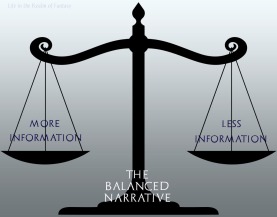 For me, the most challenging part of writing the final draft of any novel is balancing the visual indicators of emotion with the more profound, internal clues.
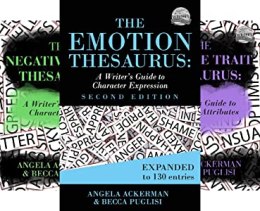 I have mentioned
 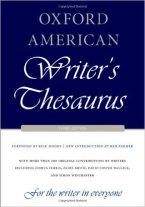 Open the thesaurus and find words that carry visual impact in your narrative, and you won’t have to resort to a great deal of description.
 The setting is a coffee shop.
 If you are writing a contemporary novel or historical work set in our real world, this is where you keep maps and maybe a link to Google Earth.
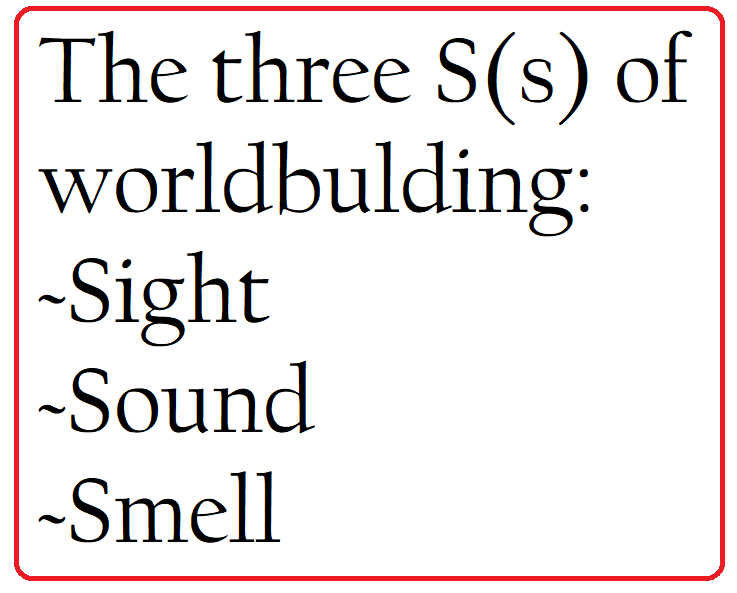 The “three S’s” of worldbuilding are critical: sights, sounds, and smells. Those sensory elements create what we know of the world. Taste rarely comes into it, except when showing an odor.
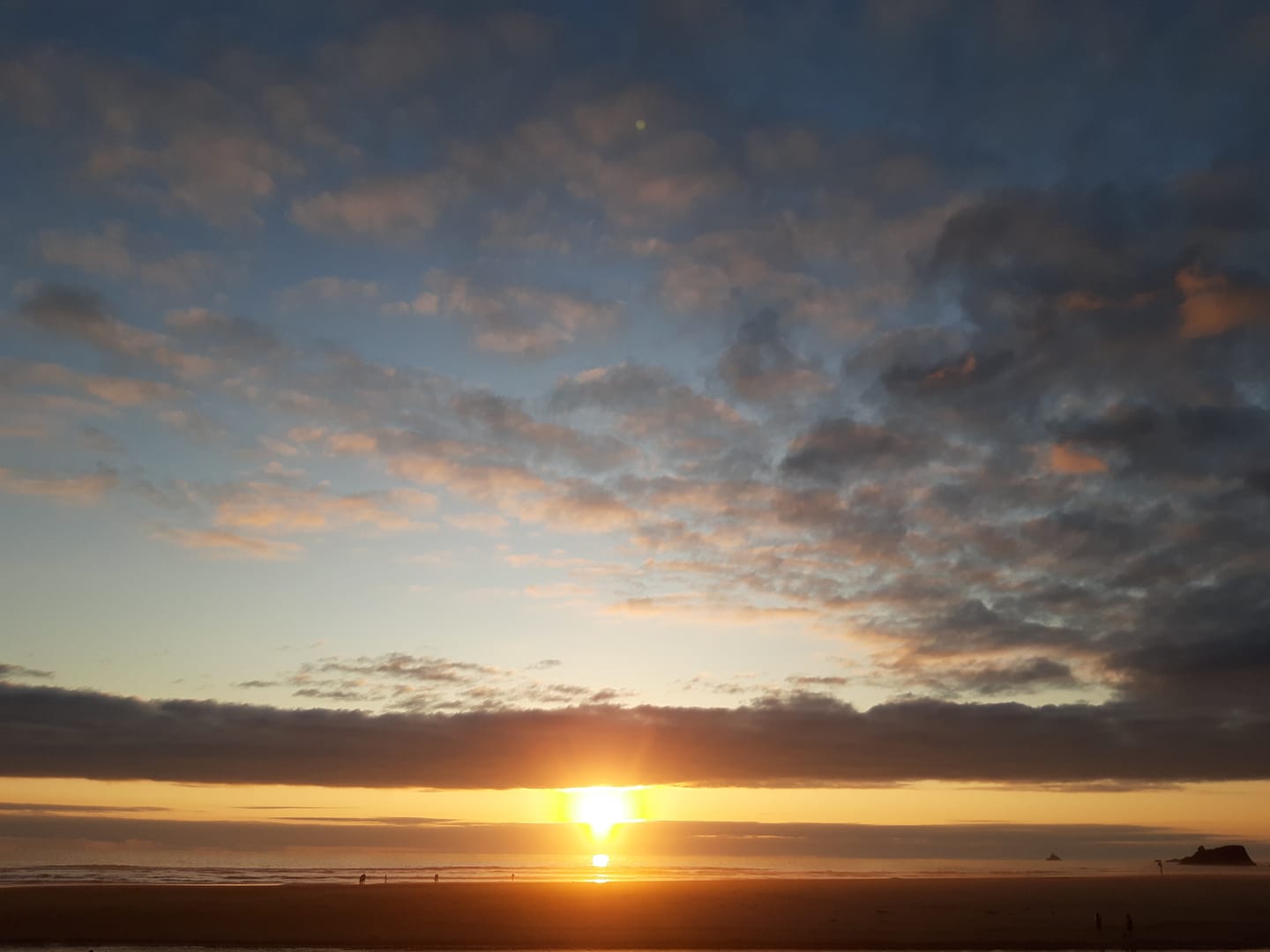 At this moment, inside your room and outside your door, you have all the elements you need to create an alien or alternate world.
 I think of stories as if they were ponds filled with words. A pond has layers, and so do good stories. I see the three layers of a story as:
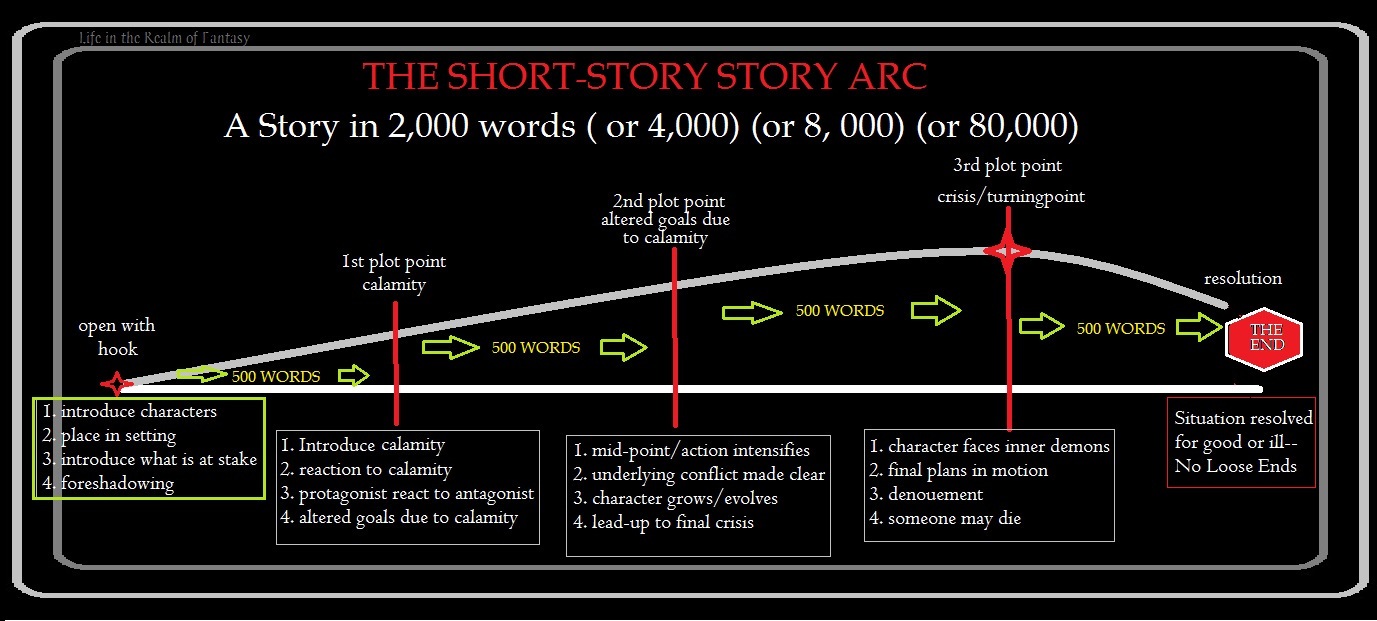 Act 1: the beginning: We show the setting, the protagonist, and the opening situation.
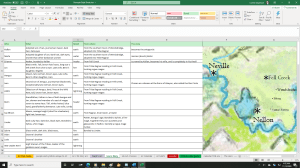
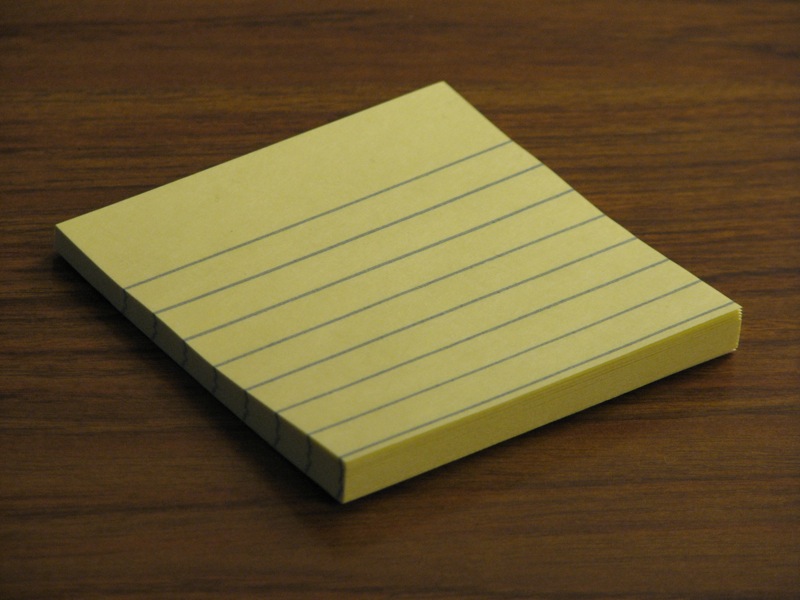 I have mentioned before that I use a spreadsheet program to outline my projects, but you can use a notebook or anything that works for you. You can do this by drawing columns on paper by hand or using post-it notes on a whiteboard or the wall. Some people use a dedicated writer’s program like Scrivener.
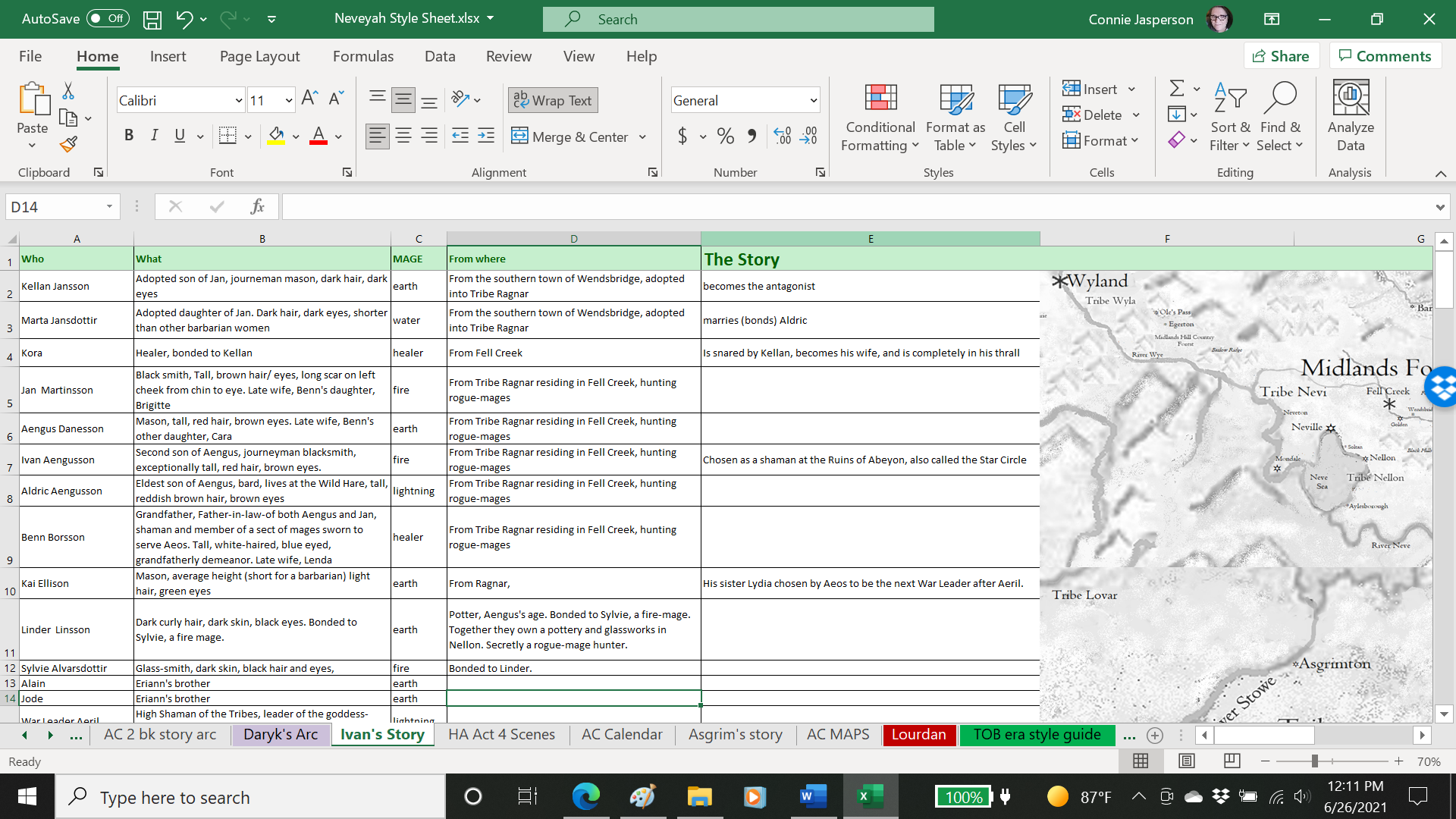 We never really know how a story will go, even if we begin with a plan. The plan serves to keep us on track with length and to ensure the action doesn’t stall.
 Then there is the marketing of the finished product, but that is NOT my area strength, so I won’t offer any advice on that score.
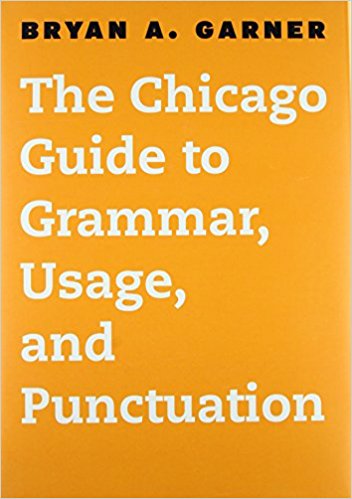 If you are writing in US English, I can highly recommend getting a copy of
 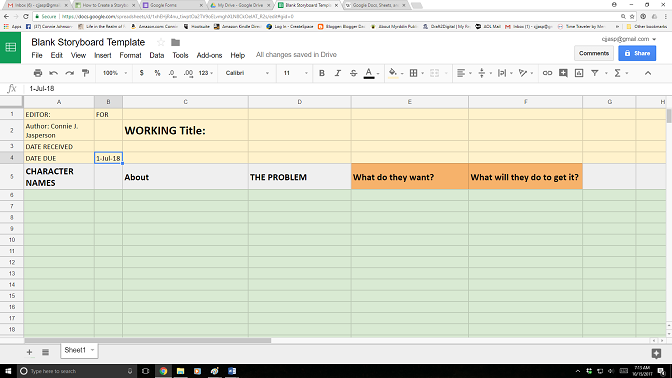 Creating a
  Write the basic story. Take your characters all the way from the beginning through the middle and see that they make it to the end. If you have completed the story and have it written from beginning to end, you can concentrate on the next level of the construction phase: adding depth.