Tag Archives: writing

Proofreading, Beta Reading, and Editing – three different stages of #writing

Proofreading is not editing, nor is beta reading. These are three different stages of preparing a manuscript for publication.

depthPart1revisionsLIRF05252021Beta Reading is the first look at a manuscript by someone other than the author. The first reading by an unbiased eye is meant to give the author a view of their story’s overall strengths and weaknesses so that the revision process will go smoothly. This phase should be done before you submit the manuscript to an editor. It’s best when the reader is a person who reads for pleasure and can gently express what they think about a story or novel. Also, look for a person who enjoys the genre of that particular story. If you are asked to be a beta reader, you should ask several questions of this first draft.
Setting: Does the setting feel real?

Characters: Is the point of view character (protagonist) clear? Did you understand what they were feeling? Were they likable? Did you identify with and care about them? Were there various character types, or did they all seem the same? Were their emotions and motivations clear and relatable?

Dialogue: Did the dialogue and internal narratives advance the plot?

Pacing: How did the momentum feel?

Does the ending surprise and satisfy you? What do you think might happen next?

What about grammar and mechanics? At this point, a beta reader might comment on whether or not you have a basic understanding of grammar and industry practices that suits your genre.

I am fortunate to have excellent friends willing to do this for me. Their suggestions are thoughtful and spot-on.

Leonid_Pasternak_-_The_Passion_of_creationEditing is a process unto itself and is the final stage of making revisions. The editor goes over the manuscript line-by-line, pointing out areas that need attention: awkward phrasings, grammatical errors, missing quotation marks—many things that make the manuscript unreadable. Sometimes, major structural issues will need to be addressed. Straightening out all the kinks may take more than one trip through a manuscript.
There are different kinds of editing, as the various branches of literature have requirements that are unique to them. In creative writing, editing is a stage in which a writer and editor work together to improve a draft by ensuring consistency in style and grammatical usages.

The editor does not try to change an author’s voice but does point out errors. When an author’s style goes against convention and it is their choice, the editor ensures it does so consistently from page one to the end of the manuscript. At the same time, attention is paid to transitions and the overall story arc.

Proofreading is its own thing.

jack-kerouac-quote-memeA good proofreader understands that the author has already been through the editing gauntlet with that book and is satisfied with it in its current form. A proofreader will not try to hijack the process and derail an author’s launch date by nitpicking their genrestyle, and phrasing. 

The proofreader must understand that the author has hired a professional line editor and is satisfied that the story arc is what they envisioned. The author is confident that the characters have believable and unique personalities as they are written. The editor has worked with the author to ensure the overall tone, voice, and mood of the piece is what the author envisioned.

I used the word ‘envisioned‘ twice in my previous paragraph because the work is the author’s creation, a product of their vision. By the time we arrive at the proofing stage, the prose, character development, and story arc are intentional. The author and their editor have considered the age level of the intended audience.

If you feel the work is too dumbed down or poorly conceived and you can’t stomach it, simply hand the manuscript back and tell them you are unable to do it after all.

If you have been asked to proofread a manuscript, please DON’T mark it up with editorial comments. Don’t critique their voice and content because it will be a waste of time for you and the author.

  • And, if your comments are phrased too harshly at any point during this process, you could lose a friend.

If the person who has agreed to proof your work cannot refrain from asking for significant revisions regarding your style and content, find another proofreader, and don’t ask them for help again.

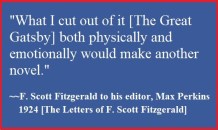
f scott fitzgerald quoteThe problem that frequently rears its head among the Indie community occurs when an author who writes in one genre agrees to proofread the finished product of an author who writes in a different genre. People who write sci-fi or mystery often don’t understand or enjoy paranormal romances, epic fantasy, or YA fantasy.
Also, some people can’t proofread because they are fundamentally driven to critique and edit.

Indies must hope their intended proofreader is aware of what to look for. In traditional publishing houses, proofreading is done after the final revisions have been made. Hopefully, it is done by someone who has not seen the manuscript before. That way, they will see it through new eyes, and the small things in your otherwise perfect manuscript will stand out.

What The Proofreader Should Look For:

Spelling—misspelled words, autocorrect errors, and homophones (words that sound the same but are spelled differently). These words are insidious because they are real words and don’t immediately stand out as being out of place. The human eye is critical for this.

  • Wrong: There cat escaped, and he had to chase it.
  • Wrong: The dog ran though the house
  • Wrong: He was a lighting.

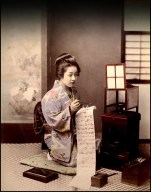
Kusakabe_Kimbei_-_Writing_Letter_(large)Repeated words and cut-and-paste errors. These are sneaky and dreadfully difficult to spot. Spell-checker won’t always find them. To you, the author, they make sense because you see what you intended to see. For the reader, they appear as unusually garbled sentences.
  • Wrong: It is accepted thoughts italicize thoughts.

Missing punctuation and closed quotes:

  • Wrong: “What do you know about the dead man? asked Officer Shultz.

Numbers that are digits:

Miss keyed numbers are difficult to spot when they are wrong unless they are spelled out.

  • Wrong number: There will be 30000 guests at the reception.

Dropped and missing words:

  • Wrong: Officer Shultz sat at my kitchen table me gently.

I have to be extra vigilant when making corrections my proofreader has asked for. Each time I change something in my already-edited manuscript, I run the risk of creating another undetected error.

ok to write garbage quote c j cherryhAt some point, your manuscript is finished. Your beta readers pointed out areas that needed work. The line editor has beaten you senseless with the Chicago Manual of Style. The content and structure are as good as you can get them. Your proofreader has found minor flaws that were missed.
If you don’t have access to a proofreader, there is a way to proof your own work. I find that making a printout of each chapter and reading it aloud helps me to see the flaws I have missed when reading my work on the screen. I hope this helps you on your writing journey!


CREDITS/ATTRIBUTIONS:

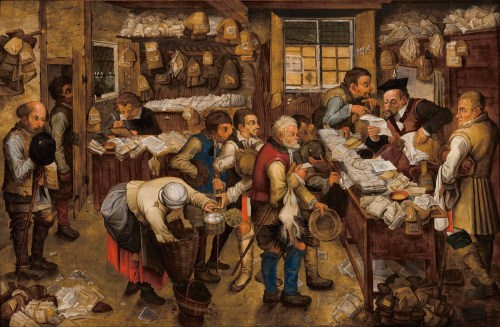
The Passion of Creation, Leonid Pasternak [Public domain], via Wikimedia Commons

Writing letter, By Kusakabe_Kimbei [Public domain], via Wikimedia Commons

3 Comments

Filed under writing

Calendars and Maps #amwriting

Time can get a little mushy when I am winging it through a manuscript. I discovered early on that keeping a calendar and a map gives me a realistic view of how long it takes my characters to travel from point A to point B.

dylan moran quote TIMEAlso, the two combine to help in deciding how long it will take to complete a task.
It helps to know what season your events occur in, as foliage changes with the seasons, and weather is a part of worldbuilding. But there are other reasons for keeping a calendar as well as sketching a map.

A calendar helps you with pacing and consistency. In conjunction with a map, a calendar keeps the events moving along the story arc. It ensures you allow enough time to reasonably accomplish large tasks, enabling a reader to suspend their disbelief.

They ensure you don’t inadvertently jump from season to season when describing the scenery surrounding the characters.

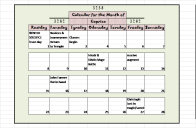
The calendar keeps the timeline believable. Here is where I confess my great regret: in 2008, a lunar calendar seemed like a good thing while creating my first world.

  • Thirteen months, twenty-eight days each,
  • One extra day at the end of the year, which ends on the Winter solstice.
  • Winter solstice is called Holy Day. Every four years, they have two Holy Days and a big party.

That arrangement of thirteen months is easy to work with because it is on paper. However, the names I assigned to the dates and months are problematic.

Calendar Capricas 3262 NeveyahWhile I had finished the RPG game’s plot and the synopsis, I didn’t have some details of the universe and the world figured out. So, in a burst of creative predictability, I went astrological in naming the months. I thought it would give the player a feeling of familiarity.

We were only beginning to design the game when it was scrapped. Fortunately, I retained the rights to my work. Unfortunately, the calendar I had invented for the RPG was incorporated into the world of Neveyah, and now (while I wish it wasn’t) it is canon.

In a bout of desperate unoriginality, I went with the names we currently use when I named the days, except—I twisted them a bit and gave them the actual Norse god’s name. The gods and goddesses of Neveyah are not Norse.

I could have changed all of that when the game was abandoned, but it didn’t occur to me. That lapse is an example of how what seems like a good idea at the time might not be workable in practice.

One thing I did right was sticking to a 24-hour day and a standard 12-hour clock. Experience is a cruel teacher. I can’t stress enough how important it is to keep things simple when we are world-building. Simplicity minimizes chaos when the plot gets complicated.

Digital Clock FaceTime has a tendency to be elastic when we are writing the first draft of a story where many events must occur. Sometimes, many things are accomplished in too short a period for a reader to suspend their disbelief.
Calendars are maps of time. They turn the abstract concept of time into an image we can understand.

Even though I regret how I named the days in Mountains of the Moon, I have a calendar, so my characters progress through their space-time continuum at a rate I can comprehend. I can adjust events in the first and second drafts, moving them forward or back in time by looking at and updating their calendar. The sequence of events forming the plot arc remains believable.

I heartily suggest you stick to a simple calendar. That is the advice I would give any new writer—stick to something close to the calendar we’re familiar with, and don’t get too fancy.

Speaking of fancy, what about distance? Stories often involve traveling, and in fantasy tales, one could be walking or riding a horse. The distance a person can walk in one hour depends on the walking speed and the terrain. People can walk between 2.0 miles (3.22 K) and 5.0 miles (8.47 K) in 1 hour (60 minutes) depending on walking speed. A healthy person can probably walk 5 to 7 miles (8.04 to 11.256 K) in two hours of walking at a steady pace.

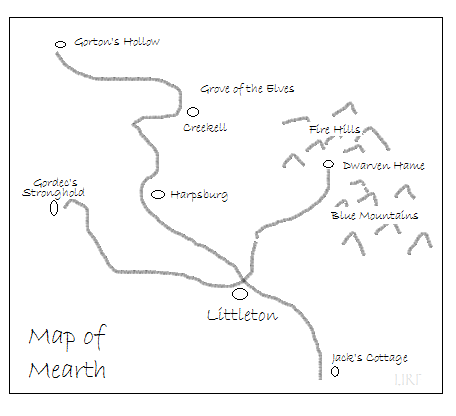
protomapWhat if your fantasy world uses leagues as a measure of distance? A league is 3.452 miles or 5.556 kilometers. Generally speaking, a horse can walk 32 miles or 51.5 K in a day.
Thus, a day of walking or riding a horse on a level road can take one quite a distance.

But roads are NOT always level, and they don’t always cross flat ground.

As I said above, the distance a person can walk in one hour depends on the walking speed and the terrain. But let’s say you settle down and walk at a steady speed. If you go at the typical walking pace of 15 to 20 minutes per mile, it could take you 2–3 hours to get to your destination if it is ten miles (16 K) away on a good road.

If you are writing sci-fi or fantasy, calendars, and rudimentary maps work together to keep the plot moving and believable. Will your characters encounter forests? Mountains? Rivers?

Maybe they live in a city.

Each of these areas will impact how long it takes to go from one place to another. This is where a calendar comes into play.

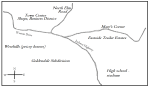
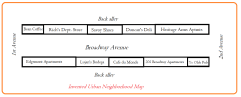
proto_city_map_LIRF07052022Many readers have a route they walk or run daily to maintain their health. These readers will know how long it takes to walk ten blocks. They will also know how far a healthy person can walk in one hour on a good road.
This is where the map comes into play. You can’t travel in a straight line over mountains or forests. Sometimes, you must travel parallel to a river for a long way until you come to a place shallow enough to cross.

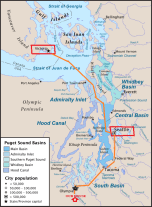
Map-pugetsoundThe part of the world where I live has large tracts of forests, many wide rivers, and is mountainous, with numerous volcanos. Our roads are often winding and sometimes travel in switchbacks up and over many of these obstacles. It takes time to go places even though the original road-builders plotted the roads through the most accessible paths.

And we’ll just toss this out there – while you can drop a tall tree across a narrow creek, building bridges over rivers requires a certain amount of engineering. Cultures from the Neolithic to modern times have had the skills needed to make bridges.

We are creative, and archaeology shows us that our ancestors were capable of far more than we have traditionally believed. Archeology and history both tell us that humans, as a species, are tribal by nature. We band together for protection, shelter, better access to resources, and companionship, and these gathering places become towns.

Humans have always created communities where resources are plentiful, but climate changes over time.

Your maps should take into consideration all the terrain your characters must deal with.

calendarTravel and events take time. A calendar, either fantasy or the standard Gregorian calendar we use today, and a simple hand-drawn map will help you maintain the logic of your plot.
sample-of-rough-sketched-map

2 Comments

Filed under writing

When your novel becomes a series #amwriting

I love novels that become series. I think this is because I hate to see the story end, or maybe I wonder how the whole thing started. Most of the time, when an author first writes a novel, they don’t consider that it may end up with a sequel or two. (Or 30). Many cozy mystery and sci-fi fantasy series begin this way.

MyWritingLife2021BSometimes, a first novel is well-received, with engaging characters and a plot arc that moves along to a satisfying conclusion. People want more, and so the series begins.
But then, there are authors who know at the outset that one book won’t tell the story. They build a plot outline around two or more novels.

Even if you plan a series at the outset, the novel that opens the series must have a complete story arc, a finite, satisfying ending, and be able to stand alone. I say this because it takes time to write a novel. Readers nowadays are impatient and are vocal about it on social media, with a tendency to heap criticism on the offending author.

A projected series is a universe unto itself, even if it is set in the real world. It is the story of that universe, told over the course of several books.

Speaking as a reader, if you are writing a series, you must plan the overall structure well in advance. Every book in the series needs to have its own plot and must end at a place that doesn’t leave the reader wondering what the hell just happened.

There are two kinds of series, episodic and continuing, or as I like to think of them, finite and infinite.

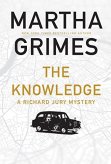
theKnowledgeMarthaGrimesThe episodic series is like a television series. Each novel has a new adventure for a previously established set of characters. In some ways, these are easiest to write, especially when each book features established characters in an established world. (Sorry about the repetition there.) Many cozy mysteries and fantasy series are episodic. They are an infinite series of standalone stories.
Some episodic series follow a particular group of characters, but others might feature a different protagonist. They are all set in a specific world, whether they follow one protagonist or several. The installments often jump around in that universe’s historical timeline. Think Anne McCaffrey’s Pern series or L.E. Modesitt Jr.’s Recluce series.

The continuing series requires some advance planning. It is a finite multi-volume series of books covering one group’s efforts to achieve a single epic goal. While each book may be set in an established world, it might feature an entirely different set of characters and their storyline.

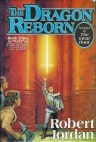
WoT03_TheDragonRebornThe story usually has a strong theme that unites the series. It might be a theme such as the hero’s journey or young people coming of age. Or it might follow the life of one main character and their sidekicks as they struggle to complete an arduous quest. Robert Jordan’s (and Brandon Sanderson’s) The Wheel of Time series is a prime example of the continuing series.
An episodic series is easier to plan as each one is a single novel. There are no loose ends, so if the author stops writing in that series, nothing is left hanging.

A continuing series must have a complete plot arc for each book. Each novel is only a section or chapter of the larger story. Speaking as a reader, please keep track of the subplots via an outline. I say this so you don’t leave loose ends but also to ensure the subplots come together at the final battle.

Sequels happen when an author is in love with their characters, and those characters and their stories resonate with readers. Sequels are how trilogies become series.

Companion novels occur simultaneously alongside the main story but feature side characters doing their own thing.

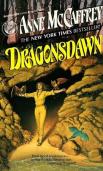
Dragonsdawn_coverPrequels are one of my favorite kinds of novels. I am always curious as to how the whole thing started.
Spin-offs might feature side characters or the protagonist’s descendants.

So, how do we manage the character arc for one group over the course of a series? I suggest storyboarding. Write a synopsis of what you think the Big Picture is, the entire story. Write it out even if that synopsis goes for 5,000 to 10,000 words.

If that storyboard looks too large for one book, separate the sections into however many novels of reasonable length it will take.

An outline will help you decide on your structure. You’ll have a better idea of how each plot will unfold.

Easter EggOnce you have figured out the entire arc of the series, make an outline of book one. This allows your creative mind to insert foreshadowing. This will happen via the clues and literary easter eggs that surface as the series goes on.
I suggest waiting to outline the next book until after book one is finished and ready for the final edit. Plots constantly evolve as we write. Book one is the foundation novel of the series, so it must be completed before you begin building the rest of the story.

Maps and calendars are essential tools for the author, no matter what genre you are writing in. Regardless of how you create your stylesheet/storyboard, I suggest you include these elements:

An OUTLINE of events including a prospective ending. Update it as things evolve.

A GLOSSARY is especially important. I suggest you keep a list of names and invented words as they arise, all spelled the way you want them.

MAPS are good but don’t have to be fancy. All you need is something rudimentary to show you the layout of the world.

A CALENDAR of events is especially important.

Outlining the next novel should be simpler if you kept a record of all the changes that evolved to your original outline. The stylesheet/storyboard is a good tool for fantasy authors because we invent entire worlds, religions, and magic systems. We don’t want to contradict ourselves or have our characters’ names change halfway through the book—with no explanation.

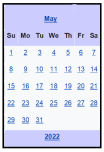
calendarNext week, we will look at creating a calendar for stories set in a speculative fiction world. We will look at some of my failures and see why simpler is usually better.
2 Comments

Filed under writing

Parkinson’s, Tequila, and Tolkien #amwriting

Most writers are hobbyists. This is because if one intends to be a full-time writer, one must have an income, and frankly, very few authors support themselves by writing alone.

My Writing LifeTechnically, I am a full-time writer. For about ten years after I retired from corporate America, I had regular office hours for writing. Nothing lasts forever, and now I am drawing on the habits I developed during my years as a hobbyist. I write when I can and devote the rest of my time to caring for my family.
It is easy to fit short bursts of writing into my daily schedule. When I was younger, I wrote at work while on break or at lunch. Sometimes, I was able to dedicate a block of time for writing by rising two hours before I had to depart for work. But usually, I wrote after the dishes were done and the house was clean. If I skipped TV, I could get a whole scene on paper.

A happy life is all about balance. I arrange my writing time around whatever the calendar says is scheduled.

IBM_Selectric (1)So, let’s talk a little more about what we write. Most of us don’t intentionally write to preach to people, but the philosophies we hold dear do come out.
Some people see good and evil as black and white. A person is either good or evil, with no middle ground. Cartoons are wonderful because often they’re a simple story of good and evil. Many times, a cartoon is precisely what I want at that moment.

Many of my favorite authors are vividly aware of the gray area between good and evil. They write engaging novels exploring that concept. Sometimes, I’m looking for that sort of story.

Whether we are aware of it or not, our life experiences and our societal and religious beliefs emerge in what we write. This is why authoritarian governments ban books they don’t (or can’t) read. Exposure to a broader world of ideas and values undermines ignorance. An educated population is difficult to manipulate.

Subconscious fears of climate change, anxiety about a society on the edge of collapse—these subliminal uncertainties fuel post-apocalyptic storytelling. Our hopes for a better society come out in our plot arcs and world-building.

In many ways, writing is undertaking a pilgrimage.

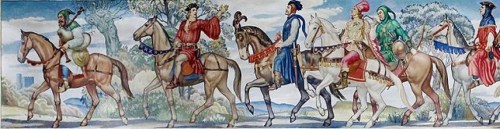
cropped-1380px-canterbury-west-winter-highsmith.jpg

Detail of mural by Ezra Winter illustrating the characters in the Canterbury Tales by Geoffrey Chaucer

People go on pilgrimages for many reasons. Often, they’re in search of moral or spiritual wisdom. Sometimes, pilgrims go to a location that has significance to their beliefs and faith.

Other times, the pilgrimage is an inner, symbolic journey. I find creating a world and writing a society involves a good, in-depth examination of my principles and values.

People are often changed by a journey to a different place and seeing how other people live. We evolve as human beings through our experiences and interactions.

Writing has the same effect on us as if we had journeyed to a far land and experienced a new culture. In the process of writing, we explore events that affect our emotions and challenge our values. We brainstorm our principles and philosophies.

My Coffee Cup © cjjasp 2013We each grow and develop in a way that is unique to us. Sometimes, we are hardened by our life experiences, and our protagonists have that jaded sensibility. Other times, we accept our own human frailties, and our protagonists are more forgiving.

J.R.R. Tolkien wrote fantasy showing the evil the world was capable of in the first part of the 20th century. He also laid bare his hope for a better future and understood how the masses are swayed by charismatic leaders. Tolkien recognized the tenuous difference between that which is right and moral and what is expedient and easily glossed over.

He understood how societies lie to themselves and justify their actions.

In The Hobbit, J.R.R. Tolkien put a face on the Engine of War. In our real world, the Engine of War is an evil that seems unstoppable, an endlessly hungry entity made up of faceless soldiers acting on commands given by faceless leaders, committing unspeakable violence against faceless people.

Wars can be fought on another front—my spouse has Parkinson’s. I see that battle not from the side of the military forces but from the side of the people upon whose lands those battles are fought.

Ice_cubes_openphoto_croppedThe battles we fight on the home front don’t have to be serious all the time. Sometimes, they can be hilarious. When your spouse has Parkinson’s, life is like a blended margarita, as seen from the ice cube’s perspective.

One minute, you’re sitting in the ice cube bin with the other cubes, everyone acting cool.

The next thing you know, someone drops you and a few of your friends into the blender and then throws Lime Juice in.

Lime looks a little startled, but nothing gets her down for long. She’s a master at keeping things zippy with her tart sense of humor. You’re relaxing with the other cubes, chatting with Lime.

Then, Tequila drops in, and it’s all good—your fellow cubes love Tequila and Lime. Here comes Triple Sec, and now it’s a party. You’re all just sitting around, chilling and flirting with Lime, Tequila, and Triple Sec.

caloricclassic  red blenderSuddenly, some joker turns the blender on, and everything goes to hell. They turn it off, and you think, “Okay, disaster averted. It’s gonna be okay.”
But no.

It’s on – off – on – off – on – off – so chaotic you can’t keep up with it. At the end of it all, you and your fellow ice cubes, along with Tequila, Triple Sec, and Lime, are like Fukushima after the tidal wave – a slurry of confusion and terror.

Then, to top it off, the joker who ruined the party pours you into a glass and adds salt to your wounds.

You know you’re gonna die, but you’re still cool. In fact, you’re Stevie Wonder cool.

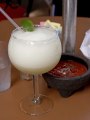
Blended_MargaritaLife is like a blended margarita. It’s all in how you look at it, so stay cool and enjoy the party for as long as it lasts.

And let those life experiences fuel your writing.


Credits and Attributions:

IMAGE: Ice Cubes, Wikimedia Commons contributors, “File:Ice cubes openphoto.jpg,” Wikimedia Commons, https://commons.wikimedia.org/w/index.php?title=File:Ice_cubes_openphoto.jpg&oldid=796010605 (accessed February 4, 2024).

IMAGE: Detail of mural by Ezra Winter illustrating the characters in the Canterbury Tales by Geoffrey Chaucer. Library of Congress John Adams Building, Washington, D.C.Wikimedia Commons contributors, “File:North Reading Room, west wall. Detail of mural by Ezra Winter illustrating the characters in the Canterbury Tales by Geoffrey Chaucer. Library of Congress John Adams Building, Washington, D.C. LCCN2007687083.tif,” Wikimedia Commons, https://commons.wikimedia.org/w/index.php?title=File:North_Reading_Room,_west_wall._Detail_of_mural_by_Ezra_Winter_illustrating_the_characters_in_the_Canterbury_Tales_by_Geoffrey_Chaucer._Library_of_Congress_John_Adams_Building,_Washington,_D.C._LCCN2007687083.tif&oldid=727674759 (accessed February 4, 2024).

6 Comments

Filed under writing

Discipline and Micro Fiction #amwriting

I think of writing as a muscle, one that must be exercised the same as other muscles. We’re healthiest when we exercise regularly. Once writing becomes a behavioral habit, we find we can’t go very long without indulging it.

WritingCraft_short-story-drabbleThe more frequently you write, the more confident you become. Spending a small amount of time writing every day is crucial. It develops discipline, and personal discipline is essential if you want to finish a writing project.

WordsThatDrawUsInLIRF01302024Maybe you plan to write a novel “someday” but aren’t there yet. Writing random short scenes and vignettes helps develop that story without committing too much time and energy to the project. This is also a good way to create well-rounded characters.

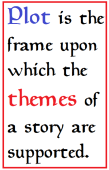
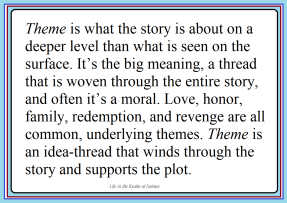
In writing these scenes, you have the chance to identify the themes and subthemes you hope to explore in your novel. Theme is different from the subject of a work. An example I have used before, and one that most people know of, is the Star Wars franchise.

  • The subject of those movies and books is “the battle for control of the galaxy between the Galactic Empire and the Rebel Alliance.”
  • The major themesexplored in those films are moral ambiguity, coming of age, and the conflict between technology and nature.
  • The subthemes are finding love, abuse of power, and family dynamics.

At some point, you will write something you think worthy of submitting to a contest or publisher. Your manuscript must demonstrate your understanding of what is meant by the word ‘theme,’ as well as your ability to craft clean and compelling prose.

If you do an internet search, you will find contests for drabbles and micro-fiction, some offering cash prizes. Some contests post pictures for prompts, others offer a word or sentence, and still others no prompt at all. I mentioned this site in the previous post: go to 700+ Weekly Writing Prompts if you need an idea.

lasceaux2016However, the Lascaux Prizes in Poetry and Flash Fiction are now open for submission and will close on March 31, 2024. The Lascaux Prize in Creative Nonfiction will reopen on April 1, 2024. The Lascaux Prize in Short Fiction will reopen on July 1, 2024.

lasceax prizeThe Lascaux Review is one of the best contests around. It is exceptionally open to writers who are just beginning their journey. Their fee is reasonable, $15.00 in every category, and submissions are accepted through Submittable. Contest Guidelines | The Lascaux Review

For practice, try picking a theme and thinking creatively. Think a little wide of the obvious tropes (genre-specific, commonly used plot devices and archetypes). Look for an original angle that will play well to a strong theme, then go for it.

If you are choosing to write a drabble, you must use nouns and verbs with the most visual impact. Your word choices must convey an atmosphere, show a character, and tell a story.

MorePowerWordsLIRF01302024A way to get a grip on these concepts is what I think of as literary mind-wandering. For me, these ramblings hold the seeds of short stories.

I gain a different perspective on my work in progress when I write a short story detailing a side character’s background. These side characters appear in the longer manuscript as having distinct personalities because I am well-acquainted with them.

If you’re experiencing a lull in your ability to advance your novel, why not challenge yourself to write a drabble? It’s a whole story in 100 words or less.

Writing such short fiction forces me to develop an economy of words. Your narrative will be limited to one or two characters. There is no room for anything that does not advance the plot or affect the story’s outcome.

What are the nuts and bolts of writing micro-fiction?

I’ve said this before, but all writing is a time commitment, no matter the intended length of the piece. When writing a drabble, you can expect to spend an hour or more getting it to fit within the 100-word constraint.

Extremely short fiction must showcase the same essential components as a longer story:

  1. A setting
  2. One or more characters
  3. A conflict
  4. A resolution.

First, we need a prompt, a jumping-off point. For a drabble, we have 100 words to write a scene that tells the entire story of a moment in a character’s life. That’s about two paragraphs, which is the length of many scenes in longer works.

In a previous post on writing short stories, I showed how I use a loose outline to break short stories into three acts.

powerWordsLIRF01302024I break down the word count to know how many words to devote to each act in the story arc. I allow around 25 words to open the story and set the scene. Then, I give myself about 50 – 60 for the heart of the story. That leaves me 10 – 25 words to conclude it.

Some contests will ask for work that fits exactly into their word count parameter: if they ask for 50 words, they want exactly 50, no more and no less. Choose your words with care and intention.

That is when writing micro-fiction becomes fun.

Spend an hour to get that idea and emotion down before you forget it. The completed scene is a small gift you give yourself. I suggest you save your short work and proto scenes in a clearly labeled file for later use. Each one has the potential to be a springboard for writing a longer work or for submission to a contest.

Whether you submit a drabble to a contest or hang on to it doesn’t matter. Either way, writing micro-fiction hones your skills, and you will have captured the emotion and ambiance of a brilliant idea.

Drabble_LIRF_1_jan_2018_cjjapExtremely short fiction is the distilled essence of a novel. It contains everything the reader needs to know and makes them wonder what happened next.

That desire to know what happened next is why readers keep reading and why they might seek out your other work.

Comments Off on Discipline and Micro Fiction #amwriting

Filed under writing

My Writing Life – Drabbles #amwriting

Things have been hopping here at Casa del Jasperson. We finally have all the furniture we need, so Grandma has a comfy chair in the living room as well as here in the Fortress of Write. This is the best workspace I’ve ever had.

MyWritingLife2021BI have been busy on the domestic side of things and enjoying life as a Townie. Lovely Instacart delivers my groceries from any store I choose. If we have to be out after dark and it’s raining, I can’t see well, so Uber does the driving. We are living a life of luxury and grateful for it. I have a “passel” of grandbabies and great-grandbabies, so when I have nothing to write, I have needlework projects to keep me busy.

With the dark of winter, jigsaw puzzles returned to the new and improved Casa del Jasperson. We bought a wooden rotating puzzle board with pull-out drawers to set on top of our card table. It rotates like a Lazy Susan but has drawers for sorting the puzzle pieces. The cover keeps things clean when we aren’t working on it. We feel pretty fancy, thank you.

My Coffee Cup © cjjasp 2013And speaking of fancy, we had a chance to spend time with two great-grandbabies this weekend. The best part of being a grandma is when the little one starts crying or needs changing, someone else takes over, and grandma shuffles off to the kitchen to stir the soup and make another cup of tea. Yay for old age!

So, let’s talk about the writing front. This is the time of year when I concentrate on short stories, preparing them to send to contests and magazines. Writing short fiction forces the author to develop an economy of words. You have a finite number of words to tell what happened, so only the important stuff fits within that space.

A side-effect of building a backlog of short stories is the supply of ready-made characters and premade settings to draw on when you need a longer story to submit to a contest. And when you look on the internet, you’ll find many contests for drabbles, some offering cash prizes.

Drabble_LIRF_1_jan_2018_cjjapWriting drabbles means your narrative will be limited to one or two characters. There is no room for anything that does not advance the plot or affect the story’s outcome. Also, while a 100-word story takes less time than a 3,000-word story, all writing is a time commitment. I will spend an hour or more getting a drabble to fit within the 100-word constraint.

To write a drabble, we need the same fundamental components as we do for a longer story:

  1. A setting
  2. One or more characters
  3. A conflict
  4. A resolution.

First, we need a prompt, a jumping-off point. We have 100 words to write a scene that tells the entire story of a moment in a character’s life.

Some contests give whole sentences for prompts, others offer one word, and others may offer no prompt at all. If you are new to the writing world, a prompt is a word or visual image that kick-starts the story in your head. An excellent site for finding ideas is 700+ Weekly Writing Prompts.

I have found that dividing the required count into three acts makes the plot outline more manageable when a contest has a rigid word count requirement. I assign a certain number of words for each act. (I’ve included that graphic at the bottom of this post.)

I give about 25 words for act one to open the story and set the scene. Act two is longer, around 50 – 60 for the story’s heart. That leaves 10 – 25 words to conclude it.

Drake - a drabble by cjj

Sometimes (okay, lately), I’m too scattered to make progress on a longer work in progress, and at that point, I write myself into a corner. Maybe I can’t even come up with a drabble. That’s when I “mind wander” about the work that has me flummoxed, thinking out loud on paper.

I don’t know about you, but it helps me to spend fifteen minutes writing info dumps about random side characters’ history and lay down a trail of breadcrumbs that lead to nowhere. These exercises aren’t a waste of time because visualizing anything about those characters and that world helps to solidify world-building and ids character development.

Writing info dumps in a separate document helps me identify the themes and subthemes I need to expand on for depth. It gives me the important info but keeps the fluff out of the narrative.

Tidying the house allows me to rest my mind, and I feel incredibly noble at the same time.

Seriously, when our mind is actively focused on a task that takes all our creative attention, we sometimes tune out the ideas and don’t quite hear the prompts that “the back of our mind” whispers to us.

We know those ideas are there, lurking just out of reach. Being able to almost see what we need to do next is frustrating, like looking through a fogged-up window. Focusing on a physical task like laundry or cooking relaxes my creative mind.

Daydreaming is good for you. Allowing the mind to wander allows a kind of ‘default neural network’ to do its job. This kicks into gear when our brain is at wakeful rest, like in meditation.

It boosts the brain, making our thought process more effective.

Yes, I spend an astounding amount of time daydreaming. Crocheting or making maps for my friends makes me look productive (when I’m on a mental vacation). I would hate to be simply wasting time.

It may feel like the Titanic that is your novel is going down, but we who write are all in the same lifeboat. If you’re stuck, I hope what works for me will work for you. Remember, if you suffer from a temporary dry spell, you are not alone.

short-story-arc

4 Comments

Filed under writing

Submitting to Magazines and Anthologies Part 3 #amwriting

Over the last two weeks, we have talked about the nuts and bolts of formatting the body of a manuscript for submission to a contest. Most contests want “blind” submissions (work without the author’s identifying information on the document), so we haven’t yet discussed how to make a proper “header.”

WritingCraft_short-story-formattingThis is the heading at the top of each page of a word-processed or faxed document. It contains page numbers, the title, and the author’s name. You won’t need one for most contests. However, if you plan to submit work to a magazine or anthology, you will want your header to follow their guidelines.

The header is important because when an editor likes your work, they might print it out to look at it more closely. If the printout of the manuscript falls off a desk, it can easily be reassembled because the pages are numbered.

We insert the header by opening the “insert” tab and clicking on “page number.” This opens a new menu. We add the page numbers using the small dropdown menu.

This is how the ribbon and menus look:

Headers and Page numbers prnt sc 2

The header contains the title and your pen name. The first page contains your legal name, mailing address, contact information in the upper left-hand corner, and the word count on the right.

This may seem excessive, but if you are serious about submitting your work to agents, editors, or publishers, it must be as professionally formatted as possible.

You will insert the Title of the Book and Your Author Name just before the page number. That way, it will look tidy and be aligned to the right. You can do this on the page number tab.

That is a simple process, but occasionally, a publisher will specify that the first (title) page should have no header or page number. Instead, they might want the header and page numbers to begin on page two.

To make the page numbers begin on page two:

  1. Click anywhere in the document.
  2. On the Page Layout tab, click the Page Setup Dialog Box Launcher and
  3. then click the Layout
  4. Under Headers and Footers, select the Different first pagecheck box, and then click OK.

Headers and Page numbers prnt sc 3

  1. The header contains the title, author name, and page numbers—all aligned right.
  2. The first page contains your mailing address and contact information in the upper left-hand corner.

So now we know how to make our submissions look professional—but where should we send them?

How do we find reputable publishers who are accepting submissions?

When I began this journey, I didn’t understand how specifically you must tailor your submissions for literary magazines, contests, and anthologies. Each publication has a specific market of readers, and their editors look for new works their target market will buy.

Magazine editors don’t have the time to teach you how to write. You have to learn that on your own. You have to ensure your work is clean and well-written before submitting it.

Cover_of_October_1952_issue_of_The_Magazine_of_Fantasy_&_Science_FictionSo, what do they do if they don’t go over your work line-by-line? Magazine editors look for and bring new and marketable stories to the reading public.

Marketable is the keyword. If your submission doesn’t fit what that magazine’s readers expect, the editor will reject it. Perhaps the quality of your work isn’t the problem. Maybe you have selected a publication that features work in your chosen genre. But your subgenre may not match what the readers of that publication want to see.

After all, both spaghetti Bolognese and bruschetta are created out of ingredients made from wheat and tomatoes. But, a person who craves spaghetti Bolognese won’t be satisfied with an offering of bruschetta despite the fact they both feature wheat and tomatoes.

The genre may be Italian, and they feature the same ingredients. But the delivery method is a subgenre that may not appeal to every diner.

Another point I want to make is this. Once your story makes it through the publisher’s door and into the first part of their process, their editor may ask you for minor revisions. They may ask you to clear up small things you missed when self-editing.

But they won’t offer you technical advice.

Harpers_Magazine_1905This is because they shouldn’t have to. Before submitting your work to an agent or submissions editor, you must have the technical skills down.

You must ensure you have a clean manuscript that is marketable to the readers of the publication you are courting. Ask someone in your writing group to proofread it before submitting it.

Professionals do the required work and don’t think twice about it—self-editing and proofreading are just part of the job.

Prominent publications have wide readerships, which helps the indie author as much as those who are traditionally published. The more people who read and enjoy your short story, the more potential readers you have for your novels. These people likely read books, and guess what? They might look for your novels when shopping for books at Amazon, Barnes & Noble, and other digital booksellers.

lasceax prizeWhen you have a story that you believe in, you must find the venue that publishes your sort of work. Read the magazines you hope to submit work to. That way, you will know what publishers are buying in your genre.

  • In other words, if you write fantasy, google magazines featuring fantasy and sci-fi and buy them. Read the work that publishers are buying so you aren’t wasting your time.

An excellent place to start would be the website Worlds Without End, an author resource site listing magazines that publish fantasy and science fiction.

Not all publications will be accepting new work, but some will. Be warned—finding magazines with open calls for submissions is a lot of work.

Anthologies with open calls might be more plentiful, but you must know how to find them. You can connect with writers’ groups through the many forums on Facebook and other social media platforms.

Pw06Those who can’t afford to buy magazines can go to websites like Literary Hub and read excellent pieces culled from various literary magazines for free. This will give you an idea of what you want to achieve in a story and where you might consider sending your work.

And may you have good luck with your submissions. Speaking as a reader, there is no such thing as too many stories. In fact, I’m going to curl up with a good book right now!

2 Comments

Filed under writing

Submitting to Contests and Anthologies Part 2 #amwriting

We are continuing our series on submitting short works to contests, anthologies, and magazines. Today’s focus is on contests.

WritingCraft_short-story-formattingFor the most part, the requirements are basically the same from contest to contest, with minor differences. Most contests charge a submission fee but have a cash prize if your work is chosen. It doesn’t matter how brilliant your story is; if you don’t follow their guidelines for submission, you will have wasted your money. Non-conforming work will not be read, so follow their guidelines!

To make sure your work conforms to the intended recipient’s requirements, go to the contest website and read the standards they have laid out.

You must get your paragraphs and line spacing right, so you must know how to use the tools that come with your word processing program. These handy tools exist to make your documents look as professional as possible.

First, you must open the toolbox.

Open your document and make sure you are on the home tab. I use MS Word, but most word processing programs (Open Office, Google Docs) follow a similar process as my program does. Running across the top of the page is the ribbon, which is your toolbox.

Everything you need to create a manuscript is there, waiting for you to learn to use it. A tiny little v in the far right-hand corner is the arrow for expanding or hiding the ribbon. We will expand the ribbon, giving us access to all the necessary tools.

MSWord_ribbon_toolsLIRF01182024

I use dark mode for all my work as light mode hurts my eyes. That is why the above screenshot of my ribbon is dark when yours might be shades of white, blue, and gray. You can discover more about “dark mode” here: Using Dark Mode in Windows 11 | Windows Learning Center (microsoft.com)

Now, we must select the font. As I said before, I use Microsoft WORD. Like every other word-processing program, it has many fancy fonts to choose from and a variety of sizes.

Lucky Coffee CupYou don’t want fancy. Stick with the industry standard fonts: Times New Roman (or rarely Courier) in 12 pt. These are called ‘Serif’ fonts and have little extensions that make letters easier to read when strung together to form words.

  • Check the contest page for their guidelines. You will find they likely want submissions formatted in Times or Times New Roman .12 font size.

If you are using MS WORD, here are a few simple instructions: to change your fonts, open your manuscript document, and Click on the tab marked ‘Home.’  In the upper right-hand corner of the ribbon, across the top of the page, is the “Editing” group, located at the right of the Styles group. Note: be sure you have Editing and NOT Editor. (The Editor menu has different functions that we’ll cover another time.)

select> select all. This will highlight the entire manuscript.

With the manuscript still highlighted, go to the font group on the left-hand end of the ribbon. The default font, or predesigned setting, will probably say ‘Calibri (Body)’ and the size will be .11. Scroll down to Times New Roman and click on it to change the font for the entire manuscript.

  • If you have clicked on the wrong font, it can be undone by clicking the back arrow (upper left-hand corner).

Once you are satisfied with your changes, click save.

Now, we are going to format our paragraphs and line spacing. Editors, publishers, and contests want their copies double-spaced so they can insert comments in the reviewing panel as needed. Having it double-spaced allows for longer comments and is easier for an editor to read.

NEVER use the tab key or the space bar to indent your paragraphs. Too many extra spaces in an electronic document cause the formatting to fail when converted to the various electronic publishing formats.

  • Keep extra spaces to a minimum—use only one space between sentences!

remove_tabsLIRF01202024To remove tabs from a manuscript in MS Word or most other word-processing programs, open the “Find” box (right side of the ribbon on the home tab). In the “Find” field, type in ^t. (Caret + lowercase t) (press the alt key 94 to make ^ and key the t). This only works if you have a ten-key (number pad) at the right side of your keyboard. ^t.

Then click “Replace.” In this field, type nothing. Click once on “Replace all,” and it will remove every tab. (If you have no number pad, you must do this by hand, using the backspace to remove the tabs from EVERY paragraph.)

That will leave you with no indents whatsoever. Your manuscript will temporarily look like a wall of words, but you will resolve that.

Once the tabs are all removed, use the following instructions to format paragraphs.

formatting_paragraphs_MSWordLIRF01202024FIRST: SELECT ALL. This will highlight your entire manuscript.

Step 1: On the Home tab, look in the group labeled ‘Paragraph.’ On the lower right-hand side of that group is a small grey square. Click on it. A pop-out menu will appear, which is where you format your paragraphs.

Step 2: On the indents and spacing menu: Use standard alignment align LEFT. We use this format because we are not looking at a finished product here. Do not justify the text. In justified text, the spaces between words and letters (known as “tracking”) are stretched or compressed. Justified text gives you straight margins on both sides, but this type of alignment only comes into play when a manuscript is published.

Step 3: Indentation: leave that alone or reset both numbers to ‘0’ if you have inadvertently altered it.

Step 4: Where it says ‘Special,’ select ‘first line on the dropdown menu.’ On the ‘By’ menu, select ‘0.5.’ (Some publishers specify a different number, 0.3 or 0.2, but 0.5 is standard.)

Step 5: ‘Spacing’: set both before and after to ‘0.’

Step 6: ‘Line Spacing’: set to ‘double.’

To summarize, the standard paragraph format has:

  • marginsof 1 inch all the way around
  • indented paragraphswith no extra space between
  • double-spacedtext
  • Align Left. This is critical.

Next, we want to add page numbers. Open the “insert” tab and click on “page number.” This opens a new menu. We will add the page numbers using the small dropdown menu.

  • Choose top of page, plain number, far right hand. You can add the title there too.

page number

NOTE: Most contests do NOT want you to insert identifying information, such as your name, on the manuscript you submit. The email and submissions portal will have your manuscript and title linked to your personal information, so don’t worry.

Editors and readers at contests receive an overwhelming number of manuscripts. They don’t have time to deal with authors who can’t be bothered to conform to the submission guidelines.

On Wednesday, we’ll talk about headers and formatting to submit to publishers of anthologies and magazines.

2 Comments

Filed under writing

Submitting to Contests and Anthologies part 1 #amwriting

Today begins a two-part series on submitting your work to contests and anthologies. We’ve talked a lot about the nuts and bolts of writing short fiction. January is an excellent time to review your backlog of short works and see if you have something worth sending to a contest or a publication.

WritingCraft_short-storyYou can get your foot in the traditional publishing house door this way. Also, if you are happy as an indie author, having work that places as a finalist in a contest (or is accepted into a paying anthology) will increase your visibility and gain readers for your other work.

The first part of the year is when calls for new works begin appearing at Submittable or Submissions Grinder. Large publishing houses and reputable small and mid-size publishers willing to pay for your work use these platforms to advertise when they are open to reading work by new authors.

to err is human to edit divineMany contests and publications use the Submittable platform year-round to accept and review the large volume of manuscripts they receive from writers. It’s great for us as authors when a publisher uses this platform. The Submittable app allows us to track what we have submitted and where it currently is in the process.

Also, the website at SFWA has a list of reputable publications that you might want to check in with every few weeks or so. These publishers regularly post open calls for submission, so it pays to check each magazine and publisher’s website for opportunities.

Submitting to contests is an excellent way to grow as an author. Why is this? Writing for anthologies and contests forces us to fit an entire story into a specific length.

Often, you must base your narrative around a particular theme, one you might not have chosen. This forces us to use our imagination.

So, what do editors of anthologies and magazines look for? And how are contests judged?

Pw06First, let’s be clear–editors don’t enjoy sending out rejections. They want to find the best work by new authors because they love to read. If you have a story that was a contest winner, you may be able to sell it to the right publication.

I regularly read for several literary contests and have edited several anthologies. Your work will receive a far closer inspection than from a casual reader.

Contests have a pool of editors and authors reading for them. These readers do their best to judge each entry on their merits. In many contests, two people will read the submissions. Each reader will have looked at the technical aspects of the piece as well as the overall story and characters.

Contest readers judge an author’s technical skill and professionalism as well as the overall story:

  1. Plot: the sequence of events and the overall story arc.
  2. Setting: did the world-building include a location, time, hints of the weather, and hints of the environment? Was the world solid to the reader?
  3. Viewpoint/narrative mode: how was the story told? Was the POV consistent to one or two characters? Did the narrative drift between verb tenses, making it confusing? Was it consistently told in the first-person (or second, or third, or omniscient, etc.)?
  4. Characters: Were the characters believable, and did they have an arc?
  5. Dialogue: Did the dialogue, both spoken and internal, advance the story? Did each speaker have their own voice and style?
  6. Transitions and hooks: Did the opening lines hook the reader? Did the narrative move smoothly from scene to scene without jarring the reader out of the story? Did each transition hook the reader, enticing them to keep reading?
  7. Showing versus telling: did the author understand how to show the action?
  8. Mechanics: Did the author understand grammar, punctuation, and industry standards? Did they follow word count and length requirements and obey formatting directions as listed in the submission guidelines?

Editors for anthologies will look at each submission with the above guidelines in mind, but they will have two more caveats:

  1. Theme: did the author understand and incorporate the theme into their story?
  2. Appeal: did that story strike a chord? Did it make them want to read more of that author’s work?

Contest readers/judges read every word in each submission and base their opinions on how well the first eight conditions were met.

ok to write garbage quote c j cherryhEach editor for an Anthology or magazine will have a slightly different idea of what they will accept than a literary contest. Literary contests focus heavily on knowledge of craft as well as the ability to tell a story.

Anthologies and magazines will make some allowances in regard to grammar and mechanics for the sake of voice—as long as it is consistent and benefits the story.

The main difference between submitting your work to a contest and submitting to a publisher is the sheer volume of work they receive and the number of people/editors available to read it.

Anthologies and contests close on a specific date or after a certain number of submissions have been received.

The inbox of a large publisher fills up every day. Larger publishers may have gatekeepers reading submissions, but most editors do their own work. For this reason, the editor will look at the story’s first page, and based on what she sees there, she will decide whether to continue reading or reject it.

If all ten of the above criteria are clearly shown in the first paragraphs, the editor will read further. If the work continues to be engaging and professional, they will read it to the end. Each page she reads gets you closer to being published, so make those words count.

oopsSome contests charge a fee for submissions. I’ve said this before, but it bears mentioning again. You have wasted time and money if you don’t follow the prospective contest or publisher’s submission guidelines, which are clearly listed on the contest page on their website.

Following those steps demonstrates your level of professionalism. Editors at magazines, contests, and publishing houses have no time to deal with unedited, improperly formatted manuscripts. Their inboxes are full of well-written and professional-looking work, so they will reject the amateurs without further consideration.

If you have any doubts about the quality of your work, consider running it past your critique group to hear their opinions on characterization, story arc, and other features of your work.

Book- onstruction-sign copyIt’s hard to hear a critical view of something you have struggled with and labored over. We believe it to be perfect, but we don’t have an objective view of it. This is when you must step back and rethink certain aspects of a piece before you submit it. The external eye of your writing group can help you see the places that don’t work.

On Monday (next week), we will discuss the expectations of publications and contest editors regarding the work they want to read. I will show how most contests and publications want submissions formatted, offer screenshots, and explain why they have these uniform standards.

5 Comments

Filed under writing

Bad Grandma, the Bread Machine, and Murder #amwriting

One of my three works-in-progress is a murder mystery set in one of my established fantasy worlds. I am currently writing the antagonist’s story and meshing each event with the protagonist’s timeline via the calendar.

MyWritingLife2021BMy antagonist is a woman whom we’ll call Bad Grandma for the sake of this post. She takes what she wants and damn the consequences.

I see Bad Grandma as a pirate in the truest sense of the word. I’m writing her as having a career marked by violence and brutality. She is definitely not a Jack Sparrow sort of pirate.

I’m at the midpoint of the first draft of this story and can’t go any further on my protagonist’s thread. Bad Grandma’s story has to be written, including the end. Then, I can return to my protagonist and write the scenes connecting the dots.

This woman has no conscience or moral boundaries, which makes writing her exhausting.

I’m a Good Grandma—I only murder people on paper. So, between bursts of writing this evil woman’s story, I find myself cleaning and cooking, activities that help me organize my thoughts.

chocolate chip cookies, veganCooking has become a primary activity for me. The weather here at Casa del Jasperson has been cold, with a layer of frigid, applied to the general iciness of the Arctic blast. As I write this post, it is a warm and balmy 18 degrees (minus 8 Celsius). It is clear and sunny, and the thin layer of snow that fell four days ago, less than an inch, is still there.

I have been making soups in my crockpot and baking all sorts of tasty delights. After all, making and serving good food is my love language. With that said, I’m a lazy chef. I rarely cook on the stovetop, so nearly everything I serve comes from the crockpot or the oven.

I made bread nearly every day for most of my adult life because it was cheaper to make than to buy, and it tasted better. But now that it’s only Greg and I, we buy it as often as we bake it.

bread machineI’ve turned laziness into a fine art. I love my bread machine because it takes the work out of making the dough. However, I rarely bake my bread in the machine. It makes too large a loaf, and the crust can be a bit too crunchy.

Instead, I use the “dough” setting. Once the machine says the dough is made, I divide it in half and place it in prepared loaf pans. Sometimes, I make cinnamon rolls or cranberry walnut loaves once the machine has finished its part of the process. When the finished product emerges from the oven, it has the right texture and the house smells divine.

So, let’s get back to the murdering murderer. Our story is set in a riverport town. Bad Grandma is a drug smuggler who has murdered a mage, a Temple armsmaster. With the head peacekeeper in that town dead, she escapes justice for the moment, heading downriver. She stops in another port town two days later and is arrested the moment she steps off her stolen barge.

Book- onstruction-sign copyThe constable in that town is unaware that Bad Grandma has murdered a mage but knows she’s wanted for smuggling and other crimes. However, our Bad Grandma is slippery and escapes the noose by murdering the constable.

She decides to sneak back home to her long-abandoned family until things cool down, believing she has them cowed enough that they’ll hide her. But she’s been so abusive all their lives that her son throws her out and alerts the city watch that she’s back in town.

So now Bad Grandma is on the road, trying to escape justice. The only avenue of escape for her is a trail through the mountains. That road takes her back to the place where she had murdered the mage.

480px-Skull_and_crossbones_vector.svgAt this point in my writing process, I need to know what Bad Grandma is doing because my protagonist, the mage who is investigating the murders, has to respond to her actions and plan how to catch her. I am writing the scenes that she is featured in, and soon, I will have the ending of the novel written. Bad Grandma’s meeting with karma resolves the central problem in this tale of woe. Once I have that solved, winding up the other threads will be easy to write.

Or so I hope!

7 Comments

Filed under writing