
Every good story has an arc to it. It begins at a place of change and is created by one event following another until it comes to a place where the narrative is concluded.
 The inciting incident is followed by a series of plot points, places where complications are introduced into the narrative.
Real life is the same way. As many of you know, this last year has been one of change for me and my husband. If I were writing the story of this year, it would begin with the inciting incident which occurred a year ago this last week. My husband was involved in a car wreck which ultimately led to his diagnosis of Parkinson’s disease. That was a bad day for us, but thankfully he wasn’t seriously injured, and we got it handled.
Just as in a novel, there was fallout from the inciting incident. Unfortunately, it meant the protagonist’s spouse could no longer drive. That would be the second plot point because it meant all plans for the summer had to be rearranged on the fly.
 The opening setting for this story is a small town in an exceedingly rural part of Thurston County. One must travel at least ten miles in any direction to find another city. After sundown, you must drive on narrow, winding, pitch-black country roads. I, the protagonist in my story, suffer from severe night blindness, which meant we had to return home before sundown, putting a real crimp in our social life.
The third pinch point comes in the sudden amount of traveling we had to do for physical therapy and neurology appointments. All medical services are twenty miles north in the Olympia area, as are the full-service grocery stores and a multitude of services we now need. It was like having a day job again. We would get up, have breakfast, and hit the road.
The story’s midpoint comes when, in January, we examined our options. Ultimately, we decided the best solution was to sell our home of eighteen years and move twenty miles north, back to Olympia.
The plot arc of the year had crested the midpoint, and now it was hurtling toward the next complication—trying to pack up, get the house ready to sell, and be a contributing grandparent to the family.
That was not easy.
Three family members have faced serious health problems since January. For one, epilepsy reared its head like the curse it is, and he landed in the hospital again. For the first time, I wasn’t any help other than offering a supportive voice on the other end of a phone call.
 Major surgeries happened for the other two, and I was many miles away to the south, getting our house on the market. But our sons and daughters are entering middle age, and our older grandchildren are adults. Despite our worries, our granddaughters proved they were mature and more than capable of handling their lives.
And they all do so, brilliantly.
This is the final battle. The protagonists have been forced to let go and be the caring sounding board whenever one is needed.
And now, we approach the happy ending. The protagonists have managed to get packed up and moved by the deadline. Every task was done, and the house was ready to put on the market by the self-imposed deadline. As of today, our two characters have received some good offers and accepted one. Now they have to hope everything goes as well as possible and the deal closes by the end of June as it should.
Is there an epilogue? Of course. What is the setting for this final chapter? We find our couple in a small apartment in an urban village.
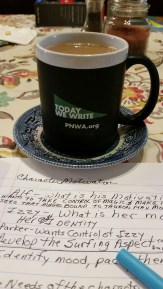 The protagonists are settling into the new neighborhood. One of the niftiest things about their community is the Starbucks—and yes, I did say Starbucks. The owners of the Chambers Prairie Grange building took a huge risk, choosing to renovate rather than tear it down. It was built in 1908 when this area was outside the city limits and was long abandoned, falling into serious disrepair. This Starbucks has the feel and ambiance of a mom-and-pop coffee shop with plenty of comfortable, widely spaced seating placed with a post-pandemic eye. The original flooring has been refurbished, along with the original walls. Even the old Chambers Prairie Grange sign is hung inside there.
Moving to this neighborhood is coming full circle for me, the protagonist. I worked for a large rhododendron nursery in 1989, and the greenhouses I worked in were on the very site where my apartment building currently sits. Across the street from my windows is the property where my uncle and aunt lived in 1966. A large condominium complex is going up where my uncle’s house was, nearing completion. Some friends of ours have bought one of the condos.
From our windows, we have a view of the old grange hall. Back in the day, my ex-hubby’s heavy metal band played there for keggers. Attendees paid two dollars at the door. One dollar went to the band, the other to the host to pay for the beer. (No one underage allowed, no exceptions.) They played many a night there in the early 1970s before the grange hall was shut down and abandoned.
The epilogue of our story shows how life is much simpler for our protagonists. It shows the point of view character, me, admitting how she could get used to the lack of stress and how it feels like a vacation.
The story is an arc that begins at a place of change (the inciting incident), details the complicating events (pinch points), and concludes at a place of relative calm and introspection (the epilogue).
 I find that writing is easy here. Creativity comes in bursts, and I feel good about my writing. We have pared our possessions down to the point that they don’t possess us—something you don’t realize is a problem until you are faced with serious downsizing.
With my husband’s diagnosis of Parkinson’s, we have entered a new phase of life. Our children tell us we have earned our stress-free life, and it’s time to enjoy it.
Yes, winter was long and hard, but now summer is here, and the days are long and bright. So, let the good times roll—real life is unscripted, unpredictable, and no matter the plot points, life is always good.
 In writing, this happens when the narrative keeps expanding, and expanding, and expanding … and what was canon in chapter 4 is contradicted in chapter 44. The story grows as we write it.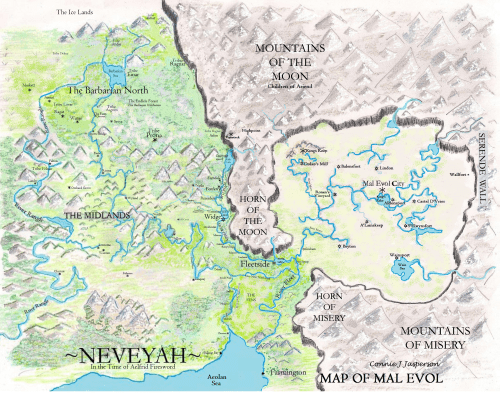
 If you are writing a tale set in a fantasy or sci-fi setting, you are creating that world.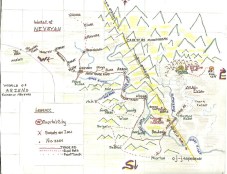
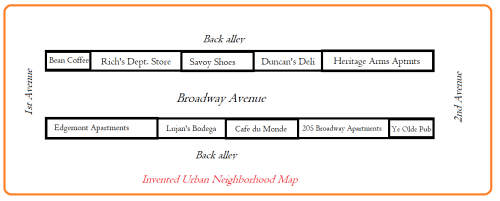
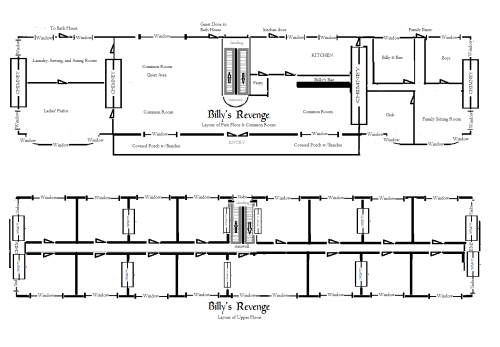 Your map doesn’t have to be fancy. Use a pencil to easily update your map if something changes during revisions. You want to know:
 No matter the level of our education or the dialect we speak, we use these rules and don’t realize we are doing so.
 Muddled phrasings often slip by when I revise my work because my mind sees the words as if they were in the correct order. This is the writer’s curse—the internal editor knows what should be there, and the eye skips over what we actually wrote.
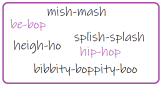 I adore mishmash words. They’re poetic and musical and roll off the tongue with a satisfying rhythm. Sadly, while I regularly bore my grandchildren with them, I hardly ever get to write them. Mishmash. Hip-hop.
 “Ing” words are a terrible temptation to those of us raised on Tolkien. He was writing a century ago, but that style of lush prose has fallen out of fashion. We open the gate to all sorts of verbal mayhem when we lead off with an “ing” word at the front of a sentence.
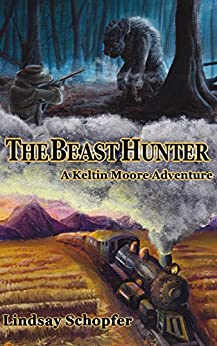
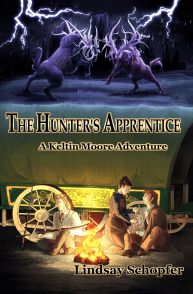 It’s been over ten years since I first started writing my series about the adventures of a professional monster hunter. With the release of
  One of my most treasured experiences in writing The Adventures of Keltin Moore has been meeting the fantastic subject experts in the course of my research. I already mentioned panning for gold, but there have been so many more generous, enthusiastic people I’ve spoken to on subjects ranging from big game hunters to horse-pulled wagons. In particular, I feel blessed to have known Gordon and Nancy Frye. The Fryes are a fantastic wealth of historical information, particularly regarding the development and implementation of firearms over the centuries. If you ever read something in my stories and thought that something involving guns was particularly cool, you can probably thank the Fryes for contributing to it!
 Lindsay Schopfer is the award-winning author of The Adventures of Keltin Moore, a series of steampunk-flavored fantasy novels about a professional monster hunter. He also wrote the sci-fi survivalist novel Lost Under Two Moons and the fantasy short story collection Magic, Mystery and Mirth. Lindsay’s workshops and seminars on the craft of writing have been featured in a variety of Cons and writing conferences across the Pacific Northwest and beyond.
 The movers came on Friday to take what furniture we could gracefully fit into the new apartment. They loaded the van far more quickly than I thought they would. The main hiccup in that day came in the form of the elevator in our building. We are in building C but must go in through the main lobby in building B, take the elevator to our floor, and cross to our building via the sky bridge. It’s a long trek.
 Over the next week, we have to donate as much as possible to be reused, and the rest will be hauled away by the junk removal company. They will not only take the junk but also clean the garage floor. (!!!)
 On the good side, it is easy to write here. I have been writing bits and bobs here and there on old unfinished manuscripts between bursts of unpacking, writing whenever I sit down to rest my back. It keeps me from fidgeting.
 In literary terms, this uneven distribution of knowledge is called asymmetric information. We see this all the time in the corporate world.
 Jared is hilarious, charming, naïve, a bit cocky, and completely unaware that he’s an arrogant jackass. He is a young man who is exceptionally good at everything and is happy to tell you about it. Jared has no clue that his boasting holds him back, as no one wants to work with him.
 When I started writing this story, I had the core conflict: Jared’s misguided desire to be important. I had the surface quest: rescuing the kidnapped kid. I had the true quest: Jared learning to laugh at himself and developing a little humility.
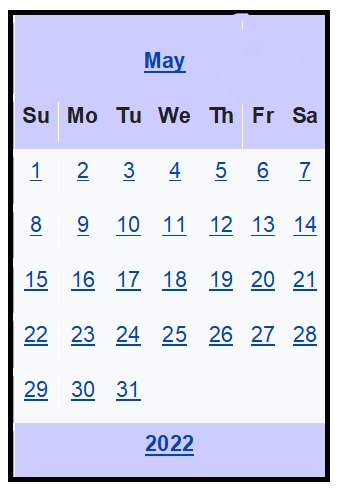 Calendar time is a layer of world-building. It sets the story in a particular era and shows the passage of time.
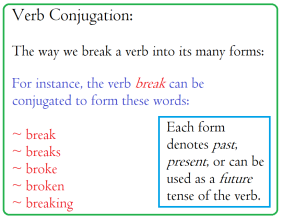 Consider the following sentences: “I eat,” “I am eating,” “I have eaten,” and “I have been eating.”
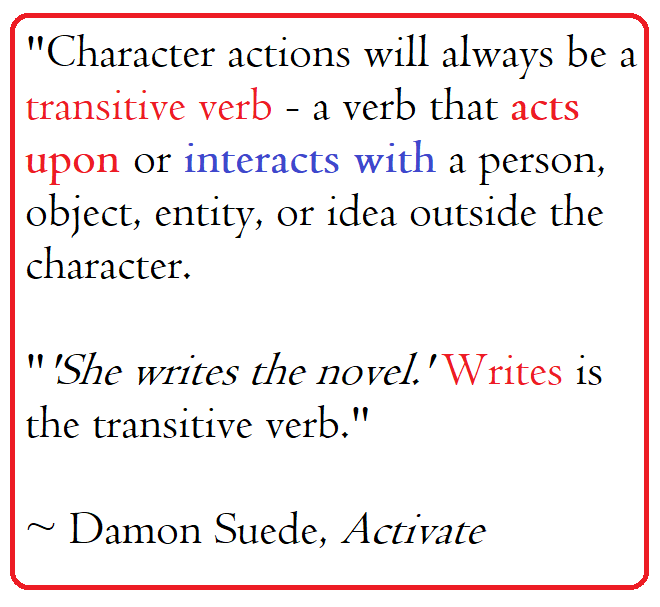 Every story is unique; some work best in the past tense, while others must be set in the present.
 If I were writing a story starring me as the main character, I would open it in the year 2005 with a couple of empty-nesters buying a house in a bedroom community twenty miles south of Olympia.
 The city center is isolated, twelve miles from the freeway and twenty miles away from every other town in the south county. If a fictional story were set in this town, it would feature the same political and religious schisms that divide the rest of our country. There are other tensions. Some families have been here for generations, and a few don’t appreciate the influx of low-paid state workers buying cookie-cutter tract homes (like mine) here.
 Two inches of rain fell the day we moved into our brand-new home in 2005, making moving our furniture into this house a misery. Our new house had no landscaping and rose from a sea of mud and rocks. With a lot of effort, we made a pleasant yard. When the housing bubble burst in 2008, many people on my side of the street lost their jobs, and some homes went into foreclosure.
 Our main street, Sussex, passes through a historic district. The buildings are all built from sandstone quarried at the old quarries. Many of the old buildings are home to antique stores. The masonic lodge is made of Tenino sandstone.
 In writing, we add depth and contour to our prose by how we choose and use our words. We “paint” a scene using words to show what the point-of-view character is seeing or experiencing. Yes, we do need to use some modifiers and descriptors.
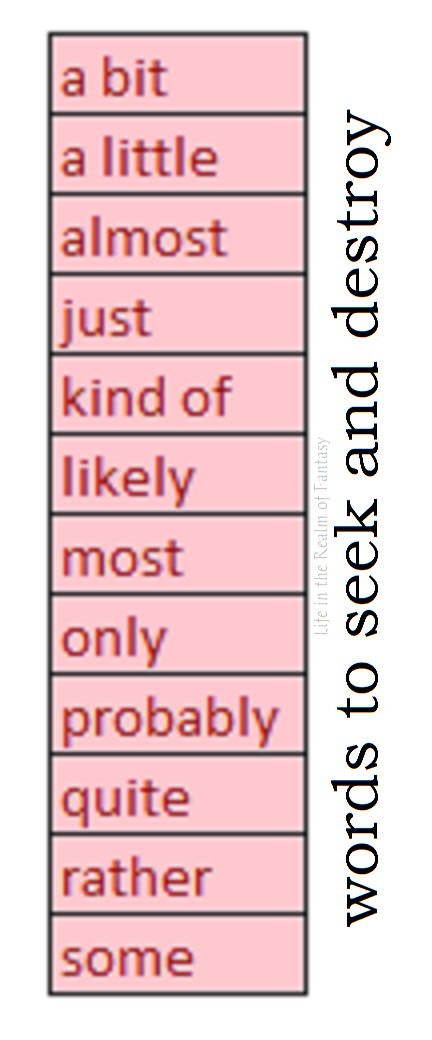
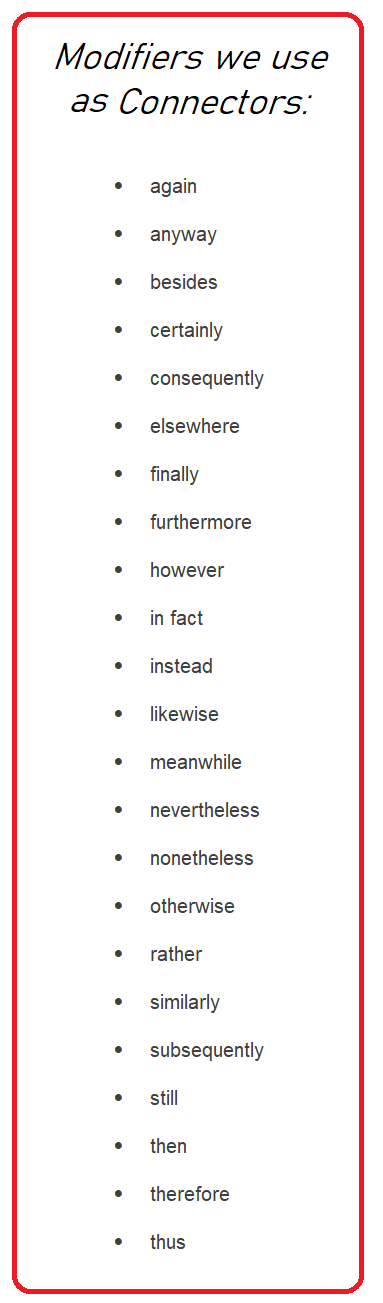 One of the cautions those of us new to the craft frequently hear are criticisms about the number of modifiers (adjectives and adverbs) we habitually use. This can hurt, especially if we don’t understand what the members of our writing group are trying to tell us.
 In the above sentence, the essential parts are structured this way: noun – verb (sunlight glared), adjective – noun (cold fire), verb – adjective – noun (cast no warmth), and finally, verb-article-noun (burned the eyes). Lead with the action or noun, follow with a strong modifier, and the sentence conveys what is intended but isn’t weakened by the modifiers.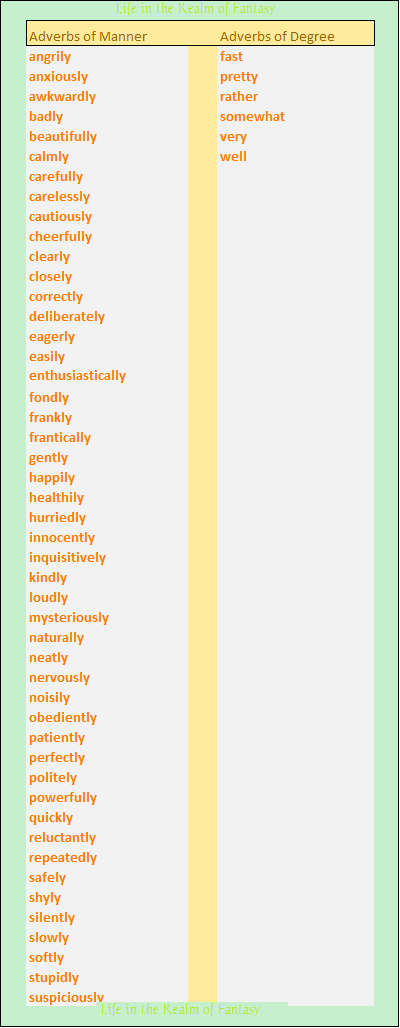
 In his book,
 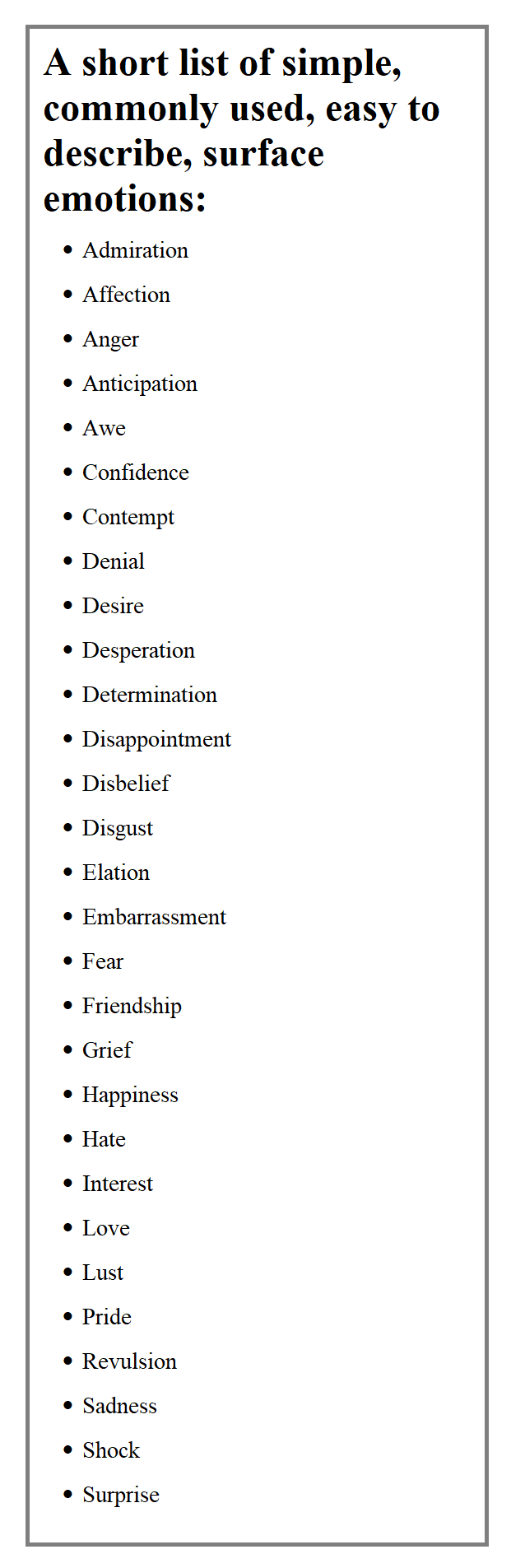 Truthfully, I find detailed descriptions of facial expressions to be boring and sometimes off-putting. Every author armed with a little knowledge writes characters with curving lips, stretching lips, and lips doing many things over, and over, and over … with little variation.
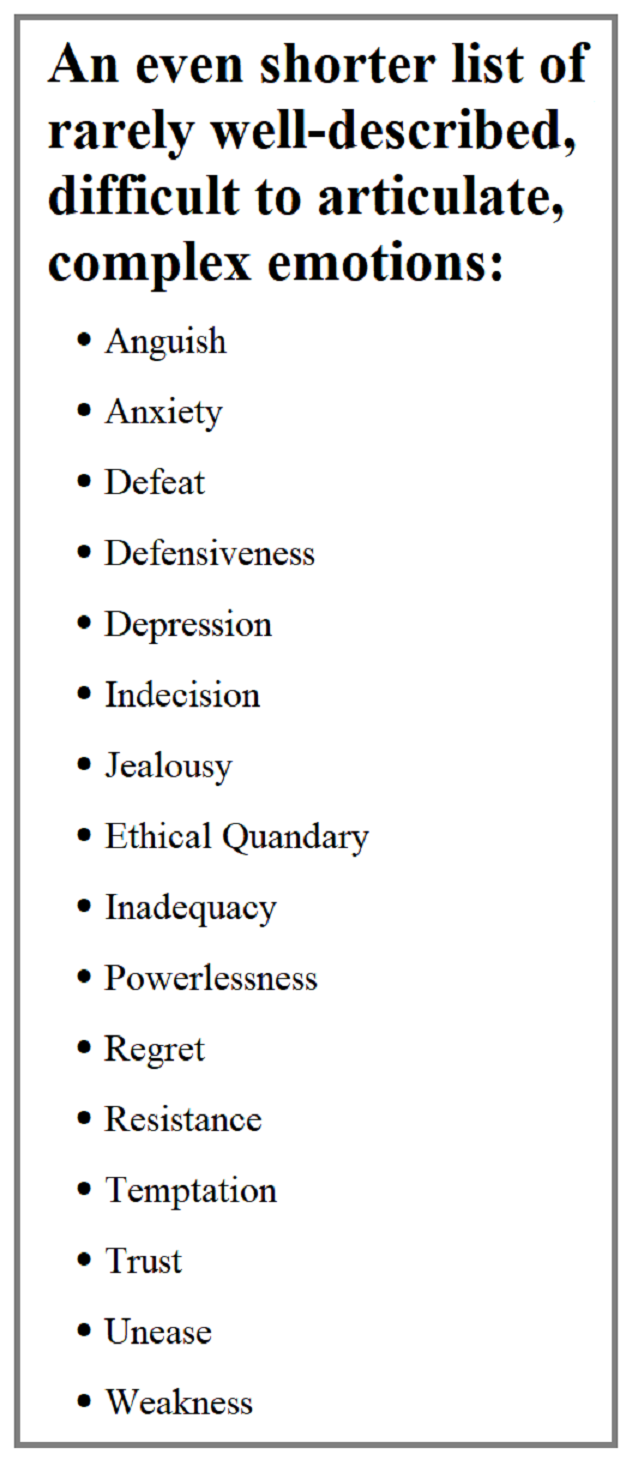 Simplicity has an impact, but I struggle to achieve balance. When looking for words with visceral and emotional power, consonants are your friend. Verbs that begin with consonants are powerful.


 Life in the Realm of Fantasy