
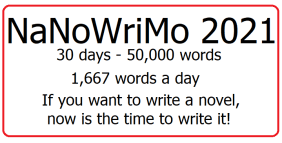
If you plan to write a 50,000-word novel this coming November, you will need to develop some time management skills.
 Writing is easier once it becomes a daily behavioral habit. However, making the best use of your limited writing time requires a little planning, self-discipline, and encouragement from your family.
Once you tell them that you have a goal of writing 1,667 words a day, they might be your biggest supporters. My family certainly has been.
My children are grown now, but most new writers have jobs and a family. When you have school-age children, time for personal projects can be limited. You are constantly going somewhere to some athletic or school function.
But I did it, and you can too. By writing in short bursts whenever you have the opportunity, you might get your first draft finished and get that certificate that says you completed 50,000 words in 30 days.
First, you must give yourself permission to write. For much of my working life, I was a single parent, sometimes with three part-time jobs. My main job was as a bookkeeper or working in data entry for corporate America. Throughout the 1990s, I worked weekends and holidays as a hotel maid. I’m retired now, but although I’d never heard of NaNoWriMo, I was a secret novelist, and I couldn’t stop thinking about what I was writing.
 We have this perception that taking time for creativity is selfish, and that will be your biggest hurdle. Trust me, it is not asking too much of your family for you to have some time every day that is sacred and dedicated to writing.
I wrote in the evenings while my children did their homework, which sometimes meant a lot of stopping and starting, but I did get some writing done. Some words are better than none! You can also set aside a block of time on the weekend to make up some words, although that can be difficult. Setting aside time on a weekend can become a hardship, especially if you have a young family.
Having me there, typing away next to the gerbil cage seemed to keep them on track with their homework, and I did get a page or two written every night.
What I churned out was pretty awful, but although I didn’t know it at the time, I was developing discipline and a work ethic in myself as well as in my children.
Having an artistic life means you allow yourself time to create something meaningful to you.
The following is a list of ideas to help you carve the time to write and still be a full participant in your family’s life.
- You must decide what is more important, your dream of writing or watching a television show that is someone else’s dream. Do you want to create, or do you want to be entertained?
Personally, I would say that if you didn’t like how Game of Thrones turned out, too bad. Write it the way you think it should have been done. Writing fan-fiction is a time-honored way to start your writing career.
- You have the right to take an hour in the morning and the evening to use for your own creative outlet. Wake up an hour early and write until the time you would generally get up. That will be the quietest time you will have all day. Give up that 9:00 p.m. TV show and write for one more hour. There are your 2 precious hours.
Use those two separate hours for your stream-of-consciousness writing. You could easily get your 1,667 words written every day, possibly more. I am a slow keyboard jockey, and I can do about 1,100 wonky, misspelled words an hour during NaNoWriMo.
ALL words you write count toward the goal, misspelled or not.
 Write for five minutes here and ten minutes there all day long if that is all you can do. Every word counts toward your finished manuscript. I took my lunch to work and wrote during my lunch half-hour whenever possible. I also wrote on the bus when I didn’t own a car.
You don’t have to announce to your co-workers or family that you are writing a book if you don’t wish to. I certainly didn’t feel comfortable saying anything about my secret life.
- If you want to spend your lunchtime writing, politely let people know you’re handling personal business and won’t have time to chat.
Writing in the stream-of-consciousness style is an excellent way to cultivate your emotional and poetic mind. It will improve your writing skills in general.
During NaNoWriMo, you engage in unedited writing. Nothing is deleted and every word counts. Even with an outline, sections of your narrative will often be unstructured because it reflects your (or your character’s) observations at the moment you were thinking them.
Writing in this fashion mirrors the way internal thoughts in the human mind work. You are quickly processing thoughts and perhaps switching from one topic to another with abandon. Just go for it.
 Remember, what you are writing is a rough draft, so your story arc will be bumpy and uneven. It doesn’t have to be perfect, so don’t worry about making it so. The goal of NaNoWriMo is to get that first draft written in thirty days. So, every time you have fifteen minutes to spare, sit down and write as much as you can in that short length of time. Spew your story as fast as you can in those moments before you are pulled away. With six or seven short bursts of writing, you can really rack up the word count.
In January or March, or whenever you go to revise your first draft, you might be amazed to find that much of what you originally wrote has life and passion.
The point is to keep on writing even when you have fallen behind. Use whatever motivational tricks you need to encourage yourself, and don’t be too hard on yourself. Far more important than simply getting word count, the goal is to finish your novel.
Writers and other artists do have to make some sacrifices for their craft. It’s just how things are. But you don’t have to sacrifice family for it. Sacrifice one hour of sleeping in and give up something ephemeral and unimportant like one hour of TV.
You can achieve your goal of 50,000 words in 30 days if you give yourself permission to create and make the time to do so.
#NANOPREP SERIES TO DATE:
#NaNoPrep: part 1: What’s the Story? (the storyboard)
#NaNoPrep, Setting: Creating the Big Picture
#NaNoPrep, Building Characters
#NaNoPrep, More Character Building
#NaNoPrep, Designing Science, Magic, and the Paranormal
#NaNoPrep, Terrain and Geography
#NaNoPrep, Connections and Interconnections
#NaNoPrep, Construction and Deconstruction
#NaNoPrep, The Story Arc Part 1
#NaNoPrep, The Story Arc Part 2
#NaNoPrep, The Story Arc part 3, the End
#NaNoPrep: Signing up and Getting Started
#NaNoPrep: Guernica, Inspiration, and Finding Writing Prompts
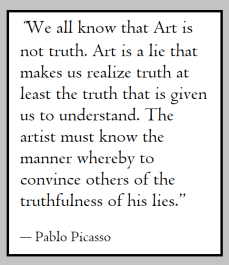 Often the work that is inspired by a visual prompt has nothing to do with the image. But it has everything to do with the nature of storytelling. The ability to explain the world through stories and allegory emerges strongly in some people. Many are naturally able to form and express a story, and others find the subliminal prompting of an image will be the spark that lights their creativity.
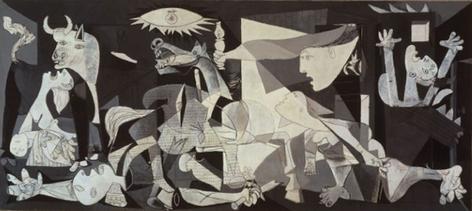 Picasso’s choice to use black and white to tell that story is brilliant. Newsreels of the day were black and white, which influenced his decision. This piece is powerful because of the emotion the artist painted into the image.
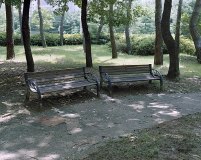 nspiration can be found in the image of an unoccupied park bench in winter. The gray weather, the barren scenery, the loneliness of the empty bench could be the seeds from which a novel grows. Who is that bench waiting for? Who has just left it? Is the story light or dark?
 Once there, create a profile. You don’t have to get fancy unless you are bored and uber-creative.
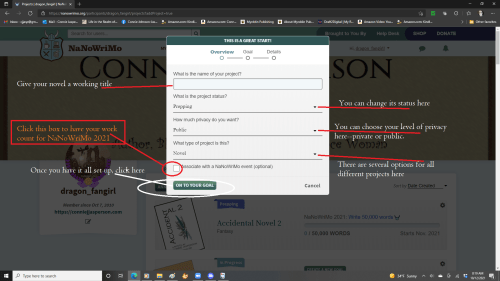 You can play around with your personal page a little to get used to it. I use my NaNoWriMo avatar and name as my Discord name and avatar. This is because I only use Discord for NaNoWriMo and one other large organization of writers. (Next week, we’ll talk about Discord and why NaNoWriMo HQ wants us to use it for word sprints and virtual write-ins.)
 Next, check out the community tabs. If you are in full screen, the tabs will be across the top. If you have the screen minimized, the button for the dropdown menu will be in the upper right corner and will look like the blue/green and black square to the right of this paragraph.
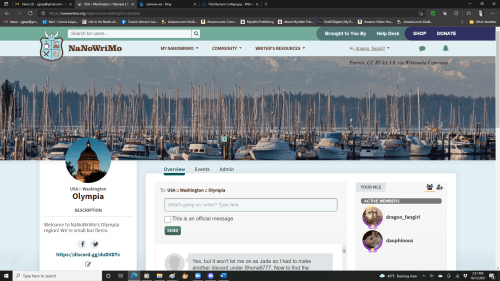 You may find the information you need in one of the many forums listed here.
 Make a master file folder that is just for your writing. I write professionally, so my files are in a master file labeled Writing.
 Give your document a label that is simple and descriptive. My NaNoWriMo manuscript will be labeled: Accidental_Novel_2.
 Still, we can come together and support each other’s writing via the miracle of the internet. My region is finalizing a schedule for “Writer Support” meet-ups via Zoom – little gab sessions that will connect us and keep us fired up.
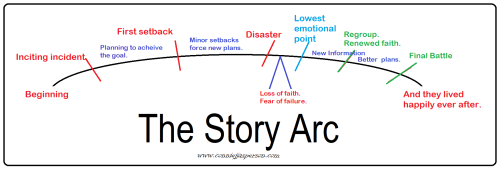
 But sometimes, when writing the first draft, we realize our manuscript has gone way off track and is no longer fun to write. That is where the storyboard and my loose outline become important.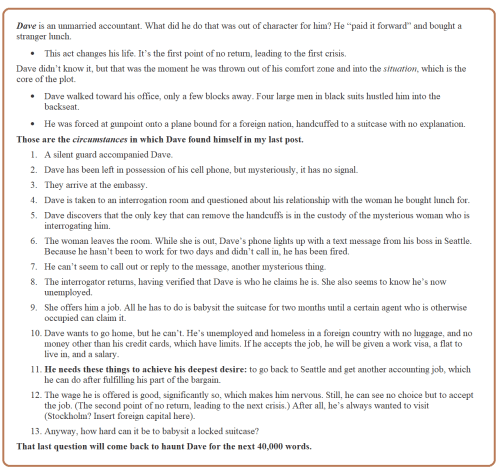
 Every novel is different, has a different genesis, and emerges from the author’s mind with its own personality.
 I usually do this with a little advance preparation. Then on November 1st, I sit in front of my computer, and using the ideas I have outlined as my prompts, I wing it for at least two hours.
 How will the next phase of Dave’s story start? That will begin the middle section of the story, and this is what we are going to give a brief outline of.
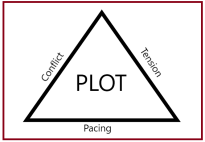 In any story, the crucial underpinnings of conflict, tension, and pacing are bound together. Go too heavily on one aspect of the triangle, and the story fails to engage the reader. By outlining a few important events now, we can add trouble and hitches during the writing process and increase the tension. Pacing will be something to worry about in the second draft—at this point, we just want to get the bones of his adventure down on paper.
 We know our genre and have written a few paragraphs that describe our characters and who they are the day before the story opens. Also, we know where the story takes place. (To catch up on earlier posts, the list is at the bottom of this article.)
 Every reader knows that stories have a beginning, a middle, and an end. They start in a place of relative comfort, and through rising action, they follow the characters through events that change them for better or worse.
 In your musings, on what day does the serious event occur, the one that changes everything? THAT day is where the story begins, and everything that happens before that moment is backstory and isn’t necessary. A plot outline I have used before as an example is set as a political thriller, but it could easily be a paranormal fantasy, a sci-fi thriller, or a romance.
 If you work at a day job and using the note-taking app on your cellphone to take notes during work hours is frowned on, you can still capture your ideas for the storyboard.
 Whether you hope to be published traditionally or plan to go indie, you must know what the reading public is buying. You will probably write a book that is squarely set in your favorite genre.
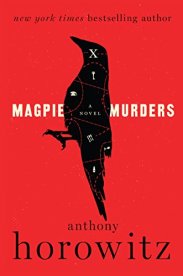 When editor Susan Ryeland is given the manuscript of Alan Conway’s latest novel, she has no reason to think it will be much different from any of his others. After working with the bestselling crime writer for years, she’s intimately familiar with his detective, Atticus Pünd, who solves mysteries disturbing sleepy English villages. An homage to queens of classic British crime such as Agatha Christie and Dorothy Sayers, Alan’s traditional formula has proved hugely successful. So successful that Susan must continue to put up with his troubling behavior if she wants to keep her job.
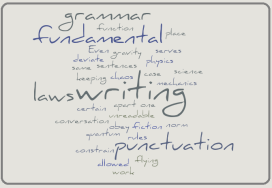
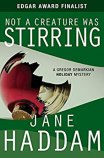
 Now, let’s talk MECHANICS. The author of the Magpie Murders has worked as a journalist. He has taken the time to become educated in grammar and understands common industry standards.

 I know that world because I based the plants and topography on the Pacific Northwest, where I live. Other than the Escarpment, which is the visible scar left behind by the Sundering of the Worlds, the plants and geography are directly pulled from the forested hills and farmlands of Southern Puget Sound and Western Washington State.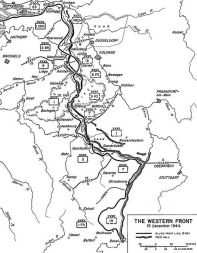
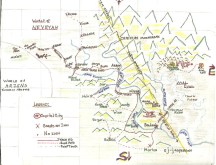
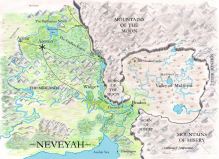
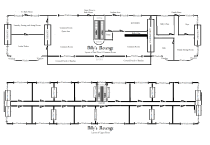 If your work is sci-fi, consider making a map of the place where the action happens. It could be a pencil-drawn floor-plan of a space station/ship or the line drawing of part of an alien world. I drew the floorplan of Billy’s Revenge for my reference, as most of the novel, Billy Ninefingers, takes place there.
 Open your
  Authors of sci-fi must research and understand the
  Satisfying these conditions sets the stage for you to create the Science of Magic. This is an underlying, invisible layer of the world. By creating and following the arbitrary rules of this “science,” your story won’t contradict itself.
 Conflict forces the characters out of their comfortable environment. The roadblocks you put up force the protagonist to be creative. Through that creativity, your characters become stronger than they believe they are.
 If you design this now, on November 1st, you will have the framework to showcase your characters ambitions, the drive to acquire more personal power, and the lengths characters will go to in their efforts to gain an edge over their opponents. Everything will be in place for a free-wheeling dive deep into the consequences of your protagonist’s struggle.


 Life in the Realm of Fantasy