
The story arc can take several forms. It can be linear, a straight shot from the inciting incident to the conclusion. This kind of story takes our protagonist through a series of events that all lead to one ending, a point well away from where it began. The protagonist has left his roots behind and is transformed into a hero.
 Another arc takes the protagonist on a journey that can end several different ways, all of them taking our characters down a winding path with many choices, roads not taken. They also are altered by their experiences for good or ill.
Yet another arc takes the protagonist back to their beginnings, transformed and ready to face their future.
My favorite arc to play with is the double circular arc, also known as the infinity arc. The majority of this post appeared here in November 2023, so if you have read it already, thank you for stopping by. The infinity arc is on my mind as it’s a method I am employing in a current short work-in-progress.
When I plan a story, I divide the outline into 3 acts. In a 2,000-word story, act 1 has 500 words, act 2 has 1,000, and act 3 has 500 more words to wind up the events. No matter the length of any story, if you know the intended word count, you can divide the plot outline that way.
 Knowing my intended word count helps me create a story, from drabbles to novels. For me, it works in stories with a traditional arc as well as those with a circular arc.
In any story, the words we use to show the setting, combined with a strong theme, will convey atmosphere and mood, so fewer words are needed.
The story I’m using for today’s example is the Iron Dragon, a 1,025-word story I wrote during NaNoWriMo 2015. That was the year I focused on experimental writing, putting out at least one short story every day and sometimes two.
This is a story of the web of time glitching and the perceptions of the characters who experienced it.
Some speculative fiction stories work well as a double circular arc—something like an infinity sign, a figure-eight lying on its side: ∞
 In a circular narrative, the story begins at point A, takes the protagonist through life-changing events, and brings them home, ending where it started. The starting and ending points are the same, and the characters return home, but they are fundamentally changed by the story’s events.
The infinity arc presents one story from two different viewpoints. The story begins with character 1, takes them through the events, and brings them back. At that point, the story takes up character 2 and retells the events through their point of view, bringing them back to where they began. (Two circular story arcs joined by one event.)
Both characters begin at the same place, experience the event(s) concurrently but separately, and arrive back at the same place. The worldview of both is challenged by what they have lived through.
The two characters may not meet. In the Iron Dragon, my characters physically don’t meet in person. However, they briefly occupy the same patch of ground during a glitch in the space-time continuum.
This story ends where it began but with the two sets of characters having seemingly experienced two different events. Their perception of the meeting is colored by the knowledge and superstitions of their respective eras.
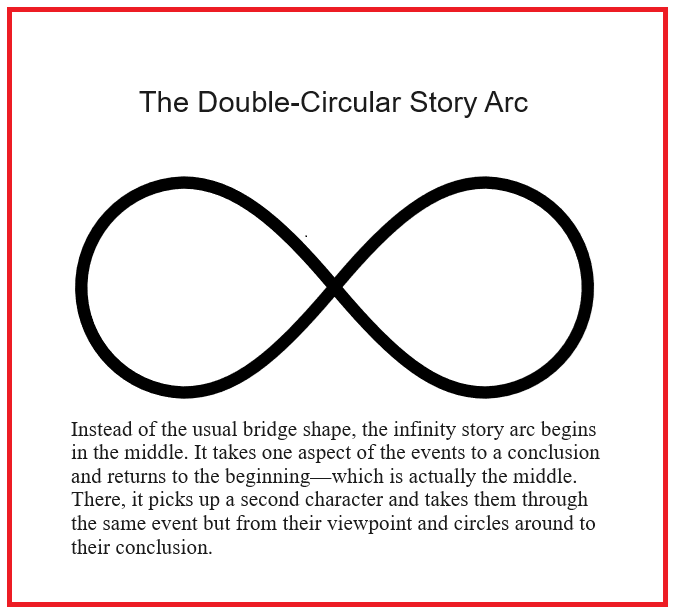
The first paragraph of the Iron Dragon begins in the middle of a story—the center of the infinity sign. Those opening sentences establish the world, set the scene, and introduce the first protagonist. The following three paragraphs show the situation and establish the mood. They also introduce the antagonist—what appears to be an immense dragon made of iron.
At this point, our first protagonist knows that he must resolve the problem and protect his people, which he does. There is more to his side of the story, of course. But this is a story with two sides. Aeddan’s point of view is not the entire story.
Again, I had to set the scene and establish the mood and characters. Here, we meet the second protagonist, an engine driver named Owen. He has the same needs as Aeddan and also resolves the problem. Neither character would have understood the strange physics of what just occurred had Michio Kaku been around to explain it to them. Both do what they must to protect their people.
The final paragraphs wind it up. They also contribute to the overall atmosphere and setting of the second part of the story. As a practice piece, this story has good bones. I didn’t feel it was the right kind of story for submission to a magazine or contest, as it’s not a commercially viable piece. So, I posted it here on this blog on November 4th, 2016. #flashfictionfriday: The Iron Dragon
 Word choices are essential in showing a world and creating a believable atmosphere when limited to only a small word count. I had challenged myself to write a story that told both sides of a frightening encounter in 1000 words, give or take a few. I wanted to expand on the theme of dragons and use it to show two aspects of a place whose national symbol is the Red Dragon (Welsh: Y Ddraig Goch).
But I also wanted to use the double circular story arc, seeing it as a way to tell one story as lived by two protagonists separated by twelve centuries and a multitude of legends. That meant I had 1000 words to tell two stories.
Short fiction allows us to experiment with both style and genre. It challenges us to build a world in only a few words and still tell a story with a beginning, a middle, and an end.
The act of writing something different, a little outside my comfort zone, forces me to be more imaginative in how I tell my stories. It makes me a better reader as well as a better writer.
Credits and Attributions:
Wikimedia Commons contributors, “File:Flag of Wales.svg,” Wikimedia Commons, https://commons.wikimedia.org/w/index.php?title=File:Flag_of_Wales.svg&oldid=808619174 (accessed November 19, 2023).
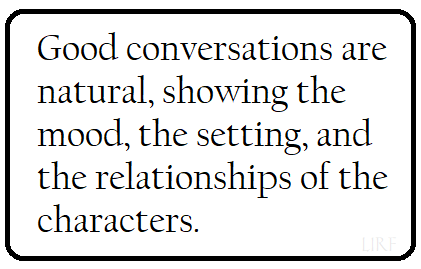
 Most of my novels and short stories begin life as exchanges of dialogue between two characters. Their conversations shed light on what each character’s role in the story might be.
 Action: She comes down for coffee. He holds a notebook, gathers pens, and stands.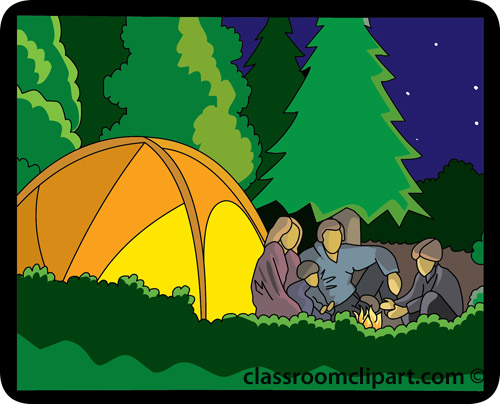
 My writing projects begin with an idea, a flash of “What if….” Sometimes, that “what if” is inspired by an idea for a character or perhaps a setting. Maybe it was the idea for the plot that had my wheels turning.
 I’m writing a fantasy, and I know what must happen next in the novel because the core of this particular story is romance with a side order of mystery. I see how this tale ends, so I am brainstorming the characters’ motivations that lead to the desired ending.
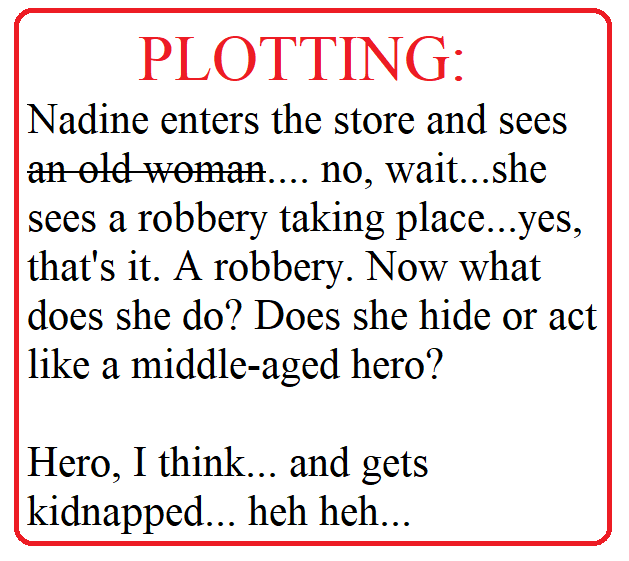 Plots are comprised of action and reaction. I must place events in their path so the plot keeps moving forward. These events will be turning points, places where the characters must re-examine their motives and goals.
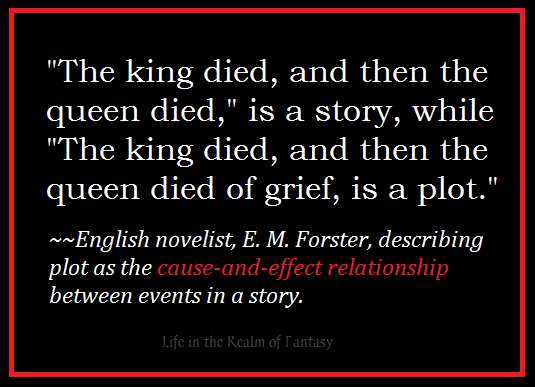 Our characters are unreliable witnesses. The way they tell us the story will gloss over their failings. The story happens when they are forced to rise above their weaknesses and face what they fear.
 Nowadays, I am rarely able to do in-person events due to family constraints, but I used to do four events a year. However, I have some tips to help ease the path for you.
 The final thing you will need is a way of accepting money. I have a metal cash box, but you only need something to hold cash and some bills to make change with. A way to accept credit cards, something like
 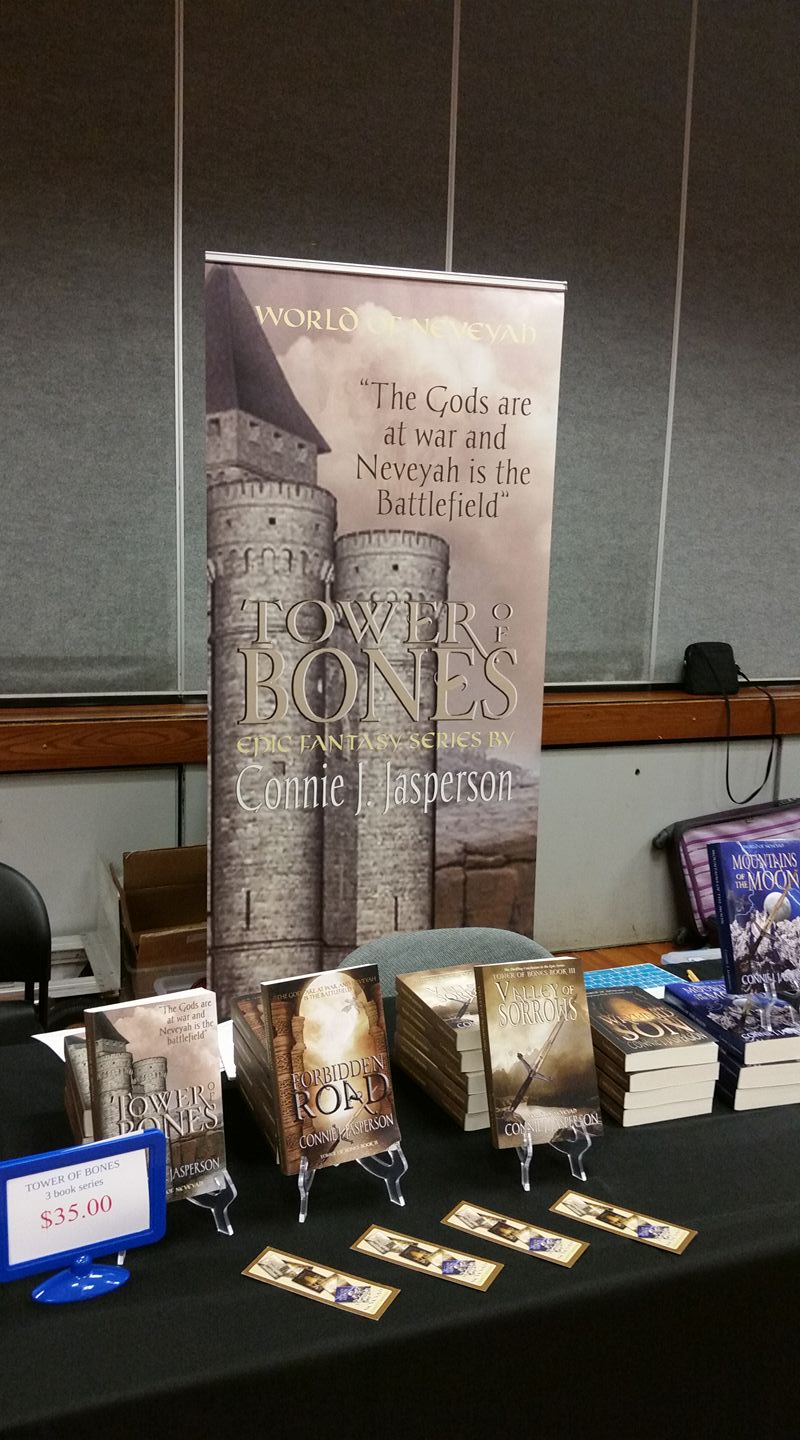 Investing in some large promotional graphics, such as a retractable banner, is a good idea. A large banner is a great visual to put behind your chair. A second banner for the front of the table looks professional but requires some fiddling with pins.
 Make your display attractive, but I suggest you keep it simple. People will be able to see what you are selling, and the more fiddly things you add to your display, the longer setup and teardown will take. The shows and conferences I have attended offered plenty of time for this, but I’ve heard that some of the big-name conventions require you to be in or out in two hours or less.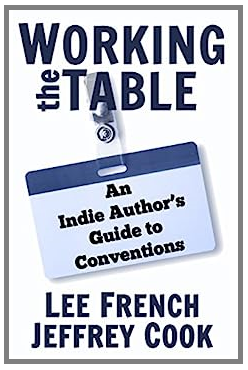
 The posts I wrote for that first attempt at blogging were pathetic attempts to write about current affairs and politics as a journalist, which is something that has never interested me. I was lucky if I managed to post one piece a month and had no readers or followers.
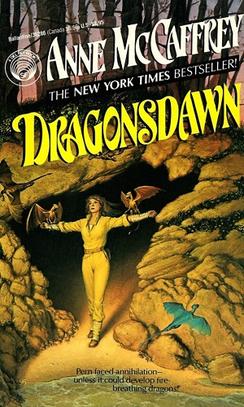 Books.
 I’ve made many friends through this writing adventure. I now know people from all over the world who I may never meet in person but who I am fond of, nevertheless.
 Some people worry about plagiarism, and in this world of AI and entitlement, it’s a valid concern. To my knowledge, I have never been plagiarized. I have a notice clearly in the sidebar on my website that the content is copyrighted.
 Life in the Realm of Fantasy has evolved over the years because I have changed and matured as an author.
 I write what I am in the mood to read, so my genre is usually a fantasy of one kind or another. However, I sometimes go nuts and write women’s fiction.
 But regardless of the genre, the basic premise of any story can be answered in eight questions that we will ask of the characters.
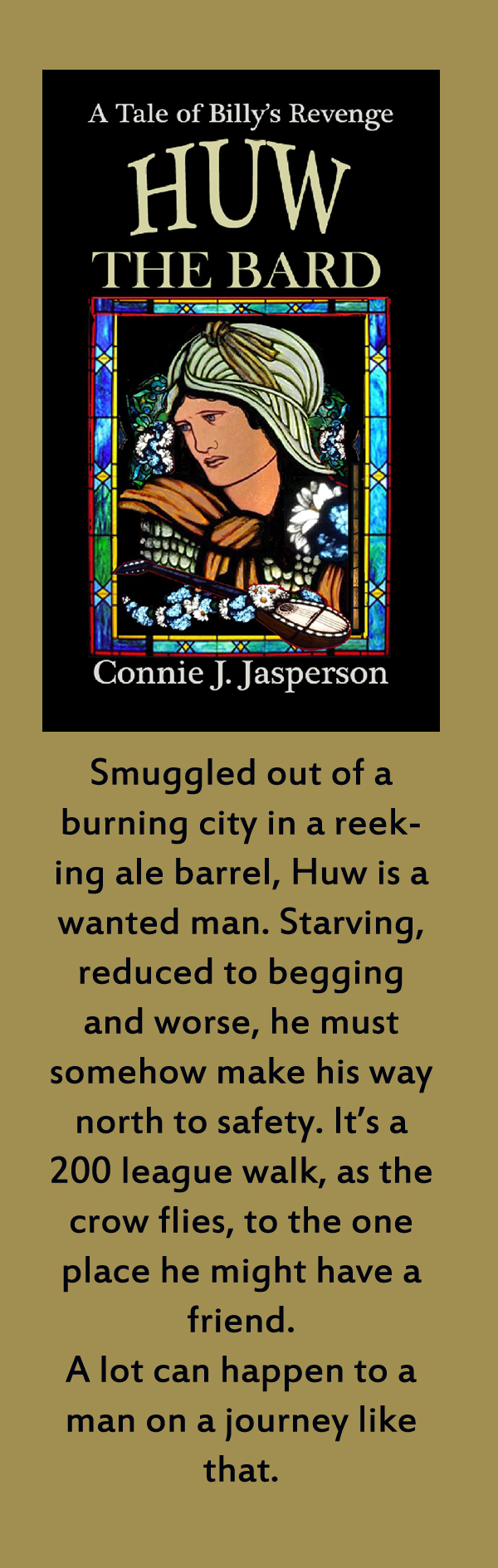
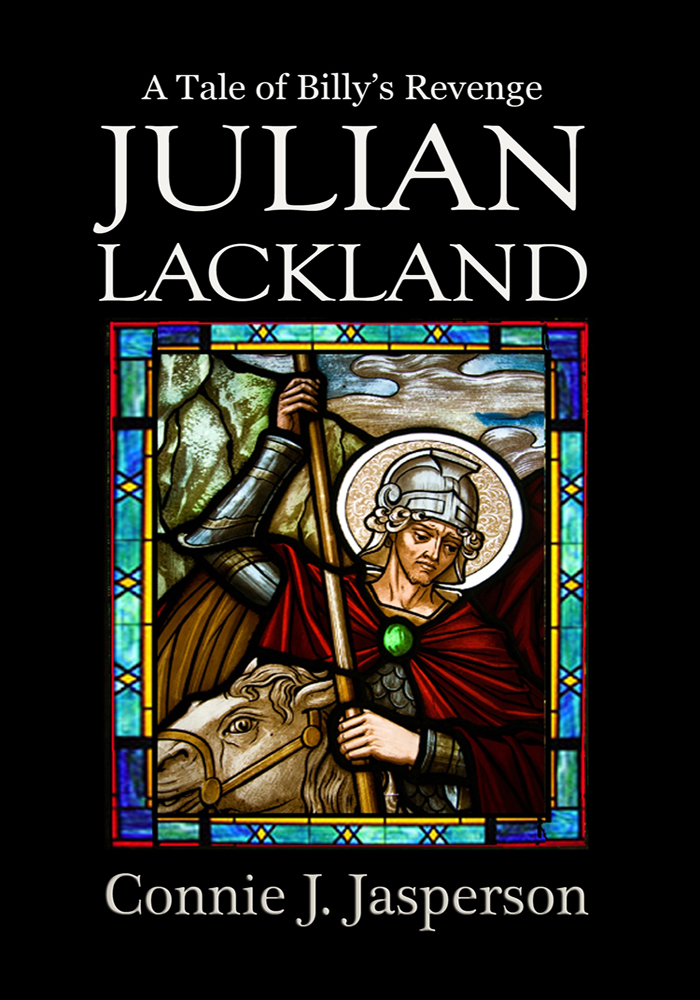 And thus Julian Lackland and Lady Mags were born, and Huw the Bard and Golden Beau. But they needed a place to live, so along came Billy Ninefingers, captain of the Rowdies, and his inn, Billy’s Revenge. When I first met Billy and his colorful crew of mercenaries, I was hooked. I had to write the tale that became three novels: Julian Lackland, Billy Ninefingers, and Huw the Bard.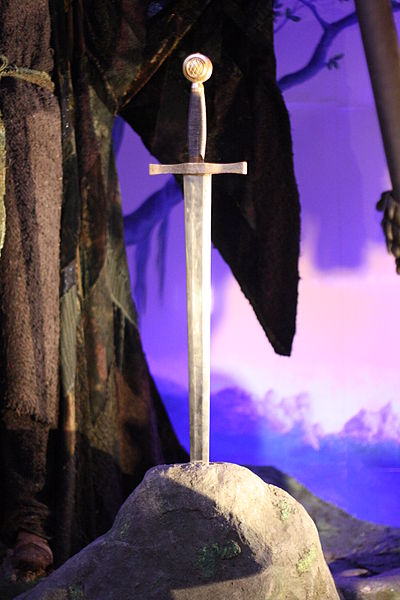
 Mood and atmosphere are separate but entwined forces. They form subliminal impressions in the reader’s awareness, subcurrents that affect our personal emotions.
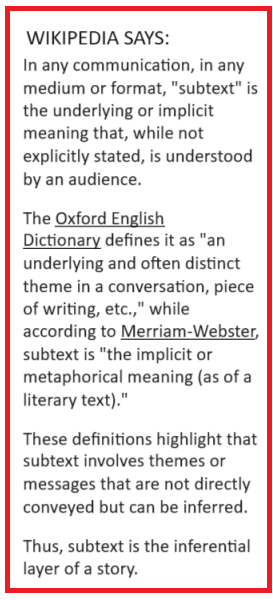 Subtext is a complex but essential aspect of storytelling. It lies below the surface and supports the plot and the conversations. It is the hidden story, the secret reasoning we deduce from the narrative. It’s conveyed by the images we place in the environment and how the setting influences our perception of the mood and atmosphere.
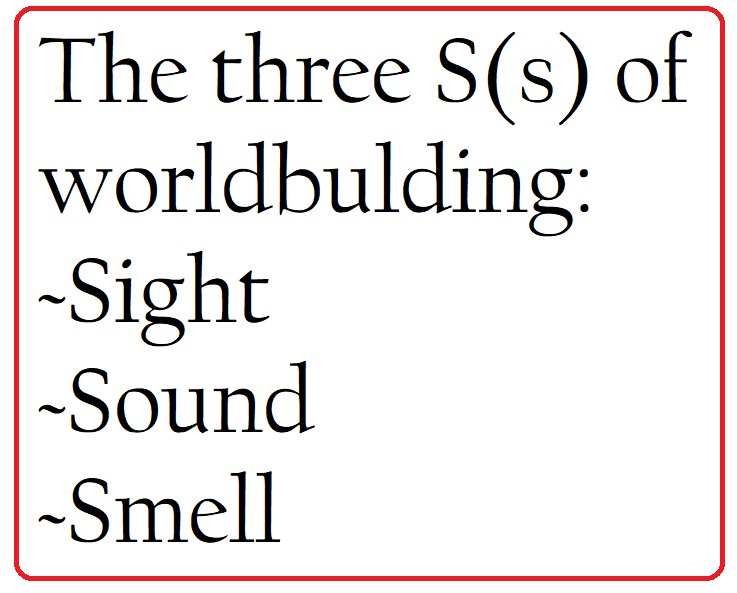 We want to avoid excessive exposition, and good worldbuilding can help us with that. Let’s say we want to convey a general atmosphere of gloom and show our character’s mood without an info dump. Environmental symbols are subliminal landmarks for the reader. Thinking about and planning symbolism in an environment is key to developing the general atmosphere and affecting the overall mood.
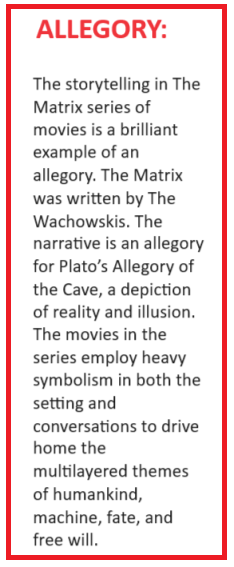 When we are designing the setting of a scene, which aspect of atmosphere is more important, mood or emotion? As I have said before, both and neither because they are entwined. Our characters’ emotions affect their attitudes toward each other and influence how they view their quest. This, in turn, shapes the overall mood of the characters as they move through the arc of the plot. And the visual atmosphere of a particular environment may affect our protagonist’s personal mood. Their individual attitudes affect the emotional state of the group—the overall mood.
 We can create an atmosphere and mood that underscores our themes and highlights plot points without resorting to info dumps. We can lighten the mood as easily as we can darken it. When we design a setting, color brightens the visuals, and gray depresses them. Those tones affect the atmosphere and mood of the scene.
 Intelligent creatures communicate in their own languages with each other, sounds that we humans interpret as random and meaningless or simply mating calls. But scientists are discovering their vocalizations must have meanings beyond attracting a mate, words that are understood by others of their kind. This is evident in the way they form herds and packs and flocks, societies with rules and hierarchies.
 We humans are tribal. We prefer living within an overarching power structure (a society) because someone has to be the leader. We call that power structure a government.
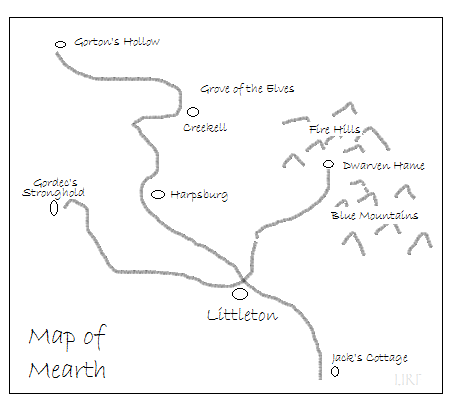 Worldbuilding requires us to ask questions of the story we are writing. I go somewhere quiet and consider the world my characters will inhabit. I have a list of points to consider when creating a society, and you’re welcome to copy and paste it to a page you can print out. Jot the answers down and refer back to them if the plot raises one of these questions.
 Power in the hands of only a few people offers many opportunities for mayhem. Zealous followers may inadvertently create a situation where the populace believes their ruler has been anointed by the Supreme Deity. Even better, they may become the God-Emperor/Empress.
 First, is this character someone the reader should remember? Even if they offer information the protagonist and reader must know, it doesn’t necessarily mean they must be named. Walk-through characters provide clues to help our protagonist complete their quest, but we never see them again. They can show us something about the protagonist and give hints about their personality or past—but when they are gone, they are forgotten.
 Novelists can learn a lot from screenwriters about writing good, concise scenes. An excellent book on crafting scenes is
  I took this absurdity to an extreme in
  One final thing to consider is this: how will that name be pronounced when read aloud? You may not think this matters, but it does. Audiobooks are becoming more popular than ever. You want to write it so a narrator can easily read that name aloud.
 Despite my experience of reading fantasy books aloud to my children, it didn’t occur to me that the names were unpronounceable as they were written. We ironed that out, but that hiccup taught me to spell names the way they’re pronounced whenever possible.
 Use common sense and if a beta reader runs amok in your manuscript telling you to remove “this and that,” examine each instance of what has their undies in a twist and try to see why they are pointing it out.
 Many writers have beta readers look at their work before it is submitted. I would also suggest hiring a freelance editor. Besides having a person pointing out where you need to insert or delete a comma, hiring a freelance editor is a good way to discover many other things you don’t want to include in your manuscript, things you are unaware are in there:
 Freelance editors will point out these all things. We don’t like it when certain flaws in our work are pointed out, but we are better off knowing what needs addressing. When an editor guides you away from detrimental writing habits, they aren’t trying to change your voice. They’ve seen something good in your work, and they’re pointing out places where you can tighten it up and grow as a writer.


 Life in the Realm of Fantasy