You have thirty seconds to sell me that book

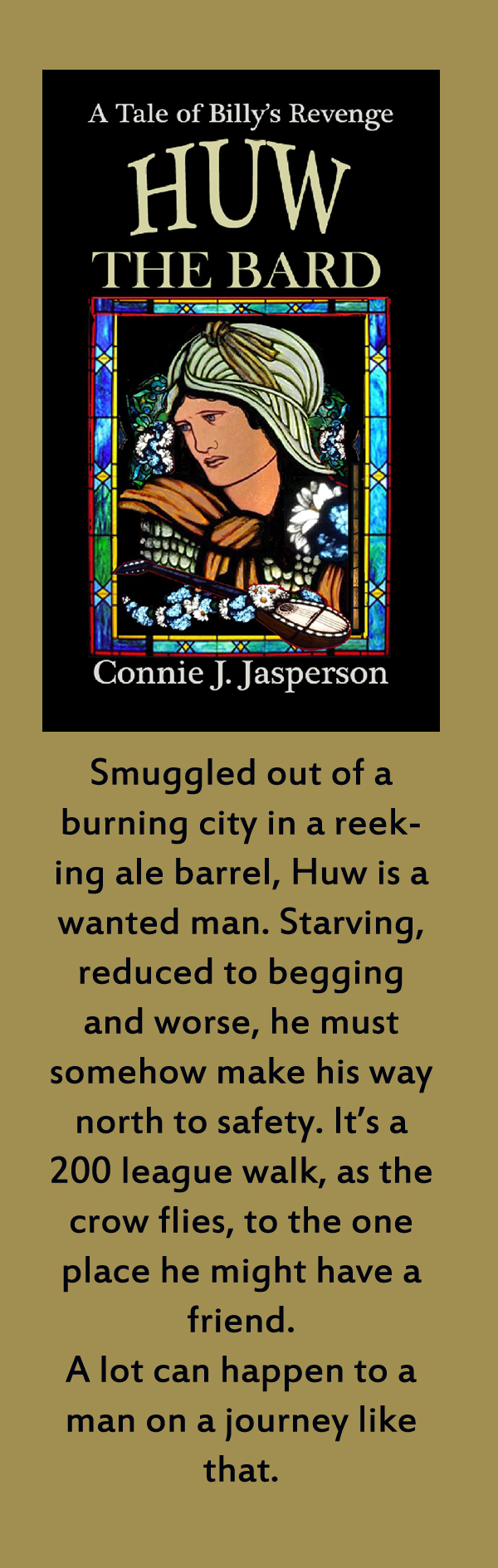
HTB Bookmark side B copy

“Huw the Bard” bookmark side B: the business card

I try to do at least one book signing event a month. For me, these events are one of the trickier parts of the business, because I am trying to sell something I love, but I am not a natural-born salesman. You have to know what you’re trying to sell, and that is not as easy as it sounds.

First off, just because you wrote the book doesn’t mean you can give a concise two sentence pitch about it to a prospective customer. And don’t think you can just read them the blurb–they can do that for themselves and will walk away if they think you are not trying to engage them.

People have short attention spans, especially at events. You have thirty seconds to sell that book–sixty if you are really lucky.

What we are talking about here is called an “elevator pitch.” It goes like this: imagine you get on the elevator carrying a briefcase with your books in it. A fellow passenger asks what you’re selling. An elevator pitch is a short summary used to quickly and simply define your product in the time it takes for the elevator to go from one floor to the next, which is where your captive audience will get off. 

Remember what I have said about the internet giving you a free education? Here is one great example of that, quoted directly from Salisbury University’s career services webpage:

Essential Elements of a Powerful Elevator Pitch:

  • HTB Bookmark side A copy

    “Huw the Bard” bookmark side A: the pitch

    Concise. Your pitch should take no longer than 30-60 seconds.

  • Clear. Use language that everyone understands. Don’t use fancy words thinking it will make you sound smarter. Your listener won’t understand you and you’ll have lost your opportunity to hook them.
  • Powerful. Use words that are powerful and strong. Deliver the “Sis-Boom-Bang” to grab their attention!
  • Visual. Use words that create a visual image in your listeners mind. This will make your message memorable.
  • Tell a Story. A short story, that is. A good story is essentially this: someone with a problem either finds a solution or faces tragedy. Either type of story can be used to illuminate what you do.
  • Targeted. A great elevator pitch is aimed for a specific audience. If you have target audiences that are vastly different, you might want to have a unique pitch for each.
  • Goal Oriented. A kick-ass elevator pitch is designed with a specific outcome in mind. What is your desired outcome? You may have different pitches depending on different objectives. For instance do you want to: make a sale, gain a prospect, enlist support for an idea, or earn a referral.
  • Has a Hook. This is the element that literally snags your listener’s interest and makes them want to know more.  This is the phrase or words that strike a chord in your listener.
(end of quoted text)

Identify the key elements of your book (or series of books). Let’s consider the Tower of Bones series of books, based in the World of Neveyah.

  1. The underlying themes of the World of Neveyah series are brotherhood, family, romantic love, honor, and duty.
  2. The obvious theme is the successful resolution of a quest.
  3. The core plot device around which the story evolves is an ongoing War of the Gods, and the world in which the tale is set in is their battleground, offering all sorts of opportunities for mayhem

How do I boil that down into a seemingly off-the-cuff elevator pitch? So far, I have not been that successful, but I am getting better with each event I go to. Practice does help to improve how confident you feel when pitching your book to a potential reader.

  • WON Books Postcard Side A 6-23-2015

    “World of Neveyah” series postcard side A: the pitch

    Open your pitch by getting the potential buyer’s attention with a “hook.” This is a statement or question that piques their interest to want to hear more.

  • Craft your spiel so it’s about 150-225 words in length, as if it were a blurb. In fact, it is an alternate blurb to the one that is on the back of the book.
  • Remember, your pitch should go no longer than 60 seconds. 30 seconds is optimal.
  • Know your “script” so well that you can sound causal about it, and vary the way in which you deliver it, so that it does not sound rote or mechanical.
  • Readers expect dedication and sincere passion for the craft of writing from the authors they meet, so put some feeling into the delivery.
  • At the end of your pitch, offer to give them something. Would they like a bookmark or a postcard? (Both of which just happen to be beautifully crafted business cards thinly disguised to look like swag.)
WON Books Postcard white Side B 6-23-2015

“World of Neveyah” postcard side B: the business card

Two sorts of handouts are absolutely crucial, especially if they are eye-catchy. Bookmarks and postcards can be used to mark a place in any paperbook, whether it is yours or someone else’s book. When readers are just pausing as they pass through at events, bookmarks and colorful postcards are always welcome because they can use them, and your name and your book cover(s) will be there where they will see it.

These are even more critical if they only buy ebooks. Readers who only buy ebooks love getting them both for the artwork and the information they contain. These cards will tell them where they can get those morsels of goodness, all primed and ready to send to the electronic reading device of their choice.

I have been assured that over time, my elevator pitch will evolve, becoming more clear and powerful. And it’s true–as time goes on I’m becoming more confident in what I have to sell, and I am selling more books.

As I have discovered, confidence in your work does convey itself to the prospective reader.  Each time you, as a person, make a positive impression on a potential reader you have the possibility of creating a lifelong fan who will tell their friends about your work.

WON Books Postcard with writing as of June 2015

Mock-up for a possible banner/poster for the World of Neveyah. Did not use–too busy, but liked some aspects of it. Will likely cut it down to just the two main sentences that tell it all.

2 Comments

Filed under Uncategorized

Elements of the story: the structure of the scene

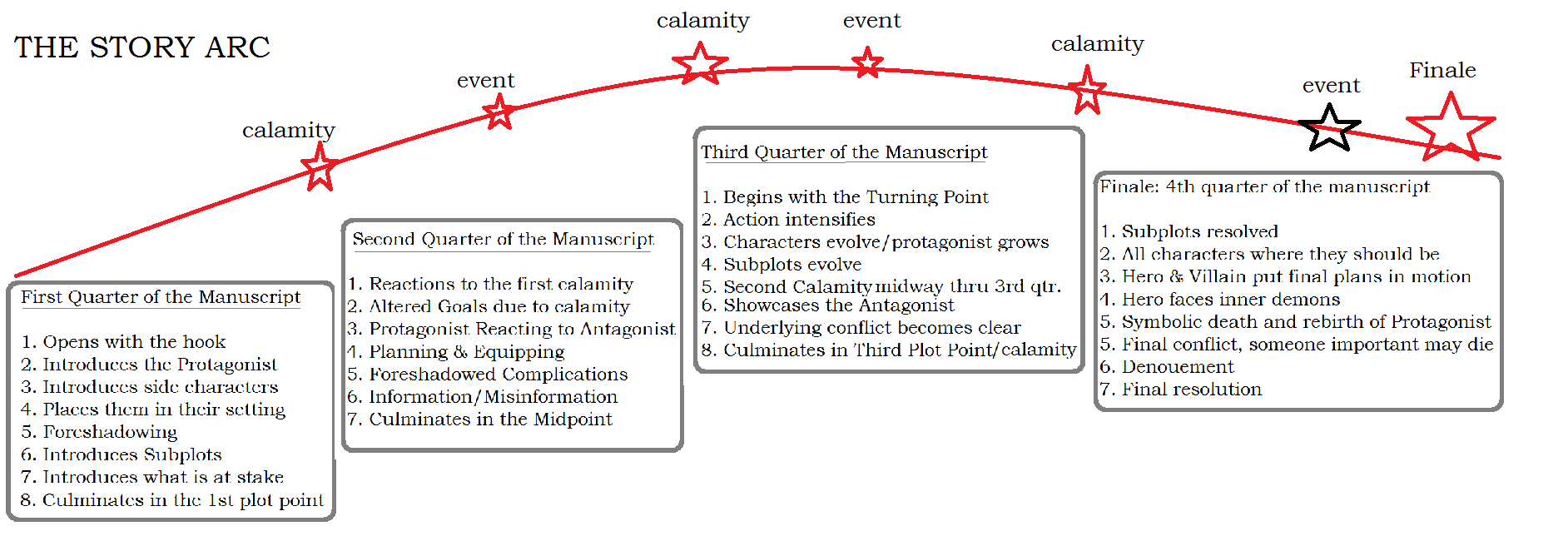
Most authors understand that there is an arc to the overall novel–the Story Arc  which  consists of :

  1. Exposition, where we introduce our characters and their situation.
  2. Rising Action, where we introduce complications for the protagonist
  3. Climax, the high point of the action, the turning point of the narrative
  4. Falling Action, the regrouping and unfolding of events that will lead to the conclusion
  5. Resolution, in which the problems encountered by the protagonist are resolved, providing closure for the reader.

The Arc of the Story

Wikipedia, the fount of all knowledge says, “In a story arc, a character undergoes substantial growth or change, and it ends with the denouement in the last third or quarter of a story: The end of a narrative arc is the denouement. It shows what happens as a result of all the conflict that the characters have gone through.”

However, as we’ve discussed before, within the larger story there are many smaller stories, “scenes” created with this same arc, that come together to create this all-encompassing drama. The way these scenes unfold is what keeps our readers interested and invested in the narrative until the end of the book.

Last July, at the 2014 PNWA Conference, in his seminar on the arc of the scene, author Scott Driscoll explained how the main difference in the arc of the scene vs the overall arc of the novel is this: the end of the scene is the platform from which your next scene launches.

Once he explained it in that fashion, I understood it. This means each scene begins at a slightly higher point on the novel’s Narrative Arc than the previous scene did, pushing the narrative toward the climax.

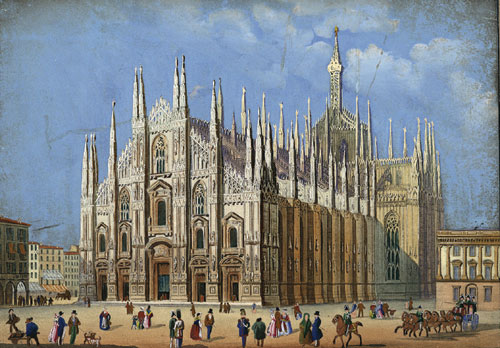
Milano_Duomo_1856

Milano Duomo 1856 via Wikipedia

In my mind, this means that novels are like Gothic Cathedrals–smaller arcs of stone support the larger arcs until you have a structure that can withstand the centuries. Each small arc of the scene builds and strengthens the overall arc of the greater novel.

These small arcs of action and reaction ensure the plot doesn’t stall and create tension that drives the story to the four cardinal points of the story arc.

Conversations are scenes that form a fundamental part of the overall arc: they begin, rise to a peak, and ebb. They inform us of something we must know to understand the forthcoming action. Conversations propel the story forward to the next scene. A good conversation is about something and builds toward something. J.R.R. Tolkien said “Dialogue has a premise or premises and moves toward a conclusion of some sort. If nothing comes of it, the dialogue is a waste of the reader’s time.”

That is true of every aspect of a scene: action, conversation, reaction. A scene that is is all action can be confusing if it has no context. A properly placed conversation can give the reader the context needed to understand the reason for the action.

A certain amount of context can arrive through internal monologue, but it must be done in such a way that the reader is not faced with a wall of italics. There are two problems with long mental conversations:

  1. italics are daunting in large chunks.
  2. it can become a thinly veiled cover for an info dump.

Remember, in novels, not everyone in the scene knows everything, so their thoughts won’t be that critical, and are therefore not needed. Plot points are driven by the the characters who do have the critical knowledge. The fact that some characters are working with limited information is what creates the tension.

Consider the concept of  asymmetric information–a situation in which one party in a business transaction has more or superior information compared to another. In business, one individual’s pursuit of pure self-interest can prevent other companies from effectively entering and competing in an industry or market–he has critical knowledge they don’t have, and effectively eliminates his competition. He has a monopoly.

That monopoly of information creates a crisis. In the novel, a conversation scene should be driven by the fact that one person has knowledge the others need. Idle conversation will bore your reader to tears.

We deploy info, but we don’t dump it in one large chunk though–the reader must find it out at the same time as the other characters, over the first 3/4 of the novel.

We do this in small arcs that combine to form the overall story arc. Events occur, linked by conversations, forming small arcs (scenes) that support the structure of the novel.

The Story Arc


By creating small arcs in the form of scenes, we offer the reader the chance to experience the rise and fall of tension, a pulse which never completely falls but is always increasing toward the high point of the book, giving the reader small rewards of emotional satisfaction along the way to the big event, the grand climax.

Comments Off on Elements of the story: the structure of the scene

Filed under Literature, Publishing, Uncategorized, writer, writing

To England and Wales, the mother country(s), on the 4th of July

First of all, my beloved sister nation, Great Britain, I want you to know that I love you like the siblings we are.

We here on the west side of the Atlantic just needed our own space, and having separate rooms really did improve how we interacted with each other.

We have so much in common, and by golly no one had better pick on you, because you are family!

My Father’s side of the family came to America from Herne Hill, Canterbury, England in 1630, sailing on the Winthrop Fleet, and ended up in Massachusetts.

My mother’s side came from  Laugharne, Carmarthenshire, Wales right around the same time, and ended up in Virginia.

So, today as we celebrate Independence Day here in jolly old America, I will raise my gin(less) tonic/w a twist of lime to the mother country(s)–and listen to the Beatles, in honor of my roots and my dear friends in both England and in Wales.

fireworks via wikipeda

Fireworks, via Wikipedia

2 Comments

Filed under Humor, Publishing, writer, writing

Gearing up for #PNWA2015

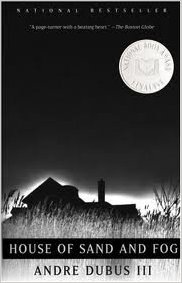
House of Sand and Fog Andre Dubus III

I love conventions. Especially writer’s conventions, where the craft of writing is the central theme, so that is why I look forward to the PNWA convention every year. Two weeks from now, that is where I will be, along with fellow Myrddin Publishing Group editor and bff, Irene Roth Luvaul.

It is horribly expensive, but for me, it is so worth it.

This year, Andre Dubus III will be the keynote speaker. While I frequently read literary fiction, I have to say I didn’t really enjoy his book, House of Sand and Fog, although it was excellently crafted. I found it exceedingly depressing, as I did most books touted by Oprah’s Book Club, which I generally don’t find to be much of a recommendation any more. Oprah is a wonderful lady, but her tastes in literature are far different than mine.

Let’s face it–I’m an escape-reader. I read to get away from the misery of the world, so while the story is thought-provoking, and worthy of every honor it has received, I didn’t enjoy it. I prefer happy endings.

But that doesn’t really matter–I want to hear what he has to say. I don’t care for George R.R. Martin‘s work either. But I love to hear George speak, and so I am looking forward to hearing what Andre Dubus III has to say.

SUPPORT YOUR LOCAL AUTHORSMy hubby took a vacation-day yesterday, giving himself a 4 day weekend to help me take my books 75 miles north to Bellevue. 3 hours each direction, inching along I-5 and I-405 in 90 degree heat–what fun!

This was so they can  be included in the PNWA July 16-19 convention’s Friday Autograph Party event. I’m pretty excited about that. My good friend, Lindsay Schopfer will also be signing books, as will 58 other authors.

I’ll be showcasing the World of Neveyah series, and Huw the Bard, so 4 books for the signing event. But all my books will be there.

Every attendee will receive an Ebook copy of Tales from the Dreamtime courtesy of Smashwords. I so wish I could give them each a copy of the audio book–Craig Allen’s narration is simply amazing.

I really enjoy the PNWA conference. A lot of people who are going the traditional route use it to pitch to agents and editors, but that doesn’t interest me. I am happy as an indie and have no plans to court a large publisher.

What I am interested in are the seminars on the craft of writing. Every year I come away from this event feeling completely inspired, and ready to write.

Friday morning Irene and I will attend the annual meeting. I do have some concerns which I have made a list of, and wish I lived closer to Seattle to be more of a volunteer. Living 75 miles away limits what I can do to help out, but I could do some virtual assisting, if there is an option for that.

Also, I will be attending seminars given by Scott Driscoll, Robert Dugoni, and Lindsay Schopfer.

creamy_wild_rice_and_mushroom_soup_recipe

creamy wild rice and mushroom soup w/coconut milk

All in all, I think it will be a fun event, and am planning my food ahead for it, as the vegan can never count on the kindness of strangers when it comes to food. The wise vegan author travels well-prepared to stay in a room with no microwave, in a hotel that is less than understanding about what constitutes a vegan meal.

I can honestly say I am NOT looking forward to the dinners, but will be well-able to provide for myself, and who needs food anyway–were gonna be talking books!

Comments Off on Gearing up for #PNWA2015

Filed under Literature, Publishing, writer

Jonesing for affirmation

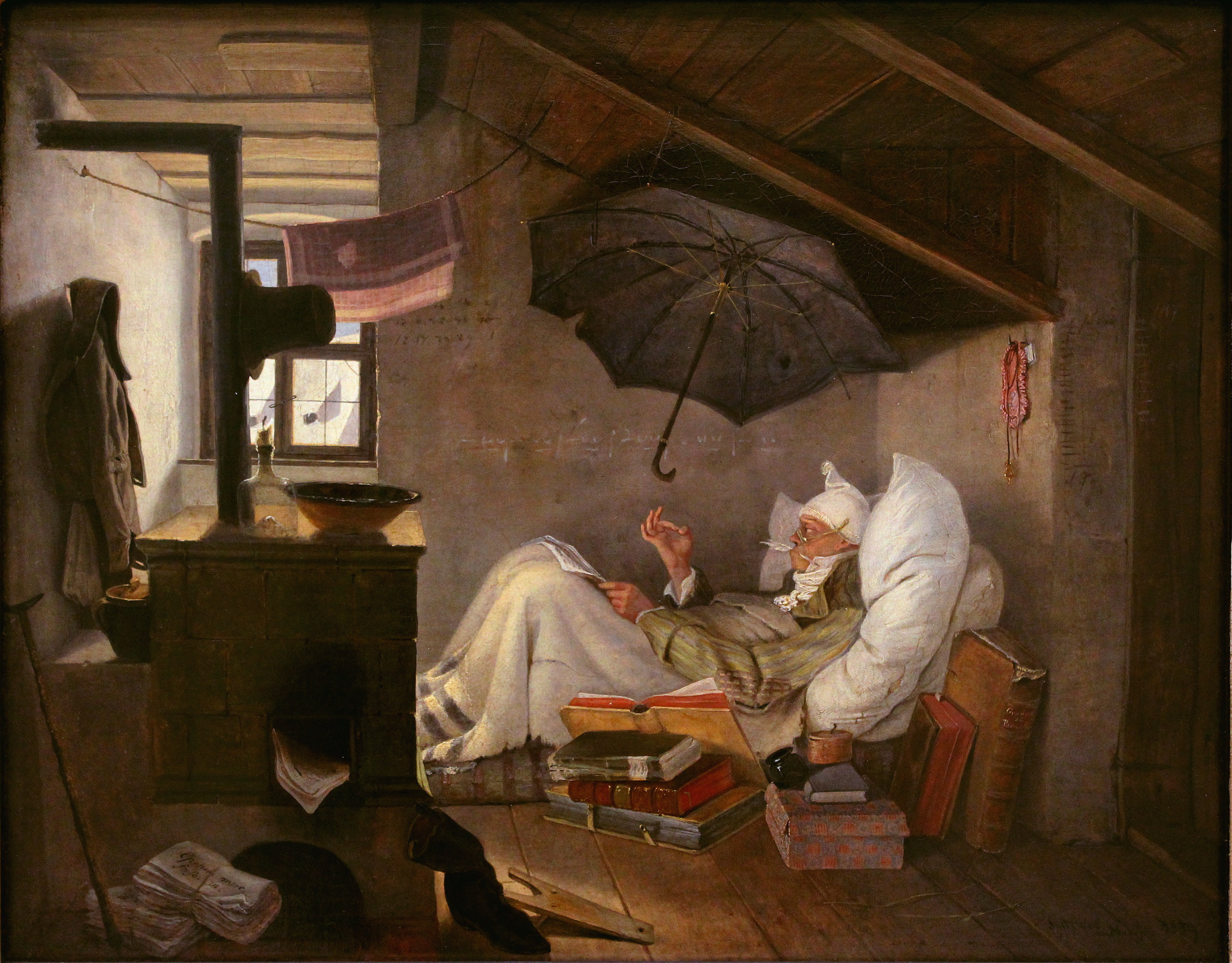
Der Arme Poet

Carl Spitzweg, The poor poet,1839 PD|100 yrs via Wikimedia Commons

Writing is an addiction. Oh, we don’t start out as garret-dwelling addicts. No, we start out as young people with bright futures, occasionally toying with that gateway drug–short-fiction.

At first it’s just thrill-seeking–writing a few short-stories and flash-fiction, just to see if we can. However, once we’ve felt the rush of  hearing the incredulous words, “You wrote this? This is good!” we are hooked.

The next step is often NaNoWriMo. Once you’ve done that first NaNoWriMo, you’ll never be the same.

Some fortunate people manage to walk away from it–they just do one NaNoWriMo, and quit, forever.

But for the rest of us, we are now on an eternal cycle of getting our word count and stream-of-consciousness-writing, and it will take us to the gates of perdition. Or to a local writing group–same thing, I am told.

No sane person thinks we can actually write for a living, but we can’t fight the urge.  We know we can do it, if we just keep at it. We crave that affirmation again, that incredible rush of “Oh yeah–I knew that story was all that, and I wrote it!”

At first, we still have some basic common sense. We know it isn’t cool to just quit our jobs and expect our family to live in a garret, starving, so we hang on to our day jobs and begin sneaking around, writing in secret, hiding it from our closest loved ones until we accidentally blow it–we are so high on the adrenaline rush from the incredible scene we just finished writing that we just have to tell someone.

After all, that scene is the turning point for the entire novel, and it’s golden!

So, not wanting to see the glazed look in your spouse’s eyes again, you tell the dog. Of course, the dog just has to tattle on you. Dogs can’t keep secrets, you should know that.

tumblr_ndi15fZRpu1syd000o1_500That is when it finally comes out that your every waking moment is spent on some aspect of the writing craft. Our family knew something was going on,and they were worried about our behavior.

But we’re so far gone by now that we don’t care.

If we’re lucky, the family is comprised of consummate enablers. Desperate to have some normalcy in their lives, they will try to keep us from becoming unkempt, shabby, pajama-clad writing-seminar junkies, bankrupting them with our endless, rather costly, efforts to “improve our work.”

They tell themselves that we’ll out grow the habit if they help us control our addiction. They encourage us to join free online writing and critique groups. They toss us a bone by giving us the occasional second-hand book on the craft of writing, usually by a famous author.

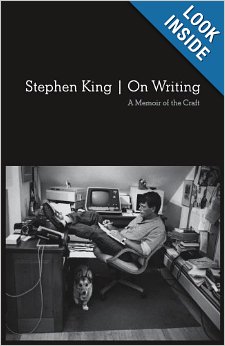
on writingThey have no idea just how potent an injection of inspiration that garage-sale edition of “On Writing” by Stephen King is to a hopeful author, and unknowingly they just make our condition worse.

At parties we have a sixth sense, always knowing who the other writers are just by the way they can’t focus on the conversation, and can’t wait to get  back to their work in progress, surreptitiously keying notes into their cell-phone and pretending they are texting.

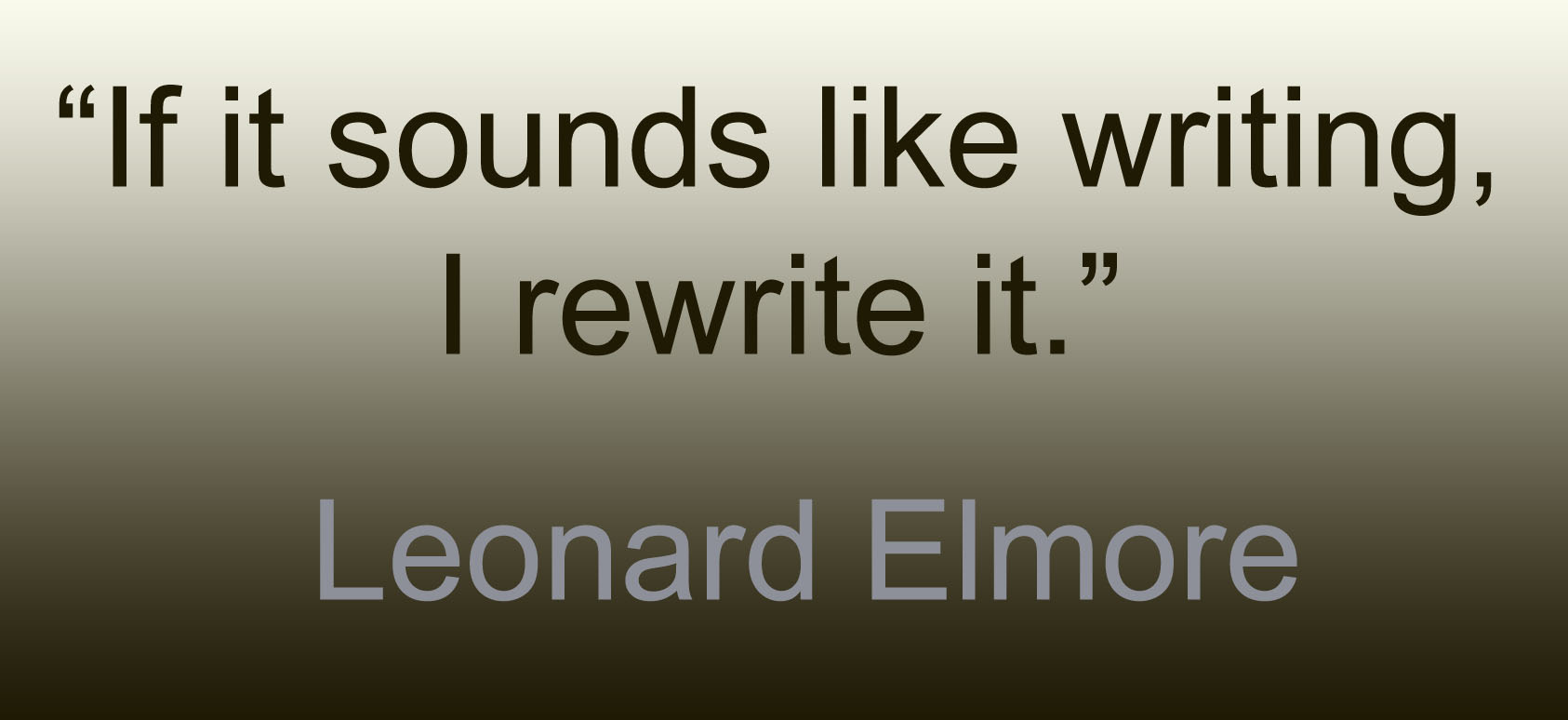
We’ve never met them before, but we find ourselves exchanging knowing glances and sneaking out to the patio with our new best friend, bingeing on Leonard Elmore quotes about writing, and sharing a few morsels of Orson Scott Card’s writerly wisdom.

leonard elmore quoteA new brother-in-arms and Leonard Elmore–we’re high as a kite and having fun now. What a great party!

Shocked faces stare out the window–it’s apparent we’re having too much fun, and our families suspect we’re “ranting about our novel again.” They drag us back into the light, despairing of ever having a “normal” life again.

An intervention and rehab looms in our future.

It won’t work. It’s not an addiction you can just walk away from. When they’ve taken your laptop away and hidden the pencils, and still they catch you forming little sentences out of the ‘o’s in your cereal bowl, they will know there is no such thing as recovery for the writing addict.

Don’t worry. Soon, they will be begging you to just go to that bloody writers’ convention and get it out of your system.

Heh heh. Like that’s ever going to happen. Soon, you will be hanging out at the local coffee-shops, looking for people with their laptops open, trying to make unsuspecting new converts to your dirty little habit.

“Are you a writer too? Ever do any NaNoWriMo?”

“Wanna share a little “Writer’s Digest? C’mon, what’s the worst that can happen? It’s not like it’s illegal, or anything.”

4 Comments

Filed under Books, Humor, Literature, Publishing, writer, writing

Phrasal verbs–minions of evil, or sometimes useful?

Book- onstruction-sign copyPhrasal verbs are usually two-or three-word phrases consisting of a verb plus an adverb, or a verb plus a preposition, or both. They are just another aspect of English vocabulary, and can be considered a form of compound verbs.  We use them all the time, but what, exactly, are they?

First, what is an adverb?

The term adverb is somewhat of a catchall word to describe many kinds of words having little in common other than the fact they don’t fit into any of the other available categories (noun, adjective, preposition, etc.) and they modify an action word—a verb.

The principal function of adverbs is to act as modifiers of verbs or verb phrases. An adverb used in this way gives information about the manner, place, time, frequency, certainty, or other circumstances of the activity denoted by the verb or verb phrase. Too many modifiers in your narrative and voila! Purple prose.

phrasal verbsThere are three main types of phrasal verb constructions depending upon whether the verb combines with a preposition, a particle, or both.

Wikipedia, the fount of all knowledge, has a good example of these three forms:

Verb + preposition (prepositional phrasal verbs)

  1. Who is looking after the kids? – after is a preposition that introduces the prepositional phrase after the kids.
  2. They picked on nobody. – on is a preposition that introduces the prepositional phrase on nobody.
  3. ran into an old friend. – into is a preposition that introduces the prepositional phrase into an old friend.
  4. She takes after her mother. – after is a preposition that introduces the prepositional phrase after her mother.
  5. Sam passes for a linguist. – for is a preposition that introduces the prepositional phrase for a linguist.
  6. You should stand by your friend. – by is a preposition that introduces the prepositional phrase by your friend.

Verb + particle (particle phrasal verbs)

  1. They brought that up twice. – up is a particle, not a preposition.
  2. You should think it over. – over is a particle, not a preposition.
  3. Why does he always dress down? – down is a particle, not a preposition.
  4. You should not give in so quickly. – in is a particle, not a preposition.
  5. Where do they want to hang out? – out is a particle, not a preposition.
  6. She handed it in. – in is a particle, not a preposition.

Verb + particle + preposition (particle-prepositional phrasal verbs)

  1. Who can put up with that? – up is a particle and with is a preposition.
  2. She is looking forward to a rest. – forward is a particle and to is a preposition.
  3. The other tanks were bearing down on my panther. – down is a particle and on is a preposition.
  4. They were really teeing off on me. – off is a particle and on is a preposition.
  5. We loaded up on Mountain Dew and chips. – up is a particle and on is a preposition
  6. Susan has been sitting in for me. – in is a particle and for is a preposition.

(end of quoted example, thank you Wikipedia)

We use phrasal verbs all the time in our daily speech and in our writing. However, whenever it’s possible we should look for simpler ways to phrase our thoughts when writing, unless we are writing conversations spoken in the local vernacular.

Why do I feel that way? The way I see them, phrasal verbs are  two-or-three words (an action word and modifiers) forming what can be considered a separate verb-unit with a specific meaning. In other words, they use more words than is really needed to express a thought:

  • Who is looking after (verb unit) the kids? == Who is watching the kids?
  • They brought that up (verb unit) twice. == They mentioned it twice.
  • Who can put up with (verb unit) that? == Who can endure that?

We use these phrasings because they sound natural to us—that is the way people in your area might speak. But when used too frequently in a written piece, phrasal verbs junk up the narrative. They subtly contribute to what we call “purple prose” because the overuse of them separates the reader from the story.

Unless you are writing poetry, simplicity is best, because you want to immerse your reader in the experience.

ok to write garbage quote c j cherryhWhen we are revising our first draft, and tightening our narrative we should be examining the prose for weak phrasing. Each time you come across phrasal verbs in your work, look at the sentence it occurs in as if it were an isolated incident and ask yourself if it needs to be there. Many times a phrasal verb really is  the only way to express what you are trying to say, but equally often a more concise way can be found.

Phrasal verbs have their places, but if you can simplify a thought and make the sentence stronger, do so.

2 Comments

Filed under Literature, Publishing, Uncategorized, writer, writing

Mountains of the Moon Launches

Map of Neveyah, for MOTM 6-14-2015Mountains of the Moon is the newest release in the World of Neveyah. It is set in the same world as the Tower of Bones series but it is the original story that was written as the storyline for an old-school RPG game, along the lines of the early Final Fantasy games.

A prequel to Tower of Bones, the book follows the adventures of Wynn Farmer as he and his companions travel high into the mountains to stop the Tauron, Bull God, and his minotaurs from overrunning Neveyah. Nothing goes as it’s supposed to, and Wynn’s general naiveté often causes his companions serious trouble.

MOTM Front Cover Final 6-18-2015Wynn is seriously ignorant of the world in general, and at the outset, he’s in over his head, and he knows it. This book also introduces several characters as young men,  two of whom play a large role in the Tower of Bones series, Rall Ivarsson, and Jules Brendsson. Both these men figure strongly in later books, and at the time of Tower of Bones, Rall occupies the office of the Holy Seat, guiding the Temple of Aeos, and is the most powerful man in Neveyah.

Wynn’s story is sometimes hilarious and was fun to write–a contrast against the frequently dark situations they find themselves in. The world of Neveyah is a harsh place at times. Magic is a fundamental facet of life there, and many of the magical creatures that inhabit the world are just as deadly as the minotaur hordes of the Bull God.

THE BLURB:

Charged by the goddess Aeos, Wynn and his companions bicker and bumble their way through the Mountains of the Moon. Danger, mystery, and dark prophecies chase them through a gauntlet of jagged peaks and deadly traps.

Can they survive the dark secret hidden in Tauron’s crumbling castle before his minotaurs overrun Neveyah?

The Gods are at war, and Neveyah is the battlefield.

>>><<<

Mountains of the Moon is on sale at these fine online stores for $2.99 ebook and $17.99 for paperbook:

Barnes and Noble for Nook or paperback

Amazon.com for Kindle or paperback

Also available at SmashWords in a variety of ebook formats for your phone or tablet!

>>><<<

FOR CARLIE M.A. CULLEN’S REVIEW OF MOUNTAINS OF THE MOON, CLICK HERE Wow! She liked it!

>>><<<

And also, a reminder that I will be signing books at AFK Elixers and Eatery all afternoon and evening tomorrow, Saturday the 27th of June, 2015. Please–feel free to stop in and chat! I will be there with local authors AJ Downey, Sechin Tower, Lee French,  Lindsay Schopfer, Stephen Matlock, David Moore and Jeffrey Cook.

Comments Off on Mountains of the Moon Launches

Filed under Books, Publishing, Uncategorized, writer, writing

Heading to Renton at AFK Elixers and Eatery #Booksigning

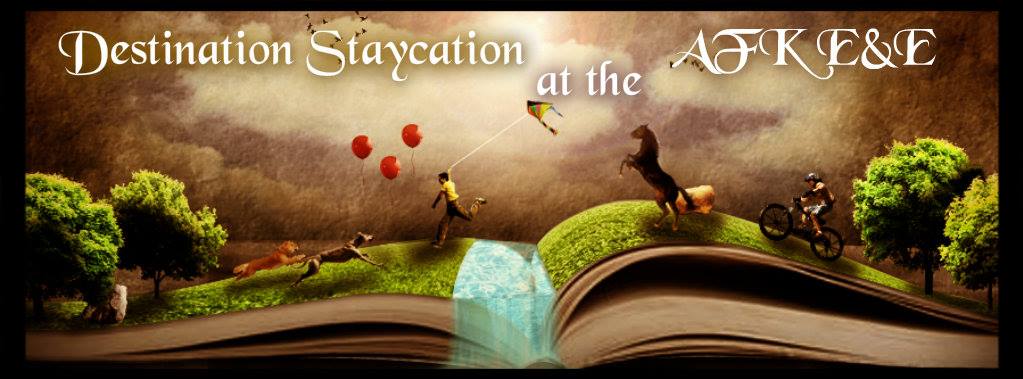
Destination StaycationOh, my gosh–I am getting so excited! The next event, Destination Staycation is happening in just 3 days, on Saturday the 27th of June.  Eight local, independent authors will be coming together for one event. We will be selling and signing books all afternoon and evening at AFK Elixirs & Eatery  in Renton, Washington, and I can hardly wait!

HTB Stamp copyWe will be offering reading-passports and stamping them with our book-related stamps.

Along with myself, AJ Downey, Sechin Tower, Lee French, Lindsay Schopfer, Stephen Matlock, David Moore, and Jeffrey Cook are the featured authors this time around.

And wow–what a fabulous venue–a gamer’s paradise!  AFK simply means Away From Keyboard. It’s commonly used in chatrooms and online games and it basically means that you won’t be available (Not at the keyboard = Not in front of your computer). But at AFK Elixers & Eatery you may be away from your computer, but you’re never far from gaming.

My friends and fellow gamers & book addicts in the western Washington/Seattle area are more than welcome to come on up (or down) and join us Saturday, between 2 and 9 pm.

Here are some samples of books being offered by the intrepid indie authors who will be joining me:

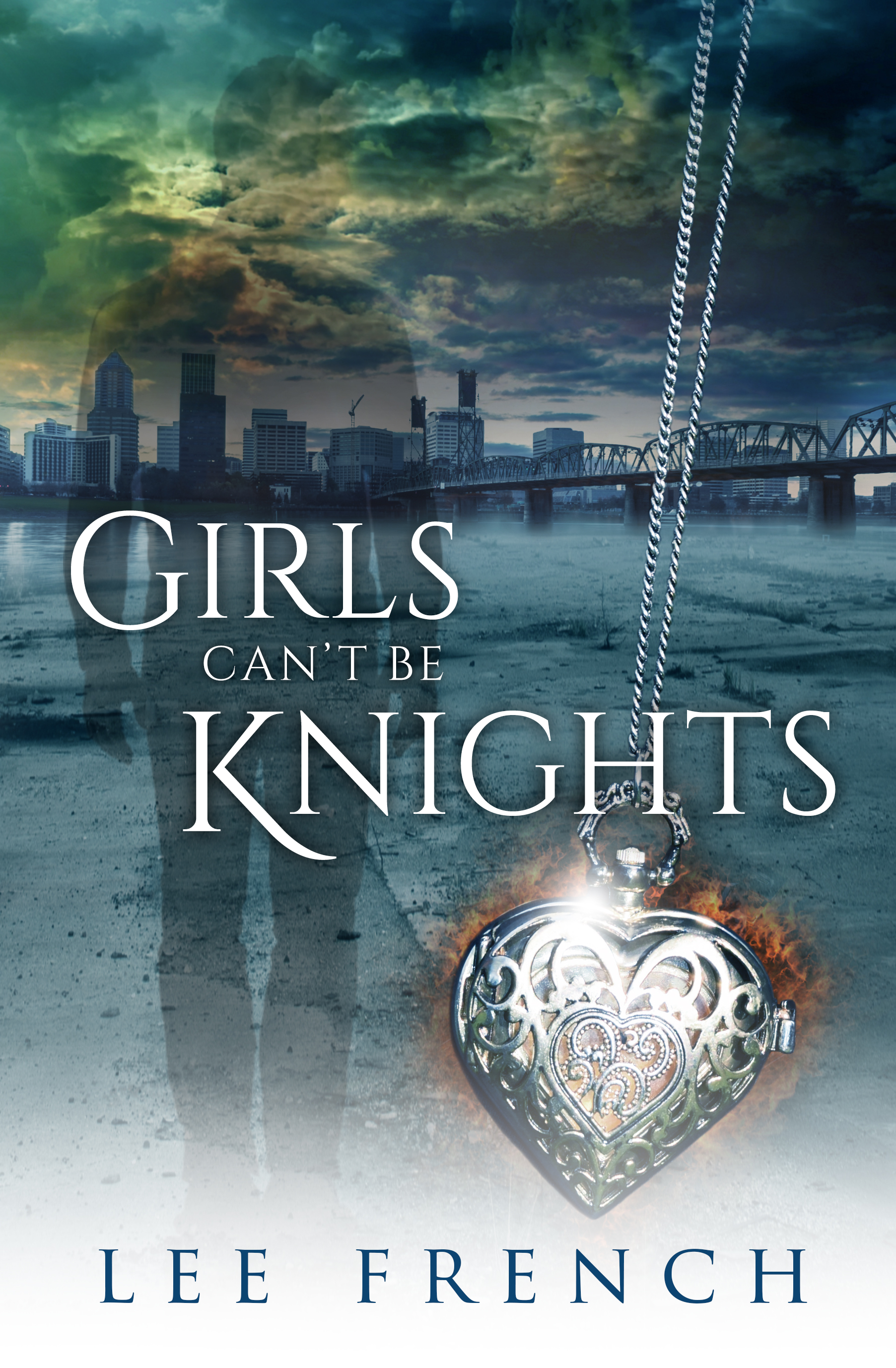
Girls Can't Be Knights KINDLEGirls Can’t be Knights, by Lee French

Portland has a ghost problem.

Sixteen-year-old Claire wants her father back. His death left her only memories and an empty locket. After six difficult years in foster care, her vocabulary no longer includes “hope” and “trust”.

Everything changes when Justin rides his magical horse into her path and takes her under his wing. Like the rest of the elite men who serve as Spirit Knights, he hunts restless ghosts that devour the living.

When an evil spirit threatens Claire’s life, she’ll need Justin’s help to survive. And how could she bear the Knights’ mark on her soul? Everybody knows Girls Can’t Be Knights.

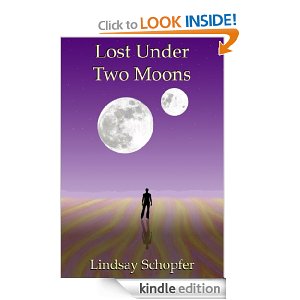
Lost Under Two moons, Lindsay SchopferLost Under Two Moons, Lindsay Schopfer

Alone. Stranded. Richard finds himself on Other World, a place of fantasy and horror. With no companion but a makeshift journal, Richard must quickly learn the unfamiliar dangers around him as he struggles daily to survive. From the approach of winter to eerily intelligent packs of nightmarish creatures, each entry details another trial of life or death. But when Richard finds the remnants of an ancient civilization, he begins to wonder if he is truly alone, and whether or not the lost people of Other World still hold the secrets that could return him home to Earth.

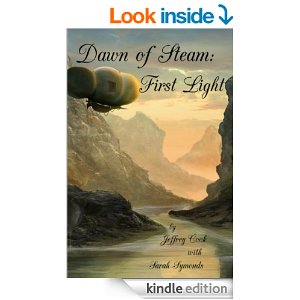
Dawn of Steam First Light Jeffrey CookDawn of Steam, Jeffrey Cook

In 1815, in the aftermath of the Napoleonic Wars, two of England’s wealthiest lords place a high-stakes wager on whether a popular set of books, which claim that the author has traveled to many unknown corners of the globe, are truth or, more likely, wild fiction. First Light is an epistolary novel, told primarily through the eyes of former aide-de-camp Gregory Conan Watts, describing the journeys of the airship Dame Fortuna and its crew through journals and letters to his beloved fiancee.
The first recruit is, necessarily, the airship’s owner: war hero, famed genius, and literal knight in steam-powered armor Sir James Coltrane. Persuading him to lend his talents and refitted airship to the venture requires bringing along his sister, his cousin, and the crew that flew with him during the Napoleonic Wars. Only with their aid can they track down a Scottish rifleman, a pair of shady carnies, and a guide with a strong personal investment in the stories.
When they set out, the wild places of the world, including the far American West, the Australian interior, darkest Africa, and other destinations are thought to be hostile enough. No one expects the trip to involve a legendary storm – or the Year Without a Summer of 1815-1816. The voyage is further complicated by the human element. Some parties are not at all happy with the post-war political map. Most problematic of all, the crew hired by the other side of the wager seem willing to win by any means necessary.

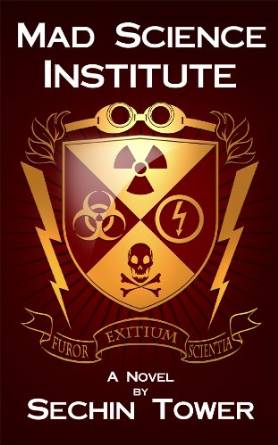
mad science institute Sechin TowerMad Science Institute, Sechin Tower

Sophia “Soap” Lazarcheck is a girl genius with a knack for making robots—and for making robots explode. After her talents earn her admission into a secretive university institute, she is swiftly drawn into a conspiracy more than a century in the making. Meanwhile and without her knowledge, her cousin Dean wages a two-fisted war of vengeance against a villainous genius and his unwashed minions. Separately, the cousins must pit themselves against murderous thugs, experimental weaponry, lizard monsters, and a nefarious doomsday device. When their paths finally meet up, they will need to risk everything to prevent a mysterious technology from bringing civilization to a sudden and very messy end.

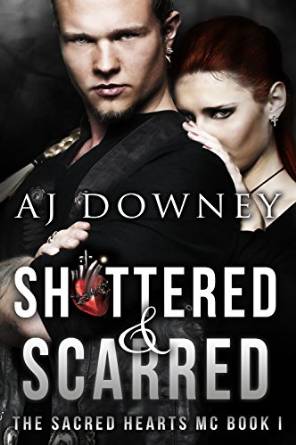
AJ Downey Shattered and ScarredShattered & Scarred: The Sacred Hearts MC, AJ Downey

She’s Shattered…

Ashton Granger is a perfect wife to her husband. She has to be, if she’s not, he will find a way to correct any perceived imperfections. Such is life, and so it has been for a very long time, eroding Ashton’s sense of self, cracking her sense of worth until she lays in a million pieces on the side of a stretch of lonely highway.

He’s Scarred…
Ethan “Trigger man” Howard is the Sergeant of Arms for The Sacred Hearts Motorcycle club. After several tours as a Marine Corps sniper overseas, he’s seen and done enough damage for a man three times his age. He’s out. Done. So over it, and home to nurse his wounds, physical, emotional and psychological with the help of his MC brothers. Now he simply deals with the scars that life handed him.

Was it more than just luck for he and Ashton both that he was the only other soul traveling that isolated stretch of highway that night?

**Mature Audiences Only (18+)**


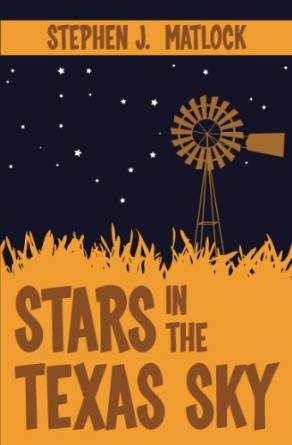
Stars in the Texas Sky Stephen J. MatlockStars in the Texas Sky, Stephen J. Matlock

STARS IN THE TEXAS SKY is a story about 13-year-old Henry Valentine. He’s the school’s star pitcher, intoxicated by first love of a young girl, and all seems right with his world of 1952 racially separated East Texas. Then he is confronted by an unlikely antagonist, a colored boy who challenges him in his town, bests him in a pitching duel, and fights him in the vacant lot outside of town. A wary distance becomes an unexpected friendship when they discover a common love for Texas beauty. He is devastated when a corrupt congressman sacrifices Henry’s friend to win re-election, and receives no sympathy or help from his disapproving family, church, and town. His finds support in the feisty, independent-minded widow with a taste for liquor in her lemonade who helps him fight against the powerful using only the tools of an innocent and powerless boy. In the end he learns the value of standing for what he believes in face of opposition, and discovers that there is nothing more powerful than a boy – or a man – who knows who he is.

This book is a 2012 Amazon Breakout Novel Award (ABNA) quarter-finalist.


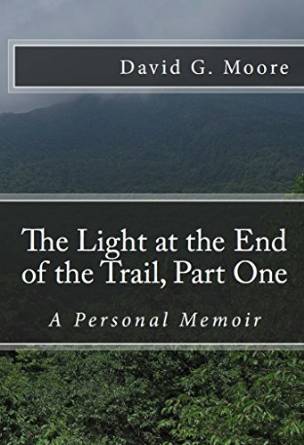
David Moore Light at end of trailThe Light at the End of the Trail, David G. Moore

This is a memoir of Moore’s early life–a life filled with equal parts light and darkness. Battling the neighborhood bullies, embracing the world of nature, surviving his mother’s depression, he finally descended into his own world of sadness. But the sadness was nothing compared to what awaited him at college. With the help of drugs and alcohol, a mysterious illness overtook him that baffled both him and the best of doctors. Meanwhile, the Moore family exploded. His parents separated, one sister joined a religious cult, the other buried herself in therapy, and his mother finally moved to the West Coast to escape it all. There were moments of bright light. At times, his illness vanished and during those reprieves he tried to live life to the fullest. But the quest for a life full of passion and joy pushed his mysterious psyche to the edge–then over the edge. It was time to enter the gates of hell.

>>><<<

And these are just the tip of the iceberg–the number of books my fellow authors and I will be offering is somewhat mind-boggling to me!

Check out the Destination Staycation Facebook Page!

I hope to see you at AFK E&E in Renton Wa on Saturday June 27th!


1 Comment

Filed under Books, Fantasy, Publishing, Uncategorized, writer, writing

Cover Reveal: Mountains of the Moon

Mountains of the Moon will go live on June 26, 2015.

I know! What took me so long!?

Well, it’s still the wild west here in the indie publishing world. Ya gotta get your book written, then rewritten, then beta-read and revised accordingly, then edited and revised accordingly, and the cover designed and the blurb made–it all takes time!

Four years, to be exact.

A great many things conspired to hold up publication of this novel, which was actually supposed to be published before Forbidden Road, but the day is finally here.

Mountains of the Moon is a prequel to Tower of Bones. The book follows the adventures of Wynn Farmer as he discovers who he is and what he is meant to do.

Wynn is a bundle of contradictions. He is in over his head, and he knows it. Naive beyond words, and ignorant of the world in general, he says the first thing that pops into his head, does not understand the difference between sarcasm and a direct order, and tends to follow instructions to the letter. His habit of answering rhetorical questions seriously is quite aggravating to his companions.

Wynn gets his act together, though, and that is when the fun really begins.

The book also follows the paths of Jules Brendsson and Rall Ivarsson, seeing them as young men. It also introduces Devyn D’Mal, an earth-mage and (unbeknownst to him in this book) uncle of most hated villain in Neveyah.

In the meantime, here is an excerpt:

The horn blew again, and the four tired mages trooped out. “Please, Aeos, just make this misery end,” muttered Jules. “Heaven only knows what that evil woman has planned for us next.”

“That was a real thunder-lizard,” said Devyn, horror tingeing his voice. “I can’t believe they had a real thunder-lizard. What is wrong with that woman? What if it had gotten loose?”

“It was only a baby,” said Rall, sagely. “Even the holy mother’s not mad enough to bring an adult inside the city.” Internally, he was shaken. “I hate fighting those things because you can’t use magic against them.”

“I thought it was fun,” said Wynn with a tired grin. The others stopped and stared at him then resumed walking. “She’ll run out of creatures pretty soon.” He tried to conceal his disappointment.

“I hope so,” said Jules, brightening up. “I can’t think of anything she hasn’t trotted out yet.”

As the four mages reached the slope opposite the amethyst tent, a thunderous roar shook the field and the night was suddenly lit as if by the sun. An enormous dragon emerged from the dark mists, landing directly in front of the group. Flames leapt and danced along the length of its immense back. Waves of heat like that of a large house fire rolled off it, making the questers unable to get close enough to use a sword, had they been so inclined.

They were not.

“Holy…where the hell did she get a firedrake?” Rall, Jules, and Devyn scattered, giving the beast too many targets concentrate on. Fiery breath roared toward them. Blazing claws reached and slashed, first at Jules and then Devyn. The horrific head swung, looking for a victim.

Overwhelmed by the horror that now stared down at him, Wynn reacted instinctively. Without even thinking, he cast his steel-cutting bolt to crack the creature’s shields and followed up immediately with a large ice spell.

>>><<<

And now, the cover:

MOTM Front Cover Final 6-18-2015

>>><<<

MOTM Back Cover Final 06-18-2015

>>><<<

And here is the YouTube link to my World of Neveyah, epic fantasy trailer, featuring Sway, written and performed by Margaret.

4 Comments

Filed under Adventure, Books, Fantasy, Humor, Publishing, writing

Dad, the renaissance man

Fred+Flintstone+FredFlintstoneToday is Fathers Day here in the US, and my dad, long gone, is on my mind. He wanted us to be as well-educated as was possible, and I grew up in a household where reading was not only encouraged, it was required, as were music lessons, and roller-skating lessons. My younger sibs and I were definitely the product of post-war American prosperity.

During WWII, Dad had been in a radio unit. He loved radio communications even though, besides everything else a soldier carried in those days,  he marched and hiked his way across France carrying a 30lb radio on his back.

He saw many terrible things during that time, and had a few narrow escapes. He was back in the US by the day of the Ardennes Counteroffensive, known here in the US as the  Battle of the Bulge.

While my uncle, Don Hutchins, was fighting on the front in  the densely forested Ardennes region of Wallonia (Belgium), Dad had been rotated back to  Fort Bliss, Texas, USA.

Uncle Don came home from Ardennes with a metal plate in his head, and dad…dad was was riding dispatch between bases on a motorcycle and was run over by a lady driving a 1937 Woodie Station wagon, who didn’t see him and turned left, driving  right over the top of him.

Nearly every major bone in his body was broken, and in the rush to save his life, his left leg was accidentally set crooked. After he’d recovered from his other injuries, the doctors at Beaumont Army Hospital went in and re-broke his leg to set it correctly.

He developed an antibiotic resistant bone infection, osteomyelitis. He spent the next seven years in and out of Army hospitals, and in 1952 he was  forced into a medical retirement after fifteen years of service in the US Army. In 1954, when I was about a year old, they finally amputated his leg, and life went on from there.  He was never able to wear his artificial leg, as prosthetic limbs in those days were really more for show than utility.

Dad had not wasted his time when he was languishing in and out of the hospital. He had gotten his high-school diploma, and then went on to college, hoping to get a degree in engineering. He did get an Associates degree, which enabled him to work as a draftsman, a well-respected, well-paid trade.

He worked for the State of Washington, which was a good employer in those days, designing plumbing and fish ladders for salmon hatcheries, among other things. He enjoyed his job and was proud of what he did.

Even so, dad was frustrated by his rather visible handicap. He was, by nature, a volatile man. He regretted that he could no longer hunt, but he loved to fish. He bought us his dream house on Black Lake near Olympia, Washington, and fished from his boat every day that he could. But he was also a renaissance man–a voracious reader, an avid music lover, and a wickedly satirical, incredibly gifted cartoonist.

Dad absolutely adored modern technology. Every new technological wonder, from cassette recorders and loud stereos to color TVs and toy robots came into our home the day it landed on the shelf at Sears or Radio Shack. Working in engineering as a draftsman, he was a genius with a slide-rule and higher mathematics in general, but he owned one of the first electronic scientific calculators, which had cost a months’s salary.

I think about dad a lot these days. He would have been so proud to know I am a published author, and selling books to boot. He was always our biggest supporter, cheering us on in our every endeavor. Failure was never an option, but anything short of abject defeat was rewarded with a steak-and-eggs breakfast at the RibEye Restaurant.

I’m a vegan now, and dad would be completely mystified as to why I would do such a hippie/liberal thing. But he would support my right to do it, all the way to France and back.

WWII US Soldiers Marching, image  courtesy www.berkeley.edu

WWII US Soldiers Marching, image courtesy http://www.berkeley.edu

4 Comments

Filed under Battles, Humor, writing