Proofreading vs. Editing #amwriting

I am in the middle of revisions, working with my editor on a large project involving merging old work with new. The difference in the quality of the older work vs. the way I write now is clear—and embarrassing.

keep clam and proofreadWhen I am finished with the revisions, I will format my manuscript as both ebooks and paper books. At that point, I will be looking for proofreaders.

At some point, we must draw the line and say, “this book is done. I want no more changes, no more fiddling with it.” So, when the manuscript is as polished as I can possibly get it, I will have one final step, one that will either ruin a formatted manuscript or make it great: proofreading.

I have said this before, and while some people will dispute this, proofreading is not editing.

Proofreading is done after the final revisions have been made. Hopefully, it is done by someone who has not seen the manuscript before. That way, they will see it through new eyes, and the small things in an otherwise clean manuscript will stand out.

By the time the manuscript has come to this stage, we know it far too well. We have seen every sentence, every paragraph, every scene so many times we are sick of going through them. Our eye sees what it expects to see. We find many things, but we don’t catch it all.

This is where the final person in the process comes in–the proofreader.

they're their there cupIf you didn’t see it when I mentioned it above, I will repeat it: proofreading is not editing. We discussed self-editing in my previous post, the three-step process for successful self-editing. However, editing as done by a professional editor is a different process, one I will go into at length next week. All editing and revisions are completed, and the final manuscript has been approved by the time we get to the proofreading stage.

Even though an editor has combed your manuscript and you have made thousands of corrections, both large and small, there may be places where the reader’s eye will stop. These errors are usually introduced in the process of making final revisions, so the author and editor have no idea they are there.

If it has been edited, why are there still errors?

When making revisions, we do a lot of cutting and pasting as we move passages to better places or even remove entire sections. In some places, words might inadvertently have been left out, or punctuation may be missing at the end of a sentence.

Any number of small, hard-to-detect things can occur as we make revisions, and these small errors are what we are looking for.

At the outset, the proofreader must understand that no matter how tempting it may be, they have not been invited to edit the manuscript for content. That has already been done and done again, and the author is satisfied with their novel’s arc. 

Find another proofreader if the one you have can’t refrain from asking for large revisions regarding your style and content.

What the Proofreader Should Look For:

Spelling—misspelled words and homophones (words that sound the same but are spelled differently). These are words that spell-checker may or may not catch, so a human eye is critical for this.

  • Wrong:  Bobby wont out the door, slamming the screen.
  • Right:  Bobby went out the door, slamming the screen.
  • Wrong: There cat ran, and he had to chase it
  • Right: Their cat ran, and he had to chase it.

Epic Fails meme2Repeated words and cut-and-paste errors. These happen when making revisions, even by the most meticulous of authors. The editor won’t see any mistakes you introduce after they have completed their work on the manuscript.

These are insidious and difficult to spot, and spell-checker won’t always find them. Sometimes these errors seem like unusually garbled sentences.

  • Wrong: First of all, all, it is accepted practice to italicize thoughts.
  • Wrong: First of all, it is accepted practice thoughts.
  • Wrong: First of all, it is accepted to ot thoughts.
  • Right: First of all, it is accepted practice to italicize thoughts.

Missing closed quotes at either end of the dialogue:

  • Wrong: “Doctor Mendel, you’re new to the area. What do you know about the dead man? asked Officer Shultz.
  • Right: “Doctor Mendel, you’re new to the area. What do you know about the dead man?” asked Officer Shultz.

Numbers that are digits:

  • Wrong: There will be 3000 guests at the reception. (It’s easy to inadvertently miss key digits.)
  • Right in certain circumstances: There will be 300 guests at the reception. (For notes and emails, we can use digits.)
  • Right: There will be three hundred guests at the reception. (In literature, we write it out.)

Dropped and missing words:

  • Wrong: Within minutes, the place was crawling with cops, and Officer Shultz was sitting at my kitchen table me gently while I made hot water for tea.
  • Right: Within minutes, the place was crawling with cops, and Officer Shultz was sitting at my kitchen table grilling me gently while I made hot water for tea.

Each time you (or a well-meaning editor) tweak the phrasing or create a new passage in your already edited manuscript, you run the risk of creating another undetected error.

Do not ask an editor to proofread your manuscript, as they will be unable to resist tweaking the phrasing, asking for more changes. Editing is their nature and their job. This can go on forever, and you might iron the life out of your manuscript. You could lose the feeling of spontaneity, making your narrative feel contrived.

Conversely, you risk putting up a manuscript that looks unedited because of the flaws introduced in the proofing process.

I have said this before, but it bears repeating. Don’t allow someone else, even an editor, to make the changes for you. Editors are human and can inadvertently make mistakes. When they are too familiar with a manuscript, they might see what should be there rather than what is.

Any person who makes changes to the final product can inadvertently ruin it.

At some point, your manuscript is done. You have been through the editing process, and the content and structure are what you envisioned.

  • Have the manuscript proofread before you format it for print or publication.
  • Then, have the final product proofread before you press the publish button.

Those two final steps will ensure the body of the manuscript you upload to Amazon KDP or IngramSpark is as clean as you can make it.

oopsUnfortunately, my last book went live when I thought I was ordering a pre-publication proof.

I said a lot of naughty words because the paperback version and the Kindle version are two different things. There was no option to order a pre-publication copy, which would have helped me a great deal. You’re less likely to see the formatting flaws until you hold that paper book in your hand.

I don’t know if this policy of not offering pre-pub paperback proof copies has changed or not. If you are publishing to KDP for a paper or hardback, carefully go over the PDF proof that KDP offers you. Do this despite the fact it’s terribly difficult to see and understand the possible formatting errors on a PDF, unless you really know what you are doing.

That experience is why I will be hiring a professional to format my paper books in the future. I see that as money well spent.
15 Comments

Filed under writing

The three-step process for successful self-editing #amwriting

Last week I was asked about my self-editing/revision process. I do have a method that works for me, but it’s time-consuming. There is no magic bullet for this.

toolsIn some ways, novels are machines. Internally, each book is comprised of many essential components. If one element fails, the story won’t work the way I envision it.
So, what are these parts?

  • Characterization,
  • Dialogue,
  • Mechanics (grammar/punctuation),
  • Pacing,
  • Plot,
  • Prose,
  • Theme,
  • Transitions.

I began this journey knowing nothing about how a novel is constructed internally. I wanted to write stories, but they never came out the way I saw them in my head.

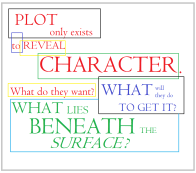
Plot-exists-to-reveal-characterSo, realizing I knew nothing was the first positive thing I did for myself. I made it my business to learn all I could, even though I will never achieve perfection.

Writing is a craft where the bar is raised with every success. Each achievement you make pushes the hope of perfection a bit higher, still just out of reach.

But I won’t stop trying.

As an editor, I’ve seen every kind of mistake you can imagine. This tendency to not see the flaws in our own work is why I have an editor. I can see the places that need work in your manuscript but need someone with a critical eye to see my work.

When prepping a novel to send to my editor, I use a three-part method. This requires specific tools that come with Microsoft Word, my word-processing program. I feel sure these tools are available for Google Docs and every other word-processing program.

Phase one: the initial read-through. Once I have completed the revisions suggested by my beta readers, this stage is put into action. After considering their suggestions and revising the manuscript, it looks finished. But it has only just begun the journey.

In Microsoft Word, on the Review Tab, I access the Read Aloud function and begin reading along with the mechanical voice. Yes, it’s annoying and doesn’t always pronounce things right, but this first tool shows me many places that need rewriting.

the review tabI use this function rather than reading it aloud myself, as I tend to see and read aloud what I think should be there rather than what is.
  • I habitually key the word though when I mean through. These are two widely different words but are only one letter apart. Most, but not all, miskeyed words will leap out when you hear them read aloud.
  • Most but not all run-on sentences stand out when you hear them read aloud.
  • Most but not all inadvertent repetitions also stand out.
  • Most of the time, hokey phrasing doesn’t sound as good as you thought it was.
  • Most of the time, you hear where you have dropped words because you were keying so fast you skipped over including an article, like “the” or “a” before a noun.

strange thoughts 2This is a long process that involves a lot of stopping and starting, taking me a week to get through an entire 90,000-word manuscript. I will have trimmed about 3,000 words by the end of phase one. I will have caught many typos and miskeyed words and rewritten many clumsy sentences.
But I am not done.

Phase Two: The Manual Edit

This phase is where I find my punctuation errors most often. I look for and correct punctuation and make notes for any other improvements that must be made. Usually, I cut entire sections, as they are riffs on previously presented ideas. Sometimes they are outright repetitions, which don’t leap out when viewed on the computer screen.

  • Open your manuscript. Break it into separate chapters, and make sure each is clearly and consistently labeled. Make certain the chapter numbers are in the proper sequence and don’t skip a number.
  • Print out the first chapter. Everything looks different printed out, and you will see many things you don’t notice on the computer screen or hear when it was read aloud.
  • Turn to the last page. Cover the page with another sheet of paper, leaving only the final paragraph visible.
  • Starting with the final paragraph on the last page, begin reading, working your way forward.
  • With a yellow highlighter, mark each place that needs correction.
  • Put the corrected chapter on a recipe stand next to your computer. Open your document and begin making the revisions you noted on your hard copy.

CAUTION INFO DUMP ZONE AHEADThis is the phase where I look for info dumps, passive phrasing, and timid words. These telling passages are codes for the author, laid down in the first draft. They are signs that a section needs rewriting to make it visual rather than telling. Clunky phrasing and info dumps are signals telling me what I intend that scene to be. I must cut some of the info and allow the reader to use their imagination.
I will have trimmed about 3,000 more words from my manuscript by the end of phase two.

Phase three is the step that only works if you understand grammar and industry practices. Be aware that understanding context is solely a human function at this stage in our technology.

You may have found that your word processing program has spellcheck and some minor editing assists. Spellcheck is notorious for both helping and hindering you. It may or may not alert you to an obvious error.

  • There, their, they’re.
  • To, too, two.
  • Its, it’s.

In this third phase, I go over each chapter using Grammarly. I have also used ProWriting AidEach program has strengths and weaknesses. There are several other programs available to writers, but I have only tried these two.

DangerEditing programs operate on algorithms and don’t understand context. I am wary of relying on Grammarly or ProWriting Aid for anything other than alerting you to possible problems. If you blindly obey every suggestion made by editing programs, you will turn your manuscript into a mess.
If your knowledge of punctuation is sketchy, don’t feel alone. By the time we begin writing as adults, most of us have forgotten whatever grammar we once knew. If this is your case, your best bet is to avoid these costly programs.

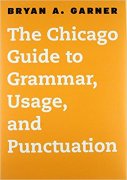
It takes far less money to invest in a book like the Chicago Guide to Grammar, Usage, and Punctuation and learn how grammar works.

Good editing software is expensive. For my specific needs, it has been a worthwhile investment. If you choose to invest in some, use common sense when reviewing the program’s suggestions.

My three-part self-editing process can take more than a month. When I’ve finished, I’ll have a manuscript that won’t be full of distractions. I will send it to my editor, and she’ll be able to focus on finding as much of what I have missed as is humanly possible.

And, if you read any books published by the large Traditional publishers, you know that a few mistakes and typos can and will get through despite our careful editing.

We are only human, after all.

14 Comments

Filed under writing

#FineArtFriday: A Guardroom by Abraham Teniers (revisited)

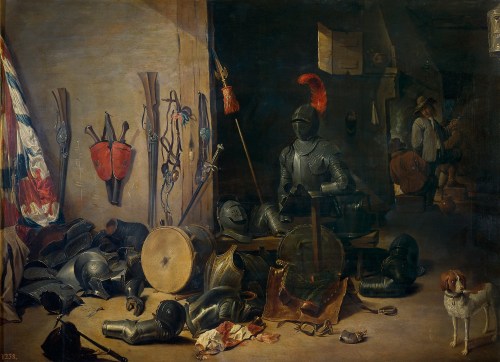
Today we are revisiting A Guardroom, an allegorical painting attributed to Abraham Teniers. This painting is worthy of a second look, for both the allegory and the quality of the composition.

I have often said that to write about medieval and pre-industrial revolution societies, you must go to art to get the facts. This painting is a symbolic piece showing the transience of life and the certainty of death.

He shows us a guardroom. Abraham Teniers served as a captain of the local civil militia of Antwerp and was fond of painting guardroom scenes.

This particular scene is intriguing to me, because of the way the jumble of disjointed metal armor completely dominates the painting. In the foreground, in the light, we see flintlock pistols, muskets, breast plates, leg guards, vambraces, a drum, swords and other steel weaponry, and several helmets—all cast into a corner.

Almost unnoticed in the background, peasant soldiers are shown smoking and drinking before a fireplace. They are deliberately kept in the background of the picture, an allegory for the fleetingness of life.

One reason renaissance painters liked to paint armor was the way the light fell on all the angles. Getting the light just right is the sign of an observant painter.  All the various shapes and sheens–armor offered an artist so many interesting surfaces, so many opportunities to show their skill.

The armor depicted in the picture was of a style no longer in use at the time it was painted. Metal armor was falling out of use by the time Abraham Teniers was born. Plate had lost its effectiveness as guns became the weaponry of choice.

In most paintings of this era, armor is an allegory, a symbol representing death. The deliberately chaotic positioning of the many pieces portrays the violence of the battlefield. A lone suit of armor, empty of life, stands guard over the dead.

Abraham is not the most famous of the Teniers family, but he was a talented and skilled painter. In this scene, he makes good use of chiaroscuro, strong contrasts between light and dark.

About the artist (from Wikipedia):

Abraham Teniers (1 March 1629 – 26 September 1670) was a Flemish painter and engraver who specialized in genre paintings of villages, inns and monkey scenes. He was a member of artist family Teniers which came to prominence in the 17th century. He was also active as a publisher. He was responsible for the publication of the Theatrum Pictorium (‘Theatre of Paintings’), the project initiated by his brother David to make a set of engravings of the entire art collection of Archduke Leopold Wilhelm.

Like his brother David before him, Abraham found appreciation at the court in Brussels and the art-loving Archduke Leopold Wilhelm of Austria – then the governor of the Southern Netherlands and a resident of Brussels – appointed him as court painter.


Credits and Attributions:

Wikimedia Commons contributors, “File:Abraham Teniers – Een wachtlokaal, 1 (Prado).jpg,” Wikimedia Commons, the free media repository, https://commons.wikimedia.org/w/index.php?title=File:Abraham_Teniers_-_Een_wachtlokaal,_1_(Prado).jpg&oldid=267098550 (accessed January 3, 2019).

Wikipedia contributors, “Abraham Teniers,” Wikipedia, The Free Encyclopedia, https://en.wikipedia.org/w/index.php?title=Abraham_Teniers&oldid=871305163 (accessed January 3, 2019).

7 Comments

Filed under #FineArtFriday

Write from the heart #amwriting

Writers are entertainers. We write books for people who want a diversion from the daily grind. No matter the subject or genre, we write escapes for people who need to just get away for a while.

MyWritingLife2021Our stories take the reader to exotic places and introduce them to other realities. When we publish a book, we hope it will find a reader on the day they were looking for just such an escape.
If it does, we hope we have written something reader will stay with to the end. We hope they see life and vitality in the narrative, the kind of energy we thought we were imparting when we wrote it.

No matter how well edited a manuscript is, readers will only stay with us if we allow ourselves to write from the heart. We must write what we believe is true even though the story is about people and events that never happened. If we believe in what we write, the prose will have power.

poetry-in-prose-word-cloud-4209005I wrote poetry and lyrics for a heavy metal band when I first started out. I was young, sincere, and convinced I had to impart a message with every word. I didn’t know until twenty years later when I came across my old notebook that my poems weren’t honest. Eighteen-year-old me was trying to make a point rather than offering ideas for further thought.
Paging through that notebook and looking back at my work, I could see the falseness clearly. My words were contrived – I was trying too hard to be the next Bob Dylan. The words that emerged hadn’t been good enough, so I went out of my way to be clever.

When I began writing stories for my children, I knew better than to get fancy. I still wrote crap but what I wrote then was honest crap because I no longer had anyone to impress.

my-books-cjjasp-own-workChildren are unimpressed by the fact their parents might write a story or play music or paint or do any of the creative arts.
They are also blunt when they tell you where a story or a song or a picture fails to impress them and are upfront about why. Thanks to the tough audience that my children were in those beginning years, I found ways to write fairy tales with truths that weren’t shaded by what I thought art should be.

These stories were better, but they weren’t written by an educated author.

As my children left home, I had more time to learn how to write a literate, well-plotted story. I made connections with other writers and joined writing groups. That was when I discovered that an author needs to be consistent with punctuation even when writing from the heart.

I had no idea I was uneducated because I had done well in writing and literature in school. I navigated college courses with no problem other than laziness. Alas, members of my writing group pointed out that I hadn’t retained much of what I was taught in elementary school.

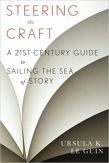
steering the craft leguinAs Ursula K. LeGuin said in her excellent book, Steering the Craft, A 21st Century Guide to Sailing the Sea of Story, “If you aren’t interested in punctuation, or are afraid of it, you’re missing out on some of the most beautiful, elegant tools a writer has to work with.” [1]
So, I knew a lot of words but didn’t know a lot about how to shape them. I try to embrace what I fear, so I forced myself to re-learn the fundamentals of American English grammar. I’m not perfect, but I try to do as well as possible. My editor still finds habitual errors.

If you are a regular reader here, you know I enjoy reading books in every genre and style.  While the books I love are scattered all across the spectrum, they have one thing in common—they are all written by authors with an understanding of the basic rules of punctuation.

Often, these authors break other grammar rules with style and abandon, but they do pay attention to punctuation.

Punctuation matters because it is the traffic signal telling the reader to go, yield, go again, or stop. If an author gets the punctuation right in most places, the reader can suspend their disbelief.

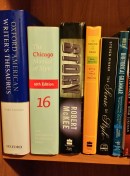
Writers begin as readers. In his book, On Writing, Stephen King gives us permission to read for six hours achicago guide to grammar day, should we so desire. Reading is how we come to understand writing and the art of story. Mr. King also admonishes us to learn the fundamentals of punctuation and grammar.
In my quest to understand the art of constructing a story, I have come across some pretty awful books. As a freelance editor, I have twice had work submitted to me by authors who believed a convoluted mess was ready for the publisher and just needed a bit of proofreading. No editor has the time or desire to completely rewrite a story for a client, and they will decline that project.

We all suffer agonies on hearing criticism until we have been at it for a while. At first, our skin is thin and delicate and bleeds copiously when flaws are found in the precious child that is our work.

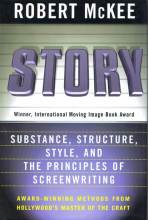
storybyrobertmckeeEvery editor will tell you no amount of money is worth the time and effort it would take to teach an author how to write coherent, readable prose. That is what seminars, books on craft, and books on style and grammar are for.
I have said this before—I don’t consider something awful and hard to read if it is written in an old-fashioned style. However, I do think a book is awful when its author wastes my time by not learning how to construct a sentence.

And when it comes to the narrative, poetry can’t be forced, but good prose can be ruined by trying to make it poetic.

I learned the hard way that contrived prose is not poetic, nor does it prove you are talented. When poetry or good imagery emerges naturally, rejoice and keep writing. Let the imagery flow when it will, and don’t force it. Every word we write doesn’t have to be golden.

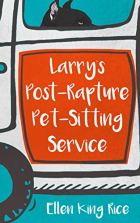
LarrysPostRapturePetSittingService_EllenKingRiceI want to read an honest story about people who seem real, who have the kind of problems we can all relate to on a human level. I want to read a story that comes from an author’s deepest soul. The setting doesn’t matter—it can be set on Mars or in Africa. Characters matter, and their story matters.
I read all genres and all settings. I will forgive the imperfections if the author has tried to be consistent and knows the fundamentals of punctuation and grammar.

I love nothing more than finding a great story that rings of truth and touches my heart. If it has passages that flow naturally and strike deep into my poetry-loving soul, all the better.


CREDITS AND ATTRIBUTIONS:

[1] Quote: Ursula K. LeGuin, Steering the Craft, A 21st Century Guide to Sailing the Sea of Story, ©1999 Ursula K. LeGuin, First Mariner Books Edition 2015, page 11.

9 Comments

Filed under writing

Three Grammar Rules We Know but Don’t Know We Know #amwriting

In English, as in other languages, certain rules of speech are learned so early on in life that they are instinctual. No matter the level of our education or the dialect we speak, we use these rules and don’t know we are doing so.

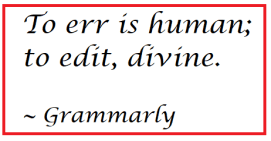
to err is human to edit divineToday I am revisiting three wonderful quotes on these rules from linguist Steven Pinkereditor Stan Carey, and Tim Dowling, a journalist for The Guardian.

The Jolly Green Giant rule:

The rule is that multiple adjectives are always ranked accordingly: opinion, size, age, shape, colour, origin, material, purpose. Unlike many laws of grammar or syntax, this one is virtually inviolable, even in informal speech. You simply can’t say My Greek Fat Big Wedding, or leather walking brown boots. And yet until last week, I had no idea such a rule existed. Tim Dowling, for The Guardian, Sept 13, 2016. [1]

My editor often finds and points out words whose order must be rearranged to sound natural. Inadvertently putting our words in the wrong order is why some sentences seem clumsy when you read them. The author wrote them that way when they were in the middle of laying down the first draft of the manuscript and didn’t notice it during the revision process.

It happens because, in the first draft, we are madly getting the words out of our heads. In the rush to get the thoughts down, words emerge in the wrong order. My red large Cadillac is comfortable to ride in. 

Muddled phrasings often slip by when we revise our work because our minds automatically put the words in the correct order. This is the writer’s curse—we see what should be there, the eye skipping over what we actually wrote.

This ability to see a finished product is a necessary facet of the creative instinct. But it is a curse to see our work as intended and not as it is. The naïve belief in the perfection of our work is why we need an unbiased eye to read our work and point out those rough areas.

My large red Cadillac is comfortable to ride in. 

Ferrari_Portofino_M_IMG_4351Actually, my large dirty minivan is not as comfortable to ride in as it used to be. Grandma’s imaginary red Ferrari would be a lot more fun, but alas—if wishes were Ferraris, my driveway would look a lot fancier.
In every language, native speakers automatically order their words in specific ways. In English, we order them this way:

  1. opinion,
  2. size,
  3. age,
  4. shape,
  5. color,
  6. origin,
  7. material,
  8. purpose

Shannon’s light blue wool jacket was left behind.

The Mishmash rule:

“Reduplication” is when a word or part of a word is repeated, sometimes modified, and added to make a longer term, such as aye-ayemishmash, and hotchpotch. This process can mark plurality or intensify meaning, and it can be used for effect or to generate new words. The added part may be invented or it may be an existing word whose form and sense are a suitable fit. Stan Carey, A hotchpotch of reduplication, MacMillan Dictionary Blog 2012. [2]

Have I mentioned how much I adore mishmash words? They roll off the tongue with a kind of rhythm and musicality. Sadly, while I regularly entertain my youngest grandchildren with them, I hardly ever get to write them. Mishmash. Hip-hop.

The Hip-Hop rule:

powerwordsWordCloudLIRF06192021Have you ever wondered why we say fiddle-faddle and not faddle-fiddle? Why is it ping-pong and pitter-patter rather than pong-ping and patter-pitter? Why dribs and drabs rather than vice versa? Why can’t a kitchen be span and spic? Whence riff-raff, mishmash, flim-flam, chit-chat, tit for tat, knick-knack, zig-zag, sing-song, ding-dong, King Kong, criss-cross, shilly-shally, seesaw, hee-haw, flip-flop, hippity-hop, tick-tock, tic-tac-toe, eeny-meeny-miney-moe, bric-a-brac, clickey-clack, hickory-dickory-dock, kit and kaboodle, and bibbity-bobbity-boo? The answer is that the vowels for which the tongue is high and in the front always come before the vowels for which the tongue is low and in the back. (Pinker, The Language Instinct, 1994:167) [3]
So, you now have a mishmash of words, three rules native speakers of English know and use without consciously thinking about it. Wonky word order is just one more thing to watch for when revising our work.


CREDITS AND ATTRIBUTIONS:

Media: Ferrari Portofino,  Alexander Migl, CC BY-SA 4.0 https://creativecommons.org/licenses/by-sa/4.0 , via Wikimedia Commons

[1] Tim Dowling, Order force: the old grammar rule we all obey without realizing, © The Guardian 2016, https://www.theguardian.com/commentisfree/2016/sep/13/sentence-order-adjectives-rule-elements-of-eloquence-dictionary (accessed 25 May 2018)

[2] Stan Carey, A hotchpotch of reduplication, MacMillan Dictionary Blog 2012 © Macmillan Publishers Limited 2009-2018. http://www.macmillandictionaryblog.com/a-hotchpotch-of-reduplication (accessed 25 May 2018)

[3] Steven Pinker, The Language Instinct, Pinker, Steven. 1994. The Language Instinct. New York: HarperPerennial.

14 Comments

Filed under writing

#FineArtFriday: Road from Market by Thomas Gainsborough ca. 1768 (revisited)


Title: Road from Market by Thomas Gainsborough  (1727–1788)

Date: between 1767 and 1768

Medium: oil on canvas

Dimensions: Height: 1,213 mm (47.75 ″); Width: 1,702 mm (67 ″

What I love about this painting:

Thomas Gainsborough is one of Great Britain’s most famous portrait artists. His best-known painting is the “Blue Boy.”  But while portraits may have paid his bills (handsomely), Thomas Gainsborough loved painting landscapes and did so whenever he was able.

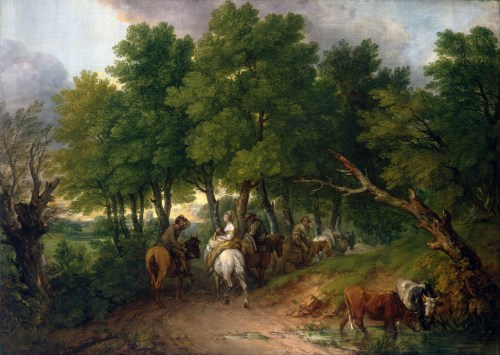
This painting shows us a road, and while it looks to our modern eyes to be nothing more than a dirt track fading into the forest, it was typical of the main roads one had to travel in both Great Britain and America. They were dirt tracks, barely passable at certain times. Traveling these roads while riding in a carriage was both dangerous and arduous.

Four people are depicted in this painting, three men and a woman. All but one of the farmers is seated sideways on the horses. This tells us that side-saddle was a common way for all people to ride at the time of the American Revolution, not just women.

Gainsborough did manage to romanticize the bucolic countryside in this pleasant, homey painting.

His horses are heroic, the peasants look well-fed, and even the cattle look prosperous. The fields just beyond the trees are lush and green.

Thomas Gainsborough is credited, along with Richard Wilson, as one of the originators of the 18th-century British landscape school. Gainsborough was a founding member of the Royal Academy of Arts.


Credits and Attributions:

Wikimedia Commons contributors, “File:Thomas Gainsborough – Road from Market – Google Art Project.jpg,” Wikimedia Commons, the free media repository, https://commons.wikimedia.org/w/index.php?title=File:Thomas_Gainsborough_-_Road_from_Market_-_Google_Art_Project.jpg&oldid=354218025 (accessed October 11, 2019).

6 Comments

Filed under writing

Creating Characters vs. Defamation of Character #amwriting

Real-life has moments that are far stranger than anything I could dream up. I’m not alone in this—everyone has a story. That story will have moments that are difficult to hear and others that are amazing.

DangerWriting fiction allows me to put reality into more palatable chunks. It’s easier to cope with that way.

One of the ways I design my worlds is by drawing on the real world to help develop the unreal. Reshaping and reusing the scenery and terrain around you are habits of good world-building.

However, crafting characters is different. We shouldn’t use the real names and exact situations of people we are acquainted with for any reason. Don’t thinly disguise your hated boss or neighbor with a different name because they could recognize themselves and sue you.

This was made clear by the late Betty MacDonald’s situation. Her first published book was picked up by J.B. Lippincott. The Egg and I is a fictionalized account of Betty’s life as a chicken farmer. It was set in Chimacum, a small community in rural Washington State.

Many members of my family were from that area of Puget Sound and still lived there during the post-WWII years, the time frame in which Betty’s book was set.

A wide disparity in education and social services existed between urban and rural communities at that time. Only a basic education was available to most families of loggers, brush pickers, and small farmers in Washington.

Thanks to the US government’s efforts, the indigenous people were in dire straits. Traditionally, Puget Sound tribes were mainly hunter/gatherers and now suffered extreme deprivation. They had lost access to their traditional hunting and fishing territories. They were losing the culture that had been their foundation for untold thousands of years.

Betty MacDonald’s book was a success in that era and moral climate, selling well over a million copies and spinning off several movie adaptations.

The Egg and I fell into disfavor in the 1970s because cultural awareness had changed the way we view indigenous people. Critics now saw a lack of understanding and cliched treatment of our local Native people in the book.

This post isn’t intended to address or pass judgment on a 1940’s treatment of cultural issues. These are things we avoid in our modern connected society, but which people took for granted in 1946 when the book was written. Instead, we need to focus on the moral and financial repercussions of writing fictional characters too close to life.

Betty’s book motivated several lawsuits against her and her publisher for defamation of character.

From Wikipedia:

Post-publication lawsuits

Following the success of the book and film, lawsuits were filed by members of the Chimacum community. They claimed that characters in The Egg and I had been based on them, and that they had been identified in their community as the real-life versions of those characters, subjecting them to ridicule and humiliation. The family of Albert and Susanna Bishop claimed they had been negatively portrayed as the Kettles. Their oldest son Edward and his wife Ilah Bishop filed the first lawsuit, which was settled out of court for an undisclosed amount.

The second lawsuit was filed against MacDonald, publisher J. B. Lippincott Company, and The Bon Marché (a Seattle department store which had promoted and distributed the book) for total damages of $975,000, as sought by nine other members of the Bishop family ($100,000 each) and Raymond H. Johnson ($75,000), who claimed he had been portrayed as the Indian “Crowbar.” The case was heard before a jury in Judge William J. Willkins’ (who was also one of the presiding judges at the Nuremberg Trials) courtroom in King County Superior Court beginning February 6, 1951. MacDonald testified that the characters in her book were composite sketches of various people she had met. The defense produced evidence that the Bishop family had actually been trying to profit from the fame the book and movie had brought them, including testimony that son Walter Bishop had had his father Albert appear onstage at his Belfair, Washington, dance hall with chickens under his arm, introducing him as “Pa Kettle.” On February 10, 1951, the jury decided in favor of the defendants. [1]

stoplightWe all draw inspiration from real life, whether consciously or not. However, if we are writing fiction, we must never detail people we are acquainted with, even if we change their names.
If you become a success, some people may see that as their ticket to a little extra money at your expense. This, despite the disclaimer we put on the copyright page:

This is a work of fiction. Names, characters, places, and incidents are products of the author’s imagination or are used fictitiously and are not to be construed as real. Any resemblance to actual events, locales, organizations, or persons, living or deceased, is entirely coincidental.

However, we can and will draw impressions from the people around us.

A common “coffee shop” game is a good way to develop characters for your stories and won’t get you sued. Now that the pandemic is winding down, many coffee shops offer indoor seating once again. Pick a place that is new to you and have your pen and notepad or laptop at the ready. Watch your fellow patrons. Observe their behavior, their speech habits, and their unconscious mannerisms. You can build an entire fantasy life for them.

Each character sketch is the kernel that can be the start of a short story or even a novel–and all of it is fiction.

My Coffee Cup © cjjasp 2013The best thing is that you don’t actually know a thing about them other than they like a Double Tall Hazelnut Latte. Peoples’ conversations are unguarded in coffee shops, openly talking about what moves them or holds them back. They are lovers or haters, quiet or loud, and most importantly, anonymous.
The moods and mannerisms, idiosyncrasies, and habitual quirks that you see can give rise to a character you can use without risking your financial security and your reputation. People-watching is a necessary habit for the author to develop.


Credits and Attributions:

[1] Wikipedia contributors, “The Egg and I,” Wikipedia, The Free Encyclopedia, https://en.wikipedia.org/w/index.php?title=The_Egg_and_I&oldid=1050662692 (accessed February 8, 2022).

13 Comments

Filed under writing

Food, culture, and what your characters eat #amwriting

I write books set in fantasy environments. An important part of worldbuilding includes the appropriate food for your level of technology.

feeding your fictional charactersSeveral years ago, I read a fantasy book where the author clearly spent many hours on the food of her fantasy world and the various animals. She gave each kind of fruit, bird, or herd beast a different, usually unpronounceable, name in the language of her fantasy culture.
The clumsy way she inserted the information into the narrative ruined what could have been a great book for me.

The book started out well, and I really liked the characters. It was a portal story, and the group had been dropped into a strange world. One of the local farmhands agreed to be their guide.

However, every time the protagonists halted their journey, they pulled some random fruit with a gobbledygook name out of the bag and waxed poetic about it. As they passed each field or forest, their guide would stop and explain the various fruits, herbs, and creatures in nearly scientific detail.

As a reader, I think Tolkien got the food right when he created the Hobbit and the world of Middle Earth. Food is an essential component of a culture but should be only briefly mentioned. Whether commonplace or exotic, it should be similar enough to known earthly foods to create an atmosphere a reader can easily visualize.

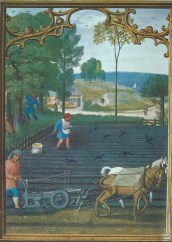
Plow_medievalAs many of you know, I have been vegan since 2012. However, during the 1980s, my second ex-husband and I raised sheep. Most of the meat we served in our home was raised on his family’s communal farm. Our chickens and rabbits roamed their yard and had good lives, and our family’s herd of twenty sheep was managed using simple, old-style farming methods.

We were self-employed in the photography industry and were able to rotate whose turn it was to spend a week caring for the animals. Fortunately, my sister-in-law’s husband was Palestinian. He ensured our sheep were raised and butchered according to halal dietary laws.

I could write a book about those five years, but no one would believe it.

I grew up fishing with my father and have a first-person understanding of what it takes to put meat, fish, or fowl on the table when a supermarket is not an option.

Take my word for this: getting a chicken from the coop to the table is time-consuming, messy, and stinks. We had as many vegetarian meals as we did those featuring meat of some kind.

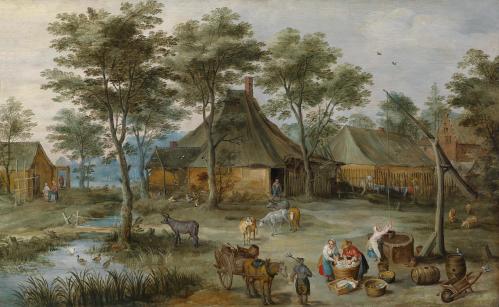
Village_scene_with_well_(Josse_de_Momper,_Jan_Brueghel_II)

Village Scene with Well, Josse de Momper and Jan Brueghel II PD|100 via Wikimedia Commons.

That experience taught me many things. As far as food goes, in a medieval setting, meat, fish, and fowl won’t be served every day in the average person’s home.

Yes, it is a real job to slaughter and prepare it for the table, but other, more subtle factors come into play, things that affect the logic of your plot.

In the Middle Ages, the wool a sheep could produce in its lifetime was of far more value than the meat you might get by slaughtering it. For that reason, lamb was rarely served. The only sheep that made it to the table were usually rams culled from the herd.

Chickens were no different because you lose the many meals her eggs would have provided once a chicken is dead. Young roosters, however, were culled before they got to the contentious stage and were usually the featured meat in any stew that might be on a Sunday menu. Only one rooster was kept for breeding purposes and if he was too ill-tempered, he went into the stew pot and a young rooster with better manners took his place.

Cattle and goats were also more valuable alive. Cows were integral to a family’s wealth as they were milk producers and sometimes worked as draft animals. Only one bull would be kept intact for breeding purposes in a small herd. The others would be neutered, made into oxen and draft animals that pulled plows, pulled wagons, and did all the work that heavy farm machinery does today.

In medieval times, it was a felony for commoners in Britain to hunt for game on many estates. Poachers were considered thieves and faced hash penalties, horrific by our standards if they were caught.

However, most people were allowed to fish as long as they didn’t take salmon, so fish was on the menu more often than fowl, sheep, or cattle. Eels were a menu staple.

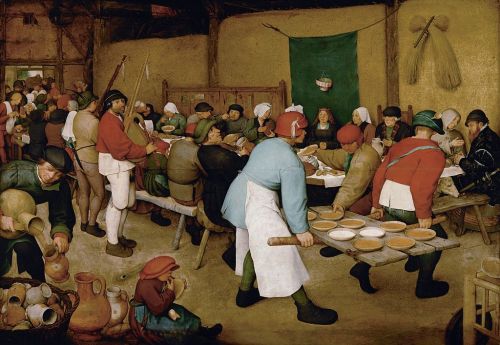
Pieter_Bruegel_the_Elder_-_Peasant_Wedding_-_Google_Art_Project_2

Pieter Bruegel the Elder – Peasant Wedding (1526/1530–1569) via Wikimedia Commons

Therefore, eels, eggs, dried beans and peas, grains, and vegetables were easy and figured most prominently on the menu. Pies of all sorts were the fast-food of the era, often sold by vendors on the street side or in bakeries.

Wheat was rare and expensive. For that reason, the grains most often found in a peasant’s home were barley, oats, and most importantly, rye.

Common vegetables in medieval European gardens were leeks, garlic, onions, turnips, rutabagas, cabbages, carrots, peas, beans, cauliflower, squashes, gourds, melons, parsnips, aubergines (eggplants)—the list goes on and on. And fruits?

Wikipedia says:

Fruit was popular and could be served fresh, dried, or preserved, and was a common ingredient in many cooked dishes. Since sugar and honey were both expensive, it was common to include many types of fruit in dishes that called for sweeteners of some sort. The fruits of choice in the south were lemons, citrons, bitter oranges (the sweet type was not introduced until several hundred years later), pomegranates, quinces, and grapes. Farther north, apples, pears, plums, and wild strawberries were more common. Figs and dates were eaten all over Europe but remained rather expensive imports in the north. [1]

For the most part, my characters eat a medieval/agrarian diet. In medieval times, peasants ate more vegetables, grains, fruits, and nuts than the nobility. The primary source of protein would be eggs and cheese, and fish. Herbal teas, ale, ciders, and mead were also staples of the commoner’s diet because drinking fresh, unboiled water was unhealthy. Medieval brews were more of a meal than today’s beers.

In my world of Waldeyn, the setting for Billy Ninefingers, when food is mentioned, it’s likely to be oat or bean porridge, soup or fish stew, ale or cider, or bread and cheese.

Billy is captain of a mercenary company and an innkeeper, and for most of his story, he does the cooking. I keep the food simple and don’t make too big a deal out of it. The conversations that happen while he is trying to feed the Rowdies are more important than the food. The food is the backdrop.

avacado dinner saladKnowing what to feed your people keeps you from introducing jarring components into your narrative. In Mountains of the Moon, set in the world of Neveyah, my people have a melding of familiar New World ingredients for their diet and do a lot of foraging. For a good list of what this diet might entail, go to this link: Indigenous cuisine of the Americas. You will be amazed at the variety of common foods that originated in the Americas.
When it comes to writing about meals, I feel it’s best to concentrate on the conversations. The food should be part of the scenery, a subtle part of worldbuilding. The conversations that occur around food are the places where new information can be exchanged, things we need to know to move the story forward.


CREDITS AND ATTRIBUTIONS:

[1] Wikipedia contributors, “Medieval cuisine,” Wikipedia, The Free Encyclopedia, https://en.wikipedia.org/w/index.php?title=Medieval_cuisine&oldid=896980025 (accessed Feb 06, 2022).

The Medieval Plow (Moldboard Plow) PD|100, File:Plow medieval.jpg – Wikipedia (accessed Feb 06, 2022).

Pieter Bruegel the Elder – Peasant Wedding (1526/1530–1569) PD|100 via Wikimedia Commons.

Village Scene with Well, Josse de Momper and Jan Brueghel II PD|100 via Wikimedia Commons.

4 Comments

Filed under writing

#FineArtFriday: Saint Cecilia (revisited) by Edward Burne-Jones

Saint Cecilia, by Edward Burne-Jones

Date: circa 1900

Medium: Stained and painted glass

Dimensions: Height: 213.5 cm (84 in); Width: 75.5 cm (29.7 in) frame: Height: 235 cm (92.5 in); Width: 88.7 cm (34.9 in); Depth: 4 cm (1.5 in)

Collection: Princeton University Art Museum

About this image:

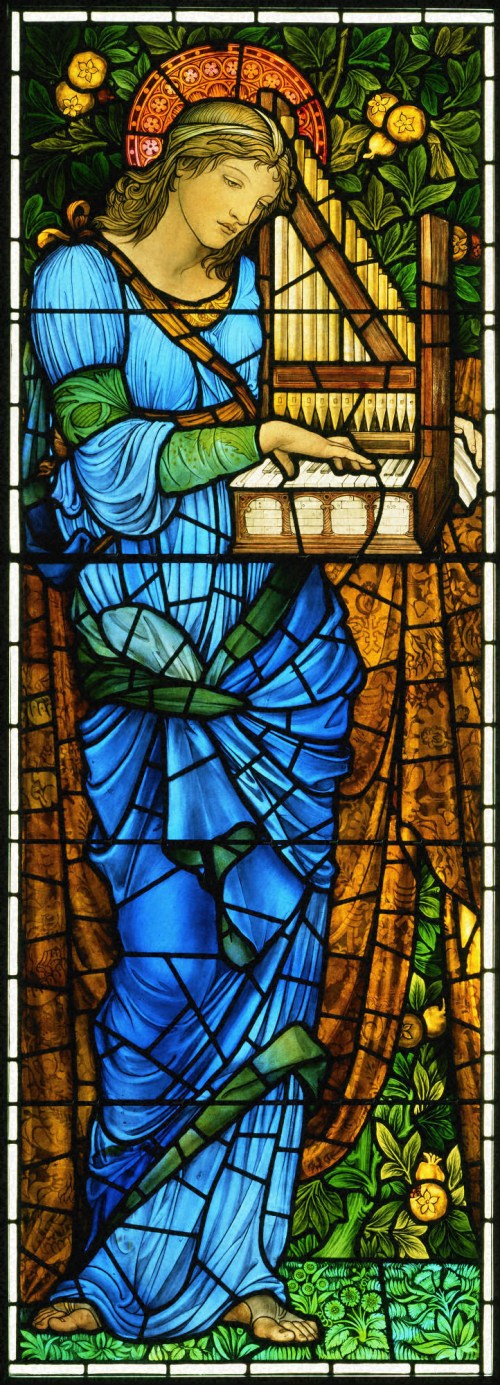
Today we are revisiting an image of a masterpiece in glass: Saint Cecilia, by Edward Burne-Jones. She is the patroness of musicians, and her feast day is traditionally celebrated on November 22. The above image is my favorite rendering of her, as it is so vividly colored.

One of the most beautiful forms of art is stained glass, and the many works of Sir Edward Burne-Jones are without peer.

I may have said before that I’m not a fan of some of the art produced by the Pre-Raphaelite Brotherhood. I understand the heroic and dramatic stories they attempted to tell. Unfortunately, the more hyper-romanticized, physically impossible contortions in which they sometimes posed their heroes and heroines don’t engage my imagination in a good way.

Burne-Jones, however, ranks high on my list of favorite artists because (in my untutored opinion) his best medium was stained glass. The concept and execution of Burne-Jones’s artistic visions in glass are stunning. Vivid, intense colors, romantic subjects – his windows are glorious and seem illuminated even when not backlit by the sun.

About Saint Cecilia, From Wikimedia Commons:

One of nearly thirty versions of a window designed by Burne-Jones and executed by the company founded by William Morris (1834–1896), Saint Cecilia is a product of the Arts and Crafts movement they initiated. Friends at Oxford, Morris and Burne-Jones became disciples of John Ruskin and the Pre-Raphaelite movement and put into practice his vision for the renewal of art. They sought to counter the effects of the machine age by reviving medieval crafts, abolishing distinctions between fine and decorative arts, and beautifying objects of everyday life. Morris wrote on the philosophy of art and founded a company to execute textiles, wallpaper, and other objects, while Burne-Jones, in addition to painting and sculpting, studied with the Pre-Raphaelite painter Dante Gabriel Rossetti and designed murals, tapestries, and stained glass for Morris’s company.

The Gothic Revival style in architecture created a market for stained glass, especially in the 1870s, when Burne-Jones was a particularly prolific designer of windows. The first Saint Cecilia window, at Christ Church, Oxford (1875), shows the influence of the early Renaissance art he had seen in central Italy, most recently in 1871. The flat, abstracted, linear style and the wilting pose of the impossibly tall, graceful woman make reference to the work of Botticelli (Florentine, ca. 1445–1510), while the tapestry-like screen of pomegranate trees and fruits and the richly patterned brocade fabric recall the latest Gothic phase of Italian art, about 1400.

Saint Cecilia, an early Christian Roman virgin martyr, became the patron saint of music and was portrayed with an organ — here, a portable organ of the fifteenth century. Although water organs existed in the ancient world, pipe organs date from the fourteenth century, so we must assume Cecilia is singing the praises of God in heaven, not during her earthly life. In the window at Christ Church, she is flanked by lancet windows with music-making angels; scenes from the life of a fellow martyr saint, Valerian, and her own martyrdom are shown below. In Chicago, a Saint Cecilia window was included in the stained glass of the Second Presbyterian Church (1904); there, the fabric behind the saint is blue, and the tree bears lemons, demonstrating the permutations that could occur among these windows.

About the artist, from Wikipedia:

Sir Edward Coley Burne-Jones, 1st Baronet ARA (28 August 1833 – 17 June 1898) was an English artist and designer closely associated with the later phase of the Pre-Raphaelite movement, who worked closely with William Morris on a wide range of decorative arts as a founding partner in Morris, Marshall, Faulkner & Co. Burne-Jones was closely involved in the rejuvenation of the tradition of stained glass art in Britain.


Credits and Attributions:

Saint Cecilia, Edward Burne-Jones [Public domain], Stained and painted glasss, ca. 1900

Wikipedia contributors, “Edward Burne-Jones,” Wikipedia, The Free Encyclopedia, https://en.wikipedia.org/w/index.php?title=Edward_Burne-Jones&oldid=868174553 (accessed November 16, 2018).

Wikimedia Commons contributors, “File:Burne-Jones, Sir Edward, Saint Cecilia, ca. 1900.jpg,” Wikimedia Commons, the free media repository, https://commons.wikimedia.org/w/index.php?title=File:Burne-Jones,_Sir_Edward,_Saint_Cecilia,_ca._1900.jpg&oldid=303427881 (accessed November 16, 2018).

2 Comments

Filed under #FineArtFriday, writing

Agency and Consequences #amwriting

In my previous post, Agency and Character Development, I briefly mentioned the importance of consequences. It is a word with many uses and connotations.

WritingCraftSeriesAgencyLIRF01302022Let’s look at both the meanings and synonyms for the word consequences.
Consequence (noun)

[kon-seh-kwens]

consequences (plural noun)

[1] The result or effect of an action or condition.

“Many programmers were laid off from work as a consequence of the failing economy.”

Synonyms:

Result, upshot, outcome, sequel, effect, reaction, repercussion, reverberations, ramification, end, end result, conclusion, termination, culmination.

[2] Importance or relevance.

“That’s of no consequence.”

Synonyms:

Importance, import, significance, account, moment, momentousness, substance, note, mark, prominence, value, weightiness, weight, concern, interest, gravity, seriousness.

[3] Social distinction. (Slightly dated usage. Its synonyms are more commonly used.)

“Adelaide Brown was a woman of consequence.”

Synonyms:

Fame, distinction, eminence, preeminence, prominence, repute, reputation, prestige, acclaim, celebrity, note, notability, mark, standing, stature, account, glory, illustriousness.

For today’s post, let’s consider agency and the importance of choice. How will the results of their decisions affect our characters’ lives? After all, a story isn’t interesting without a few self-inflicted complications.

Once again, we will go to J.R.R. Tolkien and look at Bilbo’s choices and his path to becoming the eccentric eleventy-one-year-old hobbit who vanishes (literally), leaving everything, including the One Ring, to Frodo.

ConsequencesLIRF07122020In the morning, after the unexpected (and unwanted) guests leave, he has two choices, to stay in the safety of Bag End, or hare off on a journey into the unknown. He chooses to run after the dwarves, and so begins the real story—how a respectable hobbit became a burglar and became a hero in the process.
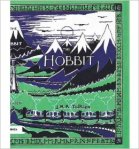
The consequences of his decision will shape his entire life afterward. Where he was once a staid country squire, having inherited a comfortable income and existence, he is now expected to steal an important treasure from a dragon. At the outset, that particular job doesn’t seem real. He is beset by problems, one of which is his general unfitness for the task. He’s always been well-fed, never had to exert himself much, and suddenly, his opinions carry no weight.

Bilbo’s hidden sense of adventure emerges early when the company encounters a group of trolls. He is supposed to be a thief, so he is sent to investigate a strange fire in a forest. Reluctantly, he agrees. Upon reaching the blaze, he observes that it is a cookfire for a group of trolls.

Bilbo has reached a fork in the path of life. He must make a choice: the smart thing would be to turn around at that point and warn the dwarves. However, his ego feels the need to do something to prove his worth. “He was very much alarmed as well as disgusted; he wished himself a hundred miles away—yet somehow he could not go straight back to Thorin and Company empty-handed.” [1] Bilbo feels the need to impress the Dwarves and makes decisions he comes to regret.

In the process of nearly getting everyone eaten and having to be rescued by Gandalf, he discovers several historically important weapons. One of them is Sting, a blade that fits Bilbo perfectly as a sword.

At first, Sting has no name, a long knife that the hobbit Bilbo Baggins discovers in the cave of trolls. Gandalf and the dwarf Thorin also find their respective swords, Glamdring and Orcrist.

Although it is only a dagger, its length corresponds to a short sword for a creature the size of the hobbit. It turns out that, like the swords of Gandalf and Thorin, this dagger was forged by the elves of Gondolin in the First Age and possesses a magical property—it shines with a blue glow when orcs are close.

the hobbitThe blade does not acquire its name until later in the adventure, after Bilbo, lost in the forest of Mirkwood, uses it to kill a giant spider and rescue the Dwarves. This is when Bilbo’s decisions become more thoughtful, and his courageous side begins to emerge.

Decisions and consequences shape Bilbo’s character and force his growth. His experiences and bad choices along the way have consequences that shape how he thinks. As the Dwarves continue to get into trouble, he makes plans for their rescue and considers what may or may not go wrong before implementing them. He doesn’t know it, but he thinks like a warrior instead of a staid country squire.

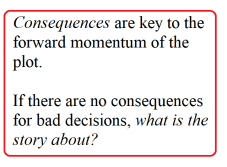
Consequences force the character arc. Sometimes the decisions our characters make as we are writing them surprise us. But if those decisions make the story too easy, they should be discarded.

We, as their creator, must take over, cut or rewrite those scenes, and force the story back on track.


Credits and Attributions:

[1] Quote from The Hobbit, or There and Back Again, by J.R.R. Tolkien, published 1937 by George Allen & Unwin, Ltd.

6 Comments

Filed under writing