The Vegan on the Road to Vegas #amwriting

I am out of town and on a mini vacation this week. We are fully vaccinated and in Las Vegas for a grandchild’s wedding.
MyWritingLife2021My husband is recovering from a total hip replacement, so traveling out of town for an extended stay involves a lot of logistics. Also, I am vegan, which has an impact on things. I can eat in restaurants, but once I am away from my part of the world, the menu is often limited to a garden salad.

I have several militant vegan friends who can be… um… evangelical… so I go out of my way to NOT be difficult. If you are determined to cook for me, don’t get into a dither. Offer me a salad with oil and vinegar, bake me a potato, and give me a little guacamole or salsa to dress it up. Open a can of beans – I will be happy with just about anything you fix. Let’s be real! Anything with avocado is awesome!

I love a veggie plate with hummus. Many restaurants offer one as an appetizer plate, and I will make that my meal. I guarantee, I won’t feel cheated.

It may seem odd to many people who know that I once raised sheep and chickens, but that experience is partly why I am vegan. So, being vegan means that I eat nothing from an animal. No cheese, no meat, no eggs.

So, what do I eat? I live in the Pacific Northwest. The Vancouver B.C./Seattle/Portland area has a large vegetarian community, so most restaurants offer options that can be made vegan. The stores in my area have large sections of plant-based proteins, cheeses, and plant-based butters. Many delicious kinds of cheese are available from Miyoko’s Creamery. They can be found in most grocery stores here in the Pacific Northwest, as can Beyond Meat and Field Roast products. We also can often find Gardein products, a Canadian plant-based company.

These products taste good and are satisfying to the carnivores I am feeding, and are easy to prepare in many diverse ways.

Vegetables are amazingly versatile and quick to prepare. If you have an eye for art and color, you can impress even your five-year-old. Some of the most beautiful presentations you will see at fine restaurants are created from artistically plated fruits and vegetables.
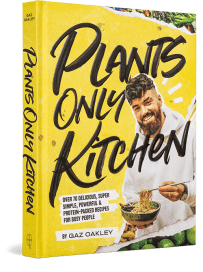
book-plants-only-coverProtein is essential, and I have many delicious options to make that don’t involve processed foods. My favorite “impress-the-son-in-law” cookbook is this gem by Gaz Oakley: Plants-only Kitchen.

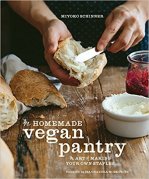
I also have a book by Miyoko Schinner, the Homemade Vegan Pantry, a book that has been the cornerstone of my personal style of cuisine. I’ve adapted many of my old recipes to my vegan lifestyle.

Tempeh is made from soybeans but differs from tofu (which I love for curries). It is a whole soybean product with different nutritional characteristics and textural qualities.

Tempeh has ‘tooth.’ The way you marinate the tofu or tempeh before you cook it is how you make it tasty. Plain tofu or tempeh is bland, waiting for you to liven it up. That blandness is what gives them a bad reputation among new vegetarians who don’t understand how to prepare them.

However, they take on the flavors of marinades well, so they are wonderful products to cook with.

Chickpeas (garbanzos) are an extremely versatile bean, with as many uses in the vegan kitchen as the soybean.

Flavor for gravies, pilafs, and soups comes from vegetable broth. There are two ways to get good rich flavor using vegetable broth. However, my go-to store-bought product for use at home is the reliable kitchen staple, Better Than Bouillion Vegetable Base. Otherwise, I make my own veggie broth base, using the recipe I found here: Homemade Vegetable Soup Base. It’s not complicated and is one of those shortcuts to great flavor that I regularly employ.

But you don’t have to cook fancy things for me. I’m happy with rice and vegetables sautéed in olive oil (or any other organic vegetable oil) rather than in butter, which comes from cows.
The_Homemade_Vegan_PantryThe most surprising thing about being vegan is how little it costs to eat well once you have your pantry basics. Going sans meat is the lazy person’s dream diet. It’s amazing how quickly you can get a meal on the table, and whether you are making beans or soup, the crockpot is your best friend. I often make my own bread from several different recipes, a tasty treat that takes less than five minutes to put together using my bread machine.

I would far rather spend my time writing than cooking. However, the meals in our household are important. The table is where we discuss the day and share our thoughts, hopes, and plans. How the food looks when the family sits down is as important as any other part of the meal. Fruit and veggies make decorating each plate easy.

But today, I’m partying in Vegas. Someone else is doing the cooking and cleaning, and I’m enjoying a spa day and a relaxing change from the routine. Our granddaughter’s wedding is a big day for us all, and we’re going to make the most of it.
4 Comments

Filed under writing

Cyberpunk and Sturm und Drang #amwriting

We all want to create intense moods and evoke a strong atmosphere in our work. This can range from subtle hints to full-on Sturm und Drang, but the intention is to captivate the reader either way.

What is Sturm und Drang? The English translation is literally Storm and Stress.

sturmUndDrang05152021LIRFSturm und Drang, as a literary form, evolved during the time of the American Revolutionary War. This was an era of global unrest and great hardship, especially in Europe. The main feature of Sturm und Drang is the expression of high emotions, strong reactions to events, and rebellion against rationalism. It is characterized by intense individualism and complex reactions.
Classical literature in this style began in 1772 with “Prometheus,” a poem by Johann Wolfgang von Goethe. The character of the mythic Prometheus addresses God (as Zeus) in hatred and defiance. Misotheism is the hatred of God or the Gods, stemming from a moment in a person’s life where one feels the gods have abused and abandoned him.

One can’t hate what one doesn’t believe in, so misotheism requires a firm belief in a God or Gods.

Wikipedia tells usPrometheus is the creative and rebellious spirit which, rejected by God, angrily defies him and asserts itself; Ganymede is the boyish self which is adored and seduced by God. One is the lone defiant, the other the yielding acolyte. As the humanist poet, Goethe presents both identities as aspects or forms of the human condition. [1]

Literature and music written in the style of Sturm und Drang were meant to shock the audience, inundating them with extremes of emotion.

A parallel movement occurred in the visual arts. Artists began producing paintings of storms and shipwrecks, showing the terror and irrational destruction wrought by nature. These pre-romantic works were fashionable in Germany from the 1760s on through the 1780s.

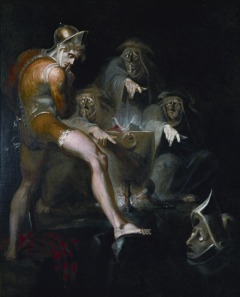
Alongside these frightening landscapes, disturbing depictions of nightmarish visions were gaining an audience in Europe. Goethe and many of his contemporaries admired and purchased paintings by artists like Henry Fuseli, horror-scapes intended to frighten the viewer.

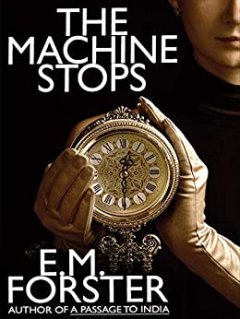
the machine stops em forsterSo, this brings me to the subgenre of cyberpunk. One of the earliest science fiction short stories to feature a dystopian society was The Machine Stops, written by E. M. Forster. It was published in The Oxford and Cambridge Review (November 1909).
In cyberpunk, we see many of the features of classic Sturm und Drang but set in a dystopian society. The deities are technology and industry. Corporate uber-giants are the gods whose knowledge mere mortals desire and whom they seek to replace.

And, just like all demi-gods, when an exceptionally strong and clever protagonist does manage that feat, it’s business as usual. They are no better than the gods whose thrones they have usurped.

Wikipedia defines cyberpunk as a subgenre of science fiction in a future setting that tends to focus on the society of the proverbial “high tech low life  featuring advanced technological and scientific achievements, such as information technology and cybernetics, juxtaposed with a degree of breakdown or radical change in the social order. [2]

Cyberpunk began as a niche rebellion by authors like Phillip K. Dick. It is now considered mainstream speculative fiction and has a large audience.

Works in this genre are always set in a post-industrial dystopian world with deep divisions in the strata of society. Some have a specified caste system of sorts, but most people live in extreme poverty in all cyberpunk tales. There will be a small middle class, and at the top, a few of the strongest, most powerful people hold incredible wealth. These societies have fallen into extreme chaos, which is the driver of the story.

The MacGyver Effect is utilized to the fullest in these stories: protagonists acquire and use technology in ways never anticipated by the original inventors. A central trope of this genre is “the street finds its own uses for things.”  

In cyberpunk, the atmosphere is dark, heavily film noir. It is fast-paced, atmospheric, and alcohol is heavily abused. It is often sexist, although strong feminine cyberpunk is emerging. The prose usually has a pared-down style reminiscent of 1950s detective fiction. Street drugs are cheap and are the relaxation of choice in many cyberpunk novels.

Macbeth_consulting_the_Vision_of_the_Armed_HeadMany authors whose works appeared in the early days of cyberpunk were indies hoping to go mainstream. Their short stories appeared in popular sci-fi magazines because visionary editors risked their jobs and reputations by accepting and publishing work that their readers could have rejected.
The success of those short works piqued the interest of agents and larger publishers, enabling them to sell their longer work.

We indie authors are fortunate. We have a lot of latitude in what we choose to write. We can write and publish edgy work that would be turned away by traditional publishers, who would pass on it because it might not be a commercial success.

Authors who engage in artistic rebellion will often find great success — but usually, this comes after they are dead.


Credits and Attributions:

[1] Wikipedia contributors, “Prometheus (Goethe),” Wikipedia, The Free Encyclopedia, https://en.wikipedia.org/w/index.php?title=Prometheus_(Goethe)&oldid=994790116 (accessed May 15, 2021).

[2] Wikipedia contributors, “Cyberpunk,” Wikipedia, The Free Encyclopedia, https://en.wikipedia.org/w/index.php?title=Cyberpunk&oldid=1020463998 (accessed May 15, 2021).

Images:

Wikimedia Commons contributors, “File:Macbeth consulting the Vision of the Armed Head.jpg,” Wikimedia Commons, the free media repository, https://commons.wikimedia.org/w/index.php?title=File:Macbeth_consulting_the_Vision_of_the_Armed_Head.jpg&oldid=526733277 (accessed May 15, 2021).

The Machine Stops by E. M. Forster, published in the Oxford and Cambridge Review by Archibald Constable, 1909. Amazon LLC cover, published 05-15-2021, fair use.

6 Comments

Filed under writing

#FineArtFriday: The Dutch Proverbs by Pieter Bruegel the Elder, revisited

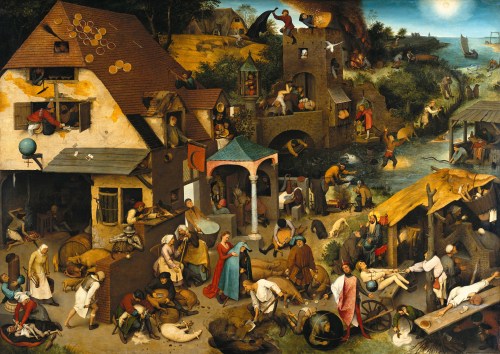
Pieter_Brueghel_the_Elder_-_The_Dutch_Proverbs_-_Google_Art_ProjectOne of the best allegorical paintings of all time is The Netherlandish Proverbs (also known as The Dutch Proverbs) by Pieter Brueghel the Elder, which was painted in 1559. A master at humor, allegory, and pointing out the follies of humanity, Brueghel the Elder is one of my favorite artists.
Artist: Pieter Bruegel the Elder
Year: 1559
Medium: Oil-on-panel
Dimensions: 117 cm × 163 cm (46 in × 64 in)
Location: Gemäldegalerie, Berlin

Quote from Wikipedia:

Critics have praised the composition for its ordered portrayal and integrated scene. There are approximately 112 identifiable proverbs and idioms in the scene, although Bruegel may have included others which cannot be determined because of the language change. Some of those incorporated in the painting are still in popular use, for instance “Swimming against the tide”, “Banging one’s head against a brick wall” and “Armed to the teeth”. Many more have faded from use, which makes analysis of the painting harder. “Having one’s roof tiled with tarts”, for example, which meant to have an abundance of everything and was an image Bruegel would later feature in his painting of the idyllic Land of Cockaigne (1567).

The Blue Cloak, the piece’s original title, features in the centre of the piece and is being placed on a man by his wife, indicating that she is cuckolding him. Other proverbs indicate human foolishness. A man fills in a pond after his calf has died. Just above the central figure of the blue-cloaked man another man carries daylight in a basket. Some of the figures seem to represent more than one figure of speech (whether this was Bruegel’s intention or not is unknown), such as the man shearing a sheep in the centre bottom left of the picture. He is sitting next to a man shearing a pig, so represents the expression “One shears sheep and one shears pigs”, meaning that one has the advantage over the other, but may also represent the advice “Shear them but don’t skin them”, meaning make the most of available assets.

You can find all of the wonderful proverbs on the painting’s page on Wikipedia, along with the thumbnail that depicts the proverb.

My favorite proverbs in this wonderful allegory?

Horse droppings are not figs. It meant we should not be fooled by appearances.

He who eats fire, craps sparks. It meant we shouldn’t be surprised at the outcome if we attempt a dangerous venture.

Now THAT is wisdom!


Credits and Attributions:

The Netherlandish Proverbs (Also known as The Dutch Proverbs) by Pieter Brueghel the Elder 1559 [Public domain], via Wikimedia Commons.

Wikipedia contributors, “Netherlandish Proverbs,” Wikipedia, The Free Encyclopedia, https://en.wikipedia.org/w/index.php?title=Netherlandish_Proverbs&oldid=829168138  (accessed May 3, 2018).

Comments Off on #FineArtFriday: The Dutch Proverbs by Pieter Bruegel the Elder, revisited

Filed under #FineArtFriday, writing

Crafting contrasts: @TadWilliams and Tolkien – how contrasts drive the story #amwriting

One of my favorite quotes for writers comes from the Buddha. “There has to be evil so that good can prove its purity above it.”

mood-emotions-1-LIRF09152020J.R.R. Tolkien understood this quite clearly. The Lord of the Rings trilogy is a significant reading commitment, one fewer and fewer readers are willing to undertake. It was written in a highly literate style that everyone understood a century ago.

Lengthwise, the saga isn’t as long as people make it out to be when compared to Robert Jordan‘s or Tad Williams’ epic (and highly literate) fantasy series. The LOTR series totals only 455,175 words over the course of all three books.

Tolkien shows the peace and prosperity that Frodo enjoys and then forces him down a road not of his choosing. He takes the hobbit through personal changes, forces him to question everything.

Frodo’s story is about good and evil, war and peace, and the hardships endured in the effort to destroy the One Ring and negate the power of Sauron. Why would ordinary middle-class people, comfortable in their rut, go to so much trouble if Sauron’s evil posed no threat to their peace and prosperity?

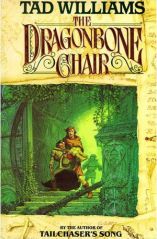
300px-The_Dragonbone_ChairTad Williams’s masterpiece, the Dragon Bone Chair, is the first book in the fantasy series Memory, Sorrow, and Thorn. These are the first three books in the epic Osten Ard series.  I read this book when it first went to paperback and had to re-read it again immediately upon finishing it. This book (and indeed the whole series) had a profound impact on me, and also my children when they became older teens.

In both the Lord of the Rings trilogy and Tad Williams’ Osten Ard books, we have two of the most enduring works of modern fantasy fiction. Both feature an epic central quest and smaller side quests, all of which must be completed for the protagonists to arrive at the final resolution.

Through it all, we have joy and contentment sharply contrasted with deprivation and loss, drawing us in and inspiring the deepest emotions.

This use of contrast is fundamental to the fables and sagas humans have been telling since before discovering fire. Contrast is why Tolkien’s saga set in Middle Earth is the foundation upon which modern epic fantasy is built.

It’s also why Tad Williams’ work in The Dragonbone Chair, first published in 1988, changed the way people saw the genre of epic fantasy, turning it into hard fantasy. His work has inspired a generation of fantasy writers: George R.R. Martin and Patrick Rothfuss, to name just two of the more famous.

In all his works, whether it’s the paranormal Bobby Dollar series or his epic Osten Ard series, Tad Williams’ novels come to life because he juxtaposes emotions in his characters and builds contrasts into every setting in his worlds. Ease and beauty are juxtaposed against harshness and deprivation.

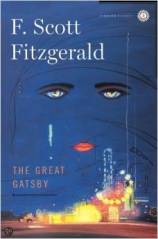
f scott fitzgerald The Great GatsbyNo matter where we live, San Francisco, Seattle, or Middle Earth, these fundamental human experiences are personal to every reader. We have each experienced pain and loss, joy and love.
When the author successfully uses the contrasts of our human experience to tell their story, the reader empathizes with the characters. They live the story as if they were the protagonist.

So, what do I mean by contrasts in world-building? It can be shown in subtle ways.

Contrasting plenty against poverty in your world-building shows the backstory without requiring an info dump.

First comes the sunshine, and then the storm, and then the aftermath. Feast is followed by famine, thirst followed by a flood. Love and loss, safety and danger, loyalty and betrayal—contrast gives the story texture, and pacing turns a wall of words into something worth reading.

In our real world, war, famine, and flood are followed by times of relative peace and plenty. The emotions and experiences of people living through all those times are the real stories.

This is not just played out in fantasy novels; it’s our human history and our future.

I say this regularly, but I must repeat it: education about the craft of writing has many facets. We learn the architecture of story by reading novels and short stories written by the masters, both famous and infamous.

We shouldn’t limit our reading to the old favorites that started us on this writing path. You may not love the novels on the NY Times literary fiction bestseller list but it’s a good idea to read one or two of them every now and then as a means of educating yourself.

What you don’t like is as important as what you enjoy. Why would a book that you dislike be so successful? No matter how much money a publisher throws at them, some books are stinkers.

It’s alright to admit you disliked a book that Oprah or Reese Witherspoon recommends.

I despised House of Sand and Fog from page one but read it to the end. It begins in a bad place, and continues downhill, an unrelentingly depressing novel that left me with a bad taste in my mouth. Ugliness followed by more ugliness doesn’t make the ugliness beautiful.

clouds ms clipartPlot, in my opinion, is driven by the highs and lows. You don’t need to pay for books you won’t like. Go to the library or to the secondhand bookstore and see what they have from the NYT bestseller list that you would be willing to examine.
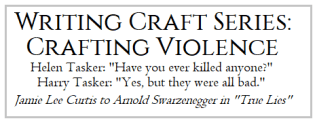
Give that book a postmortem. Why does—or doesn’t—it resonate with you?

  • Did the book have a distinct plot arc?
  • Did it have a strong opening that hooked you?
  • Was there originality in the way the characters and situations were presented?
  • Did you like the protagonist and other main characters? Why or why not?
  • Were you able to suspend your disbelief?
  • Did the narrative contain enough contrasts to keep things interesting?
  • By the end of the book, did the characters grow and change within their personal arc? How were they changed?
  • What sort of transitions did the author employ that made you want to turn the page? How can you use that kind of transition in your own work?
  • Did you get a satisfying ending? If not, how could it have been made better?

Reading and dissecting the works of successful authors is a necessary component of any education in the craft of writing.

Answering these questions will make you think about your own work. You will put more thought into how you deploy the contrasting events that change the lives of your characters.

7 Comments

Filed under writing

Crafting Action and Violence #amwriting

I am well acquainted with how the human body moves when fighting, either with weapons or bare-handed. I know this personally as I was the goalie on a women’s hockey team in my late teens. Also, at the age of nineteen, I married the bass player in a heavy metal band. We were divorced several years later, and while we remain good friends, some aspects of those years were difficult to live through.

crafting violenceThe human body moves in many ways when fighting, some of which are effective, and others not so much. In the 1990s, I studied Shao Chi Chuan, a gentler form of martial arts. I write about people who fight, and I draw upon my personal experience.
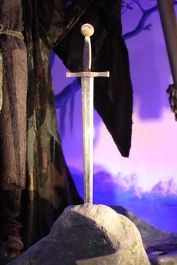
But let’s talk about literary violence. Random gore and sexual violence have no place in the well-crafted novel. The keyword here is random.

Blood and sex are sometimes a part of the more profoundly moving stories I have read. Those scenes showed meticulous plotting, and the incidents were watershed moments in the protagonists’ lives.

At times, those passages are difficult on a personal level to read. However, if they are moments that change everything, they do have a purpose. Events that change the protagonist’s life for good or ill must be crafted, and transitions must make them fit seamlessly into the narrative.

I rarely read horror, except that which is written by Dean Lappi. The violence is all the more frightening in his books because it is subtly foreshadowed and unavoidable and occurs at a surprising moment. All the things that make you feel squeamish are not random, not inserted for shock value, or just to liven things up. The characters are multidimensional, and the world they live in can be terrifying.

If you are writing horror, reread the works that inspired you. Follow their lead and plot your novel well.

I want to make this extremely clear: If the violent events don’t somehow move the story forward, change the protagonist profoundly, or affect their view of the world, you have wasted the reader’s time.

Whenever you must write scenes that involve violence, ask yourself five questions:

  1. Is this scene necessary, or am I just trying to liven up a stagnant story arc?
  2. What does this scene show about the world my protagonist lives in?
  3. Will this event fundamentally change my protagonist and affect how they go forward?
  4. What does this event accomplish that advances the plot toward its conclusion?
  5. Why was this event unavoidable?
Excalibur London_Film_Museum_ via Wikipedia

Excalibur London_Film_Museum_ via Wikipedia

Suppose the choices the protagonist has made prior to this point do not make this scene unavoidable. In that case, the violence is gratuitous and doesn’t belong there.

Some books open in the middle of the action, and I have done this on occasion as a prologue to show a backstory event. However, this kind of opening can confuse the reader, who is at the disadvantage of not knowing what is going on.

When you open a novel with the characters already thrust into the middle of an action scene, it should introduce the characters and show the root of the crisis. The key is to make it clear that it is a backstory event, and you should make it character-driven.

Whether it is shown in the prologue or the opening chapter, the first event, the inciting incident, is the one that changes everything and launches the story.

I love stories about good people solving terrible problems. The first incident has a domino effect. More things occur that push the protagonist out of his comfortable life and into danger.

Their peril might be physical or emotional. While I have experienced violent situations, I’ve also faced many things that shook my world but didn’t threaten my physical safety.

Fear of loss, fear of financial disaster, fear of losing a loved one—terror is subjective and deeply personal

Either way, the threat and looming disaster must be shown, and the solution should be held just out of reach. If it was resolved too easily, why? What sort of trap was laid, and why did they take the bait?

As in real life, emotions run high. The situation is sometimes chaotic, but the protagonists believe they can resolve the problem if they can just achieve “the one thing.”

Despite their growing doubts, the characters continue to be put to the test, and the subplots kick into gear.

Scenes form the overall story arc structure, but please, don’t waste the reader’s time with pointless banter. Each conversation or event must show something new and propel the plot forward, moving the protagonist and antagonist further along the story arc to the final showdown.

In the early part of the story, each scene should illuminate the motives of the characters. Like a flower gradually opening, the reader gains information at the same time as the protagonist does. The reader may see clues from the antagonists’ side, which the characters don’t know will affect the plot in the future.

Those clues are foreshadowing, showing why the forthcoming action is unavoidable. Through the first half of the book, subtle foreshadowing is essential, as it piques the reader’s interest and makes them want to know how the book will end.

The midpoint in the novel is a place where a watershed moment should occur. It launches the third act and makes the characters’ struggle more difficult.

At this point, the protagonist and allies are becoming aware that they may not achieve their objectives after all. Bad things have happened, and the protagonists must get creative and work hard to acquire or accomplish their desired goals.

Through experiencing these (sometimes) violent events, the protagonist suffers a crisis of faith. They fear they may not have what it takes, and their quest won’t be fulfilled.

Just when the characters have recovered from the midpoint catastrophe, another disaster occurs, the event that launches the final act. This event is where someone who was previously safe may die.

WordItOut-word-cloud-4074543Scenes that involve violence are difficult to write well unless you know how the action will affect your protagonist. Also, you must remember to give the protagonist and the reader a small break between incidents for regrouping.
This requires planning on the part of the author. We consider how each battle or catastrophe will be unavoidable. We must also ask ourselves how surviving it will change the characters for good or ill.

Incidents that raise the very real specter of possible failure elevate the emotional stakes and keep the reader turning the page.

Our task is to design the action scene so that it fits naturally into a narrative. This is a critical skill we must develop if we want to move our readers emotionally.

In the next post, we’ll discuss contrasts, and how the transition from conflict to quiet and back again can make or break your narrative.

6 Comments

Filed under writing

#FineArtFriday: Bringing down marble from the quarries to Carrara, Sargent 1911 (revisited)

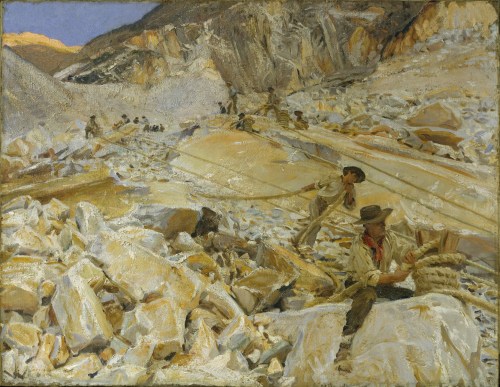
John_Singer_Sargent_-_Bringing_Down_Marble_from_the_Quarries_to_Carrara_(1911)Today we are revisiting a painting I first posted in January of this year,  Bringing down marble from the quarries to Carrara, by John Singer Sargent  (1856–1925). This is a painting that conveys the lives and efforts of quarrymen in the way all of Sargent’s paintings of the working class do. You see the heat they work in, and feel their effort as they go about their tasks in the same way as their fathers did before them, and their grandfathers.
Date: 1911

Medium: oil on canvas

Dimensions: Height: 71.4 cm (28.1 in); Width: 91.8 cm (36.1 in)

Collection: Metropolitan Museum of Art

Inscriptions: Signature bottom left: John S. Sargent

What I love about this painting:

This picture details the relentless heat of the day, the back-breaking labor of men cutting marble. This is how quarrying was done prior to World War I, with steam-donkeys and great physical peril. The ropes are huge and heavy, and these men secure the dangerous load with practiced ease.

Carrara Italy is an important center for the extraction and processing of marble. The famous stone is white and exceedingly valuable.

One of Sargent’s great skills was the ability to convey the sensory impressions of an environment, depicting his characters outdoors in all the seasons.

About the Artist, via Wikipedia:

John Singer Sargent, January 12, 1856 – April 14, 1925) was an American expatriate artist, considered the “leading portrait painter of his generation” for his evocations of Edwardian-era luxury. He created roughly 900 oil paintings and more than 2,000 watercolors, as well as countless sketches and charcoal drawings. His oeuvre documents worldwide travel, from Venice to the Tyrol, Corfu, the Middle East, Montana, Maine, and Florida.

Born in Florence to American parents, he was trained in Paris before moving to London, living most of his life in Europe. He enjoyed international acclaim as a portrait painter. An early submission to the Paris Salon in the 1880s, his Portrait of Madame X, was intended to consolidate his position as a society painter in Paris, but instead resulted in scandal. During the next year following the scandal, Sargent departed for England where he continued a successful career as a portrait artist.

From the beginning, Sargent’s work is characterized by remarkable technical facility, particularly in his ability to draw with a brush, which in later years inspired admiration as well as criticism for a supposed superficiality. His commissioned works were consistent with the grand manner of portraiture, while his informal studies and landscape paintings displayed a familiarity with Impressionism. In later life Sargent expressed ambivalence about the restrictions of formal portrait work, and devoted much of his energy to mural painting and working en plein air. Art historians generally ignored artists who painted Royalty and “Society” – such as Sargent – until the late 20th century.


CREDITS AND ATTRIBUTIONS

John Singer Sargent, Public domain, via Wikimedia Commons

“Carrara.” Wikipedia, The Free Encyclopedia. 16, 2021, 12:36 utc. 29 Jan 2021, 03:23 <//en.wikipedia.org/w/index.php?title=Carrara&oldid=118022943>.

“File:John Singer Sargent – Bringing Down Marble from the Quarries to Carrara (1911).jpg.” Wikimedia Commons, the free media repository. 15 Jun 2019, 13:13 UTC. 29 Jan 2021, 03:24 <https://commons.wikimedia.org/w/index.php?title=File:John_Singer_Sargent_-_Bringing_Down_Marble_from_the_Quarries_to_Carrara_(1911).jpg&oldid=354733943>.

2 Comments

Filed under #FineArtFriday, writing

To schedule writing time or not? #amwriting

In a writers’ forum, I was recently asked how a person can go full-time as a writer. I don’t have a good answer for that as you must be able to pay your bills, or no books will ever be written.

MyWritingLife2021Most writers are hobbyists. This is because if one intends to be a full-time writer, one must have an income.
I am a full-time writer. I have regular office hours for writing, and I’m retired from my career in Corporate America.

For many years I was a hobbyist, writing when I had a chance and devoting my life to my job and raising a family.

Some people manage to fit short bursts of writing into their daily schedule, writing at work while on break or at lunch. Others must schedule a dedicated block of time for writing by either rising two hours before they must depart for work or by skipping TV in the evening.

When I was working, I fell into both categories. A happy life is all about balance. My family always came first, so I arranged my writing time around their schedules.

When I am in the planning stage of a novel or story, I find myself stopping whatever I’m doing and making notes, quickly getting down any thoughts that occur. This is a habit I developed when I was employed outside my home.

Until 2012, I was like everyone else, with a job and commitments that took precedence over any writing I might have wanted to do.

I saw very little television in those days. Evenings and weekends were my only time for writing, making art, or reading.

Now that I’m retired from working outside my home, six in the morning until noon is my best time to write. However, being retired means you are always available when a crisis occurs.

blogging memeEvents occur, disturbing my writing schedule, but I usually forgive the perpetrators and allow them to live. At that point, I revert to writing whenever I have a free moment.
I’m a less than enthusiastic housekeeper even when not writing, but I keep things sort of under control. These are the tasks everyone does, chores that keep our homes livable.

I squeeze housekeeping chores into my writing time the way I used to fit writing into my working life.

Dinner at the table was the one meeting place for my family during the blender years of child-rearing.

I tend to do the cooking, and dinner hits the table at 5:00 pm. If you aren’t there on time, I will give you the evil eye for the rest of your life or the evening, whichever ends first.

Balance is the key to a happy life. We want to feel productive and creative, and we want to share our lives and interests with others.

Creativity applies to everything from making a meal, to painting, to generating a business plan—your spouse or child’s creative bent may be wildly different from yours, but you must be supportive.

Therefore, we who write must make time to write. This allows us to be creative and still support our families, who all have activities and interests of their own.

ICountMyself-FriendsAs I have said many times before, being a writer is to be supremely selfish about every aspect of life, including family time.
It also requires discipline and the ability to set aside an hour or so just for that pursuit, a little time where no one is allowed to disturb you.

A good way to make sure you have that time is to encourage your family members to use that time to indulge in their interests and artistic endeavors.

That way, everyone has the chance to be creative in their own way, and they will understand why you value your writing time so much.

11 Comments

Filed under writing

Character creation: attraction and repulsion #amwriting

This week we’re continuing our dive into character building. I’m putting my beta reader’s comments to work, trying to iron out some of the rough patches, and one that I must work on is attraction.

WritingCraftSeries_romanceWriting emotions with depth is a balancing act. This is where I write from real life. I think about the physical cues I see when my friends and family feel emotion. When someone is happy, what do you see? Bright eyes, laughter, and smiles.
And when we’re happy, how do we feel? Energized, confident. We’re always slightly giddy when we have a little crush coming on and even happier when it blossoms into a romance.

The trick is to combine the surface of the emotion (physical) with the deeper aspect of the feeling (internal). Not only that, but we want to write it so that we aren’t telling the reader what to experience. We allow the reader to experience the emotion as if it is their idea.

Fantasy is a popular genre because it involves people. People are creatures of biology and emotion. When you throw them together in close quarters, romances can happen within the narrative.

I’m not a Romance writer. I write about relationships, but Romance readers will be disappointed in my work. My tales don’t always have a happily ever after, although most do. Also, while I can be graphic, I’m usually a fade-to-black kind of writer, allowing my characters a little privacy.

I flounder when writing without an outline, and even though I’m in the second draft, I’m floundering now.

Writing intense, heartfelt emotions is easy for me. I begin to have trouble when I attempt to write the subtler nuances of attraction and its opposite, repulsion. I find myself at a loss for words.

The problem is, if you write intense emotions with no buildup, they come out of nowhere and seem gratuitous.

So, how do I foreshadow these relationships and show the buildup? I go to Romance writers and ask questions. I’ve attended workshops given by romance writers and learned a great deal from them. However, being autistic, I understand more from pursuing independent study.

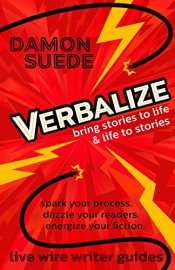
Verbalize_Damon_SuedeAlso, I’m a book junkie—I can’t pass up buying any book on the craft of writing. I bought two books on writing craft by Damon Suede, who writes Romance. These two books show how word choices can make or break the narrative.
In his book Verbalize, he explains how actions make other events possible. Even gentler, softer emotions must have verbs to set them in motion.

Emotions are nouns, and so I need to find and use the right verbs to activate them.

Therefore, matching nouns with verbs is key to bringing that romance to life. I must get out the dictionary of synonyms and antonyms and delve into the many words that relate to and describe attraction. ATTRACTION Synonyms: 33 Synonyms & Antonyms for ATTRACTION | Thesaurus.com

So, now that I have all these lovely words, the next step is to choose the words that say what I mean and fit them into the narrative.

This novel was accidental, so I didn’t plan the relationships out the way I usually do. I have five people in this convoluted tale. I’m a bookkeeper, so doing the math, if we end up with two couples, one character will be left out.

Now my beta readers tell me that while the final matches work, I need to hint at sexual tension from the opening pages on to better show the attraction.

Also, they pointed out that the odd-one-out creates endless opportunities for a real roadblock to the final event. This is something I hadn’t seen, but wow–what a great way to inject some power into the finale.

poetry-in-prose-word-cloud-4209005Each of us experiences emotional highs and lows in our daily lives. We have deep-rooted, personal reasons for our emotions, for whether we are attracted to or repulsed by another person. Sometimes those interactions can be highly charged.
Both the protagonist and the antagonist must have legitimate reasons for their actions and reactions. There must be a history of some sort. Failing that, there must be an instinctive attraction/rejection.

Our characters must have credible responses that a reader can empathize with, and there must be consequences.

For me, this is where writing becomes work.

4 Comments

Filed under writing

#FineArtFriday: Corporal J.D.M Pearson GC (WAAF) by Dame Laura Knight 1940

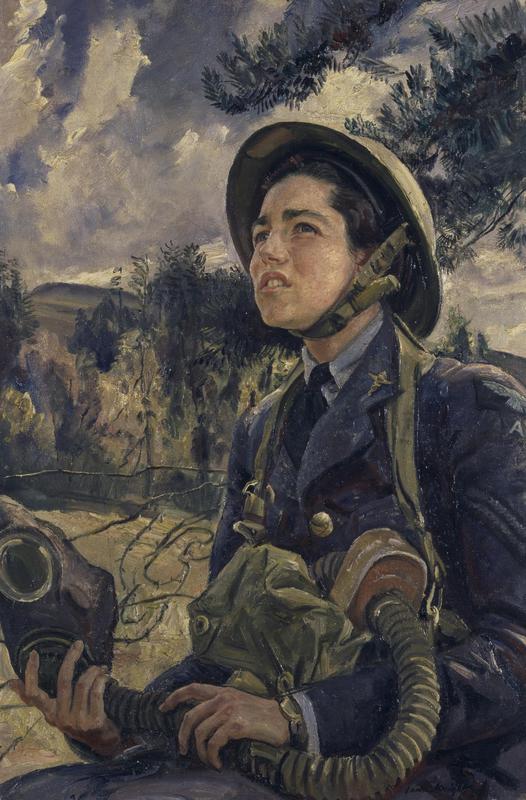
Corporal_J.D.M_Pearson,_GC,_WAAF_(1940)_(Art._IWM_ART_LD_626)About this image via Wikipedia:

A three- quarters length portrait of Corporal J. D. M. Pearson, GC, WAAF (1940) – shows Corporal Daphne Pearson of the Women’s Auxiliary Air Force, WAAF, a recipient of the Empire Gallantry Medal, later exchanged for the George Cross. Although Pearson, at Knight’s insistence, sat for the portrait holding a rifle, the finished painting shows her holding a respirator. As WAAF personal were not allowed to carry arms on duty, Knight had to paint over the rifle. [1]

Joan Daphne Mary PearsonGC (25 May 1911 – 25 July 2000) was a Women’s Auxiliary Air Force officer during the Second World War and one of only thirteen women recipients of the George Cross, the highest decoration for gallantry not in the face of an enemy that can, or could, be awarded to a citizen of the United Kingdom or commonwealth.

Pearson joined the Women’s Auxiliary Air Force (WAAF) as a medical orderly shortly after the outbreak of the Second World War in 1939.

In the early hours of the morning on 31 May 1940, Avro Anson bomber R3389 of No. 500 Squadron RAF undershot on approach to an airstrip near the WAAF quarters in DetlingKent, crashing into a field. Upon landing, a bomb exploded, killing the navigator instantly, and leaving the pilot seriously injured. Corporal Pearson entered the burning fuselage, released the pilot from his harness and removed him from the immediate area around the aircraft. After she was 27 metres (30 yards) from the aircraft, a bomb exploded. She flung herself on top of the pilot to protect him. After medical staff had removed the pilot, she went back to the plane to look for the fourth crew member, the radio operator. She found him dead. For her deeds, Pearson was awarded the Empire Gallantry Medal (EGM). [2]

About the Artist, via Wikipedia:

Dame Laura Knight, (née Johnson), DBE RA RWS (4 August 1877 – 7 July 1970) was an English artist who worked in oils, watercolors, etching, engraving and drypoint. Knight was a painter in the figurative, realist tradition, who embraced English Impressionism. In her long career, Knight was among the most successful and popular painters in Britain. Her success in the male-dominated British art establishment paved the way for greater status and recognition for women artists.

In 1929 she was created a Dame, and in 1936 became the first woman elected to full membership of the Royal Academy. Her large retrospective exhibition at the Royal Academy in 1965 was the first for a woman. Knight was known for painting amidst the world of the theatre and ballet in London, and for being a war artist during the Second World War. She was also greatly interested in, and inspired by, marginalized communities and individuals, including Gypsies and circus performers. [1]


Credits and Attributions:

File:Corporal J.D.M Pearson, GC, WAAF (1940) (Art. IWM ART LD 626).jpg|

[1] Wikipedia contributors, “Laura Knight,” Wikipedia, The Free Encyclopedia, https://en.wikipedia.org/w/index.php?title=Laura_Knight&oldid=1019091508 (accessed April 29, 2021).

[2] Wikipedia contributors, “Daphne Pearson,” Wikipedia, The Free Encyclopedia, https://en.wikipedia.org/w/index.php?title=Daphne_Pearson&oldid=1000936279 (accessed April 29, 2021).

Comments Off on #FineArtFriday: Corporal J.D.M Pearson GC (WAAF) by Dame Laura Knight 1940

Filed under #FineArtFriday

Character Creation: The Character Arc #amwriting

We’ve discussed the many different aspects of our characters and the roles they have within the story. Some will be the hero, others a sidekick, and still others will be the villain. 

WritingCraftSeries_character-arcEach character should have an arc of growth and change as the story progresses. Heroes that arrive fully formed on page one are boring. For me, the characters are the story, and the events of the piece exist only to force growth upon them.
How people are changed by their experiences is what makes the story compelling.

Many times, the protagonist begins in a place of comfort. They’re a little naïve about the rougher aspects of life. Consider Bilbo Baggins, Tolkien’s protagonist in The Hobbit.

Bilbo begins in a middle-class place of comfort. He lives in his family’s home, a comfortable, well-kept place. Bilbo has inherited a private income and has no need to work, so he devotes his time to writing and entertaining his close friends. He’s a little bored with his existence, but he’s a sensible hobbit and refuses to admit to it.

This is our hero in his comfort zone. He’s not unhappy and could have lived to the end of his days going along as he was. But he would never have developed any further as a person. He was stagnating and didn’t know it.

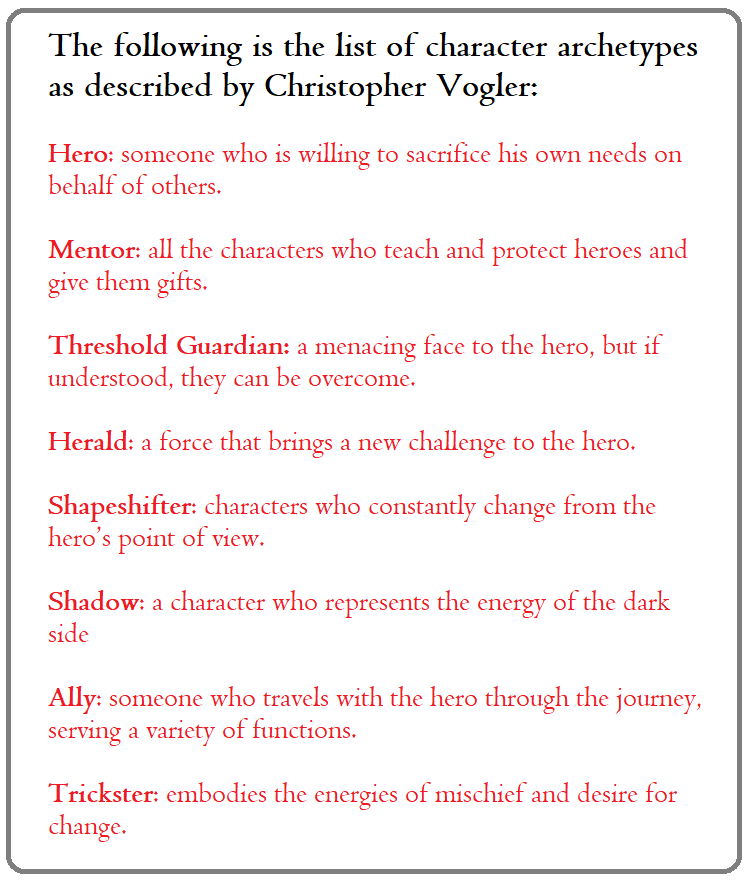
One sunny day, he’s just enjoying himself when along comes “the inciting incident”—Gandalf, a character who plays multiple roles within the Lord of the Rings story arc. In his first guise, Gandalf has the archetypal role of Herald. He is the bringer of change and unwanted dinner guests.

(The list of archetypes is shown in a picture at the bottom of this page—feel free to right-click and save it for your own files.)

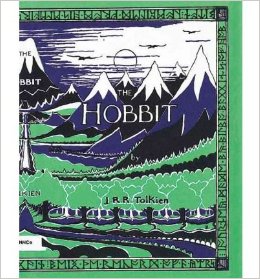
the hobbitBilbo resents both the intrusion and being made aware of how bored he is. Secretly, he fears going into the unknown and resists Gandalf’s insistence that he must go with the dwarves. However, at the last minute, Bilbo realizes that if he doesn’t go now, he will always wonder what would have happened if he had.
Bilbo’s sudden irrational decision to accept the task of Burglar sets him on a path that becomes a personal pilgrimage, a search for the courage he always possessed but had never needed.

Fear of stagnation has overcome Bilbo’s fear of the unknown.

This begins the journey and events that shape Bilbo’s character arc. By the end of the novel, he has recognized and embraced the romantic, fanciful, and adventurous aspects of his nature. In the process, he discovers that he is competent and capable of bravery, winning respect by applying his wits and common sense to every problem.

People undertake pilgrimages for many reasons, often in search of moral or spiritual wisdom. Sometimes they will go to a location that has significance to their beliefs and faith. Other times, it will be an inner, symbolic journey, a delving into their own principles and values. One is always changed by the journey.

Events in themselves don’t change us. We are changed by what we learn as human beings, by experiencing how incidents and occurrences affect our emotions and challenge our values. Everyone perceives things in a unique way and is affected differently from their companions.

Each person grows and develops in a way that is distinctively them. Some people become hardened, world-weary. Others become more compassionate, forgiving.

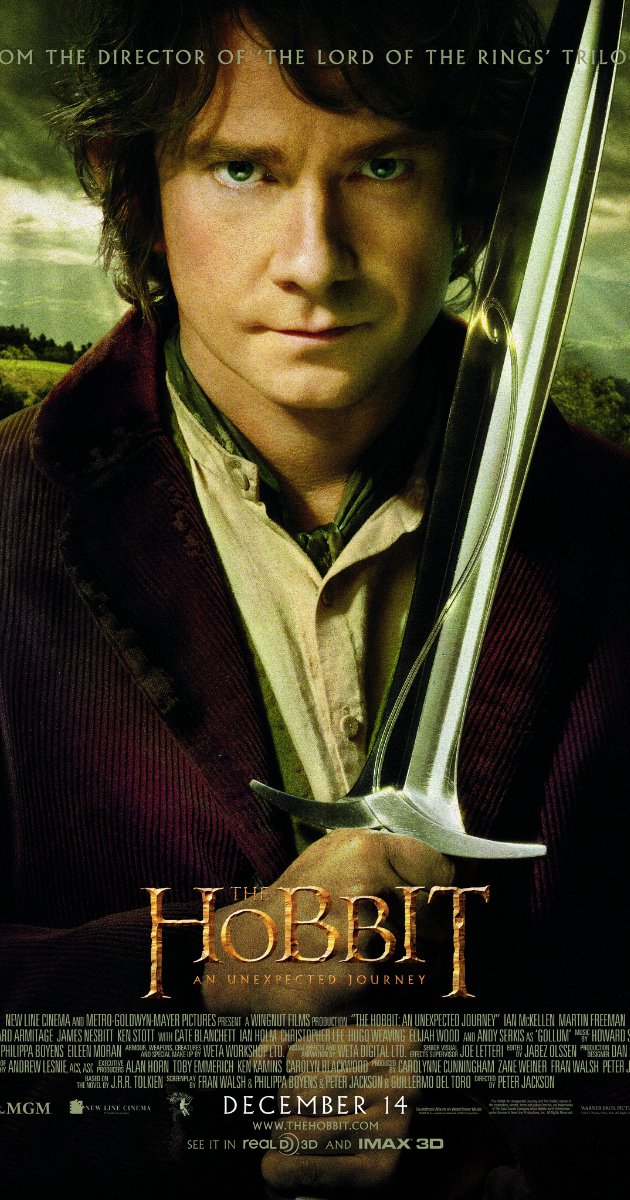
the hobbit movie posterOver the next year, Bilbo experiences many things. Where once he was a little xenophobic and slightly disdainful of anything not of The Shire, he discovers that other cultures are as valuable as his, meeting people of different races whom he comes to love and trust. He experiences the loss of friends and gains compassion. By the time Bilbo returns to the Shire, he is a different person than he was when he ran out his front door without even a handkerchief.
A character arc should encompass several stages of personal growth. What those stages are is up to you and depend on the story you are telling.

In one of my current works in progress, my protagonist is a soldier of the Bull God’s world of Serende, an enemy sworn to conquer the goddess’s world of Neveyah. He has a religious conversion, and his story takes him on a journey that is both physical and spiritual.

Whether we write fantasy, literary fiction, comedy, sci-fi, or romance—our characters must be changed by their experiences. How they are changed is up to you, but stories and series where the protagonists are unaffected by what they have experienced fail to excite me.

The works that endure are those in which the events are the catalysts of personal growth for the reader as well as the protagonist.

Personal growth creates unforgettable characters. Great characters are why certain novels are considered classics despite having been written more than one or two centuries ago.

Wuthering Heights by Emily Bronte – Wikipedia

A Christmas Carol by Charles Dickens – Wikipedia

The Hobbit by J.R.R. Tolkien – Wikipedia

ListOf ArchetypesVoglerLIRF04272021


Credits and Attributions:

Dustcover of the first edition of The Hobbit, taken from a design by the author, J.R.R. Tolkien.

The Hobbit – An Unexpected Journey, Theatrical release poster © 2012 New Line Cinema, Metro-Goldwyn-Mayer, WingNut Films, Distributed by Warner Bros. Pictures, Fair Use.

5 Comments

Filed under writing