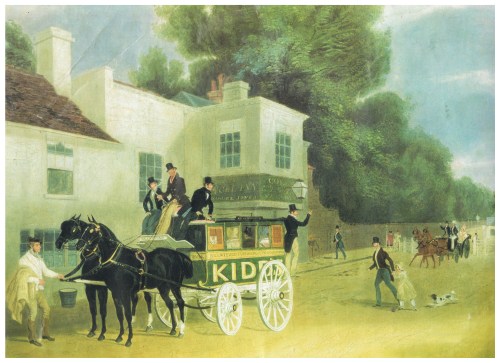
#FineArtFriday: Kidd’s Omnibus outside the Angel Inn, Brentford, c. 1840, by James Pollard

Title: Kidd’s Omnibus Outside the Angel Inn, Brentford

Artist: James Pollard

Genre: Genre Calendar Illustrations

Medium: Aquatint

Date: circa 1840 [1]

Today’s Fine Art Friday offering is Genre Art, a scene originally published in a calendar. In most working class homes, the only secular art that was hung on the walls were prints, many of which originated in calendars, as most people couldn’t afford to buy original art.

Since the mid-1700s, printed wall calendars have historically been a good source of advertising for small to large businesses. To this day, many supermarkets and hardware companies give illustrated wall calendars away for free to customers as promotional merchandise.

About the Artist, via artnet and Wikipedia:

James Pollard was a British painter best known for his depictions of horse-drawn carriages, fox hunting, and other equestrian scenes. Born in 1792 in Islington, United Kingdom to the painter and publisher Robert Pollard the Elder, he went on to work for his father’s firm as a draftsman and engraver. While working for his father, he was commissioned by a print seller named Edward Orme to paint an inn’s signboard, which would depict a mail-coach with horses and passengers. This commission launched the artist’s career, for the signpost was seen by many prospective patrons. Pollard went on to exhibit his work at the Royal Academy and the British Institution in London. Today, his works are in the collections of the Art Institute of Chicago, the National Gallery of Art in Washington, D.C., the Tate Gallery in London, and the Denver Art Museum, among others. Pollard died in 1867 in London, United Kingdom. [2]

Between 1821 and 1839, James Pollard exhibited at the Royal Academy. He exhibited at the British Institution in 1824 and 1844. During his career, he also worked with John Frederick Herring, Sr. on several horse racing paintings in which he painted the backgrounds and spectators while Herring painted the horses. [3]

What I like about this image:

This painting of Kidd’s Omnibus was created for a circa 1840 calendar by James Pollard, who was considered an adequate draftsman and illustrator in his day. It was most likely printed in his father, painter and publisher, Robert Pollard’s, printshop, as he was his father’s primary illustrator. [4]

In this illustration, we see the historical origination of urban public transportation – the Horsebus, or Omnibus. We have shortened the term to just ‘bus’ in the context of public transportation. Most  omnibuses were like cabs, in that they were owned by the drivers. However, since the drivers plied their trade on a regular route, they could carry more people. They could charge a lesser fare that the working class could afford, and still make a living.

According to Wikipedia:

horse-bus or horse-drawn omnibus was a large, enclosed and sprung horse-drawn vehicle used for passenger transport before the introduction of motor vehicles. It was mainly used in the late 19th century in both the United States and Europe and was one of the most common means of transportation in cities. In a typical arrangement, two wooden benches along the sides of the passenger cabin held several sitting passengers facing each other. The driver sat on a separate, front-facing bench, typically in an elevated position outside the passengers’ enclosed cabin. In the main age of horse buses, many of them were double-decker buses. On the upper deck, which was uncovered, the longitudinal benches were arranged back to back. [5]


Credits and Attributions

[1] Kidd’s Omnibus outside the Angel Inn, Brentford, c. 1840, by James Pollard, via Wikimedia Commons contributors, “File:Kidd’s Omnibus outside the Angel Inn, Brentford, c. 1840, by James Pollard.jpg,” Wikimedia Commons, the free media repository, https://commons.wikimedia.org/w/index.php?title=File:Kidd%27s_Omnibus_outside_the_Angel_Inn,_Brentford,_c._1840,_by_James_Pollard.jpg&oldid=195379488 (accessed July 23, 2020).

James Pollard (Life time: (1792–1867) – Transferred from en.wikipedia to Commons. (Original text: Original publication: UK Immediate source: Sammlung Fane de Salis: ephemera, from an old calendar.) This work is in the public domain in the United States because it was published (or registered with the U.S. Copyright Office) before January 1, 1925.

[2] James Pollard, Biography, artnet contributor, via artnet: http://www.artnet.com/artists/james-pollard/ accessed 23 July 2020.

[3] James Pollard, Wikipedia contributors, “James Pollard,” Wikipedia, The Free Encyclopedia, https://en.wikipedia.org/w/index.php?title=James_Pollard&oldid=838787787 (accessed July 23, 2020).

[4] Wikipedia contributors, “Robert Pollard (engraver),” Wikipedia, The Free Encyclopedia, https://en.wikipedia.org/w/index.php?title=Robert_Pollard_(engraver)&oldid=918903796 (accessed July 23, 2020).

[5] Wikipedia contributors, “Horsebus,” Wikipedia, The Free Encyclopedia, https://en.wikipedia.org/w/index.php?title=Horsebus&oldid=956355839 (accessed July 23, 2020).
 

Comments Off on #FineArtFriday: Kidd’s Omnibus outside the Angel Inn, Brentford, c. 1840, by James Pollard

Filed under #FineArtFriday

The Character Arc part 4 #amwritng

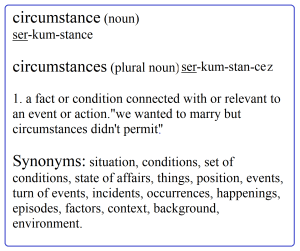
Today in our focus on writing, we’re talking about circumstances (situations) our characters find themselves in and how they are shaped by them. We’re delving a little deeper into our discussion of the Character Arc, which was begun last week.

Part 1

Part 2

Part 3

We met Dave, a hapless accountant whose moment of madness in “paying it forward” and purchasing a stranger’s lunch has led to his being taken hostage and forced to become a spy.

What does Dave want more than anything? He wants the Agents who kidnapped him to let him go home.

After the inciting incident, Dave must want nothing more than to achieve that objective.

So how do his circumstances reshape his personality? After all, we have a character arc here, not a flat line.

Let’s look at the plot outline:

On page one, Dave-the-accountant is shown in his ordinary world. He likes who he is and sees nothing wrong with his existence. We see a man who is only sure of himself when numbers are involved and see him in his office where he is working his way up the corporate ladder. The only thing Dave does well is straightening out tangled financial reports, and he is brilliant at that.

People like Dave, as he’s a good listener. However, he rarely volunteers anything conversationally because he has nothing of interest to contribute unless they are discussing accounting. He receives an unexpected bonus for having done well in getting one of their high-profile clients off the hook with the IRS.

Usually, Dave buys a sandwich from the machine in the employee lounge and eats at his desk while he works. But receiving the bonus calls for a little celebration. He tells the receptionist he’s going out for lunch and walks down the street to a café he has passed every day but never entered.

On page three, Dave does a random act of kindness that does not go unpunished. After he’s seated, Dave notices a striking woman. He imagines what it would be like to be a suave man of the world, wishing he were bold enough to introduce himself to her. He pictures her inviting him to dine with her.

Even though he is sure the woman wouldn’t give him the time of day, Dave suddenly chooses to “pay it forward” by purchasing her lunch when he pays for his.

He leaves the café before she finds out what he’s done, mentally berating himself for being such a coward.

5,000 words into the story, Dave-the-accountant has become Dave-the-kidnap-victim. Unbeknownst to Dave, the woman he was so taken with is a well-known double agent. Because he acted on the wild notion to pay for her lunch, he has drawn the attention of the people who were following her.

Two days later, as he walks to work, a white limousine pulls up alongside him. Four men in dark suits hustle him into the backseat. Here, the story can go in several directions, but in all of them, Dave must make choices that will change his life.

The next event happens 10,000 words into the story. Dave’s kidnappers realize he is not a double agent, but decide he is useful anyway. He’s an unremarkable person, a man who doesn’t stand out in a crowd. His ability to see the patterns in financial numbers is just the skill they need to nail a criminal they’ve been trying to get evidence on for years.

What does Dave fear? At first, he fears he’s going to die, but as time goes on, he fears he will lose his job.

15,000 words into the story, Dave agrees to do what the Secret Service wants, on the promise he will be allowed to go home and won’t lose his job over it.

Getting back to the security of his comfortable middle-class life becomes Dave’s primary goal. Every scene and conversation will push him closer to either attaining that goal or discovering a new purpose.

25,000 words into the story, Dave learns that, despite their glib assurances, the government was not “there to help” him. He has lost his job and barely manages to keep his apartment. The agents have one more task for him, and he’s desperate to not have to dig into his retirement funds, so he agrees to it.

45,000 words into the story, Dave is in a tough situation, trying to get evidence on an extremely dangerous person. He has lost faith in himself and the people he trusted but can’t turn back now, as he is in a situation that will get him killed if he’s discovered.

60,000 words to the end – In completing that last task and going back to his old world, Dave finds he is no longer happy as an unassuming accountant. He’s seen what is out there in the world, and no longer fits in his old corporate life.

Each event pushes Dave a little further out of his comfort zone. He has to become an actor, but in doing so, he realizes he’s been acting all his life. How does this new awareness change him?

No one can go through these sometimes traumatic and terrifying events and not be changed by them.

Many different endings are possible, some of which could lead to another book.

This was the scenario for a mystery/thriller of sorts. Still, the principle of events forcing change on the protagonist’s character arc is universal across all genres.

Dave’s character arc is driven by the desire to go back to the comfort of his old life. Nothing evokes such longing in a person as the memory of home, a place where they were happy and secure.

That longing for a time that no longer exists, and which may never have been as wonderful as we recall, is a good theme that fits well into any genre. Trying to achieve the unobtainable opens the story up to myriad possibilities, all of which should force growth or change upon the characters.

When I look back at the books that moved me, the catalyst for my emotional attachment was the characters, way more than the events, the setting, or the genre. What drew me to these imaginary people was the way they were affected by the events they lived through.

I remained invested in them to the very end of the book. That, to me, is the mark of good writing.

5 Comments

Filed under writing

The Character Arc, part 3 #amwriting

Today in our focus on writing, we’re continuing our discussion of the Character Arc, which was begun last week.

Part 1 Posted on Monday July 13, 2020

Part 2 Posted on Wednesday July 15, 2020

Today we’re talking about circumstances (situations) our characters find themselves in, and how their view of “self” is shaped by them.

But first, maybe you’re a writer like me, one who needs a few notes and a loose outline help me get the manuscript started.

Many writers work at a day job, and using the note-taking app on the cellphone during work hours is frowned on. If you are in that category and you are not working from home, you can go old-school with a pocket-sized notebook, and write those ideas down.

That way, you can unobtrusively make notes whenever you have an idea that would work well in your story, and you won’t appear distracted or off-task.

Once you have assembled your random ideas, and maybe even written a chapter or two, it’s time to think about who the characters are and how they react to their circumstances.

At the outset of the story, we meet our protagonist and see him/her in their normal surroundings.

Once we have met them and seen them in their comfort zone, an event occurs, which is the inciting incident. This is an occurrence that falls in the first chapters of the story, forcing the protagonist out of their usual circumstances. It hooks the reader and is the first point of no return.

The protagonist, in those opening paragraphs, has been shaped by the situation and lifestyle in which they are accustomed to living.

We’re going to plot a mystery with an eye toward how the protagonist is changed by their circumstances. If it seems familiar, it’s because this is a scenario I’ve used before:

The story opens when Dave, an unmarried accountant, has received an unexpected bonus and splurges on lunch in a restaurant. He sees a woman from across the café and develops a small, instant infatuation. He wishes he were brave enough to walk up and introduce himself.

What is the action he would do that falls within his comfort zone? What would he spontaneously do that is unusually bold for him?

Perhaps he chooses to secretly “pay-it-forward,” buying her lunch when he pays for his own on his way out. You must show him as a shy person not given to speaking to women he doesn’t know, much less buying their lunch.

So, this act is a bold one for Dave, and it must change his life.

Because he acted on the wild notion to pay for her lunch, he draws the attention of the people who were following her. These people operate on a level a mere accountant wouldn’t know exists.

To them, that act of buying her lunch was a secret code. They decide that Dave is a spy posing as an accountant. Unbeknownst to Dave, who goes about his life as he always does, regretting only that he didn’t dare to say hello to the woman, his every move is now on their radar.

His habitual routine is now interpreted according to a very different set of rules, by people who live and breathe conspiracy theories.

Buying a stranger lunch was the inciting incident. Everything that happens from here on occurs because of that innocent act.

This is where Dave is thrown out of his comfort zone and into the situation that is the core idea of our plot. For the rest of the novel, his circumstances will transform his way of thinking.

Two days later, as he walks to work, a white limousine pulls up alongside him. Four men in dark suits hustle him into the backseat. He is forced at gunpoint onto a plane bound for Oslo, Norway, handcuffed to a suitcase. The only other key that can remove the handcuffs is at the American Embassy in the custody of a mysterious woman, Lisa Desmond.

This is the new circumstance in which our protagonist finds himself as a result of the inciting incident.

How does Dave react to his kidnapping and what is his physical condition at the moment he is kidnapped?

How does Dave change his situation for better or worse?

How do the antagonistic forces react when they discover he is not a spy but is just an accountant who is now in danger of losing his job?

This is where we discover who the woman in the café really is and what role she will play in Dave’s new life as an unwilling spy.

Everything you will write from the point of the inciting incident to the last page will detail Dave’s quest and how the circumstances he finds himself in as each scene progresses shape his view of himself.

For a writer, winging it in short bursts can be exhilarating. Still, my years of experience with NaNoWriMo has taught me that writing by the seat of my pants for extended lengths of time only works until I run out of ideas for what to do next.

With a simple outline, I don’t become desperate and start writing random bunny trails to nowhere into the plot.

DISCLAIMER: This does NOT apply to anything written during November and National Novel Writing Month (NaNoWriMo). By day ten, I will have written an incredible number of events-to-nowhere into the manuscript. These are things that have nothing at all in common with the original story. However, I volunteer as a Municipal Liaison, so during NaNoWriMo, I must get my word-count. I write some crazy things during NaNoWriMo.

But I won’t trash them.

In December, I cut them and paste them into a separate document. I save those outtakes in my ‘idea file.’

Some of the prose will be good, and with a few minor changes (names, places), these outtakes are the seeds from which other stories grow.

I will post the fourth and final installment in The Character Arc series on Wednesday. Through the events that form the arc of the plot, Dave’s character arc becomes more defined. He becomes more decisive and able to act in the open as opposed to remaining hidden.

At first, Dave just wants to get rid of the suitcase and go back to his job. He wants that desperately and believes that somehow it will happen. On Wednesday, we will delve more deeply into Dave’s objectives.

We will explore how setting goals and working to achieve them gives Dave more control over his circumstances and forces him to become a bolder person.


Credits and Attributions

Eye on Flat Panel Monitor,  Image by Royalty-Free/Corbis © 2013

7 Comments

Filed under writing

#FineArtFriday: Forest Landscape by Jan Brueghel the Elder

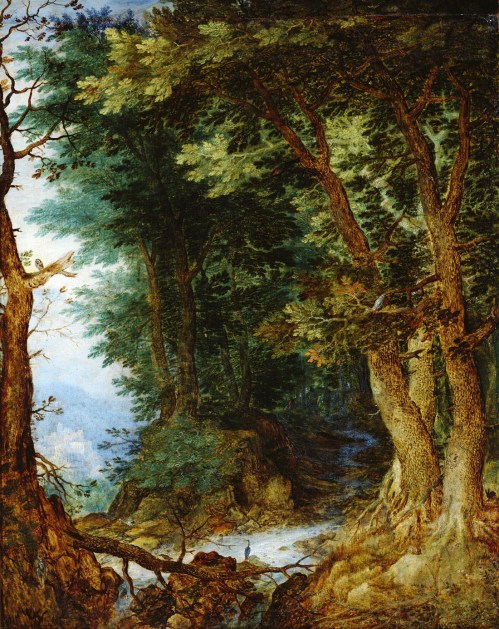
Title: Forest landscape

Artist: Jan Brueghel the Elder

Genre: landscape art

Date: between circa 1605 and circa 1610

Medium: oil on oak panel

Dimensions: 40 x 32 cm

What I love about this painting:

Today’s Fine Art Friday offering is a further exploration of the works of the Flemish artist, Jan Brueghel the Elder. I began this two part series last Friday with his painting, the Great Fish Market.

The level of detail down to the leaves and the bark on the trees is amazing, but the rich colors are what attracted me, drawing me in. The heron on the rock seems poised to take flight.  Beyond the heron, on the other side of the creek, a path leads deeper into the forest, calling to us to cross over and see where it leads. The scene is beautiful the way a fantasy is, likely because it is, in a way. Brueghel most probably painted it from sketches and memory.

I quoted this last week when discussing the Great Fish Market, but it bears repeating:

“In his forest landscapes Brueghel depicted heavily wooded glades in which he captured the verdant density, and even mystery, of the forest. Although on occasion inhabited by humans and animals, these forest scenes contain dark recesses, virtually no open sky and no outlet for the eye to penetrate beyond the thick trees.” via Wikipedia.

In many ways, Jan Brueghel’s paradise landscapes paved the way for the great plein air painters of the 18th and 19th centuries. This is most definitely a Mannerist landscape painting, as it is highly romanticized.

About the Artist, via Wikipedia:

Jan Brueghel (also Bruegel or Breughelthe Elder  (1568 – 13 January 1625) was a Flemish painter and draughtsman. He was the son of the eminent Flemish Renaissance painter Pieter Brueghel the Elder. A close friend and frequent collaborator with Peter Paul Rubens, the two artists were the leading Flemish painters in the first three decades of the 17th century.

Brueghel worked in many genres including history paintings, flower still lifes, allegorical and mythological scenes, landscapes and seascapes, hunting pieces, village scenes, battle scenes and scenes of hellfire and the underworld.

He was an important innovator who invented new types of paintings such as flower garland paintings, paradise landscapes, and gallery paintings in the first quarter of the 17th century.

He also created genre paintings that were imitations, pastiches and reworkings of his father’s works, in particular his father’s genre scenes and landscapes with peasants.  Brueghel represented the type of the pictor doctus, the erudite painter whose works are informed by the religious motifs and aspirations of the Catholic Counter-Reformation as well as the scientific revolution with its interest in accurate description and classification.  He was court painter of the Archduke and Duchess Albrecht and Isabella, the governors of the Habsburg Netherlands.

The artist was nicknamed “Velvet” Brueghel, “Flower” Brueghel, and “Paradise” Brueghel. The first is believed to have been given him because of his mastery in the rendering of fabrics. The second nickname is a reference to his specialization in flower still lifes and the last one to his invention of the genre of the paradise landscape.


Credits and Attributions:

Forest Landscape by Jan Brueghel the Elder / Public domain

Wikipedia contributors, “Jan Brueghel the Elder,” Wikipedia, The Free Encyclopedia, https://en.wikipedia.org/w/index.php?title=Jan_Brueghel_the_Elder&oldid=963723468 (accessed July 17, 2020).

Wikimedia Commons contributors, “File:Jan Brueghel (I) – Forest landscape.jpg,” Wikimedia Commons, the free media repository, https://commons.wikimedia.org/w/index.php?title=File:Jan_Brueghel_(I)_-_Forest_landscape.jpg&oldid=354133728 (accessed July 17, 2020).

Comments Off on #FineArtFriday: Forest Landscape by Jan Brueghel the Elder

Filed under #FineArtFriday

The Character Arc part 2 #amwriting

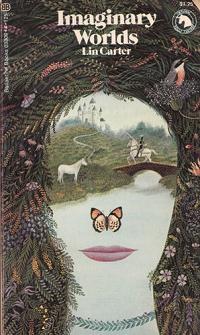
I received much of my early education from Ballantine Books’ Adult Fantasy Series. These were readily available through Doubleday’s Science Fiction Book Club (books by mail) or at the drug store in the paperback section.

When I was in the fifth grade, I read The Hobbit for the first time. Bilbo was real to me, and when you ask others who are dedicated fans of Tolkien, they will tell you that it is his characters that make his stories so epic.

While I will read nearly anything you put in front of me, Tolkien got me hooked on high fantasy, and I went out of my way to find it after that.

So, what is high fantasy? Wikipedia says, “High fantasy or epic fantasy is a subgenre of fantasy,[1] defined either by the epic nature of its setting or by the epic stature of its charactersthemes, or plot.[2] The term “high fantasy” was coined by Lloyd Alexander in a 1971 essay, “High Fantasy and Heroic Romance.”

Other than the works of Tolkien and C.S. Lewis, high fantasy wasn’t easy to find back in the early days, and a lot of what was out there was difficult to read.

But lighter fantasy was beginning to emerge in speculative fiction,

I read Anne McCaffrey’s sci-fi fantasy Dragon Riders of Pern series to the point that I wore out three copies each of her first six books in the series.

What makes a reader purchase and re-read a book to the point that she would wear out several copies of it?

The characters.

Sure, the dragons were great, and the setting was amazing, but the characters became my dearest friends as we moved through the events of their story.

McCaffrey’s characters were strong, brave, romantic—and the protagonists were most often competent women. They had a character arc that took them from a place of weakness to a place of strength.

Another series of books that influenced me as a young adult were Niel Hancock’s Atlanton Earth series. That series opens with “Greyfax Grimwald,” and is an exploration of the Buddhist interpretation of the cycle of life and death. War is the great evil, and the threat of war is a thread that runs throughout the series.

Some critics have trivialized Hancock’s books as “commodified fantasy.” Still, I enjoyed them for the often brilliant prose as much as for the deeper themes. Otter and Bear were endearing characters, people whose thoughts and emotions felt engrossing and real to me.

These were books where the storyline followed the hero’s journey. In each, the protagonists came to a point where they lost their faith or had a crisis of conscience.

This point of personal crisis was where I, as a reader, discovered who they really were as human beings.

In reading these stories, I absorbed one of the basic principles of storytelling: A flawed hero is far more relatable than a perfect hero.

In looking back at my favorite books, a sense of danger, an unavoidable threat, was evident from the opening pages. How the characters reacted to that event felt unpredictable because the authors gave them agency.

As I discussed in my previous post, agency is the ability your character has to surprise you when you are writing them and their reactions. They seem to drive the keyboard, making their own choices.

When our characters are faced with an unavoidable threat that removes the option of going about life as usual, we should give them agency. This leaves them with several consequential choices, many of which will be made in stressful situations.

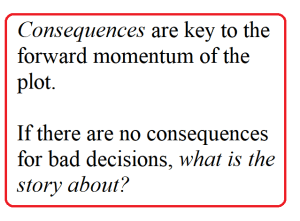
I have used the word consequential before as relating to the choices your characters must make. I chose that word intentionally. When there are no consequences for bad decisions a character might make, what is the story about?

My roots aren’t only in high fantasy—I love a good cozy mystery as much as anyone. In a cozy mystery, getting to know the main character as a friend is central to the story. The events that ensue are a means to further explore the life of the protagonist.

Why would a random trip to a convenience store interest a reader if something out of the ordinary does not occur? After all—we go out for bread every day, and it’s not too exciting. Frankly, I’m not interested in reading about Amy buying a loaf of bread. But make her the witness to a robbery and things begin to get interesting. Better yet, give her options:

  1. She can hide and wait for the intruders to leave.
  2. She can decide to be a hero.
  3. What other options does Amy have? What does she see when she looks around the store?

Whatever Amy chooses to do, there will be consequences. If things go awry, she could become a hostage. If she goes unnoticed but tells the police what she knows, she and her family could be in danger.

Once she is in the middle of these consequences, Amy will have more crisis points to face, and a lack of bread will only be one of them. She will have many decisions to make, and each choice will drive the plot.

The results of her decisions will change her outlook on life and give her wisdom she wouldn’t have had without those experiences.

At the end of the story, Amy will be more outgoing, surer of herself, and willing to step outside of her usual, rather boring, bubble of security.

The obstacles your characters face and the choices they make in those situations are the story. Giving your characters an active role and allowing them agency is what makes them human.

I recommend that in the first draft, you use all the adverbs and modifiers you need because you must get the idea down before you forget it. The first draft is where we take an idea, a “what if” moment, and give it form on paper.

When it is finished, the first draft is basically made up of sections of brilliance interspersed with a catalog of events: who did what, where they did it, and why. These adverbs and modifiers are your guideposts, prose you will remove and make active later, but getting the raw concept on paper is the crucial thing at this stage.

At the outset, giving my characters agency is challenging. This is because, in the first draft, the protagonist and his motives are still somewhat unformed.

In one of my current works-in-progress, my main character has been put through a personal death of sorts. His world has been shaken to the foundations, and he no longer has faith in himself or the people he once looked up to.

This low point is a crucial part of the hero’s journey.

If you are stuck with a character you can’t figure out, ask yourself what personal revelations come out about the protagonist, or conversely, what does he discover about himself?

How are they emotionally destroyed by the events?

How was their own personal weakness responsible for this turn of events?

How does this cause them to question everything they ever believed in?

What makes them pull themselves together and just keep on going?

How are they different after this personal death and rebirth event?

This is where he is taken down to his component parts emotionally and rebuilds himself to be more than he ever believed he could be.

By the time you finish writing the lowest point of your protagonist’s life, you should have come to know them and how they will react in any given situation.

When your characters are real to you, that feeling will come across in your writing.

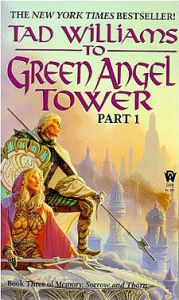
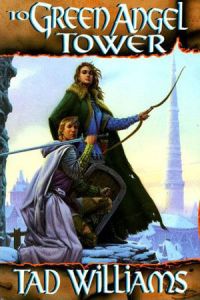
I have shown the covers of both halves of the final book in the high fantasy series by Tad Williams that shaped my early style of writing. Tad writes literate fantasy that is both epic and relatable. His characters are brilliantly portrayed–raw, human, and not perfect:

Memory, Sorrow, and Thorn


Credits and Attributions:

Wikipedia contributors, “High fantasy,” Wikipedia, The Free Encyclopedia, https://en.wikipedia.org/w/index.php?title=High_fantasy&oldid=967547546 (accessed July 14, 2020).

Front cover art for the book Imaginary Worlds – the Art of Fantasy written by Lin CarterBallantine Books, 1973 Cover artist, Gervasio Gallardo. Fair Use.

2 Comments

Filed under writing

The Character Arc part 1 #amwriting

We who write fiction spend a lot of time plotting the events a character will go through. We may write to an outline, or we might keep it in our head, but most of the action is usually known before we write it.

Even if you don’t plot in the traditional sense of the word, you should give some advance consideration to character development.

The term character arc is used to describe the personal growth and transformation of a character throughout a story. In narratives with a strong character arc, the protagonist begins as one sort of person. Through the events they experience, they are transformed. Often the change is for the better, but sometimes they change for the worse.

Great writing contrasts the relative security of the characters’ lives as they were in the opening paragraphs against the hazards of their life when they are in the midst of change.

Give me the book that immerses me in the uncertainty, fear, and anger—let me experience the emotional journey as well as the events of the narrative.

The novels that have the most influence on me as a writer are those that allow the reader to experience the characters’ journey.

These authors introduced me to characters who were multi-dimensional. They were people with a past and a present, and who hoped to survive long enough to enjoy a future.

In the opening act, the characters are introduced, and the scene is set. A great story evolves when the antagonist and protagonist are strong but not omnipotent. Both must have character arcs that show either

  1. Personal growth over the length of the story
  2. Stagnation or the inability to grow

Stagnation is a kind of death. This is a creative ploy to use for an antagonist who is unable to see their fatal flaw.

Each scene is an opportunity to advance the events of the story. But every small arc of action is also an opportunity to illuminate the motives of the characters.

The characters begin to be changed by the events they experience. How you show their emotional state is critical at this point because emotions engage readers. If you want a reader to experience the sense of crisis that you believe your story deserves, you must

  1. Foreshadow or hint at knowledge the characters don’t have, information that affects the outcome of the plot.

Very few people are evil for no reason at all. Sometimes they are likable, people who appear innocuous, even loving. If this is the case in your story, you need to insert small clues for the reader early on about the negative aspect of their personality. This is so that their despicable behavior isn’t seen as unexpected and contrived.

Fleshing out the antagonist and making their motives realistic is essential. They are as central to the story as the protagonist because their actions force change.

It’s important to remember that at no point in the narrative can people be sitting around idly chit-chatting about the changes they have been through in their life unless it affects the action at that moment.

Instead, they should be dealing with the consequences of the decisions they have just made and trying to make better plans.

Consequences are central to the forward momentum of the plot.

If consequences are to have meaning, motivations are crucial. What drives the characters to endure the results of their poor planning? What keeps them focused on achieving their goal?

Just as importantly, what will they NOT do? What is out of character for them? If you know that, you won’t muddy the narrative with look-alike and sound-alike characters.

The obstacles your characters face and the choices they make in those situations are the story.

Sometimes, in the first draft of my manuscripts, the motives of my protagonist haven’t quite come into focus for me. I tend to allow a character’s choices to push their personal growth, and then in a later draft, I have to sort out why they have made that decision.

Agency is the power of an individual to act independently. When we give the characters agency, we allow them to make their own free choices.

Giving your characters an active role and allowing them agency can make writing their story a joy. Remember, we write as much for ourselves as we do for a potential reader.

At times, I have a character I just can’t figure out. I make a character study, a personal history. Once I know their past, I understand what drives them and what triggers their emotions.

I then decide what personal revelations must come out about them in foreshadowing and figure out how to make it emerge organically.

In the character study, I ask the most important question of all: what does the character discover about herself?

When I have the answers about why, I look at the final event, the situation that ends the story to see if it passes the logic test. These people’s personal quirks and characteristics, their moral compass influenced the decisions that led them to that place.

Did I keep those clues distinct to each character, or was there a blurring of personalities within the group?

Most importantly, do my characters have recognizable motivations? Sure, we want to be subtle and not drop a ton of backstory on the reader. However, we can’t be too obscure in trying to keep the air of mystery.

If a beta reader can’t follow our protagonist’s reasoning, we haven’t done our job.

Creating intrigue yet making it believable is a balancing act.

Reading is the key. Every novel that leaves a mark on my heart has unique, individual characters that I can relate to.

When I stumble upon a book that engrosses me, I study that author’s work even if I don’t like one of their characters. I want to see how they fit the backstory into the narrative, ensuring their characters’ motivations made sense.

Their good writing habits help me improve in my own work. In my next post, I’m going to discuss the influence of novels that I once loved, and how they shaped my writing for good and for ill.

8 Comments

Filed under writing

#FineArtFriday: The Great Fish Market by Jan Brueghel the Elder 1603

Title: Great Fish Market

Artist: Jan Brueghel the Elder  (1568–1625)

Date: 1603

Medium: oil on canvas

Dimensions:  Height: 59 cm (23.2 in); Width: 92 cm (36.2 in)

Collection: Alte Pinakothek  Current location: room 19

Inscriptions: Signature and date, bottom left: BRVEGHEL 1603

What I love about this painting:

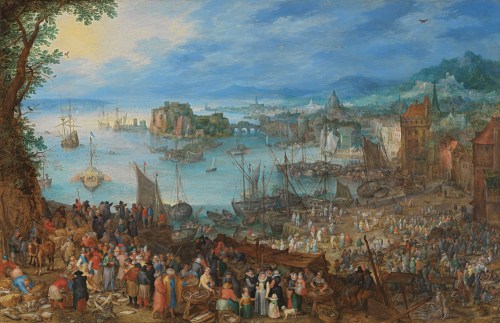
Here we see a composite of all the places Jan Brueghel the Elder had visited. The scene is a fusion of his Flemish homeland and impressions of places he’d sketched on his travels.

In the middle of the picture is the Neapolitan Castel dell’ Ovo, on the right, in the distance, is St. Peter’s Basilica in Rome. We have a little of Italy thrown in with the Flemish, his effort to create the feeling of a busy, prosperous market. He shows his imaginary city from a high perspective, the god-like view.

In writing, this would be the omniscient point of view.

The elements presented in this painting, the harborscape, the ruins, and even the sections that are simply landscapes are all features that later became genres in their own right.

The scene contains many elements of Mannerist landscape painting. According to the Tate website, mannerist is a sixteenth-century style of art and design characterized by artificiality, elegance, and an aesthetic portrayal of the human figure.

In other words, they painted fantasy. And why not?

Flemish genre painting is strongly tied to the traditions of Pieter Bruegel the Elder. It was a style that continued directly into the 17th century through copies and new compositions made by his sons Pieter Brueghel the Younger and Jan Brueghel the Elder.

In this painting, the story opens with a view across a downward-sloping foreground. It teems with life, hundreds of figures of many races, grouped around the stalls and booths of a fish market. The group at the center of the foreground is thought to be a self-portrait of the artist and his family. It was common for artists to insert self-portraits in their works, and Jan often included his family.

One of Jan Brueghel’s most significant contributions to the craft of painting landscapes was how he depicted perspective. The eye is drawn towards the harbor in the background. We look out across the bay, along the coastline, and see entire towns, with ruins, wharves, and castles. Beyond that, we see distant mountains, painted with a blue that merges with the blue of the sea.

This blending of shape and color into the distance is how a landscape appears in real life.

These painters, and the Brueghel family in particular, were the generation who paved the way for artists like Rembrandt. Their works were the foundation upon which the masterpieces of the middle-to-late 17th century were built.

About the Artist, via Wikipedia:

Jan Brueghel was the son of the eminent Flemish Renaissance painter Pieter Brueghel the Elder.  A close friend and frequent collaborator with Peter Paul Rubens, the two artists were the leading Flemish painters in the first three decades of the 17th century.

He was born in Brussels as the son of Pieter Brueghel the Elder and Maria Coecke van Aelst. His mother was the daughter of the prominent Flemish Renaissance artists Pieter Coecke van Aelst and Mayken Verhulst. His father died about a year after Jan’s birth in 1569. It is believed that after the death of his mother in 1578, Jan, together with his brother Pieter Brueghel the Younger and sister Marie, went to live with their grandmother Mayken Verhulst, who was by then widowed. Mayken Verhulst was an artist in her own right. The early Flemish biographer Karel van Mander wrote in his Schilder-boeck published in 1604 that Mayken was the first art teacher of her two grandsons. She taught them drawing and watercolor painting of miniatures. Jan and his brother may also have trained with local artists in Brussels who were active as tapestry designers.

Jan Brueghel the Elder is regarded as an important innovator of landscape art. By introducing greater naturalism in his Alpine mountain settings, his father had expanded on the world landscape tradition that had been founded mainly by Joachim Patinir. Some of Pieter the Elder’s works also foreshadowed the forest landscape that would start to dominate landscape painting around the turn of the 16th century. Pieter the Elder also developed the village and rural landscape, placing Flemish hamlets and farms in exotic prospects of mountains and river valleys.

Jan developed on the formula he learned from his father of arranging country figures traveling a road, which recedes into the distance. He emphasized the recession into space by carefully diminishing the scale of figures in the foreground, middle-ground, and far distance. To further the sense of atmospheric perspective, he used varying tones of brown, green, and blue progressively to characterize the recession of space. His landscapes with their vast depth are balanced through his attention to the peasant figures and their humble activities in the foreground.

Like his father, Jan Brueghel also painted various village landscapes. He used the surrounding landscapes as the stage for the crowds of anecdotal, colorfully dressed peasants who engage in various activities in the market, the country roads and during the rowdy kermesses. Jan Brueghel’s landscape paintings with their strong narrative elements and attention to detail had a significant influence on Flemish and Dutch landscape artists in the second decade of the 17th century. His river views were certainly known to painters working in Haarlem, including Esaias van de Velde and Willem Buytewech, whom Brueghel may have met there when he accompanied Peter Paul Rubens on a diplomatic mission to the Dutch Republic in 1613.

Jan Brueghel was, along with artists such as Gillis van Coninxloo one of the prime developers of the dense forest landscape in the 17th century. Jan Breughel in fact experimented with such works before Coninxloo’s first dated wooded landscape of 1598. In his forest landscapes Brueghel depicted heavily wooded glades in which he captured the verdant density, and even mystery, of the forest. Although on occasion inhabited by humans and animals, these forest scenes contain dark recesses, virtually no open sky and no outlet for the eye to penetrate beyond the thick trees.


Credits and Attributions:

Wikimedia Commons contributors, “File:Jan Brueghel the Elder-Great Fish market.jpg,” Wikimedia Commons, the free media repository, https://commons.wikimedia.org/w/index.php?title=File:Jan_Brueghel_the_Elder-Great_Fish_market.jpg&oldid=406069557 (accessed July 9, 2020).

Wikipedia contributors, “Jan Brueghel the Elder,” Wikipedia, The Free Encyclopedia, https://en.wikipedia.org/w/index.php?title=Jan_Brueghel_the_Elder&oldid=963723468 (accessed July 9, 2020).

1 Comment

Filed under #FineArtFriday

Need and Technology #worldbuilding #amwriting  

Need is an aspect of the world our characters inhabit.

The props we place in the setting our characters inhabit, the tools they use, the objects they must acquire – these things form a layer that grows out of need.

First, no matter what genre you are writing in, you must establish the level of technology. Whatever you do, don’t stray from it

The Romans had running water, central heating, and toilets in their homes. So did the Minoans. However modern-seeming their architectural creations were, they were low-tech.

In the environment of any genre, cups will be cups, bowls will be bowls. The materials they are made of might be different, but those items will always be needed. If you took a Minoan and transplanted them into modern-day Seattle, a bowl or cup would be instantly recognizable for what it is.

Furnishings will be similar from society to society—people need somewhere to sit or sleep, whether it is a pile of straw, cushions, or a bunk. They need a place to cook and somewhere to store preserved food:

  • A fire pit and baskets in a hut
  • A fireplace and shelves with baskets and clay jars in a cabin
  • A modern kitchen and pantry in a ranch house
  • A starship’s galley or food replicator

Settings are like Barbie clothes. The clothes of Soldier Barbie fit Corporate Barbie… and Malibu Barbie… and Star Wars Barbie. The outer garments might be changed for each genre but Barbie is still the protagonist.

We change settings to fit the genre, to create a setting with all the right tropes. Genre defines the visuals, but the characters are paper dolls we dress to fit the society we have placed them in.

You can take your protagonist and place them in one of three kinds of settings: fantasy, sci-fi, or contemporary, and they would still be who they are. In any setting, there are certain commonalities with only minor literary differences.

Take a soldier as an example. They need garments, weapons, armor, and sustenance. Those are tailored to fit your genre—sci-fi, fantasy, or contemporary military thriller. But you can also use those things to offer visual clues about your protagonist’s personality.

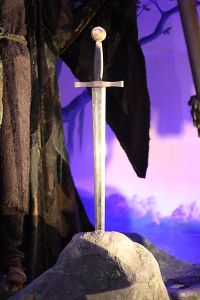
Whether the weapon is a rifle, a sword, or a phaser is dependent on the level of technology you have established.

Logic and the established level of technology determines how each need is met. In the case of weapons, you’ll find many varieties of each within each category.

Which kind of hand-held weapon your protagonist will use is dependent on their skill level and physical strength as well as what is stocked in the armory.

When it comes to weaponry, if you are writing about them, you need to research them to know what is logically possible. Within each genre, one thread remains the same: strength and skill are determining factors when it comes to weapons.

A cutlass is an efficient blade, but is shorter than a claymore. Also, a one-handed blade allows the wielder to carry a shield. In terms of firearms, a pistol weighs less than a machine-gun but isn’t as effective.

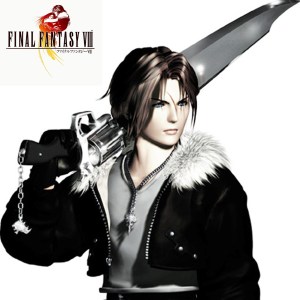
As many of you know, I’m an avid gamer. One of my all-time favorite games is Square-Enix’s 1999 Final Fantasy VIII, made for the PlayStation. It was challenging and fun to play, with entertaining side quests. I loved the music and the deep storyline. The characters were compelling and believable.

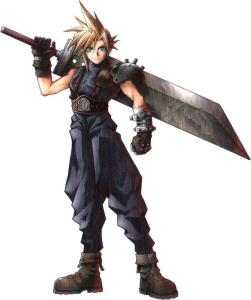
The one element that seemed illogical was Squall’s weapon, the Gunblade. Nevertheless, other fans loved it. However, while logic isn’t a thing when it comes to anime RPG weapons (witness Cloud’s Buster Sword in Final Fantasy VII), it must be considered if we want believability in our written work.

When it comes to weapons, it’s important that you research what might be most useful to your characters. Consider their strength and skills. Don’t introduce an illogical element, no matter how much you like it.

Writers of fantasy and historical fiction should do some fact checking:

Nerds on Earth’s Clave Jones says: So what would have kept a woman from wielding a longsword throughout history? Honestly, the only thing that kept more women from using swords is that they rarely got the training. It wasn’t the weight, certainly. And it wasn’t the awkwardness of the swing as swords were designed to be well-balanced and agile. [1]

Sci-fi writers, I suggest that for advanced weaponry, you should do the research into proposed future applications of lasers, sonic, and other theoretically possible weapons. Sci-fi readers know their science, so if you don’t consider the realities of physics, your work won’t appeal to the people who read in that genre.

For soldiers of any technology level, from Roman to medieval, to contemporary, to futuristic—armor will always consist of the same components: breast and backplate, shin guards, vambraces, a helmet of some sort, and maybe a shield.

These elements won’t differ much in their use. However, the materials they’re made of will vary widely from technology to technology.

For the sake of expediency and logic, garments that go under the armor must be close-fitting.

Expediency affects logic, which affects need.

The same is true for any occupation your protagonist might have–bookkeeper, lawyer, home-maker–the visual surroundings changes from genre to genre, but the fundamental requirements for each occupation remain the same.

In every aspect of a world, expediency decides what must be mentioned and how important it is.

Beneath the obvious tropes of a particular literary genre is a human being. No matter what genre you are writing or the level of technology, their actions and reactions will be recognizable and relatable to the reader.

We’ve mentioned the soldier, so let’s look more closely at their requirements.

For instance, in a battle situation, food must be extremely compact, lightweight, and must provide nutrients the soldier needs.

Nutrition bars, jerky, whatever you choose, soldiers must eat, and battles don’t pause for dinner. Think about the battle rations, how much the soldier carries, and how she carries them. Weight and the amount of space rations take up are what limits the soldier’s supply on hand.

How do you fit a soldier’s battle rations into world-building? Casually, with one sentence, a few words. She unwrapped a ration bar and ate, ignoring the sawdust-like texture.

What basic things do you need in the real-world? You need food, water, clothing, and shelter, and a means of providing those things.

Concept art, Cloud Strife with Buster Sword

Characters need these things too, but they only come into existence at the time they are in use. Place the character in a room and call it a kitchen, and the reader will immediately imagine a kitchen. Mention the coffeemaker, and the reader’s mind will furnish the cups.

Need manifests in other, more subtle ways.

Do you require a way to communicate with others quickly? Messengers, letters, telephones, social media, or telepathy? Choose a method for long-distance communication that fits your technology and stick to it.

In world-building, how you fulfill the character’s needs shows the level of technology, the society they inhabit, and their standing within that culture.

This layer is easy to construct in many ways, but if you aren’t careful, it can be a stumbling block to the logic of your plot.


Credits and Attributions:

[1] The History Of Medieval Swords (And The Women Who Wielded Them) by Clave Jones, © 2016 Clave Jones for  Nerds on Earth (https://nerdsonearth.com/2016/02/women-and-swords/ accessed 08 July 2020).

Excalibur, Eduardo Otubo / CC BY (https://creativecommons.org/licenses/by/2.0), Wikimedia Commons contributors, “File:London Film Museum (5094934492).jpg,” Wikimedia Commons, the free media repository, https://commons.wikimedia.org/w/index.php?title=File:London_Film_Museum_(5094934492).jpg&oldid=273444520 (accessed July 7, 2020).

Squall Leonhart, Final Fantasy VIII, Square Enix ©1999 Fair Use

Cloud Strife, Final Fantasy VII, Square Enix  © 1997 Fair Use

3 Comments

Filed under writing

Plot, Politics, Religion, and the Science of Magic #worldbuilding #amwriting

It takes me about four years to take a novel from concept to completion, which is why I always have several works in progress at varying stages of development.

Much of that time is devoted to world-building, although for the first few drafts of writing, I don’t realize that is what I am doing.

The layers of plot, politics, religion, and magic/science must be interwoven with bits of history, and the images and odors of the physical environment. Together, these layers help create the setting of any world.

I began one of my current projects with an idea for a character. I knew what the ultimate end of this story is because it is a prequel and is already canon in the Tower of Bones series.

This is the plot, the core conflict: Politics and religion shape three cultures. Two of the societies are strong enough to absorb the third, and one of them will do just that.

In that regard, neither the protagonist nor the antagonist is on the high ground morally—both consider it their right to impose their rule on the weaker society.

The first hurdle arose in the area of world-building. Because it is the origin story, I had to devise a post-apocalyptic culture. Religion was the first layer I worked on.

In the time of the Tower of Bones series, the Temple of Aeos is a finely-tuned machine that serves to distribute food and medical care to the poor, provides education to everyone, provides military protection when needed, and maintains the roads that connect the communities.

The Temple’s primary function is to find mage-gifted children before their untrained gift wreaks havoc in their communities. Untrained mages have a high chance of becoming the tool of the Bull God, Tauron.

This is bad because Tauron is the Mad God, the one who demands excessive sacrifices, often human. The word sacrifice means to surrender something of value, and the Mad God’s reign over his people is twisted. His religion is a reflection of his madness.

Thus, the Goddess Aeos’s mages are sworn to serve and protect the people of Neveyah from the depredations of Tauron, no matter the personal cost.

In the current work-in-progress, the Temple, as an institution, doesn’t exist. It is born out of the struggle between the two larger-than-life characters and the events of this book.

Both characters believe their deity has the right to rule Neveyah, and both know the Barbarian Tribes are the key to winning. At times, the line between what is moral and immoral is blurred.

Just as in real life, both men and the societies they lead are fundamentally flawed.

Both the antagonist and protagonist in this novel will do whatever it takes to achieve their goals. However, of the two, only my protagonist is burdened with regrets for the choices he makes.

Every society, fantasy, sci-fi, or real-world, must have an overarching political structure—a government of some sort. Humans are tribal. We are comfortable when we have a hierarchy of decision-makers to guide the tribe.

The politics of any society are an invisible aspect of world-building that affects the story, even when not directly addressed. This is because our characters have a place within that structure.

When you know what that place is, you write their story accordingly. In writing fiction, if you know your characters’ social caste, you know if they are rich or poor, hungry or well-fed. This will shape them throughout the story.

We know that hunger drives conflict in our modern world, so a segment of society that lives on the edge of starvation will be swayed to the side of whoever offers food first. This is a key part of the plot for my work-in-progress.

Another aspect of world-building that was crucial at the start of this series was the choice to use magic rather than science as the primary technology.

First of all, let me get this out there: Science is not magic. It is logical, rooted in the realm of real theoretical physics. The writers of true science fiction know the difference between reality and fantasy.

However, magic should be believable. The science of magic is an underlying, invisible layer that is part of my world-building process. In my stories, magic is only possible if certain conditions have been met:

  • if the number of people who can use it is limited.
  • if the ways it can be used are limited.
  • if the majority of mages are limited to one or two kinds of magic and only certain mages can use every type of magic.
  • if there are strict, inviolable rules regarding what each kind of magic can do and the conditions under which it will work.
  • if there are some conditions under which the magic will not work.
  • if the damage it can do as a weapon or the healing it can perform is limited.
  • if the mage or healer pays a physical/emotional price for the use.
  • if the mage or healer pays a hefty price for abusing it.
  • if the learning curve is steep and sometimes lethal.

This layer of world-building is where writers of science and writers of magic come together.

  • Magic and the ability to wield it confers power.
  • Superior technology does the same.

This means the enemy must have access to equal or better Science/Magic. So, if the protagonist and their enemy are not from the same “school,” you now have two systems to design for that story.

Authors must create the rules of magic or the limits of science for both the protagonist and antagonist.

Take the time to write it out and be sure the logic has no hidden flaws.

In creating science technologies and magic systems, you are creating a hidden framework that will support and advance your plot. Within either science or magic, there can be an occasional exception to a rule, but there must be a good reason for it. It must be clear to the reader why that exception is acceptable.

Having said all that, the only time the reader needs to know these systems exist is at the moment it affects the characters and their actions.

The best background information comes out naturally in conversations or in other subtle ways. By not baldly dropping it on the reader in paragraph form, the knowledge becomes a normal part of the environment rather than an info dump.

Limitations are the key to a good character arc. Roadblocks to success force ordinary people to become more than they believe they are.

That is when an ordinary person becomes a hero.

7 Comments

Filed under writing

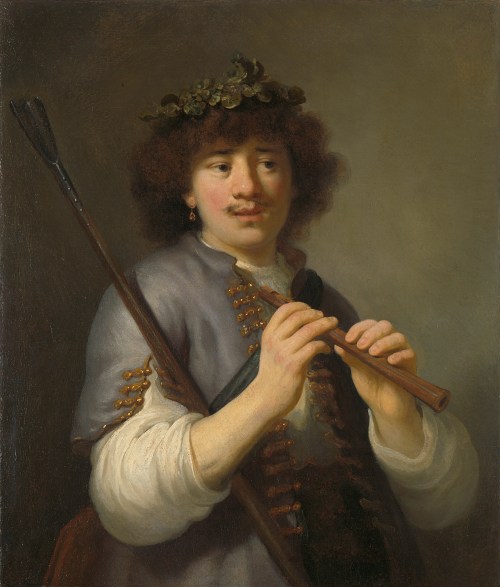
#FineArtFriday: Rembrandt as Shepherd with Staff and Flute, by Govert Flink 1636

About the artist: Born at Kleve, capital of the Duchy of Cleves, which was occupied at the time by the United Provinces, Govert Flinck was apprenticed by his father to a silk merchant, but in 1627 he was sent to Leeuwarden, where he boarded in the house of Lambert Jacobszoon. Jaobszoon was a Mennonite (one of the historic peace churches known for their commitment to pacifism). While Jacobszoon is better known as a preacher, he was a talented painter and an excellent teacher.

While studying there, Flinck met some of Jacobszoon’s neighbors, relatives of Saskia van Uylenburgh, who had married Rembrandt in 1634. That same year he began studying with Rembrandt.

Flinck is acknowledged as one of Rembrandt’s best pupils.

I really enjoy this romantic painting of Rembrandt dressed as a shepherd, holding a flute, and thinking about…what? Rembrandt’s contemplative expression seems peaceful.  The details are wonderful – from the finely worked trim on his garments down to the jewel dangling from his right ear, a gem that softly glows. The grains of the wood in both the flute and staff are subtle and real. The light falls perfectly – Flinck captured the personality of the master as a handsome young man during the happiest time of his life, and it seems as if Rembrandt himself enjoyed posing for it.

For more than a decade, Flinck’s work echoed that of Rembrandt, clearly influenced by the master’s style in the work which he executed between 1636 and 1648. As time passed, he began to desire to be a history painter, a genre in painting that  is defined by its subject matter rather than artistic style, and turned to the work of Peter Paul Rubens. In later years, Flinck had great commercial success, receiving many commissions for official and diplomatic paintings.


Credits and Attributions:

Wikimedia Commons contributors, “File:Rembrandt als herder met staf en fluit Rijksmuseum SK-A-3451.jpeg,” Wikimedia Commons, the free media repository, https://commons.wikimedia.org/w/index.php?title=File:Rembrandt_als_herder_met_staf_en_fluit_Rijksmuseum_SK-A-3451.jpeg&oldid=225225289 (accessed August 16, 2018).

Comments Off on #FineArtFriday: Rembrandt as Shepherd with Staff and Flute, by Govert Flink 1636

Filed under #FineArtFriday