
Two months ago, we began our series, Idea to Story. The previous eleven installments are listed below. We have created a sample story, a romantasy. We have met our protagonists and the ultimate antagonist. We know what their world is like and have given them a worthy quest, and we discovered what genre we are writing by paying attention to the tropes that arose as we were laying down the plot.
 Now, we’re going to examine the themes that have emerged. We will strengthen the story arc and make the characters more vivid by ensuring a strong central theme is woven through the story.
But first, what is a theme? It is an idea, an unspoken message that winds through the arc of the story and generates action. Themes are subtle but move the characters to action and define why the action happens. For an incredible list of themes, go to A Huge List of Common Themes – Literary Devices.
Before we talk about the themes we want to incorporate in our story, let’s look at how the master of themes, Henry James, wove them into his work.
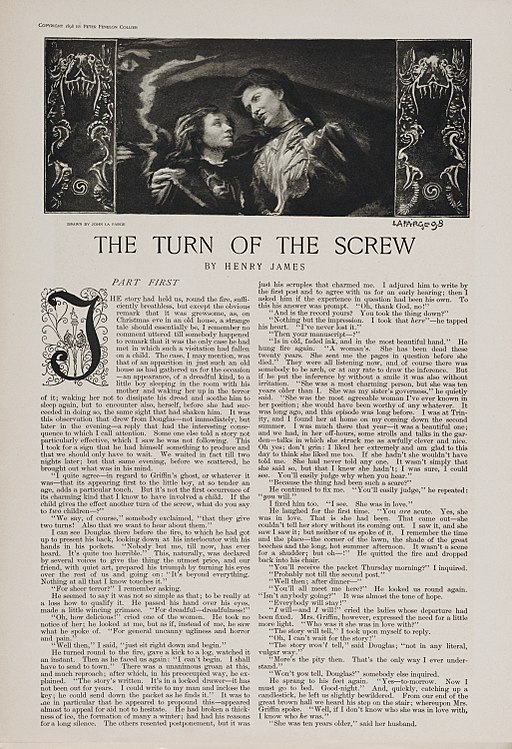 Henry James is a 19th-century writer you might have heard of but never read. However, he can teach us so much about using a story’s themes to create memorable characters. You may be familiar with the titles of some of his works, such as The Turn of the Screw and The Golden Bowl. Filmmakers and playwrights are still turning his work into movies and plays.
Henry James was a master at writing one common theme into a story—lust. Lust for sex. Lust for money. Lust for control.
Lust for power.
Henry James wrote one of the most famous novellas ever published, the Turn of the Screw.
On the surface, the Turn of the Screw is a gothic horror story. The four main themes are the corruption of the innocent, the destructiveness of heroism, the struggle between good and evil, and the difference between reality and fantasy. A fifth theme is the perception of ghosts. Are the ghosts real or the projection of the governess’s madness?
However, there are several subthemes interwoven into the fabric of the narrative:
- Secrecy.
- Deception.
- The lust for control.
- Obsession.
What I take home from the longevity of Henry James’s work is this: find a strong theme and use it to underscore and support our characters’ motives.
So, now we know that literary themes are a pattern, a “melody” that recurs in varying forms throughout a story. They emphasize mood and shape the plot.
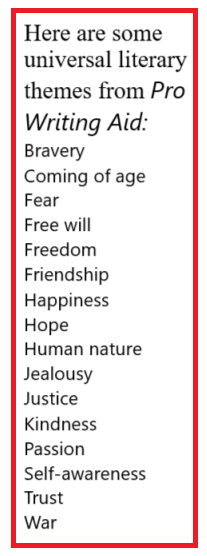 The main theme of our story is the struggle between good and evil. In Donovan’s well-planned manipulation of Kai under the guise of brotherly mentoring, we have the subthemes of deception and the corruption of the innocent. In Val and Kai, we have the dangers of ignorance and the subthemes of arrogance and class prejudice.
Our three main characters are people. In real life, people are a mix of good and bad at the same time. Some lean more toward good, others toward bad. Either way, their intentions are logical, and they desperately want what they think they deserve.
Most importantly, our characters lie to themselves about their own motives and obscure the truth behind other, more palatable truths. These unspoken truths are the themes we must weave into the fabric of our story by subtly showing a pattern.
Two themes we want to emphasize in Donovan are the desire for power and the use of fear as a means of control. However, at first, we want the tug-of-war for control of the child king, Edward, to be focused on the regents, Kai Voss and Valentine.
The story opens from Val’s point of view, so we lean a bit toward her. But not entirely, as Kai’s chapter shows he has good intentions.
By hinting at the pattern of Donvan’s actions in the first quarter of the book, his lust for power becomes clear. We hope to create in the reader a sense of helplessness to stop what we see coming. This is emphasized as clues appear, indicating that Val and Kai are acting on misinformation that is deliberately fed to them.
Once Val and Kai find themselves in the dungeon, new themes will join the story. Both are in their mid-thirties and are established and respected in their respective peer groups. However, both must have a coming-of-age arc. Despite their apparent adulthood, they each have a lot to learn about real life.
But what about young King Edward? For Val and Kai, the theme of parental love is shown in their actions of caring for him from the beginning. While he is not their child, he is in their care and both love him as if he were their son and are secretly jealous of each other. They have differing goals for him, which causes friction, but the reader doesn’t doubt their sincere love for the boy.
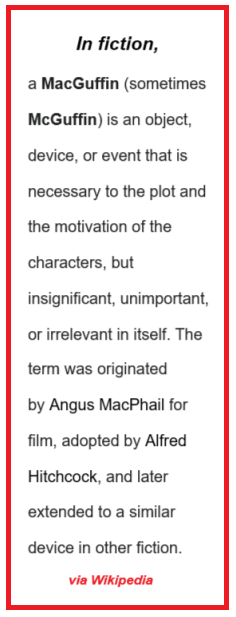 Edward is sickly, cursed with a wasting disease. All through this tale, he has been a McGuffin, the object of the quest and a pawn in Donovan’s game of power. His character arc is limited because he is bedridden and unaware of the war for control centered on him.
When she wakes up in the dungeon, Val realizes who truly set the curse on Edward and who murdered the boy’s parents in the first place. She realizes that if she can’t rescue Edward, Donovan’s curse will kill him, and Donovan will become king. She is miserably aware that she will need a wizard to counter Donovan’s sorcery. Unfortunately, the only sorcerer she has access to is Kai, which means she must rescue him first, something she despises having to do.
Conversely, Kai is glad to be free but not pleased that it is Valentine who has rescued him. He doubts her motives and refuses to believe his brother betrayed him, until they overhear the guards talking.
Val and Kai must learn to work together. As they do, the theme of romantic love will emerge.
What other themes might emerge as we write our story? How will we recognize and underscore the patterns, the melodies that appear in the narrative?
This is where writing becomes a craft, and to excel at any craft, we must work at it.
Thank you for sticking with me as we worked our way through this long and involved process of taking an idea for a story and building the characters, the world, and the plot.
While the story of Val and Kai is just a sample plot for demonstration, I have used these weeks to reexamine the different aspects of my current work in progress. Talking my way through a plot with my friends really helps, so thank you!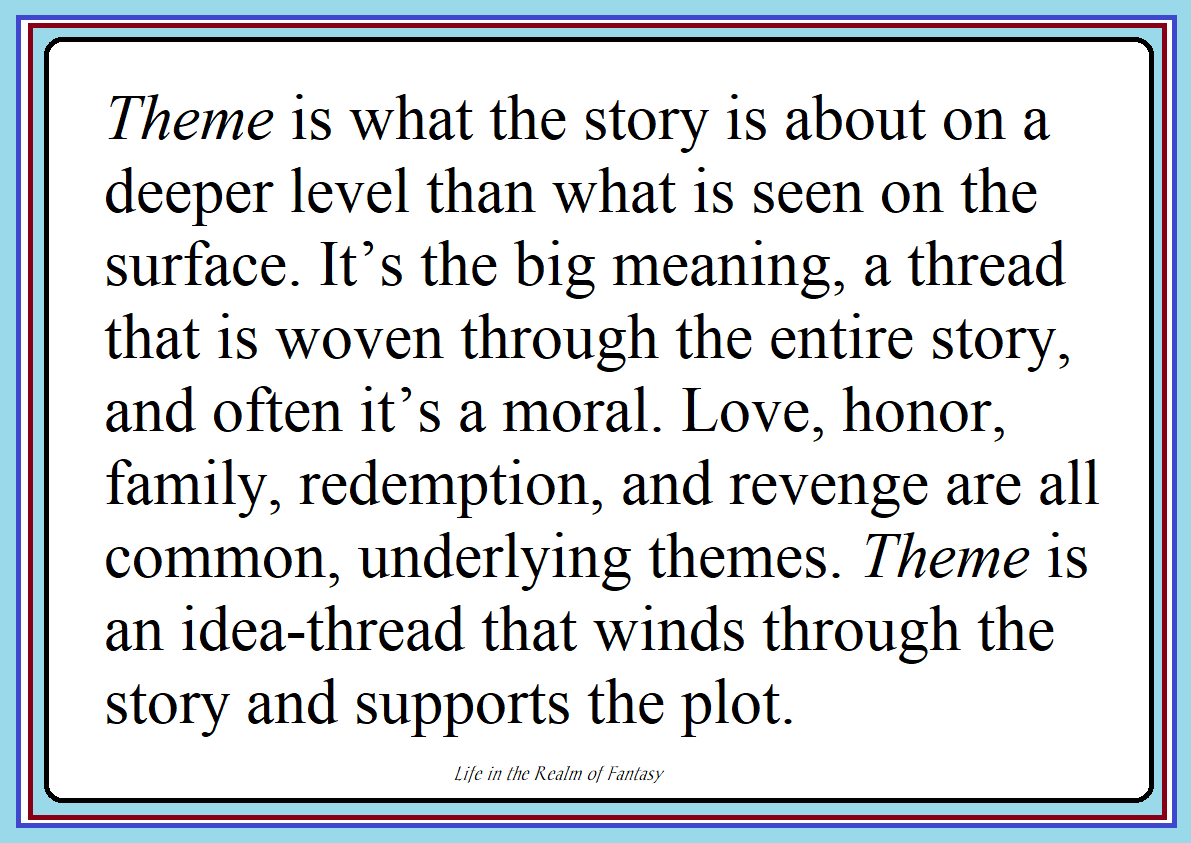
Previous in this series:
Idea to story part 2: thinking out loud #writing | Life in the Realm of Fantasy
Idea to story part 3: plotting out loud #writing | Life in the Realm of Fantasy
Idea to story part 4 – the roles of side characters #writing | Life in the Realm of Fantasy
Idea to story part 5 – plotting treason #writing | Life in the Realm of Fantasy
Idea to story part 6 – Plotting the End #writing | Life in the Realm of Fantasy
Idea to story part 7 – Building the world #writing | Life in the Realm of Fantasy
Idea to story part 8 – world-building and society #writing | Life in the Realm of Fantasy
Idea to story part 9 – technology and world-building #writing | Life in the Realm of Fantasy
Idea to Story part 10 – science and magic as world-building #writing | Life in the Realm of Fantasy
Idea to story part 11: Genre and expected tropes #writing | Life in the Realm of Fantasy
 Mansker takes us into some of the darker days of the 1960s and 70s, sometimes introducing us to people we may not want to know and situations we don’t want to be in. Some protagonists are endearing, and some not so much—but all are intriguing, and all kept me reading.
 He was born in Longview WA, spent five years on a dairy farm near Bristow OK, and is a 1973 graduate of Western Washington University in Bellingham WA.
 Once there, create a profile. You don’t have to get fancy unless you are bored and uber-creative.
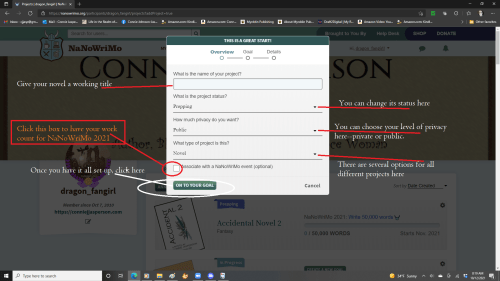 You can play around with your personal page a little to get used to it. I use my NaNoWriMo avatar and name as my Discord name and avatar. This is because I only use Discord for NaNoWriMo and one other large organization of writers. (Next week, we’ll talk about Discord and why NaNoWriMo HQ wants us to use it for word sprints and virtual write-ins.)
 Next, check out the community tabs. If you are in full screen, the tabs will be across the top. If you have the screen minimized, the button for the dropdown menu will be in the upper right corner and will look like the blue/green and black square to the right of this paragraph.
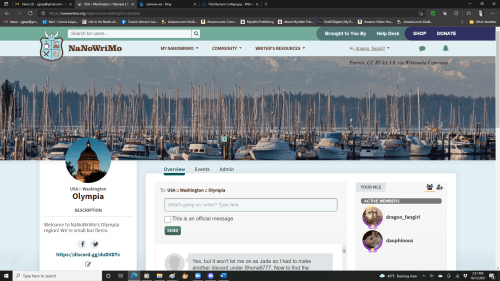 You may find the information you need in one of the many forums listed here.
 Make a master file folder that is just for your writing. I write professionally, so my files are in a master file labeled Writing.
 Give your document a label that is simple and descriptive. My NaNoWriMo manuscript will be labeled: Accidental_Novel_2.
 Still, we can come together and support each other’s writing via the miracle of the internet. My region is finalizing a schedule for “Writer Support” meet-ups via Zoom – little gab sessions that will connect us and keep us fired up.


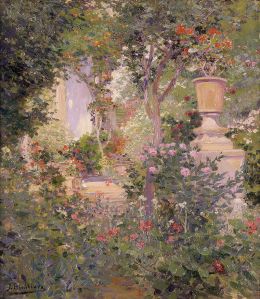

 When you write a novel or an essay, whether it’s fiction or non-fiction, the setting is how you create the sense of place, and must be a creation of many layers:


 Life in the Realm of Fantasy