Tag Archives: writing

Self-editing part 2: rare beasts – ellipsis, em dash, hyphen, and ?! #Writing

The mechanics of writing are the framework that makes a story readable. Every language has specific rules for managing grammar. The language I work in is English, so if you also write in another language, you have my profound respect. You have double the work ahead of you.

MyWritingLife2021BLast week, we talked about how punctuation is the traffic signal that keeps our words flowing smoothly.

Ellipses, em dashes, hyphens, and semicolons are rare beasts in the punctuation realm. Authors who rely on spellcheck may be getting the wrong advice when it comes to the use of rare punctuation.

For instance, Microsoft’s editor app sometimes tells us to use a comma to join two independent clauses when they don’t relate to each other. Microsoft is wrong. That creates a comma splice. The comma splice is a dead giveaway that either the author has skimped on editing their work or they’re not well-versed in grammar. (See Monday’s post, Self-editing part 1 – seven basic rules of punctuation, for a better explanation of comma splices.)

So, let’s talk about ellipses. Many authors use them incorrectly or inconsistently. This is because ellipses are not punctuation and shouldn’t be used as such.

The ellipsis is a symbol that represents omitted words and is not punctuation. The Chicago Manual of Style says that when the conversation trails off, we must add ending punctuation.

Groundfall apples, bruised and over-ripe, lay scattered across the ground. But the apple orchard is across the road, so how did they…?

Hyphens are usually not necessary, although my first drafts are often littered with them. If the meaning of a compound adjective is apparent when written as two separate words, a hyphen is not needed.

  • bus stop

hyphenated wordsIf the meaning is understood when two words are combined into one, and common usage writes it as one word, again a hyphen is unnecessary.
  • afternoon
  • windshield

Some combinations of “self” must have a hyphen:

  • self-editing
  • self-promotion

Dashes are not hyphens and are used in several ways. One kind of dash we frequently use is the ‘en dash,’ which is the width of an ‘n.’

En dashes join two numbers written numerically and not spelled out in US usage.

  • 1950 – 1951

To insert an en dash in a Word document, type a single hyphen between two words and insert a space on either side (word space hyphen space word). When you hit the space bar after the second word, the dash will lengthen a little, making it slightly longer than a hyphen. UK usage often employs the en dash in the place of the em dash.

Em dashes are the width of an “m” and are the gateway to run-on sentences. To make one, key a word, and don’t hit the spacebar. Hit the hyphen key twice, then key another word, and then hit the spacebar: (word hyphen hyphen word space) word—word.

Authors sometimes use emdashes without thinking. Too many em dashes—like salt—ruin the flavor of the prose. It often works best to rephrase things a little and use a comma or a period.

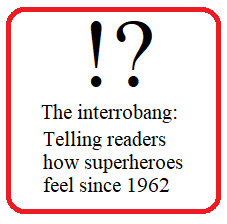
interrobangBut what about !?  These mutant morsels of madness are called “interrobangs.”
Writers of comics frequently employ interrobangs to convey emotions because they have little room for prose in each panel.

More than one punctuation mark at the end of a sentence is not accepted in most other genres. Editors working in the publishing industry will tell you that the interrobang is not an accepted form of punctuation unless you write comic books, manga, or graphic novels.

It’s your narrative, so you will do as you see fit. However, interrobangs are a writing habit writers should avoid in novels and short stories if they want to be taken seriously.

Readers expect words to flow in a certain way, but no one gets it right all the time. If you choose to break a grammatical rule, be consistent about it. Voice is how you break the rules, but you must understand what you are doing and do it deliberately.

Most readers are not editors. They will either love or hate your work based on your voice, but they won’t know why.

Craft your work to make it say what you intend in the way you want it said. Sometimes, you will deliberately use a comma in a place where an editor might suggest removing it. You should explain that you have done this to make something clear. Conversely, you might omit a comma for the same reason.

The editor you hired might ask you to change something you did intentionally. You are the author, and it’s your manuscript. If you know the rule you are breaking, you will be able to explain why you are doing so.

Most editors will do as you ask and will gladly ensure that you break that rule consistently.

Sometimes, the stories we consider powerful writing violate accepted grammar rules. Readers fall into the rhythm of the prose as long as the choices made for punctuation remain consistent throughout the manuscript.

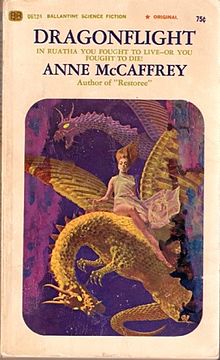
AnneMcCaffrey_DragonflightOne of my favorite authors, Ann McCaffrey, set off telepathic conversations with both italics and colons in the place of quote marks.
:Are you well?:

Spoken conversations in her books are punctuated using standard grammar and mechanics.

Hemmingway used commas but often connected his clauses with conjunctions.

The world is a fine place and worth the fighting for and I hate very much to leave it.

As readers get into a story, they become habituated to the author’s style and voice. They overlook grammar no-nos because the story captivates them.

I love a good story, but more than that, I enjoy seeing how other authors write, how they think, and how their voice comes across in their work.

4 Comments

Filed under writing

Self-editing part 1 – seven basic rules of punctuation #writing

Many authors are just starting out and have never written anything longer than a memo or a tweet. Once that first manuscript is finished, they will self-edit it. But what if they didn’t have the luxury of a college education in journalism? Many new writers don’t know how to write a readable sentence or what constitutes a paragraph.

MyWritingLife2021I certainly didn’t. If these authors hope to find an agent or successfully self-publish, they have a lot of work and self-education ahead of them.

Most public schools in the US no longer teach creative writing. While some do have some writing classes, the majority of students leave school with a minimal understanding of basic grammar mechanics.

  • They know when they read something that is poorly written, but they don’t know what grammar error makes it wrong. It just feels awkward, so they stop reading.

We who love to read know good writing when we read it. We might have the idea for the best story and the dedication and desire to write it.

However, getting our thoughts onto paper so other readers can enjoy it is not our best skill—yet.

But it soon will be. First, we must think of punctuation as the traffic signal that keeps the words flowing and the intersections manageable.

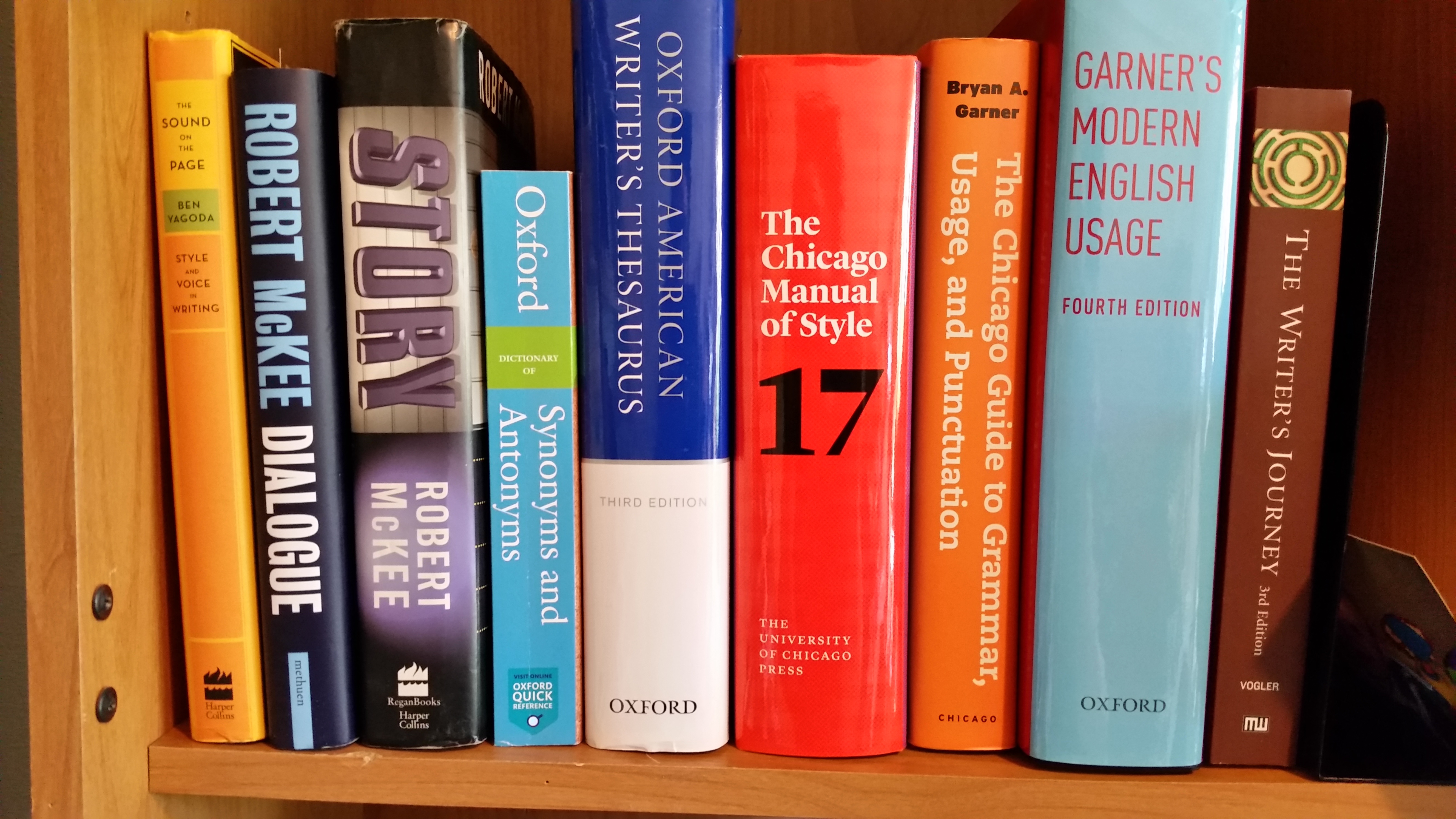
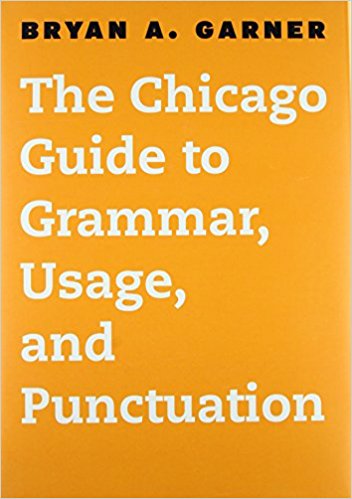
Trying to learn from a grammar manual can be complicated. I learned by reading the Chicago Manual of Style, which is the rule book for American English. Most editors in the large traditional publishing houses refer to this book when they have questions.

chicago guide to grammarIf you are writing in the US, you might consider investing in Bryan A. Garner’s Chicago Guide to Grammar, Usage, and Punctuation. This is a resource with all the answers to questions about grammar and sentence structure. It takes the Chicago Manual of Style and boils it down to just the grammar.
There are other style guides, each of which is tailored to a particular kind of writing, such as the AP manual for journalism and the Gregg manual for business writing. The CMoS is specifically for creative writing, such as fiction, memoirs, and personal essays, but also includes business and journalism rules.

However, the basic rules are simple.

Punctuation seems complicated because some advanced usages are open to interpretation. In those cases, how you habitually use them is your voice. Nevertheless, the foundational laws of comma use are not open to interpretation.

Consistently follow these rules, and your work will look professional.

First, commas and the fundamental rules for their use exist for a reason. If we want the reading public to understand our work, we need to follow them.

Wrong-Way-Traffic-Sign-K-101-1Let’s get two newbie mistakes out of the way:
  1. Never insert commas “where you take a breath” because everyone breathes differently.
  2. Do not insert commas where you think it should pause because every reader sees the pauses differently.

Second: How do we use commas and coordinating conjunctions?

A comma should be used before these conjunctions: and, but, for, nor, yet, or, and so to separate two independent clauses. They are called coordinating conjunctions because they join two elements of equal importance.

However, we don’t always automatically use a comma before the word “and.” This is where it gets confusing.

Compound sentences combine two separate ideas (clauses) into one compact package. A comma should be placed before a conjunction only if it is at the beginning of an independent clause. So, use the comma before the conjunction (and, but, or) if the clauses are standalone sentences. If one of them is not a standalone sentence, it is a dependent clause, and you do not add the comma.

Take these two sentences: She is a great basketball player. She prefers swimming.

  1. If we combine them this way, we add a comma: She is a great basketball player, but she prefers swimming.
  2. If we combine them this way, we don’t: She is a great basketball player but prefers swimming.

The omission of one pronoun makes the difference.

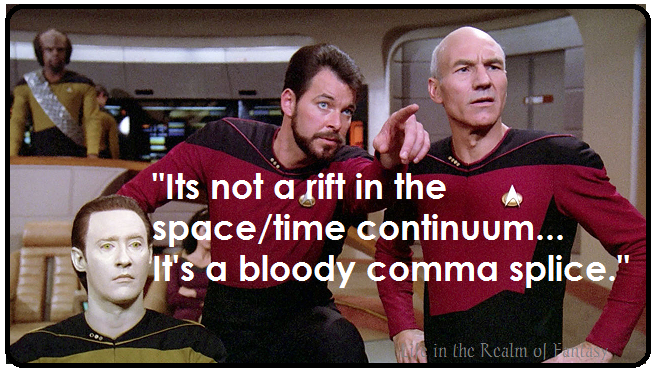
You do not join unrelated independent clauses (clauses that can stand alone as separate sentences) with commas as that creates a rift in the space/time continuum: the Dreaded Comma Splice.

Comma Splice Meme

Boris kissed the hem of my garment, the dog likes to ride shotgun.

The dog has little to do with Boris other than the fact they both worship me. The same thought, written correctly:

Boris kissed the hem of my garment.

The dog likes to ride shotgun.

The dog riding shotgun is an independent clause and does not relate at all to Boris and his adoration of me. It should be in a separate paragraph. If you want Boris and the dog in the same sentence, you must rewrite it:

Boris and the dog worship me, and both like to ride shotgun.

Third, a semicolon in an untrained hand is a needle to the eye of the reader. Use them only when two standalone sentences or clauses are short and relate directly to each other.

Some people (including Microsoft Word) think a semicolon signifies an extra-long pause but not a hard ending. The Chicago Manual of Style and Bryan A Garner say that belief is wrong. Don’t blindly accept what Spellcheck tells you!

Semicolons join short independent clauses that can stand alone but which relate to each other. When do we use semicolons? Only when two clauses are short and are complete sentences that relate to each other. Here are two brief sentences that would be too choppy if left separate.

  • The door swung open at a touch. Light spilled into the room. (2 related short standalone sentences.)

  • The door swung open at a touch; light spilled into the room. (2 related short sentences joined by a semicolon.)

  • The door swung open at a touch, and light spilled into the room. (1 compound sentence made from 2 related standalone clauses joined by a comma and a conjunction.) (A connector word.)

strange thoughts 2All three of the above sentences are technically correct. The usage you habitually choose is your voice.

I generally try to find alternatives to semicolons. they’re too easily abused because Microsoft Word and most people don’t know how to use them.

Fourth: Colons. These head lists but are more appropriate for technical writing. Colons are rarely needed in narrative prose. In technical writing, you might say something like:

For the next step, you will need:

  1. four bolts,
  2. two nail files,
  3. one peach, whole and unpeeled.

Technically speaking, I have no idea what they are building, but I can’t wait to see it!

Fifth:  Oxford commas, also known as serial commas. This is the one war authors will never win or find common ground, a true civil war.

When listing a string of things in a narrative, we separate them with commas to prevent confusion. I like people to understand what I mean, so I always use the Oxford Comma/Serial Comma.

If there are only two things (or ideas) in a list, they do not need to be separated by a comma. If there are more than two ideas, the comma should be used as it would be used in a list.

We sell dogs, cats, rabbits, and picnic tables.

Why do we need clarity? You might know what you mean, but not everyone thinks the same way.

I accept this Nebula award and thank my late parents Irene Luvaul and Poseidon.

That sentence might make sense to some readers, but not in the way I intended. The intention of it is to thank my late parents, my editor, and the God of the Sea. If I don’t thank Poseidon, he’ll pitch a fit.

I accept this Nebula award and thank my late parents, Bob and Marge, my editor Irene Luvaul, and Poseidon, the God of the Sea.

Sixth: We use a comma after common introductory clauses.

After dark, Boris would change into his bat form and go hunting for enchiladas.

Seventh: Punctuating dialogue: All punctuation goes inside the quote marks.

  1. A comma follows the spoken words, separating the dialogue from the speech tag.
  2. The clause containing the dialogue is enclosed, punctuation and all, within quotes.
  3. The speech tag is the second half of the sentence, and a period ends the entire sentence.

The editor said, “I agree with those statements.”

If the dialogue is split by the speech tag, do not capitalize the first word in the second half.

“I agree with those statements,” said the editor, “but I wish you’d stop repeating yourself.”

stoplightWhy are these rules so important? Punctuation tames the chaos that our prose can become. Periods, commas, quotation marks–these are the universally acknowledged traffic signals.

If you follow these seven simple rules, your work will be readable. If your story is creative and well-written, it will be acceptable to acquisitions editors.

6 Comments

Filed under writing

Making effective revisions: the short story #writing

In the past few weeks, we have looked at the structural elements of the story, such as theme, narrative mode, point of view, and the author’s voice. We’ve talked about showing emotions and writing believable drama. We have dissected how a story flows from scene to scene.

depthPart1revisionsLIRF05252021So now, we realize that we must submit our work to contests or publications if we ever want to get our name out there. We have looked at our backlog of short stories and gone out to sites like Submittable or the Submission Grinder to discover contests or magazines that we’d like to send them to.

After all, some of these old ramblings could be pretty good if we dusted them off and polished them up a bit.

So now we’re going to look at the structural elements of a story that has been sitting for a while. Let’s have a look at one of many short works I wrote during lockdown but forgot about.

Author-thoughtsThe first thing we’re going to look at is the problem. Is the problem worth having a story written around it? If not, is this a “people in a situation” story, such as a short romance or a scene in a counselor’s office? What is the problem and why did the characters get involved in it?

The following is the core plot of a short story that came in just under 4,000 words.

A messenger, Oriana, and her partner are on a mission to a local ruler from his brother, the king. Before they arrive there, her partner quarrels with her and attempts to steal the coins that belong to the king. She knocks him out, retrieves what he had stolen, and continues her quest to take the coins to the king’s brother.

At the brother’s town, Oriana collects a small jewel, one that is really an item of great magical power. The king will use it to end the drought that has been crippling the country. Now, she must convey it back to the king.

Oriana meets a wanderer, Geran Rose, who, unaware of what she is carrying, joins her. They travel together, but then the next day, the former partner shows up, accompanied by a demon. Now, the messenger realizes what the thief is really after. She can’t let the demon have the jewel but knows she can’t defeat him. However, a dragon can. So, she and her companion lead the demon into dragon country, knowing that they could die as easily as the demon.

First, I look at believability. It is a fantasy set in a world of humans, elves, dwarves, and dragons, so in that world, would the central event I have detailed really happen? More importantly, would it happen in the way I have shown?

  • The dragons are wild creatures, sentient and, most importantly, looking for a good meal. Why would dragons desire to eat a demon? They love the taste of elves, but they love the taste of demons more. These dragons crave the darkness that the demon embodies in the same way I crave chocolate.

sample-of-rough-sketched-mapWorldbuilding is crucial in a short story. Is the setting I have chosen the right place for this event to happen? In this case, I say yes, that it is the only place where such a story could happen.

I absolutely loved writing the scenes set at the edge of the burning lands. But have I left enough clues in the setting for a reader to visualize the world? My writing group will tell me.

The next aspect I look at is characterization, or how I have portrayed the protagonist and other characters. I ask my characters the same questions that I would ask of those in a novel. Answering these questions also tells me if the plot is believable and relatable.

Are these the right people for their roles? Yes, the elf, Oriana is the only one who could carry this off. The human, Geran Rose is the perfect sidekick, intelligent, and a good fighter. The elven thief and the high-ranking demon were easy to write because they were so outrageously fun.

StoryMemeLIRF10052021Point of view: First person – Oriana tells us this story as it happens. We are in her head for the entire story. Do her actions and reactions feel organic and natural? After some work, I think yes, but again, I’ll have to run it by someone to be sure.

In a short story, conversations and brief moments of mind wandering can be vital in advancing the plot. Are the conversations unique to each character? I hope so, but my writing group will tell me more.

This is a short story, so do these scenes of conversation and internal dialogue show us something about my protagonist’s personality and provide information we need to know without dumping it? Again, I hope so.

What is the unifying theme, the thread that runs throughout the story and ties things together? In this case, it is the many nuances and ramifications of betrayal. Is that theme strong enough to lend believability to the plot?

The last thing I look at is crucial to a reader’s enjoyment of my short story.

How does it end? Is the ending satisfying and finite? I like the way my short story ends, but will my writing group agree?

In your short story, ask yourself if you wonder what could have happened next. Do you want to write more stories around these characters?

I have another story in the works for Oriana and Geran Rose, which involves a traitor, a ballgown, and the universal womanly desire for clothing with useful pockets.

Writing short stories is fun, a way of clearing the mind when I am stuck for ideas on a longer piece. Do make the effort to examine the structure of your short stories and rearrange the scenes as needed.

On Monday, we’ll walk through the steps for revising and self-editing your short work. This final phase of the process is crucial because what you submit must be grammatically clean and look professional.

short story arc

3 Comments

Filed under writing

What to do with that backlog of unpublished short fiction #writing

There have been times when I wanted to write something but didn’t know what. These are the days when I reach a point where I have nothing useful to add to my still-unfinished novel.

microfictionI am not the only person who experiences these moments of low creative energy. When this happens, I set the longer work aside and go rogue—I write poetry and drabbles and short stories.

And yes, cardinal sinner that I am—some of my poetry rhymes. I can’t help that I was raised on Lord Byron and W.B. Yeats.

There are times when I want to write but have no solid idea what the story could be. Maybe it’s this, or perhaps it’s that. Those are the days when I turn out short stories. For me, writing short stories is like shopping for clothes. I need to try them on to see what fits before I buy them.

strange thoughts 2Maybe you are writing, but so far, you have written nothing novel or even novella-length. Perhaps you have been writing a little of this and a bit of that, and now you have a pile of disparate, exceptionally short fiction, and you don’t know what to do with it.

Two well-known and respected contests that I regularly submit work to are:

A drabble is a microfiction. It is exactly 100 words long.

Extremely short fiction must showcase the same essential components as a longer story:

  1. A setting
  2. One or more characters
  3. A conflict
  4. A resolution.

We have a lot of information to convey and only 100 words to do it. To that end, we must show our story to the reader the way an impressionist paints a picture.

  • We choose nouns and verbs with the most visual impact.

IBM_Selectric (1)Microfiction is the distilled soul of a novel. It has everything the reader needs to know about a singular moment in time. It tells that story and makes the reader wonder what happened next. Each short piece we write increases our ability to tell a story with minimal exposition.

For a longer post on how I write microfiction, see my post of January 31, 2024: Discipline and Micro Fiction #amwriting | Life in the Realm of Fantasy (conniejjasperson.com)

Here are two reliable platforms that list a wide variety of publications and contests with open calls:

Some magazines have open calls for short (well under 4,000 words is best) stories:

There are also opportunities for the visual arts as well as written work:

Submitting to contests is a different process than submitting to magazines and anthologies.

steampunk had holding pen smallWhen submitting to a publication, you send your work directly to the publisher. In return, you can expect to receive a communication from the senior editor, either a rejection or an acceptance.

Most rejections arrive in the form of impersonal emails or (rarely nowadays) letters: “We are not interested in this work at this time. Thank you, and keep writing.”

Contests are large, amorphous entities with a group of writers who have agreed to be readers. They judge submissions based on technical skills as well as creativity. Many contests must charge a fee for submissions.

I’ve said this before, but it bears mentioning again. You have wasted time and money if you don’t follow the prospective contest or publisher’s submission guidelines, which are clearly listed on the contest page or on their website.

We demonstrate our level of professionalism by strictly following submission guidelines. Editors at magazines and publishing houses receive hundreds of unsolicited works each week and have no time to deal with unedited, improperly formatted manuscripts.

Editors (or, in the big houses, their interns) look at the first page and immediately know what they are looking at. They reject the poorly written, unprofessional messes without further consideration.

Veikkaus_LottoTo wind this up—take another look at that backlog of short work. Edit it, read it aloud, and edit it again. Then, consider submitting that work to a contest or magazine. It’s good experience for indie writers, but more than that, you might hit the jackpot!

To paraphrase an old joke, “to win the lottery, you must first buy a ticket.” This is especially true if you want to be published.


Credits and Attributions:

IBM Selectric, By Oliver Kurmis (Self-photographed) [CC BY 2.5 (http://creativecommons.org/licenses/by/2.5)%5D, via Wikimedia Commons, accessed Apr. 6, 2024.

Finnish Lottery Tickets, Wikimedia Commons contributors, “File:Veikkaus Lotto.jpg,” Wikimedia Commons, https://commons.wikimedia.org/w/index.php?title=File:Veikkaus_Lotto.jpg&oldid=632154033 (accessed April 6, 2024).

Comments Off on What to do with that backlog of unpublished short fiction #writing

Filed under writing

 The powerful novella vs. a weak novel #amwriting

MyWritingLife2021BI do a lot of rambling in my first drafts because I’m trying to visualize the story. While I try to write this mental blather in separate documents, the random thought processes often bleed over into my manuscript.

During the editing process, I sometimes find that besides the four chapters that don’t fit the plot anymore, perhaps three more chapters will expand on background info. They can be condensed or cut.

I’m a wordy writer, but sometimes the finished work is shorter than I’d planned—a lot shorter. Sometimes, I get to the end of a story, but it’s only at the 40,000-word mark (or less).

Then I have to make a decision. I could choose to leave it at the length it is now and have it edited. If I am married to the idea of a novel, I could try to stretch the length, but why?

If I know anything, it’s this. When I have nothing of value to add to the tale, it’s best to stop. Fluff weakens the story, and I’d prefer to write a powerful novella rather than a weak novel.

In the second draft of any manuscript, I change verbs to be more active and hunt for unnecessary repetitions of information. At that stage, the manuscript will expand and contract. It hurts the novelist in my soul, but the story may only be 35,000 words long when the second draft is complete.

animal farm george orwell40,000 words in fantasy is less than half a book. That makes it a novella. But I send it to my beta reader to see what she thinks. If she feels the plot lacks substance at that length, I let it rest for a while, then come back to it. Then, I can see where to add new scenes, events, and conversations to round out the story arc. That might bring it up to the 60,000-word mark.

If Sherrie (my sister and beta reader) says the story is good and ends well, I stop adding content and move to the editing process.

So, what sort of scenes do I cut?

A detailed history of everyone’s background is unnecessary. Readers only want to hear a brief mention of historical information. It should be delivered in conversation and only when the protagonist needs to know it.

Unfortunately, when I am building the basic structure of the novel, I sometimes forget to write the cast members’ history in a separate document. Once I shrink or cut those rambling paragraphs, I have a scene that moves the story forward but is much shorter.

1024px-Charles_Dickens-A_Christmas_Carol-Title_page-First_edition_1843In the second draft, I will discover passages where I have repeated myself but with slightly different phrasing. My editor is brilliant at spotting these, which is good because I miss plenty of them when I am preparing my manuscript for editing. I wrote that mess, so even though I try to be vigilant, repetitions tend to blend into the scenery.

Once Irene points them out, I decide which wording I like the best and go with that.

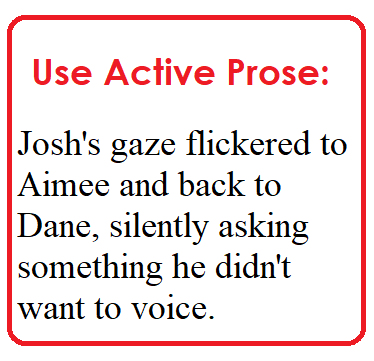
Also, in the first draft, I find a lot of “telling” words and phrases I will later change or cut. I look for active alternatives for words and phrases that weaken the narrative:

  • There was
  • To be

I change my weak, telling sentences to more active phrasing. This means I sometimes gain a few words because showing a scene as it happens requires more words than giving a brief “they did this.”

But then I lose words in other areas—lots of words.

I feel that when writing in English, the use of contractions makes conversations feel more natural and less formal. It shortens the word count because two words become one: was not is shortened to wasn’thas not is changed to hasn’t, etc.

Reading my manuscript out loud is a real eye-opener. I print each chapter out and read it aloud. I find words to cut, sentences and entire paragraphs that make no sense. The story is stronger without them.

In the first draft, I look for crutch words and remove them. This lowers my word count. My personal crutch words are overused words that fall out of my head along with the good stuff as I’m sailing along:

  • So (my personal tic)
  • Very (Be wary if you do a global search – don’t press “replace all” as most short words are components of larger words, and ‘very’ is no exception.)
  • That
  • Just
  • Literally

I try to plot my books in advance, but my characters have agency. This means the character arcs and the story evolves as I write the first draft. New events emerge, and I find better ways to get to the end than what was first planned.

blphoto-Orange-ScissorsI have learned to be brutal. I might have spent days or even weeks writing a chapter that now must be cut.

It hurts when a perfect chapter no longer fits the story. But maybe it bogs things down when you see it in the overall context. It must go, but that chapter will be saved. Those cut pieces often become the core of a new story, a better use for those characters and events.

Once that first draft is complete, no matter how short or long, I measure it against the blueprint of the story arc. I ask the following questions about every story:

  • How soon does my inciting incident occur? It should be near the front, as this will get the story going and keep the reader involved.
  • How soon does the first pinch point occur? This roadblock will set the tone for the rest of the story.
  • What is happening at the midpoint? Are the events of the middle section moving the protagonist toward their goal? Did the point of no return occur near or just after the midpoint?
  • Where does the third pinch point occur? This event is often a catastrophe, a hint that the protagonist might fail.
  • Is the ending solid, and does it resolve the major problems?

blueprint-of-the-story-arcEven if this story is one part of a series, we who are passionate about the story we’re reading need firm endings.

Novellas occupy a special place in my heart. A powerful, well-written novella can be a reading experience that shakes a reader’s world. The following is a list of my favorite novellas. And yes, you’ve seen this list before, and also yes, some are considered literary fiction:

  • The Emperor's Soul - Brandon SandersonThe Emperor’s Soul, by Brandon Sanderson
  • A Christmas Carol, by Charles Dickens
  • Breakfast at Tiffany’s, by Truman Capote
  • Candide, by Voltaire
  • Three Blind Mice, by Agatha Christie
  • The Strange Case of Dr. Jekyll and Mr. Hyde, by Robert Louis Stevenson
  • The Time Machine, by H.G. Wells
  • Of Mice and Men, by John Steinbeck
  • The Old Man and the Sea, by Ernest Hemingway
  • Animal Farm, by George Orwell
  • The Turn of the Screw, by Henry James

Read.

Read widely and try to identify the tricks that impressed you. The real trick is figuring out how to put what you learn to good use.

2 Comments

Filed under writing

Dissecting Voice/Style #writing

What does “voice” refer to in literature? It is an author’s habit, their fingerprint, a recognizable “sound” in the way they communicate their stories.

a writer's styleWhen we speak aloud, we habitually use certain words and phrase our thoughts a particular way. The physiology of our throats is unique to us. While we may sound very similar to other members of our family, pitch monitoring software will show that our speaking voice is distinctive to us.

For some of us, the moment we say “hello,” our friends and family know it’s us on the other end of the telephone, even without caller ID.

The same is true for our writing.

Our voice is comprised of the way we construct paragraphs, the words we choose, and the narrative mode and time/tense we prefer to write in.

Our content is shaped by our deeply held beliefs and attitudes. Those values change and evolve over time. Content includes the themes we instinctively write into our work and the ideals we subconsciously hold dear. Those elements shape a story’s character and plot arcs and represent who we were at the time we wrote it.

Our voice or style is the visual sound of our words as they appear on the page.

Let’s take another look at Gillian Flynn’s novel, Gone Girl.

Gone_Girl_FlynnFlynn’s style of prose is rapid-fire, almost stream-of-consciousness, and yet it is controlled and deliberate. She is creative in how she uses the literary device of narrative mode. Primarily, Gone Girl is written in the first person present tense. But sometimes Flynn breaks the fourth wall by flowing into the second person present tense and speaking directly to us, the reader.

This seamless manipulation of narrative tense reveals Flynn’s thought process.

One criticism you might hear about her style is that, at times, her characters all sound alike. Only the chapter title and subjects covered in that section let you know which person is speaking, Nick or Amy. That means we are hearing the author’s own voice in the role of the characters.

When Flynn slips into the second person mode and speaks directly to the reader, she forces us to consider the ideas she is presenting, involving us in the story.

That flowing from mode to mode is a literary device she is good at, and speaking as an editor, it is neither good nor bad. Whether it works depends on an author’s skill.

Your enjoyment of that kind of narrative depends on your personal taste. Flynn’s style of writing is unique, but her exploration of dark, unlikeable characters makes this a difficult novel for some readers.

A writer’s personal ethics and taste and the kernel of “what if” shape how they approach the subject matter and the themes of their work. Their knowledge of craft is demonstrated in the construction of sentences, paragraphs, and scenes. Skill in the craft shapes the overall arc of a story.

desk_via_microsoft_stickers

courtesy Office 360 graphics

The words we gravitate to and reuse and how we unconsciously punctuate our sentences combine to form our voice, our style.

This personal sound evolves as we develop more skills and knowledge of writing craft.

My own style has changed dramatically since my first novel. When I began writing seriously, I was in the habit of using italicized thoughts and characters talking to themselves to express what was happening inside them. I often employed compound sentences that, when I look back on them now, were too long.

Using italics for thoughts is an accepted practice and is not wrong. When used sparingly, italicized thoughts and internal dialogue have their place. However, thoughts can be used as a means for dumping information, which then becomes a wall of italicized words.

In the last few years, I’ve evolved in my writing habits. I am increasingly drawn to writing shorter sentences, but I vary sentence length to avoid choppiness.

When conveying my character’s internal dialogue, I use the various forms of free indirect speech to show who my characters think they are and how they see their world. So, in that regard, my author voice has changed.

We write for ourselves first. Then, we revise and edit for the enjoyment of other readers.

We do not iron the life out of our work, because that spark of joy that was instilled the moment we laid down those words must still shine through. It takes thought and the ability to recognize and cast aside prose that doesn’t say what we want it to, yet still have it sound like our writing and not someone else’s.

Be consistent with punctuation, whether you are right or wrong. If you “hate the Oxford comma” or some other widely accepted rule of grammar, you must be consistent when you avoid its use.

Inconsistency in a manuscript is not a voice or style.

It’s a mess.

Ernest Hemmingway rarely used commas. However, he was consistent in how he composed his sentences, and his work was original and readable.

MoveableFeast“I was learning something from the painting of Cézanne that made writing simple true sentences far from enough to make the stories have the dimensions that I was trying to put in them. I was learning very much from him but I was not articulate enough to explain it to anyone. Besides it was a secret.”

~~Ernest Hemmingway, A Movable Feast

Some authors’ voices really stand out, and their writing skills are up to the task of conveying what they intend their words to say. Their stories find an important place in our hearts.

They are the writers that agents are desperately seeking.

5 Comments

Filed under writing

How the narrative tense shapes the point of view #writing

Every story is different and requires us to use a unique narrative time. Narrative tense conveys information about time. It relates the time of an event (when) to another time (present, past, or future). So, the narrative tense we choose when writing a particular story indicates its location in time.

MyWritingLife2021In my previous post, we talked about narrative point of view. POV is the perspective, the personal or impersonal “lens” through which we communicate our stories. It is the mode we choose for conveying a particular story.

The narrative tense we gravitate to is also a component of our voice.

We shape our stories by combining narrative time with two closely related aspects:

  • Narrative point of view.
  • Our narrative voice (we’ll explore this more later).

The way that narrative tense affects a reader’s perception of the characters is subtle, an undercurrent that goes unnoticed after the first few paragraphs. It shapes the reader’s view of events on a subliminal level.

  • “I eat.”
  • “I am eating.”
  • “I have eaten.”
  • “I have been eating.”

The above sentences are all in the present tense. They contain the present-tense form of a verb: eatam, and have.

Yet, they are different because each conveys slightly different information, a different point of view about how the act of eating pertains to the present moment.

Revisions are a mess for me because I “think aloud” when writing the first draft. Passive phrasing finds its way into the prose.

Verb ConjugationWhen I begin my second draft, those weak verb forms function as traffic signals. They were a form of mental shorthand that helped me write the story before I lost my train of thought. But in the rewrite, weak verbs are code words that tell me what the scene should be rewritten to show.

I’ve used these examples before. Each sentence says the same thing, but we get a different story when we change the narrative tense, point of view, and verb choice.

  • Henry was hot and thirsty. (Third-person omniscient, past tense, passive phrasing.)
  • Henry trudged forward, his lips dry and cracked, yearning for a drop of water. (Third-person omniscient, past tense, active phrasing.)
  • struggle toward the oasis with dry, cracked lips and a parched tongue. (First-person present tense, Active phrasing.)
  • You stagger toward the oasis, dizzy with thirst. (Second-person, present tense, active phrasing.)

This is a moment in time for these thirsty characters, and the way we show it to our readers is meaningful in how they perceive the scene.

Sometimes, the only way I can get into a character’s head is to write in the first-person present tense. This is because the narrative time I am trying to convey is the now of that story. (This happens to me most often when writing short stories.)

Every story is unique; some work best in the past tense, while others must be set in the present.

WARNING: When we write a story using an unfamiliar narrative mode, watch for drifting verb tense and wandering narrative point of view.

Drifting verb tense and wandering POV are insidious. Either or both can occur if you habitually write using one mode but switch to another. For this reason, I am vigilant when I begin writing in the first-person present tense, but later discover it isn’t working for me. If I were to switch to close third person past tense, each verb must be changed to match the new narrative mode and time.

But changing an entire draft to a different narrative mode isn’t the only danger zone:

  • Time and modes will drift sometimes for no reason other than you were writing as quickly as you could. For this reason, when you begin revisions, it’s crucial to look at your verb forms to ensure your narrative time doesn’t inadvertently drift between past and present.

So, where does voice come into it? An author’s voice is their habit, their fingerprint, a recognizable “sound” in the way a story is communicated.

route recalculatingThe way we habitually phrase sentences, how we construct paragraphs, the words we choose, and the narrative mode and time we prefer to write in is our voice. It includes the themes we instinctively write into our work and the ideals we subconsciously hold dear.

So, our voice (or style) is formed by our deeply held beliefs and attitudes. We may or may not consciously intend to do it. Regardless of intent, our convictions emerge in our writing, leitmotifs that shape character and plot arcs.

As we grow in writing craft and our values and beliefs evolve, that growth is reflected in our voice. We get better at conveying what we intend to say, and our style of writing reflects it.

A fun writing exercise is to write a 100-word short story in a narrative mode that you dislike. Think of it as a little palate cleanser.

Then, rewrite it in that same mode but using a different narrative tense. You might see a wide array of possibilities that a new narrative mode and tense bring to a scene.

3 Comments

Filed under writing

Narrative point of view #writing

I think of books, stories, and literature in general, as a window through which readers can see a small slice of the wider world. The scene we can view through that window is narrow because it is expressed through the eyes of the narrator: the point of view.

WritingCraftSeries_narrative modeIf we move to a different window, the view changes. Some views are better than others.

We focus our readers’ attention on specific details by manipulating the narrative point of view. We narrate the story in one of three different ways by telling it from a first-person, second-person, or third-person narrative point of view.

Other factors will come into play, and we will get to those later, but first, let’s look at the basics.

First-person point of view is relatively common and is told from one protagonist’s personal point of view. The narrator admits they are relating the tale, using the pronouns “I-me-my-mine,” allowing the reader or audience to see their opinions, thoughts, and feelings.

It is told from the view and knowledge of the narrator and not of other characters. As such, it is that of an unreliable narrator. You, as the author, must remember that no one has complete knowledge of anything. The protagonist cannot be all-seeing and all-knowing. The reader will find out the information as the protagonist does, and that will keep them interested in the story.

Second-person point of view, in which the author uses “you” and “your,” is rarely found in a novel or short story. In fiction, it is the mode of an unreliable narrator, as “you” aren’t omniscient and can’t know everything.

It is, however, commonly used in guidebooks, self-help books, do-it-yourself manuals, interactive fiction, role-playing games, gamebooks such as the Choose Your Own Adventure seriesmusical lyrics, and advertisements.

I find using this narrative mode in fiction is tricky. Some authors don’t carry it off well, and it reads like a walkthrough for an RPG. That difficulty is why this mode is rarely used in fiction.

Gone_Girl_FlynnBooks like “Gone Girl” by Gillian Flynn prove it can work well. (Flynn also uses first-person present tense in that book, and we’ll discuss it at length next week when we take a deep dive into voice.)

Now, we’ll move on to the third-person point of view. This is the most commonly used narrative mode in literature. It offers a wide range of flexibility because an author can zoom in close or go to a wide-angle view of the action. In this narrative mode, the characters are referred to by the pronouns “he,” “she,” “it,” or “they.”

Third-person point of view is that of an invisible person describing the events and thoughts of all the characters as they happen.

  1. The writer may choose the third-person omniscient mode, in which the thoughts of every character are open to the reader, or third-person limited, in which the reader enters only one character’s mind, either throughout the entire work or in a specific section.
  2. Third-person limited differs from first-person because while we see the thoughts and opinions of a single character, the author’s voice, not the character’s voice, is what you hear in the descriptive passages. This narrative mode is also that of the unreliable narrator.
  3. The Flâneur (idler, lounger, loiterer.) This is traditionally a form of third-person point of view, but I like to think of it almost as a fourth point of view. Many of you have heard of it as third-person objective or third-person dramatic. The flâneur is an unreliable narrator.

The flâneur is a voice that observes and comments but is not a character. They are the witness to the events, and they narrate the story as they see it.

  • The flâneur is not reliable—he has his own personality, offering subtle judgments and unconscious opinions on the behavior of the characters. Therefore, just as in a first-person narrative, the reader cannot be sure he is telling the unbiased truth.
  • The narrator tells the story without describing any of the character’s thoughts, opinions, or feelings. So, the reader can only guess at character motivations and must assume the objective observer truly is objective. We must hope he has told the truth as he discusses what he sees.
  • It separates the reader from the intimacy of the action and slows the pace down. In some narratives, this mode is exactly what the story needs.

Author-thoughtsLast week, I mentioned headhopping, a disconcerting literary no-no that occurs when an author switches point-of-view characters within a single scene. I’ve noticed it happens more frequently in third-person omniscient narratives because it’s a mode in which the thoughts of every character are open to the reader.

Head-hopping is a first-draft error. Our characters are all speaking as we write. Each character’s thoughts are important, but on paper, they can be chaotic, like a holiday dinner in my family.

Each character’s mental ruminations add something meaningful to the story, but let’s have some manners here. Thoughts are unspoken dialogue, and each scene or chapter should detail the internal dialogue of one character.

As we write, we know what every character is thinking. In the first draft, we may write passages that detail every character’s viewpoint. First, we’re in Joe’s head, and then we are in Mary’s.

Head-hopping will confuse the reader, who will no longer be able to suspend their disbelief.

We don’t want that.

When a side character has something to say that is important for the reader to know, I give that character a separate chapter, even if it is a short one.

My Coffee Cup © cjjasp 2013I find that when I can’t get a handle on a particular character’s personality, I open a new document and have them tell me their story in the first person.

Then, when I go back to the manuscript, I feel like I know them as a friend.

I hope this little refresher on narrative mode helps you in your work. I have written in all the above narrative modes and find myself using either first person or close third person point of view most often.

Next up, we’ll talk about narrative tense and how it can change the tone of a story.

3 Comments

Filed under writing

The potential for drama #writing

Last week, we talked about transition scenes. We talked about how the resolution of one event takes us to a linking point that takes us further into the story. We talked about how, without transition scenes to link them, moments in time appear random, as if they don’t go together. They push the plot forward. Action, transition, action, transition—this is pacing.

MyWritingLife2021BBut how do we recognize when a moment of action has true dramatic potential? We try to inject action and emotion into our scenes, but some dramatic events don’t advance the story.

  • How do we recognize when an action scene is not crucial, not central to the overall plot arc?

I find that my writing group is essential in helping me eliminate the scenes that don’t move the plot forward, even though they might be engaging stories within the story.

It’s easy to be so attached to a particular scene that we don’t notice that it’s a side quest to nowhere.

If that happens to you, don’t throw it out! Save it in a file labeled “outtakes,” and with a few minor changes, you can reuse that idea elsewhere. A side quest might slow down the pacing of one story. But that quest, with different characters and places, could be the seed of an entirely different story.

Possession_ASByatt_coverRecognizing where the real drama begins is tricky. Let’s have a look at the novel Possession: A Romance by A.S. Byatt (pen name of the late Dame Antonia Susan Duffy DBE), winner of the 1990 Booker Prize.

The story details two complex relationships viewed across time. The modern relationship begins in an unexpected way. The novel opens in a library, a place of silence and solitude where one would think the only opportunity for drama is within the pages of the tomes lining the shelves.

But Byatt saw the potential for real drama in that quiet, dusty place. Her protagonist, Roland Michell, a scholar and professional man of high morals, commits a crime. There isn’t anything exciting about a professor sitting in a library and researching the lives of dead poets—that is, until he pockets the original drafts of letters he has come across in his research.

A person unfamiliar with academic research might not understand how such a small, seemingly inconsequential theft could possibly have a dire outcome.

  • This is the moment that has the potential of ruining his career, destroying everything he has worked for.
  • The consequences of this act hang over him to the end.

About the book, via Wikipedia:

The novel follows two modern-day academics as they research the paper trail around the previously unknown love life between famous fictional poets Randolph Henry Ash and Christabel LaMotte. Possession is set both in the present day and the Victorian era, contrasting the two time periods, as well as echoing similarities and satirizing modern academia and mating rituals. The structure of the novel incorporates many different styles, including fictional diary entries, letters and poetry, and uses these styles and other devices to explore the postmodern concerns of the authority of textual narratives. The title Possession highlights many of the major themes in the novel: questions of ownership and independence between lovers; the practice of collecting historically significant cultural artifacts; and the possession that biographers feel toward their subjects.

AS. Byatt, in part, wrote Possession in response to John Fowles‘ novel The French Lieutenant’s Woman(1969). In an essay in Byatt’s nonfiction book, On Histories and Stories, she wrote:

“Fowles has said that the nineteenth-century narrator was assuming the omniscience of a god. I think rather the opposite is the case—this kind of fictive narrator can creep closer to the feelings and inner life of characters—as well as providing a Greek chorus—than any first-person mimicry. In ‘Possession’ I used this kind of narrator deliberately three times in the historical narrative—always to tell what the historians and biographers of my fiction never discovered, always to heighten the reader’s imaginative entry into the world of the text.” [1]

So, Byatt changes narrative point of view in this tale when necessary, as a means to better explore an aspect of the story. That is a neat trick, if done right, which she does. (Done wrong, it has the potential of adding chaos to the narrative.)

e.m. forster plot memeI admire the audacity of having Michell, a protagonist who considers his professional reputation as his most prized possession, commit such a catastrophic action as stealing those original letters. It proves there is potential for drama in the least likely places.

I have been known to spend months writing the wrong story.

Instead of following the original outline, I took the plot off on a tangent and wrote myself into a corner. Then, once I admitted to myself that there was no rescuing it, I moved on to something else.

Most writers don’t see where they’ve gone awry until someone else points it out, or they step away from it for a while.

Once I give up and set a work that is stalled aside for a month or two, these things are easier to see. In the case of one novel, I cut it back to the 20,000-word mark and made a new, more logical outline. Writing went well after that, and so far, I’m getting good, useable feedback.

Creators see their work the way parents see their children. We tend to think every scene is golden. Unfortunately, some events I might believe are necessary—aren’t.

In reality, they lead the story nowhere.

desk_via_microsoft_stickers

courtesy Office 360 graphics

But I love my children, even the unruly ones. Nothing is a waste of time, and those scenes become the basis of novellas and short stories.

The ability to recognize the potential for a crucial dramatic moment is a matter of perspective. It is the ability to see the story arc as a whole before it is fully formed.

It is also the knack of knowing what kind of drama the story needs and where it should fit within the plot arc.


Credits and Attributions:

[1] Wikipedia contributors, “Possession (Byatt novel),” Wikipedia, The Free Encyclopedia, https://en.wikipedia.org/w/index.php?title=Possession_(Byatt_novel)&oldid=1189753614 (accessed March 19, 2024).

1 Comment

Filed under writing

Random thoughts about #Writing #Romance

Fantasy is a popular genre because it involves people, and sometimes it features romantic love.  People are creatures of biology and emotion. When you throw them together in close quarters, romantic connections can form within the narrative.

WritingCraftSeries_romanceI’m not a Romance writer, but I do write about relationships. Readers expecting a standard romance would be disappointed in my work which is solidly fantasy. The people in my tales fall in love, and while they don’t always have a happily ever after, most do. The other aspect that would disappoint a Romance reader is the shortage of smut.

I think of sex the way I do violence. Both occur in life, and we want our characters to live. While I have been graphic when the story demanded it (Huw the Bard, Julian Lackland, and Billy Ninefingers), the stories are about them as people and how events shaped them. I’m more for allowing my characters a little privacy.

I flounder when writing without an outline. Even in the second draft, I’ve been known to lose my way.

I struggle when attempting to write the subtler nuances of attraction and antipathy. We are sometimes repulsed by a person, and when trying to show that, I find myself at a loss for words.

When I’m building the first draft, emotions seem to come out of nowhere and feel forced.

monkey_computer_via_microsoft

courtesy Office360 graphics

For me, the struggle is in foreshadowing these relationships and showing the gradual connection as it grows between two people.

I have friends who write Romance. I read their work, and I’ve attended workshops given by Romance writers and learned a great deal from them. However, being on the spectrum, as they say nowadays, I learn by pursuing independent study.

That works for me because I can’t pass up buying any book on the craft of writing.

Two books in my writing craft library that have seen heavy use were written by Damon Suede, who writes Romance. He explains how word choices can make or break the narrative.

As a reader, I have found his viewpoint to be accurate. As a writer, I have found putting it into practice takes work.

Verbalize_Damon_SuedeIn his book Verbalize, Mr. Suede explains how actions make other events possible. Crucially for me, he reminds us that even gentler, softer emotions must have verbs to set them in motion.

Emotions are nouns. I sometimes struggle to find the best verbs to push my nouns to action.

Matching nouns with verbs is key to bringing a scene to life.

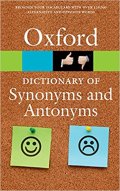
This is where writing becomes work. It’s time to get out the Oxford Dictionary of Synonyms and Antonyms and delve into the many words that relate to and describe attraction. Or I can go online: ATTRACTION Synonyms: 33 Synonyms & Antonyms for ATTRACTION | Thesaurus.com

I make a list of the words that I think will fit my characters’ personalities. Then, I have to choose the words that say what I mean and fit them into the narrative. Sometimes, this means I will rewrite a sentence two or three times before it says what I intend and flows naturally.

desk_via_microsoft_stickers

courtesy Office 360 graphics

I have written two accidental novels. Both feature romances, and because the novels were spewed onto the page, the relationships developed without preplanning.

Now, I’m in the final stages of one of these novels. The last two years have been spent fine-tuning the attractions and showing the growth of their relationships while exploring the central theme through the events my protagonists experience. (Have I mentioned it takes me four years to get a book from concept to publication?)

For me as a person and as a reader, true Romance has an air of mystery, of something undiscovered. It has to be a little bit magical, or I can’t suspend my disbelief.

I have no trouble writing adventures for my people. I have no difficulty noticing when two characters are gravitating toward one another. Writing the mystery of attraction, injecting the feeling of magic into it is the tricky part.

Book- onstruction-sign copyWhen a beta reader tells me the relationship seems forced, I go back to the basics and make an outline of how that relationship should progress from page one through each chapter. I make a detailed note of what their status should be at the end. This gives me jumping-off points so that I don’t suffer from brain freeze when trying to show the scenes.

As I am rewriting the scenes involving a romance, I want to avoid weak phrasing. I look at the placement of verbs in my sentences. If it feels weak, as if told by an observer, I move the verbs to the beginning of the sentence so that my characters do things. I don’t want someone saying they did it. I want the reader to experience doing it.

    1. Nouns followed by verbs feel active. Bystanders narrate, but characters do.

Don’t get me wrong—some stories need an all-encompassing narrator. But most of the time, we’re not interested in being told what happened. We want to experience it ourselves, which is why I gravitate to one character’s point of view. Our characters are unreliable narrators, giving us their opinions and shading the truth, and are more interesting because of that.

lute-clip-artI think our characters have to be a little clueless about Romance, even if they are older. They need to doubt, need to worry. They need to fear they don’t have a chance, either to complete their quest or to find love.

Romance writers have it right: overcoming the roadblocks to happiness makes for great love stories. This is why I read in every genre. I try to learn what I can from the masters, seeing how they use their words to write their scenes and construct their stories.

Romance is drama, but it isn’t the entire story.

Adam Savage said something about drama and creativity on his recent podcast, talking about Stanley Kubrick’s creative process. He said that what Kubrick was good at was recognizing the points when a story could create drama.

And recognizing those places with potential is crucial to creating a great novel or short story. We will explore that thought further on Wednesday.

5 Comments

Filed under writing