
Plot points and conflicts are driven by the characters who have critical knowledge. The fact that some characters are working with limited information creates tension.
 In literary terms, this uneven distribution of knowledge is called asymmetric information. We see this all the time in the corporate world.
- One party in a business transaction has more or superior information compared to another.
- That inequality of information gives them an edge against the competition.
In a story, as in real life, a monopoly of information creates a crisis. An idle conversation will bore your reader to tears, so only discuss things that advance the plot. A conversation scene should be driven by the fact that one person has knowledge the others need.
The reader must get answers simultaneously as the characters, gradually over the length of a novel.
When I am writing a scene, I ask my characters three things:
The first question I ask is: “What is the core of the problem?” In the case of one story that was begun several years ago and never taken beyond the first draft stage, the core of the problem is Jared, my main character. The story is set in the World of Neveyah, and one of the canon tropes of stories set in that world is that all mages are trained by and work for the Temple of Aeos.
 Jared is hilarious, charming, naïve, a bit cocky, and completely unaware that he’s an arrogant jackass. He is a young man who is exceptionally good at everything and is happy to tell you about it. Jared has no clue that his boasting holds him back, as no one wants to work with him.
This boy is both the protagonist and the antagonist of this story.
The second question I ask is: “What do the characters want most?” Jared is a mage, and as such, he is a member of the Clergy of Aeos. He wants to be just like his childhood hero, or better. Jared needs approval and admiration to bolster his sense of self-worth. Everything he does is an effort to be seen as worthy.
Unfortunately, the leaders of the Temple of Aeos have plenty of heroes on hand and just want a mage who can be relied upon to get a job done well and with no fanfare.
The third question I ask my characters is this: “What are they willing to do to get it?” Jared has boasted many times that he will meet and overcome any obstacle, no matter how difficult the path to success is.
His mentors like him, but despair of his ever succeeding as a mage. They devise a simple (and on the surface) heroic seeming quest tailored to improve his attitude. They layer it with dirty and disgusting obstacles that he hasn’t planned for. Jared meets and works his way through these roadblocks one by one. His mentors ensure that when he does “rescue the kid,” he gets their message quite clearly. This is where the asymmetric information comes into play. Jared’s innocent assumptions make for a wonderfully wicked plot arc.
How will Jared’s story end? It ends in a satisfying mess with all the acclaim the young hero could ask for—along with a large serving of humble pie. But nothing can keep Jared down for long—he takes that embarrassment and embraces it with his own personal flair.
 When I started writing this story, I had the core conflict: Jared’s misguided desire to be important. I had the surface quest: rescuing the kidnapped kid. I had the true quest: Jared learning to laugh at himself and developing a little humility.
I had all the pieces and the completed first draft, but other projects had more priority. Then the pandemic hit, and this story was shelved.
Now, with all the hustle and bustle of moving to a new home, I need something short and sweet to work on for relaxation, and I came across Jared’s story. It needs serious revisions, but it’s one of my favorite Neveyah stories, as it is not dark as they usually are. Jared’s tale of woe is full of gallows humor, detailing the deeds of a hero who becomes a man.
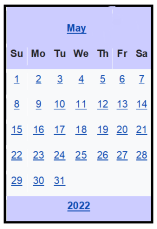 Calendar time is a layer of world-building. It sets the story in a particular era and shows the passage of time.
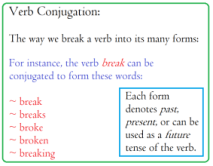 Consider the following sentences: “I eat,” “I am eating,” “I have eaten,” and “I have been eating.”
 Every story is unique; some work best in the past tense, while others must be set in the present.
 If I were writing a story starring me as the main character, I would open it in the year 2005 with a couple of empty-nesters buying a house in a bedroom community twenty miles south of Olympia.
 The city center is isolated, twelve miles from the freeway and twenty miles away from every other town in the south county. If a fictional story were set in this town, it would feature the same political and religious schisms that divide the rest of our country. There are other tensions. Some families have been here for generations, and a few don’t appreciate the influx of low-paid state workers buying cookie-cutter tract homes (like mine) here.
 Two inches of rain fell the day we moved into our brand-new home in 2005, making moving our furniture into this house a misery. Our new house had no landscaping and rose from a sea of mud and rocks. With a lot of effort, we made a pleasant yard. When the housing bubble burst in 2008, many people on my side of the street lost their jobs, and some homes went into foreclosure.
 Our main street, Sussex, passes through a historic district. The buildings are all built from sandstone quarried at the old quarries. Many of the old buildings are home to antique stores. The masonic lodge is made of Tenino sandstone.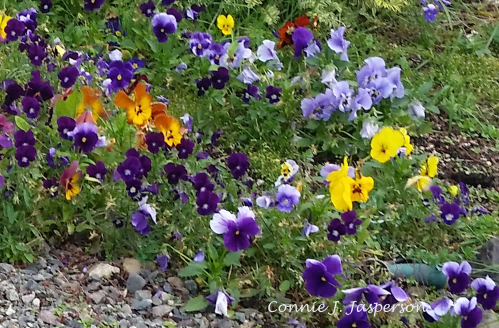
 In writing, we add depth and contour to our prose by how we choose and use our words. We “paint” a scene using words to show what the point-of-view character is seeing or experiencing. Yes, we do need to use some modifiers and descriptors.
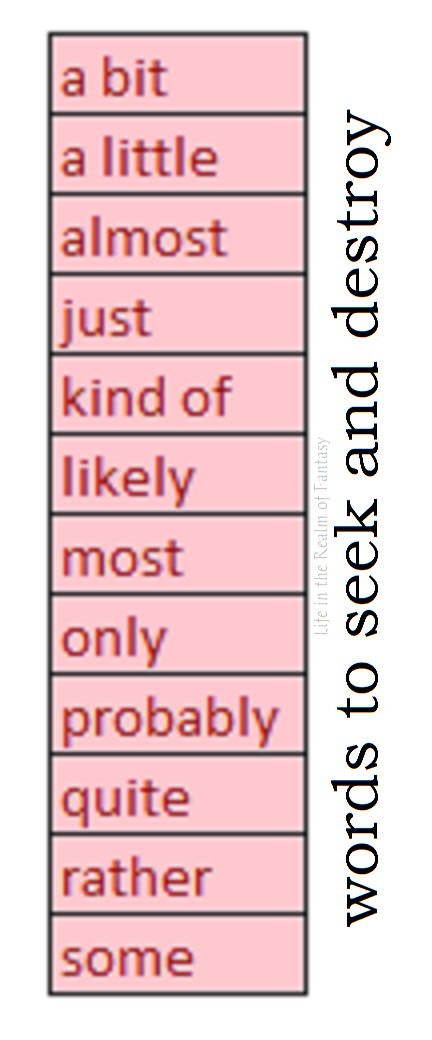
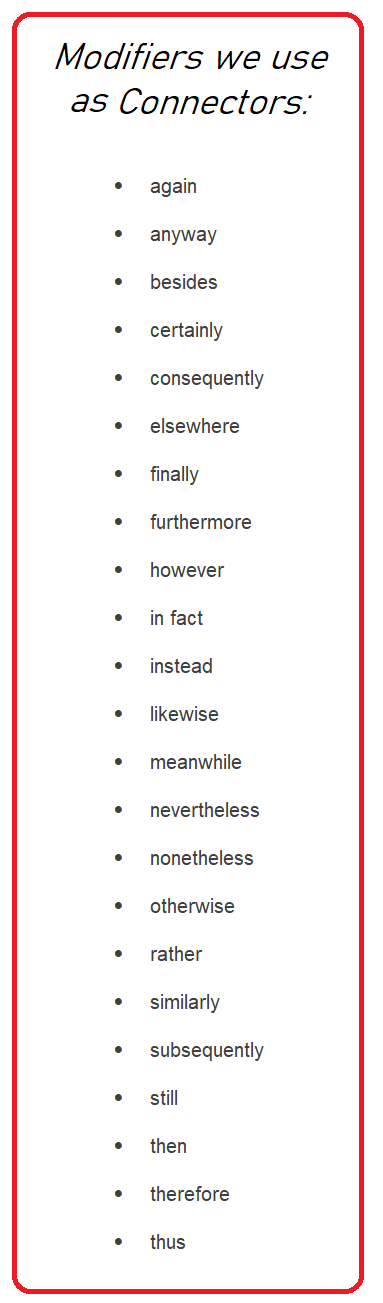 One of the cautions those of us new to the craft frequently hear are criticisms about the number of modifiers (adjectives and adverbs) we habitually use. This can hurt, especially if we don’t understand what the members of our writing group are trying to tell us.
 In the above sentence, the essential parts are structured this way: noun – verb (sunlight glared), adjective – noun (cold fire), verb – adjective – noun (cast no warmth), and finally, verb-article-noun (burned the eyes). Lead with the action or noun, follow with a strong modifier, and the sentence conveys what is intended but isn’t weakened by the modifiers.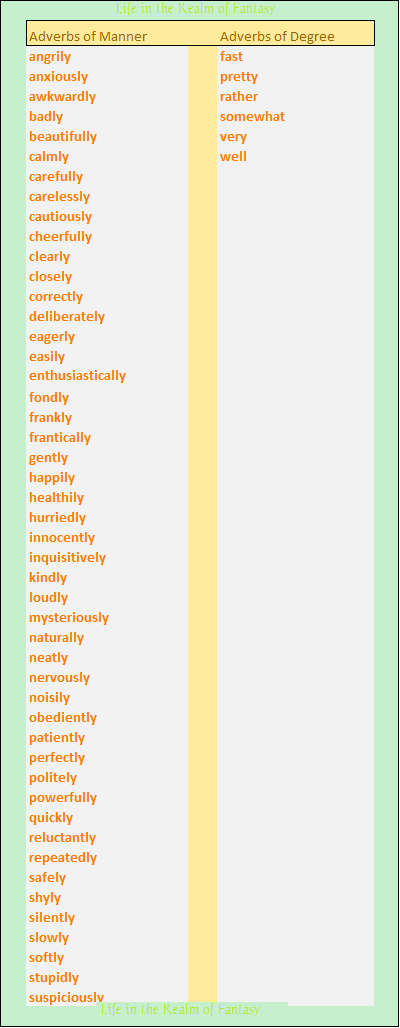
 In his book,
 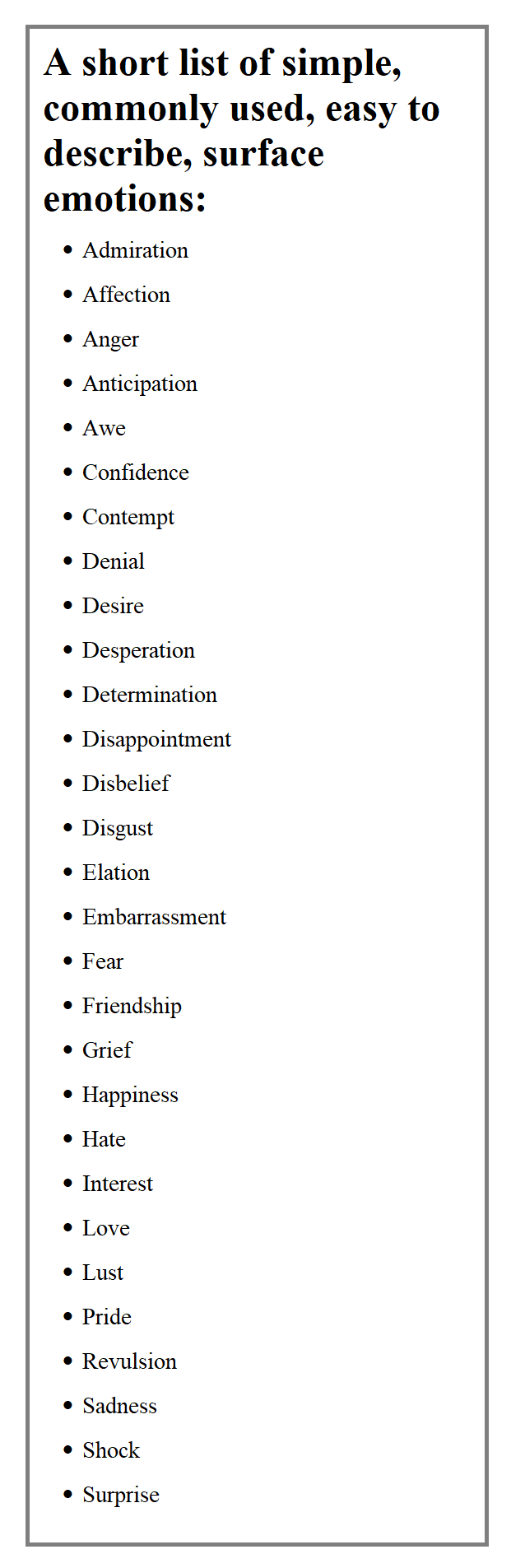 Truthfully, I find detailed descriptions of facial expressions to be boring and sometimes off-putting. Every author armed with a little knowledge writes characters with curving lips, stretching lips, and lips doing many things over, and over, and over … with little variation.
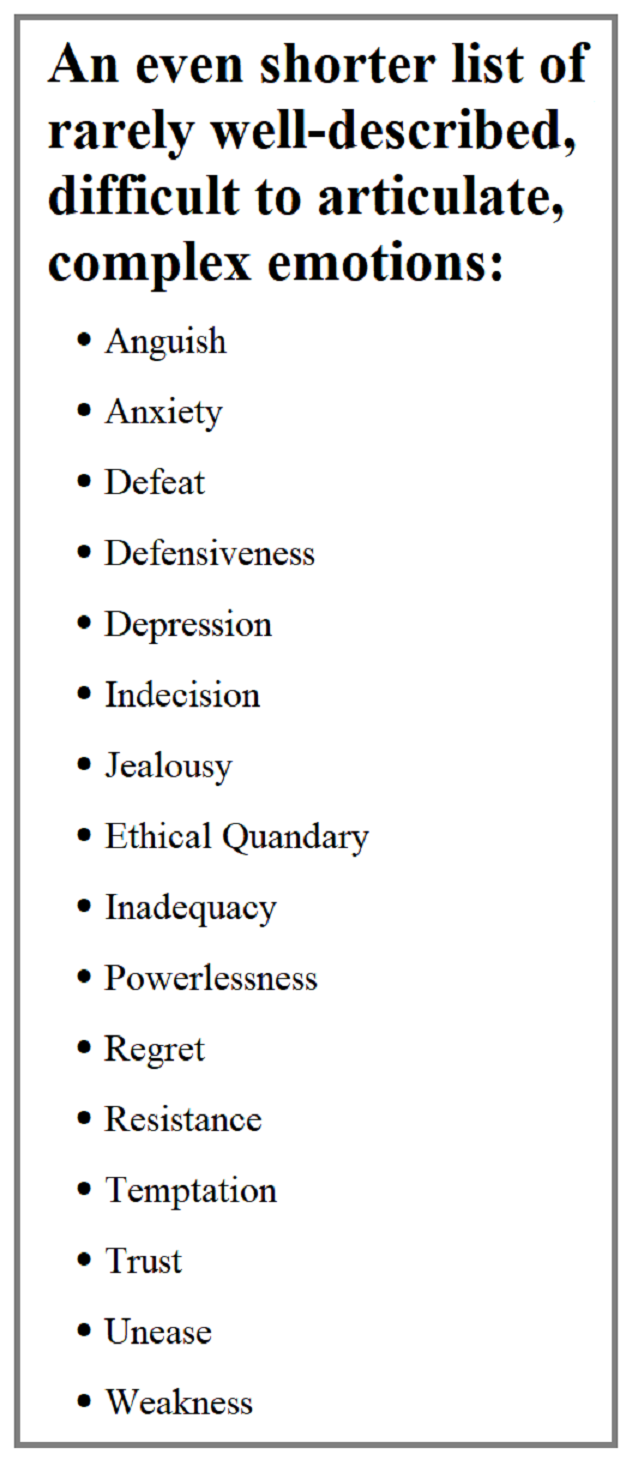 Simplicity has an impact, but I struggle to achieve balance. When looking for words with visceral and emotional power, consonants are your friend. Verbs that begin with consonants are powerful.
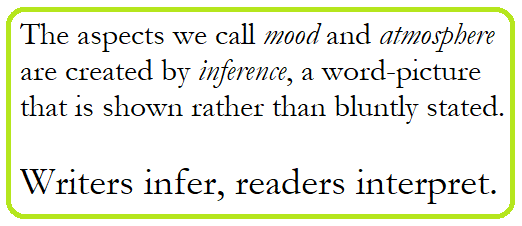 Mood is long-term, a feeling residing in the background, going almost unnoticed. Mood affects (and is affected by) the emotions evoked within the story.
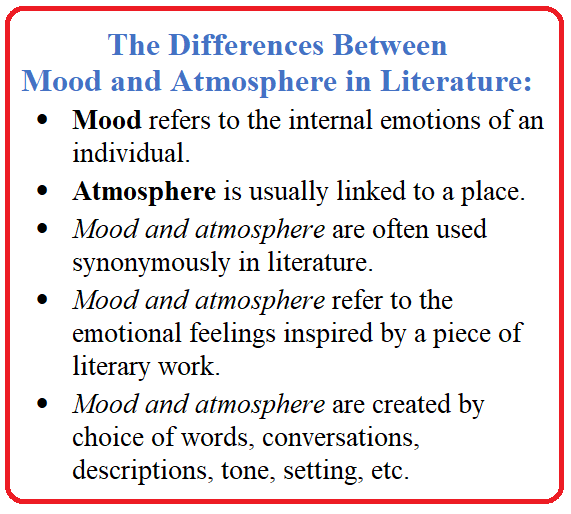 Undermotivated emotions lack credibility and leave the reader feeling as if the story is flat. In real life, we have deep, personal reasons for our feelings, and so must our characters.
 Robert McKee tells us that the mood/dynamic of any story is there to make the emotional experience of our characters specific. It makes their emotions feel natural. After all, the mood and atmosphere
  We know our story has a beginning, a middle, and an end. We sense something murky and mysterious in the middle. We instinctively know the pond is made up of layers, although we may not consciously be aware of it or be able to explain it.
 Surrealism seeks to release the creative potential of the unconscious mind, for example, by the irrational juxtaposition of images—think
  All the characters have reasons for their actions. The author offers implications and lets the reader come to their own conclusions. The reader sees the hints, allegations, and inferences, and the underlying story of each character takes shape in their mind.
 This layer will be shallower in Romance novels because the book’s point isn’t a more profound meaning—it’s interpersonal relationships on a surface level. However, there will still be some areas of mystery that aren’t spelled out entirely because the interpersonal intrigues are the story.
 This is the interpretive level:
 The commonly bandied proverbs of writing are meant to encourage us to write lean, descriptive prose and craft engaging conversations. These sayings exist because the craft of writing involves learning the rules of grammar, developing a broader vocabulary, developing characters, building worlds, etc., etc.
 Then, there are the stories where the author leans too heavily on the internal. Creased foreheads are replaced with stomach-churning, gut-wrenching shock or wide-eyed trembling of hands.
 Indeed, we shouldn’t be married to our favorite prose or characters. Sometimes we must cut a paragraph, a chapter, or even a character we love because it no longer fits the story. But have a care – people read for pleasure. Perhaps that phrase does belong there. Maybe that arrangement of words really was the best part of that paragraph.
 Handy, commonly debated mantras become engraved in stone because proverbs are how we educate ourselves. Unless an author is fortunate enough to have a formal education in the subject, we must rely on the internet and handy self-help guides to learn the many nuances of the writing craft.
 We have gotten a grip on my husband’s battle with
  LSVT BIG therapy
 Mornings usually find us wondering what we can get done that day, and evenings are often spent contemplating what could have gone better. I write whenever I can, and often end up rewriting something that seemed like a good idea at first, but which no longer works.
 We add depth and dimension to our work layer by layer. Some layers are more abstract than others, but each layer adds an element that gives a sense of reality to the fictional world.
 The mayor likes their community’s small-town feeling and ambiance and doesn’t want it to change. Her husband is trapped, as his job is to ensure his employer gets their foot in the door. He struggled for years to rise to his current position and can’t imagine giving it up.
 And we, the readers, desperately want our protagonist, the mayor, to get up and go to the coffeemaker. We can’t rest until we know if she either gets up and steps away from the table or someone notices the abandoned backpack and clears the meeting room.


 Life in the Realm of Fantasy