Tag Archives: writing

#amwriting: homonyms and honorifics

MSClipArt MP900390083.JPG RF PDAn editor once told me, “If you’re going to use grammar improperly, at least have the decency to misuse it consistently.” Since that day, I have made every effort to do so.

However, as a reader, I like to see that the author and editor both had a good grasp of the basics, and if a book is written with too many inconsistencies it ‘s hard to get involved in it.

We are all guilty of typos, homonym misuse, and the occasional comma splice. We sometimes are inconsistent with the words “sir” and “Son.” We make every effort to have our work read by editors and proofreaders, and still, invariably, some glaring blot of darkness sneaks through because certain aspects of the English language are as difficult to wrangle as a van full of toddlers on coca-cola.

One thing I’ve regularly noticed people have trouble with is the proper use of terms of endearment, such as “Sir,” or “Dad,” and “Mom.” The rules are basically simple to remember:

For people who are related, if you are saying it directly to them in place of their name, capitalize it.

  • “I love you, Son.”

If you are mentioning them in conversation, don’t capitalize it.

  • “My son is wonderful.”

Terms of endearment can also be relatively impersonal, denoting a friendship, or can even be slightly patronizing. If the speaker is not related to the person in question, do not capitalize it.

  • “I wouldn’t do that, son.”

Then there is the issue of the word “sir.” It is an honorific. Quoted from the Chicago Manual of Style section 8.32:

Honorific titles and respectful forms of address are capitalized in any context with several exceptions:

  • sir

  • ma’am

  • my lord

  • my lady

Where king/queen, Lord, or Sir is used as part of someone’s name, it is always capitalized, as are these honorifics:

  • King Olav, and Lucille, the Queen of Darkness
  • Lord John Davies; Lady Mary Shelton
  • Sir William Neville

Where king/queen is employed in the context of a general reference it is lowercased:

  • “Hello,” said the king.

But should one capitalize the word “sir” when it’s used in dialogue? Which of the following would be correct? “Yes sir.” OR “Yes Sir.”

If the reply is to a respected person in general, it is written with no capital, as it’s not a formal name. But you do need a comma just you would with a formal name:

“Yes, sir.”

“Yes, George.”

For a more in-depth exploration of that subject see my post of March 14, 2016: son and sir: to capitalize or not?

When writing dialogue: if your speaking character is in the military and the person he/she is addressing has a military rank above them, and is speaking in their military capacity you must capitalize it. The exception to this is if a younger person of lesser rank is talking to an older person of higher rank in an informal setting. At that point, the younger person is simply speaking respectfully to an older person, and “sir” does not need to be capitalized.

Remember, English is a strange and mysterious language, and is one even which even native-born speakers rarely master. While it has rules, it has many exceptions to those standards, so it is easy to be confused. Your word-processing program’s spell checker won’t notice these things because they aren’t misspelled.
to lie means to restHomophones: Words that share the same pronunciation, regardless of how they are spelled and Homonyms: Words that sound alike, but have different meanings:

  • there, they’re, their
  • to, too, two

It’s also good to recognize homographs (words that share the same spelling) that have different pronunciations and meanings. These words include:

  • desert (to abandon) and desert (arid region)
  • tear (to rip) and tear (a drop of moisture formed in the eye)
  • row (to argue or an argument) and row (as in to row a boat or a row of seats—two words which are also a pair of homophones)
  • bark (the sound of a dog) and bark (the skin of a tree)

Capitonyms are words that share the same spelling but have different meanings when capitalized. They may or may not have different pronunciations. Such words include:

  • polish (make shiny) and Polish (from Poland)
  • march (walk or advance) and March (the third month of the year in the Gregorian calendar)
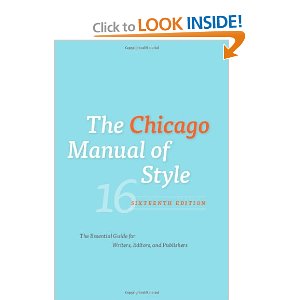
chicago manual of styleNegotiating the shoals of English grammar can be tricky, and it’s easy to get a fortune tied up in reference books. However, if you are on a tight budget, these two good references will help immensely with gaining some mastery of it:

I always recommend these two as they are the most comprehensive examples of their kind, and good, lightly used volumes are sometimes available second hand through Amazon.

Strunk and White’s Elements of Style is an excellent reference book if the Chicago Manual of Style is too daunting for you, as it’s not nearly as detailed and does hit the high points, and old copies are always available in second-hand bookstores.

Comments Off on #amwriting: homonyms and honorifics

Filed under writing

#amwriting: the rough draft

My Writing LifeI have begun a new novel set in Neveyah. It is the “how it all began” novel and takes place at the beginning of their recorded history. It’s been rolling around my head, and bits of this story are alluded to at various points all through the Tower of Bones series and also Mountains of the Moon.

The protagonist of this story is mentioned regularly in the Tower of Bones series as a character featured in children’s books. He’s portrayed as a kind of superhero, doing many impossible things.

But as always, there was a real man and real events at the core of the mythology.

I am taking the mythical man and giving him his place in history as the founder of the City of Aeoven, the College of Warcraft and Magic, and the first leader of the Temple of Aeos. I had the basic story drawn up back in 2009 when I began devising the world of Neveyah—three lines mentioning their childhood heroes.

The events that launch Aelfrid down the path of the mythic hero are all laid out. Now I must connect the dots and bring him to life.  If the story grows too large, it will be published as a two volume set, but my intention is to keep it to the same length as Valley of Sorrows.

As an indie, I must pay CreateSpace up front for my stock whenever I go to book fairs or signing events, so keeping my costs down is critical. CreateSpace costs are dependent on the length of the book, so if I have to pay $6.99 for each book, it limits  how much stock I can afford to keep on hand. I don’t want to run short of books, so I try to keep my costs to below  $5.00 per book. This also makes donating them to libraries and shelters affordable.

Even though Tower of Bones was published first, the rough draft of Mountains of the Moon was actually written first. In early 2009 I had been asked to write an epic fantasy story-line for a Final Fantasy-style anime-based RPG that was never built. For that reason, the world building was super-heavy.

Before I even had a story, I had to spend months

  • devising history and mythology
  • designing all the many environments where the story would take place
  • drawing maps
  • designing the creatures the characters do battle with
  • I also had to design the rules for magic, including its limitations

Having all these things so well-drawn and documented has been a bonus, as I can just write the story. The setting is clear in my head, laid out in a style sheet for that world, and the terrain is detailed on maps.

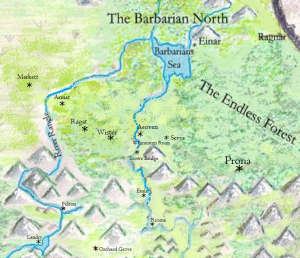
The north in the time of AelfridI have learned from the mistakes of others. Unlike the Saga of Recluce series, my maps for the early days detail the world as it was then, so there is no struggling to guess where the major towns are. (See my post, of  March 10, 2014, Spanking L.E. Modesitt Jr.)

I would definitely do two things differently, if I were to create that world today: the calendar, and the names of the days. I wouldn’t go with a 13-month lunar calendar, and I wouldn’t name the days after Norse gods.

But the calendar is canon now, and just as in real life, you must work with what you have. So, right now I am nearing the first plot point, where the first calamity occurs. Since this is the rough draft, everything to this point is really sketchy—a lot of “he said,” and “he went,” just to get the ideas down and everything in place.

These “telling and not showing” places are road marks, to guide me when I sit down to write the true first draft. My synopsis was about 3000 words. This rough draft will top out at about 55,000 words, and the first draft of the novel itself will be around 90,000 to 100,000 words.

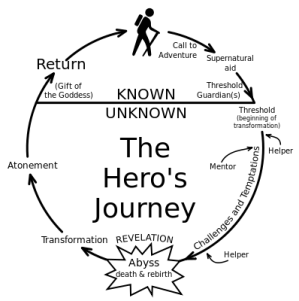
398px-Heroes journey by Christopher Vogler

Hero’s Journey, by Christopher Vogler, via Wikipedia

What I am doing at this point is setting the scene, introducing and developing the characters, and finding the reasons why they are who they are as people. I have a grip on my mentor’s character, and also the side characters.

I know my protagonist fairly well, although what initially motivates him is still a bit of a mystery. His personality and what he has to do are clear, but I haven’t yet discovered what lies within him that pushes him to achieve this thing. That is part of the journey for me.

For this book, I know exactly who my villain is, and how he came to be that person. He is new to me, but his motivation is clear and easy to imagine. I feel a real connection to him.

Altogether, if everything goes according to plan, writing this book will take about a year for me to get it to the final draft and into the editing process.

3 Comments

Filed under writing

#amwriting: advancing the plot

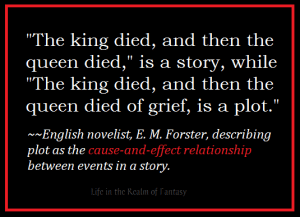
e.m. forster plot memeIn the previous post, I discussed the story arc, and how it relates to what E.M. Forster said about the plot: that plot is the cause-and-effect relationship between events in a story. The story arc is a visual description of where events should occur in a story. For me, knowing where they should happen is good, but it doesn’t tell me what those events are.

Planning what events your protagonist will face is called plotting, and I make an outline for that.

“Pantsing it,” or writing using stream-of consciousness, can produce some amazing work. That works well when we’re inspired, as ideas seem to flow from us. But for me, that sort of creativity is short-lived.

Participating in nanowrimo has really helped me grow in that ability, and one nanowrimo joke-solution often bandied about at write-ins is, “When your’re stuck, it’s time for someone to die.” But we all know that in reality, assassinating beloved characters whenever we run out of ideas is not a feasible option because soon we will run out of characters.

As devotees of Game of Thrones will agree, readers (or TV viewers) get to know characters, and bond with them. When cherished characters are too regularly killed off, the story loses good people, and we have to introduce new characters to fill the void. The reader may decide not to waste his time getting invested in a new character, feeling that you will only break their heart again.

The death of a character should be reserved to create a pivotal event that alters the lives of every member of the cast, and is best reserved for either the inciting incident at the first plot point or as the terrible event of the third quarter of the book. So instead of assassination, we should resort to creativity.

This is where the outline can provide some structure, and keep you moving forward.  I will know what should happen in the first quarter, the middle, and the third quarter of the story. Also, because I know how it should end, I can more easily write to those plot points by filling in the blanks between, and the story will have cohesion.

Think about what launches a great story:

The protagonist has a problem.

You have placed them in a setting, within a given moment, and shown the environment in which they live.

You have unveiled the inciting incident.

Now you need to decide what hinders the protagonist and prevents them from resolving the problem. While you are laying the groundwork for this keep in mind that we want to evoke three things:

  1. Empathy/identification with the protagonist
  2. Believability
  3. Tension

We want the protagonist to be a sympathetic character whom the reader can identify with; one who the reader can immerse themselves in, living the story through his/her adventures.

Also, we want the hindrances and barriers the protagonist faces to feel real to the reader. They must be believable so that the reader says, “Yeah, that could happen.” Within every scene, you must develop setups for the central events of that moment in their lives and show the payoffs (either negative or positive) to advance the story: action and reaction.

Each scene propels the characters further along, each act closing at a higher point on the story arc, which is where the next one launches from.

Some authors resort to “idle conversation writing” when they are temporarily out of ideas.  Resist the temptation—it’s fatal to an otherwise good story. Save all your random think-writing off-stage in a background file, if giving your characters a few haphazard, pointless exchanges helps jar an idea loose.

imagesDon’t introduce random things into a scene unless they are important. What if you had a walk-on character who was looking for her/his cat just before or just after the inciting incident? If the loss of the cat is to demonstrate the dangers in a particular area, make it clear that it is window dressing or remove it.

If the cat has no purpose it needs to be cut from the scene. To show the reader something  is to foreshadow it, and the reader will wonder why the cat and the person looking for it were so important that they had to be foreshadowed.

Every memorable element in a fictional story must be necessary and irreplaceable.  In  creative writing, this concept is referred to as “Chekhov’s Gun,” as it is a principal formally attributed to the great Russian playwright, Anton Chekhov.

Finally, we want to keep the goal just out of reach, to maintain the tension, and keep the reader reading to find out what will happen next. Readers are fickle, and always want what they can’t have. The chase is everything, so don’t give them the final reward until the end of the story.

But do have the story end with most threads and subplots wrapped up, along with the central story-line. Nothing aggravates readers more than going to all the trouble of reading a book to the end, only to be given no reward for their investment of time.

2 Comments

Filed under writer, writing

#amwriting: A Writer’s Armamentarium by Jennifer Vandenberg

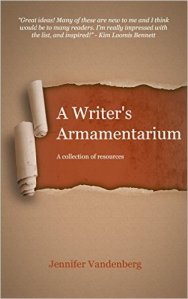
armamentarium coverWe all have times when we are at a loss for an idea. I love books that will give the creative muse a little kick in the pants. An intriguing little book in the writer’s arsenal is available for pre-order now.  A Writer’s Armamentarium, by Jennifer Vandenberg is a nifty little compendium of lists and writing prompts–things to  nudge your muse when you are a little bit stalled and blocked.

I came to know Jennifer through the online community of the Lewis County Writers Guild, a wonderful group of people I met at the 2015 Southwest Washington Writers Conference

CJJ: A Writer’s Armamentarium is an awesome title for book. What exactly is an Armamentarium?

JV: An armamentarium is a collection of resources used for an activity. It is often used in a medical context, but I loved the idea of creating a collection of lists that writers could use when they needed a bit of inspiration.

CJJ: Who did you create this book for?

JV: At first I created it for me and all the varied topics I’m interested in. As I started getting remarks from beta readers I learned that writers were more interested in these lists than non-writers so I included the chapters that writers would find most interesting. I hope that all writers, from hobbyists to professionals, can find inspiration for their stories among these lists.

CJJ: What made you decide to embark on such an ambitious project?

JV: I had dreamed of creating this book from my personal lists for about four years. I finally felt I had collected enough knowledge to fill out a book and I was excited to get started. Cleaning up and fact checking these lists took longer than I expected, but I loved every minute. This book is definitely a passion project for me.

CJJ: I was fortunate to read an advanced copy of this book, and loved the list of unusual words. What is your favorite unusual word, and why?

JV: I have so many favorite words that it is hard to pick just one. My favorite word from the Writer’s Armamentarium is omnology, which means the study of everything. I consider myself an omnologist, which sounds better than “someone who can’t decide what to focus on.”

CJJ: Let’s talk about your other work. Tell us about your Travis Eldritch series of short stories. Who is Travis, and how did you come to write about him?

JV: I love my Travis Eldritch series. He’s a private detective living on a moon in a system that has thirteen moons. In this system everyone is given a Problem at birth by the gods. Travis’s Problem is that he turns into a statue at random moments. This Problem has both advantages and disadvantages. Travis follows his gut more than his brains, but he and his partners manage to stop the bad guys eventually.

Each story is about 9,000 words. Six books have been published so far as eBooks on Amazon and in total there will be twelve books. Each story stands on its own, but there is an overarching subplot that connects all the books.

I’m a discovery writer and sometimes I just sit down and start writing with no idea of what is going to happen. I had this Sam Spade-like character talking to me so I started writing down his thoughts. Travis was born and he continues to tell me about his adventures.

CJJ: You have also written a book, Goofy Tips for a Happy Disney Vacation. What inspired that book?

JV: For three years I wrote a Disney travel blog at www.agoofyidea.com. New posts came out on Monday, Wednesday, and Friday. At the end of each post I wrote a Goofy Tip, a quick suggestion to improve the reader’s Disney vacation. I put all of the tips from the first year of the blog into a book so people could access helpful tips in one source.

This July I will be overhauling A Goofy Idea. I am creating a serial that is part fantasy, part Disneyland travelogue, about a teenage girl who was born in a book, but now lives in our world, and her fight with story spirits that want to pull her into their worlds. This story will be published on the website one chapter a week. It will be free to anyone who loves Disneyland and great stories.

CJJ: I love serials–some of the best work out there began as a serialized novels. I look forward to reading this. But, what has been the largest hurdle for you as an indie author?

JV: I love to write but I don’t love to market. My largest hurdle is balancing my time between the creative end and the business end of indie publishing. If I could have someone else do my marketing I would, but instead I’m working at finding techniques that are both successful and enjoyable.

CJJ: It is indeed a business, whether you are indie or traditionally published. The indie has a more difficult path as they must finance the entire endeavor on their own, and nothing happens overnight. So what advice do you have for the author just embarking on the indie path to publishing?

JV: Join Facebook groups. Join both virtual and in-person writing groups. Sign up for helpful blogs. Writers love to talk about writing and you can learn so much, but more importantly you need to surround yourself with a group of people who will support you as you embark on this exciting and sometimes difficult path.

CJJ: If you had it all to do over again, what would you do differently?

JV: I’d write more. Every day I didn’t write set me back from achieving my publishing dreams.

CJJ: Finally, where can the reader find your books?

JV: All of my books are published as eBooks on Amazon. All my books are listed on my author page.

CJJ: Thank you, Jennifer, for taking the time to talk with me today about your forthcoming book, A Writer’s Armamentarium.

This intriguing little book is a fun and useful little guide for the author who may need a little jump-start to their creative muse. Once Jennifer has it in paperback form, it will also be a nifty little book to have on the coffee table as a conversation piece, or as a gift for anyone who likes odd little self-help books.

>>><<<

steampunk Jennifer - CopyGeology student, National Park ranger, secretary, tax preparer, swim instructor, Hallmark sales associate, school aide, library assistant, children’s bookseller, merchandise supervisor, property curator, volunteer, food service employee, farmer, and blogger. Jennifer has had all these jobs and she’s not even old enough to receive social security. However, no matter where she worked, Jennifer has always been a writer.

In 2014 she won the Short Fiction Writers Guild Flash Fiction award for her evil Christmas entry, Advice from Siblings. She was a panelist at 2015 Left Coast Crime and gives writing workshops around her southwest Washington community.

Check out her website www.jennifervandenberg.com to learn about all her various writing projects. She has turned her Mattie Garrets/Jackson Pierce mystery series into a podcast on iTunes and will be starting a YouTube channel in summer 2016. She also plans to publish her first non-fiction book in May and start a fantasy/Disney travelogue serial in July. There are no limits to Jennifer’s imagination.

You can find Jennifer at:

Jennifer’s Author Website:

2 Comments

Filed under Literature, Self Publishing, writing

#amwriting: too many words

My Writing LifeI have been accused of using too many words to say what I mean—and my critics were right. For the last four years, I have been on a quest to learn how to convey a story and keep my reader involved. I’ve had some successes and also failures. The successes keep me going, and every failure inspires me to figure out what went wrong.

Most of the time it was my love of playing with words that derailed my story. Today’s example is a passage from an early work of mine. I will be rewriting this book over the course of the next few years, once the three books I am currently working on are published.

When I rewrite this book, I will eliminate the verbosity. I won’t change the basic story, only pare down the wordiness. This book was written for my first NaNoWriMo and was completely unplanned. I had no idea of what I was going to write until 12:01 a.m. on Nov. 1st, when I began writing it. In the back of my mind lurked Fritz Lieber’s great character, Fafhrd, although he’s not represented in this tale. Yet, Fafhrd and the Grey Mouser influenced this tale.

It still shocks me that over the course of 21 days, a 92,000 word story about a group of mercenaries in a medieval Alternate Earth emerged from my subconscious mind.

The original manuscript is a great example of everything that is both wrong and right about a  stream-of-consciousness first draft.

  1. Positive: It has a great, original plot,
  2. Positive: It has wonderful characters,
  3. Positive: It (surprisingly to me) has a basically good story arc.
  4. Positive: It ends well.
  5. Negative: I led off with an info dump.
  6. Negative: I used no contractions (Doh!)
  7. Negative: I made way too free with my adverbs and modifiers. This fluffed up the word-count by about 15,000 unnecessary words.
  8. Doubly negative: I used hokey phrasing, because I was trying to write well.
  9. Negative: Oh, and another info dump was inserted toward the end.

The example:

“I’ve brought along something so that we shall not have to boil the water to drink it,” ventured Lackland as he uncorked a bottle of wine. “Chicken Mickey was right about the trots you know, but I will never tell him that; the old thing enjoys mothering us so. It would take away the joy of nagging us to death if he thought we were able to care for ourselves.”

What? We shall not? From what hell hath this beast arisen? Still, once the hokey crap is pared away, something worth reading can be found.

SO, let’s take that unwieldy, 70-word behemoth of a paragraph apart and trim it down.

“I brought something so we won’t have to boil water to drink.” Lackland uncorked a bottle of wine. “Mick was right about the trots you know, but I’ll never tell him. It would take away the joy of nagging us to death.”

_72982736_vikings courtesy of BBCI trimmed it from 70 words to 42, and made it stronger without changing the meaning or intention. I changed the way Lackland refers to an absent friend, Chicken Mickey, the Rowdies’ supply-master. By this point in the ms, there is no need to use his full mercenary nickname every time he’s mentioned. Everyone knows Mick’s nickname and why he has it (he retired from the Rowdies to be a chicken farmer for a while, but that didn’t work out) so going with the short version of his given name, “Mick,” immediately helps that paragraph.

In the process, I axed one of my favorite sentences: “The old thing enjoys mothering us so.” It’s redundant as the sentiment is expressed in the sentence that follows, which also shows Mick’s character despite his absence.

Also of great benefit is the cutting away of unneeded words: along, to drink, ventured, as—these are words that can “go without saying” in the context of that paragraph. The reader understands they are there as silent partners: unwritten but understood. At this point, I feel that no dialogue tag is needed because Lackland has an action to perform, showing both who speaks and setting the scene.

Using contractions makes dialogue more natural. Some people would go even further than I did, and make “It would” a contraction. I don’t like the way “It’d” looks or sounds so I won’t do that—and that is part of what I think of as my voice. It is a deliberate usage choice, one that I prefer.

When I wrote the first draft of this manuscript, I was at a different stage in my writing development than I am at now. I had never been involved with a writing group, and I had never studied the mechanics of writing. The rudimentary skills I had were developed from trying to copy the styles of my favorite authors, but I had a limited understanding of the mechanics of writing fantasy fiction. The only writing I had done was for myself and my children, although I had done a lot of that.

While I had a standard high-school education and some college and had done a bit of writing in the course of my work, I realized I was woefully uneducated about the craft of writing. I made it my business to get an education, via the internet. It’s free and available to anyone who wants to learn. You just have to want to learn.

I began attending seminars, and writer’s conventions. I scavenged garage sales for books on the craft of writing and I joined local writing groups. I found other writers and made life-long friends, learning a great deal from them.

Nowadays, I have my own voice and my own style. I write far leaner prose in my first draft than I did in those days, and the editing process is not nearly such an ordeal as it was the first time I had one of my manuscripts edited professionally. I continue trying to learn the craft, updating my education constantly.

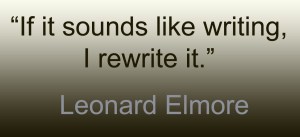
leonard elmore quoteChoose your words carefully, so they express what you want to say clearly, and in as few words as is possible, while still conveying the atmosphere and mood.

  1. Nothing can be included that does not advance the plot.
  2. There can be no idle conversations “just to show they’re human”: conversations must advance the story.
  3. We don’t need a chapter detailing the history behind the core conflict. Let that emerge as needed.
  4. Never use three words when one suffices.
  5. If you’re in love with a passage you wrote because it’s “great writing,” it probably should be cut.
  6. Ax all redundancies. It only has to be said once, unless the character has forgotten it, and that “forgetting” is a core part of the plot.
  7. Adverbs are important. They need to to be chosen carefully and used sparingly.
  8. If you occasionally love to wax poetic, go ahead and write poetry—just not in the middle of your political thriller. You have permission to love action-oriented genre fiction written with lean, mean prose, and still appreciate (and write) poetry.

What I didn’t know when I first began this journey is this: deleting the excess verbiage will add up to large gains, reducing the overall length of the book, increasing readability and (hopefully) the reader’s enjoyment.

9 Comments

Filed under Publishing, writing

#amwriting: Verbs: when to use “if I was” and “if I were”

epiphanyMost of my ideas for blog posts arise during work, or in conversation with other writers. Usually, these revolve around concepts I have a basic understanding of but haven’t really given a lot of thought to. Writing about them helps to clarify and cement them in my mind.

Every now and then a grammar topic comes up that I’ve never really thought about. If it’s a subject I am not really clear on, I will research it, and then try to distill my discoveries into bite sized chunks.

We writers often operate by instinctively using the knowledge we gained in school. Often, as in my case, that knowledge is a bit tarnished and worse for the wear.  Today’s topic is one fabulous instance of that very thing.

Last Tuesday, we were standing around the virtual watercooler at the virtual offices of Myrddin Publishing. We have authors and editors on three continents, so we use a virtual office. A grammar question arose, and this is how the conversation went:

Shaun Allan (UK) said: Grammar question, please. ‘As if it were’ or ‘as if it was’ ?

Ross Kitson (UK) said: Would it depend upon the subject of it? If it were an individual then I’d say “was” whereas if ‘it’ were an event then I’d say ‘were.’ Might be best to ask a non-Northerner.

Connie Jasperson (me) (US) said: Ross Kitson is correct (in my opinion).

Stephen Swartz (US) said: were.

Gary Hoover  (US) said: A HUGE issue with most people is the subjunctive tense. Anything that is not actual but could be is subjunctive (as your phrase indicates). “If I were a carpenter.” Is correct because the singer isn’t actually a carpenter. “I was a carpenter” is correct if he actually was. (Gary inserted the link to Wikipedia’s article on “English Subjunctive”)

Alison DeLuca (US) said: I’m a subjunctive slore! ‘Were’ all the way.

It turns out this conversation revolved around the “Past Subjunctive Tense.” Gary, Stephen, and Alison had it right.

As a result of this conversation, I did a little more digging, wanting to know more about this oddly named construct. It just so happens that on Saturday morning, Stephen Swartz and I both happened (at the same time) upon an excellent blog post by the Grammar Girl, Mignon Fogarty.

When you go out to Wikipedia the whole subjunctive verb thing looks quite complicated, but it doesn’t have to be. The subjunctive (in the English language) is used to form sentences that do not describe known objective facts. For the purposes of this post, we are only looking at Past Subjunctive definitionSubjunctives: the verbs was and were.

But first, what does “subjunctive” mean?:

Dictionary.com defines “Subjunctive.” as:

adjective

1.(in English and certain other languages) noting or pertaining to a mood or mode of the verb that may be used for subjective, doubtful, hypothetical, or grammatically subordinate statements or questions, as the mood of ‘be’ in ‘if this be treason.’

Compare imperative (def 3), indicative (def 2).

noun

2.the subjunctive mood or mode.

3.a verb in the subjunctive mood or form.

First, let’s consider what Past Subjunctive Tense covers: how to use the words ‘was’ and ‘were.’

Which is correct?

  • I wish I were a penguin. I would fly through the water.
  • I wish I was a penguin. I would fly through the water.

If I am only  only wishing I were a penguin, were is correct. If I actually could be a penguin, was would be correct and I would have to rewrite my sentence, by deleting ‘I wish’ and changing ‘would’ to ‘could.’

The Grammar Girl goes farther. She says: Believe it or not, verbs have moods just like you do. Yes, before the Internet and before emoticons, somebody already thought it was important to communicate moods. So, like many other languages, English has verbs with moods ranging from commanding to questioning and beyond. The mood of the verb “to be” when you use the phrase “I were” is called the subjunctive mood, and you use it for times when you’re talking about something that isn’t true or you’re being wishful.

I love that clue—that verbs can be wishful.

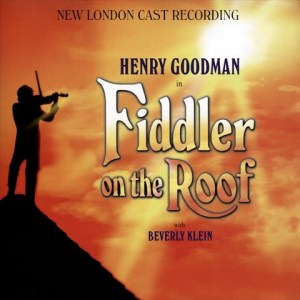
fiddler onthe roof soundtrackThe Grammar Girl gives us a great example: Think of the song “If I Were a Rich Man,” from Fiddler on the Roof. When Tevye sings “If I were a rich man,” he is fantasizing about all the things he would do if he were rich. He’s not rich, he’s just imagining, so “If I were” is the correct statement. This time you’ve got a different clue at the beginning of the line: the word “if.”

However, there are times when we use the verb ‘was’ even though the subject of the sentence has not yet happened, or may not happen at all. Grammar Girl says:  But “if” and “could” and similar words don’t always mean you need to use “I were.” For example, when you are supposing about something that might be true, you use the verb “was.”

Past subjunctive verb forms express a hypothetical condition in present, past, or future time:

  • Don’t complain about the food. What if I was a chef?
  • I wish I were reincarnated. What if I was a penguin?

If it’s only wishful thinking, we use “were.” If it might be true but we don’t know or it hasn’t happened, we use “was.”

So now, thanks to a bunch of editors hanging around the water cooler and the miracle of the internet, we know how and when to use our moody, past subjunctive verbs.

If you are a grammar junkie (as I am becoming) I highly recommend you check out Mignon Fogarty’s Grammar Girl blog, or pick up her books.

4 Comments

Filed under writing

#amwriting: son and sir: to capitalize or not?

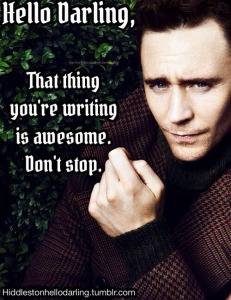
Tom Hiddleston MemeTerms of endearment are often used in casual conversation. Each has their own implications which are highly dependent on tone of voice, body language, and social context.

They can be fairly impersonal, denoting a friendship. Conversely, they can be intimate, indicating a close relationship.

Used by perfect strangers they can also be patronizing and rude.

These words vary in creativity from the sublime to the ridiculous:

  • dear
  • mate
  • chum
  • darling
  • honey
  • baby-cakes
  • sweetheart
  • sugar
  • wuvvy-dovey

From Wikipedia, the fount of all knowledge: Saying “Hey baby, you’re looking good” varies greatly from the use “Baby, don’t swim at the deep end of the pool!” Certain terms can be perceived as offensive or patronizing, depending on the context and speaker. (end quoted text.)

This brings us to the word “son.” Again, as in so many other aspects of the writing craft, context is everything.

  • “I love you, Son,” said the doting father.

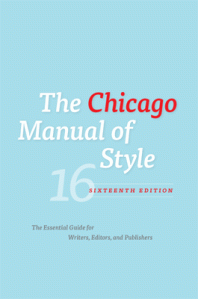
The_Chicago_Manual_of_Style_16th_editionFrom the Chicago Manual of Style, Section 8.35: Kinship names are lower-cased unless they immediately precede a personal name or are used alone:

  • my father and mother
  • Aunt Jane
  • the Bronte sisters
  • I believe Grandmother’s name was Marie
  • Please, Dad, let’s go.
  • She adores her aunt, Maud

But, in the past, instead of a boy’s name, men commonly called boys boy, kid or son, not as a name but as a neutral term of endearment. My interpretation of the word “son” in casual conversation is like this: I feel it should not be capitalized if it is being used to indicate friendship, or in a patronizing fashion.

Wikipedia claims that in an informal setting, such as a pub or gym, the use of terms of endearment is a positive politeness strategy among men. A term like “mate” or “son” shifts the focus toward the friendship existing between the speakers, yet maintains a slight emotional distance.

The problem here is the term “son.” In some cases, it is used when speaking to a man not related, but indicates friendship on the part of an older speaker in regard to a younger companion. I feel that, when used as a neutral form of endearment, the word “son” falls into the same class as:

  • Hand me the scissors, darling.
  • Have a beer, mate.
  • Gloria, dear—how’s your mother?
  • Grab that remote for me, love.
  • How’ve you been, old son?

The above endearments are not between speakers with a deep emotional attachment. They indicate camaraderie and nothing more–they are neutral. Therefore, “son” should not be capitalized if it is being used as a neutral term of endearment when speaking to a person you are not related to.

  • “Okay, son. Tell your ma I stopped by,” said his neighbor.
  • “Get off your high-horse, son,” said man next to him.

As stated above, The Chicago Manual of Style’s preference has always been to lowercase pet names, (which are terms of endearment) but in reality, you can’t go wrong unless you’re inconsistent, since the issue is guided by preference rather than rule.

The word preference means:

  1. a greater liking for one alternative over another or others.

synonyms: liking, partiality, predilection, proclivity, fondness, taste, inclination, leaning, bias, bent, penchant, predisposition

So, if you do choose to capitalize the word “son” when used as a term of endearment, be consistent. But also be aware that it’s not necessary.

Then there is the question of the word “sir.” It is an honorific. From the Chicago Manual of Style section 8.32

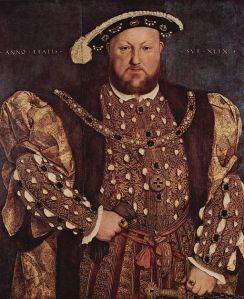
Portrait of Henry VIII (1491-1547) by Hans HolbeinHonorific titles and respectful forms of address are capitalized in any context with several exceptions:

  • sir
  • ma’am
  • my lord
  • my lady

Always capped:

  • Madam Speaker
  • Your Honor
  • Your Excellency
  • Her (His, Your) Majesty; His (Her, Your) Royal Highness
  • The Most Reverend William Ronstadt (Roman Catholic Bishop)
  • Lord John Davies; Lady Mary Shelton
  • The First Gentleman; the First Lady
  • The Right Honourable John Carter

Where king/queen is used as part of someone’s name, it is always capitalized:

  • King Bob, and Evelyn, the Queen of Darkness

Where king/queen is used as part of a general reference it is lower-cased:

  • “Hello,” said the king.

Should one capitalize the word sir when it’s used in dialogue? Which of the following would be correct? “Yes, sir.” OR “Yes, Sir.”

Paul-McCartney-on-playing-Rock-BandIf the reply is to a respected person in general, it is written with no capital, as it’s not a formal name. But you do need a comma just as you would with a formal name:

  1. “Yes, sir.” (General politeness.)
  2. “Yes, Sir Paul.” (Formally agreeing with a knight.)
  3. “Yes, Larry.” (Proper use of comma.)

When writing dialogue: if your speaking character is in the military and the person he/she is addressing has a military rank above them, THEN you must capitalize it.

If you are writing about Sir Paul McCartney’s favorite brand of socks, capitalize it.

You must also capitalize the words “sir” and/or “madam” when beginning a letter or an email. My favorite internet example of this is:

Dear Sir or Madam,

I am writing to inform you that you a related to a Nigerian prince. (Grammar Party Blog)

Just refer to me as “my lady” from here on out. Email doesn’t get better than that!

6 Comments

Filed under Publishing, writing

#amwriting: using repetition as a literary device

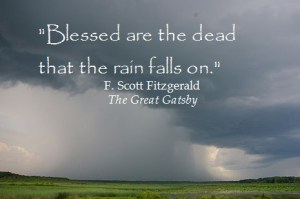
fitzgerald-great gatsby memeUnconsciously using the same words too often in our descriptions is one of the pitfalls of writing. It happens to all of us, and for me it occurs most often when I am laying down the first draft. I’m hurrying and trying to get the ideas out of my head and onto the paper and my vocabulary can’t keep up.

Many common words (the, and, etc.) don’t really stand out when used more than a few times in a paragraph, and you couldn’t write well if not for those words. However, some words will always stand out more than others, and if you use them more than once in a paragraph it looks like you’re unimaginative or a lazy writer. This is especially true if the word in question has a lot of synonyms you could have used instead of repeating the same word. Having a good thesaurus at hand is a great help to the brain-stranded author.

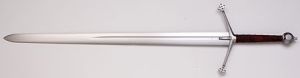
Scottish claymore replica Albion Chieftain, Søren Niedziella, CC BY 2.0

Some words don’t have a lot of obvious synonyms so you get hung up on the few you can find.  In my own work, the word sword is one of the main culprits. The type of blade my characters wield in the World of Neveyah books is a claymore, and four ensorcelled blades figure prominently in the Tower of Bones series.

Therefore, some obvious synonyms will not work as these are distinct blade types that are in no way like a broadsword.

  • Rapier
  • Epee
  • Foil

Because of this constraint, I am limited to:

  • Sword
  • Blade
  • Weapon
  • Steel (if I’m desperate, but I despise using that to reference a weapon that isn’t an epee or a rapier)

ozford american writers thesaurusHowever, sometimes we use intentional repetition:

Sometimes we want to emphasize a concept and repetition is the way to do it. Some of the best authors use the repetition of certain key words and phrases to highlight an idea or to show the scene. This technique is an accepted rhetorical device and is commonly found in mainstream fiction. It is used to evoke an emotional response in the reader, and can be exceedingly effective when done right.

Literarydevices.net says, “The beauty of using figurative language is that the pattern it arranges the words into is nothing like our ordinary speech. It is not only stylistically appealing but it also helps convey the message in much more engaging and notable way. The aura that is created by the usage of repetition cannot be achieved through any other device.”  (End quoted text)

Also according to literarydevices.net, repetition as a literary device can take these forms:

  • Repetition of the last word in a line or clause.
  • Repetition of words at the start of clauses or verses.
  • Repetition of words or phrases in opposite sense.
  • Repetition of words broken by some other words.
  • Repetition of same words at the end and start of a sentence.
  • Repetition of a phrase or question to stress a point.
  • Repetition of the same word at the end of each clause.
  • Repetition of an idea, first in negative terms and then in positive terms.
  • Repetition of words of the same root with different endings.
  • Repetition both at the end and at the beginning of a sentence, paragraph, or scene.
  • A construction in poetry where the last word of one clause becomes the first word of the next clause. (End quoted text)

Some famous examples of repetition as a literary device:

“Every book is a quotation; and every house is a quotation out of all forests, and mines, and stone quarries; and every man is a quotation from all his ancestors.”  Ralph Waldo Emerson, Prose and Poetry

f scott fitzgerald The Great Gatsby“About half way between West Egg and New York the motor-road hastily joins the railroad and runs beside it for a quarter of a mile so as to shrink away from a certain desolate area of land. This is a valley of ashes—a fantastic farm where ashes grow like wheat into ridges and hills and grotesque gardens, where ashes take the forms of houses and chimneys and rising smoke and finally, with a transcendent effort, of men who move dimly and already crumbling through the powdery air.” F. Scott Fitzgerald, The Great Gatsby

When an author writes it intentionally to drive home a point, repetition is an effective tool. It is when words are inadvertently used with a lack of creativity that repetition ruins a narrative.

Consider buying a thesaurus or make use of the many online thesauruses that are available.

I have a well-worn copy of the Oxford American Writer’s Thesaurus. This book has become just as important to me as my copy of the Chicago Manual of Style. This large book of synonyms can be purchased used from Amazon, for as little as $9.99 in the hardcover form. I do recommend purchasing this as a paper book rather than an ebook. Once you see the amazing variety of words at your disposal, it’s one you will refer back to regularly.


4 Comments

Filed under Literature, writing

#amblogging: wanted: flatiron for curly quotes and other blogging twists

300px-Barnum_&_Bailey_clowns_and_geese2Blogging regularly is one of the best ways to improve your writing chops but it can be like working for the circus.  Even when you really know the vagaries of your platform, a lot of strange things can happen in your work. They go unnoticed, doing their thing in the background, keeping it interesting.

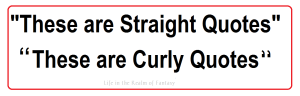
WordPress, the mighty bastion upon which my empire rests, uses ‘fancy quotes’ as the default format. While they do look better in a document, blogging can often be an off-the-cuff thing. Straight quotes are less apt to go awry.  I am not sure why this is the default, nor am I able to find a way to ‘unfancy’ them.

WordPress chooses to make things  fancy, but I don’t need fancy. Judging from the number of posts in their forums on the subject, I am not the only one.

In some places, these curvy morsels of madness are called ‘smart quotes.’ In others, they are ‘curly.’ I don’t like them because sometimes they end up facing the wrong way, and being a bit unobservant, I don’t catch that until after I’ve posted it.

I’ve discovered some out of date plug-ins that are no longer available for uncurling my curly quotes, but alas– ‘no longer available’ is not really helpful. I have a flatiron for my curly hair–I need one for WordPress’s curly quotes.

straight and curly quotesAnother seemingly random thing I’ve discovered the hard way: occasionally I will decide to cut a section and paste it elsewhere, only to find (after having published the post) that the cut section has magically reappeared, and I am now repeating myself, verbatim.

This happens so often that I neurotically look at the menu every time I right-click-cut anything, to make sure I am actually cutting and not merely copying.

I double-check the text. Yes, the cut piece is definitely cut and successfully pasted elsewhere. But when I click ‘save draft’ it magically reappears back in the place from which it was cut, and I am once again repeating myself.

gibberish-american businesses onlineThen there is the hinky formatting. Sometimes the formatting goes crazy  and no matter what I do, the spaces between the paragraphs vanish. My post becomes a wall of words. Highlighting the post and clicking on ‘clear formatting’ does not help.

The spaces will show up on the editing side of the piece, but they will have vanished when the post is saved and published. (Edit: removed repeated line. Cursed fluently.)

My hubby, the programmer, says this is most likely caused by some hidden formatting issue that happens when I am copying from a Word doc and pasting it into the post. I usually write my posts in a Word doc because I catch more mistakes that way. Then I paste it here and, using the ‘preview’ option, check, double-check, and check again for bloopers.

Randomly, the posts are rife with strange formatting that will not be removed no matter what remedy I try. If I was a programmer, I would know exactly what bit of code was causing it and fix it. Alas! I’m only an old lady with just enough knowledge to be dangerous.

Hinky formatting also occurs in my Blogger sites, but not as often. I love the way WordPress looks when it’s all going right, but I love the options Blogger offers and the compatibility with Google products such as YouTube videos. (Blogger is a Google product.)

Dealing with these little issues are why I try to write my posts several days in advance and schedule them for the time I want them to post. Once I have it scheduled, I will let it sit overnight and then come back and read it with fresh eyes. I catch a lot that way, but it’s amazing how many slip by me.

This is why I always say self-editing is not as effective as we’d like. No one sees my blog posts before they are published but me and invariably I miss some whopping eye stopper.

1024px-Trapeze_Artists_in_CircusThe most mysterious problem is the inadvertent posting of a piece that is

  • in the draft stage
  • full of bloopers
  • looks illiterate

Technically, that happens because I get side-tracked and instead of scheduling it as I normally do, for some crazy reason I click ‘publish’ instead of ‘save draft.’

I blame ghosts.

And curly quotes.

9 Comments

Filed under blogging, writing

St Albans… ‘render unto Caesar’

Photographer and author, Sue Vincent, takes us on a journey through British history via the architecture of St. Albans. It is in this village where the real influence of the Romans can still be seen. Roman and Victorian building styles collide and create something uniquely British.

5 Comments

Filed under Adventure