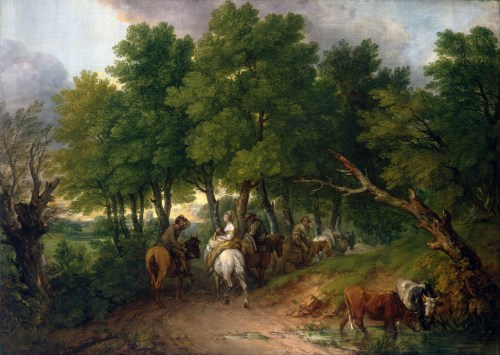
We had an exceptionally wet January here in my area of the Pacific Northwest. Usually, we get 8.19 inches (208 mm) of rain in January. But this year, we received 10.78 inches (273.8 mm) of precipitation. Some days, it just bucketed down.
 February here in my little town was dryer than usual, far less rainy than in other parts of the Northwest. We have seen the sun much more than usual over the last two weeks, which doesn’t bode well for the summer. I can’t help but think of the horrible heat we had last June. We don’t like it when it gets up to 110 degrees Fahrenheit (43.3 Celsius). It’s literally hell when you realize most people here don’t have air conditioning in their homes. Up through the 1980s, we never needed it, as summers rarely topped 80 degrees (26.6).
But it’s still early March, and Saturday morning was cool and sunny, and a perfect day to go to the Farmers Market in Olympia. The local farms and greenhouses had a good selection of early organic vegetables. It was crowded with folks like us, masked and keeping a respectful distance, but all of us were hoping for good bargains.
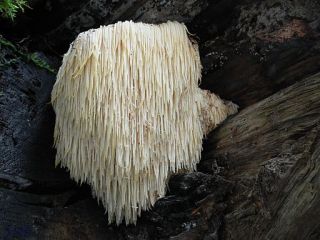 Edible mushrooms of all sorts abounded. One I hadn’t seen before, the lion’s mane mushroom, was the central feature in the displays of the two local craft fungi growers. It was interesting to look at, but … no.
Not on my plate, please.
However, local wines, hothouse veggies, winter apples, baked goods, carved boxes, silk scarves and hand-dipped candles abounded—the market was full of intriguing things .
Best of all, the musician on stage in the food court was really talented, a brilliant songwriter and guitarist. Great music, and a sunny day–what could top it?
Lunch.
So, we went to our favorite teriyaki restaurant, where I ordered my usual favorite dish, the spicy tofu bowl.
They must have a new cook. I can take a certain amount of culinary heat, and the dish I have grown to love over the last ten years can be tongue-tingling and a bit lip-burning.
But, on a scale of one to five, with one being bland and five the hottest, what I received was at least a ten on the volcanic pepper index.
I couldn’t eat it. But we had fun anyway. Now that I know a different cook is working there, I’ll order the teriyaki tofu bowl next time.
 On the writing front, last week was quite productive. I received the final chapters back for my blended novel from my editor and am now going over the manuscript one last time. This is a merging of the stories of two characters and the events of one overarching plot arc. It’s the parallel stories of two battle mages, a father and son, told from their unique generational viewpoints.
It’s not working as separate books, and in the final book of that series, the protagonists join forces to work together anyway. Since being an indie means I can do whatever I think will improve my product, I decided to put their concurrent stories into one book, telling the story with no repetition of ground already covered.
When deciding whose point of view should be primary in each chapter, I chose the character with the most interesting angle on the action. For the first half, it’s more from John’s point of view, but Edwin’s story kicks into gear in the middle, and they join forces at the end, preparing for the final book. It’s epic fantasy, so it’s big and sweeping, but still less than half the length of a Robert Jordan or Tad Williams book.
The whole series is getting a facelift. I’m always learning, always trying to improve myself and my work. So, when something doesn’t work, I’m not ashamed of admitting I was wrong and changing it up.
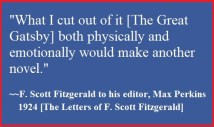
 This merger of two novels into one involved cutting a number of chapters out of each and layering the stories so that the timeline moves forward at the right pace and doesn’t repeat what we already know.
I think that with my editor’s sharp eye pointing out the rough spots, we’ve achieved a smooth narrative, but time will tell. I will have the book professionally formatted for paperback, as I just don’t have the patience for that anymore.
So, that’s how I’m spending my spring afternoons, re-editing old works, and putting the final polish on Bleakbourne on Heath, the novel that began life as a weekly serial for a now-defunct website.
It has an actual ending now. Once the final chapters have been run by my writing group, I will publish it as a standalone novel.
Writing and publishing a chapter a week seemed so easy back in 2016 when I had the idea.
It’s not.
Oh, how foolish I was to commit to that! Writing the words is one thing. Words I had in abundance. But I had to edit them, revise them, and proofread them–which left me no time for writing anything else.
I couldn’t keep churning chapters out that pace, and then I didn’t know how to end the thing. So, I ended it with a wedding and left several threads dangling.
This last November, my writing group came through, helping me brainstorm it. With their help and the impetus of NaNoWriMo, I managed to pull off a credible ending.
So far this year, I’ve submitted a short story to the Masters Review short fiction contest. I did this hoping to at least get a critique of some sort. I don’t expect much as fantasy never does well in that particular contest, no matter how deep the themes and ideas presented. They say they want fiction in all genres, but really, they lean more toward literary fiction. The reason I took such a perilous plunge was to get a critique of that story by people who hadn’t read parts of it before, and who don’t know me.
 Also, I submitted my 2020 NaNoWriMo novel to PNWA’s literary contest in the category of fantasy and science fiction. All entrants will receive two critiques from that contest, which is why I sent my work in. The readers are people who read fantasy for pleasure. They have never seen my work, and my name isn’t attached to the manuscript. So, their insights will be unbiased, with no need to sugarcoat them.
And finally, on Friday, I had an epiphany. It occurred to me that I’ve been approaching one of my stalled works-in-progress from the wrong angle. This is a story that begs to be told from the first-person point of view. Once I did that, the words flowed.
The way I structure my writing day is to write new words in the morning and make revisions on other works in the afternoon. I don’t stagnate that way, and I feel like I’m making progress.
So, that’s the news from Casa del Jasperson. Fresh veggies, sunshine, and a lot of progress in the writing department.
I hope your winter has gone as well as mine.
Credits and Attributions:
Media: Lion’s Mane Mushroom, Lebrac, CC BY-SA 3.0 <https://creativecommons.org/licenses/by-sa/3.0>, via Wikimedia Commons.
Wikimedia Commons contributors, “File:Igelstachelbart, Hericium erinaceus.jpg,” Wikimedia Commons, the free media repository, https://commons.wikimedia.org/w/index.php?title=File:Igelstachelbart,_Hericium_erinaceus.jpg&oldid=490095032 (accessed March 6, 2022).
 Today we are discussing a particular kind of editor: the submissions editor. When I first began this journey, I didn’t understand how specifically you have to tailor your submissions for literary magazines, contests, and anthologies. Each publication has a specific market of readers, and their editors look for new works their target market will buy.
 The quality of your work isn’t the problem, and you have selected a publication that features work in your chosen genre. But your subgenre may not match what the readers of that publication want to see. After all, both spaghetti Bolognese and bruschetta are created out of ingredients made from wheat and tomatoes, but the finished meals are vastly different.
 Some hobbyists expect special consideration and are offended when they don’t get it. Egos are rampant in this business, but in reality, no one gets to be treated like a princess.
 er sending your work.
 Please, if you consider yourself a professional, format your submissions properly. You want to stand out but getting fancy with your final manuscript is not the way to do that—you will be rejected out of hand if you don’t make this effort.
 Most editors will ask to see the first twenty pages of your manuscript before they agree to accept the job. Sometimes, significant issues will need to be addressed. If so, an editor will probably refuse to accept your manuscript. However, they will tell you why and give you pointers on how to resolve the problems.
 For new and beginning authors, it may take an editor more than one trip through a manuscript to straighten out all the kinks. This may be a three-step process involving you making the first round of revisions and/or explanations, sending them back to the editor, who will make final round of suggestions. At that point, the editor is done. You have the choice to either accept or reject those suggestions in your final manuscript.
 For creative writing, editing is a stage of the writing process. A writer and editor work together to improve a draft by correcting punctuation and making words and sentences clearer, more precise. Weak sentences are made stronger, info dumps are weeded out, and important ideas are clarified. At the same time, strict attention is paid to the overall story arc.
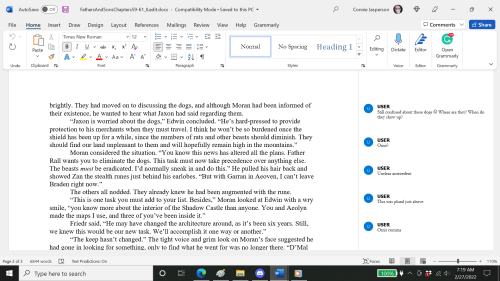 Editors who have been in the business for a long time find it much faster to use the markup function and insert inline changes. A new author or someone unfamiliar with how word-processing programs work might find it confusing and difficult to understand.
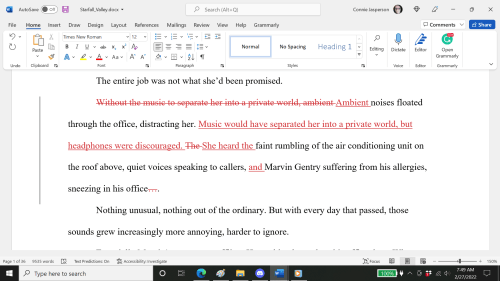 Inserting the changes and using Tracking cuts the time an editor spends on a manuscript. Writing comments takes time, and suggestions may not always be clear to the client.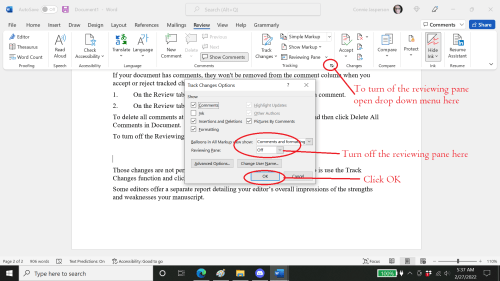
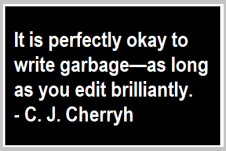 However, many authors don’t have the money to hire an editor. If that is the case, you may have a friend in your writing group who has some experience editing, and they will often help you at no cost. Your writing group is a well of inspiration, support, and wisdom, and they are invested in your book. They want you to succeed and most will gladly trade services.
 When I am finished with the revisions, I will format my manuscript as both ebooks and paper books. At that point, I will be looking for proofreaders.
 If you didn’t see it when I mentioned it above, I will repeat it: proofreading is not editing. We discussed self-editing in my previous post,
 Repeated words and cut-and-paste errors. These happen when making revisions, even by the most meticulous of authors. The editor won’t see any mistakes you introduce after they have completed their work on the manuscript.
 Unfortunately, my last book went live when I thought I was ordering a pre-publication proof.
 In some ways, novels are machines. Internally, each book is comprised of many essential components. If one element fails, the story won’t work the way I envision it.
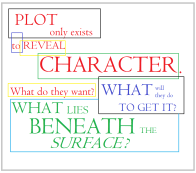 So, realizing I knew nothing was the first positive thing I did for myself. I made it my business to learn all I could, even though I will never achieve perfection.
 I use this function rather than reading it aloud myself, as I tend to see and read aloud what I think should be there rather than what is.
 This is a long process that involves a lot of stopping and starting, taking me a week to get through an entire 90,000-word manuscript. I will have trimmed about 3,000 words by the end of phase one. I will have caught many typos and miskeyed words and rewritten many clumsy sentences.
 This is the phase where I look for info dumps, passive phrasing, and timid words. These telling passages are codes for the author, laid down in the first draft. They are signs that a section needs rewriting to make it visual rather than telling. Clunky phrasing and info dumps are signals telling me what I intend that scene to be. I must cut some of the info and allow the reader to use their imagination.
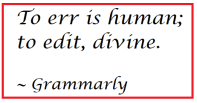
 Editing programs operate on algorithms and don’t understand context. I am wary of relying on Grammarly or ProWriting Aid for anything other than alerting you to possible problems. If you blindly obey every suggestion made by editing programs, you will turn your manuscript into a mess.
 Our stories take the reader to exotic places and introduce them to other realities. When we publish a book, we hope it will find a reader on the day they were looking for just such an escape.
 I wrote poetry and lyrics for a heavy metal band when I first started out. I was young, sincere, and convinced I had to impart a message with every word. I didn’t know until twenty years later when I came across my old notebook that my poems weren’t honest. Eighteen-year-old me was trying to make a point rather than offering ideas for further thought.
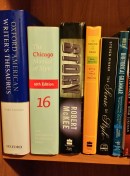 Children are unimpressed by the fact their parents might write a story or play music or paint or do any of the creative arts.
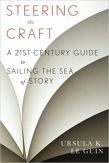 As Ursula K. LeGuin said in her excellent book,
 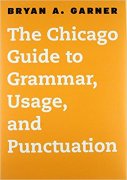 day, should we so desire. Reading is how we come to understand writing and the art of story. Mr. King also admonishes us to learn the fundamentals of punctuation and grammar.
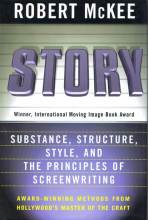 Every editor will tell you no amount of money is worth the time and effort it would take to teach an author how to write coherent, readable prose. That is what seminars, books on craft, and books on style and grammar are for.
 I want to read an honest story about people who seem real, who have the kind of problems we can all relate to on a human level. I want to read a story that comes from an author’s deepest soul. The setting doesn’t matter—it can be set on Mars or in Africa. Characters matter, and their story matters.
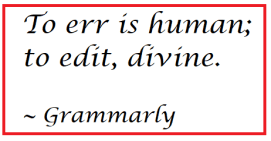 Today I am revisiting three wonderful quotes on these rules from
  Actually, my large dirty minivan is not as comfortable to ride in as it used to be. Grandma’s imaginary red Ferrari would be a lot more fun, but alas—if wishes were Ferraris, my driveway would look a lot fancier.
 Have you ever wondered why we say fiddle-faddle and not faddle-fiddle? Why is it ping-pong and pitter-patter rather than pong-ping and patter-pitter? Why dribs and drabs rather than vice versa? Why can’t a kitchen be span and spic? Whence riff-raff, mishmash, flim-flam, chit-chat, tit for tat, knick-knack, zig-zag, sing-song, ding-dong, King Kong, criss-cross, shilly-shally, seesaw, hee-haw, flip-flop, hippity-hop, tick-tock, tic-tac-toe, eeny-meeny-miney-moe, bric-a-brac, clickey-clack, hickory-dickory-dock, kit and kaboodle, and bibbity-bobbity-boo? The answer is that the vowels for which the tongue is high and in the front always come before the vowels for which the tongue is low and in the back. (Pinker, The Language Instinct, 1994:167) [3]