
I am well acquainted with how the human body moves when fighting, either with weapons or bare-handed. I know this personally as I was the goalie on a women’s hockey team in my late teens. Also, at the age of nineteen, I married the bass player in a heavy metal band. We were divorced several years later, and while we remain good friends, some aspects of those years were difficult to live through.
 The human body moves in many ways when fighting, some of which are effective, and others not so much. In the 1990s, I studied Shao Chi Chuan, a gentler form of martial arts. I write about people who fight, and I draw upon my personal experience.
But let’s talk about literary violence. Random gore and sexual violence have no place in the well-crafted novel. The keyword here is random.
Blood and sex are sometimes a part of the more profoundly moving stories I have read. Those scenes showed meticulous plotting, and the incidents were watershed moments in the protagonists’ lives.
At times, those passages are difficult on a personal level to read. However, if they are moments that change everything, they do have a purpose. Events that change the protagonist’s life for good or ill must be crafted, and transitions must make them fit seamlessly into the narrative.
I rarely read horror, except that which is written by Dean Lappi. The violence is all the more frightening in his books because it is subtly foreshadowed and unavoidable and occurs at a surprising moment. All the things that make you feel squeamish are not random, not inserted for shock value, or just to liven things up. The characters are multidimensional, and the world they live in can be terrifying.
If you are writing horror, reread the works that inspired you. Follow their lead and plot your novel well.
I want to make this extremely clear: If the violent events don’t somehow move the story forward, change the protagonist profoundly, or affect their view of the world, you have wasted the reader’s time.
Whenever you must write scenes that involve violence, ask yourself five questions:
- Is this scene necessary, or am I just trying to liven up a stagnant story arc?
- What does this scene show about the world my protagonist lives in?
- Will this event fundamentally change my protagonist and affect how they go forward?
- What does this event accomplish that advances the plot toward its conclusion?
- Why was this event unavoidable?
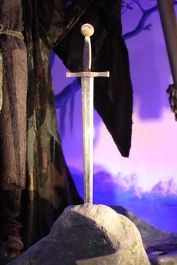
Excalibur London_Film_Museum_ via Wikipedia
Suppose the choices the protagonist has made prior to this point do not make this scene unavoidable. In that case, the violence is gratuitous and doesn’t belong there.
Some books open in the middle of the action, and I have done this on occasion as a prologue to show a backstory event. However, this kind of opening can confuse the reader, who is at the disadvantage of not knowing what is going on.
When you open a novel with the characters already thrust into the middle of an action scene, it should introduce the characters and show the root of the crisis. The key is to make it clear that it is a backstory event, and you should make it character-driven.
Whether it is shown in the prologue or the opening chapter, the first event, the inciting incident, is the one that changes everything and launches the story.
I love stories about good people solving terrible problems. The first incident has a domino effect. More things occur that push the protagonist out of his comfortable life and into danger.
Their peril might be physical or emotional. While I have experienced violent situations, I’ve also faced many things that shook my world but didn’t threaten my physical safety.
Fear of loss, fear of financial disaster, fear of losing a loved one—terror is subjective and deeply personal
Either way, the threat and looming disaster must be shown, and the solution should be held just out of reach. If it was resolved too easily, why? What sort of trap was laid, and why did they take the bait?
As in real life, emotions run high. The situation is sometimes chaotic, but the protagonists believe they can resolve the problem if they can just achieve “the one thing.”
Despite their growing doubts, the characters continue to be put to the test, and the subplots kick into gear.
Scenes form the overall story arc structure, but please, don’t waste the reader’s time with pointless banter. Each conversation or event must show something new and propel the plot forward, moving the protagonist and antagonist further along the story arc to the final showdown.
In the early part of the story, each scene should illuminate the motives of the characters. Like a flower gradually opening, the reader gains information at the same time as the protagonist does. The reader may see clues from the antagonists’ side, which the characters don’t know will affect the plot in the future.
Those clues are foreshadowing, showing why the forthcoming action is unavoidable. Through the first half of the book, subtle foreshadowing is essential, as it piques the reader’s interest and makes them want to know how the book will end.
The midpoint in the novel is a place where a watershed moment should occur. It launches the third act and makes the characters’ struggle more difficult.
At this point, the protagonist and allies are becoming aware that they may not achieve their objectives after all. Bad things have happened, and the protagonists must get creative and work hard to acquire or accomplish their desired goals.
Through experiencing these (sometimes) violent events, the protagonist suffers a crisis of faith. They fear they may not have what it takes, and their quest won’t be fulfilled.
Just when the characters have recovered from the midpoint catastrophe, another disaster occurs, the event that launches the final act. This event is where someone who was previously safe may die.
 Scenes that involve violence are difficult to write well unless you know how the action will affect your protagonist. Also, you must remember to give the protagonist and the reader a small break between incidents for regrouping.
This requires planning on the part of the author. We consider how each battle or catastrophe will be unavoidable. We must also ask ourselves how surviving it will change the characters for good or ill.
Incidents that raise the very real specter of possible failure elevate the emotional stakes and keep the reader turning the page.
Our task is to design the action scene so that it fits naturally into a narrative. This is a critical skill we must develop if we want to move our readers emotionally.
In the next post, we’ll discuss contrasts, and how the transition from conflict to quiet and back again can make or break your narrative.
 Most writers are hobbyists. This is because if one intends to be a full-time writer, one must have an income.
 Events occur, disturbing my writing schedule, but I usually forgive the perpetrators and allow them to live. At that point, I revert to writing whenever I have a free moment.
 As I have said many times before, being a writer is to be supremely selfish about every aspect of life, including family time.
 Writing emotions with depth is a balancing act. This is where I write from real life. I think about the physical cues I see when my friends and family feel emotion. When someone is happy, what do you see? Bright eyes, laughter, and smiles.
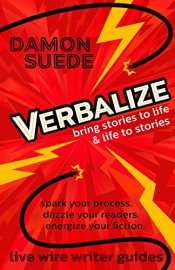 Also, I’m a book junkie—I can’t pass up buying any book on the craft of writing. I bought two books on writing craft by
  Each of us experiences emotional highs and lows in our daily lives. We have deep-rooted, personal reasons for our emotions, for whether we are attracted to or repulsed by another person. Sometimes those interactions can be highly charged.
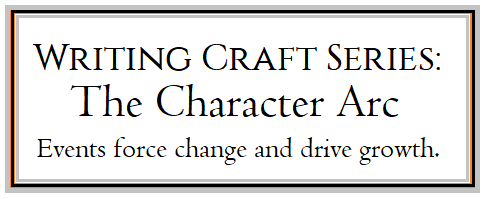 Each character should have an arc of growth and change as the story progresses. Heroes that arrive fully formed on page one are boring. For me, the characters are the story, and the events of the piece exist only to force growth upon them.
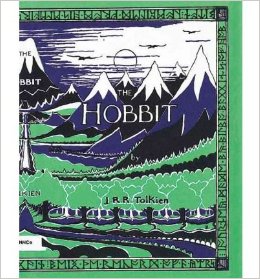 Bilbo resents both the intrusion and being made aware of how bored he is. Secretly, he fears going into the unknown and resists Gandalf’s insistence that he must go with the dwarves. However, at the last minute, Bilbo realizes that if he doesn’t go now, he will always wonder what would have happened if he had.
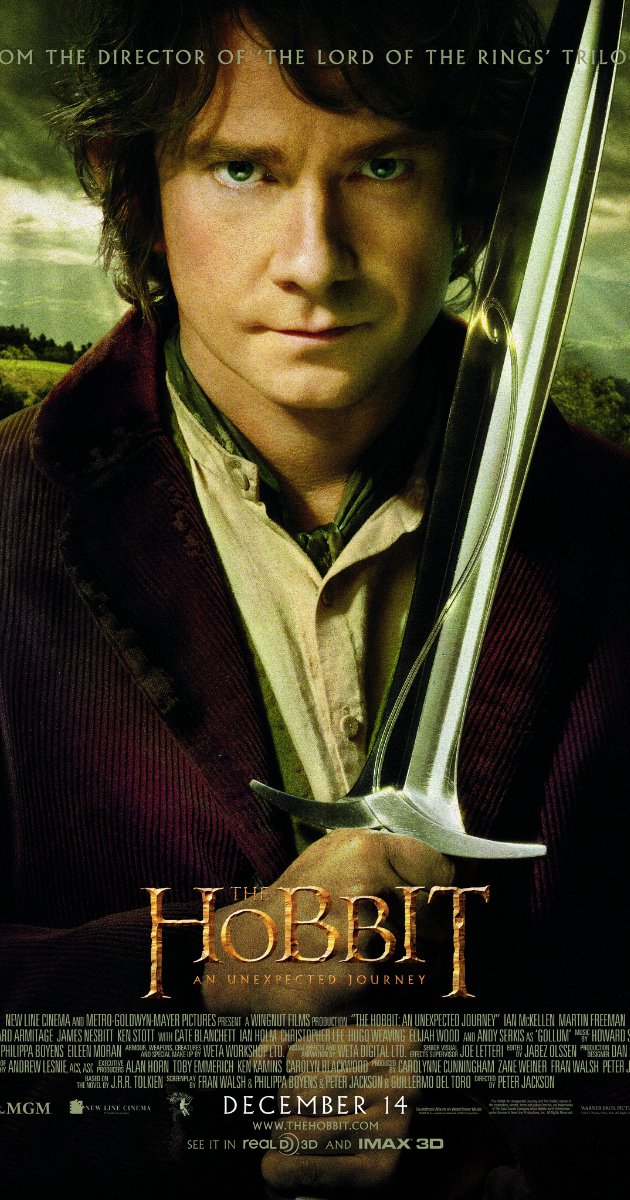 Over the next year, Bilbo experiences many things. Where once he was a little xenophobic and slightly disdainful of anything not of The Shire, he discovers that other cultures are as valuable as his, meeting people of different races whom he comes to love and trust. He experiences the loss of friends and gains compassion. By the time Bilbo returns to the Shire, he is a different person than he was when he ran out his front door without even a handkerchief.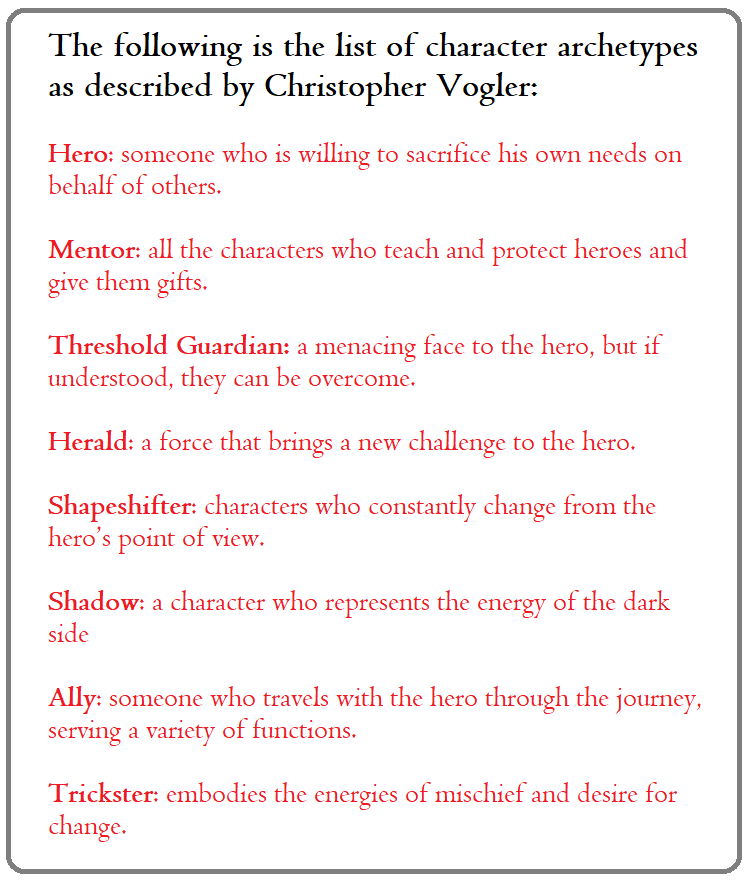
 The Writer’s Journey, Mythic Structure for Writers,
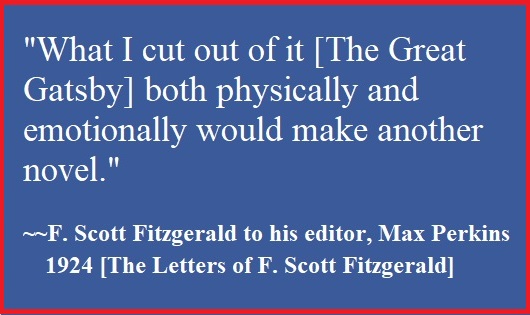 One thing I do recommend is that you keep the number of allies limited. Too many named characters can lead to confusion in the reader.
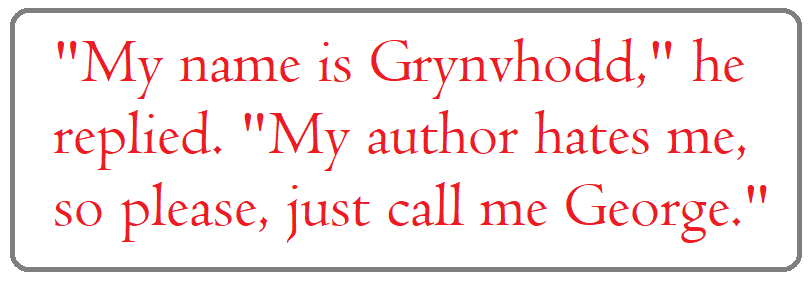 How easy is it to read, and how will that name be pronounced when it is read aloud?
 In real life, everyone has emotions and thoughts they conceal from others. Perhaps they are angry and afraid, or jealous, or any number of emotions we are embarrassed to acknowledge. Maybe they hope to gain something on a personal level—if so, what? Small hints revealing those unspoken motives are crucial to raising the tension in the narrative.
 Dialogue gives shape to the story, turning what could be a wall of words into something personal. We meet and get to know our protagonists and the people they will travel with through the conversations they engage in.
 Obi-Wan is a complex mentor, arriving on the screen with a past. He has lived and lost and made choices he wished he hadn’t. When he faces Darth Vader in his final showdown, you get the feeling that the old man planned his exit perfectly.
 For this reason, every sacrifice our characters make must have meaning and must advance the plot, or you have wasted the reader’s precious time.
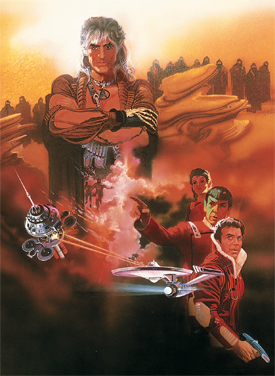 Mortally wounded, the antagonist, Khan, activates a “rebirth” weapon called Genesis, which will reorganize all matter in the nebula, including Enterprise. Though Kirk’s crew detects the activation and attempts to move out of range, they will not be able to escape the nebula in time without the ship’s inoperable warp drive. Spock goes to restore warp power in the engine room, which is flooded with radiation. When McCoy tries to prevent Spock’s entry, Spock incapacitates him with a
  Narrative essays are drawn directly from real life, but they aren’t necessarily factual or accurate representations of events. They often detail a fictionalized experience or event that affected the author on a personal level.
 Choose your words for impact! Writing with intentional prose is critical. A good essay has been put into an entertaining form that expresses far more than mere opinion. Narrative essays sometimes present deep, uncomfortable concepts but offer them in a way that the reader feels connected to the story.
 And on that note, we must be realistic. Not everything you write will resonate with everyone you submit it to. Put two people in a room, hand them the most exciting thing you’ve ever read, and you’ll get two different opinions. They probably won’t agree with you.
 Editors at magazines, contests, and publishing houses have no time to deal with poorly formatted manuscripts. Their inboxes are full of properly formatted work, so they will reject the amateurs without further consideration.
 First, we must select the font. Every word-processing program has many fancy fonts you can choose from and a variety of sizes.
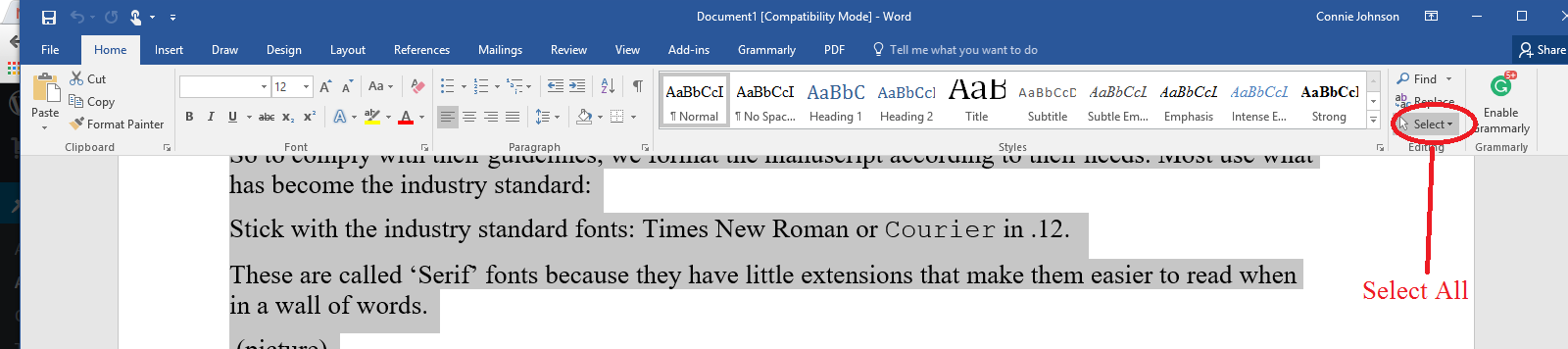 Step 1: On the Home tab, look in the group labeled ‘Paragraph.’ On the lower right-hand side of that group is a small grey square. Click on it. A pop-out menu will appear, and this is where you format your paragraphs.
 Do not justify the text. In justified text, the spaces between words and letters (known as “tracking”) are stretched or compressed. Justified text gives you straight margins on both sides. However, this type of alignment only comes into play when a manuscript is published. At that point, the publisher will handle the formatting.
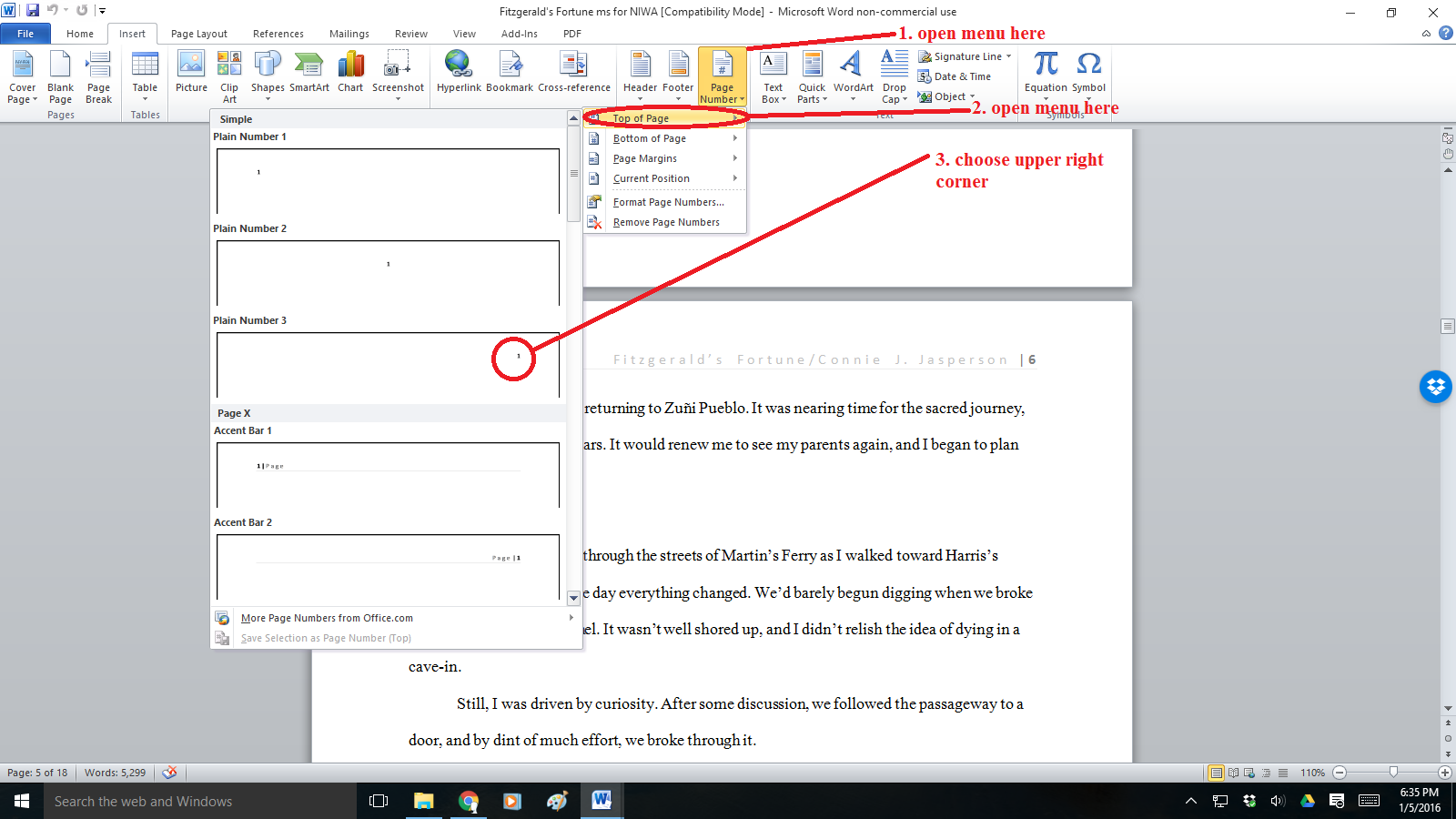 Now your manuscript is submission-ready. It is in Times New Roman or Courier .12 font, is aligned left, has1 in. margins, is double-spaced, has formatted indented paragraphs.
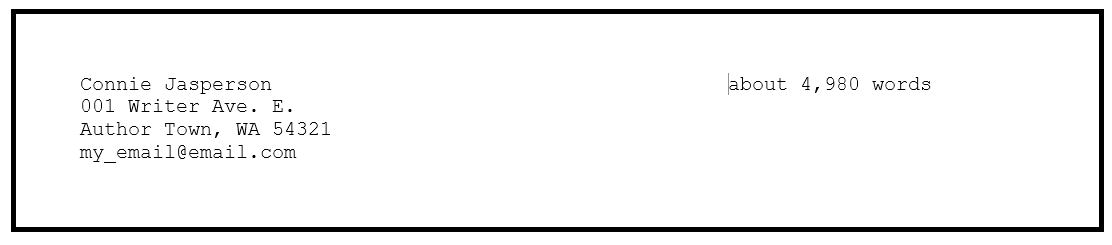 This may seem like overkill to you. If you are serious about submitting your work to agents, editors, or publishers, it must be as professionally formatted as is possible.
 You are more likely to sell a drabble than a short story in today’s speculative fiction market. You are also more likely to sell a short story than a novel.
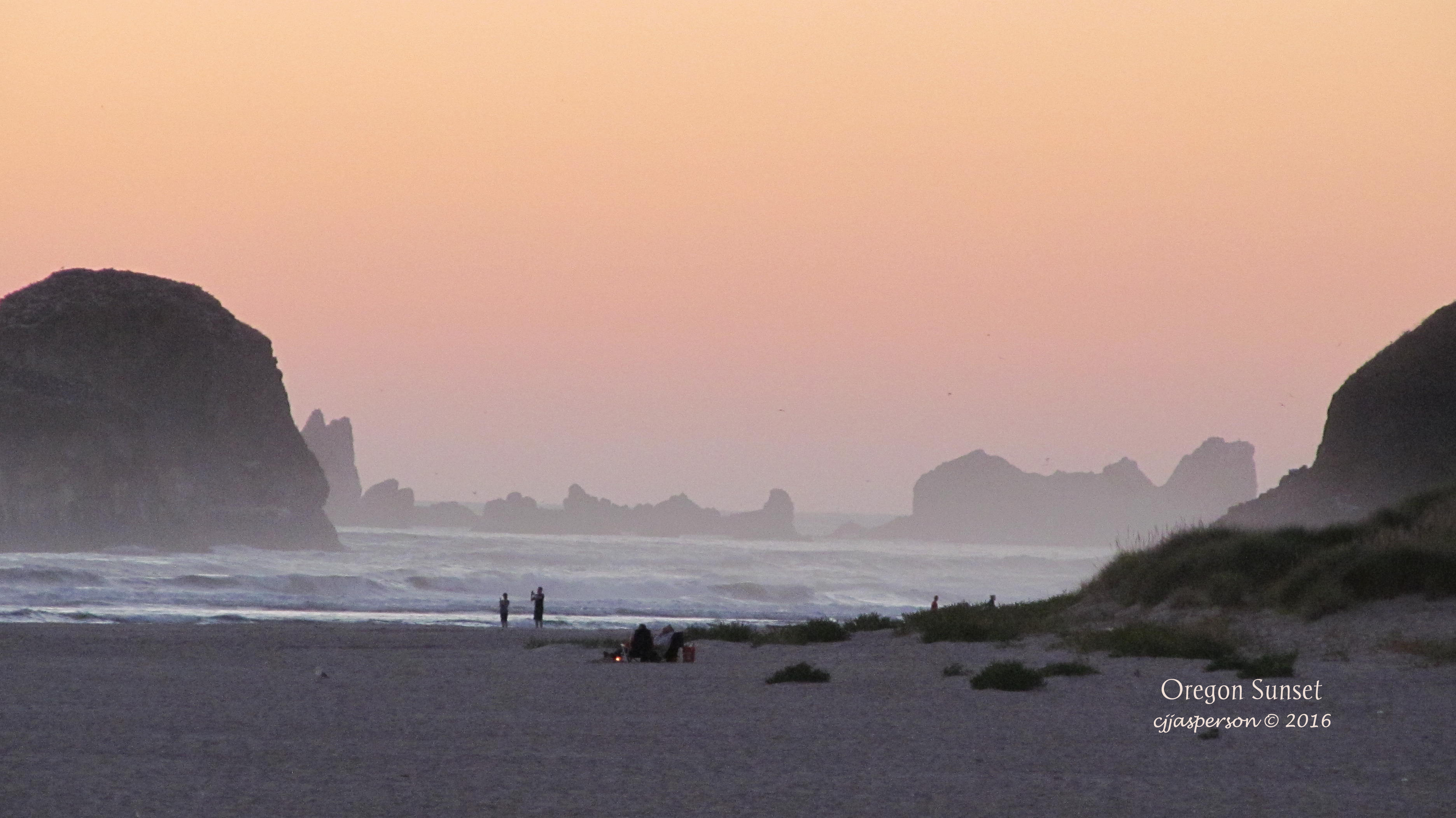 does require plotting and rewriting the prose until the entire story is told in exactly 100 words. You should expect to spend an hour or so writing and then editing it to fit within the 100-word constraint.
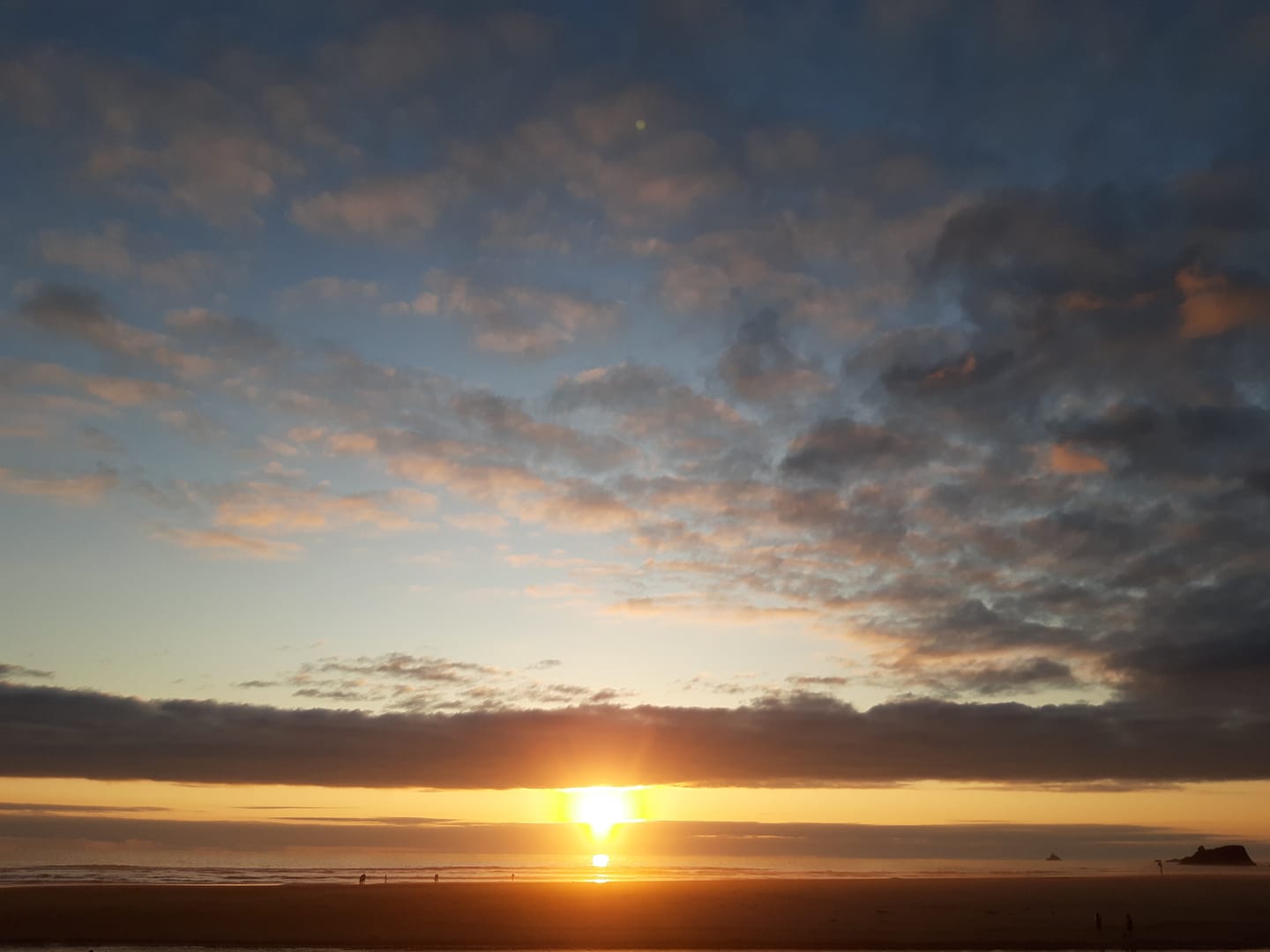 The above drabble is a 100-word romance and is an example I have used here before. It has a beginning (hook), a middle (the conflict), and a resolution. The opening shows our protagonist on the beach with someone for whom she cares deeply.
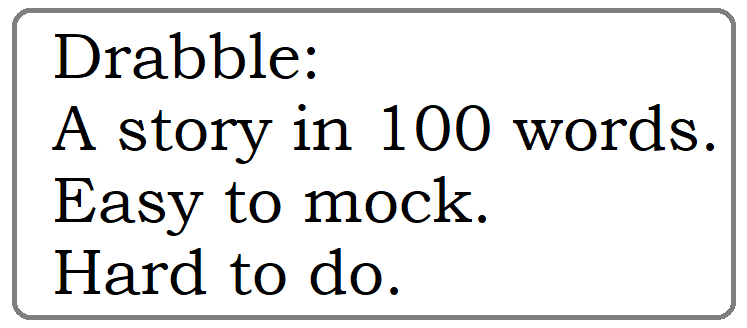 The act of writing random ideas and emotions down in drabble form rejuvenates your creativity, a mini-vacation from your other work. It rests your mind and clears things so you can return to your main project with all your attention.


 Life in the Realm of Fantasy